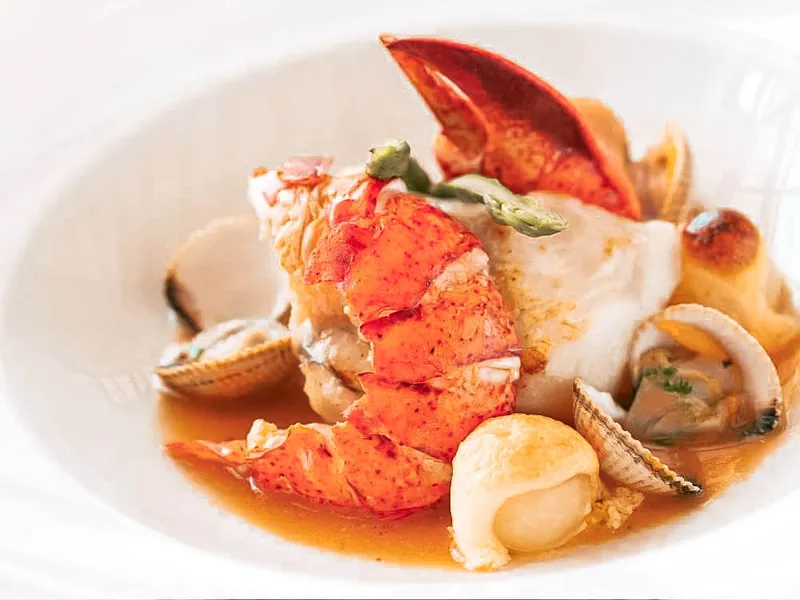
I was sitting in a restaurant — eight weeks pregnant, just past that initial wave of nausea that makes all food sound terrible — when the waiter handed me the menu and I realised I had absolutely no idea what I was allowed to eat. Mussels? Prawns? The salmon looked good but was it smoked or cooked? What about the tuna starter? My phone came out under the table and I started Googling frantically, which is never a dignified activity but is especially undignified when you're trying to pretend you're casually browsing the wine list (which you also can't drink).
The problem with searching "can I eat seafood while pregnant" is that the internet gives you approximately four hundred conflicting answers in under a second. Some sources say avoid all seafood entirely. Others say eat it constantly for the omega-3s. One alarmist article had me convinced that a single prawn would cause irreversible harm, while a medical journal calmly recommended two to three portions of fish per week during pregnancy. The gap between public panic and medical consensus on this topic is genuinely staggering.
So here's what I wish someone had handed me at that restaurant table: a clear, properly sourced guide to which seafood is safe during pregnancy, which isn't, and — just as importantly — why seafood actually matters for foetal development. Because the irony of avoiding fish entirely out of caution is that you're potentially depriving your baby of nutrients that are genuinely difficult to get from other sources.
Why seafood actually matters during pregnancy
Before we get to the "what's safe" list, it's worth understanding why this conversation matters beyond just avoiding risks. Fish and shellfish are one of the richest natural sources of omega-3 fatty acids — specifically DHA (docosahexaenoic acid), which plays a critical role in foetal brain and eye development. The third trimester is when DHA accumulation in your baby's brain is most intense, and your body can only provide what it has.
The Royal College of Obstetricians and Gynaecologists (RCOG) specifically recommends that pregnant women eat fish as part of a balanced diet, highlighting oily fish in particular for its omega-3 content. The NHS recommends at least two portions of fish per week during pregnancy, with at least one being an oily fish like salmon, sardines, or mackerel. This isn't a casual suggestion — it's a positive nutritional recommendation from the same health authorities that publish the "avoid" lists.
Beyond omega-3s, seafood provides:
- High-quality protein: Essential for foetal growth, placental development, and maternal tissue expansion. Fish protein is also more easily digestible than red meat protein, which matters when your digestive system is already under pregnancy-related stress.
- Iodine: Critical for thyroid function and your baby's neurological development. Iodine deficiency during pregnancy is linked to cognitive impairment. White fish and shellfish are among the best dietary sources.
- Selenium: An antioxidant that supports immune function and thyroid health. Fish is one of the most reliable dietary sources.
- Vitamin D: Oily fish is one of the few significant food sources of vitamin D, which is important for bone development and immune function — both yours and your baby's.
- Vitamin B12: Essential for nerve development and red blood cell formation. Deficiency during pregnancy can cause neural tube defects.
The point is this: the conversation about seafood and pregnancy shouldn't start with fear. It should start with the recognition that fish is actively beneficial, and the goal is to eat it safely — not to avoid it altogether. Women who eliminate seafood entirely during pregnancy may actually be doing their babies a nutritional disservice.
The complete safe list: fish and shellfish you can eat
This is the list you can screenshot and keep on your phone for restaurant situations. All of these are considered safe during pregnancy when properly cooked, according to NHS and RCOG guidelines.
White fish (eat freely, no weekly limit):
- Cod
- Haddock
- Plaice
- Sole (Dover and lemon)
- Sea bass
- Sea bream
- Pollock
- Coley
- Tilapia
- Whiting
- Catfish
- Hake
- Monkfish
- Turbot
- Halibut
White fish is low in mercury, high in protein, and rich in iodine. There's no recommended upper limit during pregnancy — you can eat it as often as you like, which makes it the safest default choice when you're unsure.
Oily fish (limit to two portions per week):
- Salmon — The pregnancy superstar. High in omega-3 DHA, moderate in mercury, widely available.
- Sardines — Extremely high in omega-3s, low in mercury (small fish = less accumulation), and rich in calcium if you eat the bones.
- Mackerel (not king mackerel) — Excellent omega-3 source. Atlantic mackerel is lower in mercury than king mackerel.
- Trout — A freshwater oily fish with a good omega-3 profile and very low mercury levels.
- Herring — Similar nutritional profile to sardines. Kippered or fresh, both are fine when cooked.
- Anchovies — Tiny, so very low mercury. High in omega-3s per gram.
- Pilchards — Essentially adult sardines. Same benefits.
The two-portions-per-week limit on oily fish isn't because of mercury — it's because oily fish can contain low levels of pollutants (dioxins, PCBs) that accumulate over time. Two portions keeps your exposure within safe limits while providing the omega-3 benefits.
Shellfish (safe when thoroughly cooked):
- Prawns
- Langoustines / scampi
- Crab (cooked)
- Lobster
- Mussels (cooked thoroughly — shells must open during cooking)
- Clams (cooked thoroughly)
- Scallops (cooked through, not just seared)
- Squid / calamari
- Cockles (cooked)
The key word with shellfish is cooked. Raw or undercooked shellfish carries a risk of bacterial and viral contamination (norovirus, Vibrio, Listeria) that's particularly dangerous during pregnancy because your immune system is naturally suppressed. If it's been properly cooked to an internal temperature of at least 63°C, shellfish is safe and provides excellent protein and iodine.
What to avoid — and why
The "avoid" list is shorter than most people think. The internet has inflated it enormously through a combination of excessive caution and poorly sourced articles, but the actual medical guidance from the NHS and RCOG is specific and limited.
Avoid completely:
- Shark: Very high mercury levels due to being a large, long-lived predatory fish. Mercury accumulates up the food chain, and sharks sit at the top.
- Swordfish: Same issue as shark — large, predatory, high mercury.
- Marlin: Another large predatory fish with significant mercury accumulation.
- Raw shellfish: Oysters on the half shell, raw clams, raw mussels — the bacterial risk is too high during pregnancy. Cooked versions of the same shellfish are fine.
Limit carefully:
- Tuna: No more than four medium tins (140g drained) or two fresh tuna steaks per week. Tuna mercury levels are higher than most fish but lower than shark or swordfish. The limit is precautionary, not prohibitive — you don't need to avoid tuna entirely.
- King mackerel: Higher mercury than Atlantic mackerel. If you're buying mackerel, check which species it is — this matters.
That's it. That's the actual avoid list from NHS guidelines. Not the thirty-item panic list that certain websites publish. Three species to avoid entirely, two to limit, and raw shellfish. Everything else is about preparation method.
Mercury explained: the real risk in plain language
Mercury is the reason this conversation exists at all, so it deserves a proper explanation rather than the vague fearmongering that usually surrounds it. Mercury — specifically methylmercury — is a neurotoxin that crosses the placental barrier and can affect foetal brain development. At high levels, it causes measurable cognitive impairment. At the levels found in most commercially available fish, the risk is negligible for occasional consumption — but it becomes relevant if you eat high-mercury fish frequently.
How mercury gets into fish: industrial emissions release mercury into the atmosphere. It settles into waterways, where bacteria convert it to methylmercury. Small organisms absorb it. Small fish eat those organisms. Bigger fish eat the smaller fish. Each step up the food chain concentrates the mercury further — a process called bioaccumulation. That's why the biggest, longest-lived predatory fish (shark, swordfish, marlin) have the highest levels, and small, short-lived fish (sardines, anchovies) have the lowest.
The European Food Safety Authority (EFSA) has established that the tolerable weekly intake of methylmercury is 1.3 micrograms per kilogram of body weight. For a 65 kg woman, that's about 84 micrograms per week. For context:
- A 150g portion of salmon contains roughly 3–6 µg of mercury
- A 150g portion of canned tuna contains roughly 15–30 µg
- A 150g portion of swordfish contains roughly 100–150 µg
You can see the pattern. A portion of salmon barely registers. A portion of canned tuna is well within limits. A single portion of swordfish could approach or exceed the weekly limit on its own — which is why swordfish is on the "avoid" list rather than the "limit" list.
The practical takeaway: if you're eating salmon, sardines, cod, prawns, or any of the "safe" list fish, mercury is not a concern at normal consumption levels. The NHS recommendations already have generous safety margins built in. You would need to eat extraordinary quantities of moderate-mercury fish to approach problematic levels.
Raw seafood, sushi, and smoked fish: the rules
This is where things get slightly more nuanced, because the risk with raw seafood during pregnancy isn't mercury — it's pathogens. Bacteria (Listeria, Salmonella, Vibrio), viruses (norovirus, hepatitis A), and parasites (Anisakis) are the concern, and pregnancy makes you more susceptible to these infections because your immune system is naturally downregulated.
Sushi: The NHS advises that sushi made with raw fish is generally fine during pregnancy IF the fish has been previously frozen. UK and EU regulations require that fish intended for raw consumption is frozen at -20°C for at least 24 hours, which kills parasites. This means sushi from reputable UK restaurants and supermarkets is considered safe. However — and this is important — homemade sushi with fresh-from-the-fishmonger fish may not have been frozen adequately. If in doubt, ask the restaurant or choose cooked options (prawn tempura rolls, cooked salmon rolls, vegetable sushi).
Smoked fish: There are two types, and the distinction matters.
- Hot-smoked fish (cooked during the smoking process, flaky texture — like hot-smoked salmon or smoked mackerel) — safe to eat during pregnancy. The cooking temperature is sufficient to kill pathogens.
- Cold-smoked fish (cured but not cooked — like smoked salmon slices, gravlax, lox) — carries a small Listeria risk. The NHS says cold-smoked fish is low-risk but some midwives advise caution. If you choose to eat it, buy it fresh, consume it within the use-by date, and ensure it's been stored properly.
Ceviche: Fish "cooked" in citrus acid is not actually cooked — the acid denatures the protein (changing the texture) but does not reliably kill bacteria or parasites. Avoid ceviche during pregnancy.
Oysters: Always avoid raw during pregnancy. Cooked oysters (baked, grilled, fried) are safe. The Listeria and Vibrio risk with raw oysters is significant even for non-pregnant adults — during pregnancy, it's not worth it.
How much seafood should you eat per week?
The NHS recommends at least two portions of fish per week during pregnancy, with one of those being an oily fish. A "portion" is approximately 140g — about the size of your palm. This isn't a maximum for white fish and shellfish (there's no specified upper limit), but oily fish should be capped at two portions per week due to pollutant accumulation.
In practical terms, a good weekly pattern might look like:
- Monday: Salmon fillet with vegetables (oily fish portion 1)
- Wednesday: Cod fish fingers or baked cod with chips (white fish)
- Friday: Sardines on toast or prawn stir-fry (oily fish portion 2 or shellfish)
Three fish meals per week — two oily, one white — puts you well within the recommended range and provides excellent omega-3 intake. You can add more white fish or shellfish meals without concern. If fish features in your cooking regularly (a prawn curry here, a tuna sandwich there), you're probably hitting the target without trying.
If you're struggling with fish aversion — and first-trimester nausea can make the mere thought of fish genuinely revolting — don't force it. Take a DHA supplement (most prenatal vitamins include it, but check the label) and reintroduce fish when you can stomach it. Nutrition during pregnancy is a marathon, not a sprint, and one fishless month is not going to cause a problem.
Cooking and preparation safety
The rules for cooking seafood during pregnancy are straightforward, and they're the same rules that food safety experts recommend for everyone — pregnancy just makes following them more important because the consequences of foodborne illness are more severe.
Temperature: All fish and shellfish should reach an internal temperature of at least 63°C (145°F). For fish fillets, this means the flesh should be opaque and flake easily with a fork. For shellfish, mussels and clams must open during cooking (discard any that don't), and prawns should be pink and firm throughout.
Storage:
- Fresh fish should be consumed within two days of purchase, stored in the coldest part of your fridge (usually the bottom shelf).
- Cooked fish can be stored in the fridge for up to three days.
- Frozen fish is safe indefinitely but best quality within three months. Always defrost in the fridge, never at room temperature.
- Leftover fish should be reheated to at least 74°C (165°F) — steaming hot throughout, not just warm.
Cross-contamination: Use separate chopping boards for raw fish and other foods. Wash hands thoroughly after handling raw seafood. Clean all surfaces that have been in contact with raw fish. This is standard kitchen hygiene, but during pregnancy it moves from "good practice" to "actually important."
Eating out: At restaurants, you can ask how fish is prepared and whether shellfish is cooked through. Any reputable restaurant will answer these questions without judgement — they'd far rather answer a question than deal with a food safety incident. If you're uncertain about the cooking method, choose a dish where the fish is visibly, obviously cooked: fish and chips, grilled salmon, prawn curry, fish pie. Avoid tartare, carpaccio, and anything described as "lightly seared" or "rare."
Shellfish by shellfish: your complete reference
Because "can I eat prawns?" is a question I was asked roughly seventeen times during my pregnancy by other pregnant friends, here's the definitive shellfish-by-shellfish breakdown.
Prawns: Safe when cooked. This includes restaurant prawns, supermarket pre-cooked prawns (cocktail prawns, prawn rings), prawns in a stir-fry or curry — all fine. Cold pre-cooked prawns from the chilled section are safe provided they've been stored correctly and are within date. Avoid prawn sashimi or raw prawn dishes.
Crab: Cooked crab meat is safe — including the brown meat, which is particularly rich in nutrients. Fresh dressed crab from a fishmonger is fine. Crab sticks (the processed surimi ones) are pre-cooked and safe, though they're not actually crab. Avoid raw crab.
Lobster: Safe when thoroughly cooked. Lobster thermidor, grilled lobster tail, lobster bisque — all fine. Ensure the meat is opaque and firm throughout.
Mussels: Safe when cooked until the shells open. Moules marinières, mussels in tomato sauce, baked mussels — all fine provided every shell has opened during cooking. Discard any that remain closed. Never eat raw mussels during pregnancy.
Oysters: Cooked only. Baked, grilled, or fried oysters are safe. Raw oysters — the ones on the half shell with lemon and Tabasco — are off the menu until after birth. The Vibrio risk alone makes this non-negotiable.
Scallops: Safe when cooked through. Note: "seared scallops" at restaurants are often cooked on the outside but translucent in the centre. During pregnancy, request them cooked all the way through — the kitchen will accommodate this. Pan-fried scallops cooked until opaque throughout are perfectly safe and delicious.
Squid / calamari: Safe when cooked. Fried calamari, squid in pasta, grilled squid — all fine. Avoid squid sashimi.
Clams: Same rules as mussels — cook until shells open, discard any that don't. Clam chowder, linguine alle vongole (provided the clams are fully cooked), steamed clams — all safe.
Langoustines / scampi: Safe when cooked. Scampi and chips from the chippy is pregnancy-safe fast food, which is excellent news.
Frequently asked questions
Can I eat sushi while pregnant?
In the UK and EU, sushi made with fish that has been previously frozen (which is a legal requirement for fish served raw) is generally considered safe during pregnancy. Supermarket sushi and sushi from reputable restaurants meets this standard. If you're uncertain, choose cooked sushi options — prawn tempura rolls, cooked salmon rolls, or vegetable sushi — which carry no risk. Avoid homemade sushi with unfrozen fresh fish.
Is smoked salmon safe during pregnancy?
Hot-smoked salmon (the flaky, fully cooked kind) is completely safe. Cold-smoked salmon (the silky, thinly sliced kind used on bagels) carries a small Listeria risk. The NHS considers it low-risk but some healthcare providers advise caution. If you choose to eat it, buy it fresh, check the use-by date, and consume it promptly. If you want to eliminate all risk, heat cold-smoked salmon until steaming hot before eating.
How much tuna can I eat while pregnant?
Up to four medium tins (140g each, drained weight) or two fresh tuna steaks per week. Tuna has higher mercury levels than most fish but is well below the levels found in shark or swordfish. There's no need to avoid tuna entirely — just stay within these limits. If you ate tuna daily before pregnancy, simply reduce your frequency to a few times per week.
Are prawns safe in the first trimester?
Yes, cooked prawns are safe throughout all trimesters of pregnancy. There's no trimester-specific restriction on shellfish. The key requirement is that they're properly cooked — pink, firm, and opaque throughout. Pre-cooked prawns from the supermarket (cocktail prawns, prawn rings) are already cooked and are safe to eat cold, provided they've been stored correctly.
What if I accidentally ate raw fish while pregnant?
Don't panic. A single exposure to raw fish — even if it wasn't previously frozen — is very unlikely to cause harm. The risk per serving is genuinely low; the guidelines exist to minimise cumulative risk over the entire pregnancy. Monitor yourself for symptoms of food poisoning (nausea, vomiting, diarrhoea, fever) over the following 48 hours and contact your midwife or GP if any develop. In all likelihood, nothing will happen.
Can I eat fish and chips while pregnant?
Absolutely. Fish and chips is one of the most pregnancy-friendly takeaway options available. The fish is battered and deep-fried, which means it's thoroughly cooked (well above the safe temperature). Cod and haddock — the most common fish and chip shop species — are low-mercury white fish. The only caveat is frequency: fish and chips is high in fat and calories, so it's a "sometimes" food rather than a daily choice, but from a food safety perspective during pregnancy, it's entirely safe.
Sources