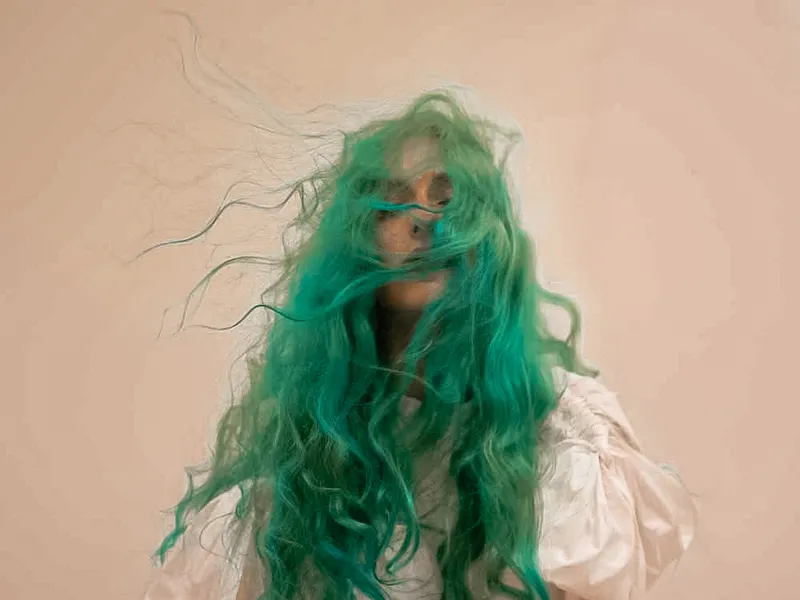
The look on my face in that hotel bathroom in Crete — towel on my shoulders, freshly dried hair catching the overhead light with an unmistakable mint-green cast — is not one I'd like to relive. Two weeks of swimming in the pool every day had turned my carefully balayaged blonde into something that looked more suited to a mermaid cosplay than a beach holiday. The panicked Google search that followed taught me everything I now know about why blonde hair goes green, and more importantly, that the fix is surprisingly simple once you understand the chemistry.
Why blonde hair turns green (it's not what you think)
The almost universal assumption is that chlorine turns blonde hair green. It's intuitive — you swim in chlorinated water, your hair goes green, chlorine must be the villain. But chlorine is actually innocent of the colour change itself. The real culprit is copper.
Copper is present in pool water from multiple sources: copper-based algaecides (used to prevent algae growth), copper pipes in the pool's plumbing system, and naturally occurring copper in the water supply. When copper ions dissolve in water, they're invisible. But when they deposit onto hair — particularly the porous, damaged cuticle of bleached or highlighted hair — and then oxidise, they produce copper oxide. Copper oxide is green. That green tint you're seeing is literally a thin layer of oxidised metal on your hair strands.
It's the same chemical reaction that turns the Statue of Liberty green, or that produces that beautiful verdigris patina on old copper roofs. Romantic on architecture, less so on your head.
So why does it only happen to blonde hair? It doesn't, technically. Copper deposits on all hair that's exposed to it. But on dark hair, the green tint is invisible — the base colour is too dark for the subtle green layer to show through. On blonde hair, especially very light blonde or platinum, the green is visible because there's no darker pigment to mask it. It's like putting green paint on a white wall versus a black wall — same paint, dramatically different visibility.
Chlorine's actual role: accomplice, not culprit
Chlorine isn't causing the green, but it's enabling it. Here's how:
Cuticle damage. Chlorine is an oxidising agent — it breaks down the protective lipid layer on the cuticle and lifts cuticle scales, making hair more porous. More porous hair absorbs more copper ions from the water. Think of it as chlorine opening the door and copper walking right in.
Oxidation catalyst. Chlorine accelerates the oxidation of copper ions on the hair surface, speeding up the conversion from colourless dissolved copper to visible green copper oxide. Without chlorine, the oxidation would still happen eventually (air exposure would do it), but it would be much slower and less intense.
Protein degradation. Chlorine attacks the keratin proteins in the hair shaft, further weakening the cuticle and creating more binding sites where copper ions can attach. Each swim session makes the problem progressively worse — the cuticle becomes more damaged, more copper deposits, more green becomes visible.
Sun exposure adds a third factor: UV radiation breaks down melanin and colour molecules in hair, lightening it further and making any green deposits more visible. UV also degrades the hair's structural proteins, increasing porosity. The combination of chlorine + copper + UV is the perfect storm for blonde-to-green conversion — which is exactly why the problem is so specifically a summer phenomenon.
Who is most at risk?
Not all blonde hair is equally vulnerable. Several factors increase your susceptibility:
Bleached or highlighted hair. The bleaching process destroys significant amounts of cuticle structure and cortical protein, creating a highly porous surface that absorbs copper like a sponge. Highlights are particularly vulnerable because they sit alongside unbleached hair — the contrast makes any green tint extremely noticeable. If you're maintaining blonde with regular bleach touch-ups, your hair is at maximum risk.
Fine hair. Each strand has less mass and a proportionally larger surface area — meaning more exposed cuticle per gram of hair to absorb copper. Fine blonde hair goes green faster and more intensely than thick blonde hair.
Previously damaged hair. Any prior damage — from heat styling, chemical processing, chronic dryness, or mechanical stress — increases porosity and therefore copper absorption. If your hair is already in compromised condition, one swim can be enough for a visible green shift.
Frequent swimmers. Cumulative exposure is cumulative damage. Swimming daily or multiple times per week gives copper deposits less time to be washed out between sessions. Professional swimmers and lifeguards with blonde hair are particularly familiar with this problem.
Pools with copper-based algaecides. Some pool maintenance systems rely heavily on copper sulfate to control algae. These pools have significantly higher dissolved copper content than pools using alternative algaecide systems. Ask the pool operator if you're curious — most will know.
How to fix green hair: 5 methods ranked by effectiveness
If the green has already happened, don't panic. The copper is on the hair surface and in the outer cuticle — it's removable. Here are five methods, ranked from most to least effective:
1. Chelating shampoo (best solution). Chelating shampoos contain ingredients (EDTA, phytic acid, or citric acid) that bind to metal ions and remove them from the hair. This is the most effective and safest method because it's specifically designed for the purpose. Products like Malibu C Swimmers Wellness Shampoo, UltraSwim Chlorine Removal Shampoo, or Paul Mitchell Shampoo Three are all excellent. Lather, leave for 3–5 minutes, rinse. One to two applications typically removes all visible green. Follow with a deep conditioner — chelating shampoos can be drying.
2. Ketchup / tomato paste (surprisingly effective). The acidity (acetic acid and citric acid from the tomatoes) combined with the red pigment (lycopene) works on two levels: the acid chelates the copper, and the red-orange pigment partially neutralises the green tone through colour theory (red cancels green on the colour wheel). Apply liberally, wrap in cling film, leave for 20–30 minutes, rinse, and shampoo. It sounds absurd. It genuinely works. Many professional swimmers use this method because it's cheap, accessible, and effective.
3. Aspirin soak. Dissolve 6–8 aspirin tablets (uncoated, plain) in a glass of warm water. Apply to affected hair, leave for 15–20 minutes, rinse, and shampoo. Aspirin contains acetylsalicylic acid, which is effective at dissolving mineral deposits. Less targeted than a chelating shampoo but widely available in a pinch — useful when you're at a holiday resort and the nearest salon supply shop is 50 kilometres away.
4. Apple cider vinegar rinse. Mix 1 part apple cider vinegar with 2 parts water. Pour over hair after shampooing, leave for 5 minutes, rinse thoroughly. The acetic acid dissolves copper deposits and helps close the cuticle. Less effective than chelating shampoo for heavy green deposits, but excellent for mild cases and as a preventive rinse after swimming.
5. Baking soda paste. Mix baking soda with water to form a thick paste. Apply to green areas, leave for 10 minutes, rinse. The alkalinity helps dissolve copper compounds. It's the least effective of the five methods but useful as a first-pass treatment when nothing else is available. Follow with conditioner — baking soda raises the cuticle and can leave hair rough if not neutralised.
What NOT to do: don't bleach over it. Bleach will lift the green from copper oxide into a more intense shade. Don't use purple shampoo — purple neutralises yellow-orange tones, not green. Purple + green = muddy brown, which is not an improvement. And don't panic-colour over it with a toner — address the mineral deposit first, then deal with any remaining colour issues.
Prevention: how to swim all summer without the green
Prevention is easier, cheaper, and less stressful than correction. Here's the full anti-green protocol:
Pre-wet your hair with clean water. This is the single most effective preventive measure and costs nothing. Hair absorbs water like a sponge — once it's saturated with clean water, it physically cannot absorb as much pool water (and therefore copper). Before entering the pool, thoroughly drench your hair with fresh water from the shower. Think of it as filling the sponge so it has no room for pool water.
Apply a leave-in conditioner or oil before swimming. After pre-wetting, apply a silicone-based leave-in conditioner or a few drops of coconut oil. This creates a hydrophobic layer over the cuticle that repels pool water and blocks copper absorption. The combination of pre-wetting + oil barrier reduces copper absorption by approximately 75–90%.
Wear a swim cap. The most effective barrier, obviously — no water contact means no copper absorption. Modern silicone swim caps are more comfortable and less hair-damaging than the old latex ones. They won't keep your hair completely dry (water seeps in at the edges), but they reduce exposure by 90%+ compared to uncovered swimming.
Rinse immediately after swimming. Don't let pool water dry in your hair — evaporation concentrates the copper and gives it more time to oxidise. Rinse thoroughly with clean water within minutes of leaving the pool. If a full shower isn't available, even a bottle of water poured over your hair helps.
Use a swimmer's shampoo after every swim. A chelating or swimmer's shampoo after each pool session removes copper deposits before they accumulate to visible levels. This is maintenance, not damage control — preventing the green is always easier than removing it.
Clarify weekly during swim season. Even with daily rinsing and swimmer's shampoo, trace mineral deposits can accumulate over time. A weekly clarifying treatment (chelating shampoo left on for 5 minutes) keeps everything in check.
Complete summer protection plan for blonde hair
Green from pools is the most dramatic summer hair problem, but it's not the only one. Sun, salt, chlorine, and heat collectively assault blonde hair during summer. Here's a comprehensive protection strategy:
UV protection. UV radiation breaks down melanin, colour molecules (if dyed), and structural proteins. Use a leave-in conditioner or spray with UV filters — look for ingredients like benzophenone-4, ethylhexyl methoxycinnamate, or simply "UV filter" on the label. Apply before sun exposure, reapply if swimming. Wearing a hat is the most effective UV protection for hair — and it protects your scalp from sunburn too.
Deep conditioning twice weekly. Summer exposure (sun + salt + chlorine) strips moisture and protein at an accelerated rate. Double your deep conditioning frequency during summer months. A hair botox treatment at the start of summer provides excellent baseline protection for 6–8 weeks.
Purple shampoo maintenance. UV and mineral exposure cause blonde hair to shift warm — brassy yellow-orange tones appear. A purple shampoo once or twice per week neutralises brassiness and maintains cool, clean blonde tones. Leave on for 2–3 minutes (longer risks an ashy or purple cast). This addresses brassiness specifically — it does NOT address or prevent green, which is a mineral issue requiring chelation.
Reduce heat styling. Your hair is already under stress from environmental exposure during summer. Adding daily flat ironing or blow-drying compounds the damage exponentially. Embrace your natural texture, use air drying, or try heatless styling methods during the warmest months. Your hair will thank you in September.
Trim at the end of summer. Despite your best efforts, some cumulative damage is inevitable during an active summer. Book a trim in early September to remove the most damaged ends before autumn. Starting the cooler months with fresh, healthy ends is a better foundation than carrying summer damage forward.
Frequently asked questions
Can natural (non-bleached) blonde hair turn green?
Yes, but it's less likely and less visible. Natural blonde hair has an intact cuticle that absorbs less copper than bleached hair. The green tint, if it occurs, tends to be subtler. Very light natural blonde (especially in children, whose hair is finer and more porous) is more susceptible than darker natural blonde. The prevention methods are the same regardless of whether your blonde is natural or dyed.
Does salt water (the ocean) cause green hair too?
Ocean water alone doesn't typically cause green hair — seawater doesn't contain significant dissolved copper. However, salt water is very drying and damaging to the cuticle, making hair more porous and therefore more vulnerable to copper absorption the next time you swim in a pool. If you alternate between ocean and pool swimming during a beach holiday, the ocean primes your hair for the pool's copper. Rinse with fresh water after ocean swimming and apply leave-in conditioner.
Will purple shampoo fix green hair?
No. Purple shampoo neutralises yellow and orange tones (brass) — it works on the colour wheel by depositing purple pigment that cancels warm tones. Green requires a different colour correction: red or pink tones cancel green. A chelating shampoo removes the green entirely (addressing the cause), while a red-toned toner or the tomato/ketchup method neutralises the green visually. Using purple shampoo on green hair can create a muddy, grey-brown tone.
How can I tell if my pool has high copper levels?
Look for blue-green staining on the pool tiles, grout, or around the pool equipment — this is copper deposit. Ask the pool operator what algaecide system they use (copper-based vs. non-copper alternatives). You can also test pool water with a copper test strip (available at pool supply shops) — levels above 0.3 ppm indicate elevated copper that's more likely to cause hair discolouration.
My child's blonde hair went green — are the same fixes safe for kids?
Yes. All the methods listed (chelating shampoo, tomato paste, apple cider vinegar rinse) are safe for children's hair. Chelating shampoo is the gentlest and most effective option. For very young children, dilute the apple cider vinegar more (1 part ACV to 4 parts water) and avoid getting it in their eyes. The ketchup method is actually fun for kids — let them sit with a ketchup helmet for 20 minutes and the green is gone. Always follow with conditioner.
Sources
Keep on bubbling
- How to colour your hair at home — protect your colour investment
- How to repair dry, damaged hair — post-summer rescue routine
- Most beautiful beaches in France — enjoy the sea without wrecking your blonde