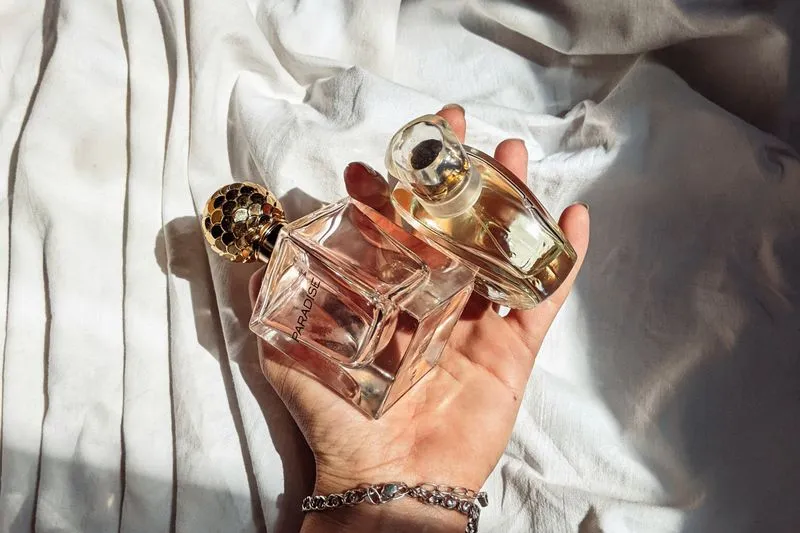
A Thursday in April, 7.10pm, late-night opening in the fragrance hall of a Knightsbridge department store. Ottilie, 29, a junior designer at an architecture practice in Clerkenwell, is holding a box in each hand. Same name, same bottle, same gold cap. On the left: "eau de toilette", 100ml. On the right: "eau de parfum", 50ml — for almost exactly the same price. The air around her smells of sandalwood, candyfloss and clean laundry (twenty perfumes elbowing each other for space). The sales assistant doesn't look up from her screen: "The eau de parfum's the same thing, just stronger. It'll last you all day." Ottilie sprays the eau de toilette on her left wrist and the eau de parfum on her right. Then she walks out empty-handed.
At 10pm, on her sofa in Walthamstow, she sniffs both wrists. The right one still smells of something — rounder, sweeter, almost vanilla. The left one has faded to next to nothing. But that's not what bothers her. What she loved was the fizzy opening of the eau de toilette, that zest that snaps for the first few minutes. Her right wrist smells nothing like it. "The same thing, just stronger"? No.
It's the most common misunderstanding at the perfume counter — and I fell for it too. Eau de parfum, eau de toilette, extrait, cologne, body mist: these words describe a dose of fragrance concentrate diluted in alcohol. Not a quality. Not a guaranteed number of hours. And not necessarily the same formula. Then there's the sum nobody does for you at the till: the price per ml.
If you're after the scent family that suits you — floral, woody, amber — it's all in my complete guide to choosing a perfume by scent family. Here, we're talking dose, wear time and pounds.
Eau de parfum or eau de toilette: the real difference is a dose of concentrate
A perfume is a concentrate dissolved in alcohol. That concentrate — perfumers also call it the "juice" — holds every smelling ingredient in the formula. Chemistry World, the Royal Society of Chemistry's magazine, describes perfumery as the art of handling "ensembles of volatile organic molecules", each one evaporating at its own speed. Eau de toilette and eau de parfum differ, first and foremost, in how much of that concentrate goes into the bottle.
And the rest of the bottle? Mostly alcohol. The Perfume Society, the UK fragrance-lovers' club, puts it plainly in its quick-read guide to scent strengths: names like eau de toilette or eau de parfum identify "the strength or concentration of oil in the carrier (or base – usually alcohol)". The alcohol evaporates fast on your skin — leaving the concentrate to do its work (it's that cold, prickly hit you feel for the first two seconds).
Here's the surprise: none of these names has a legal definition. The cosmetics rules Great Britain kept after Brexit — the EU's 2009 regulation, published in its UK version on legislation.gov.uk — list "perfumes, toilet waters and eau de Cologne" among cosmetic products. But they set no strength for any of them, and the phrase "eau de parfum" doesn't appear anywhere in the text. (Yes, I searched the whole thing.)
Extrait, eau de parfum, eau de toilette, cologne: the concentration chart
The Perfume Society publishes a simple chart of figures — and calls them "a rule of thumb (or nose!)", because concentrations "can vary from fragrance to fragrance, depending on how that particular brand like to blend their scents". Keep that in mind as you read the table.
| Name | Concentrate (The Perfume Society) | What the Society suggests it for |
|---|---|---|
| Extrait (extract, solid perfume) | 20–30% | A dab for intimate moments, close to the skin |
| Parfum | 15–25% | Same use as extrait |
| Eau de parfum | 8–15% | Evenings out |
| Eau de toilette | 4–8% | Daytime |
| Cologne | 2–4% | A refreshing splash first thing |
| Body cream or lotion | 3–4% | Layering under a matching scent |
Two things to take away. First, the order is solid — from richest to lightest, extrait (or parfum), eau de parfum, eau de toilette, cologne. Second, the edges are soft. An eau de toilette at 10% would sit outside this chart — and since no law fixes the numbers, nothing stops a brand from making one. You'll also see a 15–20% range for eau de parfum repeated all over the place; it isn't in this chart.
Here's what each name covers, in plain English.
- Extrait (or plain "parfum"): the richest form. The Society splits the two, with 20–30% for extrait and 15–25% for parfum.
- Eau de parfum: sitting between the two extremes, at 8–15% on the Society's chart.
- Eau de toilette: lighter — more alcohol for the same size of bottle.
- Cologne: the lightest of the classic names, at 2–4% — the Society's pick for "a refreshing splash" to start the day.
- Body mists and eau fraîche: not on the Society's chart at all.
That makes mists the vaguest category of the lot. Think of a mist as a veil you spray widely — not as a scent built to last. Hair perfumes play a different game: the Society notes they're often "imbued with moisturising, protective properties", which helps when it's hot and an alcohol-based scent would dry your hair out.
Same name, same bottle: why the eau de parfum isn't always the same scent
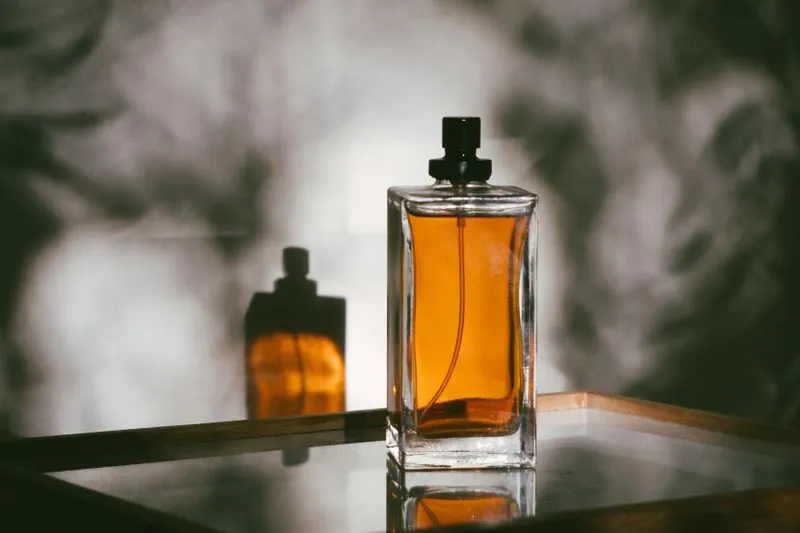
I've worn Shalimar since I was 22. Eleven years — and always the eau de parfum. A few years ago I bought the eau de toilette — to slip into my bag and "save a bit". On my skin, it wasn't the same perfume. More citrus at the start, far less vanilla at the end. First I thought my nose was playing tricks on me — then that I'd bought a dodgy bottle. Neither.
That's Ottilie's story, the long version. The Perfume Society warns, in black and white, that different concentrations "may sometimes have differing notes in them, and not simply be weaker or stronger". Its advice when you like a fragrance is to explore it "in all its different concentrations" before you settle on a favourite. It makes sense once you know that every note evaporates at its own pace. Chemistry World explains that a well-designed perfume evolves over time "as a result of the materials' different volatilities". In a chypre (the fragrance family of Guerlain's Mitsouko), the bergamot top note is "the most volatile and first to be perceived", while the oakmoss base persists "on the skin long after the other components have evaporated". Change the balance between them and you change the scent you're wearing at 6pm.
The result: you can love the eau de toilette and dislike the eau de parfum of the same name. Or the other way round. It's not your nose going wrong — it's the recipe that's moved. And nothing on the box tells you whether the brand simply diluted its formula or rewrote it.
How long does eau de parfum last? Longer than eau de toilette, but no label promises hours
"All day," promised Ottilie's sales assistant. No label will give you a number of hours, and no UK rule asks for one. The Perfume Society's guide sticks to a general rule: "the higher the percentage, the longer it will last on your skin". A rule, not a stopwatch: how long a perfume lasts depends on five things the label ignores.
- The formula. Top notes go first, base notes last. A scent built on citrus generally fades faster than one built on woods or vanilla — at the same concentration.
- The dose. Two sprays or six isn't the same perfume at 4pm (for you or for the person at the next desk).
- The surface. My wool scarf still smells of Shalimar the next day — my wrist doesn't.
- Your skin. Dry skin holds scent badly. In hot weather, the Perfume Society suggests layering an eau de toilette with "a matching (or unscented) body lotion, as dry skin makes fragrance fade faster".
- Your nose. After an hour I can't smell my own perfume any more — yet a colleague walking behind my chair tells me it's still there.
And whatever you do, don't rub your wrists together after spraying: I explain why in my piece on rubbing perfume between your wrists.
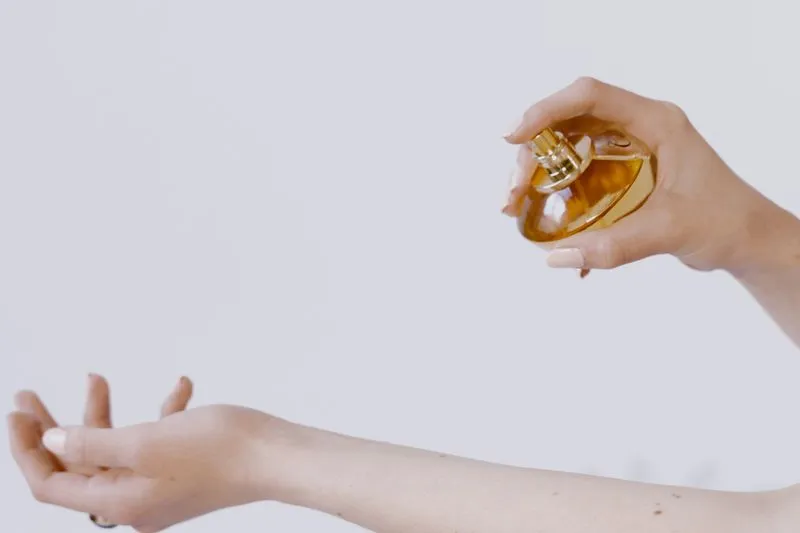
Sillage vs longevity: why eau de parfum doesn't always "speak" louder
Sillage is the trail your perfume leaves behind when you cross a room. Longevity is how long it stays on you. The two often go together, but not always — and that's where eau de parfum sometimes disappoints.
Think of two dials. One measures how loudly a scent announces itself in the first half hour; the other, how long it hangs around. A perfume can score high on the first and low on the second (it bursts, then fizzles out). Or the reverse — discreet from the start, but still there at dinner.
That's why an eau de toilette full of fresh notes can seem "stronger" in the first half hour. Its very volatile top notes rise fast from your skin towards other people's noses. And at the top of the scale, extrait does the opposite: according to the Perfume Society, a dab of pure parfum or extrait lasts until the next day but won't project as far as an eau de parfum. Longer-lasting, less chatty. More concentrate, in other words, doesn't mean more sillage.
My take: if you want sillage for a night out, don't just look at the concentration. Look at the family (to my nose, ambers and gourmands get noticed more than citrus scents) and at the dose. And if you want discretion at work, one spray of eau de parfum often beats four of eau de toilette.
Price per ml: the sum that settles eau de parfum vs eau de toilette
On the label you get a price and a volume. Divide one by the other and you get the only figure that lets you compare a 30ml, a 50ml and a 100ml. The volume has to be there: Article 19 of the cosmetics regulation, on legislation.gov.uk, requires "the nominal content at the time of packaging, given by weight or by volume" — except for packs holding less than five millilitres, free samples and single-application packs. (Yes: a mini under 5ml doesn't even have to tell you how much it holds.)
For the very same bottle, the price per ml swings wildly. Between 8 October and 8 November 2021, Which? tracked the prices of 20 popular fragrances at Amazon, Boots, John Lewis, Superdrug, The Fragrance Shop and The Perfume Shop. Dolce & Gabbana Light Blue Eau de Toilette 100ml cost £52.95 at John Lewis and £84 at Superdrug and The Perfume Shop. Do the division: 53p per ml on one side, 84p on the other. The same juice — 59% dearer. Buying all 20 fragrances from the cheapest retailer rather than the priciest would have saved £230.52 — in Which?'s words, "a 22% difference for exactly the same products".
Between eau de toilette and eau de parfum, the sum has a second step. Higher concentrations generally cost more: the Perfume Society links a higher percentage to longer wear and, "therefore, the higher the price". But if you need twice as much eau de toilette for the same effect, your saving vanishes. The real number is the cost per day of wear: price per ml multiplied by what you use each morning.
My method, no calculator needed: since this spring I write the opening date under each bottle in marker pen; the day it runs out, I'll divide the price by the number of days. My Shalimar eau de toilette didn't need the pen: I was re-spraying it constantly, and the "saving" evaporated with it. Same logic for sizes: the biggest bottle isn't automatically the cheapest per ml, especially when the small one is on offer.
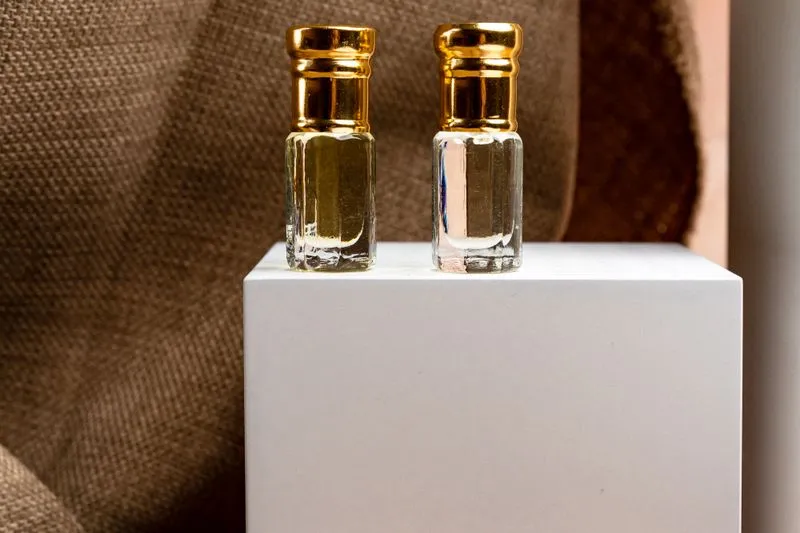
Intense, Elixir, Parfum: what are the new names on the bottle worth?
Counters are full of spin-offs: eau de parfum "Intense", "Elixir", "Absolu", "Parfum"… None of them is defined in the UK cosmetics rules (I searched the text for those words too: nothing). They signal the brand's intention — denser, warmer, pricier — not a percentage.
The trickiest word of all is "parfum". On the front of a bottle, it names a strength (15–25% on the Perfume Society's chart). In everyday speech, it just means the smell. And in the ingredients list, as we'll see, it means something else again: the whole fragrance blend. When a brand prints "Parfum" under a name, it's talking concentration. When your colleague says "love your perfume", she's talking smell. Same word, three jobs.
My take: an "Intense" or "Elixir" version is often a new perfume borrowing the name of a hit. Test it as a new release — not as an update. And if the endless spin-offs wear you out, have a look at the niche perfume houses worth discovering: you'll find creations that aren't the umpteenth version of a bestseller.
What a perfume label tells you — and what it never will
Turn your box over. You'll find the volume, the ingredients list and the batch number. Never the percentage of concentrate — the law doesn't ask for it.
The ingredients list follows a simple rule, set out in Article 19: it "shall be established in descending order of weight of the ingredients at the time they are added to the cosmetic product". In other words, the first ingredient is the one there's most of. On a perfume, that's the alcohol, since it makes up most of the bottle. The whole fragrance blend, meanwhile, fits into a single word: "parfum" (or "aroma").
One exception. Certain allergenic molecules have to be named in full, on top of the word "parfum", once they go over 0.001% in a leave-on product — a perfume, for instance. You've read them without realising: limonene, linalool, citral, coumarin… They're listed in an annex of the same regulation, and they're the reason a perfume's ingredients list often runs longer than its name.
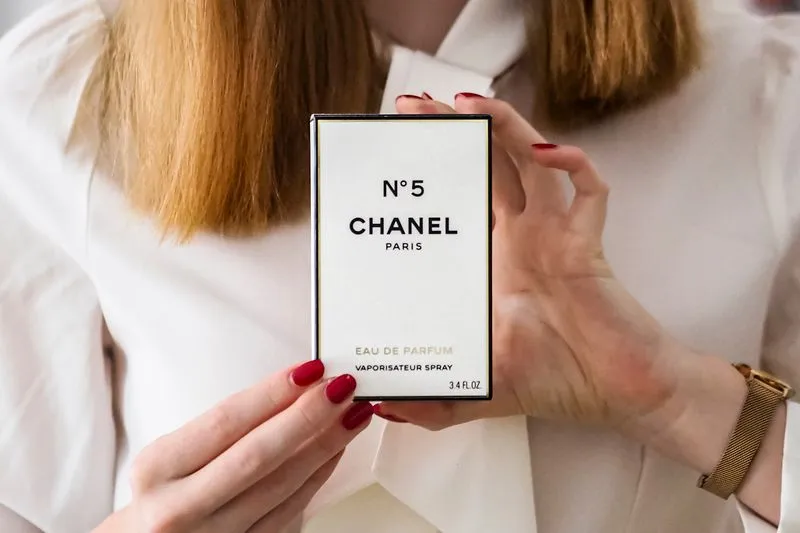
Sensitive skin: should you avoid eau de parfum?
No, not in itself: none of the official sources I read ranks eau de parfum as more allergenic than eau de toilette. What matters is the molecule your skin has become sensitised to.
Fragrance is one of the usual suspects when skin reacts. The NHS page on the causes of contact dermatitis lists "cosmetic ingredients – such as preservatives, fragrances, hair dye and nail varnish hardeners" among the allergens that commonly trigger allergic contact dermatitis. It also names "perfumes and preservatives in toiletries or cosmetics" among common irritants — a second route, with no allergy involved.
The allergy mechanism is the surprising part. "The first time you come into contact with an allergen, your body becomes sensitised to it, but does not react to it," the NHS explains. It's only on a later exposure that the immune system reacts and the skin turns red and itchy. Put simply: a perfume you've worn happily for years can start causing trouble one day — and it's easy to blame the wrong product.
The allergen names at the end of the ingredients list earn their keep here: if you react to two perfumes, look for the name they share.
Which strength to choose: office, summer, evening, gift
There's no right concentration in absolute terms, only a right concentration for a moment. Here's how I think about it — my view, not a rule.
- At work: an eau de toilette, or an eau de parfum in a single spray. In an open-plan office, discretion counts for more than staying power.
- In summer: eau de toilette or cologne, even if it means a second spray in the afternoon. The Perfume Society suggests eau de toilette "for day time", and a matching lotion underneath when it's hot. On a sticky July afternoon on a pub terrace, a vanilla extrait makes me feel queasy (me, at least).
- In the evening: eau de parfum or extrait, sprayed an hour before you go out so the top notes have settled by the time you arrive. The Society's line for evenings is "a spritz of Eau de Parfum to leave a sultrier trail".
- As a present: whichever strength the person already wears. If you don't know, a small eau de parfum limits the damage.
- To discover a perfume: the smallest size, or a sample. You'll pay more per ml, but less for a mistake.
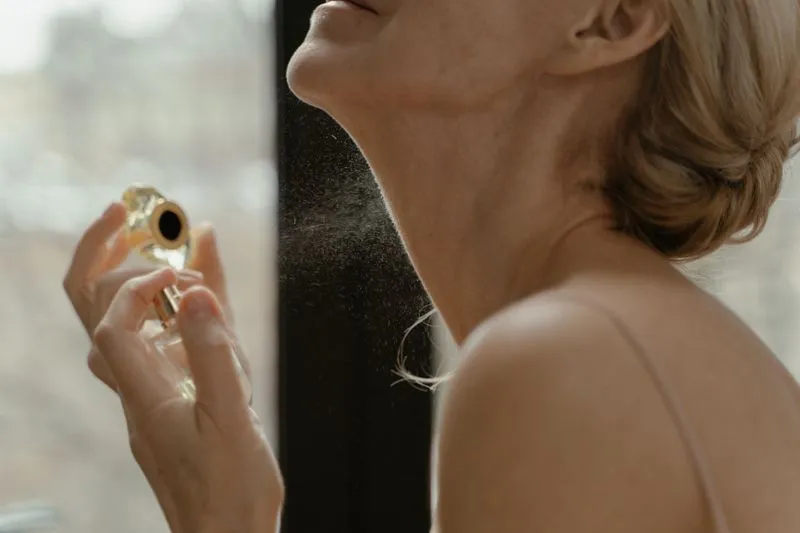
My five-step method for choosing between eau de parfum and eau de toilette
This is exactly what I do before buying a bottle — and what I should have done with my Shalimar eau de toilette.
- Same day, two wrists. Eau de toilette on the left, eau de parfum on the right (or the other way round, but write it down).
- Four check-ins. At 10 minutes, at 1 hour, at 4 hours, and in the evening. Note what you smell each time: three words will do.
- A witness. Around the two-hour mark, ask someone to smell you from arm's length.
- The division. Price divided by the number of millilitres, for every size and every strength.
- The verdict. Keep the one whose evening you like, not just its opening. The opening is what makes you buy — the evening is what you actually wear.
Ottilie did exactly that. She went back to the department store the following Thursday, redid the test on both wrists, and took the eau de toilette — in 50ml, because once she'd done the division, the 100ml barely saved her anything. She re-sprays around 2pm, once, on her neck. And she kept her zest.
Your turn: this weekend, two wrists, four check-ins. The perfume you still like at 10pm is the one.
Frequently asked questions
Does eau de parfum always last longer than eau de toilette?
For the same name from the same brand, that's the most common case: more concentrate means more scent to evaporate. The Perfume Society's general rule is that the higher the percentage, the longer it lasts on your skin. But the formula matters as much as the dose, because base notes outlast top notes. Treat any number of hours you read as a rough guide, not a promise.
Can I find out the exact percentage of concentrate in a perfume?
Not from the label. The UK cosmetics regulation doesn't require it, and the whole fragrance blend appears as a single word, "parfum". You can ask the brand, but it doesn't have to tell you. The only clue is the order of "aqua" and "parfum" in the ingredients list.
Is eau de toilette really cheaper than eau de parfum?
Per ml, often yes. In use, not necessarily: if you spray twice as much eau de toilette for the same effect, you pay the same per day, or more. The only sum that counts is the cost per day of wear (price per ml multiplied by your daily dose).
What's the difference between parfum, extrait and eau de parfum?
"Parfum" and "extrait" both name the most concentrated forms. The Perfume Society gives 20–30% for extrait and 15–25% for parfum, with eau de parfum just below at 8–15%. None of these words has a legal definition, so a brand's own label is the only thing that tells you which one you're holding.
How strong are body mists and eau fraîche?
There's no agreed figure: they don't appear on the Perfume Society's chart. Treat them as the lightest option, to spray widely and top up. To see whether a mist is alcohol-based, read the first ingredient: "alcohol" or "alcohol denat." at the top of the list means there's plenty of it.
Is eau de parfum more likely to cause allergies than eau de toilette?
None of the official sources I read ranks one strength as safer than the other. The NHS lists fragrances among the cosmetic ingredients that commonly cause allergic contact dermatitis, and what triggers it is a specific molecule in someone who has become sensitised to it. If you react, stop the perfume and speak to a pharmacist or your GP.
Should I buy the big bottle to save money?
Only if the price per ml really is lower (do the division: offers on small sizes sometimes flip the logic) and you're sure you'll love it for a long time. A 100ml that takes you three years to finish is three years of the same smell.
Sources
- The Perfume Society — Cologne to Parfum: your quick-read, easy guide to scent strengths (14 July 2022)
- Chemistry World (Royal Society of Chemistry) — Perfumery: the molecular art form (2 October 2015)
- legislation.gov.uk — Regulation (EC) No 1223/2009 on cosmetic products, introductory text
- legislation.gov.uk — Regulation (EC) No 1223/2009, Article 19: Labelling
- Which? — Which? reveals the cheapest shops to buy perfumes and aftershaves this Christmas (8 December 2021)
- NHS — Contact dermatitis: causes (reviewed 3 May 2023)