Try this. Close your eyes and think of your mum. Not her face — her scent. Can you smell it? That's what perfume actually is. Not an accessory. Not a finishing touch. It's an invisible signature that lives in people's memory long after you've left the room. And yet, most of us choose our fragrance in under five minutes, standing in front of a department store counter, waving around blotter strips that all smell the same after the third one.
I spent years buying perfumes I'd wear twice and abandon at the back of a bathroom cabinet. Then a friend who works as a perfumer sat me down and explained the basics — and everything changed. This guide is exactly what she told me, with a decade's worth of testing added on top.
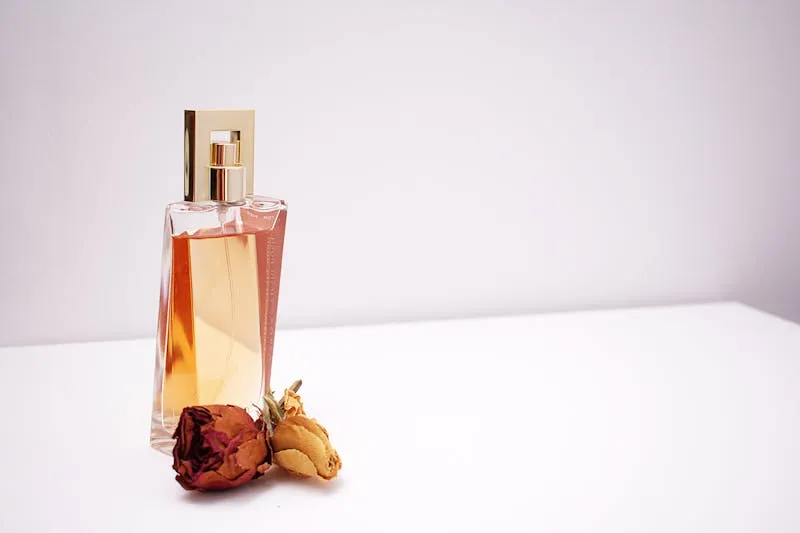
Perfume is memory
Before we talk about fragrance notes and concentration levels, here's what you actually need to understand: your nose is hardwired directly to your limbic system — the part of your brain that handles emotions and memory. No rational filter. No conscious processing. The smell arrives, and in 0.2 seconds, you feel something.
That's why perfume doesn't "work" universally. The smell of freshly baked scones might transport you straight back to your nan's kitchen — and leave your colleague completely unmoved because she didn't grow up with scones. Perfume is personal in a way that even fashion or colour simply isn't.
What this means practically: you can't choose a perfume because your best friend loves it, because you saw it in a campaign, or because someone gorgeous is wearing it in an advert. You need to find what YOU love to smell — and for that, you first need to understand the language perfumers use.
Fragrance families — understand before you buy
Since 1984, the perfume world has used a standardised classification system — the Fragrance Wheel, created by perfume expert Michael Edwards — to organise fragrances into families. It's not an exact science (perfumers love bending the rules), but it's the best navigational tool available when you're starting out.
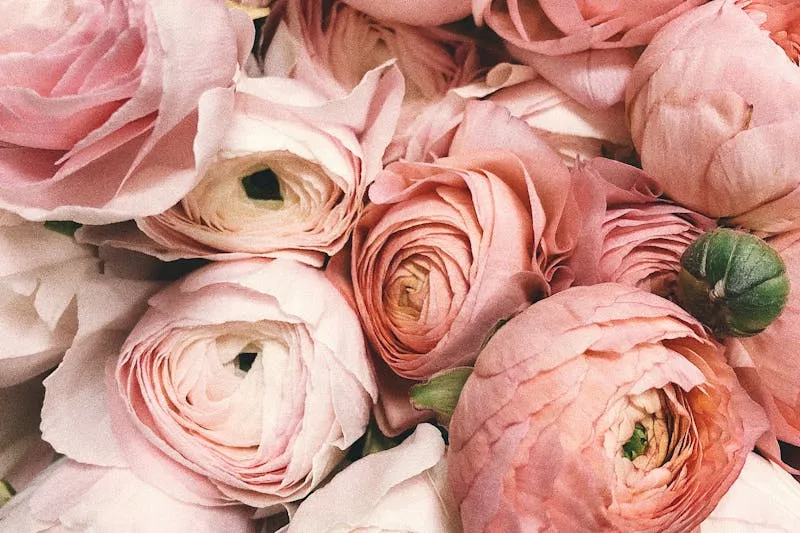
Florals — The largest family. From light florals (lily of the valley, peony) to opulent ones (rose, jasmine, ylang-ylang). If you love flower markets and spring gardens, you're probably a floral person. Don't think "floral" means old-fashioned — some of the most modern and interesting fragrances today are floraloriental blends.
Orientals — Vanilla, amber, resins, spices. Warm, sensual, long-lasting. Perfect for autumn and winter, evening wear, and drier skin types (which hold them beautifully). Think Guerlain Shalimar for the classic. Black Opium by YSL for the modern version.
Woody — Cedar, sandalwood, vetiver, patchouli, oud. Earthy, deep, sometimes smoky. Long-lasting and increasingly gender-neutral. If you love old libraries, leather armchairs, or forest walks, this is probably your family.
Fresh — Citrus, aquatics, aromatics (herbs, fougères). Light, bright, perfect for summer and the office. The most immediately appealing family — but also the one that fades fastest. Great in EDT concentration for everyday wear.
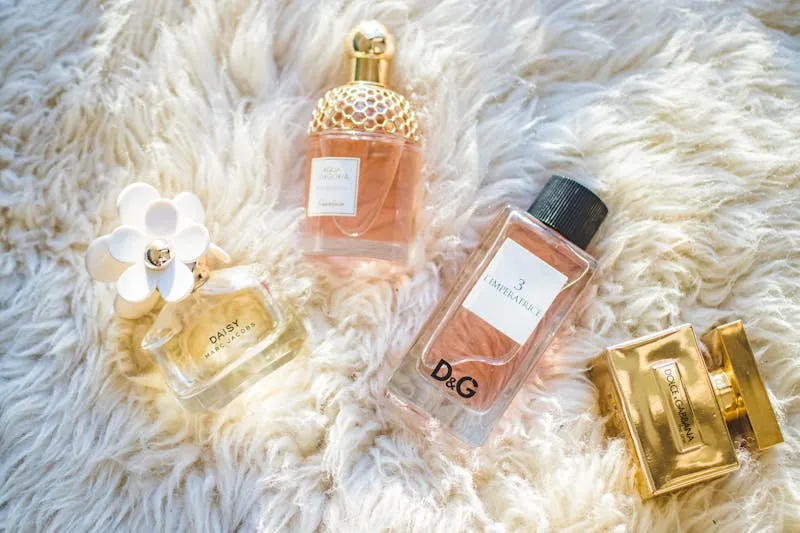
Fruity — Peach, raspberry, blackcurrant, pear. Instantly accessible, widely loved. Often blended with florals to create the "floriental fruity" category that dominates mainstream fragrance today (think Marc Jacobs Daisy, various Lancôme releases).
Chypre — A complex family built around labdanum, patchouli and bergamot. Elegant, a little secretive, slightly vintage. Hugely prized in niche perfumery circles. If you want something original that no one else at work will be wearing, start with chypres.
Fougère — Lavender, oakmoss, coumarin. The basis of many traditional "masculine" fragrances — but increasingly worn by women who don't want to be confined by gendered scent codes. Very popular at independent British perfumers like Les Senteurs.
The fragrance pyramid: top, heart, base notes
When you spray a perfume on your wrist and sniff it immediately — what you smell is the top notes. Citrus, bergamot, ginger, fresh herbs. Vivid and energetic, but they evaporate in 15 to 30 minutes. They're the hook — the first impression.
After 20 to 30 minutes come the heart notes — the real perfume. Flowers, gentle spices, ripe fruits. These define the character of the fragrance and last two to four hours.
And then the base notes remain — the ultimate signature. Vanilla, woods, musk, resins. They appear after four hours and can linger for 8 to 24 hours depending on concentration and your skin. Base notes are why you still smell someone's presence hours after they've left.
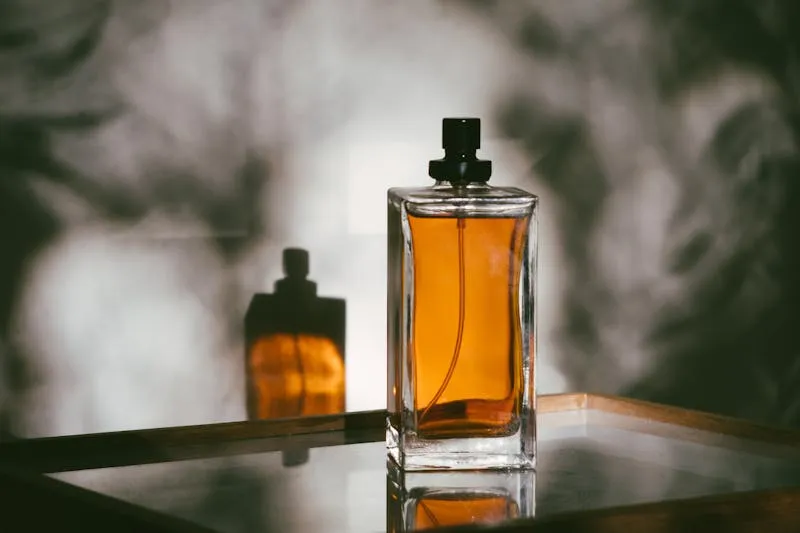
This mechanism also explains why the same perfume can smell completely different on two people. Your skin chemistry — pH, acidity, hydration — particularly affects how base notes develop. It's not a marketing myth: it's real biochemistry.
How to test a perfume properly
Here's the protocol I follow every time — and it's saved me from dozens of regrettable purchases.
Rule 1: maximum three or four fragrances per session. Your olfactory system saturates after four or five scents. Beyond that, you can't distinguish anything accurately. Want to test more? Come back another day.
Rule 2: blotters first, then skin. Blotter strips let you quickly eliminate what you clearly don't like. But the real test is always on your skin. Ask for a sample sachet, or spray on the inner wrist.
Rule 3: no more than two spots on skin. Left wrist, right wrist. No more. Otherwise everything blends together and you can't evaluate anything properly.
Rule 4: wait 20 to 30 minutes before judging. Go and look around the shop. Browse the other counters. Then come back and smell. A fragrance that seemed unremarkable at first can become extraordinary once the base notes develop.
Rule 5: smell coffee beans between tests. The classic palate-cleanser. It genuinely works — it resets your nose between fragrances. Not a luxury gimmick.

Rule 6: ask for a sample before committing. Any serious perfumer — from Liberty to Les Senteurs to your local independent — will offer samples. Wear the fragrance for 48 hours in your actual life: to the office, on the Tube, after the gym. Only then will you know if it holds, if it evolves nicely, and if you still love it at the end of the day.
EDT, EDP, parfum: what's the difference?
This is one of the most frequently asked questions, and one that gets muddled most often. The concentration of fragrant materials changes everything — the longevity, intensity, price, and even how the scent evolves on your skin.
Eau de Cologne (EDC): 2 to 5% fragrant materials. Light, fresh, lasts one to two hours. Great for post-sport or post-shower use. No depth, no sillage — just a flash of freshness.
Eau de Toilette (EDT): 5 to 15% fragrant materials. The most widely sold format. Lasts three to five hours, moderate sillage. Perfect for everyday wear and active days. Top notes are very prominent — an EDT will feel "lighter" than the EDP version of the same fragrance.
Eau de Parfum (EDP): 15 to 20% fragrant materials. Denser, warmer, longer-lasting (five to eight hours). Base notes come through far more strongly. If you want a fragrance that genuinely leaves a trail, go EDP.
Parfum / Extrait: 20 to 40% fragrant materials. The most concentrated and expensive format. Lasts 12 to 24 hours. Apply sparingly — two pulse points, no more. For evenings, special occasions, and those who want a powerful but discreet sillage.
Your skin type changes everything
Here's what fragrance counter staff don't always tell you: perfume doesn't behave the same way on every skin type, and that's nothing to do with the quality of the fragrance.
Oily skin: Fragrance lasts longer and projects more. Oily skin retains fragrant molecules beautifully. Counterintuitively, people with oily skin can wear lighter fragrances (fresh EDTs) and make them last. A genuine advantage.
Dry skin: Fragrance evaporates faster. If this is you: moisturise before applying (a neutral body lotion or shea butter), go for higher concentrations (EDP rather than EDT), and lean towards oriental or woody families — they cling better to dry skin.
Acidic skin (low pH): Floral notes can turn. A floral that smells beautiful on your friend might develop a slightly off note on you. This isn't in your head — it's genuine biochemistry. Testing on your skin for at least an hour is even more critical if you have acidic skin.
Choosing by season
This isn't an absolute rule — plenty of people wear their signature scent year-round, and that's perfectly valid. But heat genuinely amplifies fragrant materials, and cold can suppress them. A fragrance that's discrete and lovely in winter can become overwhelming on a hot August day.
Spring: Light florals (peony, freesia, lilac), clean citruses, some green notes. The best time to test new fragrances — moderate temperatures give the most neutral evaluation conditions.
Summer: Fresh and aquatic, pure citruses, aromatic (basil, mint), light florals. Avoid heavy orientals — heat amplifies them to the point of being suffocating. If you want a warm fragrance in summer, choose EDT and apply sparingly.
Autumn: Woody, soft spice (cinnamon, cardamom), chypres. The changing light and cooler air welcome deeper fragrances. Many people find their signature scent in autumn — the conditions are perfect for orientals. British perfumer Miller Harris does particularly beautiful autumnal blends.
Winter: Full orientals — vanilla, amber, warm musks, resins, oud. Base notes come through magnificently in cold air. This is the season for extraits and concentrated EDPs. A fragrance you found too heavy in March can become perfect in December.
Five classic mistakes to avoid
Mistake 1: rubbing your wrists together. Everyone does it. Everyone's wrong. Rubbing breaks the more delicate molecules — the ones that form your heart notes. Dab gently or let it dry in the air.
Mistake 2: testing too many fragrances at once. After four fragrances, your nose is saturated. Everything after that is meaningless. Come back another day.
Mistake 3: buying on immediate infatuation. The fragrance that utterly fascinates you in the first seconds is often the one you'll grow tired of in three weeks. Fragrances that seem unremarkable at first but evolve beautifully on your skin tend to become lasting signatures.
Mistake 4: over-spraying. A fragrance is applied at pulse points and in a light layer. Three sprays maximum for an EDP; two for a parfum extrait. Surrounding yourself in a cloud of eight jets is the fastest way to make everyone around you uncomfortable — and to distort how the fragrance actually smells.
Mistake 5: concluding a fragrance "doesn't last". Sometimes a fragrance seems to disappear on you — not because it's low quality, but because your nose has adapted to it and stopped registering it (olfactory adaptation). The people around you can almost certainly still smell it. Before declaring it has no staying power, ask someone near you if they can smell it.
What to spend on a good perfume
Direct question, direct answer: between £45 and £100 for a fragrance with decent projection, longevity, and proper formulation. Below £35 (outside sale periods), formulas are often heavily diluted or rely on low-grade synthetics that turn slightly sharp after a couple of hours.
But "more expensive = better" is a myth. At £200 a bottle, you're paying for packaging, advertising, the designer bottle, and brand prestige. The raw materials in a mainstream fragrance at that price point are not necessarily better than those in a niche perfume at £90 — and often inferior to what you'll find at a quality independent perfumer.
The sweet spot for beginners: £50 to £80 for an EDT or EDP from a serious house (Guerlain, Chanel, Hermès, Jo Malone, Penhaligon's). To go further, explore niche between £70 and £150 with houses like Diptyque, Maison Margiela Replica, L'Artisan Parfumeur, or British-born Ormonde Jayne.
How to store your perfume
A poorly stored perfume loses its quality within months. Fragrant materials are sensitive to three enemies: light, heat, and air.
Light: UV rays and direct sunlight oxidise the molecules and destroy top notes first. Never place a bottle on a windowsill, even a beautiful one. A brightly lit bathroom shelf is also not ideal — which catches many people out.
Heat: Above 25°C for extended periods, fragrances degrade. The steam-filled bathroom, the top of a radiator, a car in summer — all places to avoid entirely. A drawer in a bedroom maintained at consistent temperature is ideal.
Air: Every use allows a little air into the bottle. This accelerates oxidation. Opaque bottles with pumps protect better than those with screw caps. For small bottles that you use rarely: transfer into an even smaller container to minimise air space.
Frequently asked questions
How do I know if a perfume suits me before buying?
The only real test: on your skin, for at least an hour. Blotter strips give you a sense of the top notes, but they tell you nothing about how a fragrance will evolve with your specific skin chemistry. Always ask for a sample to take away. If the shop doesn't have samples (rare for a reputable perfumer), spray on your inner wrist and go away for 30 minutes. Only buy if you still love it after that half-hour.
Why does my perfume disappear quickly on me?
Several possible reasons: dry skin (moisturise before applying), concentration too low (move to EDP), fragrance family poorly suited to your skin chemistry. But often it's olfactory adaptation — your nose has adjusted to the scent and stopped registering it, while everyone around you can still smell it clearly. Before writing it off, ask someone nearby if they can smell it on you.
Can I mix two perfumes together?
Yes — it's actually a strong trend in modern perfumery, called layering. The basic rule: look for a shared base note (e.g. vanilla) between the two fragrances, or a logical progression (light floral + warm oriental). Our Mademoiselle Bulle article on perfume layering covers everything you need to do this well without it going sideways.
Are unisex fragrances genuinely gender-neutral?
The "unisex" label covers very different realities. Some so-called unisex fragrances are simply neutral woody aquatics. Others — Maison Margiela Replica, Le Labo, many Byredo releases — are genuinely designed to dissolve gender codes. What reads as "masculine" or "feminine" is largely cultural anyway: in the UK, fougères are "for men"; in the Middle East, men routinely wear opulent florals. Wear what makes you feel right. That's the only rule that matters.
What's the difference between niche and luxury perfume?
Luxury perfume (Chanel, Dior, YSL) is produced at scale with significant commercial constraints — maximum mass appeal, standardised raw materials, vast marketing budgets. Niche perfume (Serge Lutens, By Kilian, Frédéric Malle) is produced in small batches, often with rare raw materials, without the pressure of immediate commercial return. The result: more olfactory risk-taking, fewer compromises. But "niche" doesn't automatically mean "better" — nor that you'll love it.
How do I choose a perfume as a gift?
Rule 1: if you have no idea what they like, a miniature discovery set or a gift card at an independent perfumer (Les Senteurs, Penhaligon's, Liberty's fragrance hall) is always safe. Rule 2: if you know their rough taste, identify the fragrance family of what they already wear — then look for something in the same family but different. Rule 3: describe the person to the sales assistant rather than asking "what do you recommend for a woman?" A good perfumer will ask the right questions.
Are supermarket fragrances actually bad?
Not necessarily "bad" — but formulated to be inoffensive rather than remarkable. They smell pleasant for the first 30 minutes, then fade or turn slightly synthetic. For low-stakes everyday use, that's fine. But if you want a fragrance that genuinely defines you and creates an olfactory impression, you'll need to look elsewhere.
Is there an age for certain fragrances?
No. That's a marketing construct. The only practical consideration: very heavy orientals and full-strength ouds can feel overpowering if you're still working out your style. If you're new to perfume, start with lighter families to develop your taste, then move into the more complex ones once you know what you love. Penhaligon's in London offer a particularly lovely consultation service for exactly this kind of exploration.
Sources
- Fragrantica — Fragrance encyclopedia and community reviews
- British Fragrance Association — Industry standards and consumer guidance
- PubMed — Olfactory memory and limbic system research
- IFRA — International Fragrance Association (standards and safety)
- Les Senteurs — Independent London perfumer since 1984