Saturday, 10.20am. I unscrewed the cap on a tube of sunscreen that had survived last summer, and the smell got to me before the texture did. Coconut gone sour — somewhere between rancid butter and a snuffed-out candle. Then the cream itself: first a thin trickle of clear oil, then little white lumps, like cottage cheese forgotten at the back of the fridge. My cat — stretched out on the bath mat — got up and left the room (the cat has standards).
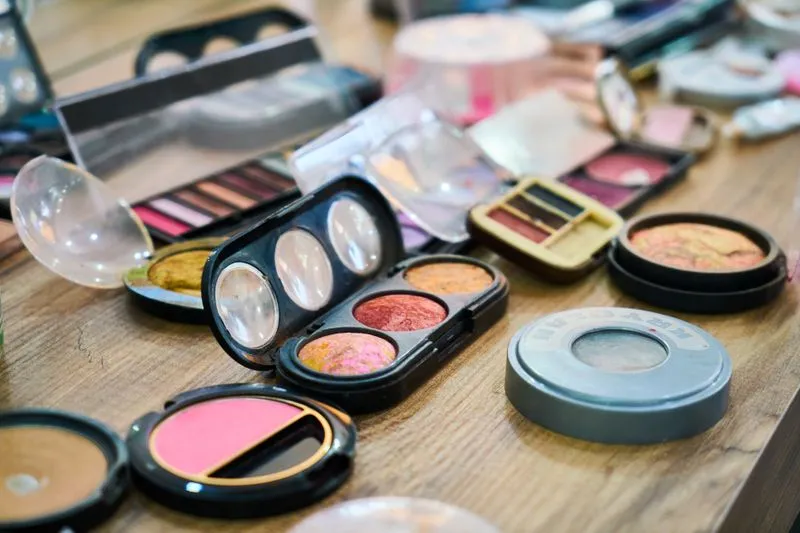
It was spring-clean day in the bathroom of my Hackney flat. The windowless one — where the steam from the shower takes a good half hour to clear. I lined everything up on the tiles. Four opened mascaras — one of which went "pfft" every time I pumped it. Two foundations. A pot of moisturiser opened at Christmas. Seven serum samples (three of them already torn open). A lip gloss as sticky as set honey. And a lipstick bought for a wedding in 2019. Yes — the same wedding as the dress I never wore again (at least the dress doesn't smell). The result: 31 products on the floor (I counted), 14 in the bin bag.
We keep everything because binning something half-full feels like binning money — especially on a tight budget. But a cosmetic isn't a tin of beans — the moment you open it, a countdown starts. This guide shows you how to read that countdown on the pack, product by product. And how to spot the signs that don't lie (the ones your nose and fingers pick up before any label does). If you've just sorted out the steps of your beauty routine in the right order, this is the perfect moment to check that every bottle in the queue still deserves its place.
Open jar or date: how do you read a cosmetic's shelf life?
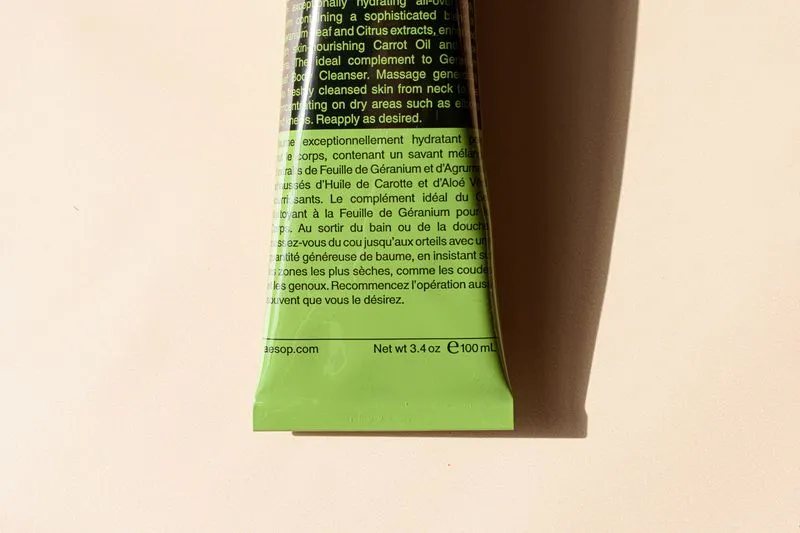
A cosmetic's shelf life appears in one of two ways, and its stability decides which. A product that keeps for less than 30 months carries a date. A product that lasts longer carries a small drawing of an open jar instead, with a number and the letter M. This isn't a marketing habit — it's the law. Article 19 of the cosmetics regulation, as published on legislation.gov.uk, sets it out. Products with a minimum durability of more than 30 months don't need a date. Instead, they must show "the period of time after opening for which the product is safe and can be used without any harm to the consumer".
That regulation started life as EU law. When the UK left the EU, legislation.gov.uk published it along with the rest of EU legislation. It keeps the text up to date with any amendments the UK has made since. So whether you bought your mascara at Boots or at a pharmacy in Paris, the open jar means the same thing.
Case one: the date. It follows the words "best used before the end of" or a small egg timer symbol, with the month and year (or day, month and year). It's the date until which the product (stored properly) keeps doing what it promised. You'll mostly see it on fragile formulas that won't last two and a half years.
Case two, by far the most common in a make-up bag: the period after opening, or PAO. "12M" means twelve months (so "6M" is six, and "24M" is two years). What matters is when the clock starts — from the first time you open the product, not from the day you paid for it.
Some products show neither a date nor a jar, and that's normal. The Cosmetic, Toiletry and Perfumery Association (CTPA), the UK industry body, explains that they won't deteriorate in normal use: aerosols, which are effectively sealed, perfumes, thanks to their high alcohol content, and single-use packs such as sachets. And "no open jar" doesn't mean "immortal".
Why opened products go off (and why mascara goes first)
An opened cosmetic goes off mainly because of microbes you put there yourself. Every time you dip in a finger, a brush or an applicator, you leave a little of your skin's own bacteria behind (you can't see it, but it's there). The preservatives in the formula keep those intruders in check, but not forever. The Aston University team that analysed hundreds of used make-up products explains that a cosmetic's expiry date is set by how long its preservatives can keep contamination under control.
The same researchers point out that water-rich cosmetics are more at risk of microbial growth once everyday use has contaminated them. And the rules are stricter around the eyes. Under the EU guidance they cite, a product applied around the eye area should contain no more than 100 colony-forming units of aerobic microorganisms per millilitre. For other cosmetics, the limit is 1,000.
Put those together and mascara ticks every box. It's liquid. It's touched with every stroke, it lives in a closed, dark tube — and it's applied right at the edge of your eye. No wonder it has the shortest life in your bag.
Sunscreen is the odd one out. With SPF, the problem isn't only bacteria — it's whether the product still does its job. In the regulation, the date is the one until which the product "will continue to fulfil its initial function". For a sunscreen, that function is protecting your skin.
When should you bin each product in your bathroom?
This table sums up, product by product, how long it keeps once opened, why, and the signs that should send it straight to the bin. The basic rule never changes. The number on the open jar (or the date) is the limit — and anything that has changed in look or smell goes early, even if its date hasn't passed.
For foundation, lipstick or moisturiser, there's no single lifespan: the number depends on the formula and the packaging, and two products of the same type can carry different ones. According to the Aston researchers, the symbol shows 3M, 6M, 12M, 18M, 24M or 36M, and most products have an expiry date of 3 to 12 months. For mascara and sunscreen, UK bodies give a benchmark, and it's in the table.
| Product | How long once opened | Why | The signs that say "bin it" |
|---|---|---|---|
| Mascara, liquid eyeliner | Around 3 months (College of Optometrists) | Eye area = strictest limits; the wand goes back into the tube | Odd smell, texture that flakes or goes stringy, stinging eyes, any eye infection |
| Liquid foundation, concealer | The number on its open jar, which varies by formula | Water-rich formulas, more fragile | Layers separating, colour turning, marks on the surface, strange smell |
| Powders, eyeshadows, pressed blush | The number on its open jar | Water-free formulas, less welcoming to microbes | Hard, shiny crust on top, marks, smell |
| Lipstick, gloss | The number on its open jar | Direct contact with your mouth | Rancid or old-crayon smell, texture that has changed |
| Moisturiser in a jar | The number on its open jar | The least protective packaging (fingers go in) | Colour, smell, beads of water, marks |
| Tube or pump moisturiser, serum | The number on its open jar | Better-protected packaging | Same signs, usually later |
| Sunscreen | Its date or open jar; a nearly full, well-stored pack can go on until the following season (CTPA) | Whether it still protects; heat damages it | Oil separating, lumps, discolouration, unpleasant smell |
| Perfume | Often no open jar | Won't deteriorate in normal use, thanks to its high alcohol content (CTPA) | Smell that has turned, darker colour: a question of pleasure, not safety |
| Sponges, brushes | No number | Washing decides | Marks, smell, a sponge that hit the floor and never got washed |
For sunscreen, the CTPA spells out the checklist that works for everything else too: bin a product that has become discoloured, has an unpleasant odour or doesn't look like it should. Your nose is your best quality-control tool — it was there long before the label.
Mascara and eyeliner: three months, and never borrowed
Mascara has the shortest life in your make-up bag: around three months once opened. That's not a magazine number. Look After Your Eyes — the public website of the College of Optometrists — puts it in writing: mascaras and eyeliners have the shortest shelf life – usually around three months. Out-of-date mascara, it adds, could be home to bacteria that cause an infection such as blepharitis (inflamed eyelid edges), or something more serious that could threaten your sight.
The wand goes back and forth between your lashes and the tube several times a day (every coat, every touch-up). Each trip carries back a little of what it touched, into a damp, closed, dark space. And pumping the wand like a bicycle pump pushes air in: the mascara dries out faster, so you pump harder to "wake it up". My "pfft" mascara? Opened in September, by my maths. Seven months. It was the first to go.
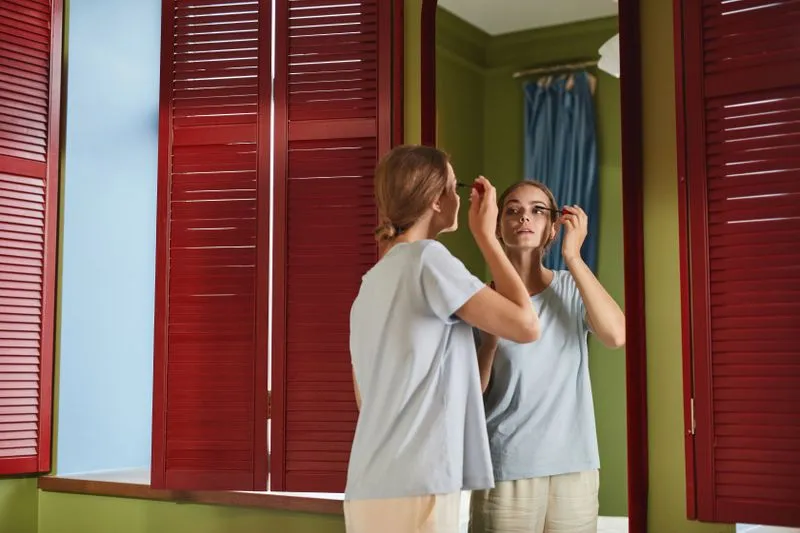
Sharing is the other trap. The same site warns against borrowing a friend's mascara or eyeliner: if she has conjunctivitis or another infection that can be passed on, you could end up with it too. Shop testers are the same problem on a much bigger scale. The Aston researchers note that testers are commonly not cleaned regularly and are left exposed to every passing customer who touches and tries them.
Foundation and concealer: the signs that don't lie
You check a liquid foundation with your eyes and nose more than with the calendar. These formulas contain water, which puts them among the products most at risk once contamination starts. The first sign I spot is separation. A thin oily layer rising to the top, or pigment settling at the bottom that won't mix back in — even after a good shake. Then comes the colour shift (often towards orange) — and a smell that wasn't there at the start.
My Luminous Silk — the foundation I rebuy on repeat — has had its opening date written in marker on the bottom since that Saturday. At the start of summer, I mix it with a drop of liquid bronzer to follow my tan. I always do that mix in the palm of my hand — never in the bottle. Pouring one product into another means handing it whatever the other one contains (and juggling two opening dates at once).
Doe-foot concealers (the ones with a spongy tip) deserve a bit more suspicion. The applicator goes from your skin to the tube, then back to your skin, exactly like a mascara wand — and even closer to the eye. If yours is past the number on its open jar, smells odd or has changed colour, stop making excuses for it.
Lipstick and gloss: hygiene matters more than the date
With lipstick, how you use it matters as much as how old it is. The Aston study analysed 467 used make-up products donated by users in the UK. The haul: 96 lipsticks, 107 lip glosses, 93 mascaras, 92 eyeliners and 79 make-up sponges. In the lipsticks and glosses (and the sponges), the researchers found several species of Pseudomonas — opportunistic bacteria capable of causing significant infections, particularly in people with weakened immune systems.
Sharing is the first habit to drop. The full Aston paper notes that sharing make-up greatly increases contamination in shop testers, through more use and more pressure on the preservatives. The lipstick that goes round the table at the end of a night out, the friend who "just borrows a bit of gloss" in the loos of a bar — no.
And my 2019 wedding lipstick? It smelt of old wax crayon — with a faintly rancid note underneath. A lipstick is mostly oils and waxes, and the smell usually gives an old bullet away before the look does. Mine had spent more than five years in a warm drawer. I binned it without a tear (well, almost).
Creams and serums: does a jar or a pump make a difference?
A moisturiser in a jar is more exposed than one in a tube or pump. The Aston researchers concluded that significant contamination occurs during use, and a jar you dip your fingers into morning and night gets a lot of use. A pump delivers the dose without anything going back in; a tube keeps most of the product sealed away from the air.
Two small habits make a big difference: clean hands before you touch the product, and a lid screwed firmly back on afterwards (every single time). Sounds obvious. Except we all open a pot of cream in the morning with fingers still wet from the shower, thinking about something else entirely.
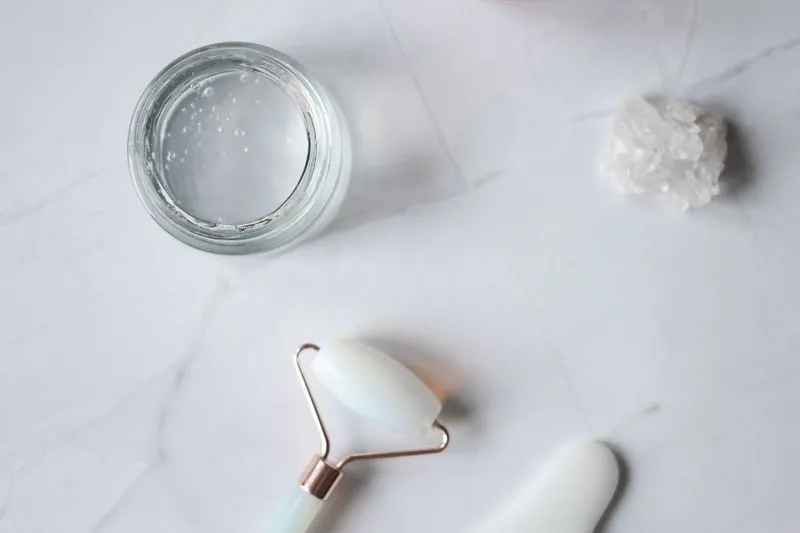
Serums in dropper bottles sit somewhere in between. The dropper should never touch your skin: drip the serum into your palm or onto your fingertips, then apply. My The Ordinary HA 2% + B5 now has a little "11/24" written on the bottom in marker. I layer it before La Roche-Posay's Hyalu B5 (both feature in the guide to hyaluronic acid in skincare).
Then there are samples — the real treasure of a small budget. Single-use sachets are designed to be used once — which is exactly why they don't carry an open jar. A torn sachet folded over with a hair clip "for next time" comes with no guarantee at all. I had three in the drawer. Straight in the bin.
Last summer's sunscreen: keep it or bin it?
A sunscreen opened last summer is only worth keeping on three conditions. It's within its date or open jar, it has been stored properly — and it hasn't changed in look or smell. The NHS guidance on sunscreen and sun safety says to make sure the sunscreen is not past its expiry date.
The CTPA, on its page on whether you can have confidence in sunscreens, goes further. Sunscreen should be kept in a cool, dry place, away from direct sunlight, with the lid firmly closed. It shouldn't go through repeated extreme changes in temperature either (its example: from the fridge to the car's parcel shelf). Products used extensively on a beach, or left open for a length of time, should generally be discarded after the holiday. Nearly full packs stored correctly may be kept until the following season — but small amounts left at the bottom should go.
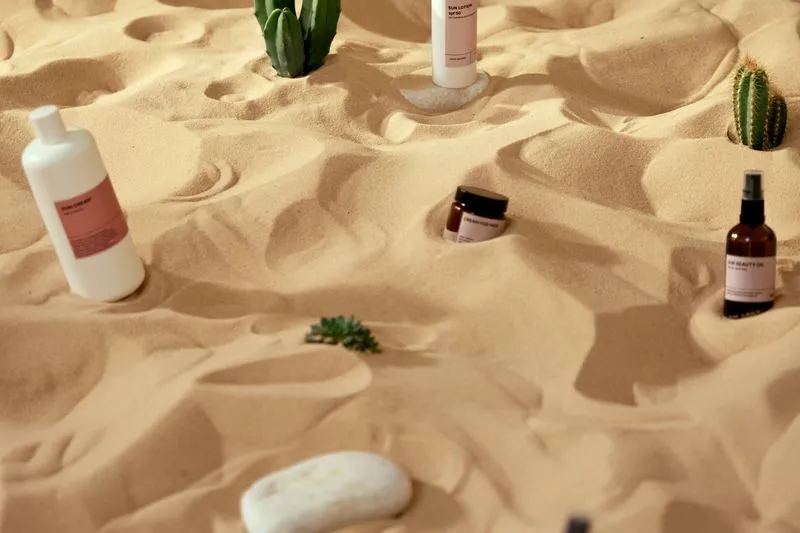
My Saturday-morning tube (separated oil, lumps) left no room for doubt. A nearly full tube that spent the winter in a cupboard, lid on, with a normal texture and smell and a date or open jar still valid? You can finish it at the start of the season without guilt. Still unsure? Buy a new one. A bottle of sunscreen costs less than a sunburn — and far less than what a sunburn leaves behind.
Perfume: no date required, but it can still turn
Your perfume probably has no open jar, and that's by design. The regulation only requires one where durability after opening is relevant. And the CTPA explains that perfumes, with their high alcohol content, won't deteriorate in normal use. A perfume doesn't become risky with age the way an old mascara can.
It can turn, though, and that's about pleasure rather than safety. In Saturday's drawer there was an eau de toilette (a gift from years ago) that I'd never really loved. The fresh opening had vanished — leaving a flat smell with a hint of nail varnish. Nothing harmful — just nothing like the original. The signs to look out for are the same as for any cosmetic: an unpleasant smell when you open it, a colour that has darkened.
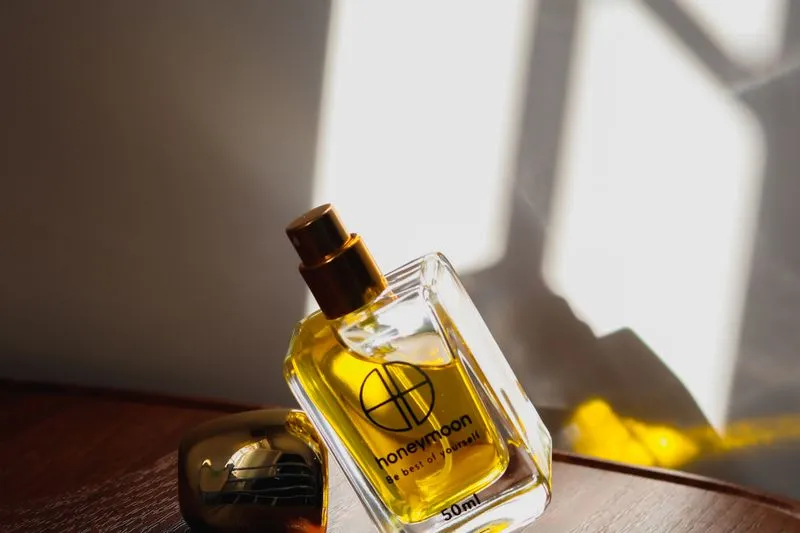
My Shalimar, which I've worn since I was 22, has never turned. I think I know why — it lives in its box, in a bedroom drawer, never on the bathroom shelf. The storage rules the CTPA gives for sunscreen — cool, dry, out of direct sunlight, no wild swings in temperature — are the ones I apply to every bottle. A windowless bathroom that goes from chilly to tropical with every shower is a fine demonstration of what not to do.
Sponges and brushes: the real bacteria hotspot in your bag
The dirtiest thing in your make-up bag doesn't have an expiry date. It's your sponge. In Aston University's microbiological study of used cosmetic products, 79 to 90% of the products analysed were contaminated with bacteria. But the sponges were in a league of their own — an average of more than a million colony-forming units per millilitre, against a hundred to a thousand for the other products.
The EU guidance the researchers cite caps eye products at 100 colony-forming units per millilitre and other cosmetics at 1,000: that's the gap. And the way sponges are really used explains the rest. In the study, 93% had never been cleaned, and 64% had been dropped on the floor and then used again. Fungi turned up in 56.96% of the sponges, and Enterobacteriaceae (the family E. coli belongs to) in 26.58%.
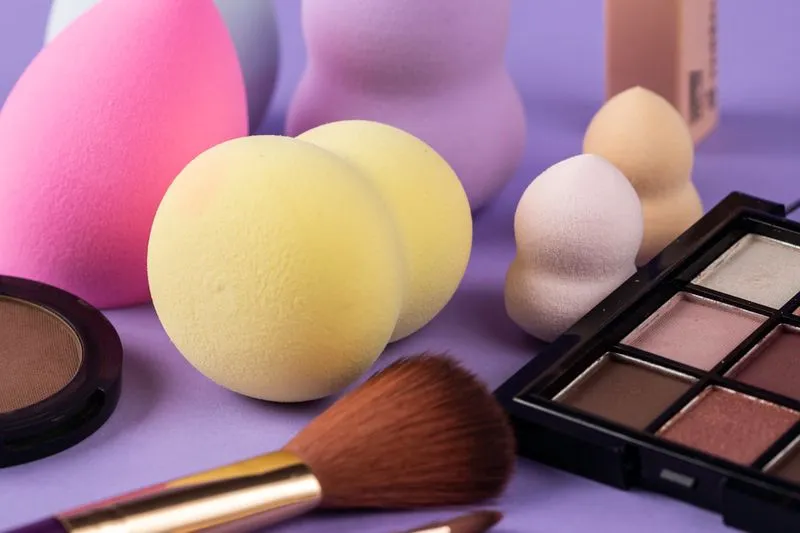
A damp sponge zipped into a make-up bag at the back of a warm bathroom combines water and warmth — precisely what microbes are looking for. I binned two sponges on Saturday, including one I had definitely picked up off the tiles (we've all been there, haven't we?).
Where should you keep your cosmetics so they last?
The bathroom is rarely the best place to store cosmetics, and yet it's where we pile them all. The storage advice the CTPA gives for sunscreen — cool, dry, out of direct sunlight, lids firmly on, no repeated extremes of temperature — describes the opposite of a shelf that gets steamed twice a day.
Here's the storage system that survived my big clear-out.
- In the bathroom: only what you use every day, lids on, away from the shower.
- In the bedroom: perfume in its box, sealed spares, the special-occasion make-up.
- Never in the sun: not on a windowsill, not in the car, not on the radiator.
- One open product per category: one mascara, one foundation, one day cream. The rest wait, sealed.
The real secret on a small budget is buying less, and smaller. A mini you finish in three months costs you less, in the end, than a big bottle you throw half of away (even if the price per millilitre looks worse). A 3-for-2 is only a bargain if the other two stay sealed. And use samples within the week instead of collecting them. Tonight, open your drawer, grab a marker and date everything that's been opened. In three months, you'll thank me (and so will your cat, if it has standards).
Frequently asked questions
Is it dangerous to use expired make-up?
Not necessarily, but the risk is real and it's mostly microbial. The Aston study found contamination in 79 to 90% of used products, including bacteria capable of causing infections. Around the eyes, out-of-date mascara can lead to infections such as blepharitis, according to the College of Optometrists. With sunscreen, there's the added problem that it may no longer protect as labelled.
Does the period after opening start from when I buy the product?
No. The PAO counts from the first time you open and use the product. A mascara bought in January and opened in April starts its countdown in April. That's why it's worth writing the date in marker the day you open it.
Can an unopened product go off?
Yes, but slowly if you store it well. A product with an open jar symbol and no date has a minimum durability of more than 30 months — that's the condition for showing the jar instead of a date. If it carries a "best used before the end of" date, stick to it even if it's sealed. And if it spent the summer in a hot car, be wary.
How long does an opened foundation last?
As long as the number on its open jar: the figure followed by an M on the bottle or its box, which varies from one formula to another. According to the Aston researchers, most products have an expiry date of 3 to 12 months. Before that, a foundation still goes if it separates, changes colour or smells odd.
Why doesn't my perfume have an open jar symbol?
Because the rules don't require one where durability after opening isn't relevant, and the CTPA says perfumes, with their high alcohol content, won't deteriorate in normal use. A perfume can still turn (flat or sour smell, darker colour), but that's a question of pleasure, not safety.
Can I keep my mascara longer than three months if it still seems fine?
I wouldn't. The College of Optometrists puts mascara's shelf life at usually around three months and says not to hang on to it, even if it was an expensive gift. A mascara that looks fine can still harbour bacteria: you can't see them.
Should I throw away my eye make-up after an eye infection?
The NHS doesn't tell you to bin it: its blepharitis advice is not to use eye make-up, especially eyeliner and mascara, while you have symptoms. Once you've recovered, starting a fresh mascara is my own rule of thumb — and never share eye products with someone who has an infection, as the College of Optometrists warns.
How long do samples keep?
Single-use sachets are designed for one use, which is why they don't show a period after opening. A torn sachet doesn't keep. Mini bottles with a proper cap follow the same rule as full sizes: check the open jar and write down the date you opened them.
Sources
- legislation.gov.uk — Regulation (EC) No 1223/2009 on cosmetic products, Article 19 (labelling)
- CTPA (thefactsabout.co.uk) — What does my label mean?
- CTPA (thefactsabout.co.uk) — Should I have confidence in sunscreens?
- NHS — Sunscreen and sun safety
- NHS — Blepharitis
- College of Optometrists (Look After Your Eyes) — Eye make-up
- Bashir and Lambert, Aston University — Microbiological study of used cosmetic products (Journal of Applied Microbiology)