Three weeks. That's how long your "100% natural" shampoo bar took to turn your lengths into waxy strands that cling to your fingers when you step out of the shower. Second line of its INCI list: sodium cocoate. And the "organic BB cream" leaves your cheek feeling tight by lunchtime.
So is organic beauty just marketing with a pretty leaf on the label? The short answer: an organic label guarantees where the ingredients come from, not what they do on your skin. Some natural actives have solid evidence behind them. Others live off their packaging. Tomorrow is Earth Day, and the beauty aisles at Boots are about to turn very green indeed.
Organic and natural: they're not the same thing
"Organic" and "natural" don't guarantee the same thing — and brands love to blur the two.
"Natural" is not a regulated term for cosmetics in the UK, and neither is "organic". As the Soil Association's guide to organic vs natural beauty explains, organic food and drink products must by law contain at least 95 percent certified organic ingredients, but that isn't the case for cosmetics. The same page gives a striking example: a product can be labelled natural "even if only 1 percent of its ingredients come from natural sources".
"Organic", on the other hand, can correspond to a real certification — provided there's an actual label to back it up. In the words of the Soil Association's explainer on organic beauty, "Unless a product is certified, there's no guarantee that it will be 100 percent organic." One detail that surprises people: clay, salt and water can't be certified organic. That's why natural certification exists mainly for toners, bath salts and face masks, the Soil Association explains.
"98% natural origin" formulas — you've seen them everywhere. But what does that mean in practice? It means 98% of ingredients are of natural or naturally derived origin. The remaining 2% might be synthetic preservatives, colourants or stabilisers. And those 2%, depending on what they are, can be either completely harmless or precisely the elements your skin reacts to.
What an organic label guarantees, and what it doesn't
A third-party label guarantees the composition and origin of the ingredients, checked by a body independent of the brand — not efficacy. Behind the logo sit a published standard, audits and traceable raw materials. None of it measures what the cream does on your skin.
COSMOS is the shared standard created by five European bodies: BDIH (Germany), Cosmebio and Ecocert (France), ICEA (Italy) and the Soil Association (UK). According to the COSMOS standard, version 4.1 of March 2024, more than 95% of the physically processed agricultural ingredients (oils, butters, extracts) in a COSMOS Organic product must be organic, and at least 20% of the total product — 10% for rinse-off products, non-emulsified water-based products and products that are at least 80% minerals. COSMOS Natural sets no organic minimum but applies the same rules on ingredients and processes.
In the UK, the one to look for is the Soil Association's COSMOS logo. With a symbol from an independent certifier, says the Soil Association, "You'll then know that every step of the production process is checked." NATRUE is the other third-party label you'll come across, with its own published criteria.
What none of these logos promises: that a serum fades a mark, that one cream hydrates better than another, or that your skin will tolerate it. The standards cover ingredients and processes, not results. To choose among certified products, I've gone through certified organic picks, category by category; to compare these logos with the ones on your food (EU organic, Demeter, the Soil Association), the complete guide to organic labels takes them one by one.
Star natural ingredients: what each one does
Jojoba, rosehip, aloe vera and shea each have a documented use, narrower than their reputation. "Natural" hyaluronic acid, meanwhile, comes out of a fermentation tank.
Jojoba oil
The one Instagram presented as the answer to all your skin problems. Jojoba oil is technically a liquid wax, made mostly of wax esters. A 2017 review of plant oils applied to the skin describes it, for exactly that reason, as a good repair option for a damaged skin barrier (seborrhoeic dermatitis, eczema, acne). Its light texture suits combination skin. For very dry skin, pair it with a richer butter or oil. It's a good ingredient. It's not a miracle.
Rosehip oil
Its main fatty acid is linoleic acid (between 35.9% and 54.8%, according to the same review), followed by alpha-linolenic acid. The authors credit it with good protection against inflammation and oxidative stress. On dry or mature skin, as an evening treatment, it's an oil I recommend without hesitation. It won't replace a proven anti-ageing active such as retinol, but it nourishes without leaving a greasy film.
Aloe vera
A classic — and for once, the clinical trials back it up. The NCCIH, the US research centre for complementary medicine, sums it up: applied to the skin, aloe gel may speed up burn healing and reduce burn-related pain. It's generally well tolerated, with occasional reports of burning, itching, rash and eczema.
Shea butter
Unrefined shea butter (raw, yellow or beige) is a go-to for dry patches: elbows, heels, hair ends. It's made of triglycerides of oleic, stearic, linoleic and palmitic acids, plus unsaponifiable compounds, and the 2017 review credits it with an anti-inflammatory effect. The refined version (white, odourless) is simply more neutral to use — it's a matter of taste.
"Natural" hyaluronic acid
You may have seen it marketed as a natural ingredient. Except the hyaluronic acid in your serum doesn't come from a plant. Once extracted from rooster combs, it's now mostly produced by bacterial fermentation, using strains such as Streptococcus zooepidemicus, as a 2023 review in the journal Molecules explains. That's biotechnology. The active is still useful — I've covered what hyaluronic acid really does for your skin — but the "natural" claim is a bit of a stretch.
The hair transition: what's really behind waxy hair
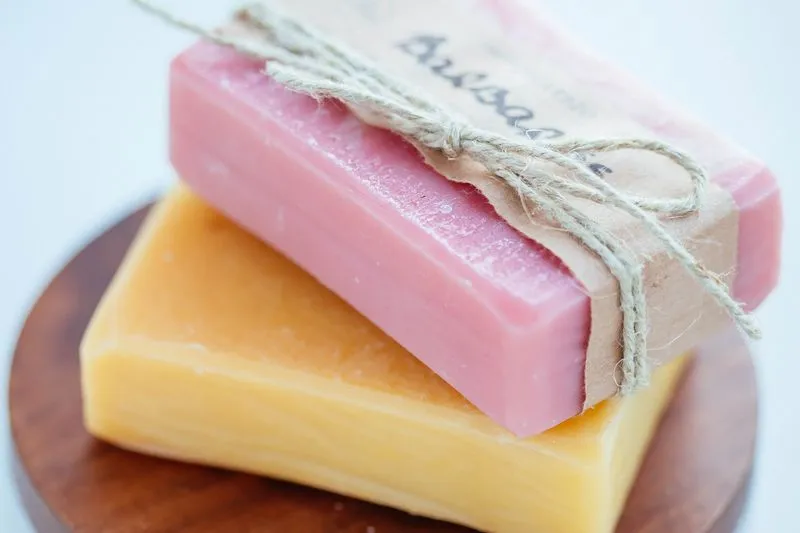
No study measures the famous "hair transition": heavy, waxy hair after switching to a shampoo bar mostly comes from soap in hard water. If that's you, you're not alone — the phenomenon even has a name on forums and social media.
The explanation doing the rounds: your scalp, used to being stripped by powerful surfactants (SLS, SLES), overproduces sebum and takes weeks to calm down. It's a neat story, but I couldn't find a single study measuring this rebound. I passed it on myself in my buying guide to certified organic cosmetics, where I talked about two to six weeks of rebalancing; going back to the sources, I couldn't find it. A 2015 review of shampoos in the Indian Journal of Dermatology also notes that frequent washing with a well-formulated shampoo won't damage the hair.
What is documented is the soap-and-hard-water combination. Many shampoo bars are soaps: on the INCI list, you'll see names like "sodium cocoate" or "sodium olivate". According to a 2015 review of hair cosmetics in the International Journal of Trichology, soap leaves an alkaline residue that precipitates as calcium salts and builds up on the hair, leaving it dull and tangled. The heavy, waxy hair of the "transition" looks very much like that. A soap-free bar, formulated with surfactants, avoids this mechanism.
The result: if your hair turns dull, sticky or waxy on a shampoo bar, it isn't a phase to sit out. It's the formula, or your water, especially in a hard-water area.
If this happens to you:
- Read the INCI list: if it starts with "sodium …ate" ingredients and your water is hard, switch formulas rather than persevering.
- Rinse with lightly diluted cider vinegar: it helps bring the pH back to acidic after an alkaline soap.
- Avoid very rich masks, which will weigh down hair already coated in residue.
Sensitive skin and organic cosmetics: friend or foe?
The essential oils and botanical extracts that scent many organic formulas are precisely what can irritate reactive skin. People with sensitive skin often turn to organic products thinking they'll be gentler: sometimes that's true, sometimes it's the opposite. Lavender, tea tree, eucalyptus, menthol, citrus: all natural, all common in natural beauty.
Some of these molecules have a reserved spot on the label. Under Annex III of the UK Cosmetics Regulation, fragrance allergens such as linalool (found in lavender), limonene (citrus) and geraniol (geranium, rose) have to be named. The threshold: a concentration above 0.001% in leave-on products and 0.01% in rinse-off products. A certified organic product can therefore contain several declared allergens — and still irritate sensitive skin.
For sensitive skin, natural cosmetics can absolutely work — but only if you choose stripped-back formulas, free from essential oils. Look for ingredients known to be well tolerated (centella asiatica, colloidal oatmeal, pure aloe vera, plant-derived panthenol).
Natural doesn't mean safe
The toxicity of a substance doesn't depend on whether it's natural or synthetic. It depends on its concentration, its form, how it's applied, and the person using it.
Concrete examples:
Camphor — natural, extracted from the camphor tree. A 2019 paediatric case series in the Pan African Medical Journal reminds us it can cause nausea, hallucinations and seizures. It can do so after ingestion, inhalation or simple skin contact — with babies absorbing more through the skin than adults do.
Lead — 100% natural. The UK Health Security Agency's advice on lead warns that traditional eye cosmetics such as kohl, kajal and surma "often contain high levels of lead", sometimes more than half their weight. Lead and its compounds are on the list of substances banned from cosmetics, but imported and unbranded products slip through. The same guidance advises against traditional cosmetics with unknown ingredients during pregnancy.
Sun reactions — some plant extracts react with sunlight. DermNet's teaching module on photosensitivity explains that photoactive psoralens, found in limes and in "perfumes containing oil of bergamot", can trigger a reaction on sun-exposed skin: blisters and red patches in lines, which may be followed by long-lasting pigmentation. Dermatologists call the perfume version berloque dermatitis. If a product lists bergamot or other citrus oils, don't put it on skin that's about to spend the afternoon in the sun.
Conversely, some synthetic ingredients are among the most thoroughly studied actives in dermatology, such as niacinamide and retinol. "Chemical" doesn't mean dangerous — just as "natural" doesn't mean harmless.

Natural skincare: what works and what's overhyped
Three natural actives have solid evidence behind them on skin: colloidal oatmeal, aloe gel on burns and azelaic acid, the last one as a medicine. Zinc oxide, for its part, does real work as a sunscreen filter. Other natural beauty promises are mostly marketing.
Well documented
Colloidal oatmeal — in the US, the FDA allows it as a skin protectant. A product containing it can claim temporary skin protection and relief of minor skin irritation and itching due to eczema, as a 2020 review of non-prescription moisturisers for atopic dermatitis notes. Its starches and beta-glucans form a protective film, and its avenanthramides have anti-inflammatory activity.
Pure aloe vera — the clinical trials summarised by the NCCIH point towards faster healing and less pain on minor burns.
Azelaic acid — it occurs naturally (DermNet describes it as a by-product of the metabolism of a yeast that lives on the skin), but it's mainly a medicine. It comes as a 20% cream and a 15% gel, used for mild to moderate acne and rosacea. Well studied, yes. But we're talking about a treatment, not an organic supermarket cream.
Zinc oxide — a mineral UV filter, used alongside titanium dioxide in so-called mineral sunscreens. An ingredient of mineral origin that does real protective work.
Overhyped
Activated charcoal — its "detox" effect on the skin is marketing. Your skin doesn't need "detoxing" with a black face mask: it's a concept with no serious physiological basis.
Salt crystal scrubs — too abrasive for the face or thin skin. I keep them for the body, and even then, the rules of body exfoliation done right apply to "natural" grains too. For the face, enzymatic exfoliants (papain, bromelain) are a grain-free option.
"Anti-ageing miracle oils" — plant oils have real but modest effects: the 2017 review mentions, for instance, better skin elasticity and hydration with daily application of argan oil. They don't "smooth" wrinkles: they hydrate and protect.
Formula-dependent
Natural vs synthetic vitamin C (extracted from acerola or camu-camu vs lab-made) — same molecule (L-ascorbic acid), same efficacy. The source matters far less than the concentration and stability of the formula. An unstable natural vitamin C is worth less than a well-stabilised synthetic one; to pick the right one, see my guide to niacinamide, vitamin C and BHA.

How to build an organic routine that holds up
An organic routine that holds up is built one product at a time, keeping what already works — without ideology.
Start with a single change
Don't switch everything at once. If you change your cleanser, your moisturiser and your serum simultaneously and your skin reacts, you won't know what to blame. One change at a time, keeping to the right order of steps in a complete beauty routine. Personally, I leave at least a week between new products.
Keep what works
If your SPF suits you, keep it. Going natural doesn't mean going synthetic-free across the board. Your sunscreen can happily stay your one uncertified product — that makes complete sense.
Give the product time
A rich cream feels good straight away: the comfort is immediate. A serum targeting skin texture needs several weeks of regular use before you judge it.
Don't ignore your local water
Hard water changes how a soap-based shampoo bar or a cleansing foam rinses out. In a hard-water area, you'll get more residue. A soap-free cleanser, or a final rinse with filtered water or a floral water, can make a real difference.
The 80/20 rule
You don't have to be 100% organic for it to count. If 80% of your products are natural and the remaining 20% are non-negotiables (your SPF, your retinol serum, your prescription acne treatment), that's a coherent, sustainable approach. And all-or-nothing? I just don't believe in it.
Organic and natural beauty works when its actives have proven themselves and are well formulated. The certification only tells you where the ingredients come from. Treat it like any other cosmetic: look at the formula, test it on your skin, give it a few weeks, and judge on results — not on packaging.
Frequently asked questions
Are organic cosmetics more effective than conventional ones?
Not automatically. A cosmetic's effectiveness depends on the concentration and stability of its actives, not their origin. A poorly formulated natural vitamin C (unstable, too diluted) will be less effective than a well-stabilised synthetic one. Organic can be just as effective — or more so — when the formulation is serious. But organic certification alone doesn't guarantee efficacy: it guarantees the composition and origin of the ingredients.
Can you really trust organic beauty certifications?
Third-party labels (COSMOS, Soil Association, NATRUE), yes, within their scope: they involve a published standard and independent checks. They guarantee the composition and origin of ingredients, not efficacy. Without a label, you're on your own: in the UK, "natural" and "organic" are unregulated for beauty products, and "eco" or "green" don't promise anything specific. The Soil Association symbol on a product means something. "Natural" in small print means very little.
Is the hair transition inevitable with a natural shampoo?
No. As far as I can tell, no study has measured a sebum "rebound" after giving up sulphates. The documented problem comes from soap-based shampoos in hard water: soap leaves calcium salts on the hair, which turns dull and tangled. A soap-free bar or a sulphate-free liquid shampoo can go without any transition at all. If yours is a soap, a diluted apple cider vinegar rinse helps bring the pH back to acidic.
Are organic cosmetics more expensive?
It depends on the range. A certified cream from the chemist and a luxury natural line don't play in the same price bracket, any more than their conventional equivalents do. In my buying guide to certified organic cosmetics, I suggested organic products cost 20–40% more: the gap varies too much from one range to another for a single figure to hold, and I haven't found a price study that measures it. That guide is still the place to compare products category by category.
Are essential oils in organic cosmetics dangerous?
Not systematically — but they warrant attention. Several of the molecules they contain are fragrance allergens that must be declared on the label above a set concentration, and a Gloucestershire Hospitals NHS leaflet on aromatherapy in labour warns that essential oils "can be very powerful". My advice for sensitive skin, pregnancy and babies: choose essential-oil-free formulas, even within certified organic ranges.
How do you read an INCI list to tell if a product is natural?
Ingredients are listed in descending order of weight. The first five or six (often water, a plant oil, a butter, an emulsifier) weigh the most. Below 1%, the order is free: a botanical active at the end of the list is very likely present only in trace amounts. To spot synthetics, look for names like PEG or PPG (ingredients made by ethoxylation or propoxylation, processes prohibited by the COSMOS standard) or Dimethicone (a silicone).
Can organic cosmetics be used on acne-prone skin?
Yes, if you pick carefully. Azelaic acid has proven itself against acne, but as a medicine (20% cream). As for oils, for acne-prone skin I prefer those rich in linoleic acid, such as rosehip, over those rich in oleic acid. The 2017 review of plant oils explains that continuous application of oleic acid damages the skin barrier, whereas linoleic acid helps maintain it.
Sources
- Soil Association — Organic vs natural beauty (archived 20 March 2025)
- Soil Association — What does organic beauty mean? (archived 29 March 2025)
- Cosmetics Regulation (EC) No 1223/2009, Article 19 — UK version (legislation.gov.uk)
- Cosmetics Regulation (EC) No 1223/2009, Annex III — UK version (legislation.gov.uk)
- COSMOS-standard — Cosmetics Organic and Natural Standard, version 4.1 (March 2024)
- UK Health Security Agency — Lead: information for the public
- Gloucestershire Hospitals NHS Foundation Trust — The use of essential oils and massage to help with your labour
- Lin, Zhong, Santiago — Anti-Inflammatory and Skin Barrier Repair Effects of Topical Application of Some Plant Oils, Int J Mol Sci (2017)
- Gavazzoni Dias — Hair Cosmetics: An Overview, Int J Trichology (2015)
- D'Souza, Rathi — Shampoo and Conditioners: What a Dermatologist Should Know, Indian J Dermatol (2015)
- NCCIH — Aloe Vera: Usefulness and Safety
- Hebert et al. — Efficacy of Nonprescription Moisturizers for Atopic Dermatitis, Am J Clin Dermatol (2020)
- DermNet — Azelaic acid
- Serra et al. — Microbial Hyaluronic Acid Production: A Review, Molecules (2023)
- Nchinech et al. — Traditional camphor misuse: a forgotten danger to children (about 2 cases), Pan African Medical Journal (2019)
- DermNet — Phototherapy: Photosensitivity (CME module)