
Cleanser, toner, serum, eye cream, moisturiser, SPF. Or: cleanser, serum, moisturiser, SPF. Or maybe just: cleanser and moisturiser. You've read 47 different routines on 47 different blogs and each one swears it's "the right one". Result: you still don't know whether serum goes before or after moisturiser. (Before. Almost always before. Good start.)
And early March is a good moment to sort it all out. The heavy cream that rescued your skin in January is starting to feel like a duvet, the clocks go forward at the end of the month — and the sun is back before you've even cleared out the bathroom cabinet. The good news: there's a simple logic to skincare layering. Once you've got it, you'll never need to Google "skincare routine order" at 7am again.
Why skincare order really matters
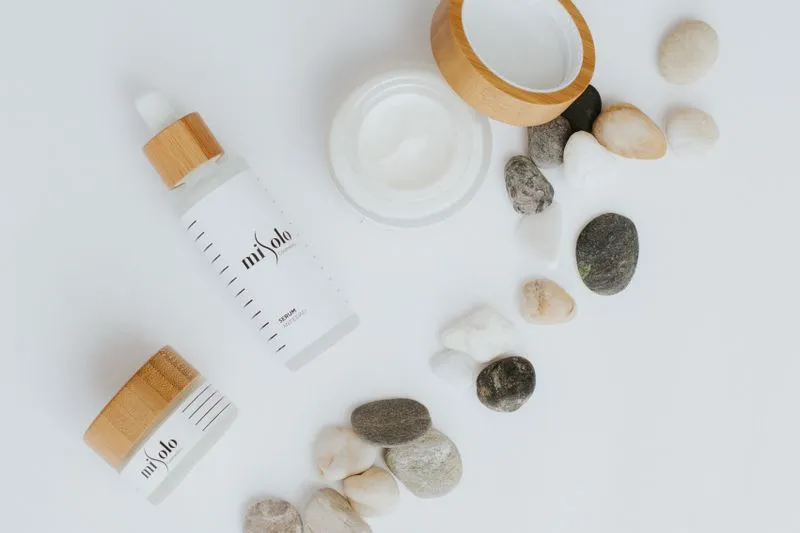
Skincare order decides what actually reaches your skin: a serum applied over a cream gets diluted instead of doing its job. The reason is the skin itself, which is first and foremost a barrier. Its main job is keeping things out (bacteria, pollution, all sorts of aggressors), and that same barrier makes life harder for the actives you'd like to get in.
The rule you'll find everywhere: thinnest to thickest. A watery serum spreads badly over a film of cream, and the active you paid good money for ends up stuck in a layer that was never designed for it. Flip it round and the cream does exactly what it's meant to do — slow down the evaporation of water from your skin.
Keep your feet on the ground, though. Layering doesn't push anything "deep into the skin" by magic. It simply stops you wasting what can work.
Cleanser preps the skin, serum carries the active, moisturiser holds in water, SPF protects — and toner is optional.
Morning routine: from clean skin to SPF
The morning goal is twofold: prep your skin and protect it for the day ahead. Your skin isn't really dirty when you wake up (you've been asleep, not rebuilding a motorbike) — but it has produced sebum overnight. A gentle cleanse is plenty.
Here's the exact order:
1. Cleanser (gentle)
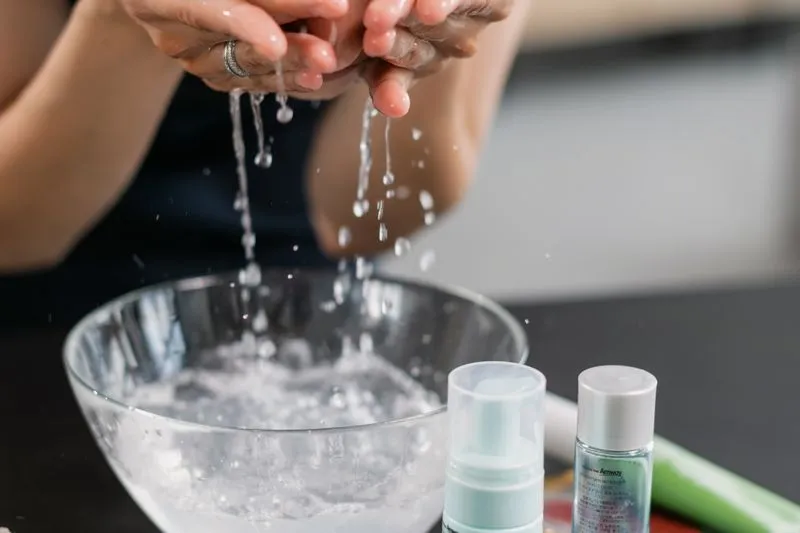
A light gel, micellar water, or plain water if your skin is dry or sensitive. Hot or cold? The answer is in our guide to the right water temperature for washing your face. The goal: remove overnight sebum and the last of your night cream — not strip your skin bare.
2. Toner (optional)
For years, toners were mostly alcohol, fragrance and glorified water. Today, plenty of them are active — acids (AHAs, BHAs), niacinamide, hyaluronic acid. If yours falls into that category, it goes straight after cleansing. If it's an acid toner (AHA/BHA), keep it for the evening, where it counts as your exfoliant: in the morning your vitamin C is already your acid. If it's basic, skip it without a second thought.
3. Serum or watery active
This is where your vitamin C goes. As an antioxidant, it helps your skin deal with the free radicals UV produces — which sunscreens only partly block. (That doesn't mean it replaces your SPF. No.) You can also use your brightening serum, hyaluronic acid serum or niacinamide here.
4. Eye cream
After serum, before moisturiser. Thin skin, specific formula, patted on gently (never rubbed).
5. Moisturiser
Seals in your actives and hydration at the surface. Lightweight in the morning, richer in the evening depending on your skin.
6. SPF (last)
SPF is the last thing you apply every morning — after everything else, never mixed into your moisturiser. In the UK, the NHS guide to sunscreen and sun safety says the sun is strongest between 11am and 3pm from March to October, and that you can burn even when it's cloudy. So March is the month to get back into the habit.
Evening routine: where the real work happens
In the evening, there's no more UV to deal with until tomorrow morning. That makes it the slot for actives that leave skin more sensitive to the sun — retinol leading the pack. And no, you don't need SPF at night.
1. Double cleanse (if you wear make-up or SPF)
First cleanse: a cleansing oil or balm — to dissolve make-up, sunscreen and the day's grime. Second cleanse: a gentle gel or foam — to clean the skin itself. If you've worn neither make-up nor SPF, one gentle cleanse is enough.
2. Exfoliation (a few evenings a week, not daily)
AHAs (glycolic, lactic acid) for smoothing and glow. BHA (salicylic acid) for pores and oily skin. Not both on the same night. Not on a retinol night. And not every night — a skin barrier sanded down evening after evening ends up red and irritated.

3. Serum or night active
Retinol, retinal, bakuchiol: this is their spot. Retinol goes on at night for a reason. The American Academy of Dermatology's guide to retinoids and retinol explains that retinoids can make skin more sensitive to the sun, which is why the dermatologist it interviews advises using them only at night, with sun protection during the day. On exfoliation nights, skip it; on the others, it goes straight after cleansing — in a thin layer, well away from the eye area. Reactive skin? You can put it between two thin layers of moisturiser (the sandwich method) while your skin gets used to it. For how to start without ending up looking like a lobster, see my complete guide to using retinol without damaging your skin.
4. Eye cream (night version)
Often a richer formula than the morning one — peptides, caffeine. Pat, don't rub.
5. Night cream or rich moisturiser
More nourishing than your day cream: ceramides, urea, shea butter, squalane — ingredients that support your skin barrier overnight.
6. Facial oil (optional, for dry skin)
The very last step — a thin layer of oil over your moisturiser, to limit water loss if your skin is very dry.
Serums and actives: what goes before what?
Short answer: not all together. If you've got a vitamin C serum, a niacinamide, a hyaluronic acid and a retinol, the order mostly depends on texture and time of day. For what each active really does, my breakdown of niacinamide, vitamin C and BHA goes further.
| Pairing | Same application? | How to split them |
|---|---|---|
| Vitamin C + hyaluronic acid | Yes | Vitamin C first, hyaluronic acid second |
| Niacinamide + hyaluronic acid | Yes | Either order, thinnest first |
| Retinol + niacinamide | Yes | Together in the evening |
| Vitamin C + retinol | No | Vitamin C in the morning, retinol in the evening |
| AHA/BHA + retinol | No | Exfoliant on some evenings, retinol on the others |
Vitamin C + hyaluronic acid: compatible. Vitamin C first, hyaluronic acid second, following the thinnest-to-thickest rule. On the formulation side, the 2017 review of topical vitamin C in the Journal of Clinical and Aesthetic Dermatology explains that L-ascorbic acid needs a pH below 3.5 to be more stable and penetrate better, and that going above 20% concentration adds nothing — except a risk of irritation.
Niacinamide + hyaluronic acid: perfectly compatible, in either order (thinnest first).
Retinol + niacinamide: compatible, and both can go on in the same evening.
Vitamin C + retinol: not in the same application. Vitamin C in the morning, retinol in the evening: the classic split — and the easiest one to stick to.
AHA/BHA + retinol: not on the same night. Combined, they irritate and weaken the skin barrier. Alternate: exfoliant on some evenings, retinol on the others.
Eye cream: before or after moisturiser?
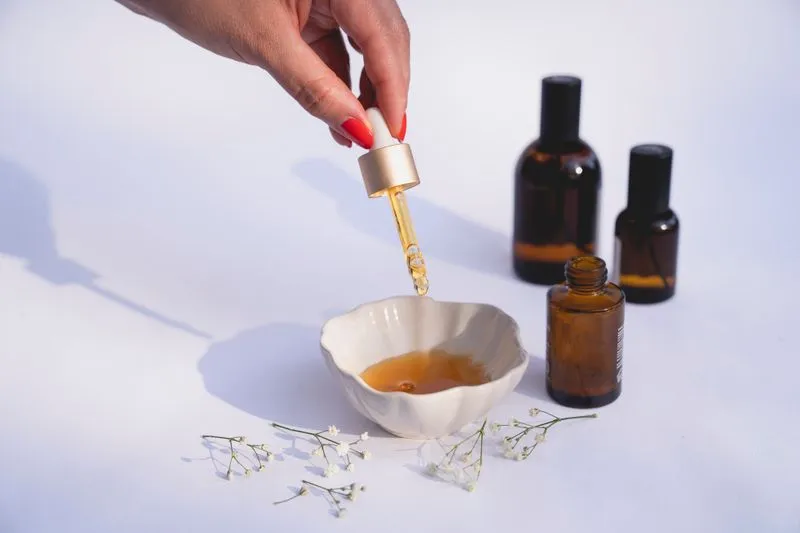
Before your face moisturiser, but after your serum.
The reason is simple: apply moisturiser first and the area is already coated in a film that gets in the way of the next product. And eye cream is formulated for skin that's noticeably thinner than your cheeks — so let it get there first. Eye cream on top of moisturiser — what's the point?
Technique: pat gently with your ring finger (the one with the least strength). Never rub. Start at the inner corner, near your nose, and work outwards along the orbital bone — staying clear of the rim of the eye.
Can you use your regular moisturiser instead? It can work if it's lightweight and fragrance-free. Eye creams generally avoid fragrance and heavy textures because the area reacts quickly. They're worth it if you've got pronounced dark circles or expression lines — not compulsory.
SPF: why it goes on last
SPF goes on last because it only protects as an even, unbroken layer on the surface of your skin. Any cream smoothed on top of it, or mixed into it, dilutes it and spreads it thinner. So: after everything else, and before make-up.
There are two families of filters: organic ("chemical") filters, which absorb UV — and inorganic ("mineral") filters such as zinc oxide and titanium dioxide, which can leave more of a white cast. Most sunscreens use a mix.
Amount matters as much as order — and this is where most of us cut corners without realising. The British Association of Dermatologists' sun protection fact sheet explains that people apply less sunscreen than the amount it's tested at, and less evenly. Its rule of thumb is blunt: "the protection you may actually receive is about one-third to one-half of the labelled SPF." Which is why the BAD recommends at least SPF 30 with high UVA protection — and most sunscreens now carry 4 or 5 UVA stars on the back of the bottle, or a UVA logo.
Where you apply it matters too. In a University of Liverpool study presented at the BAD's annual conference, 57 people applied sunscreen to their face with no instructions: they missed 9.5% of their face on average — and 77% of them missed the area between the inner corner of the eye and the bridge of the nose. As sunscreen shouldn't go in your eyes, the BAD points to sunglasses for that zone.
If you hate the white cast of very mineral SPFs, don't force it: try a tinted version or a fluid with chemical filters. Boots' own Soltan range and La Roche-Posay Anthelios are both easy to find on the high street — just check for SPF 30 and the UVA stars. The right SPF is the one you'll want to put on every morning, because a texture you can't stand will be at the back of the drawer by week two. And before make-up, let it dry for as long as it takes to brush your teeth.
Adapting for your skin type
The basic order doesn't change. It's the textures and a few specific products that vary.
Dry skin: milk or oil cleansers. An oil step at the end of your evening routine. Hyaluronic acid serums and moisturisers rich in ceramides, squalane and shea butter. Go easy on acids.
Oily / combination skin: a gentle foaming cleanser. A niacinamide serum. A lightweight, non-comedogenic moisturiser (gel-cream rather than rich cream). BHA (salicylic acid) on some evenings for pores. And hydration, always: oily skin can perfectly well be dehydrated — and stripping it doesn't help.
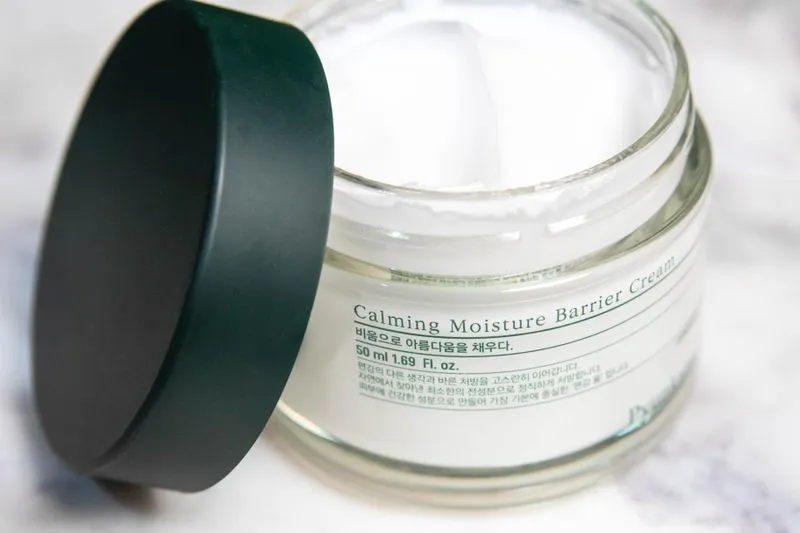
Sensitive / reactive skin: less is more. A very gentle, fragrance-free cleanser, a simple serum (niacinamide or centella asiatica), a soothing moisturiser. One new active at a time — never three at once. If you're starting retinol, the sandwich method (light moisturiser, retinol, moisturiser) makes the first weeks gentler. And test anything new on a small, discreet patch of skin before it goes on your whole face.
Mature skin: vitamin C in the morning, retinol or bakuchiol in the evening, a rich moisturiser with ceramides, an eye cream with peptides. And above all, SPF. A study of 298 Caucasian women aged 30 to 78 in Montpellier, published in 2013 in Clinical, Cosmetic and Investigational Dermatology, concluded that UV exposure seems to be responsible for around 80% of visible signs of facial ageing.
The mistakes wrecking your routine
Mistake 1: rubbing instead of patting. I've never seen a serum work better because it was scrubbed in — and on skin already sensitised by an active, rubbing is irritation for nothing. Pat, press, smooth. The BAD's fact sheet even says not to rub sunscreen in, but to spread it as evenly as possible and let it dry.
Mistake 2: using too many products at once. Five strong actives in one go is playing roulette with your skin — and you'll never know what's working. Start simple (cleanser, serum, moisturiser, SPF), add one active at a time and give it several weeks before the next. My first retinol was a 1% serum, slathered on generously one Saturday evening in November — it took three weeks to get presentable skin back. Never again.
Mistake 3: changing routines too often. Skincare is judged in weeks, not days. My double cleanse took three weeks to make a visible difference — and I still count that as fast. If you change everything every month, your skin spends its life adjusting and no product ever gets the chance to prove itself.
Mistake 4: forgetting your neck, chest and eyelids. Applying SPF to your face and stopping at the jawline? Your neck and chest catch the sun too, and they often get forgotten. Take every product down that far — SPF first — and wear sunglasses for the eye area sunscreen can't reach.
The 3-step routine for when you've got no time
Honestly? Three steps done every day beat a twelve-step routine followed one week in two.
Morning:
1. Gentle cleanser
2. Lightweight moisturiser
3. SPF 30 or 50 — done.
Evening:
1. Cleanser (double cleanse if you've worn make-up)
2. Serum (one active only: retinol for lines, niacinamide for pores, hyaluronic acid for hydration; vitamin C belongs in the morning, before moisturiser)
3. Moisturiser.
That's it. It might feel like an anticlimax after reading 47 twelve-step routines. But a simple routine followed every day for three years usually does more than an elaborate one applied three evenings a week, depending on your mood.
Frequently asked questions
Does serum really go before moisturiser?
Yes, with one exception. Serum is thinner and more concentrated in actives; moisturiser forms a film that slows water loss. The one deliberate exception is the sandwich method (light moisturiser, retinol, moisturiser) for reactive skin that's new to retinol, which I cover in my retinol guide. The morning order: cleanser, toner, serum, eye cream, moisturiser, SPF.
Can you use vitamin C and retinol at the same time?
Not in the same application. The classic split: vitamin C in the morning (antioxidant help against UV), retinol in the evening (it makes skin more sensitive to the sun). You can technically layer them at night — but you're piling two demanding actives onto the same skin. Morning and evening is the simplest split, and the easiest to tolerate.
Is double cleansing really necessary if I don't wear make-up?
Not necessarily. If you wear SPF every morning — and from March you should — an oil or balm first cleanse still earns its place in the evening; with neither make-up nor sunscreen, one gentle cleanser is enough. Over-cleansing does your skin no favours: if your face feels tight after washing, that's your cue to go gentler.
Do you need to let each step dry before the next?
No need to wait for ages. Let each layer sink in: the time it takes to open the next bottle is usually enough. Two exceptions: retinol, which goes on bone-dry skin, and sunscreen, which the BAD advises spreading evenly and leaving to dry, so give it a moment before make-up goes on.
Can you skip toner?
Yes, if yours is basic (alcohol, rose water, no real actives). No, if it's active (AHAs, BHAs, niacinamide, hyaluronic acid): then it partly replaces a serum and earns its place. Before buying one, read the INCI list: if the first five ingredients are "Aqua, Alcohol, Parfum, Rosa Damascena, Glycerin", it's mostly decorative.
Is the SPF in my moisturiser enough?
For small doses of daylight, yes. The BAD's fact sheet says an SPF moisturiser will help protect you against small amounts of UV exposure, such as walking to the car or hanging out the washing. But these formulas are usually applied much more thinly than sunscreen — so they're unlikely to give the same protection, and some contain no UVA protection at all. For a day outdoors from spring onwards, a proper sunscreen applied last wins.
What age should you start retinol?
There's no official starting age for a cosmetic retinol. What matters is the method: the dermatologist quoted by the American Academy of Dermatology suggests the least intense formula you can find, every other night to start, building up slowly, with sun protection every day. The AAD is also clear that retinoids should not be used during pregnancy, so if you're pregnant or trying, talk to your GP first. The full step-by-step is in my retinol guide.
Can you use the same routine in winter and summer?
The structure stays the same — it's the textures that change. Summer: a more thorough cleanse (sweat, suncream), a lighter moisturiser, and sunscreen reapplied every two to three hours if you're staying outside, as the BAD advises. Winter: a richer cream, and an oil at the end of your routine if your skin feels tight. Your actives can stay the same all year, with one exception for retinol on sunny holidays.
Sources
- NHS — Sunscreen and sun safety
- British Association of Dermatologists — Sun Protection Fact Sheet
- British Association of Dermatologists — Misapplication of sunscreen leaving people vulnerable to skin cancer (2017)
- American Academy of Dermatology — Retinoid or retinol?
- Al-Niaimi F., Chiang N. Y. Z. — Topical Vitamin C and the Skin: Mechanisms of Action and Clinical Applications, Journal of Clinical and Aesthetic Dermatology (2017)
- Flament F. et al. — Effect of the sun on visible clinical signs of aging in Caucasian skin, Clinical, Cosmetic and Investigational Dermatology (2013)