
Thursday 26 June, 3.40pm, in the only meeting room without air con. Georgia, 28, a research analyst at a consultancy in Clerkenwell, raises her right arm to point at a figure on the screen — and sees it. On her pale blue shirt, just below the armpit, a dark half-moon the size of a saucer. She lowers her arm (very) slowly. She finishes the presentation with her elbows clamped to her ribs, like a penguin at its annual review. Then she spends the afternoon in her blazer. In a room that feels like a sauna.
That evening, in the beer garden round the corner from my flat, she tells me everything and gets her phone out. Three weeks earlier, after a TikTok about "the aluminium in deodorant that gives you breast cancer", she binned her antiperspirant. Its replacement: a "natural" alum crystal deodorant (glass bottle, kraft-paper label, very pretty). "I swapped a cancer scare for sweat patches in a meeting. Good deal or bad deal?"
The answer fits in two sentences. No, a deodorant can't stand in for an antiperspirant — one deals with smell, the other with sweat, and they've never had the same job. And no, the best studies haven't found a link between aluminium, deodorants and breast cancer. Bonus twist: Georgia's alum crystal is an aluminium compound too.
With the first proper heat of the summer, the question comes back every year — in the group chat, in the Boots aisle, at the pharmacy counter. So here's everything you need to choose with your eyes open: how each product works, what Cancer Research UK and the EU's scientific safety committee say about aluminium, what natural deodorants can and can't do, when to put antiperspirant on (spoiler: not in the morning), and the point at which sweating stops being a shopping problem and becomes a GP problem.

Deodorant vs antiperspirant: what's the real difference?
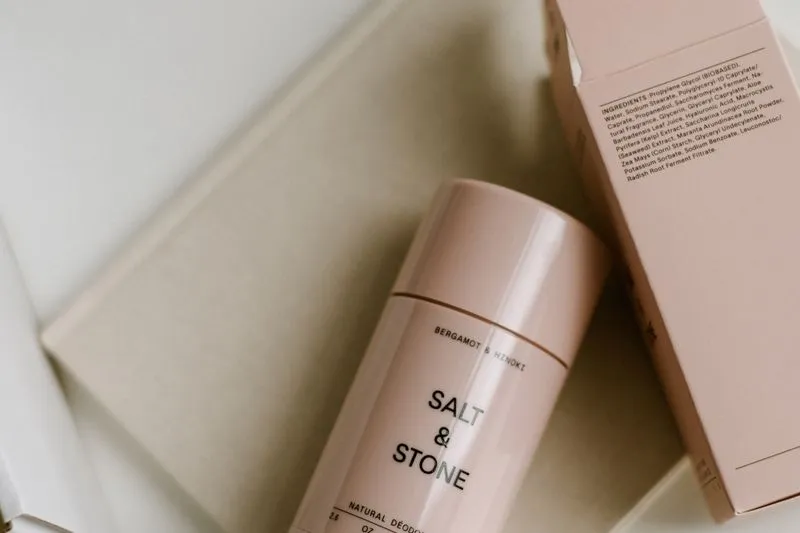
A deodorant tackles smell; an antiperspirant tackles sweat. That's the whole difference — and it changes everything when you're standing in front of the shelf. The British Association of Dermatologists (BAD) puts it in three lines on its patient page on hyperhidrosis: "A treatment which reduces sweating is called an antiperspirant. This is different from a deodorant, which reduces smell. The two are often combined in the same product."
That last sentence explains most of the confusion. Plenty of cans say "deodorant" in big letters and "anti-perspirant" in small ones (or the other way round), so we end up calling everything "deodorant". Read the small print. If it says antiperspirant, it contains an ingredient meant to reduce sweat. If it only says deodorant, it lets you sweat — and works on the smell.
| Product | What it does | Aluminium | Who it's for |
|---|---|---|---|
| Deodorant | Fights or masks odour, lets sweat through | Not needed: it doesn't block sweat | You don't sweat much, smell is the worry |
| Antiperspirant | Reduces the amount of sweat | Yes, aluminium salts | Sweat patches ruin your day |
| Alum crystal | Sold as a deodorant | Yes (it's an aluminium compound) | Light sweating, no fragrance wanted |
Why we sweat, and why fresh sweat doesn't smell
Sweat is the body's built-in air con. According to a 2023 review of deodorants and antiperspirants in the International Journal of Cosmetic Science, eccrine glands — spread over almost the whole body — play a critical role in thermoregulation. Apocrine glands are only found in certain areas, including the armpits and the genital area. And, unlike eccrine glands, they only start working at puberty (which explains a lot about Year 8 changing rooms).
The detail that changes how you see the whole aisle: odour comes from bacteria, not from sweat itself. The same review puts it plainly — skin microbiomes are responsible for body odour, with Staphylococcus and Corynebacterium the most prominent culprits. The armpit is their dream home: warm, moist, covered in hair follicles, with more than 25,000 sweat glands per armpit. Smell comes from bacteria, wet from glands — which is why there are two products.
The triggers are well known too. The NHS lists exercise, hot weather and hormonal changes among the things that can make body odour worse, and the BAD notes that sweating is a normal response to a rise in body temperature — and to emotions such as anxiety. Translation: a big presentation at the end of June, in a room without air con. Georgia had ticked two boxes before she even opened her mouth.
How an aluminium antiperspirant slows sweat down
An antiperspirant slows sweat by partly plugging the openings of the sweat glands. The review describes it simply: antiperspirants work by forming gel plugs in sweat pores, which stops sweat reaching the surface of the skin. The ingredient doing the work is an aluminium salt — usually aluminium chlorohydrate in everyday products, aluminium chloride in the stronger ones.
There's a bit of history behind that. Aluminium chloride was introduced as an antiperspirant back in 1916 and is still considered one of the most effective actives. But it's acidic — it can irritate skin and damage clothes — which is why the gentler aluminium chlorohydrate arrived in the 1940s. The EU's Scientific Committee on Consumer Safety (SCCS) also cites work from 2016 and 2017 showing that aluminium chlorohydrate forms plugs in the skin's sweat glands.
Less sweat reaches your armpit — and the rest of you (back, chest, feet, anything you haven't slathered) carries on sweating as normal. And the effect isn't permanent — stop using it, and the sweat comes back.
Aluminium and breast cancer: what the evidence says
Antiperspirants don't raise your risk of breast cancer. Cancer Research UK is blunt about it on its page on cosmetics and cancer myths: "Using deodorants, antiperspirants and body sprays does not increase the risk of cancer."
So where does the fear come from? The charity explains it in one line — the worry stems partly from these products being applied near the breast. Proximity isn't proof, though. And Cancer Research UK adds that "the best studies have shown no link between aluminium, deodorants and breast cancer."
The same page makes a point I find reassuring as someone who reads a lot of labels: the UK and the EU have strict rules controlling the ingredients in cosmetics, some substances are banned, and others are restricted to small amounts. Its practical advice is to buy from a reputable retailer — cosmetics from outside the UK and EU may not follow the same rules. (Yes, that includes the mystery deodorant from a marketplace app.)
Does that mean aluminium raises no questions at all? The one open question was never cancer: it was how much aluminium gets through the skin.
How much aluminium is safe? The EU safety committee's verdict
The EU's safety committee considers aluminium compounds safe in antiperspirants up to set limits. Getting there took six years. In 2014, the SCCS said it couldn't complete a risk assessment — there wasn't enough good data on how much aluminium actually gets through the skin — and asked for a human study under real-life conditions.
That study came. In its final opinion of March 2020 on the safety of aluminium in cosmetic products, the committee accepted a dermal bioavailability of 0.00052% — a tiny fraction of what's applied. On that basis, it judged aluminium compounds safe up to 6.25% aluminium in non-spray deodorants and antiperspirants, and up to 10.60% in sprays.
Then the line that matters most: "the systemic exposure to aluminium via daily applications of cosmetic products does not add significantly to the systemic body burden of aluminium from other sources." Diet, the committee adds, is a major source of aluminium for the population. Your roll-on is not the big item on your aluminium bill.
My take, for what it's worth (I'm a writer, not a toxicologist): there's no reason to ditch antiperspirant out of fear of breast cancer. There are good reasons, though, to treat your armpit skin kindly, especially straight after shaving.
Shaving and sore skin: when to skip the antiperspirant
Right after shaving, the antiperspirant waits. For the strong, aluminium chloride products used for heavy sweating, the BAD is specific: they "should be applied at night only, to dry skin", sore red skin is a common problem (especially on wet skin), and it's best to avoid shaving the area shortly before or after — within 12 hours.
Most of us do the exact opposite. Razor in the morning shower, towel, antiperspirant, T-shirt, out the door. I did it for years without a second thought (and without understanding why it stung some mornings). The NHS page on contact dermatitis explains the mechanism behind that sting: an irritant is a substance that directly damages the outer layer of skin — and a freshly shaved armpit is the last place to test one.
Same logic for exfoliating your armpits: I keep it for the morning, never the night I use antiperspirant (skin you've just scrubbed doesn't need anything else asked of it). My full method is in the guide to body exfoliation done right.
Natural deodorants and alum crystals: what they really do
A "natural" deodorant is still a deodorant: it deals with smell, not sweat. "Natural" describes where the ingredients come from, never what they do. If sweat patches are your problem, no natural deodorant will fix them — which is exactly the trap Georgia fell into.
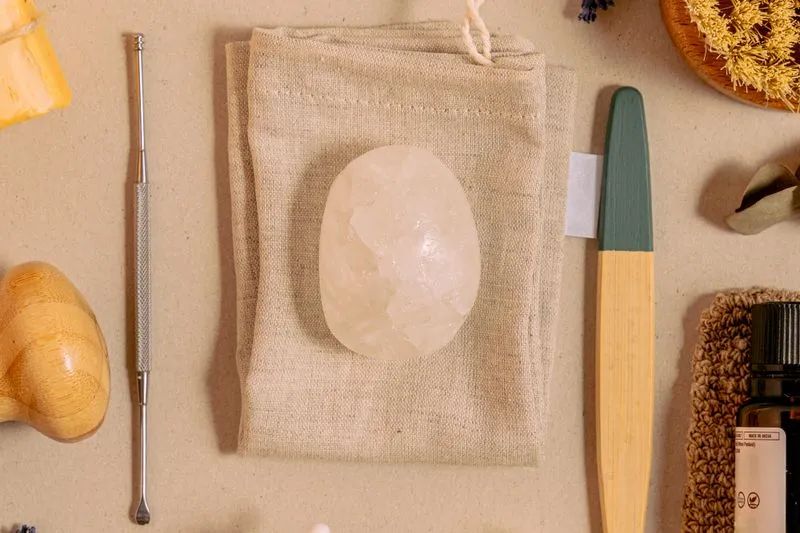
Alum crystals deserve their own paragraph, because they've sat in the "free from" aisle for years. Look at the label: natural crystals are listed as "potassium alum", which is potassium aluminium sulphate. The SCCS opinion counts potassium aluminium sulphate among the aluminium compounds it reviewed — and even mentions skin irritation reported after using a crystal deodorant containing alum. So if you want zero aluminium, the crystal isn't for you. If you want something fragrance-free for light sweating? Fair enough — just don't expect miracles in a heatwave.
Then there's the stinging question. The review notes that perfume, fragrance and essential oils are often found in deodorants to mask body odour — natural ones included. And the NHS page on contact dermatitis explains that allergic contact dermatitis can be triggered by substances found in certain products, such as cosmetics, while irritants (soaps, detergents) are the most common cause overall. Its advice: check the ingredients on your products for irritants or allergens.
And aluminium itself, allergy-wise? The SCCS says aluminium is not regarded as a skin sensitiser, and considers contact allergy to it rare given how widely it's used. I'm not saying natural deodorants irritate more than the rest (none of the sources I read says so). I'm saying "natural" doesn't mean "gentle".
My one attempt at a bicarbonate-based deodorant cream, a few summers ago, lasted four days: red armpits that stung every time I lifted my arm. Which ingredient was to blame? No idea. I stopped, my skin calmed down, end of story. That proves nothing for you — it just explains why I now test every new deodorant with suspicion.
Spray, roll-on, stick or cream: which format?
For every day, I'd pick a roll-on, stick or cream over a spray. Sprays are the one format you breathe a little of — the SCCS's own exposure calculations include a line for the share of antiperspirant spray that reaches the lungs. The review also lists butane, isobutane and propane as typical propellants in aerosol formulas. Not a scandal, just a reason not to fog up a tiny bathroom every morning.
The committee does allow more aluminium in sprays (10.60% against 6.25%). That figure is about aluminium only, not about everything else in the can — it doesn't make the spray the better everyday choice.
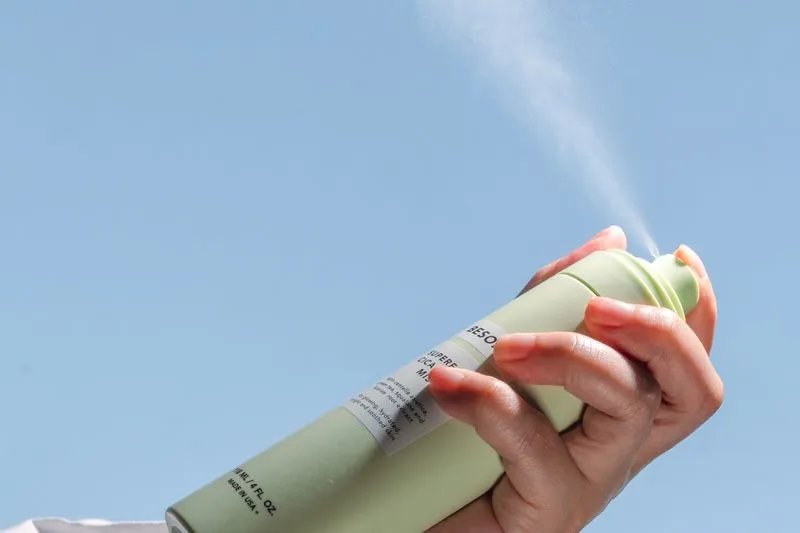
Between the other formats, it's a matter of taste. My ranking, road-tested over several summers:
- Roll-on — precise, but wet going on. Give it a good minute before you pull a top on, or it transfers straight onto the fabric.
- Stick — dry, quick, perfect for a weekend bag. Its flaw: white marks on black tops (if you overdo it).
- Cream — applied with a fingertip, so you can dose it exactly. Less handy when you're running late.
How to apply antiperspirant so it actually works
Strong antiperspirants go on at night, on completely dry skin, and I use my everyday stick the same way. That's the BAD's instruction for strong aluminium chloride products: "at night only, to dry skin". Yes, at night. Not in the morning straight out of the shower, hair dripping, kettle on.
My reading of it (again, not a dermatologist): at night your skin is dry, you're not moving, and the product has hours to do its job. The morning shower is part of the routine — it doesn't undo anything.
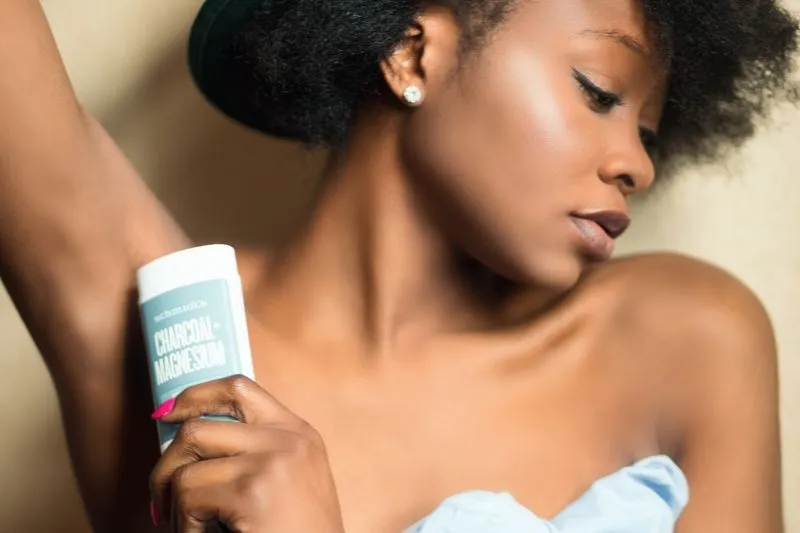
- Bedtime, dry skin. Not straight out of the shower: wait until the armpit is completely dry (the BAD notes soreness is more common on wet skin).
- A thin layer. Two or three strokes of a roll-on, one of a stick. I've never seen any difference from doubling the dose — except on my T-shirts.
- Let it dry. One minute, the time it takes to brush your teeth, before your pyjama top goes on.
- Morning: normal shower. Wash, dry, and add an aluminium-free deodorant if you like a bit of scent.
- Ease off when things improve. If my skin gets sore, I space out the applications and let it recover.
Heat, clothes and sweat patches: the habits that help
The product isn't everything: what you wear and what you eat and drink count almost as much. The NHS page on body odour recommends natural fabrics like cotton, wool and silk, and avoiding tight clothing and manmade fabrics. It also suggests not eating too much strong-smelling or spicy food, and not drinking too much alcohol.
Georgia's shirt? Pale blue polyester. The worst combo of the summer: a fabric that lets nothing through, in a colour that shows every drop. In my experience, white, black and busy prints hide sweat patches far better than pastels and grey marl (which practically frame them).

On the hygiene side, the NHS advice is to wash your armpits, groin and feet at least twice a day with soap and dry thoroughly, and to change and wash your clothes regularly. For heavy sweaters, the NHS page on excessive sweating adds loose-fitting clothes and armpit or sweat shields — ask a pharmacist. I used to find the idea embarrassing, until the day I counted my ruined white shirts.
If your feet suffer in summer too, the same NHS pages suggest moisture-wicking socks changed at least twice a day, and leather shoes rather than enclosed trainers. For the skin on your feet before sandal season, it's all in my routine for cracked heels and dry feet.
Excessive sweating: when should you see a GP?
Sweating becomes a GP matter when it gets in the way of your life despite everything you've tried, or when it suddenly changes. The NHS page on excessive sweating (hyperhidrosis) describes it as sweating when your body doesn't need to cool down — and it can happen for no obvious reason, because of another condition, or as a side effect of a medicine.
The most common type affects certain areas only — palms, soles, armpits, face and scalp — and, according to the BAD, usually begins in childhood or the teenage years and may improve with age. Up to a third of people with hyperhidrosis may have a family member with it. If you recognise yourself, it's not a hygiene issue or a character flaw: the BAD notes it can affect work and relationships.
The NHS advises seeing a GP if you're sweating excessively and:
- the things you can do yourself are not helping;
- it has lasted for at least six months;
- it stops you from getting on with your daily activities;
- it happens at least once a week;
- it happens at night (night sweats);
- you have a family history of excessive sweating;
- you're taking medicine for another condition.
The body odour page adds two more reasons: you notice a change in how your body odour usually smells, or you suddenly begin to sweat much more than usual. From there, the GP may look for another cause, and specialist options include tablets, creams, iontophoresis (a weak electric current passed through water) and Botox injections for the armpits — which the NHS says may not be available on the NHS. The BAD adds that the effect of botulinum toxin usually lasts two to six months.

Deodorant or antiperspirant: how to choose for the day ahead
The right product depends on your day, not on a "good" or "bad" label. Here's my cheat sheet — the one I wish I'd given Georgia before her meeting:
- Quiet day, no heatwave: a deodorant is enough (fragrance-free if your skin is sensitive).
- Big meeting, interview, first date, wedding in July: antiperspirant the night before, on dry, unshaven skin.
- Freshly shaved, waxed or sore armpit: no antiperspirant that day. A gentle deodorant, or nothing.
- You'd rather avoid aluminium on principle: your call. Go for an aluminium-free deodorant (so not the crystal), loose clothes, and accept that you'll sweat normally.
- You still sweat heavily after all that: pharmacist first, then GP — no embarrassment required.
In my bathroom, that looks like this. June to September: a stick antiperspirant two or three nights a week, never on a night I shave. In the morning, a fragrance-free deodorant. In winter, the deodorant alone does the job. It slots in between the shower and moisturiser in my complete body care routine, head to toe.
Georgia has kept her pretty glass bottle for weekends. Her antiperspirant is back on her bedside table, and she puts it on the night before the days that matter. Tonight, ask yourself the same question she did: tomorrow, what worries you more — the smell or the patch? Your answer tells you which bottle to open.
Frequently asked questions
Can I use antiperspirant every day?
Yes, if your skin tolerates it and isn't broken or sore. Put it on at night, on dry skin, and space out applications if your armpits get irritated. Skip it right after shaving — with strong aluminium chloride products, the British Association of Dermatologists advises a 12-hour gap.
Does the aluminium in antiperspirant cause Alzheimer's?
In its 2020 opinion, the SCCS writes that after significant investigation it is generally accepted that there is no causal link between aluminium and Alzheimer's disease. It also concludes that aluminium from cosmetics doesn't add significantly to the body burden from other sources, diet being a major one.
Is an alum crystal deodorant aluminium-free?
No. Natural crystals are labelled "potassium alum", which is potassium aluminium sulphate — a compound the SCCS lists among the aluminium compounds it reviewed. Crystals are sold as deodorants, not antiperspirants.
Do I need an "armpit detox" when I switch to natural deodorant?
None of the health bodies quoted here mentions an armpit detox. What you notice after stopping antiperspirant is simply your normal sweating coming back, because its effect isn't permanent. Judge a new deodorant over a few warm days, and stop at the first sign of irritation rather than waiting for your skin to 'adjust'.
Can I spray perfume on my armpits?
I wouldn't. Cosmetics are among the products that can trigger allergic contact dermatitis, according to the NHS, and armpit skin is often already stressed by shaving. Keep perfume for your neck or chest (and find out why rubbing perfume between your wrists is a habit worth dropping).
Does stress make you sweat more?
Yes. The British Association of Dermatologists notes that sweating is a normal response to a rise in body temperature and to emotions such as anxiety. It's why your armpits wake up right before a presentation.
How do I stop sweat ruining my clothes?
A pharmacist can suggest armpit or sweat shields to protect your clothing, says the NHS, and loose-fitting clothes in natural fabrics help too. Let your product dry before you get dressed, and wash tops worn on a hot day promptly.
Sources
- NHS — Excessive sweating (hyperhidrosis) (page last reviewed 7 November 2023)
- NHS — Body odour (BO) (page last reviewed 14 May 2025)
- NHS — Contact dermatitis (page last reviewed 3 May 2023)
- British Association of Dermatologists — Hyperhidrosis, patient information (updated May 2022)
- Cancer Research UK — Do cosmetics cause cancer? (last reviewed 19 December 2024)
- European Commission, SCCS — The safety of aluminium in cosmetic products, Submission II (4 March 2020)
- Teerasumran P. et al. — Deodorants and antiperspirants: new trends in their active agents and testing methods, International Journal of Cosmetic Science (2023)