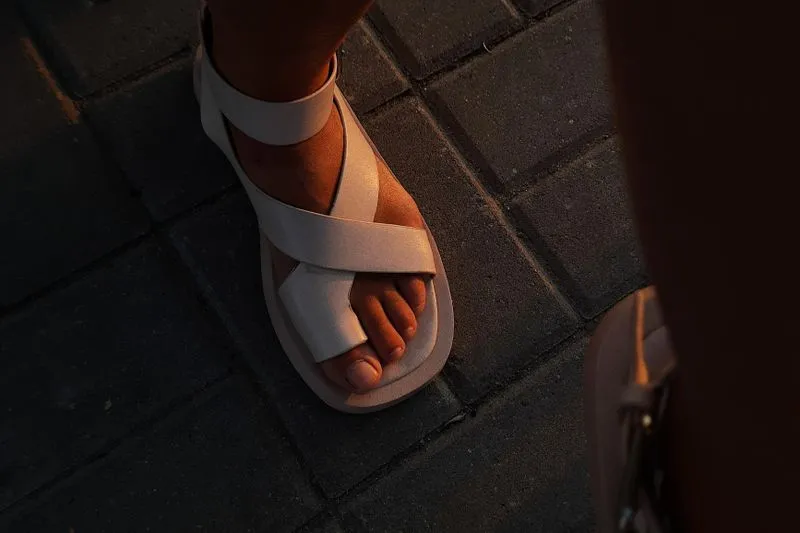
A Thursday in May 2019, 8.40am, a Northern line carriage packed to the doors (the smell of cold coffee and wet umbrellas included). I was 27, wearing a brand-new cotton shirt dress and my summer 8-denier tights — the ones I wear to the office under summer dresses. I crossed my legs. A tiny, dry sound, almost nothing. Then a cold line creeping up my leg. A ladder had just run — from heel to calf — snagged by the skin of my own foot.
My heel had the texture of a cheese grater (I'm barely exaggerating), and it had just proved it in front of forty-odd strangers. I spent the whole day hiding the ladder under my desk. With THE question on a loop: since when did my feet look like this? Since October, probably. All winter, ankle boots, socks and thick tights had kept them out of sight — and that Saturday, I was planning to get my sandals out (tan flat ones with thin straps, bought in the sales).
Most of us live some version of that morning every spring. First pair of sandals of the year, and there they are: heels gone white, thick, sometimes split. Six years on, I have a routine that takes four weeks. Start this week and you're ready for mid-June — and it still works if your sandals are already out. It isn't a medical protocol. It's the order I've put the NHS, dermatologists and podiatrists' advice into (plus a few things I learned the hard way).
Why heels crack (especially when sandal season starts)
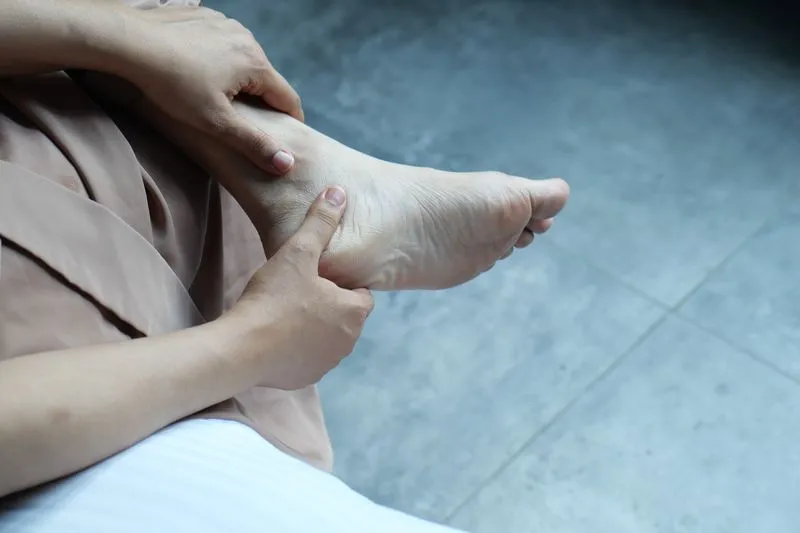
A heel cracks when two things meet: dry skin that has lost its stretch, and repeated pressure. The cracked heels review from bpac (a New Zealand organisation that produces medical guidance for health professionals) explains the mechanics. Every time you put weight on your heel, the fat pad underneath squashes and spreads sideways. If the skin around it is dry and inelastic, it can't keep up — so it splits.
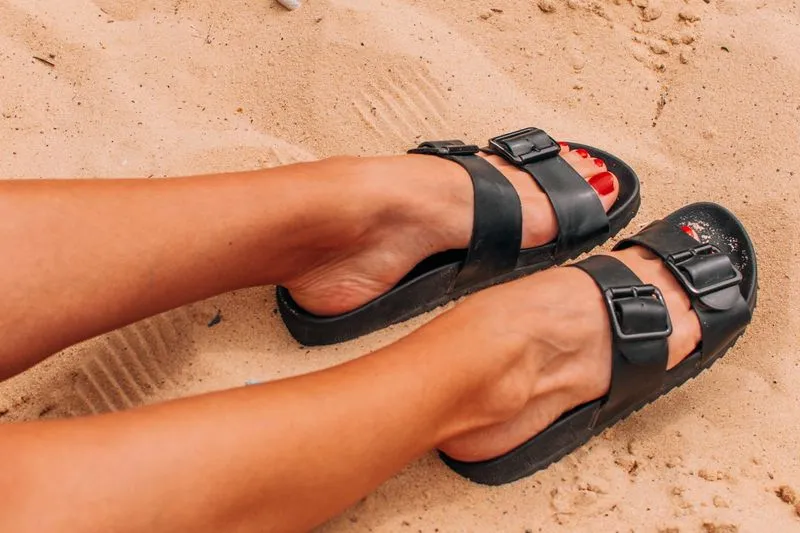
The same review lists what makes fissures more likely. Abnormally dry skin, corns or calluses, standing for long periods (especially on hard floors), excess body weight. And — brace yourself — going barefoot or regularly wearing sandals or open-backed shoes. Yes, really. The sandals we want to wear with smooth heels are part of the problem.
A podiatry leaflet from East Sussex Healthcare NHS Trust says it plainly: heel fissures due to very dry skin are more common in the summer, because of the hotter weather and sandals with open backs. When your heel sits on the back of the sandal, it can be squashed and pinched over the edge of the sole. That's the whole story of my May 2019, in two sentences.
Some conditions dry out or thicken the skin too — atopic eczema, psoriasis, an underactive thyroid, diabetes. They change what you should do (there's a whole section on other causes further down).
Dry heel, hard skin or fissure: the three stages to spot before you start
Before you buy anything, look at your heels in daylight (a mirror propped on the floor does the job nicely). The routine in this guide works for the first two stages. The third one isn't a bathroom job — however determined you're feeling.
| Stage | What you see and feel | What you do |
|---|---|---|
| Dry heel | Rough, whitish skin that feels tight after a shower and snags your tights | Moisturise daily, water not too hot. |
| Hard skin (callus) | Thick, hard, yellowish rim around the heel; small surface cracks, no pain | Urea cream, gentle filing (once or twice a week), overnight treatment. |
| Deep fissure | A split that hurts when you walk, bleeds, or has red skin around it | No filing: see a podiatrist or your GP. |
The Royal College of Podiatry's guide to general footcare describes cracked heels as common in people with very dry skin, in those who wear backless and slip-on shoes, and where callus has built up on the heels. It adds the line that matters for stage three: deeper cracks can become infected.
A split that bleeds is an open door in your skin. Filing it only makes the door wider. And if you have diabetes or poor circulation, even a simply dry heel deserves a professional opinion — before you start anything.
Foot file, pumice stone or blade: what removes hard skin without damaging your heel
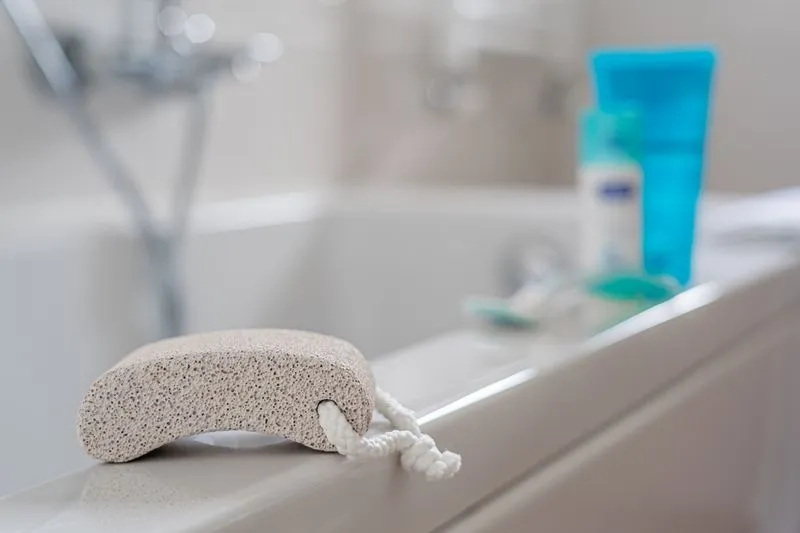
The short answer: a pumice stone or a foot file, gently, never a blade. The Royal College of Podiatry's advice for hard skin is to rub the area gently with a pumice stone or foot file when you're in the bath. The word doing the work in that sentence is "gently" — not "vigorously", not "until it's as smooth as a pebble".
Why no blades? Callus shavers with razor blades promise a smooth heel in three strokes — and that's exactly the problem. You take off too much, too fast. On a heel that carries your whole weight from morning to night, raw skin doesn't go unnoticed (every step reminds you). The same guide is clear that a podiatrist can safely remove callus: that's where the blade belongs, in trained hands.
Wet or dry? It depends on the tool. The East Sussex leaflet says to dip the pumice stone in warm water and move it gently in circles around the foot, then apply moisturiser. It also says never to use a pumice stone on an injured or sore area. Some files are designed for dry skin — follow the instructions for yours, not a random video you watched at midnight.
And electric roller files? I'll be blunt: I find them effective — and that's exactly what bothers me. Two minutes of enthusiasm and you've removed the layer that was protecting your heel. If you own one, use the slowest setting and follow the instructions. Stop as soon as the skin feels smooth (not pink, not warm).
Then there's the stubborn myth that "the more you file, the more it grows back". I couldn't find solid research proving it, so I won't sell it to you. Torbay and South Devon NHS's skin care for feet leaflet puts the real point better: thick hard skin will keep coming back unless the cause of the pressure or friction on your feet is found and dealt with. For the rest of your body, the rules change (scrubs, mitts, frequency) — I cover them in my guide to body exfoliation, feet and elbows included.
Urea foot cream: which percentage for dry or cracked heels
If you remember one ingredient from this guide, make it this one. At low strengths, urea moisturises. At higher strengths, it also helps loosen layers of hard skin (that's the "keratolytic" effect). The 2021 review of urea in dermatology by Piquero-Casals and colleagues sorts its uses by concentration.
- 2 to 10%: moisturising and optimising the skin's barrier function.
- 10 to 30%: moisturising and starting to break down hard skin.
- 30% and above: a strong keratolytic effect (the same review also lists it for debriding dead tissue).
As for results, the bpac review reports a figure that convinced me. In people with heel fissures, a 25% urea cream improved pain, dryness, skin appearance and scaling — after four weeks. Four weeks: that's where the rhythm of my routine comes from. The same review notes that 10% urea cream is the most commonly used product.
On the UK high street, the Torbay leaflet names a heel balm containing 25% urea — Flexitol — to be applied once or twice a day, and E45 as an everyday moisturising cream. The Royal College of Podiatry simply says to apply a urea-based foot cream every day, and warns it may take a week or two to start seeing results. My take? Start around 10% on a simply dry heel. Move up to 20 or 25% if there's hard skin. And leave anything stronger to your pharmacist's or podiatrist's advice.
One side effect worth knowing: urea can sting a little. The 2021 review describes mild, occasional irritation — more frequent at higher concentrations, and temporary. For me, it shows up as tingling when a small crack is open. That's my cue to switch to something gentler for a few days.
| Your heel | Urea concentration | How often |
|---|---|---|
| Dry, rough | 5 to 10% | Every day, after your shower. |
| Hard skin, small cracks | 10 to 25% | Morning and night for four weeks, then every night. |
| Very thick hard skin | 30% and above | On a pharmacist's or podiatrist's advice. |

The overnight treatment: petroleum jelly, cotton socks and liquid plasters
The overnight treatment is the step that changed my heels — and by far the least glamorous. The idea: a greasy layer, covered, for several hours. The East Sussex leaflet describes an "intensive overnight treatment": petroleum jelly applied thickly, cling film wrapped loosely over the feet, and bed in a pair of cotton socks.
My version skips the cling film (I tried it once — the rustling). Three nights a week for the first two weeks. Urea cream first. A thin layer of petroleum jelly on top, on the rim of the heel only. Then an old pair of cotton socks — kept for this job and nothing else. My boyfriend calls them my granny socks. He's right, and I don't care. In the morning, the hard skin is as soft as after a bath (minus the ten minutes in the water).
For a crack that's already open, there's another kind of dressing: liquid plasters, sold at any chemist. The bpac review lists liquid, gel or spray bandages and cyanoacrylate liquid skin protectants — shown to reduce pain and help healing. The film works like a second skin, to be used on a clean, dry crack (never on a wound that's red and hot). If the skin is split, the East Sussex leaflet suggests covering it with a clean or sterile dressing, such as Melolin or gauze, until it has healed.

The four-week routine for sandal-ready heels
This is the programme I restart every spring. It takes five minutes in the evening and some consistency — and consistency is what gets results, not the price of the tube. You don't need ten products either. Paring routines back is one of this year's must-know beauty trends (and your feet aren't exempt).
Week 1: stop the damage and moisturise
Take a photo of your heels, always in the same light — in four weeks, you'll be glad you did. Keep showers and baths warm rather than hot, the same logic I explain in my piece on hot water and your skin. Then urea cream around 10%, morning and night, massaged in — never between your toes. The East Sussex leaflet notes that moisturiser is most easily absorbed about ten minutes after a bath or shower. No filing yet: the skin needs to soften first.
Week 2: first filing session, first nights
One pumice session, straight after a shower, without pressing. Moisturise straight afterwards. And three nights of the overnight treatment, spaced out (Monday, Wednesday, Friday, for example). By the end of this week, the rim of your heel should already feel less rough. If it's red or sore, you've overdone the filing (time to back off).
Week 3: adjust
If the hard skin is hanging on, move up to a 20 or 25% urea cream. Second filing session, still gentle. This is also check-in week. A crack that keeps reopening, pain when you walk, redness around it? The Royal College of Podiatry says to see a podiatrist when a problem isn't improving within three weeks of self-care — so book, don't push on.
Week 4: compare and switch to maintenance
Retake your photo, same light, same angle. The result for me: a soft, pink heel that doesn't snag anything (8-denier tights included). After that, maintenance comes down to three things. Cream every night, one filing session a week, and an overnight treatment after every long day in sandals.
Sandals that won't split your heels all summer
You can have perfect heels in June — and be back at stage two by August if your sandals are hard on them. The East Sussex leaflet's fix is simple: make sure the heel seat of your sandal is wide enough to accommodate your heel. The bpac review agrees on the risk (it lists sandals and open-backed shoes among the causes of fissures).
I'm not going to ask you to give up sandals (I haven't either). Here's my personal sorting, tested over several summers.
- Yes: sandals with a back strap, which hold your heel instead of letting it squash with every step.
- Yes: a slightly thick, flexible sole with a gentle cup for the heel.
- In moderation: mules and slingbacks — for an evening out, not for walking across London.
- No (except by the pool): flat flip-flops that slap against your heel all day.
The Royal College of Podiatry lists backless and slip-on shoes among the things behind cracked heels, which is why the back strap wins every time in my book. Silicone heel cushions in closed shoes are another option on days when you walk a lot — invisible, and your heels will thank you.

Deep fissures: when to see a podiatrist
A deep fissure is no longer a beauty issue. The signal? Pain, blood or inflammation. The bpac review is clear that in some people — especially with deeper, larger heel fissures — infection can develop, which may stay local or turn into cellulitis.
Book an appointment in any of these situations.
- The crack bleeds or weeps, or the skin around it turns red, hot or swollen.
- It hurts to put weight on your foot, even after a few days of care.
- The fissure keeps reopening despite three weeks of regular routine.
- You have diabetes, poor circulation or reduced feeling in your feet.
- The skin peels, itches or changes for no obvious reason.
Who to see? A podiatrist (the title "chiropodist" is also used). The Royal College of Podiatry explains that podiatrists are educated to degree level and regulated by the Health and Care Professions Council, and that you should look for an HCPC-registered one. On the NHS, some areas let you self-refer, while others need a GP referral — check with your local NHS. A pedicure at a nail bar is a beauty treatment (lovely for dry heels, not designed for a fissure that bleeds).
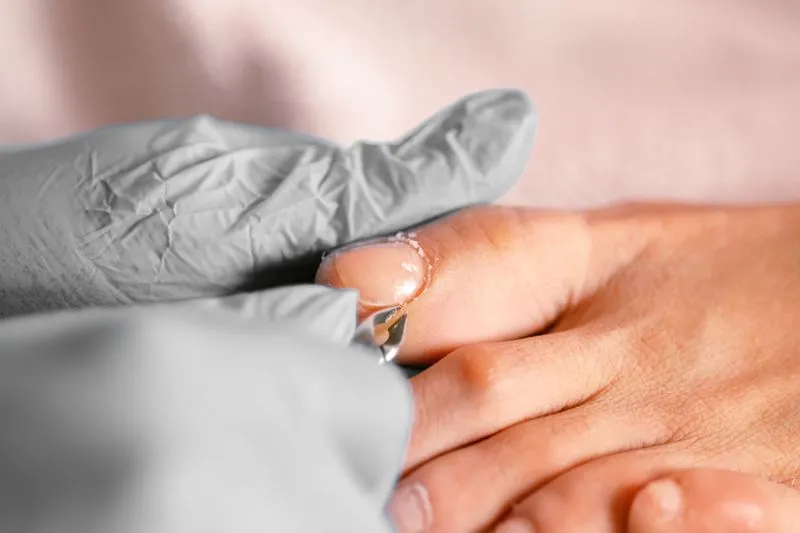
A first appointment can feel a bit intimidating. There's nothing mysterious about it: the podiatrist examines your feet and works out what's going on. They can then safely remove the callus and advise on prevention, as the Royal College puts it. If you go private, ask for the price when you book.
When dry heels aren't just about dryness
Sometimes the cream doesn't work because the problem is somewhere else. The bpac review links cracked heels to several conditions: atopic eczema, psoriasis, an underactive thyroid, diabetes. None of them can be diagnosed in a bathroom mirror — and none of them is fixed with a tube of foot cream.
Athlete's foot is the sneaky one. The Royal College of Podiatry points out that it commonly affects dry, flaky areas, like the heel — so it can pass for plain dryness. The NHS page on athlete's foot adds that the skin on your feet may become cracked or bleed. Itchy between the toes? Skin peeling in fine flakes despite regular moisturising? Ask a pharmacist. Antifungal creams, sprays and powders are sold over the counter, and the NHS says they usually take a few weeks to work (see a GP if they don't, or if you have diabetes).
And yet we all tend to blame dryness first (me included). It often is dryness. Not always — and that's exactly what week three of the routine is there to check.
The mistakes that undo the routine (I've made nearly all of them)
- The twenty-minute scalding foot soak. It softens, it relaxes — and it weakens the skin you're trying to repair. Warm water, a short soak.
- The blade "just to even it out". A blade takes off too much skin at once. That's how you end up with a raw heel the night before a wedding (a disaster scenario, but a very realistic one).
- Cream between the toes. It stays there, so does the moisture — and that's an open invitation to fungal infections.
- Doing it all the night before. An intensive filing session on Friday night for sandals on Saturday? No. Skin filed at the last minute is red, sensitive and more fragile than before.
- Stopping once the sandals come out. It's the opposite: in summer, your heels work harder. Evening maintenance matters more in July than in April (yes, even on holiday).
- Walking around straight after the cream. Slippery feet, slippery floor — wait until it has sunk in, or put your socks on.
My advice for starting tonight? Dig out an old pair of cotton socks. Put a urea cream next to your toothbrush. And take a photo of your heels before bed. In four weeks, you compare — and your sandals will do the rest.
Frequently asked questions
How long does it take to fix cracked heels?
Allow around four weeks of regular care for a real difference. In people with heel fissures, the bpac review reports that a 25% urea cream improved pain, dryness and skin appearance within four weeks. The Royal College of Podiatry says it may take a week or two to start seeing results with a daily urea foot cream. A deep fissure that isn't improving after three weeks is worth a podiatrist's appointment.
Pumice stone or electric foot file: which is better?
A pumice stone is the gentlest option: you wet it and use it on skin softened by a bath or shower. An electric file is faster — which makes it easier to overdo. Either way, the rule is the same: file gently, once or twice a week. Stop as soon as the skin feels smooth. Blades and callus shavers are best left alone.
What percentage of urea is best for very dry heels?
A cream with around 10% urea is enough for a dry heel. If there's hard skin and small cracks, a 20 to 25% formula, such as a 25% urea heel balm, is a better fit. Above 30%, urea has a strong keratolytic effect: ask a pharmacist or podiatrist first, especially if the skin is broken or you have diabetes.
Does Vaseline help cracked heels?
Petroleum jelly is part of the East Sussex NHS leaflet's intensive overnight treatment: applied thickly, covered loosely with cling film, under cotton socks. In my routine, a thin layer on top of urea cream keeps everything in place until morning. It doesn't replace the urea cream, which is still the ingredient that softens and breaks down hard skin.
Should I soak my feet before filing?
It isn't essential: a shower is enough to soften the skin. If you do soak, keep the water warm rather than hot and the soak short. Dry carefully between your toes before applying cream.
What should I do if a heel crack bleeds?
Don't file it. Keep it clean, cover it with a clean or sterile dressing, and avoid strong creams on it. If the skin around it turns red, hot or swollen, or the crack weeps, see a podiatrist or your GP promptly. Deeper cracks can become infected.
Can I treat my own heels if I have diabetes?
Not without advice. The bpac review warns that people with diabetes are more prone to infection, and that heel fissures can lead to a foot ulcer when there's nerve damage or poor blood supply. The Royal College of Podiatry notes that people with diabetes or poor circulation may be eligible for NHS podiatry services — ask your GP. Moisturising is usually fine; filing and acid-based products go through a professional.
Nail bar pedicure or podiatrist: what's the difference?
A podiatrist is a health professional, educated to degree level and regulated by the Health and Care Professions Council. A nail bar pedicure is a beauty treatment. For simply dry heels, either can work; for a deep or painful fissure, it's a podiatrist.
Sources
- The Royal College of Podiatry — Your Guide to General Footcare (2021)
- East Sussex Healthcare NHS Trust, Podiatry — Dry Skin (Anhydrosis) and Skin Fissures (September 2022)
- Torbay and South Devon NHS Foundation Trust, Podiatry — Skin Care for Feet (December 2022)
- NHS — Athlete's foot
- bpac (New Zealand) — Cracked heels: stop them in their tracks, Best Practice Journal 65 (December 2014)
- Piquero-Casals J. et al. — "Urea in Dermatology: A Review of its Emollient, Moisturizing, Keratolytic, Skin Barrier Enhancing and Antimicrobial Properties", Dermatology and Therapy (2021)