Hot wax, cold wax strips, razor, electric epilator, depilatory cream, laser, IPL, electrolysis, threading, sugaring, tweezers. Eleven methods. Each with its devotees, its detractors, and a pain level somewhere between "fine, really" and "why am I doing this to myself". This comparison sets out what each one REALLY does to your skin, your bank balance and your patience — and, at the end, which one I'd keep in your shoes.
My big bathroom clear-out on 5 April had spared one place: the bottom drawer, where everything ends up. On Sunday at half past four, in my second-floor flat in Hackney (no lift), I finally emptied it to see where I stood before the first bare-legged days. The inventory: a half-used box of cold wax strips (the last three welded together), two razors, one of them bladeless, a tube of hair removal cream with no opening date on it (straight in the bin, marker-pen rule) and a pair of tweezers that has survived everything. Four methods. Zero strategy.
Plenty of us work this way, because hair removal is rarely a rational decision. It's usually the method your mum taught you, or the one you drifted into thanks to a three-for-two at Boots. And then you just carry on — even when it itches, even when it grows back in three days, even when you burn yourself with the wax. This guide lays it all out — how long each method lasts, how much it hurts, what it costs and who shouldn't use it — with sources you can open yourself.
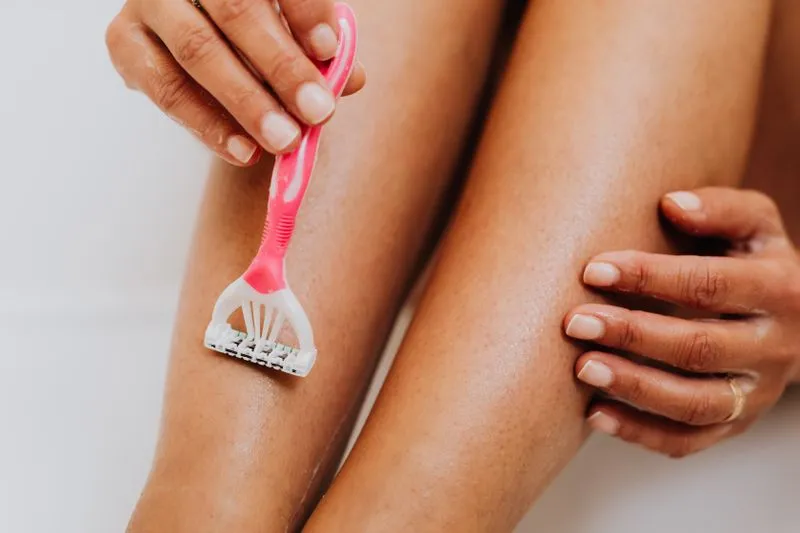
The razor: fast, cheap, misunderstood
The razor is the most ordinary method of all — and the most maligned. You may have been told that shaving makes hair grow back thicker, coarser or darker. No. The blade cuts the hair at the skin's surface; it doesn't touch the follicle or the growth rate. Cleveland Clinic's dermatology explainer on shaving and regrowth puts the illusion down to the shape of the hair. Once it's cut short, you see the darker, thicker base rather than the fine tip — and the freshly cut edge feels prickly. Let it grow out and it's back to its old texture.
The real advantages of the razor:
- Fast (a few minutes for both legs).
- Painless, as long as the blade is in good shape.
- No minimum hair length.
- Cheap: a handle, some blades, a gel.
The real disadvantages:
- Results don't last: you'll often need to shave daily or every couple of days (the hair isn't pulled out, just cut).
- Nicks, razor burn and ingrown hairs when technique is poor.
- That sandpaper feeling as it grows back.
On the bikini line and underarms, the razor works but needs the most care (ingrown hairs, folliculitis). The NHS page on ingrown hairs advises not shaving too close — leaving some stubble can stop bacteria getting in — and suggests switching to another method, such as a hair removal cream, or a longer-term one like laser.
Waxing: hot, cold, strip-free — the real differences
Wax pulls the hair out by the root. The result: smooth skin for a few weeks, sometimes longer, according to the American Academy of Dermatology, against a day or a few days with a razor. And because the hair grows back with its natural fine tip, you skip the prickly regrowth. That's its big selling point. Now for the catch.
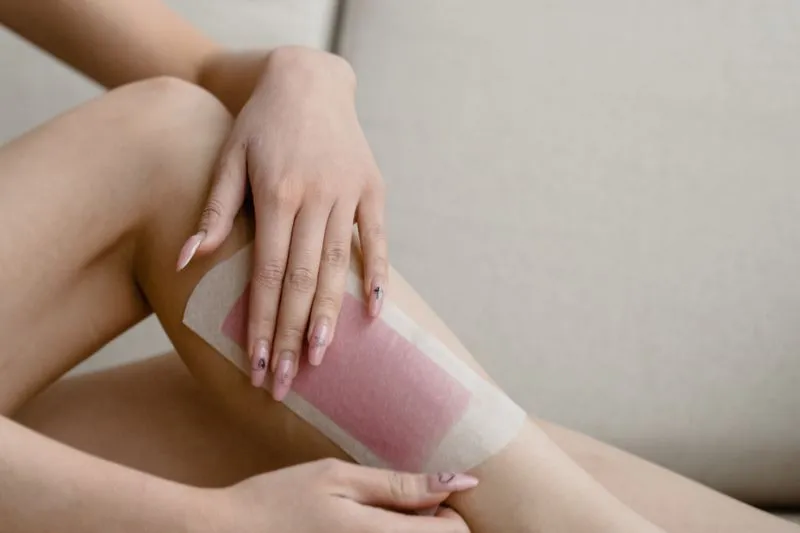
Hot wax (strip-free)
Applied warm, it grips short hairs and awkward areas better. More painful than strips (in my experience), but more thorough. Strip-free wax is worked in small sections, which makes it handy for the bikini line — and the AAD's own advice is that a Brazilian is best left to a professional.
Cold wax strips
Practical, quick, less messy — but less effective on short or fine hair. Strip quality varies a lot from brand to brand — try one box from Boots or Superdrug before you stockpile five.
Key points on waxing:
- Hair length: the AAD's step-by-step guide to waxing at home suggests roughly a quarter to three-quarters of an inch (about 6mm to 2cm). After shaving, let it grow before you book.
- Don't go over the same patch again and again in one session: at some point it's no longer the hair coming off, it's the skin.
- No wax on sunburnt, very sensitive or broken skin.
- Contraindications worth knowing: isotretinoin (the severe-acne treatment) taken in the last six months. Retinoids (retinol, tretinoin) should be paused for a few days before waxing your face — you'll see where they sit in a complete beauty routine, step by step.
The electric epilator: is the pain worth it?
Yes, an electric epilator is worth the pain if you want several weeks' break with no appointments and you can get past the first few sessions; no for underarms and bikini line. The device lines up tiny rotating tweezers that pull out several hairs at once. It's mechanical, it's thorough, and the first few goes are rarely a relaxing experience.
The case for it fits in two sentences. Like wax, it takes the hair out by the root — so regrowth is counted in weeks rather than days — for a one-off purchase and no salon bookings. "Wet & dry" models work in the shower, where warm water makes the whole thing more bearable (and the first session is the worst: after that, you know what's coming).
What's less often said: ingrown hairs can follow, especially if you never exfoliate, and very short hairs slip between the tweezers. For underarms and bikini line, plenty of people go back to the razor.
Depilatory cream: the chemistry, the results, the limits
Depilatory cream doesn't pull the hair out: it dissolves it. Its active ingredients — usually calcium or potassium thioglycolate — break the bonds in the hair's keratin so it comes away at the skin's surface. No root removal, so results close to shaving — a little longer-lasting, according to the AAD.
Those actives are irritating by nature. Hence that unmistakable sulphur smell, and hence the list of places to avoid: face (unless it's a face formula), irritated skin, sensitive areas.
Advantages:
- Painless.
- Quick on large areas such as legs.
- Easy to find, from the supermarket to the chemist.
Disadvantages:
- Strong, lingering smell.
- Risk of irritation and allergy: always patch test a small area first, sticking to the time on the pack.
- Never leave it on longer than stated, or your skin will burn or sting.
- Formulas differ hugely between brands: some go on without a murmur, others sting within a minute.

Laser and IPL: what the ads don't tell you
Along with electrolysis, laser and intense pulsed light (IPL) are the only methods in this comparison that aim for more than a breather — long-term hair reduction.
How do they work?
The light is absorbed by melanin, the pigment in the hair, which heats up and damages the follicle. So it works on dark hair. On white, grey, blonde or red hair, the American Academy of Dermatology is blunt: laser won't work, because there's too little pigment to absorb the energy. For light hair, the long-term option is electrolysis — hairs treated one by one with a fine needle.
Who's allowed to treat you in England?
This one surprises people. GOV.UK's guidance on laser and IPL registration in England is clear — practitioners who use IPL or lasers for purely cosmetic purposes don't have to register with the Care Quality Commission, even if they're doctors. Some local councils do require registration, so the rules depend on where you live. In practice, that puts the checking on you: ask who will hold the device, what training they've had, whether they're insured, and when they'll go through your medical history.
Clinic laser or at-home IPL
- Laser (at a clinic): the most powerful. North Bristol NHS Trust's laser hair removal page says most people need four to six sessions as an initial course, with top-ups once or twice a year. Price depends on the area and number of sessions: get a written quote before committing.
- At-home IPL (Philips Lumea, Braun Silk-expert, Ulike…): less powerful, and designed for medium to dark hair. Check the skin and hair colour chart in the manual before buying — if your combination isn't on it, the device isn't for you.
And if you're thinking "laser in May, smooth legs by July", do the maths. The same NHS trust asks patients to wear high-factor sunblock on the area before and during the course, and to skip sunbeds and fake tan; an active tan can delay treatment. A course is best started when the sun is scarce.
Before the first session, tell the clinic about every medicine you take, prescribed or over the counter: North Bristol NHS Trust's laser treatment FAQ explains that some medicines, such as some antibiotics and St John's wort, can make you over-sensitive to laser treatment and increase the risk of side effects. If you're pregnant, the same trust says most people prefer to leave laser treatment until afterwards. For at-home IPL, read the manual's list of exclusions in full before the first flash.
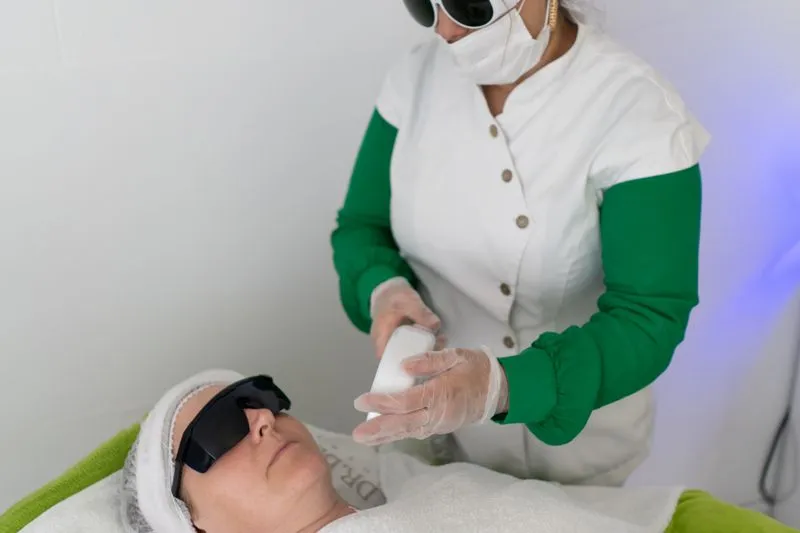
Electrolysis: the long-term option that works on light hair too
Electrolysis is the method to know about if your hair is blonde, red or grey. A fine needle slipped into the follicle delivers an electrical current that destroys the hair root, one hair at a time. The British Association of Dermatologists' patient leaflet on hirsutism says multiple treatments are often needed, that it can be painful (a local anaesthetic cream beforehand may help), and that it's relatively expensive, time-consuming and not normally available on the NHS. The American Academy of Dermatology's guide to hair removal methods adds that it can remove unwanted hair permanently and works on all hair types, including the light hairs lasers can't remove, with no maintenance sessions once the hair is gone. The NHS is more cautious: it describes electrolysis and laser as longer-lasting treatments that are not usually permanent — so treat "permanent" as the best case, not a promise.
The needle goes into your skin — so hygiene is not a detail. The BAD leaflet says to check that the operator is qualified and registered with the British Institute and Association of Electrolysis, and that they use new, disposable needles rather than re-sterilised ones. It doesn't recommend home electrolysis machines, and lists scarring as a potential side effect; the AAD adds that darker skin can develop keloids, a type of raised scar.
Given the pace — one hair at a time — I'd keep it for a few very visible light hairs, not two whole legs.
Threading and sugaring: the old-school methods
Threading
Threading rules over eyebrows, upper lip and the face. A twisted cotton thread catches the hairs and pulls them out in rows. It's very precise and, according to the AAD, causes little irritation — an option for sensitive or acne-prone skin. Results last four to five weeks. Hard to do on yourself — head to a threading bar. (And tweezers, in all this? Unbeatable for touch-ups, nothing more.)
Sugaring
A paste of sugar, lemon juice and water, heated, then spread against the direction of hair growth and flicked off in the direction of growth — the reverse of waxing. Fans find it gentler than wax because it mostly grips the hair. It rinses off with water, and you can make it at home.
Comparison table of hair removal methods: duration, pain, cost, contraindications
The durations follow the sources in this article. Pain is an indicative score out of 5. Cost is a ballpark — low, medium, high — because prices vary too much between cities and salons for a single figure to mean anything. The last column gathers the contraindications and precautions given by the sources cited.
| Method | How long it lasts | Pain /5 | Cost (ballpark) | Contraindications and precautions |
|---|---|---|---|---|
| Razor | A day to a few days | 1 | Low | Irritation from frequent shaving; ingrown hairs, more likely with coarse or curly hair |
| Cold wax strips | A few weeks | 3 | Low to medium | Isotretinoin in the last six months, a current antibiotic or tretinoin; never on sunburnt skin |
| Hot wax at a salon | A few weeks | 4 | Medium to high | Same as strips; burns if the wax is too hot |
| Electric epilator | A few weeks | 3-4 | Low (one-off purchase) | Ingrown hairs possible; not for underarms or bikini line |
| Depilatory cream | A little longer than shaving | 1 | Low | Patch test, then wait 24 hours; stick to the areas on the pack |
| At-home IPL | Gradual reduction, with upkeep | 2 | High in year one (buying the device) | Check the device's skin and hair colour chart and its list of exclusions; no tan, sunbeds or fake tan |
| Clinic laser | Long-term reduction (four to six sessions, then top-ups) | 2-3 | High | A tan (wait for it to fade); medicines that can make skin over-sensitive to laser, such as some antibiotics; a practitioner experienced with your skin tone |
| Electrolysis | Long-term, can be permanent (AAD), after several sessions | 3 | High | Qualified operator, new disposable needles; scarring possible, keloids on darker skin |
| Sugaring | A few weeks | 3 | Very low (homemade) | Test the temperature on your wrist |
| Threading | Four to five weeks | 2-3 | Low to medium (at a salon) | Little irritation, suits sensitive or acne-prone skin; not for large areas |
My take, if you only remember one line: a well-used razor for everyday, wax or sugaring for holidays, and laser only if your hair is dark and you can start well away from summer. The rest comes down to pain threshold and patience — and that call is yours.
And by profile:
- Sensitive skin: threading for the face, which the American Academy of Dermatology says causes little irritation, a well-used razor for the rest, and cream only after a patch test.
- Light hair (blonde, red, grey): forget laser and IPL — for something long-term, it's electrolysis.
- Tight budget: a razor for everyday and homemade sugaring for legs.
Aftercare that makes a real difference
Hair removal either pulls or cuts: either way, your skin takes a hit. What you do next — in the hours, then the days afterwards — largely decides whether you get redness, little spots and ingrown hairs.
Straight after waxing, epilating or sugaring
- A soothing lotion (aloe vera, bisabolol, panthenol), or a cold compress if it's burning.
- No scalding shower that day: what very hot water does to your skin applies to freshly waxed legs too.
- Loose clothes rather than tight jeans over the bikini line.
- No direct sun on freshly treated skin.

In the days that follow
- Exfoliate gently once the skin has calmed down, to help regrowing hairs break through: the right way to exfoliate your body applies here as it is.
- Moisturise the treated areas daily with a light, non-greasy cream.
- A pharmacist can suggest exfoliating products that help prevent ingrown hairs, as the NHS page on ingrown hairs points out.
Frequently asked questions
How many laser sessions do you really need?
North Bristol NHS Trust says most people need four to six sessions as an initial course, then top-ups once or twice a year. The American Academy of Dermatology talks about six or more sessions on an area. So a course runs over several months, and it needs planning well before summer, since a tan can delay treatment.
Is hair removal riskier on darker skin tones?
Some methods need more care. Laser is still possible on darker skin — with the right type of laser and a practitioner experienced with your skin tone. (The NHS centre in Bristol uses a long-pulsed Nd:YAG laser for darker skin.) The risk of pigment changes is higher on naturally dark skin. At-home IPL isn't designed for every skin tone, so check the device's chart. Coarse or curly hair is more prone to ingrown hairs after shaving. With electrolysis, the American Academy of Dermatology flags a risk of keloids (raised scars) on darker skin. Wax and sugaring are still options if you test the temperature first; threading involves no heat at all.
Does hair removal cause ingrown hairs?
Shaving is the classic culprit, especially against the grain, too close to the skin or with a blunt blade. The NHS notes that coarse or curly hair makes ingrown hairs more likely. Epilators can cause them too if you never exfoliate. Prevention comes down to three habits: shave in the direction of growth, exfoliate gently, moisturise.
Can you combine several methods?
Yes, and it's often the best approach: razor for underarm upkeep, wax or sugaring for legs, threading for brows. One big exception: during a laser course, North Bristol NHS Trust asks patients not to wax, pluck or use depilatory creams. Shaving or trimming is fine between sessions.
Does laser work on blonde, red or grey hair?
No. North Bristol NHS Trust states that laser treatment doesn't work on white or blonde hair, and the American Academy of Dermatology adds red and grey hair to the list. For those colours, the options are shaving, waxing, sugaring, threading — or electrolysis, which the NHS lists among professional treatments for excess hair.
Is removing all your pubic hair medically discouraged?
The data calls for caution rather than alarm. A US study on pubic hair grooming and sexually transmitted infections appeared in 2017 in the journal Sexually Transmitted Infections. Based on 7,580 people, it found an association between grooming and self-reported STI history, stronger among those who removed everything, frequently. That's a correlation, not proof of cause. If you do go fully bare: clean tools you don't share, no micro-cuts, and see someone if irritation persists.
Is laser hair removal available on the NHS?
Not for cosmetic reasons. The NHS page on hirsutism describes electrolysis and laser hair removal as treatments that are not usually available on the NHS and can be expensive, and notes that they're not usually permanent. If excess hair is bothering you, a GP can talk you through the options, including a prescription cream to slow facial hair growth.
Sources
- NHS — Ingrown hairs
- NHS — Hirsutism
- GOV.UK — Laser or intense pulsed light treatment registration (England)
- North Bristol NHS Trust, Bristol Laser Centre — Hair removal
- North Bristol NHS Trust, Bristol Laser Centre — Questions about laser treatment
- Cleveland Clinic — Will shaving make your hair grow back thicker? (2023)
- American Academy of Dermatology — 6 ways to remove unwanted hair
- American Academy of Dermatology — Hair removal: How to wax
- Osterberg et al., Sexually Transmitted Infections (2017) — Correlation between pubic hair grooming and STIs
- British Association of Dermatologists — Hirsutism (patient leaflet, 2021)