Back in 1978, two authors, Nürnberger and Müller, published a paper in a dermatology journal with a blunt title: So-called cellulite: an invented disease. Nearly fifty years on, it still affects 80% to 90% of women after puberty — and the shelves are heaving with creams, cupping sets, "sculpting" leggings (yes, really) and ultrasound gadgets that promise to make it disappear. Spoiler: none of them do. A few habits soften it a little, for a while, and it's worth knowing which ones.
It's mid-April, which means the "summer body" countdown has started on every magazine cover at the newsagent. This guide isn't part of it. It's the one I wish I'd had at 22 — when I was pinching my thighs in front of the mirror wondering what was wrong with me. The answer: nothing. Absolutely nothing. But I would have liked to understand what cellulite is biologically, what softens its appearance (no miracles) and what I could stop buying.
What is cellulite, really?
Cellulite, or "orange peel skin", is a change in the structure of the skin and the fatty tissue just beneath it. The medical literature gives it some heavyweight names: gynoid lipodystrophy, oedematous fibrosclerotic panniculopathy (yes, doctors do love an intimidating name).
Here's the mechanism, as described in Gabriel and colleagues' 2023 review of cellulite. Under the skin, lobules of fat push upwards. Fibrous bands (septa) connect the skin to the deeper layers and pull it down. Wherever a thick band tethers the skin, a dimple forms. It's not about extra pounds: it's architecture.
And that architecture differs between the sexes. In women, the bands run vertically, at right angles to the skin. In men, they sit at roughly 45° and criss-cross — more of them, and stronger. The result: even men carrying extra weight rarely get dimpling.
Why 8 or 9 women in 10 have cellulite, and why your weight doesn't explain everything
First myth to bin: cellulite isn't reserved for women who are overweight. Gabriel's review puts it at 80% to 90% of women after puberty (women of every ethnic background, although white women appear more prone), and says it most often appears between 20 and 30. Do the maths — at that rate it has to include slim women, athletes and women who eat "perfectly" (by whatever standard is in fashion).
The main factors behind yours:
- Biological sex: the vertical orientation of the bands is typically female, and oestrogen probably plays a central role. Men almost never have it, apart from rare cases of androgen deficiency (a shortage of so-called male hormones).
- Hormones: high-oestrogen phases — pregnancy, breastfeeding, long-term use of the pill, HRT after menopause — appear to make it worse.
- Genetics: it's one of the recognised risk factors. If your mum has it, stop looking for someone to blame — there's no blame.
- Age: over the years, the dermis (the layer beneath the skin's surface) thins and loses collagen, which lets fat bulge through more.
- Circulation: one theory (the vascular hypothesis) links cellulite to tiny blood vessels leaking fluid between the fat lobules. It remains one theory among several.
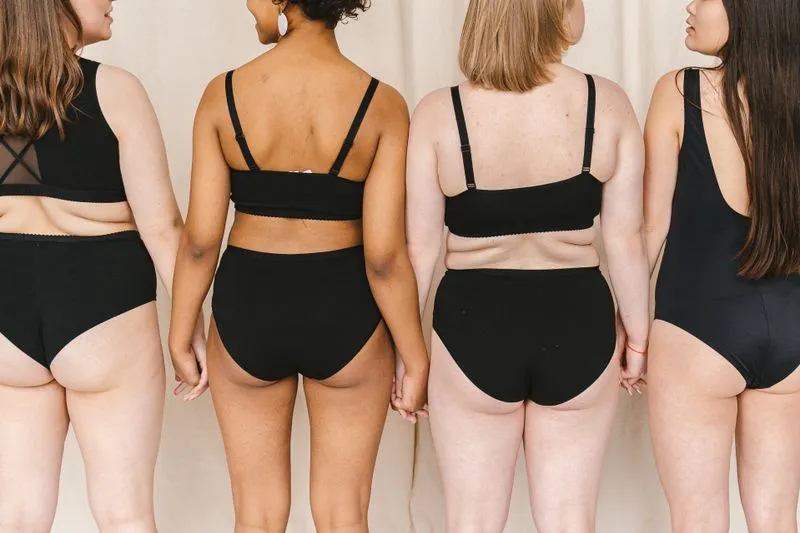
The 3 "types" of cellulite — and the scales used in clinical trials
In a beauty salon, you'll hear about three types (and be offered the course of sessions to match): fatty, watery and fibrous. It's a handy way to talk about it — but it isn't the classification used in clinical studies. Treat it as vocabulary, not a diagnosis.
1. So-called fatty (adipose) cellulite
Soft, visible when you stand, and more pronounced when you pinch the skin. It shows up mostly on the thighs, buttocks and hips. It's the type weight gain makes most obvious, so it's the one where movement and a balanced diet have some grip.
2. So-called watery cellulite
It gets blamed on fluid retention and heavy legs, and it's said to be worse in summer. Salons treat it with lymphatic drainage, and the shelves offer red vine leaf or butcher's broom capsules. The evidence is thin. And if your legs properly swell, show them to your GP — oedema or lymphoedema can look like cellulite and need completely different care.
3. So-called fibrous cellulite
Firmer, sometimes tender when pinched, with a "mattress" look. It's the most stubborn — which makes sense: it's the fibrous bands doing the pulling. Creams won't touch it. The techniques that cut or release those bands, such as subcision, give the longest-lasting results.
In clinical trials, two scales dominate. The simpler one, the Nürnberger-Müller scale, has four grades: 0, smooth skin standing and lying down; I, smooth at rest but dimpled when pinched; II, dimpling visible when standing; III, dimpling visible even lying down. The other, the Cellulite Severity Scale (CSS), scores five features (number and depth of dimples, surface pattern, skin laxity and the Nürnberger-Müller grade) for a total of 0 to 15. Less catchy than "watery cellulite" — but far more useful.
What doesn't work on cellulite (or barely)
The cellulite market sells a lot and proves very little. In 2015, a systematic review of 67 studies on cellulite treatments found only 19 randomised, placebo-controlled trials — and no clear evidence of good efficacy for any treatment it assessed. In the UK, the advertising regulator is just as blunt: the ASA and CAP's advice on cellulite claims states that "The ASA and CAP have yet to see convincing evidence that topical products, medical devices or cosmetic treatments can treat, remove or reduce cellulite or the appearance of cellulite."
Standard anti-cellulite creams
Caffeine, theophylline (a cousin of caffeine), retinol, plant extracts: these are the most studied ingredients. A handful of placebo-controlled trials showed some improvement with caffeine or retinol, but in small groups and over short periods. At best, firmer-looking skin. The architecture stays exactly where it was. In the US, no anti-cellulite cream is approved by the FDA (the American medicines regulator).
Rubber cupping sets
The idea: suction the skin to massage it. Cupping didn't feature among the treatments assessed in the medical reviews I read for this guide. If you like the sensation, fine — keep the cup moving, go gently, and stop if it hurts or leaves marks.
"Anti-cellulite" leggings
They compress. Like support tights. Some women find that comfortable when working out — but no fabric can alter the fibrous bands sitting under your skin.
The "detox" cure
No "detox" has proved itself on cellulite. So-called draining or antioxidant supplements (red vine leaf, ginkgo, centella, fish oil) have very little clinical evidence behind them, according to Gabriel and colleagues. Juice cleanses and "slimming" teas do no better.
What softens cellulite a little, and what it changes
Gabriel and colleagues' 2023 review says it plainly: there is no effective treatment for cellulite, most approaches give unpredictable results and any improvement is short-lived. What follows improves the look of your skin — a little, and for as long as you keep it up.
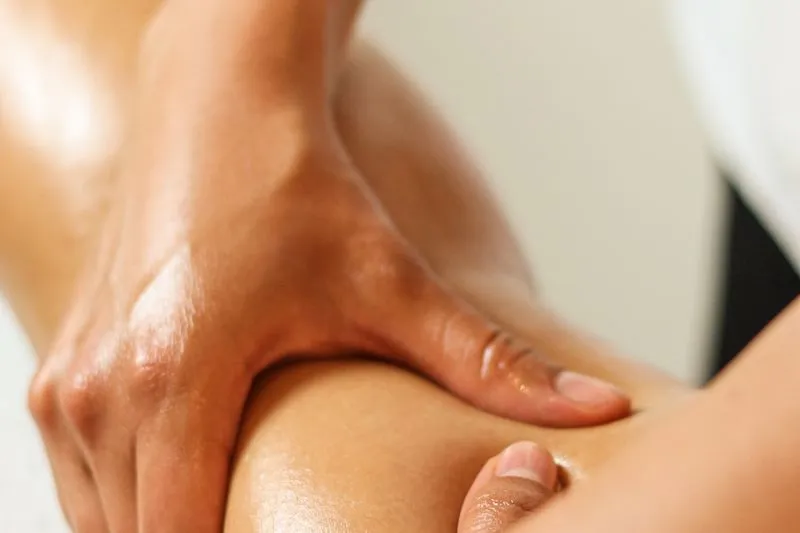
Skin-rolling massage (palper-rouler)
It's one of the oldest moves against cellulite: lift a fold of skin and roll it between your fingers, working upwards. The idea is to stimulate lymphatic drainage. In practice, clinicians rarely do it by hand any more — the mechanised version is called LPG Endermologie.
DIY version: on dry skin or with a light oil, a few minutes per area, several times a week. For me, the effect shows mostly on the same evening — skin that feels softer and smoother. It doesn't vanish.
Caffeine… with massage
The difference lies in how you apply it. A caffeine cream dabbed on in two seconds and forgotten does very little. The same cream massaged in for several minutes? In my view, the massage does most of the work — the active is a bonus. The earliest attempts to treat cellulite already paired the two: a cream and vigorous massage. If you buy a cream, massage it in.
Skin hydration
Well-moisturised skin looks suppler and more even, and orange-peel texture shows a little less. A body cream or oil every day, and your skin looks better, dimples or not.
Cellulite treatments at the clinic: what the studies say
If you want to go further than a home routine, here's where the evidence stands. Spoiler: it's thin for most techniques — and stronger for the ones that target the fibrous bands.
LPG Endermologie
A device with motorised rollers suctions the skin and rolls it: mechanised skin rolling, approved in the US by the FDA for cellulite. Observational studies report a clear improvement after 15 sessions of 30 to 45 minutes, twice a week — without saying how long it lasts. One randomised trial found it only slightly better than an aminophylline cream (another caffeine cousin). And the bill climbs fast — you need a whole course of sessions.
Cryolipolysis (fat freezing)
The principle: cool a pinch of fat to reduce the fat inside it. It targets localised fat deposits, not skin texture. You can shrink a bulge without smoothing a single dimple — and cryolipolysis doesn't even appear among the cellulite treatments reviewed by Gabriel and colleagues in 2023.
Radiofrequency
Heat delivered into the deeper layers of the skin to stimulate collagen and firm things up. Newer devices have improved the look of cellulite in clinical studies, although Luebberding and colleagues' 2015 systematic review found important methodological flaws in many of them. The downsides: several sessions before you see anything, results that don't last, and sometimes bruising (which does fade).
Subcision: cutting the bands
This is the technique that goes after the mechanical cause: under local anaesthetic, a doctor cuts the fibrous bands pulling the skin down. With a vacuum-assisted system (Cellfina), 93% of participants with moderate to severe cellulite had improved by at least one point on the CSS, a 0-to-15 scale, a year after a single session, and results lasted more than three years. The trade-off: bruising, swelling, temporary soreness. It's a surgical procedure, to discuss with a doctor.
Qwo injections (collagenase)
An enzyme, collagenase, injected to dissolve the bands behind the dimples. The FDA approved it in 2020 for cellulite on the buttocks, and trials showed improvement still present at two years. But on 6 December 2022, the manufacturer announced it was stopping production and sales, because of extensive, variable bruising and a risk of prolonged skin discolouration. If anyone offers it to you, be suspicious — it's no longer made.
Diet and cellulite: the real connection (no miracle diets)
Diet doesn't cause cellulite. It affects what makes it worse — weight gain above all. Medical reviews recommend a low-fat, low-salt diet, regular exercise and cutting back on smoking and alcohol — general lifestyle advice that doesn't treat cellulite.
What makes it worse
- Weight gain: as fat lobules grow, the dimples deepen. And the bands, stretched by the weight gained, don't shrink back when you lose it.
- Alcohol: it pushes the body to make more fat.
- Refined sugars and sitting still: a very high-carbohydrate diet combined with little movement drives insulin up — and fat storage with it.
- Salt: the NHS says that adults should have no more than 6g of salt a day, around one level teaspoon. I couldn't find a single study measuring what cutting salt does to orange-peel skin itself. Your blood pressure is another matter: the same NHS page warns that eating too much salt can cause high blood pressure.
What helps (no miracles)
- A stable weight: no rapid gain, no crash loss. Excessive weight loss can slacken the skin and make cellulite look worse, Gabriel and colleagues warn.
- Drinking when you're thirsty: good for you. But I haven't seen any study showing that an extra litre of water smooths orange-peel skin.
- Fruit, vegetables, oily fish: excellent for your health. The supplements made from them (fish oil, antioxidant plant extracts) have very little evidence on cellulite.
Exercise and cellulite: why squats won't smooth your thighs
Exercise won't melt the cellulite off one particular area: what it mostly does is help keep your weight stable — so the dimples don't deepen.
What exercise does:
- It builds your thigh and glute muscles, which changes your shape.
- It's good for your physical and mental health, cellulite or not.
What exercise does NOT do:
- Target fat in one specific area. In a 2011 study of 24 sedentary adults by Vispute and colleagues, six weeks of abdominal exercises, five days a week, didn't reduce belly fat under the skin. Same logic for thighs: squats build the muscle, they don't "burn" the fat sitting on top.
- Alter the fibrous bands under your skin.
- Make cellulite disappear.
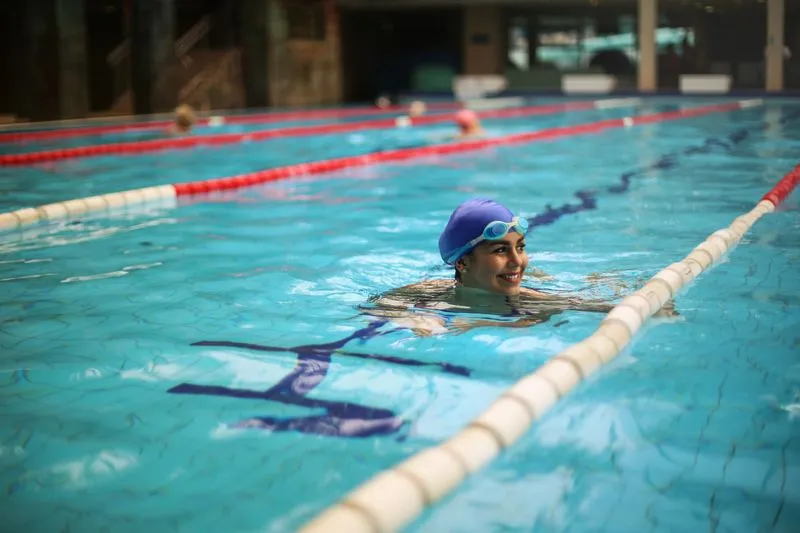
The benchmark to aim for is the NHS one: at least 150 minutes of moderate intensity activity a week, plus strengthening activities on at least two days. Swimming, cycling, brisk walking, a Sunday hike: the best exercise is the one you'll still be doing in November. Add squats, lunges and hip thrusts (a weighted glute bridge) for your glutes and thighs.
Accepting your cellulite: the option nobody mentions
Let me put something on the table: you can also choose to do nothing. And that's a completely legitimate choice.
Models have cellulite (retouching and lighting do the rest). Influencers too (it's the angle, the pose, the filter). Your yoga teacher. Your mum. Probably your GP (who has never mentioned it, and rightly so).
Cellulite isn't a disease, and it isn't a threat to your health. In their 1978 paper, Nürnberger and Müller already described it as normal — and near-inevitable — in women, and questioned the point of treating a non-disease. The problem is an industry that has convinced us a normal feature is a flaw to fix. In the US, according to Gabriel and colleagues, members of the American Society for Aesthetic Plastic Surgery performed more than 86,000 minimally invasive cellulite treatments in 2021 — the belief pays.
If you want to treat your cellulite because it makes you feel more at ease in your body — brilliant, this guide is here for that. But if you're doing it because you've absorbed the idea that you should get rid of it before summer, it's worth asking where that idea came from.
An honest anti-cellulite routine
A routine that holds up, without breaking the bank or promising miracles. It slots into your complete beauty routine, in the right order, without adding more than a few minutes.
Morning
- Finish your shower cool (if you like it): I found no study linking it to cellulite. But it wakes you up — which is something. For your face, water temperature is a different question: here's what dermatology recommends on hot or cold water for washing your face.
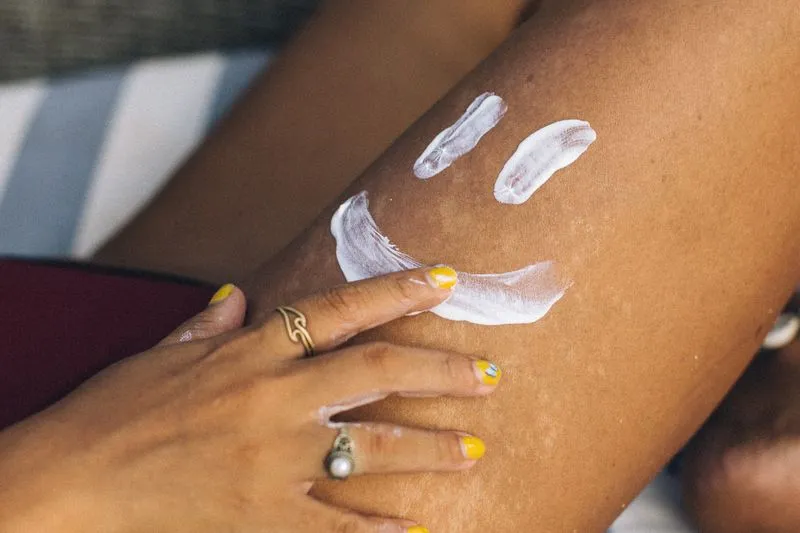
- Cream or oil + massage: apply your body product (caffeine, centella asiatica or a plain moisturiser), massaging for 3 to 5 minutes, working up from the ankles to the hips.
3 to 4 times a week
- Cardio: 30 to 45 minutes of brisk walking, swimming, cycling or moderate HIIT (interval training). Four sessions of 40 minutes and you're past the 150 weekly minutes.
- Strength training: 20 to 30 minutes for thighs, glutes and core.
- Skin rolling: 10 to 15 minutes, on dry skin or with an oil. Pinch and roll the skin, working upwards.
Twice a week
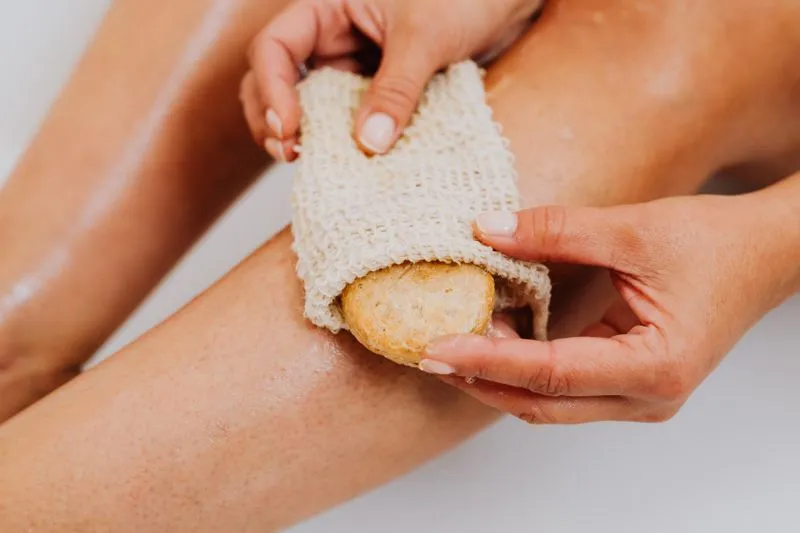
- Body scrub: it softens the skin and preps it for massage. No more often than that — so you don't irritate it.
Diet (every day)
- Less salt and less alcohol
- Drink when you're thirsty
- Fruit, vegetables, oily fish
- A stable weight rather than yo-yo diets
If you want to go further
- An appointment with a dermatologist, to find out which options are worth it for you
- A course of Endermologie, knowing the effect is modest
- Radiofrequency: several sessions, temporary results
- Subcision, for dimples visible at rest: a medical procedure
Frequently asked questions
Can cellulite disappear completely?
No, not completely and not for good. Literature reviews conclude that no treatment makes cellulite disappear: most soften it — and the effect wears off. Techniques that cut the fibrous bands, such as subcision, give the most durable results (more than three years in one study), without amounting to a cure. What's realistic: softer skin and slightly less visible cellulite, as long as you keep it up.
Does exercise alone get rid of cellulite?
No. Exercise helps keep your weight stable and builds your thigh and glute muscles, which can make cellulite less visible. But it doesn't touch the fibrous bands, and it can't target one area: six weeks of abdominal exercises, five days a week, didn't reduce belly fat in the study published by Vispute and colleagues in 2011.
Do cupping sets work?
Nothing proves it. They don't appear among the treatments assessed in the medical reviews I consulted. They massage, like your fingers do: slightly suppler skin straight afterwards, nothing more demonstrated. If you use them, go gently.
Is there an anti-cellulite cream that works?
None changes the architecture of the skin. Caffeine or retinol creams showed some improvement in a few small, short placebo-controlled trials. The rest is mostly down to the massage: a cream worked in properly leaves skin softer and smoother-looking. In the UK, the ASA says it has yet to see convincing evidence that topical products can reduce cellulite, and in the US no cream is FDA-approved to treat it.
Is cellulite linked to weight?
Partly. Weight gain deepens the dimples, because fat lobules grow and push harder against the skin. But cellulite affects 80% to 90% of women, slim ones included, and men rarely have it even when overweight: the architecture of the bands matters more than the scales. And losing weight doesn't reset everything: the bands stretched by weight gain don't shrink back when you lose it; after major weight loss they stay elongated and weak, which makes treatment more complicated.
At what age does cellulite appear?
At any point after puberty, most often between 20 and 30. High-oestrogen phases (pregnancy, breastfeeding, long-term use of the pill, HRT after menopause) appear to make it worse. With age, the dermis thins and cellulite tends to become more visible.
Is LPG Endermologie worth the investment?
Not if you want permanently smooth skin. Observational studies report improvement after around fifteen sessions at two a week, without saying how long it lasts. One randomised trial found it only slightly better than an aminophylline cream. If the massage feels good and you can afford it, why not.
Do cellulite supplements do anything?
There's very little evidence. Red vine leaf, ginkgo biloba, centella asiatica, bladderwrack, fish oil or borage oil: these extracts are sold for their antioxidant effects, but the clinical data on cellulite is very thin. One lead worth watching: a placebo-controlled trial reported improvement in women with moderate cellulite after six months of oral collagen. One trial isn't proof, and no capsule replaces moving your body.
Sources
- Gabriel A. et al. — "Cellulite: Current Understanding and Treatment" — Aesthetic Surgery Journal Open Forum (2023)
- Luebberding S., Krueger N., Sadick N.S. — "Cellulite: an evidence-based review" — American Journal of Clinical Dermatology (2015)
- Sadick N. — "Treatment for cellulite" — International Journal of Women's Dermatology (2019)
- Nürnberger F., Müller G. — "So-called cellulite: an invented disease" — Journal of Dermatologic Surgery and Oncology (1978)
- Vispute S.S. et al. — "The effect of abdominal exercise on abdominal fat" — Journal of Strength and Conditioning Research (2011)
- ASA / CAP — Weight control: Cellulite (advertising advice)
- NHS — Salt in your diet
- NHS — Physical activity guidelines for adults aged 19 to 64
- NHS — Before you have a cosmetic procedure