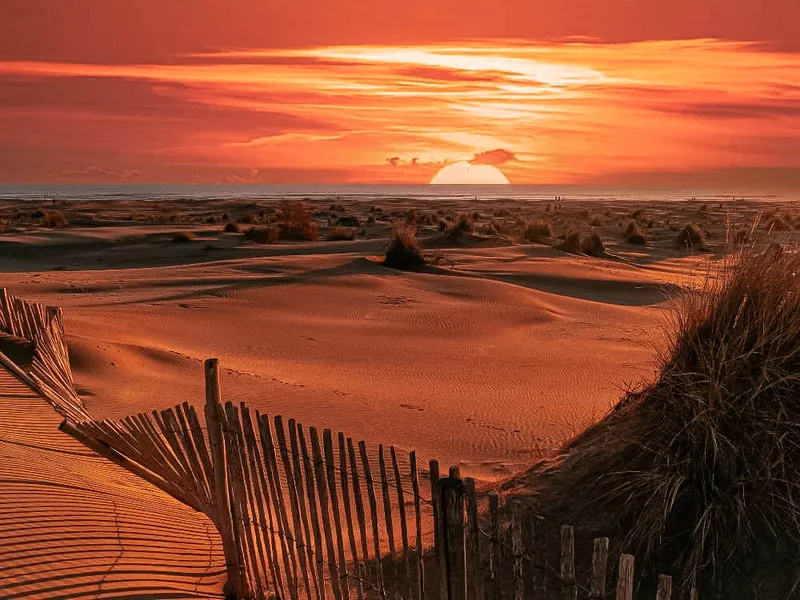
Every summer, the same lists appear. "France's Top 10 Beaches." Inevitably, they include the Côte d'Azur (because obviously), a token Corsican entry (because it photographs well), and perhaps one Atlantic beach for balance. They're the same ten beaches rearranged in a slightly different order, and they always leave me frustrated — because France has over 5,500 kilometres of coastline touching three different bodies of water, and reducing that to a listicle of the usual suspects does the country's extraordinary coastal variety a genuine disservice.
I've spent years visiting French beaches — not as a professional travel writer with a brief and a deadline, but as someone who genuinely loves the coast and has made it a personal project to seek out the beaches that don't appear on the first page of Google. The famous ones deserve their fame (Palombaggia in Corsica really is that beautiful), but some of the most magical beach experiences I've had in France were at places I'd never heard of until a local mentioned them, or a wrong turn down a coastal road led to a path through the dunes and — suddenly — a stretch of sand so perfect it felt private, even in August.
This guide is organised coast by coast, because French beaches vary dramatically depending on which stretch of shoreline you're on. The wild Atlantic surf of the Basque Country has nothing in common with the sheltered turquoise coves of the Var, and both are entirely different from the dramatic granite shores of Brittany. The coast you choose determines the experience you'll have, so let's take them one by one.
Brittany: wild granite and secret coves
Brittany's coastline is possibly France's most underrated. Rugged, windswept, and spectacularly varied, it offers everything from vast sandy bays to tiny coves wedged between pink granite cliffs. The water is cold — let's be honest about that immediately — but the landscapes are extraordinary, and in July and August, with the right weather, swimming is perfectly viable if you're not expecting Mediterranean temperatures.
Plage de l'Île Vierge, Crozon Peninsula (Finistère). Accessible only by a steep coastal path, this small beach sits between dramatic rock formations with turquoise water that looks Photoshopped but isn't. The hike down takes about 20 minutes and discourages casual visitors, meaning it stays relatively quiet even in high summer. The sand is white, the water is clear, and the sense of discovery when you round the final corner and see it is genuine.
Plage de Saint-Guirec, Ploumanac'h (Côtes-d'Armor). This is the famous pink granite coast — enormous rounded boulders in shades of rose and amber framing a sheltered sandy beach. Saint-Guirec is small, photogenic beyond reason, and home to a medieval oratory built on a rock in the bay. It's popular but not overwhelmingly so, and the surrounding Sentier des Douaniers coastal path provides access to quieter adjacent coves.
Plage des Grands Sables, Île de Groix (Morbihan). A convex beach — one of the few in Europe where the sand curves outward rather than inward. Accessible by ferry from Lorient, the island is car-free in summer, which gives the entire experience a pace and tranquillity that mainland beaches can't match. The sand has a distinctive white-and-garnet colour from the island's unique mineral geology.
Plage de Donnant, Belle-Île-en-Mer (Morbihan). Belle-Île is Brittany's largest island, and Donnant is its most dramatic beach: a deep cove flanked by wild cliffs, exposed to Atlantic swells that produce serious surf. The approach via winding coastal road is cinematic. Swimming requires caution due to currents, but for landscape beauty, it's among the most striking beaches in France.
Normandy: wide sands and dramatic cliffs
Normandy's coastline alternates between vast sandy beaches backed by dunes and dramatic chalk cliffs that drop straight into the Channel. The beaches are often enormous — at low tide, the sand stretches for hundreds of metres — and the light has a quality that has attracted painters since the Impressionists. The water is cool (similar to Brittany) and the weather is variable, but on a good day, a Norman beach can rival anything further south.
Étretat (Seine-Maritime). Not just a beach — an event. The chalk cliffs of Étretat, with their natural arches and the needle-like Aiguille, form one of France's most iconic coastal landscapes. The pebble beach below the cliffs is less comfortable for sunbathing than sandy alternatives, but the setting is so dramatic that comfort becomes secondary. Visit early morning or late afternoon to avoid the heaviest crowds. The cliff-top walk provides astonishing perspectives.
Plage de Deauville (Calvados). Glamorous, manicured, and quintessentially Norman. Deauville's beach is famous for its colourful parasols and the wooden boardwalk (Les Planches) where well-dressed Parisians have been parading since the 19th century. The beach itself is wide and sandy, the beach huts are photogenic, and the town behind offers excellent seafood restaurants. It's a different energy from wild Brittany — polished, elegant, slightly theatrical.
Plage de Barneville-Carteret (Manche). On the western Cotentin Peninsula, facing the open Atlantic rather than the Channel, Barneville-Carteret has a long, exposed beach with excellent sunset views toward the Channel Islands. Less visited than the more famous Norman beaches, it has a relaxed, local feel. The town is a proper fishing port, which means fresh seafood is a given.
The Atlantic coast: surf, dunes, and endless horizons
The French Atlantic coast — from the Loire estuary south through the Vendée, the Charente-Maritime, and the Gironde to the Landes — is defined by one thing: scale. The beaches here are vast. Some stretch for tens of kilometres without interruption, backed by dunes that can reach 100 metres in height. The surf is consistent, the sand is golden, and the sunsets over the open ocean are spectacular.
Plage de la Côte Sauvage, Île de Ré (Charente-Maritime). The "wild coast" of Île de Ré — the western, Atlantic-facing side — is a dramatic contrast to the island's sheltered eastern beaches. Wide, windswept, and backed by dunes and pine forest, it has serious waves and serious beauty. Swimming is restricted in places due to currents, but for walking, surfing, and sheer atmospheric power, it's magnificent.
Dune du Pilat, La Teste-de-Buch (Gironde). Europe's tallest sand dune (approximately 100 metres high) overlooks a stunning stretch of beach and the Banc d'Arguin sandbank. The beach at the base of the dune is accessed by climbing over the dune itself — a workout that makes arriving at the sand feel earned. The view from the top, across the Bay of Arcachon on one side and endless pine forest on the other, justifies the climb. It's busy in summer, but the scale absorbs the crowds.
Plage de Lacanau (Gironde). One of France's premier surf beaches. Consistent Atlantic swells produce waves that attract surfers from across Europe. The beach is enormous — several kilometres of golden sand — and the town behind it has developed a relaxed surf culture with board rentals, surf schools, and beachside bars. Even if you don't surf, watching competent surfers work the waves at Lacanau is genuinely entertaining.
Plage de Biscarrosse (Landes). The Landes coast runs for nearly 100 kilometres of virtually uninterrupted sandy beach, and Biscarrosse is its heart. Less developed than Lacanau, more authentically Landais, and backed by freshwater lakes where you can swim, windsurf, and kayak. The pine forests provide shade within walking distance of the beach — a practical advantage when the midday sun becomes fierce.
The Basque Country: where mountains meet the sea
The French Basque coast, from Bayonne to the Spanish border, is where the Pyrenees meet the Atlantic. The result is a coastline of dramatic contrasts: rocky headlands, small curved bays, colourful fishing villages, and a surf culture that rivals anything in the world. The beaches are generally smaller than the Landes ones to the north, but what they lack in scale they compensate for in character.
Côte des Basques, Biarritz (Pyrénées-Atlantiques). The beach where European surfing began in the 1950s. A curved bay beneath the cliffs of Biarritz, with a view south along the coast toward Spain. The setting is spectacular — the grandeur of Biarritz's Belle Époque architecture on the cliffs above, the Atlantic below. At high tide, the beach largely disappears; at low tide, it's expansive and beautiful. Sunset here is unmissable.
Plage d'Hendaye (Pyrénées-Atlantiques). The longest beach on the Basque coast and arguably the most family-friendly. Protected from major swells by its position in a bay, it has calmer water than most Atlantic beaches. The view across the bay to the dramatic fortress-like rocks of the Deux Jumeaux (twin rocks) and across the Bidasoa river to Spain gives it an atmosphere unlike any other French beach.
Plage de Guéthary. A tiny village between Biarritz and Saint-Jean-de-Luz with a small, picturesque beach beneath a clifftop village. Guéthary retains an authentically Basque character that Biarritz has partly lost to tourism — whitewashed houses with red shutters, a harbour where fishermen still work, and a pace of life that makes rushing feel inappropriate. The waves are excellent for experienced surfers.
The Mediterranean: Languedoc to the Riviera
The French Mediterranean coast divides into two distinct sections with very different characters. The Languedoc (from the Spanish border to Marseille) is flat, sandy, and large-scale — long beaches backed by lagoons and marshland, with modern resort towns built in the 1960s and 70s. The Riviera (from Marseille eastward) is the famous one: rocky coves, turquoise water, pine-covered headlands, and the glamour factor that has attracted the wealthy and famous since the 19th century.
Calanque d'En-Vau, Cassis (Bouches-du-Rhône). A steep-walled limestone inlet — a calanque — accessible only by boat or a 90-minute hike through garrigue scrubland. The effort is the point: En-Vau's turquoise water, white pebble beach, and towering cliff walls create a landscape so dramatic it feels cinematic. Bring everything you need because there are no facilities. The swim in crystal-clear water surrounded by 100-metre cliffs is an experience that stays with you.
Plage de Pampelonne, Ramatuelle (Var). The beach that defined the Riviera's modern image — five kilometres of golden sand behind which Saint-Tropez's beach clubs have operated since the 1960s. Yes, it's touristy. Yes, the private beach clubs charge absurd prices for sunbeds. But the public sections of Pampelonne are free, beautiful, and perfectly swimmable. The water is warm, shallow, and sheltered — proper Mediterranean conditions.
Plage de Paloma, Saint-Jean-Cap-Ferrat (Alpes-Maritimes). A small, sheltered cove on the exclusive Cap Ferrat peninsula. The water is extraordinarily clear — you can see the bottom at several metres' depth — and the setting, surrounded by pine trees and the villas of the ultra-wealthy, has a discreet luxury that's more appealing than the flashier Riviera beaches. Getting there involves a short walk from the car park, which keeps it manageable even in summer.
Plage de l'Espiguette, Le Grau-du-Roi (Gard). The Languedoc's answer to the overcrowded Riviera — a vast, wild, dune-backed beach that stretches for nearly eight kilometres along a sand spit. No buildings visible. No beach clubs. Just sand, sea, and the occasional flamingo in the adjacent marshes. It feels more like a desert island than a beach on the busiest coast in France. The remoteness is its best feature.
Corsica: the island of impossible beaches
Corsica deserves its own category because its beaches are, frankly, unfair. The combination of granite mountains rising straight from the sea, crystal-clear water in shades of turquoise that look artificially enhanced, and white or golden sand creates landscapes that belong in a South Pacific travel brochure rather than a Mediterranean island 170 kilometres from Nice.
Plage de Palombaggia, Porto-Vecchio. Consistently ranked among Europe's most beautiful beaches, and for once the ranking is earned. A long curve of white sand, backed by umbrella pines, lapped by water so clear it seems to glow turquoise from below. It is genuinely stunning. It's also popular — arrive before 10 a.m. in July and August or resign yourself to crowds.
Plage de Rondinara, Bonifacio. An almost perfectly circular bay — shaped like a shell — with shallow, warm, absurdly turquoise water. The shape creates complete shelter from waves, making it ideal for swimming and snorkelling. Reached via a winding road through maquis shrubland, it has a car park that fills by late morning in high season. The early bird gets the paradise.
Plage de Saleccia, Agriates Desert. Accessible only by 4x4 on a rough track, by boat, or by a demanding 12 km walk through the Agriates Desert. This inaccessibility is what preserves it: a kilometre of white sand, limpid turquoise water, wild juniper bushes for shade, and essentially no development. It's often compared to Caribbean beaches, and the comparison is not hyperbole.
Practical tips for French beach-going
- Beach flags: Green = safe to swim. Orange = swim with caution (lifeguards present). Red = swimming prohibited. Purple = water pollution. No flag = unsupervised. Always swim in flagged areas where lifeguards are present.
- Blue Flag beaches: France has over 400 Blue Flag beaches (Pavillon Bleu), indicating good water quality, safety, and environmental management. Check the Pavillon Bleu website for the current list.
- Free access: All French beaches are public. Private beach clubs rent sections of sand and provide sunbeds and service, but they cannot restrict access to the water's edge. You can always walk through a private section to reach the sea.
- Topless sunbathing: Legally and socially accepted on most French beaches, though less common than it was twenty years ago. Use your judgement based on the beach's atmosphere and the crowd.
- Jellyfish: Mediterranean beaches occasionally experience jellyfish arrivals, particularly in late summer. Ask locals or check beach posts for current conditions. If stung, rinse with seawater (not fresh water) and seek the lifeguard station for vinegar treatment.
- Sun protection: The French sun in July and August is intense, particularly on the Mediterranean coast. SPF 30+ is essential, reapplied every two hours and after swimming. Sunstroke is a real risk — bring a hat and enough water.
Frequently asked questions
Which French coast has the warmest water?
The Mediterranean, specifically the stretch from the Var to the Italian border, has the warmest water — typically 24–26°C in July and August. Corsica is similar. The Atlantic coast ranges from 18–22°C in summer, while Brittany and Normandy are cooler at 15–19°C. The warmest water in mainland France is generally found in sheltered bays on the eastern Riviera.
What is the best month for French beaches?
Late June and early September offer the best balance of warm weather, warm water, and manageable crowds. July is hot but increasingly busy. August is peak season — the warmest water but the most crowded beaches, highest prices, and heaviest traffic. Mid-September can be excellent on the Mediterranean, with water temperatures still above 22°C and significantly fewer visitors.
Are French beaches safe for swimming?
Supervised beaches with lifeguards are generally safe. The main risks are currents (particularly on Atlantic beaches), jellyfish (Mediterranean in late summer), and strong waves (Basque coast and Atlantic). Always swim in flagged zones, observe the flag colour system, and ask lifeguards about local conditions. Never swim alone on unsupervised beaches, particularly on the Atlantic coast where rip currents are a serious hazard.
Do you need to pay for French beaches?
No — all French beaches are legally public and free to access. Private beach clubs charge for sunbeds, parasols, and service, but you're never required to use them. You can set up your own towel on the public section of any beach. Even on the most exclusive Riviera beaches, there must be free public access to the shoreline.
Which French coast is best for families with children?
The Languedoc coast offers the most family-friendly conditions: long, shallow, sandy beaches with gentle waves and warm water. The Vendée (Atlantic) is also excellent for families — wide beaches with gradual entry. Hendaye on the Basque coast is a family favourite due to its sheltered bay. On the Mediterranean, Hyères and Porquerolles have calm, shallow water ideal for young children. Avoid exposed Atlantic surf beaches with young children due to strong waves and currents.
Sources