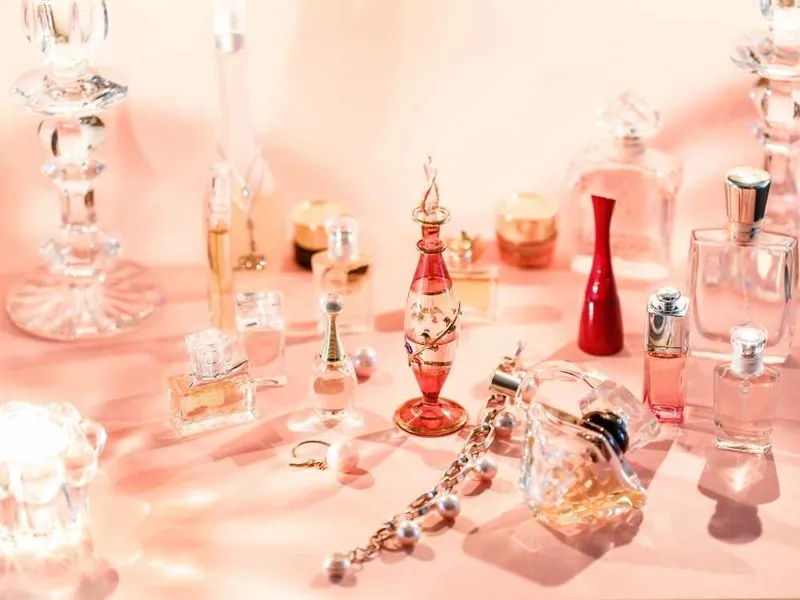
Let me tell you about the time I bought my best friend a perfume for her birthday. I'd spent 45 minutes in Sephora, sniffed approximately 30 bottles, got complete olfactory fatigue, panicked, grabbed something that smelled "nice" (at that point, everything smelled the same), and wrapped it with confidence. She opened it, sprayed it once, smiled politely, and I never saw that bottle again. It's probably still sitting in the back of her bathroom cabinet, next to the expired sunscreen and the hair mask she'll "use one day." That was the day I learned that choosing perfume for someone else is an art — and I'd been doing finger painting.
Why perfume is one of the riskiest gifts
Perfume is deeply personal. More personal than clothes (you can return a sweater), more personal than jewelry (most people have a general style), and way more personal than a book (worst case, it sits on a shelf looking intellectual). A perfume lives on someone's skin. It interacts with their body chemistry, their sweat, their pH. The same fragrance can smell completely different on two people — what's divine on your wrist might be unbearable on someone else's.
There's also the emotional dimension. Scent is the sense most directly connected to memory and emotion. The olfactory bulb is right next to the amygdala (emotional processing) and the hippocampus (memory). That's why a single whiff of a particular perfume can transport you back to your grandmother's house, a first date, or a terrible ex. When you give someone a perfume, you're not just giving them a smell — you're potentially creating an emotional anchor.
And then there's the simple fact that most people already have a perfume they love. You're essentially saying: "I think I know your taste better than you do." That's either incredibly flattering or mildly insulting, depending on whether you get it right.
All of which is to say: choosing a perfume for someone else requires homework. Not guesswork. Homework.
Fragrance families: the vocabulary you need
Before you walk into a store, you need to understand the basic categories. Perfumes are classified into fragrance families — broad groups based on their dominant olfactory character. Knowing these families is like knowing the difference between red wine and white wine before buying a bottle for someone. It doesn't make you a sommelier, but it keeps you from serving Cabernet with sushi.
Floral: the largest and most popular family. Built around flower notes — rose, jasmine, peony, lily of the valley, tuberose. Ranges from light and fresh (a single-note daisy scent) to heavy and intoxicating (a dark tuberose oriental). If you have no idea what she likes, floral is the safest starting point — but "floral" is a continent, not a country.
Oriental (Amber): warm, sensual, enveloping. Built around vanilla, amber, musk, spices (cinnamon, cardamom), resins (benzoin, frankincense). These are evening perfumes, winter perfumes, seduction perfumes. Think Shalimar, Black Opium, or Hypnotic Poison. Not for the faint-hearted — and not for someone who prefers clean, light scents.
Woody: sandalwood, cedar, vetiver, patchouli, oud. These fragrances have depth and structure. They can be warm (sandalwood) or dry (vetiver), cozy or sophisticated. Increasingly popular in women's perfumery — the gender lines in fragrance have blurred significantly.
Fresh: citrus, aquatic, green, aromatic. Clean, light, invigorating. Perfect for summer, daytime, sport. Think of that "just showered" feeling. Citrus-based scents (bergamot, lemon, grapefruit) fall here. They tend to be less long-lasting than orientals or woods.
Chypre: (pronounced "shee-pruh") a classic family built on a structure of bergamot, oakmoss, and patchouli. Elegant, complex, slightly retro. Not as common today but still beloved by perfume connoisseurs. If she mentions Mitsouko or Feminité du Bois, she's a chypre person.
Gourmand: edible notes — caramel, chocolate, coffee, praline, vanilla, cotton candy. These fragrances smell like desserts. Hugely popular in recent years (Angel by Thierry Mugler pioneered this category). Divisive: people either love them or find them cloying.
Top, heart, base: understanding the fragrance pyramid
Every perfume unfolds in three stages. Understanding this structure helps you evaluate a fragrance properly — and explains why that quick sniff in the store isn't enough.
Top notes (0–15 minutes): what you smell first. These are light, volatile molecules that evaporate quickly — citrus, light fruits, herbal notes. They create the first impression but disappear fast. Most perfume-buying mistakes happen here: you smell the top notes, think "this is nice," buy it, and then discover the heart and base are completely different.
Heart notes (15 minutes – 2 hours): the core of the fragrance. Floral, spicy, or fruity notes that emerge once the top notes fade. This is the fragrance's true character — what she'll smell like for most of the day. Always wait for the heart before deciding.
Base notes (2+ hours): the foundation. Heavy, long-lasting molecules — woods, musks, amber, vanilla, resins. These linger on skin and clothing for hours, sometimes days. The base note is what people notice when they lean in close. It's also what makes a cheap perfume smell cheap (synthetic musks) or an expensive one smell luxurious (real sandalwood, natural ambergris).
The practical takeaway: never judge a perfume in the first 5 minutes. Spray it on a blotter (or better, on your skin), wait at least 30 minutes, then decide. The perfume you smell at minute 30 is the perfume she'll actually wear.
Choose by personality, not by age
The biggest mistake people make when buying perfume for someone else is thinking in demographics. "She's 25, so she'll like something young and fresh." "She's 50, so she'll want something classic." This is lazy thinking, and it leads to generic choices.
Fragrance is about personality, not age. A 22-year-old can adore Shalimar (launched in 1925). A 60-year-old can rock Cloud by Ariana Grande. The idea that certain perfumes are "for older women" or "for young girls" is a marketing construct, not a reality.
Instead, think about her style:
- The minimalist: clean lines, neutral colors, understated elegance. Go for a fresh or light floral — something with a transparent, "barely there" quality. Think Le Labo Santal 33, Glossier You, or Issey Miyake L'Eau d'Issey.
- The maximalist: bold colors, statement pieces, loves being noticed. Go for an oriental, a statement floral, or a gourmand. Tom Ford Black Orchid, Lancôme La Vie Est Belle, or Viktor&Rolf Flowerbomb.
- The classic/elegant: timeless wardrobe, pearls and cashmere, understated luxury. Chypre or sophisticated floral. Chanel No. 5, Dior Miss Dior, Hermès Jour d'Hermès.
- The bohemian/free-spirit: vintage shops, natural fabrics, artistic sensibility. Niche perfumery — Diptyque, Byredo, Maison Margiela Replica, or something from a local indie brand.
- The sporty/outdoorsy: active lifestyle, prefers freshness. Citrus, aquatic, or green. Dolce & Gabbana Light Blue, Chanel Chance Eau Fraîche, or Jo Malone Wood Sage & Sea Salt.
Best picks by budget
Let's be practical. Not everyone can drop €150 on a niche fragrance. Here are solid choices at every price point — all widely available and well-regarded.
Under €30 — the smart picks:
- Zara Red Temptation (~€15): a warm, sweet oriental that's been compared to Baccarat Rouge 540 (a €300 perfume). Is it the same? No. Is it shockingly good for the price? Absolutely.
- The Body Shop White Musk (~€20): a clean, soft musk that's been a bestseller for decades. Safe, likeable, inoffensive — in the best way.
- Ariana Grande Cloud (~€25-30): a dreamy, sweet, musky cloud (the name delivers). Massively popular with younger demographics, but honestly pleasant on anyone.
€30–€80 — the mainstream sweet spot:
- Chanel Chance Eau Tendre (~€75): a soft, powdery floral that's impossible to dislike. It's the perfume equivalent of a cashmere scarf — luxurious, comforting, universally flattering.
- YSL Libre (~€70): a modern lavender-vanilla-orange blossom blend. Confident, feminine, unexpected. One of the best-selling perfumes in the world right now.
- Marc Jacobs Daisy (~€55): a light, cheerful floral. If you don't know her taste and need something safe, Daisy rarely disappoints.
- Dior Miss Dior (~€80): a modern chypre-floral. Elegant without being stuffy, fresh without being boring. A timeless choice.
€80+ — the luxury/niche tier:
- Maison Francis Kurkdjian Baccarat Rouge 540 (~€250): the fragrance of the decade. Saffron, ambergris, cedar, burnt sugar — it smells like nothing else. Divisive but unforgettable.
- Le Labo Santal 33 (~€180): sandalwood, cardamom, iris, leather. The "cool person" perfume. You'll smell it everywhere in Brooklyn, Marais, and Shoreditch — because it's that good.
- Diptyque Eau Rose (~€130): a bright, dewy rose. Not your grandmother's rose — this is fresh, modern, luminous. Perfect for someone who says "I like roses but not old-fashioned rose perfume."
- Tom Ford Black Orchid (~€120): dark, rich, truffle-and-orchid decadence. A statement perfume for someone who doesn't do "subtle."
Where to buy and how to test properly
Where you buy matters more than you think. And how you test determines whether your choice will be a hit or a miss.
In-store (the best option):
- Go to a dedicated perfume store (Sephora, Marionnaud, department store fragrance counter, niche boutique). The staff knows the products and can guide you.
- Tell them who it's for — her style, her current perfume, the occasion. A good fragrance advisor is worth their weight in Chanel No. 5.
- Test on blotters first, then narrow down to 2-3 finalists. Spray those on your skin (different arms or wrists). Walk around, have a coffee, let the fragrance develop for 30 minutes. Then decide.
- Don't test more than 4-5 fragrances in one visit. Olfactory fatigue is real — after 5 scents, everything smells the same. If you need more, come back another day.
- Smell coffee beans between tests — it's a common trick to "reset" your nose. Does it actually work scientifically? Debatable. But it gives your brain a break, and that helps.
Online (the backup plan):
- Buying perfume blind (without smelling it first) is risky. But if the recipient has a specific perfume she wants — maybe she mentioned it, maybe you saw it on her wishlist — online is fine.
- Sample services are your friend: sites like Scentbird, Perfume Samples, or Luckyscent let you buy small decants (2-10ml) for a few euros/dollars. Buy 3-5 samples, let her test them, and then buy the full bottle of her favorite. It's slightly less "surprise," but infinitely more successful.
- Check the return policy. Some retailers (Sephora, Nordstrom) accept perfume returns even after opening. This is your safety net.
Mistakes that ruin a perfume gift
I've made most of these. Learn from my suffering.
Buying based on the ad. Perfume advertising is a fantasy — beautiful people in improbable situations doing improbable things. The ad tells you nothing about how the perfume smells. Zero. The woman running through a field of flowers in a golden dress? That perfume might smell like burnt tires. (Okay, it won't. But you get the point.)
Buying based on the bottle. Gorgeous bottle doesn't mean gorgeous scent. Some of the best perfumes in the world come in plain bottles (Le Labo, literally a pharmacy label). Some of the worst come in crystal flacons. The bottle is packaging. You're buying the liquid.
Buying because a celebrity wears it. Rihanna wearing a perfume doesn't mean it will smell good on your girlfriend. Body chemistry is individual. Also, celebrities are paid to say they wear things.
Buying the wrong size. If you're not 100% sure she'll love it, buy the smaller size (30ml or 50ml). A 100ml bottle of a perfume she doesn't like is 100ml of guilt and wasted money. A 30ml is an elegant gesture that says "try this" without pressure.
Ignoring her lifestyle. A heavy oriental perfume for someone who works in an open-plan office? She'll either never wear it or get passive-aggressive comments from colleagues. Think about when and where she'll actually use it.
Forgetting about allergies and sensitivities. Some people get headaches from certain fragrance ingredients (especially strong musks or aldehydes). If she's mentioned sensitivity to strong smells, choose something light and natural — or better yet, ask her directly.
Eau de toilette vs. eau de parfum: what's the difference?
You'll see these terms on every perfume bottle. They refer to the concentration of fragrance oils in the formula — which directly affects intensity, longevity, and price.
- Eau de Cologne (EDC): 2-5% concentration. Light, refreshing, lasts 1-2 hours. Think of it as a body splash. Rarely sold as a main fragrance today.
- Eau de Toilette (EDT): 5-15% concentration. Lighter, more subtle, lasts 3-5 hours. Good for everyday wear, office, summer. Usually cheaper than EDP.
- Eau de Parfum (EDP): 15-20% concentration. Richer, more intense, lasts 6-8 hours. The most common concentration for premium fragrances. Best value for money.
- Parfum / Extrait de Parfum: 20-40% concentration. The most intense and long-lasting (8-12+ hours). Also the most expensive. A few drops go a long way.
The practical advice: for a gift, eau de parfum (EDP) is usually the best choice. It's intense enough to last all day, versatile enough for most occasions, and feels more "special" than an EDT. If you're buying a niche or luxury fragrance, check if they offer an extrait — it's often the most refined version of the scent.
One caveat: EDT and EDP versions of the same perfume are not always the same scent at different strengths. Some brands reformulate slightly — the EDT might be fresher and lighter, while the EDP is warmer and richer. They're siblings, not twins. If possible, test the specific concentration you're buying.
Frequently asked questions
What if she already has a signature scent?
That's actually useful information. If she's loyal to one perfume, don't try to replace it — complement it. Look for fragrances in the same family but with a twist. If she wears Chanel No. 5 (floral aldehyde), try Chanel Coco Mademoiselle (oriental floral) — same house, different angle. Or buy her a layering product in her signature scent (body lotion, hair mist).
Is it okay to give perfume as a first gift?
It depends on how well you know her. Perfume is an intimate gift — it says "I've thought about what would smell good on your skin." For a new relationship, it can be either romantic or presumptuous. If you're not sure, go with a discovery set (lower stakes, same thoughtfulness) or pair a smaller bottle with something else (a candle, a scarf, flowers).
Do perfumes expire?
Yes, but slowly. Most perfumes last 3-5 years if stored properly (away from direct sunlight and heat). Citrus-based fragrances degrade faster; oriental and woody scents can last longer. The perfume won't become harmful, but it may lose its top notes and smell "flat." Store it in a cool, dark place — not in the bathroom (humidity and temperature fluctuations accelerate degradation).
Can I buy a men's perfume for a woman?
Absolutely. The "men's" and "women's" categories in perfumery are marketing labels, not olfactory rules. Many women wear "men's" fragrances — Tom Ford Tobacco Vanille, Dior Sauvage, Bleu de Chanel — and they smell fantastic. If you know she likes woody, spicy, or leather notes, don't let a gendered label stop you. Fragrance is genderless.
What's the best season to give perfume?
Perfume is a year-round gift, but the type should match the season she'll start wearing it. A heavy oriental in July will sit unused until November. A light citrus in December will feel out of place. If you're buying in winter, go warmer (oriental, woody, gourmand). In summer, go lighter (fresh, citrus, sheer floral). Or choose a versatile all-season fragrance like YSL Libre or Chanel Chance.
Sources: