
Stand in front of the shelves of panty liners, intimate washes and scented wipes at Boots or Superdrug, and it's easy to walk away believing that discharge is a sign you're not quite clean. It isn't. The NHS says so in the opening lines of its page on vaginal discharge: discharge is normal, and "It's a fluid or mucus that keeps the vagina clean and moist, and protects it from infection." Discharge isn't a hygiene failure. It's the hygiene system.
What should make you pause isn't having discharge — it's a change in it. A colour that isn't yours, an unpleasant smell, itching, blood outside your period. This guide tells you which changes can wait a few days, which need a same-day call, and where to get tested in the UK.

Why does your vagina produce discharge?
Your vagina produces discharge to keep itself clean and moist and to protect against infection. Part of the fluid comes from the cervix (cervical mucus), part from the vaginal wall itself, which constantly renews its surface and sheds cells (our guide to the anatomy of the vulva and vagina shows where each sits).
The protection works through balance. The vagina is home to a community of helpful bacteria, and its fluid keeps that environment clean and moist. When the balance is right, unwanted bacteria and yeasts struggle to take hold. When it tips — after antibiotics, harsh products or a hormonal change — infections find their opening.
You can get discharge at any age — and the amount varies. It differs from one woman to the next — and, for the same woman, from one week to the next. So the useful question is never "Do I have discharge?" It's "Has my discharge changed?"
How discharge changes through your menstrual cycle
Normal discharge changes through the month, which is exactly why it worries people. Clear and slippery one Tuesday, white and sticky ten days later: both can be perfectly normal. Healthy discharge has no strong or unpleasant smell — and it can be clear or white, thick and sticky, or slippery and wet.
The slippery, wet version tends to appear around ovulation, for a few days between periods — and it can be more noticeable then. At other times it's usually whiter, thicker and stickier.
Pregnancy, being sexually active and using birth control all increase the amount. More discharge at these times isn't, on its own, a warning sign.
| When | Usual appearance | Amount | Smell |
|---|---|---|---|
| Most of the cycle | Clear or white, thick and sticky | Varies from woman to woman | No strong or unpleasant smell |
| Around ovulation (mid-cycle) | Clear, slippery and wet | Heavier for a few days | No strong or unpleasant smell |
| Pregnancy, contraception, active sex life | Same range as above | Usually heavier | No strong or unpleasant smell |
| Something has changed | New colour, texture or smell | More than usual | Fishy, strong or unpleasant |
That last row is the one that matters. If your discharge changes — in smell, colour or texture — it might be a sign of an infection, so get it looked at rather than guessing.

Colour, smell, texture: a table to decode your discharge
When discharge changes, its appearance points towards a likely cause. The NHS publishes a short table of possible causes — the one below expands it with the details from each condition page, including pink, brown and blood-streaked discharge.
| What you notice | Possible cause | Often comes with | What to do |
|---|---|---|---|
| Clear or white, no unpleasant smell, no discomfort | Normal discharge | Nothing | Nothing in particular |
| Thick and white, like cottage cheese, not usually smelly | Thrush (a yeast infection) | Itching and irritation, soreness or stinging during sex or when you pee | Pharmacist if thrush has been diagnosed before; GP if it's the first time |
| Thin and watery, greyish-white, strong fishy smell | Bacterial vaginosis (BV) | Smell often worse after sex; usually no itching or soreness | GP or sexual health clinic |
| Green, yellow or frothy, sometimes fishy | Trichomoniasis (an STI caused by a parasite) | Soreness, swelling and itching; pain when peeing or during sex | GP or sexual health clinic; partners need treatment too |
| Unusual discharge with pelvic pain | Chlamydia or gonorrhoea | Bleeding after sex or between periods, burning when you pee | Sexual health clinic or GP; get tested |
| Pink or streaked with blood, between periods or after sex | Bleeding mixed with discharge: an STI such as chlamydia, or another cause | Sometimes pelvic pain or pain when peeing | NHS 111, a GP or a sexual health clinic |
| Any bleeding after the menopause, even spotting or pink or brown discharge | Postmenopausal bleeding: not usually serious, but it can be a sign of cancer | Often nothing else | See a GP, even if it's only happened once |
| Discharge with blisters or sores | Genital herpes | Blisters or sores around the genitals | Sexual health clinic or GP |
| Unusual discharge after a forgotten tampon | Something left in the vagina | Irritation, soreness | See a GP |
Treat these descriptions as tendencies, not fingerprints. One infection doesn't always look the same, and two can overlap (BV and an STI, for instance). That's why the NHS writes, right above its own table: "But do not self-diagnose – see a GP if you're worried."
Bleeding after the menopause deserves its own line, because it's easy to dismiss. The NHS page on postmenopausal bleeding is unambiguous: see a GP even if it's only happened once, even if there's only spotting or pink or brown discharge, and even if you're not sure it's blood. It's not usually serious — but it can be a sign of cancer, and cancer may be easier to treat when it's found early.
Thrush: thick discharge that itches
Thrush is a common yeast infection caused by candida — a fungus that is normally harmless. It usually shows up as white discharge, often like cottage cheese, that doesn't usually smell — together with itching and irritation around the vulva and vagina. The lack of smell is a useful clue (it's one of the main differences from BV). Antibiotics, pregnancy, poorly controlled diabetes (or a weakened immune system) and irritated skin all make it more likely.
If you've had thrush diagnosed before and recognise the symptoms, a pharmacist can recommend treatment — see a GP if it's your first time, if treatment hasn't worked, or if you're pregnant or breastfeeding. According to the NHS page on thrush, it counts as recurring when it comes back more than 4 times in 12 months, and a GP can help work out what's triggering it.

Bacterial vaginosis: when the smell changes
Bacterial vaginosis (BV) is the cause most often mistaken for thrush, and it's treated completely differently: it's a change in the natural balance of bacteria in the vagina, not a yeast. The giveaway is the smell — thin, watery, greyish-white discharge with a strong fishy smell, often worse after sex, usually without itching or soreness.
BV isn't an STI — but it makes you more likely to catch one, possibly because it makes the vagina less acidic. It's treated with antibiotics from a GP or sexual health clinic, so book an appointment rather than reaching for thrush cream — and if you're pregnant, speak to a GP or your midwife whenever your discharge changes. Having a coil (an IUD) is one of the situations in which BV is more likely; if you're weighing up the two types, our honest comparison of the copper and hormonal IUD covers how each one feels day to day.

Chlamydia, gonorrhoea, trichomoniasis: when discharge signals an STI
Some changes in discharge point to a sexually transmitted infection. The catch is that these infections are often quiet — sometimes completely silent.
Chlamydia is the classic example: most people who have it don't have any symptoms. When symptoms do appear, they can include discharge that isn't normal for you, bleeding after sex or between periods, a burning feeling when you pee, and pain in your lower tummy. Left untreated, chlamydia can lead to pelvic inflammatory disease (an infection of the womb, fallopian tubes and ovaries), which can cause infertility or an ectopic pregnancy.
Gonorrhoea can cause a yellow or greenish discharge, burning pain when you pee and lower abdominal pain — though not everyone gets symptoms. Trichomoniasis, caused by a parasite, can bring discharge that is thick, thin or frothy and yellow-green, sometimes with an unpleasant fishy smell, plus soreness, swelling and itching. Up to half of all people with it don't develop any symptoms, though they can still pass it on.
If your discharge changes after sex without a condom, infection isn't the only risk to think about. Our guide to when to take the morning-after pill and how to get it deals with pregnancy; testing deals with infections. One doesn't replace the other.
Intimate hygiene: what helps, and what makes things worse
No amount of washing will stop discharge: the NHS says plainly that you can't prevent it, and that it's normal. Washing can, however, cause trouble. Perfumed products used in or around the vagina are on the NHS list of things that make BV more likely, and soap is one of the irritants that can set off vaginitis. The NHS recommends four simple habits:
- Wash the outside only, gently, with warm water and a mild, non-perfumed soap.
- Never wash inside the vagina (douching).
- Skip perfumed soaps and gels, deodorants and scented hygiene wipes.
- Wear cotton underwear, and avoid tight underwear or tights if thrush keeps coming back.
One more habit helps with BV: not smoking.

When to see a GP, a pharmacist or a sexual health clinic
The right timing depends less on the discharge itself than on what comes with it. In the UK, help comes from a pharmacist, your GP, a sexual health clinic (sometimes called a GUM clinic) or NHS 111.
NHS 111 is the place to start if your discharge changes colour, smell or texture, if you produce more than usual, if you feel itchy or sore, if you bleed between periods or after sex, if it hurts when you pee, or if you have pelvic pain. Sexual health clinics can also help. Many run a walk-in service (no appointment needed), and they'll often get test results quicker than GP surgeries.
| Your situation | Where to go |
|---|---|
| Thrush you've had diagnosed before, with symptoms you recognise | A pharmacist |
| Thrush symptoms for the first time; thrush more than 4 times in 12 months; treatment hasn't worked; you're pregnant or breastfeeding; you're under 16 or over 60; you have a weakened immune system | A GP |
| Discharge that changes colour, smell or texture, itching or soreness, bleeding between periods or after sex, pain when peeing, pelvic pain | NHS 111, a GP or a sexual health clinic |
| Symptoms after sex with a new partner, or you or a partner may have an STI | A sexual health clinic or a GP |
| Any bleeding after the menopause, even once, even spotting or pink or brown discharge | A GP, without waiting to see if it happens again |
| Suspected gonorrhoea with a high temperature, joint pain or swelling, a rash, or red, painful eyes | An urgent GP appointment or NHS 111 |
For postmenopausal bleeding, the GP should refer you to hospital or a special postmenopausal bleeding clinic — and you should not have to wait more than 2 weeks to see a specialist. Until you've seen a doctor or nurse about unusual discharge, avoid sex — it could be an STI.
What happens at a GP or clinic appointment for unusual discharge
An appointment for unusual discharge is usually quicker and simpler than people fear. The GP or clinic will want to confirm the cause and rule out an STI. You'll be asked about your symptoms and any sexual partners, and a doctor or nurse may look at your vagina.
Often a cotton bud (swab) is wiped over the discharge to test for infections. Sometimes you can do the swab yourself, and you may be asked for a pee sample. If an internal examination is needed, a smooth, tube-shaped tool called a speculum is gently inserted to hold the vagina open. You stay in control of the examination:
- you can ask for someone else to be in the room with you (a chaperone) — a friend, another doctor or nurse, or a trained member of staff;
- you can ask the doctor or nurse to stop at any point if it's too uncomfortable.
Treatment depends on the cause: antifungal medicine for thrush, antibiotics for BV or a bacterial STI, an antibiotic called metronidazole for trichomoniasis. If the problem is irritation rather than infection, the fix is removing the trigger — a product, tight clothing, or occasionally a contraceptive method that doesn't suit you. If contraception seems to be part of the story, our complete guide to every contraceptive method sets out the alternatives, with their pros and cons.
Getting tested for STIs: clinics, pharmacies and home kits
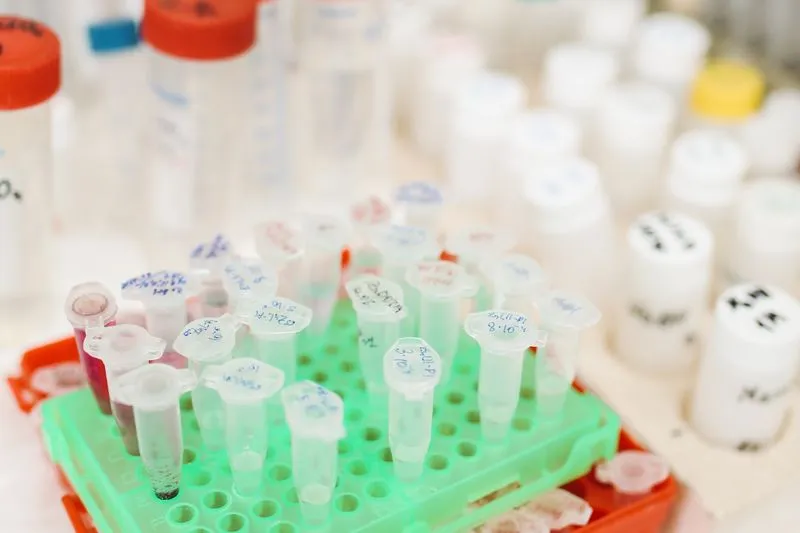
Getting tested in the UK is more flexible than many people realise — and it doesn't require symptoms. You can be tested at a sexual health clinic or a GP surgery — even if you have no symptoms — and you may be offered tests for other STIs at the same time.
If you don't have symptoms but want a test, you can use a self-test kit at home and send it to a lab. You may be able to get a free kit from a sexual health clinic or some pharmacies, or buy one from some pharmacies. If you're under 25, you may also be able to get free chlamydia home test kits.
Young women are the focus of chlamydia screening in England — for a clear reason. Since 2021, the National Chlamydia Screening Programme has concentrated on reducing the harms of untreated chlamydia, which fall mainly on women. In community settings such as GPs and pharmacies, a test is proactively offered to young women — though everyone can still get tested if they need to.
How often? The NHS chlamydia and gonorrhoea pages give the same rule of thumb: get tested once a year, or whenever you have a new sexual partner. And if a test comes back positive, a sexual health clinic can help contact your partners — or contact them for you, without naming you.

Frequently asked questions
Is it normal to have vaginal discharge every day?
Yes. Discharge keeps the vagina clean and moist and protects it from infection, and you can have it at any age. The amount and texture vary through your cycle, with heavier, slippery discharge around ovulation. What matters is a change in colour, smell or texture — especially with itching, soreness or pain.
Does white discharge always mean thrush?
No. Normal discharge is clear or white, and it can be thick and sticky. Thrush usually combines thick, white discharge like cottage cheese with itching and irritation around the vulva. Without itching or soreness, white discharge is most often normal.
Should I worry about pink or brown discharge?
Pink or blood-streaked discharge between periods or after sex is a form of bleeding, and bleeding between periods or after sex is on the NHS list of reasons to get help from NHS 111, a GP or a sexual health clinic — it can be a sign of an infection such as chlamydia. Before the menopause, brown discharge that's new for you counts as a change in colour — another reason on the same NHS list, especially if it appears between periods or after sex. After the menopause, the advice is firmer: spotting, or pink or brown discharge, needs checking by a GP, even if it's only happened once.
Why does my discharge smell stronger after sex?
A fishy smell that's stronger after sex is typical of bacterial vaginosis. The discharge is often thin, watery and greyish-white, usually without itching. BV is treated with prescribed antibiotics, so see a GP or sexual health clinic — and speak to your GP or midwife if you're pregnant.
Can I buy thrush treatment without seeing a doctor?
Yes, from a pharmacy — if you've had thrush diagnosed in the past and you know the symptoms. See a GP if it's your first time, if treatment hasn't worked, if it keeps coming back, or if you're pregnant or breastfeeding.
Is bacterial vaginosis a sexually transmitted infection?
No. BV is caused by a change in the natural balance of bacteria in the vagina, even though sex can trigger it, and it can pass between women. It does make you more likely to catch an STI, possibly because it makes the vagina less acidic. Consider a test if you've had a new partner.
Does my partner need treatment too?
It depends on the cause. For trichomoniasis, chlamydia and gonorrhoea, current and recent partners need to be tested (and treated if necessary). For thrush, partners don't need treating unless they have symptoms. With BV, a female partner may also need treatment.
Is heavier discharge in pregnancy something to worry about?
Not on its own — discharge is usually heavier during pregnancy. But discharge that changes colour or smell, itches, or comes with pain is a reason to speak to your GP or midwife. During pregnancy, don't use thrush treatment without medical advice.