
"He doesn't fancy me any more." It's the first explanation that comes to mind when a partner loses his erection halfway through sex — then again the following week, then the month after that. It's simple, and most of the time it's wrong. An erection is not a thermometer for desire. It's first and foremost a matter of blood flow, nerves and hormones. Your underwear — or the number of years you've been together — comes a long way down the list.
The British Association of Urological Surgeons (BAUS) spells out the mechanics in its patient leaflet on erectile dysfunction. A man needs four things — adequate hormone levels, adequate blood flow to the penis, intact nerves and "an appropriate sexual desire". If one link fails, the erection may fail too. Desire is only one item on that list, not the whole list. So this is rarely a verdict on your relationship — and sometimes it's an early warning about his health.
You're far from alone. In a large online survey of 13,617 women, most of them under 30, 79% said they had experienced a partner losing his erection during sex. Roughly one in seven (14.7%) had been blamed for it. Men's Health Week ran from 9 to 15 June and closed on Father's Day. It's a good moment to look at the subject from the place it's rarely seen from — yours. Causes, check-ups, treatments, the words that help (and the ones that don't): here's how to understand what's going on, and how to support your partner without carrying the problem for him.

A one-off or erectile dysfunction: where is the line?
A single failed erection is not erectile dysfunction. The NHS page on erectile dysfunction notes that most men occasionally fail to get or keep an erection. It's usually down to stress, tiredness or drinking too much — and "it's nothing to worry about". The picture changes when it keeps happening. Erectile dysfunction means being unable to get an erection, or unable to keep one for long enough to have sex, on a recurring basis.
It's common, and it becomes more common with age. The NHS describes it as "very common, particularly in men over 40". BAUS puts the figure at one man in ten overall, and almost one in three (30%) among men with diabetes. The most detailed British picture comes from the third National Survey of Sexual Attitudes and Lifestyles (Natsal-3, interviews from 2010 to 2012). In it, 12.9% of sexually active men reported trouble getting or keeping an erection lasting at least three months in the past year. The figure climbs steeply with age — from 7.6% of men aged 16 to 24 to 30.0% of those aged 65 to 74. If your partner is in his forties or fifties, you're right where the subject stops being theoretical.
One clue can help you think about it (without replacing a medical opinion). Depending on the cause, the NHS explains, a man may still get erections at other times, such as when he wakes up. And erection problems don't necessarily mean his desire has gone — sometimes it's the plumbing that has stopped keeping up, not the wanting.
How an erection happens, and why it goes wrong so easily
An erection is a chain of events. BAUS describes it step by step. During arousal, nerve impulses travel from the brain to the penis and relax the smooth muscle there — which lets blood flow into the erectile tissue. As the penis fills, it enlarges and hardens — and the veins are compressed, which stops the blood draining out again. The erection lasts until orgasm or until arousal fades.
That chain has an obvious weak point: any link can break it. A narrowed artery, a nerve damaged by diabetes, low testosterone, a medicine, a worry that short-circuits arousal — each one can be enough on its own. And they often add up. BAUS notes that a combination of psychological and physical causes is not unusual.
This is why the question "is it physical or psychological?" is often the wrong one. A man whose arteries are starting to fur up misses one erection, worries about it, then misses the next one because he's worried. The trigger is vascular — the loop that follows is psychological. It isn't a question of willpower, and even less of love.
Heart, diabetes, smoking: the physical causes of erectile dysfunction
The first physical suspect is the blood vessels. BAUS explains that blood vessels can narrow and harden with age. When the supply to the penis is poor, it doesn't fill properly — and blood leaks back out. The NHS lists the conditions most often behind recurring problems: high blood pressure or high cholesterol, diabetes, depression or anxiety, and hormone problems. In men with diabetes, BAUS adds, the commonest causes are blood vessel disease and nerve damage, often together.

The link with heart health has been measured. A 2011 meta-analysis in the Journal of the American College of Cardiology pooled twelve prospective cohort studies (36,744 participants). Compared with other men, men with erectile dysfunction had a 1.48 times higher risk of cardiovascular disease. Their risk of coronary heart disease was 1.46 times higher, and their risk of stroke 1.35 times higher. According to the authors, the increase is probably independent of the usual risk factors (smoking, blood pressure, cholesterol and so on). Erectile dysfunction therefore looks like a warning sign in its own right.
BAUS lists other physical causes too:
- Hormone imbalance — a lack of male hormones such as testosterone.
- Nerve damage — which weakens the signals that set off an erection.
- Trauma — such as a spinal cord injury.
- Pelvic surgery — some cancer operations on the prostate, bladder or bowel.
Lifestyle matters a great deal, which is good news, because lifestyle can change. BAUS notes that men who smoke and drink are more likely to have erectile dysfunction. The NHS advice is concrete. Lose weight if you're overweight, stop smoking, eat a healthy diet and exercise daily — and don't drink more than 14 units of alcohol a week. Even cycling counts — if he rides for more than three hours a week, the NHS suggests taking a break for a while.
Medicines that can affect erections
Erectile dysfunction can be a side effect of a treatment taken for something else entirely. BAUS singles out drugs used to treat high blood pressure, depression and anxiety, as well as recreational drugs. The NHS confirms it — and adds that a doctor may switch someone to a different medicine if that's the cause.
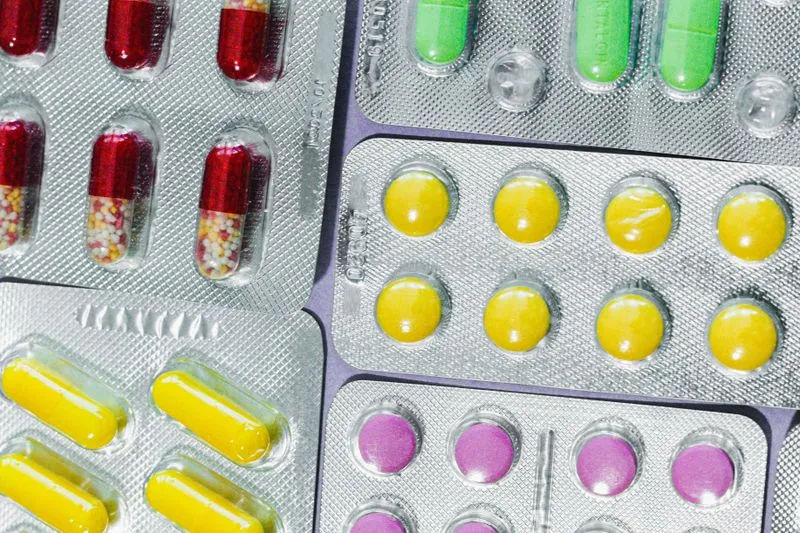
Timing is a useful clue. If the problems started within days or weeks of a new treatment, mention it to the GP (who may suggest a different medicine). One piece of advice has no exceptions — never stop a prescribed medicine on your own to get erections back. The right move is to talk about it — with the GP, or with a pharmacist for a first question.
Stress and performance anxiety: a loop that feeds itself
Psychological factors play a part in many cases, even when the original cause is physical. BAUS lists stress, depression, anxiety, relationship problems, embarrassment and guilt.
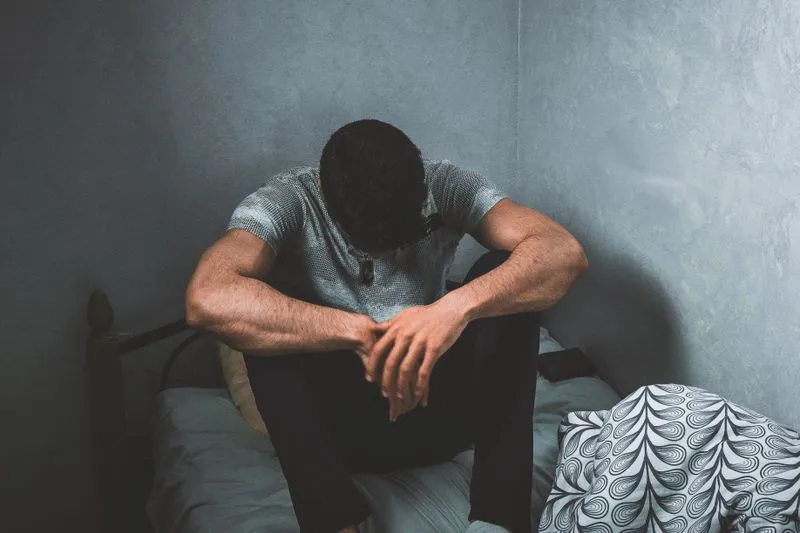
What BAUS describes next is the heart of the problem. Whatever the cause, a man who struggles to get an erection often feels under pressure to perform. That pressure can bring a feeling of inadequacy and a sense of lost manhood — what BAUS calls performance anxiety. One failure creates apprehension, the apprehension creates the next failure, and some men start avoiding intimate moments altogether. From your side it can look like indifference: he goes to bed later, he sidesteps the cuddles that might "lead somewhere". It isn't indifference — it's avoidance.
Life events belong in the conversation too. Pressure at work, redundancy, a parent who is ill, money worries — none of these stays neatly outside the bedroom door. Naming them is often the first step towards separating what belongs to the erection from what belongs to everything else.
"Is it my fault?" What partners of men with erectile dysfunction go through
No. In the great majority of cases, the cause lies in his blood vessels, nerves, hormones or medicines — the British Association of Urological Surgeons (BAUS) notes that purely psychological causes are seen in fewer than one man in ten. And when anxiety does play a part, it's mostly his own fear of failing that keeps the problem going.
Kirsty (47, a procurement manager at a logistics firm) agreed to describe for this article the eight months before her partner finally saw his GP. "I'd run through every explanation, and they all came back to me: I'd put on weight, he was seeing someone else, he didn't find me attractive any more." She bought new lingerie, then stopped initiating sex altogether — so as not to put him on the spot. On the day he eventually went, the GP started by taking his blood pressure. Her story proves nothing on its own; it simply sounds like a great many others.
Research confirms that the problem doesn't stay on his side of the bed. In the FEMALES study (published in 2005), 293 partners of men with erectile dysfunction described their sex lives before and after it began. They had sex less often, and fewer of them experienced desire, arousal or orgasm "almost always" or "most times". Their loss of satisfaction tracked the severity of their partner's erectile dysfunction. Among women whose partners were using a PDE5 inhibitor (the family of drugs that includes sildenafil), those measures were better.
Then there's what you tell yourself — and what you're told. The survey of 13,617 women (published in Sexual Medicine in 2021) found that about one woman in seven had been blamed by a partner for his loss of erection. Those women were more likely to end the sexual encounter, less sexually satisfied and more likely to end the relationship. One caveat: participants were recruited online (via email, Facebook, Reddit and Amazon Mechanical Turk), so the sample isn't representative, and nearly three in four respondents were aged 18 to 29.
Your own desire can wear thin as well, out of weariness or fear of putting him in a difficult position. That's a common reaction, and it deserves attention in its own right. The causes of low libido in women, and when to seek help, go well beyond what's happening in the relationship. You didn't cause this. You are, however, part of the solution.

Talking about erectile dysfunction without hurting him — or staying silent
Silence is the most common response, and the most costly one. It leaves each of you stuck in your own story — him in shame, you in doubt. BAUS is clear about the alternative. If possible, a man should include his partner in discussions with his doctor or nurse — "to allow you to work through your concerns together". What the partner thinks matters. A 2009 analysis from the FEMALES study found that women's perceptions and attitudes were linked to whether their partners sought medical advice and used treatment (the authors argue for involving partners in care).
Talking to each other matters well beyond erections. In Natsal-3, not being able to talk easily about sex with a partner was one of the factors associated with low sexual function, for men and women alike. Timing counts as much as wording. Avoid the bedroom, and above all the minutes after sex has stopped short, when embarrassment is at its peak. A walk, a drive or a quiet evening with nothing at stake works better (you can talk without having to look each other in the eye). Start with how you feel, not with what isn't working for him.
A few phrases that open the door rather than slamming it:
- "I get the feeling something's weighing on you, and I don't want you to deal with it on your own."
- "This isn't a criticism. I'd like us to talk to a doctor — together, if you want."
- "For me, it doesn't change how much I want you."
And a few traps. Brushing it off ("it's nothing, it happens to everyone") can feel kind, but it closes the conversation if the problem has lasted for months. Over-investing — reading three articles a day, planning "make-up" evenings — adds pressure. Humour can ease things, provided it's never at his expense.
If routine, tiredness or the years have put some distance between you, ways to reignite desire in a long-term relationship are worth exploring alongside everything else.
Erectile dysfunction: GP, sexual health clinic or pharmacy?
The NHS advice is simple: see a GP or go to a sexual health clinic if erection problems keep happening. Sexual health clinics can provide the same treatment as a GP surgery, many offer walk-in sessions, and they often get test results back faster. At the appointment, the doctor or nurse may ask about lifestyle and relationships and take his blood pressure. They may also examine his genitals (and his prostate, if he has symptoms such as needing to pee more often).
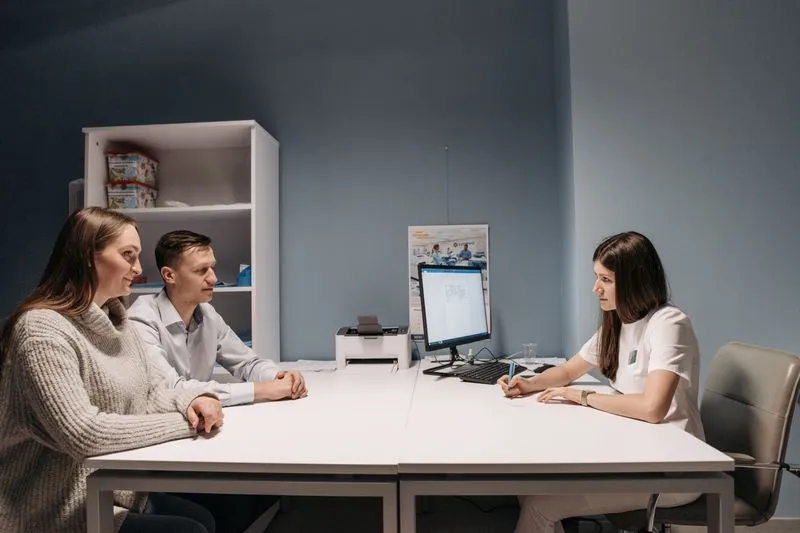
BAUS describes the simple tests a GP can arrange: blood tests for cholesterol, blood sugar and an early-morning fasting testosterone level (taken before 10am, having fasted overnight), plus a blood pressure reading. Bringing cholesterol, blood pressure and blood sugar under control, and keeping to a healthy weight, is described as "an effective starting point". BAUS is also unusually direct about who decides what comes next: "It is up to you and your sexual partner to decide what treatment you choose."
A pharmacy can be a first step too. In November 2017, the MHRA reclassified Viagra Connect (sildenafil 50mg) as a pharmacy medicine, available without prescription to men over 18 with erectile dysfunction after a discussion with the pharmacist. It isn't sold to men with severe cardiovascular disorders, at high cardiovascular risk, with liver failure or severe kidney failure, or taking certain interacting medicines — those men need a doctor. The regulator's stated aim was to bring men who might not otherwise seek help into the healthcare system, and away from illegal websites. In March 2023, the MHRA did the same for Cialis Together (tadalafil 10mg), with the same exclusions for men with severe heart, kidney or liver problems.
Treatments for erectile dysfunction, from tablets to implants
Treatment starts with the cause. Lifestyle changes and getting blood pressure, cholesterol and blood sugar under control are the foundation, and BAUS describes them as helpful for every patient. If a medicine is to blame, the GP may switch it. Specific treatments come next, or alongside.
Tablets are the first-line treatment for most men. The NHS lists four PDE5 inhibitors: sildenafil (Viagra), tadalafil (Cialis), vardenafil (Levitra) and avanafil (Spedra). They increase blood flow to the penis. Sildenafil (Viagra Connect) and, since March 2023, tadalafil 10mg (Cialis Together) can be bought from a pharmacy after a discussion with the pharmacist; vardenafil and avanafil need a prescription. The MHRA's assessment report on Viagra Connect sets out the pharmacy dose: one 50mg tablet with water, about an hour before sex. No more than one a day, in packs of up to eight tablets. Reported side effects include headache, flushing, indigestion, a blocked nose, dizziness, nausea and visual disturbances.
This point matters for you: none of these tablets produces an erection on demand. The MHRA report spells it out — "Sexual stimulation is still needed to produce an erection." Without touch and arousal, the tablet does nothing. Foreplay doesn't become optional; if anything, it becomes essential, and foreplay ideas to explore as a couple suddenly have a very practical use.
The same report is firm about nitrates. Taking sildenafil with nitrates or nitric oxide donors — glyceryl trinitrate (GTN), isosorbide mononitrate, nicorandil, or amyl nitrite ("poppers") — can lead to a dangerous fall in blood pressure, so the two must never be combined. On cost, BAUS explains that GPs can now prescribe generic sildenafil without the old restrictions. Branded treatments on the NHS are limited to specific conditions — and, in general, to one tablet a week. In England, each prescription item costs £9.90 (prescription charges apply in England only), unless he qualifies for free prescriptions. The charge was frozen in April 2025.
When tablets don't work or aren't suitable, BAUS describes several other options:
| Treatment | How it works | In practice |
|---|---|---|
| Self-injection into the penis | A drug relaxes the muscles of the penis so blood flows in. | He is trained to do it; no more than twice a week and never more than once in 24 hours. |
| Intra-urethral pellet or cream | A small dose of prostaglandin placed in the urethra. | Only 35 to 40% of men get good-quality erections; can cause pain or flushing. |
| Vacuum erection device | A pump draws blood into the penis; a ring at the base keeps it there. | Works for most men, says the NHS, but isn't always available on the NHS. |
| Penile implant | Inflatable or bendable prostheses placed surgically. | Reserved for men who have tried the other treatments; not visible from outside. |
Psychosexual counselling isn't a last resort either: BAUS notes that counselling can be part, or all, of the treatment. The NHS warns that there can be a long wait for these services. Privately, it points to sex therapists registered with the College of Sexual and Relationship Therapists (COSRT) or the Institute of Psychosexual Medicine — and to Relate, which offers sex therapy for a fee.
Buying erectile dysfunction pills online: the traps to avoid
Erectile dysfunction medicines are a favourite target for criminals. When it announced the Viagra Connect decision, the MHRA said its investigators had seized more than £50 million of unlicensed and counterfeit erectile dysfunction medicines over the previous five years. For a man too embarrassed to talk, a box that arrives in the post can look like the easy way out.
The NHS is blunt about it. Many websites sell fake medicines, online medicines aren't always regulated, and the ingredients can vary from one pack to the next. Its advice is to see a doctor first. If he does buy online, the NHS checklist is short. The pharmacy should be registered with the General Pharmaceutical Council (GPhC), any online doctor service with the Care Quality Commission (CQC) and every doctor involved with the General Medical Council (GMC).
For a man with a heart condition, an unknown pill is a real danger. He has no way of knowing what's in it — or whether it contains a drug that must never be combined with his nitrates. Sharing a friend's tablets carries the same problem, in a friendlier wrapper.
Keeping your sex life going: erections aren't the whole story
Intimacy doesn't have to be put on hold during tests or treatment. Touching, massage, oral sex and toys are all part of sex, and none of them depends on an erect penis. Some couples discover, along the way, a sex life that's less centred on penetration — and not necessarily any less satisfying.

One simple idea is to agree, for a few weeks, that penetration is off the table. The pressure disappears, and with it some of the performance anxiety. If an erection comes, good; if it doesn't, nothing has "failed". Your pleasure matters during this time too — it isn't a bonus to be postponed until later. A shame-free guide to female pleasure and orgasm can feed that exploration for both of you.
If he has a heart condition and you're worried about the exertion, ask the question openly at his next appointment. The MHRA report lists the men who must see a doctor rather than buy tablets over the counter. They include men who have had a heart attack or stroke in the last six months, and those with unstable angina or severe heart failure. That answer belongs to his doctor, not to guesswork.
Frequently asked questions
Can younger men get erectile dysfunction?
Yes. The NHS describes it as very common, particularly in men over 40, but it isn't limited to older men. In Natsal-3, 7.6% of sexually active men aged 16 to 24 reported difficulty getting or keeping an erection lasting at least three months in the past year. A GP check is worthwhile at any age, especially if he smokes, is overweight or has diabetes.
Does Viagra work without desire?
No. Sildenafil (Viagra) and the other PDE5 inhibitors increase blood flow to the penis, but the MHRA is explicit that sexual stimulation is still needed to produce an erection. Without desire and arousal, nothing happens.
He takes heart medication. Can he take a tablet for erections?
Only his doctor can say. Sildenafil must never be taken with nitrates such as GTN spray, isosorbide mononitrate or nicorandil, or with poppers, because the combination can cause a dangerous fall in blood pressure. Pharmacists won't sell Viagra Connect or Cialis Together to men with severe heart conditions or at high cardiovascular risk.
Can erectile dysfunction go away for good?
It depends on the cause. Stopping smoking, losing weight, switching a medicine or treating a hormone problem can improve things, and BAUS calls lifestyle changes an effective starting point. When the cause can't be reversed (after some pelvic surgery, for instance), treatments allow erections without curing the underlying problem.
Is erectile dysfunction treatment free on the NHS?
Partly. Generic sildenafil can be prescribed by a GP without the old restrictions, according to BAUS, while branded treatments on the NHS are limited to specific conditions such as diabetes, multiple sclerosis or prostate cancer treatment. In England, the standard prescription charge is £9.90 per item (prescription charges apply in England only), although around 89% of prescription items are dispensed free.
Should we see a sex therapist together?
It's often worth it. BAUS encourages men to involve their partner in discussions, and notes that counselling can be part, or all, of the treatment. The NHS points to therapists registered with COSRT or the Institute of Psychosexual Medicine, and to Relate. Going together can help untangle misunderstandings — particularly when the partner has believed it was her fault.
He refuses to talk about it. What can I do?
Try not to turn it into a battle. Say once, calmly, that you're worried about his health and that you're ready to go with him, then give him time. You can also see a sex therapist or couples counsellor on your own: what you're going through deserves to be heard, even if he isn't ready yet.
Sources
- NHS — Erectile dysfunction (impotence) (page last reviewed 28 July 2023)
- British Association of Urological Surgeons — Erectile dysfunction (impotence), patient leaflet (June 2024)
- MHRA — MHRA reclassifies Viagra Connect tablets to a Pharmacy medicine (28 November 2017)
- MHRA — Public Assessment Report: Viagra Connect 50mg, prescription only to pharmacy reclassification (2017)
- MHRA — MHRA reclassifies Cialis Together tablets to a Pharmacy medicine (14 March 2023)
- GOV.UK — Cost of living boost for millions as prescription charges frozen (28 April 2025)
- Mitchell K. R. et al. — Sexual function in Britain: findings from Natsal-3 (The Lancet, 2013)
- Dubin J. M. et al. — Is Female Wellness Affected When Men Blame Them for Erectile Dysfunction? (Sexual Medicine, 2021)
- Fisher W. A. et al. — The FEMALES study (Journal of Sexual Medicine, 2005)
- Fisher W. A. et al. — Erectile dysfunction is a shared sexual concern of couples II (Journal of Sexual Medicine, 2009)
- Dong J.-Y. et al. — Erectile dysfunction and risk of cardiovascular disease: a meta-analysis (Journal of the American College of Cardiology, 2011)