You know you're a Virgo. Maybe you even know your rising sign is Leo. But beyond that, when someone mentions "your Moon in Pisces" or "your Mercury retrograde", you nod politely while quietly wondering if it's serious. A birth chart is a map of the sky at the exact moment you were born — and it's considerably richer (and more fun) than your sun sign alone.
I remember exactly when I properly got into astrology. I'd been reading the Sunday supplement horoscope for years without fully believing it. Then one Sunday evening, around ten, a friend sent me my full natal chart as a PDF with a single line: "Look at your Moon in Scorpio — it explains so much." I opened it on my phone, stretched out on the sofa, and zoomed in on a circle bristling with tiny glyphs and criss-crossed with red and blue lines. First thought: I'm going to need a map for this.
This guide is that map — with one limit set out from the start: astrology isn't a science, and the studies show it.
What exactly is a birth chart?
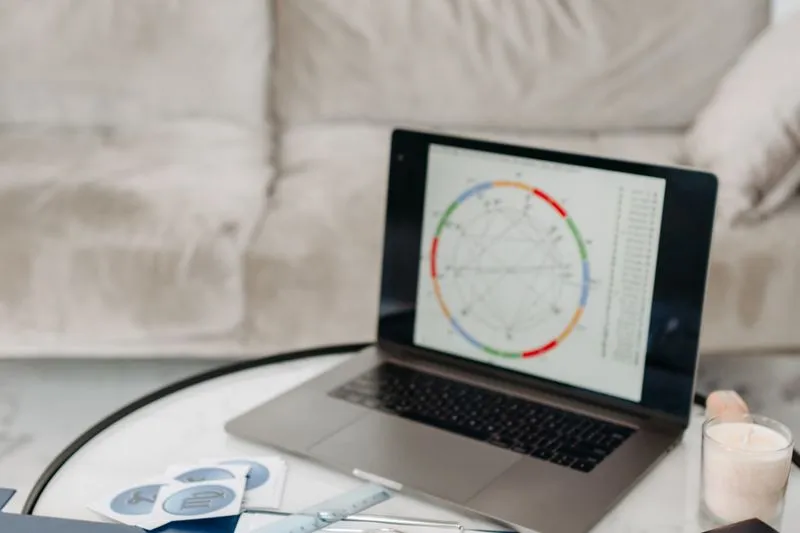
A birth chart (also called a natal chart) shows the position of the Sun, Moon and planets at the precise moment of your birth, as seen from your birthplace. Not just the Sun — which decides your "sign" in magazine horoscopes — but also the Moon, Mercury, Venus, Mars, Jupiter, Saturn, Uranus, Neptune and Pluto. Plus a few calculated points — the Ascendant (your Rising sign), the Midheaven, the lunar nodes.
To calculate a birth chart, you need three pieces of information:
- Date of birth: day, month, year
- Time of birth: as precise as possible — an hour either way can be enough to change your Rising sign
- Place of birth: your birth town, for the geographical coordinates
If you don't know your exact birth time (very common), you can still generate a chart, but the Rising sign and the houses won't be reliable. And here's the British catch: your birth certificate may not help. In Scotland, the time of birth is recorded on every statutory birth entry, not just for twins. In England and Wales, GOV.UK's checklist for registering a birth asks for the place and date of birth but not the time, which register offices only record for twins, triplets and other multiple births (Kensington and Chelsea's registration guide spells that out). So most certificates from England and Wales say nothing about the hour.
The chart is drawn as a circle divided into twelve sections (the "houses"), with planetary symbols placed according to where each body was in the sky when you were born. The lines connecting the planets are the "aspects" — the angles the planets form with each other. At first glance, it looks like a circuit diagram without the key. But it's readable.
Free tools to generate your chart
Three free options will get you started:
- Astro.com: Astrodienst's site. The interface is austere, but it's the one I keep bookmarked.
- Cafe Astrology: very educational, with a free birth chart calculator and detailed descriptions for each placement. There's an "Unknown Time" box if you don't have your birth time.
- Co-Star: the popular app, free, with social features — fine for a first look, though the interpretations are short and cryptic.
The Big Three: Sun, Moon, Rising
Your Sun, Moon and Rising sign are the three things to read first: together they form what astrologers call the big three. Everything else comes later.
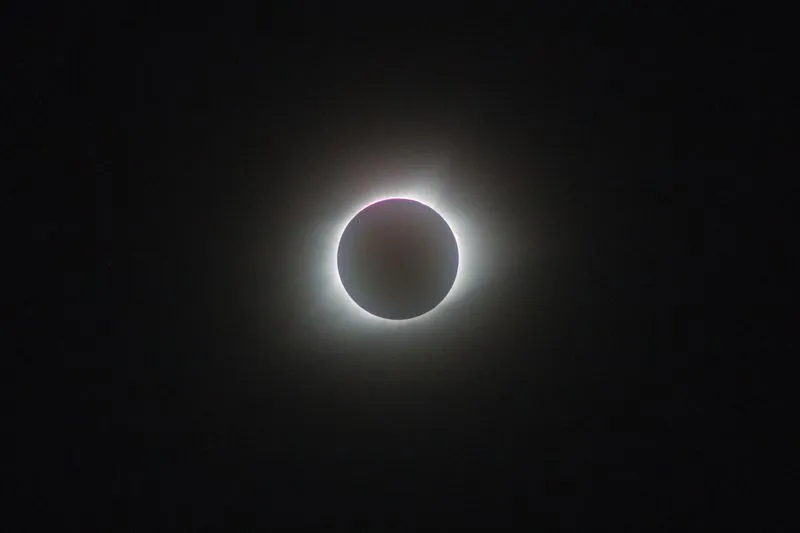
The Sun and Moon also make eclipses when they line up (I projected the partial one on 29 March onto my living-room wall with a pasta colander). What eclipses mean in astrology is read through that duo and the lunar nodes.
The Sun sign — your core identity
This is the sign everyone knows — the one you're asked about at parties. It's set by the position of the Sun in the zodiac at the moment of your birth. The Sun spends roughly a month in each sign — so two people born in the same month often share a sun sign.
In astrology, the Sun represents your core identity, your conscious self, the direction you're heading in life — your ego in the Jungian sense, not the pejorative one. It's the energy you express when you feel most fully yourself.
What doesn't the sun sign tell you on its own? Quite a lot. Many people don't recognise themselves in their sun sign description, and that's completely normal — it's one element among ten planets, twelve houses and a whole web of aspects. A Virgo with the Moon in Sagittarius and Gemini rising will feel far more adventurous and chatty than the "detail-obsessed Virgo" of the glossies. For a portrait of each sign (element, strengths, blind spots), see the 12 zodiac signs and their personalities.
The Moon sign — your emotional inner world
According to Cafe Astrology's guide to Moon signs, the Moon changes sign every two to two and a half days. That makes it far more personal than the Sun. Two people born on the same day can have different Moon signs depending on their time of birth.
The Moon represents your emotional world, your instinctive reactions, what you need to feel safe and looked after, and how you function in private — away from the public eye. It's your inner self, the one you perhaps only show to the people you really trust.
If the Sun says "who you aspire to be", the Moon says "what you need to feel okay". The two can pull against each other. A Pisces Moon in a Capricorn chart, for example, craves romance and daydreaming that the pragmatic Capricorn side finds hard to allow itself.
The Rising sign — your social mask and first impression
The Rising sign (or Ascendant) is the zodiac sign that was rising on the eastern horizon at the moment and place of your birth. Cafe Astrology's guide to the Ascendant puts it at a change every two hours on average, though the pace varies a lot the further you are from the equator. Hence the obsession with birth time. To dig into this one placement, read what your rising sign changes about your personality, sign by sign.
The Rising sign represents the face you show the world, the first impression you make, and often the style with which you approach life. It's what others see before they really know you.
Many people identify more with their Rising sign than their sun sign, particularly in social settings — at work, at parties, on a first date. A Scorpio with Sagittarius rising will come across as far more open and upbeat than a Scorpio with Capricorn rising. Same sign, different shop window.
Mercury, Venus, Mars and the slow-moving planets: what they rule in your chart
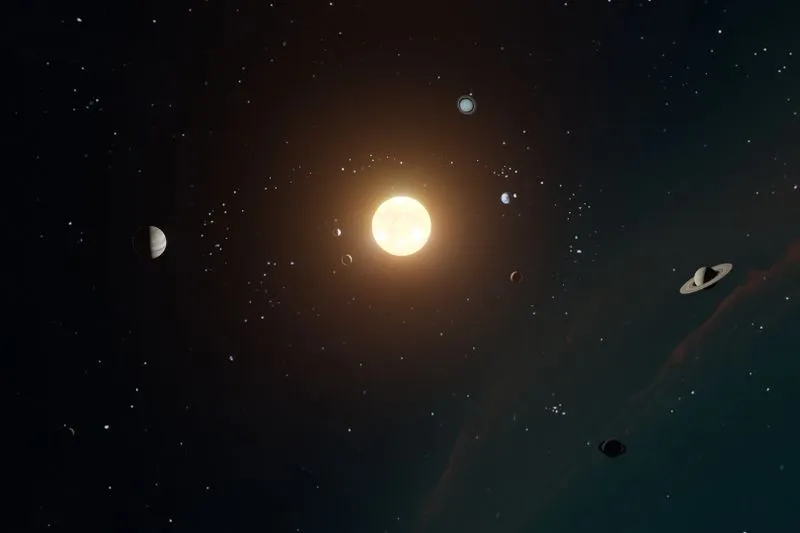
Beyond the Sun-Moon-Rising trio, the personal planets (Mercury, Venus, Mars) are the next ones worth exploring. The slow-moving planets (Jupiter, Saturn, Uranus, Neptune, Pluto) change sign far more slowly: people born in the same year often share their positions. They split into the social planets, Jupiter and Saturn, and the generational planets, Uranus, Neptune and Pluto.
The personal planets
- Mercury: how you think, communicate and process information. Mercury in Virgo thinks analytically and precisely; Mercury in Sagittarius thinks in broad strokes and big concepts.
- Venus: what you love, how you love, what attracts you aesthetically and romantically. Venus also governs your relationship with money and sensory pleasure.
- Mars: how you act, how you fight (or don't), your drive and your libido. Mars in Aries charges forward; Mars in Libra deliberates and negotiates.
The social planets
- Jupiter: expansion, luck, growth. Where Jupiter falls in your chart suggests where life gives you a natural boost.
- Saturn: discipline, limits, life lessons. Where you hit blocks — but also, once you've done the work, where deep mastery grows.
The generational planets
- Uranus: radical change, rebellion, originality.
- Neptune: ideals, spirituality, illusion, art.
- Pluto: deep transformation, power, symbolic death and rebirth.
For a beginner, the Sun, Moon, Rising and the three personal planets are more than enough. You'll get the gist of your chart without drowning in it.
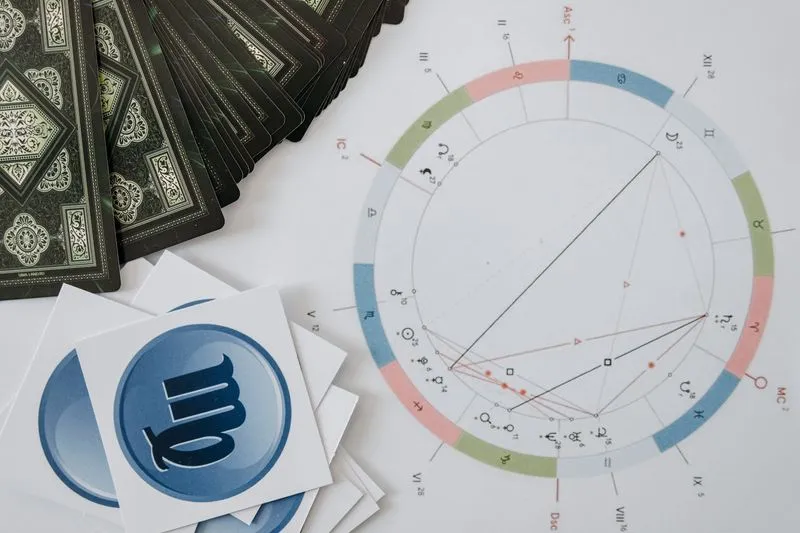
The twelve astrological houses
The chart circle is divided into twelve sections called "houses". They represent different areas of life — and a planet in a house colours that area with its own energy.
- House 1: self, appearance, approach to life (the Rising sign's house)
- House 2: money, possessions, personal values
- House 3: communication, siblings, short journeys
- House 4: home, family, roots, private life
- House 5: creativity, romance, children, pleasure
- House 6: health, daily routines, work in the practical sense
- House 7: partnerships (romantic and professional), relationships with others
- House 8: transformation, sexuality, inheritance, symbolic death and rebirth
- House 9: travel, philosophy, higher education, belief systems
- House 10: career, public reputation, ambitions (the Midheaven's house)
- House 11: friendships, communities, collective ideals, future plans
- House 12: the unconscious, solitude, spirituality, what we keep hidden
An example? Venus in House 7 suggests that romantic partnerships are a big arena for your personal growth. Mars in House 10 channels your energy and ambition towards your career.
Aspects: when planets talk to each other
Aspects are the angles the planets form with each other in the chart. They describe the quality of the relationship between two planetary principles — and they're where the most interesting tensions and resources in a chart are hiding.
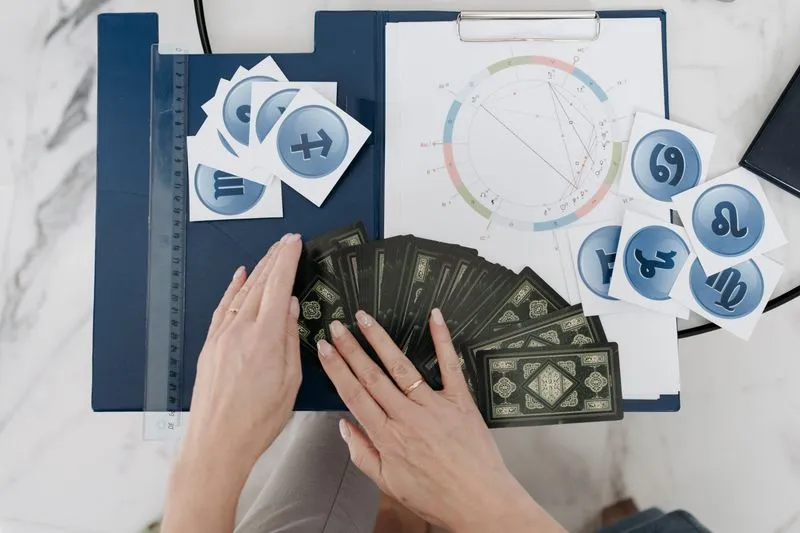
- Conjunction (0°): two planets at the same point. Their energies fuse, and the result depends heavily on which planets are involved.
- Trine (120°): a harmonious aspect. The two planets' energies flow naturally together — the ground where talents come easily.
- Sextile (60°): a supportive aspect. More dynamic than the trine, it takes a little effort, but the two planets work well together.
- Square (90°): a tension aspect. Friction between the two principles, a zone of challenge and growth. Squares aren't "bad": they're motivating.
- Opposition (180°): tension between two opposing principles. It can feel like an internal tug-of-war, or get projected onto relationships.

How to start reading your chart
Faced with a natal chart for the first time, the instinct is to understand everything at once. Resist. Chart reading builds up over months, and professional astrologers spend years deepening it.
For a first reading, I'd suggest this four-step progression:
Step 1 — The Big Three: identify your Sun (which sign, which house), your Moon (same) and your Rising sign. Read the descriptions and note what resonates. You don't need to agree with everything. Just note what rings true.
Step 2 — The personal planets: locate Mercury, Venus and Mars. Which sign? Which house? These three planets speak to how you communicate, love and act.
Step 3 — Stelliums: a stellium is when several planets (usually three or more) sit in the same sign or house. It's a concentration of energy — so a particularly busy area of your life. If you have one, start there.
Step 4 — Major aspects: look at the aspects between your personal planets (Sun, Moon, Mercury, Venus, Mars). A trine between Sun and Moon points to natural harmony between your identity and your emotional needs. A square between Mars and Venus, to creative tension between desire and action.
Classic beginner mistakes in astrology
Four mistakes come up again and again when you start out.
Defining yourself entirely by one sign: "I'm a Scorpio, so I'm jealous and manipulative by nature." No. You're a complete birth chart with ten planets, twelve houses and dozens of aspects. Your Scorpio Sun is one element, not a sentence. As for jealousy, it has a history your sign doesn't tell: where jealousy in relationships comes from and how to ease it.
Using astrology to excuse behaviour: "That's just how I am, it's my Mercury in Sagittarius talking." Astrology isn't an alibi. It's a tool for reflection: it helps you spot tendencies, not set them in stone. If you want to change something for real, daily exercises that build self-confidence will do more for you than your Mercury.
Believing retrogrades cause disasters: Mercury appears to move backwards three to four times a year, for about three weeks each time. It's an optical illusion — Mercury laps the Sun in 88 days, overtakes us, and seems to reverse against the background stars. The Planetary Society's explainer on Mercury retrograde is clear that there's no scientific evidence this apparent motion affects you at all. In astrology, a retrograde is an invitation to slow down, review, re-read.
Comparing charts without nuance: "My ex was a Gemini, all Geminis are flaky." Two Geminis with very different charts can behave in completely opposite ways. And when things are sticky in a relationship, couple communication techniques that work will tell you far more than the compatibility of two sun signs.
Books and a podcast to go deeper into astrology
If you want to go beyond this introductory guide, here are some solid resources:
- "The Inner Sky" by Steven Forrest (Bantam, 1984): a readable introduction by an astrologer who argues for what he calls choice-centred astrology.
- Liz Greene's books: she holds a doctorate in psychology, is a qualified Jungian analyst and co-founded the Centre for Psychological Astrology in London with Howard Sasportas in 1983. Start with "Saturn: A New Look at an Old Devil". More demanding, but rewarding.
- The Astrology Podcast with Chris Brennan: a weekly show on the history, philosophy and techniques of astrology, running since 2012.
Frequently asked questions
I don't know my birth time. Can I still get a useful chart?
Yes, partly. Your Sun, Mercury, Venus and Mars can almost always be calculated from your date alone (unless you were born on the day one of them changes sign). Usually the Moon too: it changes sign every two to two and a half days, so only a birth on a changeover day is a problem. What stays blurry without the time: your Rising sign and the whole structure of the twelve houses. Calculators then give you a "noon chart", drawn as if you were born at midday. Some astrologers practise "rectification" (estimating the birth time from life events), but that's advanced territory.
Is Mercury retrograde really that serious?
Not really. Mercury appears to move backwards three to four times a year, for about three weeks each time — a sizeable chunk of the year. Astrology links these periods with revision, returns to the past and messages worth checking twice. In practice, it's an invitation to re-read your emails before you hit send, not a sign of imminent catastrophe. Astronomically, it's an optical illusion caused by our viewpoint from Earth.
What's the difference between tropical and sidereal astrology?
Western astrology (what this guide covers) is tropical: its signs are tied to the seasons (equinoxes and solstices), not to the actual constellations. Vedic astrology (Jyotish), practised in India, is sidereal: it follows the constellations. And the sky has drifted since the zodiac was invented more than 3,000 years ago, because Earth's axis no longer points in quite the same direction. As a result, your Vedic sun sign may differ from your Western one. They're not competing systems, just different conventions.
Have the signs shifted? I keep reading about a 13th sign.
The Sun does pass through a thirteenth constellation, Ophiuchus. According to NASA's explainer on constellations and the calendar, the Babylonians left it out more than 3,000 years ago to match their twelve-month calendar. But in tropical astrology, the signs are twelve equal 30° slices tied to the seasons, not to the constellations. So Ophiuchus isn't a 13th sign in this system. NASA itself says it didn't change any zodiac signs: it just did the maths.
Do two people with exactly the same birth chart have the same life?
It's one of the big objections to astrology — and a fair question. Researchers have tested it: in a study published in 2003, Geoffrey Dean and Ivan Kelly compared more than 2,000 "time twins", people born within minutes of each other and so with near-identical charts. As BBC Science Focus sums up the research, their personality tests showed no significant correlations. Astrologers reply that a chart shows tendencies, not a fixed destiny. My take: used honestly, astrology is a tool for self-reflection, not a prediction.
Why does my magazine horoscope never feel accurate?
Because it's written for a twelfth of the population — millions of people supposedly living the same week. In my view, sun-sign predictions are little more than entertainment, not astrology in the technical sense. A personalised reading starts from your full natal chart and the current planetary transits relative to your natal planets: an individual calculation. A magazine horoscope is like reading the average weather for the whole of Europe instead of the forecast for your street. If you still love the ritual, treat it as one: the annual horoscope, sign by sign sketches the year's big themes without promising anything.
What's the difference between a Rising sign and an Ascendant?
In everyday use, they're the same thing. Strictly speaking, the Ascendant is a precise point of the zodiac rising on the eastern horizon at your birth, and your Rising sign is the sign that point falls in. "I have Aquarius rising" and "my Ascendant is in Aquarius" say the same thing.
Sources and references
- ScotlandsPeople — Statutory register of births
- GOV.UK — Register a birth
- Royal Borough of Kensington and Chelsea — Registering a birth (updated 20 May 2024)
- mygov.scot — Order a copy of a birth, death or marriage certificate
- ICO — Getting copies of your information (subject access request)
- Cafe Astrology — What's My Ascendant? (Rising Sign)
- Cafe Astrology — What's My Moon Sign?
- The Planetary Society — What does "Mercury in retrograde" actually mean? (Kate Howells, 19 April 2023)
- NASA — Constellations and the Calendar (20 September 2016)
- BBC Science Focus — Is there any science in astrology? (Robert Matthews, 2010)
- The Centre for Psychological Astrology — Liz Greene
- Steven Forrest — The Inner Sky's fortieth anniversary (30 July 2024)