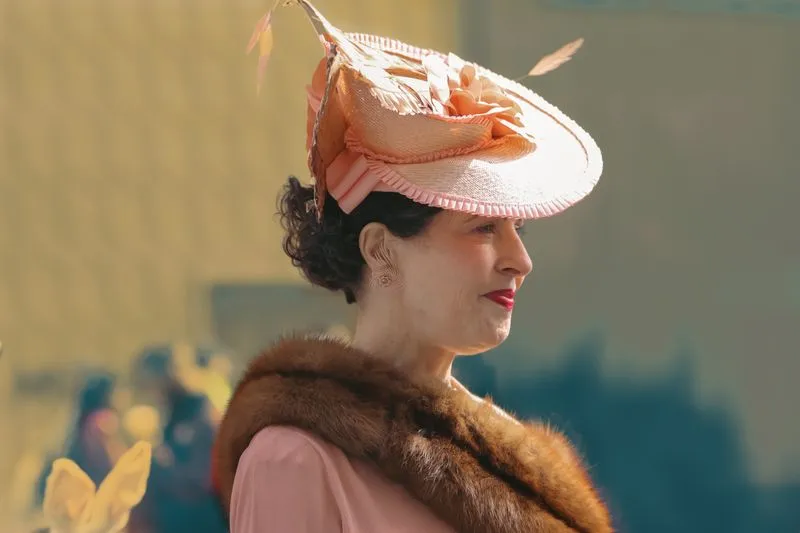
"They've put 'hats encouraged' on the invitation. Encouraged means compulsory, doesn't it?"
Sunday 8 June, 7.40pm. Mum on the phone, the invitation propped up next to her. I could hear her tapping it with a fingernail (as if that would make it talk). The son of one of her oldest friends is getting married in early July, at a country house in the Cotswolds. Under the address, in italics: "Morning dress. Hats encouraged."
"And does a fascinator count as a hat?
— Not at Ascot.
— We're not going to Ascot, Kristina.
— No. But they're the ones who wrote the rules everyone else copies."
She laughed, then demanded evidence. So here's my favourite piece — and it's got some history. In January 2012, Ascot banned fascinators from its Royal Enclosure. The racecourse's head of communication — Nick Smith — explained the decision with a line I still find funny (and quote far too often). As reported by the Associated Press: "Some fascinators have become so small that they're nothing more than a hairband and a feather." Thirteen years on, the rule still stands — to the centimetre.
Royal Ascot opens on Tuesday 17 June and runs until Saturday 21 June 2025. Five days of racing, at a racecourse whose rulebook specifies the width of your straps. So let's read that rulebook line by line and look at what the royal family does without ever writing it down. Then we'll work out what you can borrow for a wedding, a christening or any occasion where the invitation asks you to "dress up". (Mum, for the record, has already found her hat. More on that at the end.)
The Royal Ascot Royal Enclosure dress code, line by line
The Royal Enclosure is the most exclusive part of the racecourse. You only get in with a sponsor. According to Debrett's, the form has to be signed by someone who has attended for four consecutive years. It's also where Ascot's dress code is strictest. That's why it's the one everyone means when they talk about a "royal dress code". The racecourse publishes it in full: the Royal Enclosure dress code runs to about twenty lines, and every one of them counts.
What's required of women in the version published for the 2025 meeting:
- "A dress or skirt falling just above the knee or longer" (lace and chiffon are allowed);
- shoulder straps at least 1 inch (2.5cm) wide;
- a jacket or pashmina if you like, but "tops and dresses beneath must still comply";
- a trouser suit, as long as jacket and trousers are in matching material and colour;
- a jumpsuit that falls below the knee and meets the strap rule;
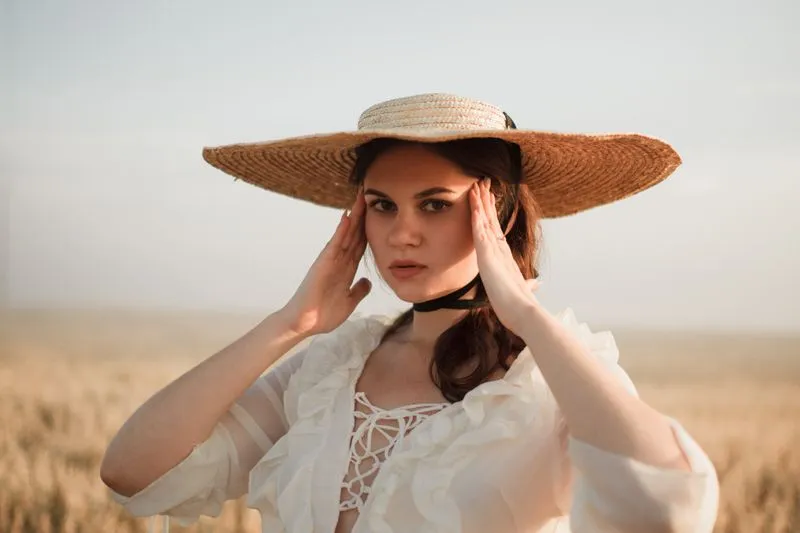
- a hat — compulsory — or a headpiece or "hatinator" with a base of at least 4 inches (10cm) in diameter.
And what's refused, in black and white:
| Not permitted in the Royal Enclosure | What the rule covers |
|---|---|
| Fascinators | A small headpiece on a comb, hair clip or headband without a solid 10cm base. Allowed for 10- to 17-year-olds. |
| Strapless and one-shoulder | Dresses and tops with no straps or a single strap. |
| Halter necks | A garment held up by a strap around the neck, with an open back. |
| Spaghetti straps | Very thin straps, since the rule demands 2.5cm at least. |
| Sheer fabrics | Anything entirely see-through. |
| Visible midriffs | The part of the torso between the chest and the waist. |
Whichever dress code you follow, Ascot also refuses fancy dress and novelty prints (slogans, promotional messages, brand logos, cartoon characters). Trainers, denim, leggings and shorts are excluded from the Royal Enclosure, Queen Anne and Village codes. Yes, denim too, even your smartest pair (the Windsor Enclosure, with no official dress code, only rules out fancy dress and branded clothing).
Hat, hatinator or fascinator: the Royal Ascot 10cm rule
The 10cm rule dates from 2012. Before that, the fascinator — that little feathered piece pinned into your hair — went everywhere, the Royal Enclosure included. Then Ascot tightened up. The irony? As the AP pointed out at the time, fascinators were a favourite of Kate (then the Duchess of Cambridge) and of Princesses Beatrice and Eugenie.
The official reasoning still makes me smile. Nick Smith conceded that "there is an argument that some fascinators are formal." But "the very fact that there is that argument" was reason enough to ban them. Translation — when in doubt, out (my rule for leftovers in the fridge, too). And no, the Queen didn't ring up to demand it. "No, that doesn't happen," Smith said. "We set the rules." He did add that the organisers were in touch with her staff.
So: three objects, three statuses.
- The hat: a crown and — usually — a brim. Wide-brimmed hat, boater, pillbox (the small round one with no brim), picture hat. Always accepted (it's the rule; everything else is a concession).
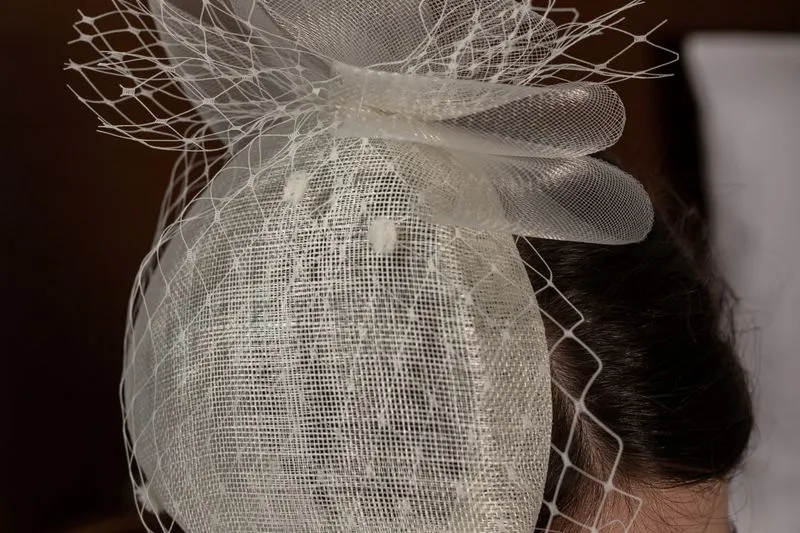
- The hatinator (or "headpiece"): the in-between — worn to one side, but built on a firm base. Accepted in the Royal Enclosure if that base measures at least 10cm across.
- The fascinator: a decoration fixed to a comb, clip or headband, with no solid 10cm base. Refused in the Royal Enclosure, except for 10- to 17-year-olds, who can wear one with no size requirement at all.
The rulebook also provides for overseas visitors: they can wear the formal national dress of their country (or Service Dress). If that dress doesn't include a hat, they don't need one. And "religious headdress is permitted in place of a hat or headpiece." The rulebook is strict. It isn't stupid.
Hemlines, straps and shoulders: the Ascot rulebook in front of your mirror
"Just above the knee" is, to my mind, the most misunderstood line in the whole rulebook. It doesn't mean a hand's width above the knee. My rule of thumb: standing up, your hem skims the top of your kneecap. Sitting down — and you will sit, on a lawn or at a restaurant table — the skirt rides up a few centimetres. (Try it on a chair, in front of the mirror.) My view — a dress that feels borderline when you're standing will be too short three hours later.
A midi length settles the question. It works in every enclosure, it looks right at 11am and at 6pm — and it saves you tugging at your hem all day. If you're unsure which length flatters you, my guide to dressing for your body type goes through the cuts that work for your height and hips.
Now the 2.5cm straps. They're wider than you'd think: get a tape measure out and check the straps on your summer dresses (you may be surprised). The rule is about the strap's width, so in my reading a decorative chain next to a thin strap won't rescue it. And a dress with nothing on the shoulder at all — a bardot neckline, say — is out by default, since there's simply nothing to measure. In the Queen Anne Enclosure, bardot is even named in the list of refusals.
Sheer is defined precisely: what's refused is fabric that's "entirely transparent". Lace and chiffon are fine. In practice, a lined lace dress passes — a voile shirt over a bra doesn't.
One last subtlety: the trouser suit. It's allowed, but in "matching material and colour". A navy blazer over cream trousers, however smart, doesn't meet the definition. In the Royal Enclosure, a suit means a suit.
For men at Royal Ascot: morning dress, top hats and ankle-covering socks
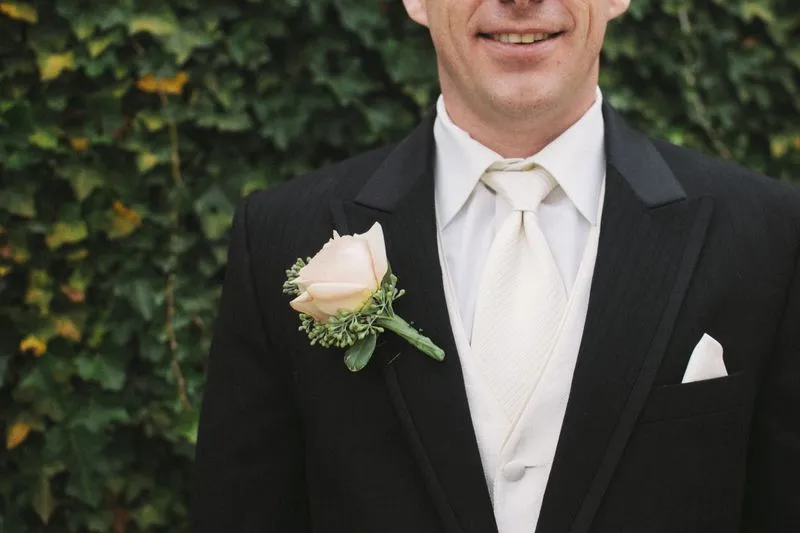
The men's code in the Royal Enclosure is even tighter than yours. It requires morning dress in black, grey or navy, with a waistcoat and a necktie. Patriotic patterns are accepted — a national flag on the tie, for instance. The top hat is black or grey, the shoes are black, and socks must cover the ankle.
What men can't wear: customised top hats (coloured ribbons, feathers, embellishments), cravats, bow ties and neckerchiefs. The bow tie, refused in the Royal Enclosure, is welcome in the Village Enclosure. One amusing exception — tartan trews are acceptable with a morning coat and top hat, although mixing half Scottish dress with half Royal Enclosure dress isn't.
The top hat can come off — but only in certain places: a restaurant, a private box, or an enclosed outdoor seating area, terrace, balcony or garden. On the lawn by the track, it stays on.
Queen Anne, Village, Windsor: the more relaxed Ascot enclosures
Royal Ascot has four enclosures, each with its own code. Without a sponsor, you'll be in the Queen Anne Enclosure, the Village or the Windsor Enclosure. Here's what the racecourse says for each in the 2025 version.
| Enclosure | Dress | On your head | Men |
|---|---|---|---|
| Royal Enclosure | Just above the knee or longer, straps of 2.5cm minimum | Hat, or headpiece with a 10cm base. No fascinators | Morning dress, waistcoat, tie, top hat |
| Queen Anne | Shoulder or halter-neck straps, no minimum length | Hat, headpiece or fascinator | Matching two- or three-piece suit, collared shirt, tie |
| Village | Same as Queen Anne | Hat, headpiece or fascinator | Jacket or blazer (can be different from the trousers), full-length trousers or chinos, tie, bow tie or cravat |
| Windsor | No official dress code; smart daywear encouraged | Hat, headpiece or fascinator encouraged | Jacket and collared shirt encouraged |
The halter neck, refused in the Royal Enclosure, is explicitly allowed in the Queen Anne Enclosure (I didn't see that one coming). But even in the more relaxed enclosures, strapless, off-the-shoulder, sheer and bare midriffs are still out. The flexibility is about length and headwear — not shoulders.
The royal family's unwritten dress rules
Ascot's rules apply to guests, not to the royal family. The AP put it bluntly back in 2012: "The queen can wear whatever she wants." And yet, for seventy years, Elizabeth II followed rules stricter than any racecourse steward. It's just that nobody had printed them.
Being seen came first. Hello!'s portrait of the Queen's life in fashion quotes her daughter-in-law Sophie, then Countess of Wessex, in ITV's documentary Our Queen at Ninety: "Don't forget that when she turns up somewhere, the crowds are two, three, four, ten, 15 deep, and someone wants to be able to say they saw a bit of the Queen's hat as she went past." Hence the bright, solid colours and the matching accessories. "She needs to stand out for people to be able to say 'I saw the Queen'."
Then the Queen's hat itself, which became a national game — it was tradition at Ascot to bet on the colour she'd wear. Not wanting to spoil the fun, the Queen locked her chosen outfits away at Windsor Castle. Decoy hats were placed along the corridor (I love the idea of decoy hats). Her dresser Angela Kelly explained why in her book: "This will stop anyone catching sight of the hat Her Majesty actually intends to wear and, with inside knowledge, betting a vast amount of money on the correct colour of the Queen's hat for opening day at Royal Ascot."
Comfort and continuity meant the same trusted British names, over and over: Launer handbags, Anello & Davide shoes, Cornelia James gloves, Rachel Trevor Morgan hats. Her couturier Norman Hartnell said of the Queen and the Queen Mother: "Their clothes have to have a non-sensational elegance." Hardy Amies, another of her designers, went further in 1997: "There's always something cold and rather cruel about chic clothes, which she wants to avoid."
And then there was repetition. She wore a colour-clashing magenta and red dress in March 2020, then wore it again a few months later. Long before anyone said "rewearing", she was doing it in public, which is more than most of us manage with a wedding outfit.
The Royal Procession at Ascot: 200 years in 2025
The Royal Procession explains on its own why Ascot dresses up so much. Each day of the meeting, racing opens at 2pm with the royal party driving up the course in open carriages. As the royal landau passes, the Royal Standard is raised and the national anthem is played. You don't dress up for a horse race — you dress up to be seen on the day the sovereign drives past you.
The racecourse tells the story in an article marking the Procession's 200th anniversary. Queen Anne founded Ascot in 1711 as a venue for "horses fit for kings". The first Royal Procession took place on 31 May 1825 under George IV: the King, accompanied by the Duke of Wellington, led four other coaches from Windsor Castle to Ascot. Two centuries later, the ritual has barely changed — and Royal Ascot 2025 celebrates its bicentenary.
Only once has the Procession been held outside Royal Ascot week. That was in July 2000, six days before the Queen Mother's 100th birthday (on the day of the race named after her and King George VI). This year, visitors to the Queen Anne Enclosure can see one of the Procession landaus on the ground floor of the Grandstand. (I've never set foot at Ascot, but I'll be watching the Procession on 17 June on TV, as I do every year.)
Buckingham Palace garden parties: day dress, no ruler required
The royal garden party is the other great British hat occasion, and its dress code is far shorter than Ascot's. The royal family's official page on garden parties sums it up in two sentences: "For a Garden Party, gentlemen wear morning dress or lounge suits, while women wear day dress, usually with hats or fascinators. National dress and uniform are also often worn."
You read that right: the fascinator, banned from the Royal Enclosure, is perfectly at home in the palace gardens. The word "usually" says it all. A hat there is a shared habit. The palace doesn't make it a written rule.
Each year, more than 30,000 guests spend a summer afternoon in these gardens. The sovereign traditionally hosts three garden parties at Buckingham Palace and one at the Palace of Holyroodhouse (in Scotland). You can't write to the palace asking for an invitation. Guests are nominated through a long-established network of sponsors (Lord-Lieutenants, societies and associations, government departments, local government, the Services, the Church and other faiths). "Historically, Garden Parties took the place of presentation parties attended by debutantes, and have evolved into a way of recognising and rewarding public service." The party officially begins at 4pm, when members of the royal family enter the garden and a military band plays the national anthem.

Why Britain still dresses up for the races
Britain's race-day hat habit has a surprisingly precise origin. According to Debrett's guide to Ascot, "Queen Victoria made hats de rigueur after wearing a porter bonnet (a headpiece that shielded the face from observers) to Ascot in the 1830s." The dress codes themselves owe much to the Edwardian era, with its tailcoats and enormous ladies' hats.
The reputation followed quickly. Debrett's quotes a Times journalist writing in 1922 that Ascot was "notoriously the best place in England to see beautiful women in beautiful clothes." The Royal Enclosure itself goes back to 1822, when George IV commissioned a two-storey stand with a lawn around it, open by invitation of the King. And a fact I can't resist: convicted criminals and undischarged bankrupts were once barred, but divorcées have been allowed in since 1955.
Thursday is still Ladies' Day, the most flamboyant of the five. That's the paradox of British hats. Hardly anyone wears one on an ordinary day any more. So the few occasions that call for them — Ascot, a garden party, a traditional wedding — carry all the weight. Which is exactly why Ascot's code is useful: not as law, but as a benchmark.
Weddings and christenings: what to borrow from the royal code
For a wedding in Britain, the default is more formal than you might think. Debrett's advice on being a good wedding guest is clear: "If none is specified and the wedding is very traditional, men should wear morning dress, suits, highland dress or military uniform. Women should dress smartly, and hats are generally worn." Borrowing from Ascot, here are five reflexes. None is compulsory. All of them spare you the photo you'll regret.
- Shoulders covered for the ceremony. A wide strap or a sleeve, even if the jacket comes off for dinner. It's the easiest Ascot rule to transfer, especially in a church.
- Knee length or below, with sitting down in mind: between the ceremony, the drinks and the wedding breakfast, you'll spend more time seated than standing.
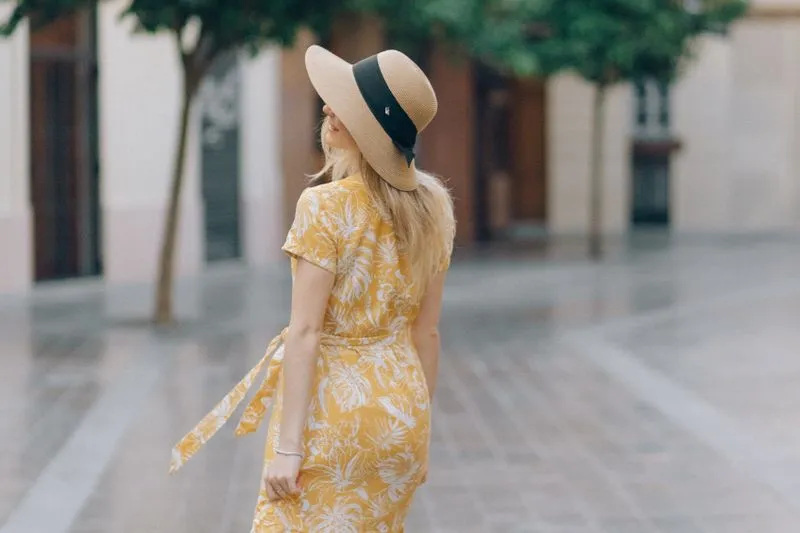
- Headwear in proportion. If the invitation says "hats encouraged", a hatinator or a small hat worn towards the back is plenty. If nothing is specified, a discreet fascinator works — a giant picture hat that blocks the altar for the row behind doesn't.
- A clear face: upturned brim, nothing in front of your eyes. The Queen dressed so the crowds could see her; your friends want to see you.
- A solid, confident colour that suits you, even if it isn't the colour of the season.
Debrett's also warns against "head-to-toe outfits in white or cream", and notes that "all-over black will look too sombre for a celebratory occasion" unless it's cleverly accessorised. For the other wedding rules (prints, the bride's colour, what not to wear), I've pulled everything together in my wedding guest outfit guide. And for point 5 — since your hat is the colour closest to your face — it's time to dig out the colour analysis test you can do at home. Since mine, at the end of April, I know mustard isn't for me. So a mustard hat isn't either (however pretty).
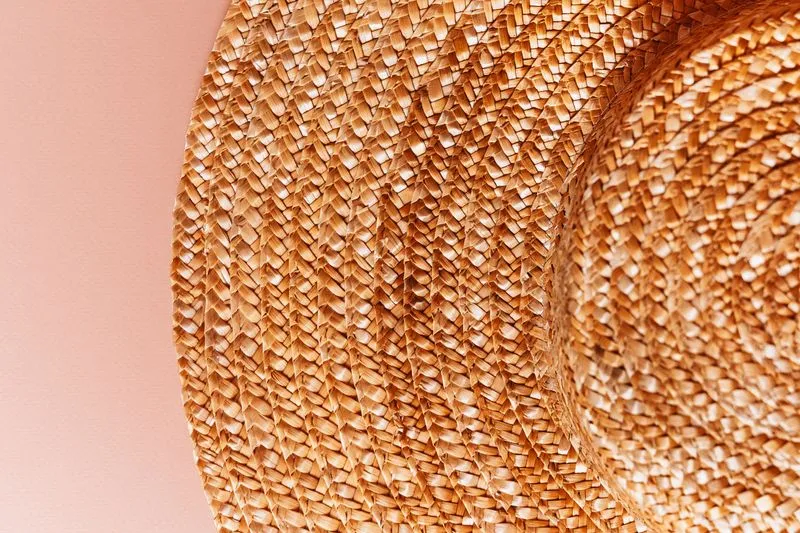
That leaves the budget. A formal hat doesn't get worn often, so it has to earn its place. Choose a neutral shade that goes with two or three dresses, in natural straw or sinamay for summer. Then have it fitted to your head by a milliner rather than wedging it in place with pins all day. If you like to think in cost per wear, my edit of fashion pieces worth investing in applies the same logic to clothes. Hiring is an option too — some milliners and occasionwear rental sites offer it.
Mum, meanwhile, has decided. A small navy hat with an upturned brim, its base well over 10cm, already tested with a selfie in front of her mirror. She isn't going to Ascot. She won't be walking into the Royal Enclosure. But she could.
Frequently asked questions
Can you wear a fascinator at Royal Ascot?
Yes, in the Queen Anne, Village and Windsor Enclosures, where a fascinator is among the accepted or encouraged headwear. In the Royal Enclosure it has been refused since 2012, except for 10- to 17-year-olds: you need a hat, or a headpiece whose solid base measures at least 10cm (4 inches) across.
How long does a dress need to be in the Royal Enclosure at Ascot?
Dresses and skirts must fall just above the knee or longer, and jumpsuits must fall below the knee. In the Queen Anne and Village Enclosures there's no minimum length, but strapless, off-the-shoulder, sheer and bare-midriff styles are still refused.
Are trouser suits allowed at Royal Ascot?
Yes. In the Royal Enclosure, the Queen Anne Enclosure and the Village, a trouser suit is accepted as long as the jacket and trousers are in matching material and colour. The Windsor Enclosure has no official dress code. A mismatched blazer over trousers in another colour doesn't meet the Royal Enclosure definition.
Do you need a hat for a Buckingham Palace garden party?
A hat is the custom, not a measured rule. The royal family's guidance says women wear day dress, usually with hats or fascinators, while men wear morning dress or lounge suits. National dress and uniform are also often worn.
When can men take off their top hat at Ascot?
In the Royal Enclosure, the top hat may be removed in a restaurant, a private box or an enclosed external seating area, terrace, balcony or garden. Elsewhere, it stays on. It must be black or grey, with no coloured ribbon, feathers or embellishment.
Is a hat too much for a wedding in the UK?
No — at a traditional British wedding, hats are generally worn, and "hats encouraged" on an invitation settles it. If nothing is specified, a discreet fascinator or a slim headpiece is enough. Choose a size that doesn't bother the people behind you or spoil the photos, and take it off for dinner.
How do you measure the base of a hatinator?
Turn the headpiece over and measure the rigid part that sits on your head, from edge to edge, with a ruler. Feathers, veiling and flowers don't count. For the Royal Enclosure, you need at least 10cm (4 inches).
Can overseas visitors wear national dress at Royal Ascot?
Yes. Overseas visitors can wear the formal national dress of their country or Service Dress. If the national dress doesn't include a hat, none is required, and religious headdress is permitted in place of a hat or headpiece.
Sources
- Ascot Racecourse — Royal Enclosure Dress Code
- Ascot Racecourse — Queen Anne Enclosure Dress Code
- Ascot Racecourse — Village Enclosure Dress Code
- Ascot Racecourse — Windsor Enclosure Dress Code
- Ascot Racecourse — The Royal Procession: celebrating the 200th anniversary (3 June 2025)
- AP via Today — Royal crackdown on fascinators at Ascot racecourse (18 January 2012)
- Hello! — The Queen's life in fashion (9 September 2022)
- The Royal Family — Garden Parties
- Debrett's — All about Ascot
- Debrett's — How to be a great wedding guest