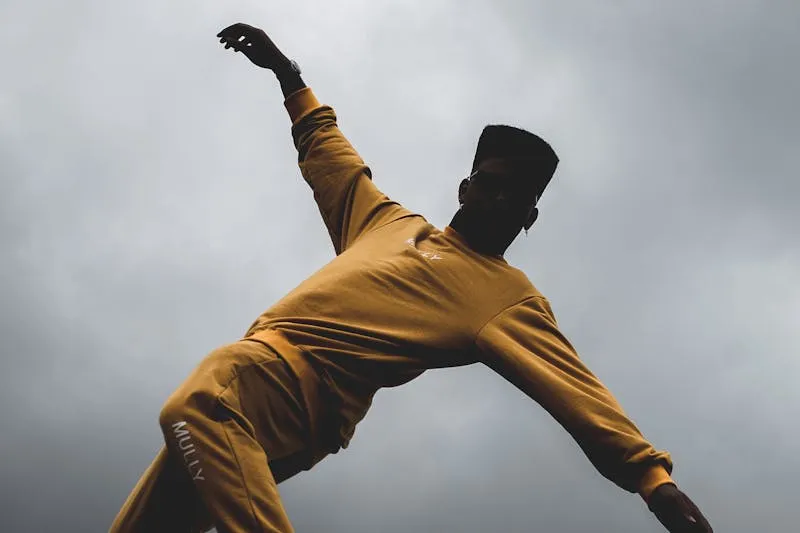
Pantone has spoken. The catwalks have rolled. And suddenly everything is "Peach Fuzz" or "Butter Yellow" — in the magazines, in the shop windows, all over Instagram. But between the colour Pantone decrees and the one you can actually wear without looking like a giant Post-it note, there's a world of difference. This guide helps you navigate that world.
Each season, the same mechanics. One colour becomes "THE colour." It floods everything — from ASOS to the pages of British Vogue. Six months later, it's vanished as fast as it arrived, replaced by another. This cycle is designed to make you buy. This guide is designed to give you a system — not to tell you "buy terracotta this season."
Who actually decides the season's colours?
It's the question no one asks often enough. The answer is more organised — and more commercial — than most people realise.
The colour ecosystem
It begins roughly 18-24 months in advance with trend forecasting agencies — WGSN, Coloro, Trend Union. These organisations analyse cultural, economic, and social signals and deduce which colours will "resonate" in two years' time.
Their forecasts feed the spinners and weavers who produce yarns and fabrics accordingly. Then come the designers who select from these available materials. Then the creative directors of mid-market brands taking cues from the runway. Finally, mass distribution.

Pantone, for its part, is both an industrial tool (colour standardisation for printing and manufacturing) and a media phenomenon. The "Colour of the Year" announcement is as much a PR exercise as a genuine forecast — Pantone receives global press coverage every January.
Why knowing this is useful
Because it changes your relationship to trend colours. They don't "emerge" spontaneously from creative genius — they're planned, produced, and distributed. This isn't a moral judgement: it's simply a fact that gives you more freedom to choose what genuinely suits you rather than what someone wants you to buy.
Before integrating: does this colour actually work for you?
This is the step everyone skips. Before asking how to integrate the season's colour, you first need to know whether it's made for you.
The basics: warm vs cool
All colours have a temperature. And so do complexions. The general principle:
- Warm complexion (skin with golden, peachy, or copper undertones) → suits warm colours better: terracotta, camel, olive, coral, mustard yellow, bronze.
- Cool complexion (skin with pink, blue, or ashy undertones) → suits cool colours better: royal blue, plum, hot pink, pearl grey, midnight blue, lavender.
- Neutral complexion → the luckiest: can wear both ranges by playing with intensity.

How to identify your undertone
Simple methods:
- The vein test: look at the inside of your wrist. Blue/purple veins = cool undertone. Green veins = warm undertone. Mixed = neutral.
- Gold vs silver jewellery: gold suits you better? Warm undertone. Silver? Cool. Both equally? Neutral.
- Pure white vs off-white: crisp white (snow white) suits you? Cool undertone. Cream or ivory works better? Warm undertone.
Seasonal colour analysis — useful tool or gimmick?
You may have heard of seasonal colour analysis (Spring, Summer, Autumn, Winter) — a system that classifies chromatic personalities into 4 (or 16, in advanced versions) types. Is it real, a gimmick, or a bit of both?
What seasonal colour analysis is
Developed by Carole Jackson in the 1980s (Colour Me Beautiful), the system associates colour palettes with four types of chromatic personality based on depth (light/deep), warmth (warm/cool), and clarity (bright/soft) of complexion, eyes, and hair.
In its full 16-season version (the Tonal System), it's a genuinely precise tool — but it requires analysis by a trained consultant, in neutral light, with real colour drapes. Free online tests are unreliable.
What's worth retaining
Even without a full analysis, the core logic is useful: colours that naturally contrast with your features (eyes, hair, skin) tend to flatter you. Colours that come too close to your complexion tone can flatten you or make you look washed-out.
Integrating a new colour without overhauling your wardrobe
The golden rule: never rebuild your wardrobe around a colour trend. Integrating intelligently, yes. Rebuilding everything, no.
The three-touch rule
To introduce a trend colour into an existing outfit, the three-touch rule is most effective: you need only three contact points with the new colour for the look to feel cohesive. A scarf, visible socks, and a clutch — that's all.
This means you don't need to buy a Butter Yellow coat to "do" the trend. A bag, a pair of earrings, and a scarf — and you're in the trend for under £30.
"Test" pieces for a new colour
If you want to try a trend colour on a garment (not just an accessory), start with low-commitment pieces:
- A basic t-shirt or top: £12-25, you test whether the colour works on you and whether you enjoy wearing it daily.
- A pair of socks: the safest and most accessible test.
- A scarf or clutch bag: visible without dominating the outfit.
- A nail polish or beauty accessory: colour trend at near-zero cost.

Good combinations: making trend colours sing
The art isn't in the trend colour itself — it's in what you wear it with.
Combinations that always work
Trend colour + grounded neutral: the safest combination. The neutral "gives space" to the trend colour to exist. Examples: Butter Yellow + camel beige. Cobalt Blue + off-white. Terracotta + ivory cream.
Trend colour + pure white or black: classic, effective, never wrong. White creates freshness; black intensifies.
Trend colour + raw denim: denim is the universal neutral. It absorbs all trend colours without overwhelming them.
Muted tonal dressing: two shades of the same trend colour, with a difference in depth (e.g. powder pink + candy pink). Sophisticated effect, immediate coherence.

Combinations to avoid
Two trend colours together: high risk unless you really understand colour contrast. "Maximum fashion" (full trends head-to-toe) is difficult to carry off without styling expertise.
Trend colour + busy print: the print and the colour "fight" visually. If you want to integrate a trend colour into an outfit with a print, make sure the colour is present within the print.
When trend colours meet your classics
Your wardrobe probably has a core of classic pieces — navy, camel, beige, white, black, grey. Here's how to integrate trend colours onto this base without destabilising it.
The focal point principle
In an outfit, there must be one dominant focal point — the element the eye goes to first. The trend colour must either be that focal point (a trend-coloured jacket on a neutral base) or accentuate the existing focal point (a coloured belt on a classic dress).
If you try to put the trend colour everywhere, you lose the focal point and the outfit looks unstructured.

The classics that best "receive" trend colours
- Raw denim: accepts everything — terracotta, olive, cobalt, lavender...
- Beige or camel blazer: brings warmth and sophistication to any colour.
- White or cream trousers: ideal for spring and summer trend colours.
- Camel trench: the most versatile piece for "receiving" a trend colour in accessories.
Colour budget: investing your pounds intelligently
Trend colours and investment don't mix well — by definition, a trend colour is ephemeral. Here's how to rationalise the budget.
The three-tier colour rule
Tier 1 — Permanent colours (70-80% of fashion budget): your neutrals and the colours that structurally suit you — navy, camel, white, black, grey, perhaps an olive green or burgundy depending on your complexion. These pieces are perennial and worth investing in.
Tier 2 — Semi-permanent colours (15-20%): colours that stay in fashion for 2-3 seasons. Terracotta, sage green, Klein blue — shades with depth and a certain permanence. A quality piece at this tier is justified.
Tier 3 — Ephemeral colours (5-10%): colours of the moment — 2024's Peach Fuzz, 2023's Viva Magenta. For these colours: accessories only, limited budget, second-hand preferred.
Colours by season: a practical guide
Rather than a list of trends (which will be dated the moment this guide is published), here's a reading by season of how colours work — with particular attention to the British context.
Autumn-winter: depth is the rule
A/W colours are naturally deeper, more saturated, more earthy. British autumns and winters — grey skies, wet pavements, early dusk — actually call for colour in a way that's different from continental Europe. Brighter, more vivid colours can lift the grey.
- Natural colours: terracotta, deep camel, chocolate brown, forest green, burgundy
- Metallic accents: gold, bronze, copper — excellent in accessories
- Black and its variants: anthracite, midnight blue, deep plum
The A/W accent colour is often a saturated or unexpected shade: carmine red, intense cobalt, pine green as a contrast to the dominant neutrals.

Spring-summer: lightness and contrast
S/S colours play on lightness, luminosity, and bright contrasts — though British summers being what they are, there's an argument for keeping slightly more depth than the Mediterranean palette suggests:
- Pastels and powders: lavender, mint, peach, azure blue, lilac pink
- Brights and primary accents: lemon yellow, vivid orange, emerald green, cobalt
- White, cream, and ecru: the S/S base par excellence — though in Britain, a cream or ecru reads warmer and more wearable than stark white on grey days
Classic pitfalls around trend colours
After years of observation — and making the mistakes myself:
Pitfall 1: Following a trend colour because everyone else is wearing it — Your neighbour, your Instagram feed, your colleague. That's not a reason to buy it. The question is always: does it suit YOU?
Pitfall 2: Buying the most visible piece in the trend colour — A coat in the colour of the year. In two seasons, it'll be "very 2024." Reserve trend colours for smaller pieces.
Pitfall 3: Ignoring the gap between "the colour in the shop" and "the colour on you" — Colours are photographed, retouched, presented under special lighting. That beautiful Butter Yellow on the mannequin can look completely different on you in natural light. Always try under daylight before buying.
Pitfall 4: Treating the trend colour in isolation — A colour doesn't live alone. It lives in combinations. If you don't know what to wear it with in your existing wardrobe, don't buy it.
Pitfall 5: Buying multiple pieces in the same trend colour — A top, a skirt, and a bag in the same trend colour: it can work if it's an intentional, coherent tonal look. Otherwise, it's three pieces that will go out of style simultaneously.
Frequently asked questions about season's colours
How do I know which colours actually suit me?
The most reliable method is the physical drape test: hold fabrics in different colours against your face in natural light, without makeup. Observe what "illuminates" your complexion vs. what makes it look flat or tired. The presence or absence of visible shadows, the brightness of the skin, the "relief" of the face — all of this changes with colour. If you want to go further, a professional seasonal colour analysis (with a trained consultant) can be a worthwhile one-time investment: you'll have a precise palette for life.
Are there truly universal colours that everyone can wear?
Yes — but not in absolute terms, in terms of shade within the colour. "Blue" is universal if you find the right shade for your undertone: cobalt for cool undertones, teal for neutrals, petrol blue or navy for warm undertones. Similarly, "red" exists as carmine red (cool), tomato red (neutral), or brick red (warm). Colour isn't binary. The shade is everything.
Do you actually need to follow Pantone's Colour of the Year?
No, not as a purchasing directive. The Pantone Colour of the Year is useful as an indicator of the cultural mood — it tells you what's "speaking" to society that year. But if the colour doesn't suit you, ignoring it entirely is the right decision. You can be in the spirit of a colour trend by wearing neighbouring shades that do suit you.
How do you wear trend colours in a professional environment without looking too extravagant?
The "one-colour statement" rule applies particularly well in professional settings: one trend colour element in an otherwise restrained outfit. A coloured blazer over white/black. A structured skirt in a trend colour with a neutral top. Coloured shoes or a bag against a monochromatic, understated outfit. Professional dress doesn't ban colour — it asks that it be contained and intentional.
Do colour rules differ significantly for darker skin tones?
Yes, significantly. Deeper complexions (Black or mixed-race skin) can generally carry higher saturations and stronger contrasts to great effect. Very pale or very pastel colours can "disappear" against deep skin — prefer more vivid tones. Very fair complexions can be overwhelmed by too-intense colours — medium tones or saturated pastels are often more flattering. These are generalisations with exceptions: observing your own complexion remains the best compass.
Can you mix multiple trend colours in one outfit?
Yes, but it's an advanced styling exercise. The rules: the colours should share either a temperature (all warm or all cool) or a similar depth (all bright or all soft). Colour blocking (distinct blocks of different colours) works when the colours are complementary (opposite on the colour wheel) or analogous (adjacent). To start: mix two trend colours maximum, with at least one neutral to give the look room to breathe.
Does hair colour change what suits me?
Absolutely. Hair colour is one of the most influential factors in what you can wear. Very blonde hair + fair skin creates an overall look that "calls for" strong contrasts (black, deep navy, saturated colours). Black hair + golden skin can carry rich, earthy colours with great elegance. If you change hair colour, re-examine your palette — colours that worked before may not work any more, and vice versa.