Emily is thirty-two, a project manager at a marketing agency in Manchester, with a bright flat overlooking Heaton Park. The day her daughter was born, in March last year, she sat on the hospital bed, newborn pressed to her chest, and felt — nothing. She had been waiting for the tidal wave of love the baby books describe; what came instead was a quiet dizziness and a nagging question: what if I'm not cut out for this?
Emily is not unusual. She is one of many mothers who move through the first weeks (the first months, sometimes) in a fog that nobody had bothered to describe. When you search "becoming a mother" online, you find photographs of glowing women in white linen, baby cradled in golden light. Reality looks more like purple under-eye circles, a milk-stained pyjama top, and a 3 a.m. Google search for "baby crying non-stop normal or not".
For this article, I spoke to six women — Emily, Fatima, Chloe, Yasmine, Veronica and Rachel — who agreed to share, without filter, what motherhood cost them. In energy, in sleep, in certainties, sometimes in their relationship. Their stories are for anyone who needs to hear: you are not alone, and what you are feeling is not a sign that something is wrong with you.

The truths about motherhood we still keep quiet
There is an unspoken pact around motherhood. A pact of silence. People readily discuss names, nursery colours, the thrill of the first scan. They speak far less about the bleeding that follows delivery, the stitches that pull, that sensation of becoming a stranger in your own body.
Fatima — thirty-seven, mother of three in Birmingham — sums it up with disarming clarity: "They taught me to breathe through contractions. Nobody taught me to breathe through the six months that came after." What she holds against the people around her is the lie by omission. The notion that if you are not immediately fulfilled, something must be wrong with you.
The figures bear out what these women describe. A government estimate of perinatal mental health conditions in England puts the prevalence at 25.8% among women who gave birth in 2019 (counting a window that runs from three months before conception to two years after the birth). Roughly one in four. And that figure says nothing of the diffuse distress that is routinely minimised by those around you. "You have a healthy baby, what more could you want?" Every single woman I spoke to had heard that sentence. Every single one.
Baby blues or postnatal depression: the blurred line
The baby blues are common and short-lived, arriving in the days after the birth; postnatal depression lasts, and it can be treated. Between the two lies a grey zone that families (and sometimes professionals) struggle to read.
Chloe — twenty-nine, a graphic designer in Bristol — lived in that grey zone for four months. "I cried every evening. My partner told me it was normal, just hormones. My mum said it had happened to her too. My GP told me to get some fresh air." It was ultimately a friend — herself a postnatal depression survivor — who pointed her towards a perinatal psychologist (a specialist in the period around birth). "Four months. It took four months for someone to take what I was feeling seriously."
Detection often stumbles on something simple: the NHS 6-week postnatal check includes a conversation about your mental health, and a conversation only catches what a woman dares to say aloud. Many women minimise their symptoms, driven by guilt or fear of judgement (a reflex that reaches well beyond motherhood, as our overview of women's mental health and the solutions that help shows).

Yasmine — thirty-five, a teacher in Edinburgh — distinguishes baby blues from depression with a very personal criterion: "The baby blues is crying at a song on the radio. Depression is not being able to get up to change the nappy." She eventually saw her GP after six weeks, following a panic attack in Tesco (in the baby food aisle, she adds). The diagnosis took twenty minutes. "I was relieved, oddly. I finally had a word for what I was living through."
Your body after birth: grief and gradual acceptance
Veronica, forty-one, a solicitor in London, recalls a specific moment. Three months after her son's birth, she tried to put on a dress she had worn during pregnancy — not before, during. "It wouldn't zip. I understood then that my body had changed permanently, and that nobody had told me this was a possibility. Everyone promises you'll 'get your body back'. I got a different one, and I had to get to know it."
The tummy that does not flatten. The stretch marks that settle. Breasts that change in shape, volume, sensitivity. The caesarean scar that pulls for months. The pelvic floor that sometimes needs weeks of physiotherapy. These changes are a normal part of recovering from birth — but psychologically, they remain a shock for many women.
The pressure to achieve a "pre-baby body" is relentless. Celebrity magazines clock how quickly famous mothers return to their pre-pregnancy weight. Social media brims with "before and after" shots implying that a postnatal body is a problem to be solved. Fatima puts it bluntly: "Six weeks after my third birth, my mother-in-law asked when I planned to start exercising again. I was still bleeding."
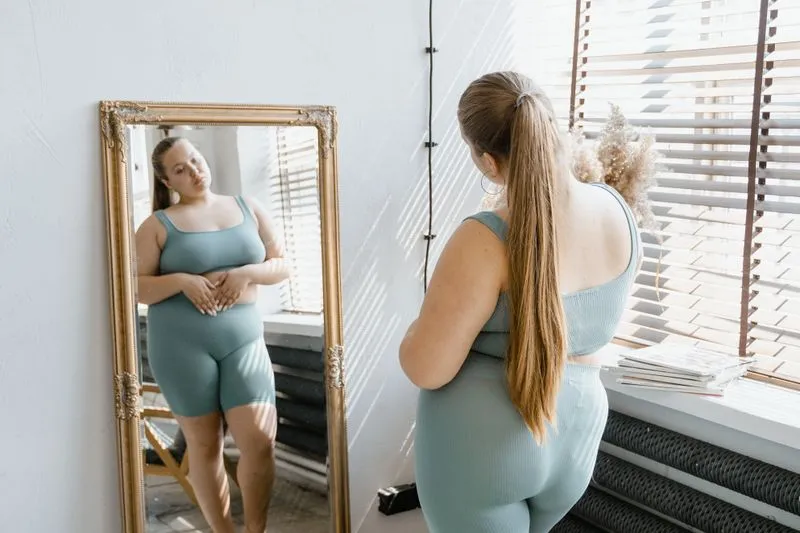
Rachel — thirty-four, a nurse in Leeds — found an unexpected kind of peace. "I stopped looking at my stomach as a flaw. My son is eighteen months now, and when he rests his head on my tummy — the soft one, the one with stretch marks — he falls asleep in thirty seconds. That tummy is perfect for him." Rachel is clear that this peace did not arrive all at once: "It came in little bits, over more than a year."
Your relationship after baby: the silent earthquake
During pregnancy you prepare the nursery, choose the name and sit through antenatal classes — but nobody offers a class on how your relationship will cope once the baby arrives. Yet that may be where the need is greatest.
A University of Washington team followed 82 newlywed couples for four to six years: 67 per cent of the wives who became mothers reported a decline in marital satisfaction, and nearly half of them did not report it until a year after the birth. One caveat matters: only 43 of the 82 couples became parents during the study, and 49 per cent of the wives who stayed childless also reported a decline. So the baby is not the whole story, and a third of the new mothers reported stable or improved satisfaction.
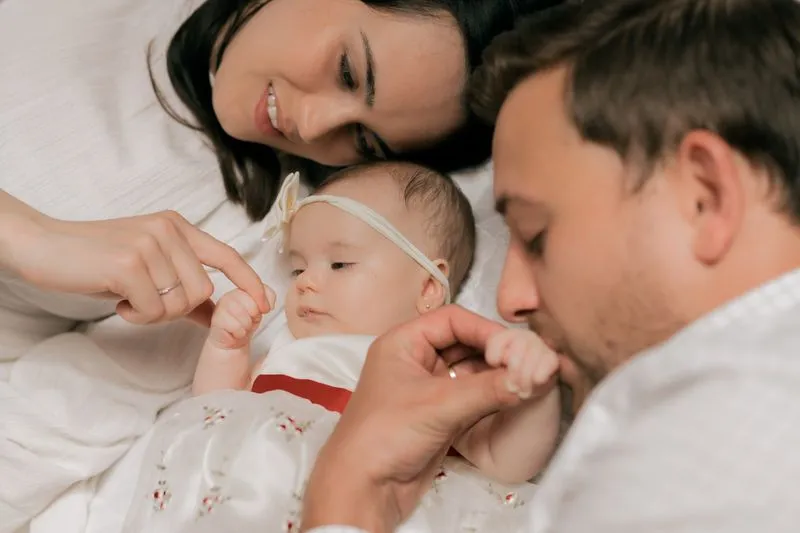
Emily describes the first months with a precise metaphor: "We went from being a couple to being flatmates with a baby. We took turns on night feeds, spoke in whispers, stopped touching each other. We just didn't have the energy, that's all. And I'd gone shy, too. My body didn't feel entirely mine any more."
The question of sex after birth remains largely taboo. The NHS is clear that "there are no rules about when to start having sex again after you have given birth", and its page is frank about soreness and dryness. What no leaflet can settle is desire, or how you feel about your own body. Yasmine explains: "My partner was patient. But after four months, he started making comments, gently, looking worried. And I felt guilty for wanting nothing. We were both suffering in silence, each on our own side of the bed."
Chloe points to another dimension: the division of tasks. "I handled the baby 80 per cent of the time. My partner handled 20 per cent but believed he was doing 50. That perception gap is a ticking time bomb." The concept of the "mental load" — made famous by the French cartoonist Emma — takes on its full, concrete meaning here. Before resentment sets in, couple communication techniques that actually work are worth trying together.
Who am I now? The maternal identity crisis
The loss of identity after having a child may be the most taboo subject of all, because to voice it is to risk being labelled a "bad mother" — the woman who dares to say that motherhood does not wholly fulfil her.
Veronica states it with lawyerly precision (occupational hazard, she says with a smile): "Before, I was Veronica — solicitor, jazz lover, keen hillwalker, voracious reader, Matthew's wife. After, I was Leo's mum. Full stop. My first name had vanished from most conversations."
This phenomenon has a name: matrescence. Coined by the anthropologist Dana Raphael and brought back into public discussion by the American reproductive psychiatrist Alexandra Sacks, the word describes the profound identity shift a woman goes through when she becomes a mother. It is not a pathology — it is a transition, much like adolescence. But unlike adolescence, nobody warns you it is coming.

Rachel experienced this crisis acutely: "I'm a nurse. I look after people all day. And during my maternity leave, my world shrank to nappies, feeds and walks in the park. I felt diminished — and guilty for feeling diminished, because I'm supposed to love this." Guilt on top of guilt: feeling bad, then feeling bad about feeling bad.
The paradoxical loneliness of new motherhood
Fatima has three children. A present husband. A mother who lives twenty minutes away. Friends who send messages. And despite all of that, she describes the early months after each birth as "the loneliest of my life". The paradox is cruel: you are never alone (the baby is always there, always demanding), yet you are profoundly isolated.
This isolation takes several forms: maternity leave abruptly cuts you off from office life — lunches with colleagues, adult conversation —, your childless friends may not fully grasp what you are going through, those with children are overwhelmed themselves, and social media adds its own layer: every other mother seems to cope better than you (a comparison trap unpacked in our look at what the research says about social media and self-esteem).
Chloe captures it with a vivid image: "Instagram is the highlight reel of motherhood. I was living the deleted scenes." She eventually joined a new-mothers' group run by her local Children's Centre. "It was a turning point. The other women didn't have any more answers than I did, but they were asking the same questions."

The mental load: invisible yet crushing
The mental load means knowing the nappy supply is running low before the last pack is opened, remembering the baby's check-up three days in advance (and putting the red book in the changing bag), planning the baby's meals alongside your own, and noticing that the 3–6 month babygrow no longer fits and the 6–9 month one needs digging out. All of it, constantly — in the background, like software running without ever closing.
Yasmine, a teacher, draws a parallel with her profession: "In the classroom, I manage thirty pupils with a timetable, a curriculum and resources. At home, I manage one baby with no timetable, no curriculum, and my only resources are instinct and the mums' WhatsApp group at 2 a.m."
The mental load rests first on an unequal split of the work: the Office for National Statistics' analysis of unpaid work found that "Women carry out an overall average of 60% more unpaid work than men", and more than double the proportion when it comes to cooking, childcare and housework. That is only the work that can be timed. On top of it comes what — in my view — wears mothers down most: the invisibility of all that anticipation. He changes the nappy when asked; she knows it needs changing without being told.
Veronica tried a radical approach: "I went on a mental-load strike for a weekend. I planned nothing, reminded no one. My husband forgot the GP appointment, didn't pack the changing bag, and gave our son an out-of-date yoghurt. On Monday he told me: 'I don't know how you do it.' It was both gratifying and depressing."
Returning to work after a baby: guilty whatever you choose
Rachel went back to the hospital when her son was nine months old — the week her Statutory Maternity Pay ran out. First day: she cried in the changing room for ten minutes before putting on her scrubs. Second day: she cried in the car park. Third day: she did not cry — but she checked her phone forty-seven times (she counted) for photos from the childminder.
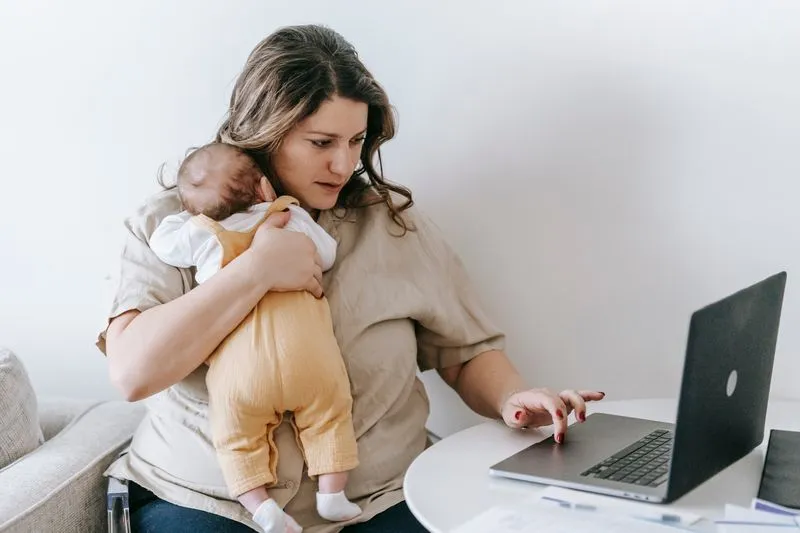
Returning to work crystallises a familiar psychological trap: double guilt. If you go back quickly, you are accused of abandoning your child. If you take extended leave, you are accused of abandoning your career. The result? Whichever path you choose, you are left with a nagging sense of not doing enough.
Emily, in a permanent role, managed to negotiate a four-day week. "That's a privilege, I know. My colleague on a fixed-term contract didn't even dare ask." Fatima chose a long career break for her third child. "Financially, it's a sacrifice. Socially, it's a disappearance. For two years, when people asked what I did for a living, I said 'I'm at home with the kids' and the conversation stopped. As though raising three children were not a job."
In the UK, Statutory Maternity Leave lasts 52 weeks, and Statutory Maternity Pay covers up to 39 of them: 90% of your average weekly earnings for the first six weeks, then a flat rate — £187.18 a week for 2025/26, or 90% of your earnings if that is lower. Shared Parental Leave lets parents split up to 50 weeks of leave and up to 37 weeks of pay between them. The debate around parental leave often overlooks a more fundamental question: the quality of support during and after that leave.
What six mothers wish they had heard
I asked each of the six women the same question: "If you could go back in time and tell yourself one thing on the day of the birth, what would it be?"
Emily: "That the love would turn up at about three months, one morning when she smiled at me from her bouncer. There was no rush."
Fatima: "Stop searching for the perfect mother. She doesn't exist. Even your own mum wasn't one — she just forgot to mention it."
Chloe: "Ring the health visitor the week you get home, even if everything seems fine. I'd have saved myself four months."
Yasmine: "The fog lifts. Hold on."
Veronica: "Keep your jazz nights, even if it's only one a quarter. It sounds trivial, and yet that's where I found myself again."
Rachel: "Your soft belly, your dark circles, your doubts: they're all part of the package, and the package is worth it, even on the days you don't believe it."
These six testimonies do not cover every reality of motherhood. They do not address IVF journeys, miscarriage, single motherhood or blended families. Every story is different. If one of them sounds like you, start with a name: the person you will talk to this week, whether that is your health visitor, your GP or a friend.
Frequently asked questions
How can I tell the difference between normal tiredness and postnatal depression?
Postnatal tiredness comes first from sleep deprivation. Postnatal depression is characterised by persistent sadness, loss of interest in the baby, panic episodes, feelings of inadequacy and sometimes dark thoughts. If these symptoms last more than two weeks, see your GP, midwife or health visitor. If you have thoughts of suicide or of harming yourself or your baby, do not wait: the NHS advises asking for an urgent GP appointment or calling 111 (choose the mental health option), and calling 999 in an emergency. The Samaritans are there on 116 123, day and night.
My partner does not understand what I am going through. What can I do?
Communication is essential but not always sufficient. Seeing a counsellor together (ideally one who knows the perinatal period) can help open a dialogue with a neutral third party; our guide to couples therapy explains when and how to take that step.
Is it normal to regret having a child?
This feeling, described by the sociologist Orna Donath under the term "regretting motherhood", exists. It can sit alongside real love for your child, and reflect grief, exhaustion or overload. Speaking about it without judgement (ideally with a healthcare professional) is the first step.
When can I start exercising again after giving birth?
After a straightforward birth, the NHS says you can start gentle exercise — walking, gentle stretches, pelvic floor exercises — as soon as you feel up to it. It is usually a good idea to get advice at your 6-week postnatal check before any high-impact exercise such as running or aerobics; after a caesarean or a more complicated birth, recovery takes longer, so talk to your midwife, health visitor or GP first.
Where can I find help if I am struggling after having a baby?
Several routes are open in the UK: your health visitor or midwife, your GP, an NHS talking therapies service (in England you can refer yourself if you are 18 or over), the PANDAS Foundation (a charity for parents affected by perinatal mental illness), and in an emergency, the Samaritans on 116 123.
Is UK maternity leave long enough to recover?
Statutory Maternity Leave lasts up to 52 weeks, but Statutory Maternity Pay drops to a flat weekly rate after six weeks (unless 90% of your earnings is lower) and stops after 39 weeks. For many families, money sets the return date as much as recovery does. The women interviewed for this article place their real adjustment somewhere between six and twelve months after the birth.
Sources
- GOV.UK — Estimated prevalence of perinatal mental health conditions in England, 2016 and 2019
- NHS — Feeling depressed after childbirth
- NHS — Your 6-week postnatal check
- NHS — Sex and contraception after birth
- NHS — Keeping fit and healthy with a baby
- University of Washington — Marital satisfaction after the first baby (2000)
- Office for National Statistics — Women shoulder the responsibility of "unpaid work"
- GOV.UK — Benefit and pension rates 2025 to 2026
- GOV.UK — Maternity pay and leave
- GOV.UK — Shared Parental Leave and Pay
- Acas — Pregnancy and maternity discrimination