You're crying. Crying at a nappy advert on telly. Crying because the baby is finally asleep and you know you should sleep too, but you can't. Crying because everyone keeps telling you this is the best time of your life, and it doesn't feel like it at all. Everyone says: "It's the baby blues, it'll pass." But how do you know if it really will — or if this is something else?
According to the Royal College of Psychiatrists' guide to postnatal depression (RCPsych), postnatal depression (PND) affects between 10 and 15 in every 100 women having a baby. Many don't recognise it for what it is, because it can creep in gradually, because it gets mistaken for the baby blues, and because there's still very little room in our culture for unhappy motherhood. This week, 5 to 11 May, is Maternal Mental Health Awareness Week, whose 2025 theme is "Your Voice, Your Strength". It's a good moment to ask the question out loud.
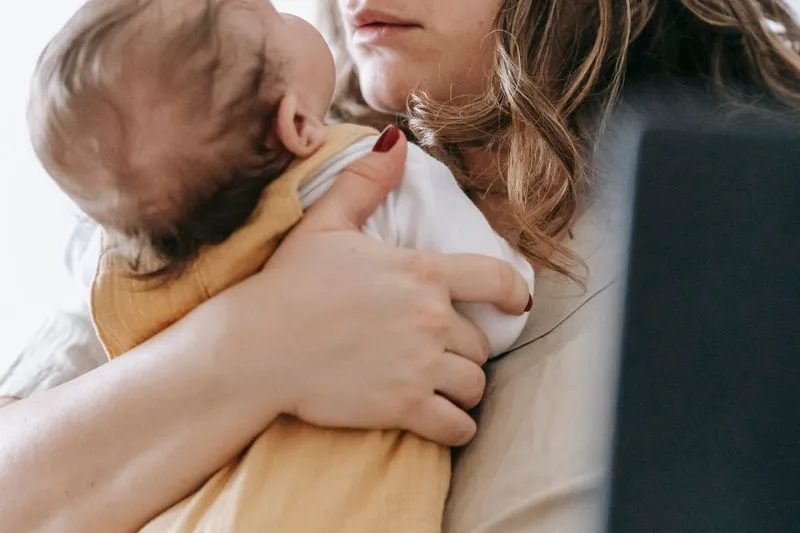
Why so many new mothers cry in the first week
Crying in the days after giving birth is common and, for most women, short-lived. The Royal College of Psychiatrists describes having a baby as "a time of huge change" and adds: "It is common to feel many different emotions." Tears in the first days aren't "abnormal" in a clinical sense.
It's tempting to blame hormones for everything, but they aren't the whole story. For postnatal depression, the Royal College of Psychiatrists says there is probably no single reason, but a number of different stresses may add up to cause it.
The difficulty is that everyone — including, sometimes, healthcare professionals — tends to wave these feelings away with "it's the baby blues, it'll pass." Which is true most of the time, but it can also hide something more serious taking root.
The baby blues: what's normal
The baby blues is a short-lived emotional dip that's so common it's considered part of normal recovery. The Royal College of Psychiatrists says over half of new mothers experience it (so if it's happening to you, you're in the majority): it usually starts three to four days after birth and has usually stopped by the time the baby is about ten days old. Women with the baby blues don't need treatment.
When it starts and when it ends
The NHS guidance on postnatal depression sets the outer limit: the baby blues doesn't last more than two weeks after giving birth. Symptoms that last longer, or that start later, point towards something else.
What it feels like
- Frequent crying, often without a clear reason
- Irritability and heightened sensitivity
- Feeling overwhelmed, a low hum of anxiety
- Mood swings and over-reacting to small things
- Deep tiredness
- Rapid switches between happiness and sadness
What sets the baby blues apart from postnatal depression: the emotions are volatile (they rise and fall quickly), and the mother generally keeps the ability to function, to care for her baby, and to feel connected to them at moments.

How to get through the baby blues
The baby blues doesn't need medical treatment. What helps:
- Accepting practical help — let people cook, clean, shop and hold the baby
- Sleeping whenever the baby sleeps, even for twenty minutes, and asking your partner to take some of the night feeds
- Talking about what you're feeling, without forcing yourself to "be fine"
- Limiting visits that drain rather than support
- Putting big decisions on hold for a few weeks
Postnatal depression: an illness that lasts, and can be treated
Postnatal depression is an illness. Not a sign of weakness, not a failure of motherhood, not something to push through with willpower. An illness, as serious as depression at any other time of life — and a treatable one.
When it appears
PND often starts within one or two months of giving birth, but it can begin several months later, and the NHS says symptoms can start at any point up to a year after the baby is born. About a third of women with PND have symptoms that began during pregnancy and simply carried on. So feeling yourself slide at six months — around weaning, or the return to work — deserves exactly the same attention.
The symptoms
- A persistent low mood, a sense of emptiness
- Loss of enjoyment and interest, including with the baby
- Exhaustion that sleep doesn't fix, trouble sleeping even when you can
- Negative thoughts and guilt (being a bad mother, the baby not loving you)
- Overwhelming anxiety, sometimes panic attacks
- Difficulty concentrating or making decisions
- Withdrawing from friends and family
- Frightening thoughts, such as harming yourself or your baby (in severe cases)
What distinguishes PND from the baby blues: duration (more than two weeks), intensity and — crucially — its impact on daily life. A woman with PND doesn't have ups and downs; she has mostly downs, sustained over weeks or months.

Baby blues or postnatal depression: how to tell the difference
| Factor | Baby blues | Postnatal depression |
|---|---|---|
| How common | More than half of mothers | 10 to 15 in every 100 mothers |
| Onset | Around 3 to 4 days after birth | Often within 1 to 2 months, sometimes up to a year after birth |
| Duration | Usually over by day 10, not beyond 2 weeks | Weeks to months, longer if untreated |
| Emotional pattern | Fluctuating (highs and lows) | Persistently low |
| Bond with baby | Generally maintained | Can be significantly affected |
| Daily life | Manageable despite the tears | Often very difficult |
| Support needed | Rest, reassurance, practical help | Talking therapy, sometimes with an antidepressant |
Who is most at risk of postnatal depression?
Certain factors make postnatal depression more likely. Knowing them isn't about predicting suffering — it's about making sure closer support is in place when it matters most. Each appointment in your antenatal appointment schedule is a chance to mention them. Between them, the Royal College of Psychiatrists and the NHS list:
- Previous mental health problems, including depression
- Depression or anxiety during pregnancy
- Little support from a partner, family or friends, or a difficult relationship
- A recent stressful event, such as a bereavement, a relationship ending or losing a job
- Domestic violence or previous abuse
- Having arrived in a new country as a refugee or to seek asylum
- A family history of mental health problems after childbirth
The baby blues itself doesn't turn into depression in most cases, but the Royal College of Psychiatrists advises telling your health visitor or GP if it carries on for more than two weeks, so they can check whether you have PND. And none of these factors is required — PND can start for no obvious reason at all. If your birth didn't go the way you'd imagined — an emergency caesarean, for instance — mention it at your postnatal check, even if everyone keeps telling you it all turned out fine.
Screening questions, the EPDS and your 6-week check
You may not be handed a questionnaire straight away. NICE guideline CG192 on antenatal and postnatal mental health asks professionals to consider two short questions in the early postnatal period — whether, over the past month, you've often been bothered by feeling down, depressed or hopeless, and whether you've had little interest or pleasure in doing things. If you answer yes, or there's concern, NICE suggests using a fuller questionnaire such as the Edinburgh Postnatal Depression Scale (EPDS) or the PHQ-9 (Patient Health Questionnaire) as part of a complete assessment.
The EPDS is a short self-report questionnaire about how you've felt recently: mood, enjoyment, worry, guilt, sleep, dark thoughts. It isn't a diagnosis — it's a tool, which NICE places within a full assessment by a professional. Filling it in can also help you put words to what you're experiencing, or show someone close to you that this goes beyond ordinary tiredness.

Then there's your own postnatal check, 6 to 8 weeks after the birth, which your GP surgery should offer — and which you can request yourself. As the NHS page on your 6-week postnatal check puts it: "You'll be asked how you're feeling as part of a general discussion about your mental health and wellbeing." That appointment is yours, not just the baby's.
How friends and family can help with postnatal depression
If you're reading this because someone you love is struggling, here's what actually helps — and what doesn't.
What helps
- Practical support without being asked: come and do the washing up, bring a meal, take the baby for an hour.
- Listening without minimising: "It's the baby blues, it'll pass" doesn't help. "I'm here, I hear you, that sounds really hard" does.
- Not leaving her alone for long stretches — isolation makes everything worse.
- Suggesting a GP or health visitor appointment and offering to come along.
- Watching for warning signs: thoughts of self-harm, not eating, complete withdrawal from the baby.
What doesn't help (and sometimes makes things worse)
- "You should be happy — you've got a beautiful baby"
- "Everyone goes through this"
- "Think of your baby"
- "Are you sure you're not exaggerating a bit?"
- Leaving books about the joys of motherhood on the kitchen table
Postnatal depression treatment and support in England
Postnatal depression is treatable: with the right support, most women make a full recovery, even if it takes time.
Talking therapies
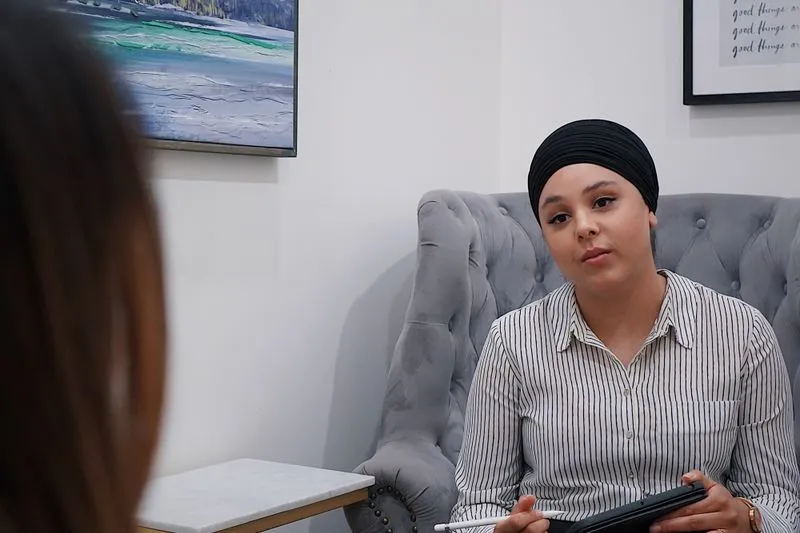
Talking therapies are usually the first treatment offered. For mild to moderate depression after birth, NICE recommends considering facilitated self-help; for moderate or severe depression, a high-intensity psychological therapy such as cognitive behavioural therapy (CBT). Interpersonal therapy (IPT), which looks at your relationships, is another option. In England, you can self-refer to your local NHS Talking Therapies service or ask your GP, midwife or health visitor to refer you. In Scotland, Wales and Northern Ireland, start with your GP, midwife or health visitor, who can refer you to local services. The Royal College of Psychiatrists notes that pregnant women and new mothers are usually given priority, and you can often bring your baby to appointments. NICE also sets a timescale: assessment within two weeks of referral, and psychological treatment within a month of that first assessment.
Medication
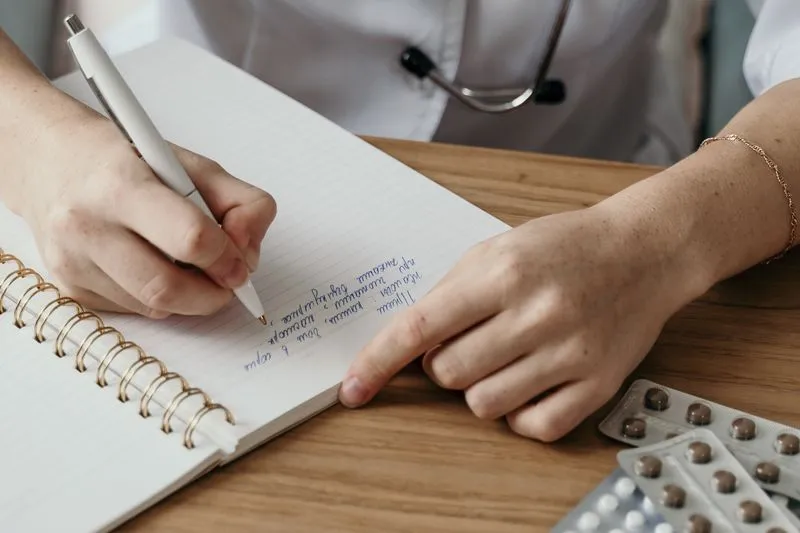
For more severe depression, or if talking therapy hasn't helped, an antidepressant may be recommended. Breastfeeding doesn't automatically rule treatment out: the Royal College of Psychiatrists says that for many antidepressants there's no evidence of problems for breastfed babies, so breastfeeding is usually possible. Tell your GP you're breastfeeding, and decide together what's safest for you and your baby.
Specialist perinatal mental health services
If your depression is very severe and doesn't respond to treatment, your GP or health visitor can refer you to a specialist community perinatal mental health team. These teams care for women with complex mental health needs during pregnancy and after giving birth. The few women who need hospital care should normally be admitted, with their baby, to a specialist mother and baby unit (MBU), as NICE recommends. Charities can help alongside the NHS: the Association for Post Natal Illness (APNI) runs a helpline on 020 7386 0868, from 10am to 2pm on weekdays, for women and their families.
Postnatal depression in fathers and partners
Less widely known, but just as real: fathers and partners can also become depressed after a birth. The Royal College of Psychiatrists points out that this may be more likely when the mother also has postnatal depression.
Support exists for fathers too. PANDAS Foundation, the perinatal mental health charity, has dedicated support for dads alongside its peer support groups, online and face to face.
If you're a partner and recognise yourself here, talk to your GP — depression in fathers is treated too.
Frequently asked questions
Can PND happen after a second or third birth?
Yes. A previous birth without postnatal depression doesn't protect you next time. And if you've had depression or other mental health problems before, including after an earlier baby, tell your GP or midwife early in pregnancy so that support can be planned — the NHS asks women with a relevant history to do exactly that.
Will PND permanently damage my bond with my baby?
This is one of the most common fears. PND can make it harder, for a while, to feel close to your baby — and love doesn't always arrive like a thunderbolt at birth anyway, as what science says about maternal instinct shows. The bond is part of the treatment: specialist perinatal teams actively support the relationship between mothers and babies. The Royal College of Psychiatrists notes that PND can affect a child's development even after it has ended, which is precisely why getting help early matters — for both of you.
Do I have to stop breastfeeding to get treatment?
Not necessarily. Many antidepressants can be taken while breastfeeding, though not all of them: your doctor should explain the risks and offer the one with the least risk for you and your baby. If breastfeeding is exhausting you, combining breast and bottle, or stopping, is not a failure. In the words of the Royal College of Psychiatrists: "It is more important for your baby that you are well."
Can depression follow a miscarriage or stillbirth?
Yes. Low mood, anxiety and even post-traumatic stress can follow the loss of a pregnancy or a baby, and they are often less recognised than they should be. NICE asks professionals to offer advice and support to women who have had a traumatic birth or a miscarriage and want to talk about it, and trauma-focused therapy (CBT or EMDR) when post-traumatic stress follows a traumatic birth, miscarriage, stillbirth or neonatal death. Talk to your GP, or ask your midwife where to find bereavement support.
My GP doesn't seem to take my concerns seriously. What can I do?
You can ask for a second opinion or see a different GP — the Royal College of Psychiatrists says so plainly. Your health visitor can also help, and, in England, you can refer yourself to NHS Talking Therapies without going through your GP. You are entitled to be taken seriously.
When should I seek urgent help?
Immediately if you have thoughts of harming yourself or your baby, suicidal thoughts, hallucinations (hearing voices, seeing things others can't), beliefs that aren't true, or if you can no longer look after yourself or your baby. These can be signs of postpartum psychosis, which affects around 1 in 1,000 women and needs urgent treatment. Call 999, go to A&E, or call Samaritans on 116 123. Don't wait for a GP appointment.
Is there someone I can talk to today?
Yes. The Association for Post Natal Illness (APNI) runs a helpline on 020 7386 0868, from 10am to 2pm, Monday to Friday. PANDAS Foundation offers a free call back from one of its trained volunteers, at a time that suits you. Its WhatsApp service, on 07903 508334, runs every day from 8am to 10pm. Samaritans answer on 116 123, free, 24 hours a day, 365 days a year. If you're having thoughts of harming yourself or your baby, call 999 or go to A&E.
Sources
- Royal College of Psychiatrists — Postnatal depression
- NHS — Postnatal depression
- NHS — Treatment for postnatal depression
- NICE CG192 — Antenatal and postnatal mental health: clinical management and service guidance
- NHS — Your 6-week postnatal check
- Association for Post Natal Illness (APNI)
- PANDAS Foundation — Perinatal mental health support
- Samaritans — Here to listen, 116 123
- Central London Community Healthcare NHS Trust — Maternal Mental Health Awareness Week, 5–11 May 2025