Two weeks. That is the cooling-off period the NHS describes as normal in the UK between your consultations with the surgeon and the operation — time that belongs to you, not to the clinic. Two weeks to weigh up what may have been on your mind for years: that nose you've never liked, breasts that feel too small or too large, eyelids that have started to droop. You've scrolled through before-and-afters on Instagram, read the forums, and you're swinging between "why not" and "am I being ridiculous".
That time exists for a reason: there is a gap between the fantasy of a perfect result and the reality of an operation. Surgery means anaesthesia, scars, real risks — and a recovery that can stretch across weeks. Many women discover that gap only after the fact.
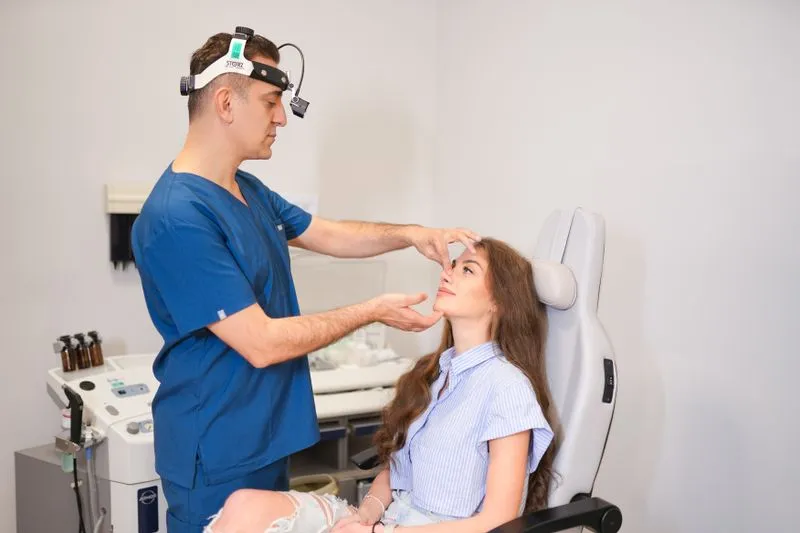
Cosmetic surgery: where the wish comes from, and why the question matters
The motivations for cosmetic surgery vary enormously: a breast asymmetry present since adolescence, a rhinoplasty after a broken nose, a blepharoplasty for a "less tired" appearance in one's fifties. There are post-pregnancy motivations — tummy tucks, breast surgery after breastfeeding — and post-weight-loss ones, when skin simply doesn't catch up.
The 2023 annual audit of the British Association of Aesthetic Plastic Surgeons (BAAPS) recorded 25,972 cosmetic surgical procedures that year — a 16% fall on 2022. Women accounted for 93% of them, and breast augmentation topped the list. The audit counts procedures performed by BAAPS members — the Department of Health's 2013 review of cosmetic interventions (the Keogh review) describes it as an annual audit of its members' activity — so it is not a total for the whole country. Many women still feel they cannot speak about it openly, caught between the stigma of "giving in to vanity" and the pressure to look a certain way.
What the numbers don't show is what each woman expected from her operation. The same procedure can ease a long-standing discomfort, or disappoint because it was asked to fix something other than appearance. That is why the question of why comes before the choice of surgeon.
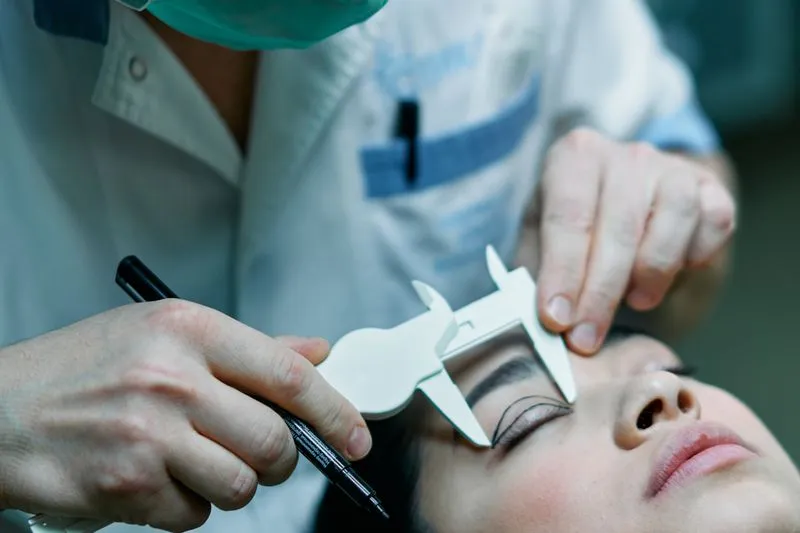
Your first consultation: what actually happens
The first consultation is there to examine you, understand what you want and explain what the operation involves. Book it with the surgeon who will actually operate — not with a salesperson or a patient coordinator — and ask about the consultation fee when you book.
Here is what should happen during that first meeting:
- Full medical history: previous surgeries, allergies, current medications, smoking status, general health, and any mental health treatment past or present. Be thorough — these details directly affect your safety.
- Clinical examination: the surgeon will examine the area of concern, take photographs with your explicit consent, and assess feasibility.
- Discussion of expectations: the surgeon needs to understand precisely what you want — and to tell you clearly what is achievable, partially achievable, or not possible.
- Information on risks: ask directly about the most common complications, what aftercare to expect and what happens if something goes wrong. A surgeon who glosses over risks or seems impatient when you ask is a warning sign.
- Written quote: all costs in writing — surgeon, anaesthetist, hospital, and follow-up appointments — so you know whether aftercare and any future procedures are included.
Then take your time. The NHS page on cosmetic surgery abroad advises having two consultations with the surgeon before any operation. That gives you a cooling-off period, "which is normally 2 weeks in the UK". Reputable surgeons will not pressure you into a decision.
Choosing your surgeon: the criteria that matter
The surgeon matters more than the clinic or the price: check their registration first, then their experience of the procedure you want.

Essential qualifications
The NHS guide to choosing who will do your procedure is clear: only registered doctors can perform cosmetic surgery in England. You can check any doctor on the General Medical Council (GMC) online register. The British Association of Aesthetic Plastic Surgeons' patient leaflet on tummy tucks goes one step further. It advises choosing a surgeon who is on the specialist register held by the GMC. Some surgeons also hold a cosmetic surgery certificate from the Royal College of Surgeons, which means they have been assessed against an agreed national standard.
Two professional associations to ask about:
- BAAPS (British Association of Aesthetic Plastic Surgeons) — the association dedicated to aesthetic plastic surgery.
- BAPRAS (British Association of Plastic, Reconstructive and Aesthetic Surgeons) — the broader professional body covering both reconstructive and aesthetic practice.
Membership of a professional association is not a qualification in itself — it is one more thing to check, not a guarantee.
Beyond qualifications: specific experience
A qualified plastic surgeon is not necessarily expert in every procedure. Ask how many operations of the type you are considering they have done, and how often they perform them. A surgeon confident in their practice answers without hesitation — and hesitation is an answer too.
Request to see a before-and-after portfolio for patients who had the same procedure. Look not only at results but at how those results sit with body types similar to yours.
The facility
All independent hospitals and clinics that provide cosmetic surgery in England must be registered with the Care Quality Commission (CQC), which also publishes quality ratings online. Look up the clinic before you book. In the event of a complication, having a fully equipped surgical facility on hand is essential.
Questions to ask before you sign anything
You have every right — and a responsibility to yourself — to ask anything you want to know. Here are the questions not to leave without answering:

- How many of these procedures have you done, and how often do you perform them?
- Will you be operating on me yourself, from start to finish?
- What are the specific risks for my case? (not the generic leaflet version)
- Which technique will you use, and why?
- Where will the scars be, and how do they typically heal?
- What result is realistic for my anatomy?
- Where will the operation take place, and is the clinic CQC-registered?
- What happens if there is a complication? (who follows up, where, how)
- What is your post-operative follow-up protocol?
- When can I return to work and exercise?
- Is a revision included if the result is not satisfactory, and at what cost?
A serious surgeon will answer all of these precisely and without impatience. If some are brushed aside, see another surgeon.
Common cosmetic procedures in the UK: costs and realities
UK prices vary considerably depending on the surgeon, the location (London versus the regions), and your individual case. The ranges below come from the NHS guides to each cosmetic procedure, and they usually exclude consultations and follow-up care. Your written quote — line by line — is the only figure that counts.

Breast surgery
- Breast augmentation: around £3,500 to £8,000. Breast implants do not last a lifetime: it is likely they will need replacing at some point, and any future surgery is paid for separately.
- Breast reduction: around £6,500. It may be available on the NHS when the size of your breasts causes problems such as backache and other options have not worked — worth raising with your GP.
- Breast lift (mastopexy): it can be combined with augmentation, which is worth discussing at the first consultation.
Rhinoplasty
- Nose reshaping: £4,000 to £7,000. It might be several months before you see the full effect — the nose takes time to settle.
Eyelids and face
- Blepharoplasty (eyelids): £2,000 to £6,000. Scarring may be visible and feel tight for a few months.
- Facelift: from a few thousand pounds for a mini facelift to £10,000 for a face and neck lift. It can take six to nine months to see the full effect. It can be combined with fat transfer.
- Ear correction (otoplasty): £2,500 to £3,500. It is sometimes available on the NHS, particularly for children who need it.
Body
- Liposuction: about £3,000 to £8,500 depending on the areas treated. It is not a treatment for obesity — it is targeted body contouring of stubborn fat deposits.
- Tummy tuck (abdominoplasty): about £5,000 to £10,000. It leaves a long, low scar running from hip to hip, and it is not a weight-loss operation. It is most often considered after pregnancy or significant weight loss, when exercise has not shifted the excess skin.
- Labiaplasty: about £4,000. It is not usually available on the NHS, except in specific medical situations.
Cosmetic surgery risks: general and procedure-specific
Cosmetic surgery carries the same risks as any operation, plus those specific to each procedure — even when it is presented as an easy, low-stakes choice.
General surgical risks:
- Allergic reactions, including to the anaesthetic (which is why every past reaction matters)
- Post-operative infection
- Excessive bleeding, haematoma or seroma (fluid collection)
- Blood clots: deep vein thrombosis (DVT) or pulmonary embolism (rare but serious)
- Scarring that is more noticeable than expected
Procedure-specific risks:
- Breast implants: capsular contracture (the breast feeling hard because scar tissue has shrunk around the implant), rupture, and — rarely — breast implant-associated anaplastic large cell lymphoma (BIA-ALCL). The MHRA's guidance on breast implants and ALCL explains that BIA-ALCL is a variant of anaplastic large cell lymphoma (defined by the WHO in 2016), "an uncommon type of non-Hodgkin lymphoma".
- Rhinoplasty: breathing difficulty that can be permanent, a changed sense of smell, heavy nosebleeds, or a result that isn't what you hoped for.
- Liposuction: lumpy or uneven results, numbness that can last for months.
- Facelift: nerve injury, with loss of sensation or movement in the face.
These risks do not mean you shouldn't have surgery — they mean you should know about them and accept them consciously, with your eyes open.
Recovery after cosmetic surgery: timings by procedure
Depending on the procedure, expect anything from one to six weeks off work — and up to six months for the swelling of a rhinoplasty to go completely. Instagram shows you the final result — rarely those first weeks.

Approximate recovery times, from the NHS procedure guides:
- Blepharoplasty: most people take about two weeks off work. Bruising and redness may take several weeks to fade.
- Breast augmentation: a week or two off work. No driving for at least a week, no heavy lifting or strenuous exercise for at least a month. Back to most normal activities after about six weeks.
- Rhinoplasty: a splint for about seven days, up to two weeks off work, and up to six months for the swelling to go completely.
- Tummy tuck: four to six weeks off work and exercise, with a compression garment for around six weeks.
- Facelift: about two to four weeks to recover fully, all of it off work; bruising stays visible for at least two weeks.
- Labiaplasty: up to two weeks off work, and no sex for at least four weeks.
If you're travelling for surgery, add the flight to your planning. The NHS recommends not flying for 5 to 7 days after breast surgery or liposuction, and 7 to 10 days after facial procedures or a tummy tuck. Air travel and major surgery both raise the risk of a blood clot.
What you need to organise in advance:
- Help at home for the first few days (shopping, childcare).
- Time off work, agreed with your employer before you book the date.
- No major social events or formal commitments for several weeks post-op.
- Compression garments as recommended by your surgeon.
Cosmetic surgery and your mental health: before deciding, after the operation
Two moments matter: before you sign, knowing who the change is really for; after the operation, giving the mirror time to catch up with the result.
Before: healthy and less healthy reasons
Before you book anything, ask yourself one simple question: am I doing this for myself, or to please someone else? Two kinds of motivation tend to emerge:
- A request that comes from you: "I want to feel better in my body, for myself." It focuses on a specific area, with a specific expectation.
- A request that comes from elsewhere: "My partner would prefer...", "I want to look like...", "If I change this, my life will change." These are the sentences worth pausing on before you sign anything.
If a surgeon suggests talking things through with a psychologist before setting a date, particularly for a major change or several procedures, this is not an obstacle — it is a protection. And if you are being treated for a mental health condition, tell both the surgeon and the person treating you.

After: adapting to your new body
A technically successful result does not guarantee immediate satisfaction. It takes time to inhabit your new body, for the reflection in the mirror to align with your inner image of yourself.
The weeks after surgery can be harder than expected: pain, swelling, tiredness, a face or figure that doesn't yet look like the result you were promised. Going through that — however unsettling — does not mean you made the wrong decision.
However, if distress persists several months after an objectively good result, talk to your GP — therapeutic support can help.
What result to expect from cosmetic surgery, realistically
No cosmetic procedure can guarantee a result that is 100 per cent in line with what you have in mind.
Part of the result depends on factors neither the surgeon nor you can fully control — how your body heals, your genetics, your natural ageing. A good surgeon will tell you what they can improve — not what they can make perfect.
The "after" photographs you see of celebrities and influencers typically combine:
- The surgical result itself
- Professional make-up
- Photo filters and retouching
- Complementary injectables (anti-wrinkle injections, fillers)
- Carefully chosen lighting
The word botox turns up at the hairdresser's too — but hair botox is a conditioning treatment that has nothing to do with needles.
Cosmetic surgery can bring you closer to a version of yourself you'd like to be — it cannot transform you into someone else. Nor does it replace everyday care: skin looked after with a skincare routine applied in the right order remains the foundation, before and after any procedure.
Frequently asked questions
Is cosmetic surgery available on the NHS?
Rarely. The NHS states that cosmetic surgery is not routinely provided on the NHS, and most people pay privately. Exceptions exist for psychological or health reasons. They include breast reduction when large breasts cause significant distress and problems such as backache, nose reshaping for breathing problems, ear correction for children who need it, and breast enlargement for very uneven or absent breasts. Reconstructive surgery, such as rebuilding a breast after a mastectomy, is a separate matter. Start with your GP. For breast reduction, the NHS notes that the exact criteria depend on where you live.
How do I verify a surgeon's qualifications in the UK?
Search the surgeon by name on the GMC online register and check that they are on the specialist register. Ask whether they hold the Royal College of Surgeons' cosmetic surgery certificate, and whether they belong to a professional association such as BAAPS or BAPRAS. For the clinic, check its CQC registration and rating if it is in England.
Can you have cosmetic surgery after 60?
Age alone doesn't decide — your state of health, assessed during the preoperative check, determines whether the operation is reasonable. Expect a more thorough assessment, particularly of your heart and fitness for anaesthesia, and detailed questions about your medication.
Should I tell my GP before having cosmetic surgery?
It is not legally required — but it is strongly advisable. Your GP has your complete medical history and can flag contraindications or drug interactions you may not have considered. They will also be a point of contact if something worries you after the operation.
What does informed consent mean?
It means agreeing to the operation after being told what it involves, the alternatives, the most common complications and what happens if something goes wrong. You will usually be asked to sign a consent form. Read all of it before signing, and never sign on the day you first meet the surgeon.
Can multiple procedures be combined in one operation?
Yes, for example breast augmentation with a lift. However, combining procedures lengthens the time under anaesthetic. This should be discussed and justified by your surgeon, and is only appropriate when the areas being treated do not interfere with each other's recovery.
What is the Save Face register?
Save Face describes itself as a government-approved register of accredited practitioners. It covers non-surgical treatments such as anti-wrinkle injections, dermal fillers and lip enhancement — not surgery. For non-surgical treatments more generally, the NHS suggests checking whether a practitioner is on a voluntary register accredited by the Professional Standards Authority (PSA). You'll find Save Face at saveface.co.uk.
How long after pregnancy should I wait before body contouring surgery?
It's best to wait until your weight is stable, breastfeeding has stopped and no further pregnancy is planned in the short term. A later pregnancy can change the result of a tummy tuck or breast surgery. As the BAAPS leaflet puts it: "If you are overweight, pregnant or planning to become pregnant, your surgeon may suggest delaying your operation."
Sources
- BAAPS — UK cosmetic surgery audit 2023 (April 2024)
- BAAPS — Information about abdominoplasty surgery (patient leaflet)
- NHS — Choosing who will do your cosmetic procedure
- NHS — Is a cosmetic procedure right for me?
- NHS — Cosmetic surgery abroad
- NHS — Cosmetic surgery procedure guides (costs and recovery)
- NHS — Breast enlargement (implants)
- NHS — Is cosmetic surgery available on the NHS?
- NHS — Breast reduction (female)
- MHRA (GOV.UK) — Breast implants and anaplastic large cell lymphoma (ALCL)
- Department of Health — Review of the Regulation of Cosmetic Interventions (Keogh review, April 2013)
- BDD Foundation — Cosmetic surgery and BDD
- NHS — Body dysmorphic disorder (BDD)