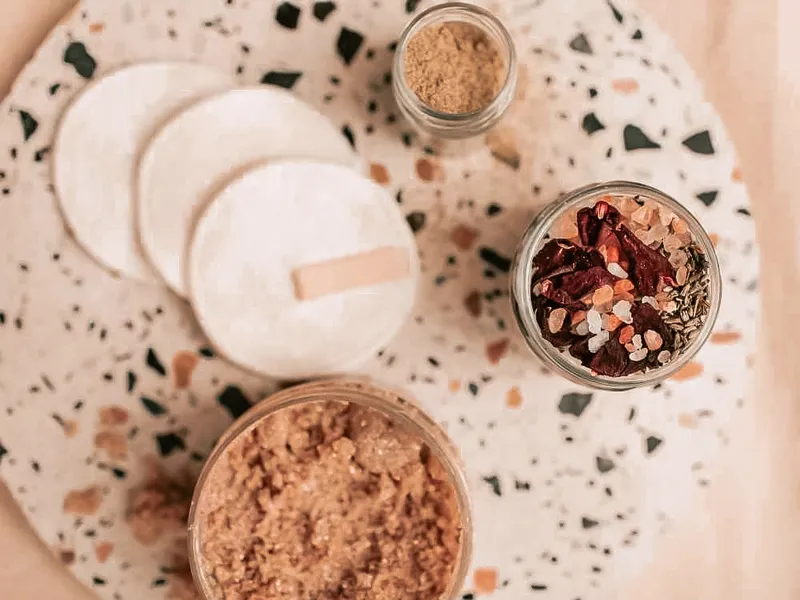
There's a satisfying simplicity to exfoliation: you scrub away what's old and dull, and what's underneath is brighter, smoother, and softer. It's one of the oldest beauty practices on the planet — Cleopatra allegedly used sand from the Nile, which sounds horrific but wasn't entirely wrong in principle. What she didn't have (and what we do) is an understanding of the skin barrier, the difference between helpful and harmful exfoliation, and the knowledge that more is absolutely not better. Because overdoing it is where most people go wrong — and the consequences range from irritation to genuine damage.
Why exfoliate: what's actually happening at the skin level
Your skin is in a constant state of renewal. The epidermis (outer layer) produces new cells at its base, which gradually migrate upward over about 28–40 days (slower as you age), eventually reaching the surface where they die, flatten, and — ideally — shed naturally. This process is called desquamation, and when it's working properly, your skin handles it on its own without any help from you.
The problem: desquamation doesn't always work properly. Factors like dry air, insufficient hydration, hormonal changes, ageing, certain skin conditions (keratosis pilaris, psoriasis), and even wearing tight clothing can slow the natural shedding process. Dead cells accumulate, creating a dull, rough surface layer that:
- Blocks moisturisers and serums from penetrating to the living cells that actually benefit from them
- Traps oil and bacteria in pores, contributing to body acne (especially on the back and chest)
- Creates an uneven texture that makes self-tanner apply patchily
- Causes ingrown hairs by trapping hair beneath layers of dead skin
- Makes skin look dull and ashy, regardless of how much lotion you apply
Exfoliation accelerates the removal of this dead cell layer, revealing the fresher, smoother cells underneath. Done correctly, it improves texture, enhances product absorption, reduces ingrown hairs, and creates a genuine, visible glow that's not just marketing language — it's literally the difference between light reflecting off rough, irregular cells versus smooth, flat ones.
Mechanical vs. chemical exfoliation: two completely different approaches
These are not interchangeable methods. They work through fundamentally different mechanisms, suit different skin types, and have different risk profiles.
Mechanical (physical) exfoliation uses friction to physically dislodge and remove dead cells from the skin surface. Scrubs with granules (sugar, salt, ground pumice), brushes, loofahs, exfoliating gloves, and dry brushing all fall into this category. It's immediate — you feel the dead skin being removed in real time. The risk is physical damage: too much pressure, too coarse a granule, or too frequent use can create micro-tears in the skin, damage the lipid barrier, and cause inflammation.
Chemical exfoliation uses acids or enzymes to dissolve the "glue" (desmosomes) that holds dead cells to the skin surface. The dead cells release and wash away without any scrubbing. Alpha-hydroxy acids (AHAs), beta-hydroxy acids (BHAs), and polyhydroxy acids (PHAs) are the main categories. The process is gentler on the skin surface but involves chemical interaction with living cells — which means concentration, pH, and exposure time all matter critically.
Mechanical exfoliation: tools, techniques, and best practices
Body scrubs (granular). The most popular form of body exfoliation. Sugar scrubs are gentler (the granules dissolve with water and friction, becoming less abrasive as you work); salt scrubs are more intense (the granules maintain their shape longer) and have the bonus of mineral content. Coffee scrubs offer mild exfoliation plus caffeine, which temporarily tightens skin — though the effect is cosmetic and short-lived. Apply in circular motions with medium pressure — you should feel friction, not pain. Rinse thoroughly.
Exfoliating gloves and mitts. These provide more even coverage than scrubs and let you control pressure precisely. The textured surface is enough to dislodge dead cells without the mess of granules. Use on damp skin with your regular body wash. They're particularly good for larger areas (legs, arms, back) and are easier to use than trying to reach your back with a scrub jar. Wash the gloves after each use and replace every 3–4 months — bacteria accumulate in the fibres.
Dry brushing. Done before showering, on completely dry skin, with a natural bristle brush. Start at the feet and brush upward in long, sweeping strokes toward the heart. The technique removes dead skin effectively and is often credited with improving lymphatic drainage (though the clinical evidence for lymphatic benefits is limited). What's undeniable: it creates immediately smoother skin and a tingling, energised feeling. Don't use on broken, irritated, or sunburned skin. Brush pressure should be firm but not painful — you're exfoliating, not sanding furniture.
Pumice stones and foot files. Reserved exclusively for the feet, where skin is thickest. Soak feet in warm water for 10 minutes first, then use the stone or file on calluses and rough patches with gentle, circular motions. Never use these anywhere else on your body — the abrasion level is far too aggressive for normal skin.
Chemical exfoliants for the body: AHAs, BHAs, and PHAs
Chemical exfoliation sounds intimidating, but it's often gentler than physical scrubbing — and more effective for certain concerns.
AHAs (Alpha-Hydroxy Acids). Water-soluble acids that work on the skin surface. Glycolic acid (from sugarcane, the smallest molecule so it penetrates deepest) and lactic acid (from milk, larger molecule, gentler) are the most common. AHAs dissolve the bonds between dead cells, promoting even shedding. They also stimulate collagen production over time and improve skin hydration by attracting water molecules. Best for: dry skin, rough texture, dullness, keratosis pilaris ("chicken skin" bumps on the upper arms), and uneven skin tone.
BHAs (Beta-Hydroxy Acids). Oil-soluble, meaning they can penetrate into pores — something AHAs can't do. Salicylic acid is the primary BHA. Best for: body acne (back, chest, shoulders), ingrown hairs, and oily skin. BHAs have anti-inflammatory properties that reduce the redness associated with spots and ingrown hairs. Body washes and lotions containing 2% salicylic acid are widely available and effective for acne-prone body skin.
PHAs (Polyhydroxy Acids). Larger molecules than AHAs, so they work exclusively on the skin surface. Gluconolactone and lactobionic acid are the main ones. They're the gentlest chemical exfoliants — ideal for sensitive skin that can't tolerate glycolic or salicylic acid. They also have humectant properties (they attract moisture), making them excellent for people who find other exfoliants drying.
Enzyme exfoliants. Derived from fruits (papain from papaya, bromelain from pineapple), enzymes break down dead protein (keratin) on the skin surface. They work at skin pH without requiring the acidic pH that AHAs need. Extremely gentle, suitable for the most sensitive skin — but also the mildest in terms of results. Often found in body masks rather than leave-on products.
Product recommendations for body chemical exfoliation: CeraVe SA Smoothing Cream (BHA + ceramides, excellent for keratosis pilaris), AmLactin Daily Moisturizing Lotion (12% lactic acid, highly effective for rough, dry skin), and Paula's Choice Skin Revealing Body Lotion (10% AHA, good all-rounder). These are apply-and-leave products that work overnight — no scrubbing required.
Zone-by-zone guide: different skin, different treatment
Your body doesn't have uniform skin — thickness, sensitivity, and oil production vary dramatically by zone. Treating everything the same way means you're either too gentle on thick-skinned areas or too aggressive on sensitive ones.
Legs. Relatively thick, resilient skin that tolerates vigorous exfoliation well. A coarse salt or sugar scrub, exfoliating gloves, or dry brushing all work effectively. Exfoliate before shaving — it lifts hair away from the skin surface and removes dead cells that cause the razor to drag, resulting in a closer shave and fewer ingrown hairs. Frequency: 2–3 times per week.
Arms. The outer arms are similar to legs — moderately thick, tolerant. The inner arms, however, are significantly thinner and more sensitive. Use a gentler touch on inner arms, or switch to a chemical exfoliant. If you have keratosis pilaris (those small, rough bumps typically on the upper arms and sometimes thighs), a combination approach works best: gentle physical scrub followed by a leave-on AHA lotion (lactic acid is particularly effective for KP). Frequency: 2 times per week.
Back and shoulders. Common site for body acne because of high sebaceous (oil) gland density and friction from clothing and backpacks. A BHA (salicylic acid) body wash is most effective here — apply, leave on for 1–2 minutes before rinsing, to give the acid time to penetrate pores. Long-handled body brushes make the back accessible for physical exfoliation. Frequency: 2–3 times per week, alternating physical and chemical methods.
Chest and décolletage. Thinner skin than the back, and more prone to irritation and sun damage. Gentle AHA lotions work well; avoid coarse scrubs. If you get chest acne, a BHA body wash (lower concentration, 1%) is preferable to physical exfoliation, which can spread bacteria. Frequency: 1–2 times per week.
Bikini area. Highly sensitive, prone to ingrown hairs, and easily irritated. Chemical exfoliation is strongly preferred over physical — a gentle BHA serum (1–2% salicylic acid) applied after shaving or waxing prevents ingrown hairs without the friction that can irritate freshly treated skin. Never use coarse scrubs here. Frequency: every other day during ingrown-prone periods, once or twice weekly for maintenance.
Feet. The thickest skin on your body, with calluses that can build up to several millimetres. This is the one area where aggressive exfoliation is appropriate. Pumice stones, foot files, and urea-based creams (10–25% concentration, which chemically softens keratin) are all effective. For dramatic results, "baby foot" peel masks (concentrated AHA/BHA in a sock form) cause the entire outer layer to peel off over 5–7 days — unsettling to witness but remarkably effective. Frequency: weekly for physical exfoliation, monthly for chemical peels.
DIY scrubs that actually work (and ones to avoid)
Homemade scrubs can be genuinely effective — and cost a fraction of commercial products. The key is choosing the right granule and the right carrier oil.
Brown sugar + coconut oil scrub. The gold standard DIY. Brown sugar granules dissolve gradually (self-limiting abrasion), while coconut oil moisturises and has mild antimicrobial properties. Mix 1 cup brown sugar with 1/2 cup coconut oil. Add a few drops of essential oil for fragrance if desired (lavender, vanilla, or citrus). Use within two weeks (coconut oil is shelf-stable, but moisture from the shower can introduce bacteria). This genuinely rivals commercial scrubs at about 5% of the price.
Sea salt + olive oil scrub. More aggressive than sugar — better for very rough areas (feet, elbows, knees). Fine-grain sea salt is preferred over coarse; olive oil provides excellent moisturisation. Add a squeeze of lemon juice for a mild AHA boost (citric acid). Don't use on freshly shaved or broken skin — salt on micro-cuts is exactly as unpleasant as you'd imagine.
Coffee grounds + honey scrub. Used coffee grounds provide gentle exfoliation plus caffeine (temporary skin tightening and improved circulation). Honey is a natural humectant and has antibacterial properties. Mix equal parts and apply in circular motions. The coffee stains slightly — use in the shower and rinse thoroughly.
Oatmeal + yogurt scrub. The gentlest DIY option — suitable for sensitive skin. Finely ground oatmeal provides very mild mechanical exfoliation while soothing the skin (oatmeal contains avenanthramides, which are anti-inflammatory). Yogurt's lactic acid adds a chemical exfoliation component. Mix to a paste and leave on for 5 minutes before gently massaging and rinsing.
Avoid: baking soda scrubs (pH is too alkaline, disrupts the acid mantle), ground apricot kernel (jagged edges, same problem as walnut shell), crushed aspirin masks (uncontrolled salicylic acid concentration — use a properly formulated BHA product instead), and lemon juice alone (too acidic without buffering, causes chemical burns in sunlight due to phototoxic compounds called furocoumarins).
Aftercare: what to do after exfoliating
Exfoliation removes the outermost dead cell layer — which also served as a partial barrier. Freshly exfoliated skin is more permeable (good for product absorption), more sensitive (bad for irritants), and more vulnerable to UV damage. Post-exfoliation care determines whether you get glowing skin or irritated skin.
Moisturise immediately. Within 3 minutes of patting dry — while skin is still slightly damp. This is the window when the moisture barrier is most receptive and humectants in your moisturiser can pull water into the skin most effectively. Use a rich, fragrance-free body cream or lotion. Ingredients to look for: ceramides (repair the barrier), hyaluronic acid (attract moisture), shea butter (occlude to prevent moisture loss), and niacinamide (strengthen barrier function).
Avoid irritants for 24 hours. No perfume directly on exfoliated skin. No products containing alcohol, retinol, or high-concentration acids. No tight, friction-creating clothing on freshly exfoliated areas if possible. No very hot baths or showers — warm water is fine, hot water strips the already-compromised lipid barrier.
Apply SPF to exposed areas. Exfoliated skin is significantly more photosensitive, especially if you used AHA or BHA products. If your arms, legs, or décolletage will be exposed to sun within 24–48 hours of exfoliating, apply sunscreen. This is particularly critical with chemical exfoliants — glycolic acid in particular increases UV sensitivity measurably.
Don't double up. If you exfoliated in the morning, don't apply a retinol body product that night. If you used a chemical exfoliant, don't follow it with a physical scrub the next day. Give your skin at least 48 hours between exfoliation sessions — the barrier needs time to rebuild.
7 exfoliation mistakes that damage your skin
1. Exfoliating too often. The most common mistake by far. Daily scrubbing strips the skin barrier, causing redness, sensitivity, dryness, and paradoxically — more dead skin production (the skin overproduces cells trying to repair the barrier). For most body skin, 2–3 times per week is maximum. For sensitive areas, once per week.
2. Using too much pressure. Exfoliation should feel like a massage, not sandpaper on wood. Let the product or tool do the work — your job is guidance and gentle motion, not force. If your skin is red and raw afterward, you've gone too far.
3. Exfoliating sunburned or irritated skin. Sunburn is inflammation. Exfoliation during active inflammation damages healing tissue, worsens peeling, and can cause permanent scarring. Wait until the sunburn has fully resolved before resuming exfoliation.
4. Skipping moisturiser afterward. Exfoliation without moisturisation creates net damage — you've removed the protective dead cell layer without replacing its barrier function. Always moisturise. Always. No exceptions.
5. Using the same product everywhere. Your coarse salt scrub that's perfect for your legs will destroy the delicate skin on your inner thighs or décolletage. Zone your products — coarser for thick-skinned areas, gentler (or chemical) for sensitive ones.
6. Not cleaning your tools. Exfoliating gloves, loofahs, and brushes harbour bacteria, dead skin, and mould — especially in the humid bathroom environment. Wash after every use and hang to dry completely. Replace regularly (loofahs every 3–4 weeks, gloves every 3–4 months). Bacteria-laden tools can cause folliculitis (infected hair follicles) and body acne.
7. Exfoliating before self-tanner… but too aggressively. Yes, you should exfoliate before applying self-tanner — it creates a smooth surface for even absorption. But doing it immediately before, with a coarse scrub, can leave your skin too raw and absorbent, causing the tanner to grab unevenly on the most exfoliated spots. Exfoliate 24 hours before tanning, moisturise overnight, then apply tanner on calm, hydrated skin.
Frequently asked questions
How often should I exfoliate my body?
For most skin types, 2–3 times per week is ideal. Oily, resilient skin can handle three sessions; dry or sensitive skin should start with once weekly and increase only if tolerated. Never exfoliate daily — this overwhelms the skin's ability to repair its barrier and leads to increased sensitivity, dryness, and redness over time.
Can I exfoliate if I have eczema or psoriasis?
Only during inactive phases (no active flare) and only with extremely gentle methods. PHAs or enzyme exfoliants are the safest chemical options; a soft muslin cloth is the safest physical option. Never use scrubs or acids on actively inflamed, cracked, or bleeding patches. Consult your dermatologist before starting any exfoliation routine if you have a chronic skin condition — individual tolerance varies significantly.
Is dry brushing actually effective?
For exfoliation, yes — it physically removes dead cells and improves skin texture immediately. For lymphatic drainage and cellulite reduction (the most commonly marketed benefits), the evidence is mostly anecdotal. Some people report reduced puffiness and improved skin firmness, but controlled studies are lacking. Treat it as an effective exfoliation method with potential bonus benefits, not a medical treatment.
What's the best exfoliation method for preventing ingrown hairs?
Chemical exfoliation with BHA (salicylic acid) is the most effective. BHA penetrates into the pore, dissolving the dead skin that traps the growing hair beneath the surface. Apply a 2% salicylic acid product to ingrown-prone areas (bikini line, legs, underarms) 24 hours after hair removal, then every other day. Physical exfoliation with a gentle glove can help as a supplement, but avoid scrubbing the actual ingrown — you'll just irritate it further.
Can exfoliation help with body odour?
Indirectly, yes. Body odour is produced by bacteria on the skin breaking down sweat compounds. Dead skin buildup provides a larger surface area for bacteria to colonise and can trap odour-causing compounds. Regular exfoliation of odour-prone areas (armpits, feet, groin) reduces bacterial load and can noticeably reduce odour. However, it's a complement to regular hygiene, not a replacement for deodorant or antiperspirant.
Sources
Keep on bubbling
- Should you wash your face with hot water? — skin care basics that matter
- How to repair dry, damaged hair — extend your care routine to hair
- How to detox your body — a holistic approach to wellness