
The first drop lands on my left shoulder. Warm, heavy, the size of a 2p coin. A second one on my forearm, a third down the back of my neck — and before the first rumble of thunder, there's the smell. Dry, dusty grass drinking up the water all at once — wet earth, chips, sun cream and spilt cider, all mixed together. A Saturday at Worthy Farm, 5.20pm, somewhere between the Pyramid Stage and a falafel van. Ten minutes earlier, I'd been desperately hunting for a patch of shade under an oak tree.
All around me, thousands of people move at once. Ponchos unfold with a freezer-bag rustle. Hoodies come off waists. Hoods appear out of nowhere, and girls in tiny shorts and vest tops realise — in real time — that it's going to be a long night. And me? Denim shorts, a white vest, an old pair of trainers (the new ones had stayed at home, for once). And tied round my hips since noon, a grey hoodie I'd been cursing all afternoon because it was far too warm. At 11pm, on a soaked field, that hoodie was the best decision I'd made all year.
That's the whole problem with festival outfits. They have to survive the 3pm heat, the 5pm downpour and the chill at 1am — sometimes on the same day, often three days in a row. They have to get through a security search, walk for hours across grass or mud, and stay (vaguely) photogenic. Glastonbury opens its gates next week, and festival season is properly under way. So here's the list, forecast by forecast and day by day: the layers, the shoes, the bag that gets through security, and what stays at home. Not a word about line-ups. Just what you're wearing. For where to go, see my pick of the must-attend summer music festivals.
Why should you dress in layers for a festival?
A festival outfit isn't a look. It's a system of three layers you add or remove as the day goes on. It's the only rule that holds when the weather changes four times between the first act and the last.
- The base — a vest, T-shirt or bodysuit that breathes, in a fabric you can bear when it's damp with sweat (clingy polyester, not for me).
- The middle layer — an open shirt, an overshirt, a hoodie or a cardigan. This is the one that makes the outfit. It's also the one that saves you at midnight.
- The rain layer — a poncho, a packable windbreaker or a waterproof jacket that folds into your bag.
Festival organisers know this better than anyone. In its guide to what to pack for Glastonbury 2025, published on 11 June, the festival lists a change of clothes including a cosy sweater, with a simple reason: "it can be hot in the day and chilly at night". In late June. In Somerset. If they take the trouble to say it, believe them.
Second rule — fabric. Denim is a festival-goer's worst enemy in the rain. Wet jeans weigh a ton, cling, chafe — and take forever to dry (especially in a tent, where nothing ever really dries). On dry days I stick to denim shorts: less fabric, less water. The moment rain is forecast, I switch to loose trousers or light joggers.
Third rule — the most underrated one: every piece has to be allowed to get dirty. Not "a bit". For real. Mud, cider, grass, dust, burger sauce. If the thought of your white linen shirt getting a stain makes your heart sink, it stays at home. You'll save yourself three days of guarding it instead of watching the stage.

What shoes should you wear for three days at a festival?
Good festival shoes are shoes you've already worn in, that hold your foot and can cope with water. Three days at a festival means hours of standing, walking between stages and queueing. Your feet do all the work — and they're the ones who decide, around 11pm, whether you enjoy the headliner on your feet or watch it sitting on a kerb.
The classic trap? The brand-new pair bought specially. The NHS page on blisters is clear on this one: to prevent friction blisters, "wear new shoes for short periods of time, until they're comfortable". It also suggests changing your socks frequently if your feet get sweaty. Festival translation: new trainers plus a downpour is the exact recipe for a Sunday spent limping.
| Shoes | Rain and mud | Heat | My verdict |
|---|---|---|---|
| Wellies. | Unbeatable. | Sweltering. | In the bag as soon as a storm is possible. |
| Walking boots. | Very good if waterproof. | Fine with thin socks. | The best all-rounder for camping. |
| Canvas or leather trainers. | Soaked in ten minutes. | Comfortable. | Perfect for a dry city festival. |
| Sandals, flip-flops, sliders. | Forget it. | Lovely (until someone stands on your toe). | For the showers, not the crowd. |
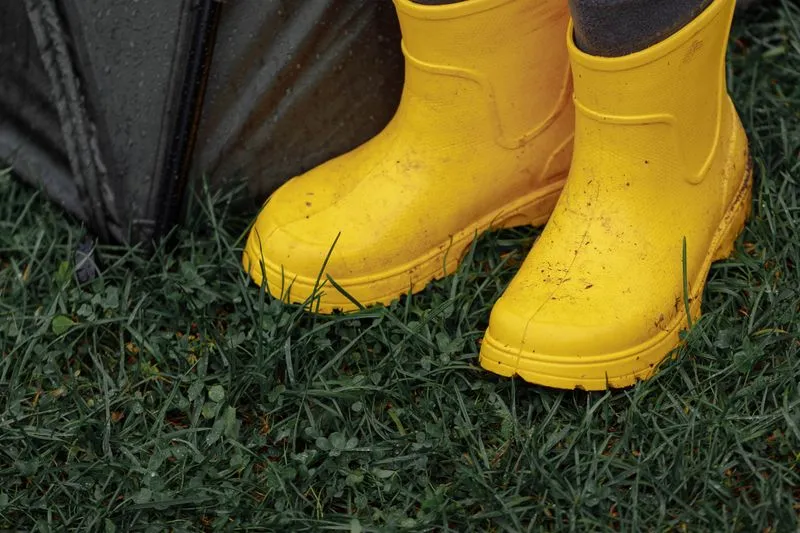
Wellies deserve a moment of their own. They're the only shoes that let you wade through calf-deep mud without thinking about it, and Glastonbury's own packing list asks for wellies or sturdy boots. They're also a piece of fashion history. The V&A's essay on how Glastonbury shaped festival fashion dates the whole "festival fashion" industry to the mid-2000s and Kate Moss, photographed at Glastonbury in 2005 in Hunter wellies. It even records the superstition: "Even if the weather prediction is glorious sunshine, if you don't bring your wellies, it will definitely rain."
In proper heat, though, wellies are a sauna (yes, even the pretty ones). My view: if the forecast shows a storm — just one — the wellies come. Even if they stay in the tent until the day the field turns into a swamp.
For dry days, trainers you know by heart. My everyday pair stays in London. I take the old ones — the pair that has already seen everything and that I can abandon without tears. If you're still choosing, my guide to women's trainers, from trends to iconic models will help you narrow it down. For a festival, the rule fits in three points: thick sole, closed toe, already worn in.
Socks, then — the silliest and most important thing in your bag. Count one pair per day. Add a spare pair for every rainy day forecast, plus one pair kept for the night (that pair never touches the campsite floor). They weigh next to nothing. And changing your socks at noon when your feet have been swimming for two hours — trust me — it's life-changing.
Which bag gets you through festival security?
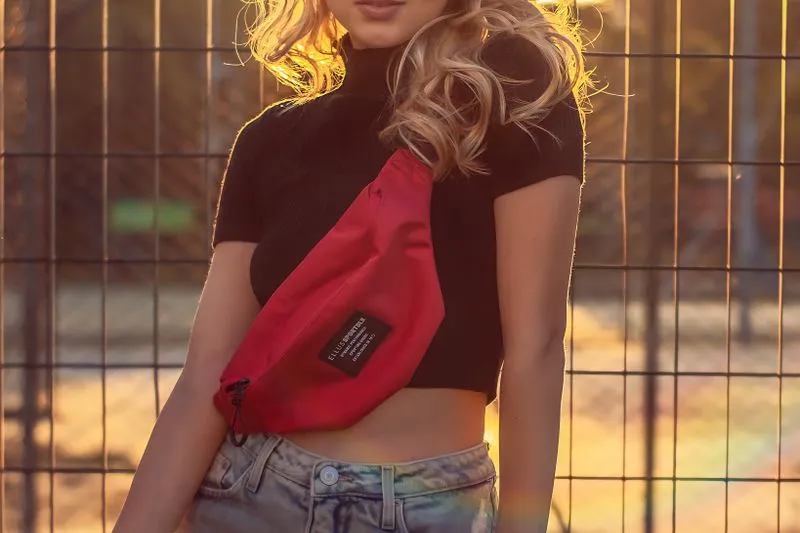
The right festival bag is small, soft and opens in a second. A bum bag, a cross-body bag or a small backpack. Anything else slows the queue, risks being turned away at the gate — and ends up sawing into your shoulder by 9pm.
Your bag will be searched. At Glastonbury, the packing guide warns that ticket holders "will be subject to searches of their vehicles, their bags and their person", and asks you not to wrap your bags, because they need to be accessible for searches. The same page puts it neatly: "The less you bring, the quicker you'll get through the gates." The result? The easier your bag is to open, the faster you're in.
Every festival then sets its own rules, written down on its website. A London example: BST Hyde Park's general information page allows "an A4 size bag (297mm x 210mm x 210mm)", one bag per person. It adds, rather wisely: "It's better for everyone if you do not bring a bag at all." Suitcases and anything bigger than A4 are refused, and so are spray cans, golf umbrellas and parasols.
Glass is the other trap. Glastonbury is blunt about it: "All glass will be confiscated if found, including perfume and mirrors." My Shalimar stays at home (that one hurts to write). Before you zip your bag, sort it out.
- Roll-on or stick deodorant, not a spray.
- Sun cream in a tube, not a mist.
- A reusable water bottle in plastic or metal — Glastonbury tells you to fill it up from the free taps on site.
- Perfume decanted into a small plastic atomiser, or nothing at all.
What goes in my bum bag, no exceptions: phone, bank card, an emergency tenner, ID, earplugs, lip balm with SPF, two plasters, a hair tie. Glastonbury's list simply says "Money/cards", and I'd take both (card machines and phone signal both have bad days in a field).
Festival outfits in a heatwave: cover up rather than strip off
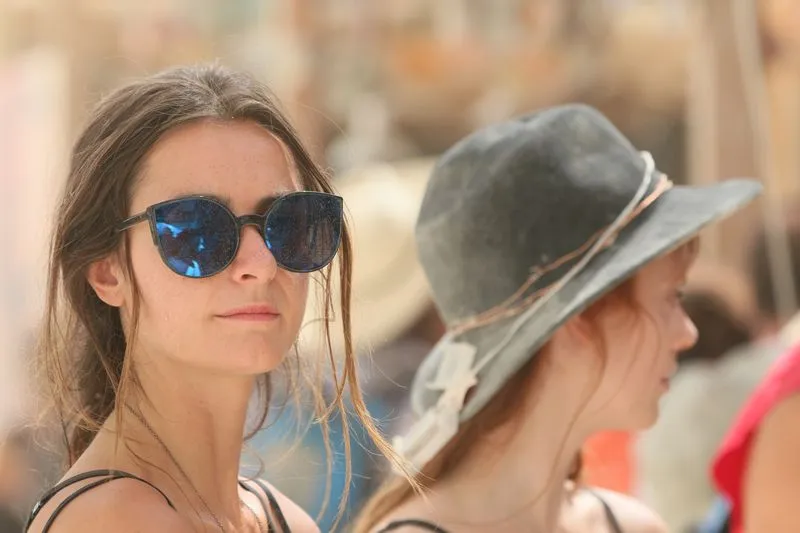
In a heatwave, the coolest festival outfit isn't the shortest one. It's the loosest. An open lightweight shirt, floaty trousers or a midi skirt and a hat protect you from the sun better than a crop top and hot pants — while still letting the air move.
I know — it's not the look you see all over Instagram. But it's exactly what the health advice says. The NHS guide to sunscreen and sun safety tells you to spend time in the shade between 11am and 3pm, to "cover up with suitable clothing and sunglasses" and to use at least factor 30 sunscreen. At a festival, that window lands right on the afternoon sets (and the queue for the water taps). Which is why it pays to let fabric do some of the work.
When it gets really hot, the advice goes further. To help prevent heat exhaustion and heatstroke, the NHS recommends drinking more cold drinks, especially if you're active, and wearing "light-coloured, loose clothing". It also tells you to go easy on the alcohol, festival or not. I'll leave that one to you, but at least alternate every drink with your water bottle.
In practice, my heatwave outfit looks like this.
- Top — a cotton vest with an oversized men's linen shirt on top, sleeves rolled, never buttoned all the way up.
- Bottom — loose shorts or a floaty midi skirt (with cycling shorts underneath if your thighs rub when you walk).
- Head — a bucket hat or a soft straw hat that squashes into your bag. A baseball cap leaves your neck and ears in the sun.
- Neck — a cotton bandana you soak at every water point.
- Feet — canvas trainers and thin socks.
Colour-wise, light shades are your friend in full sun (it's literally in the NHS advice). If you're attached to black — I get it, it's my uniform from October to March — save it for the evening.
Festival outfits in the rain: poncho, jacket or umbrella?
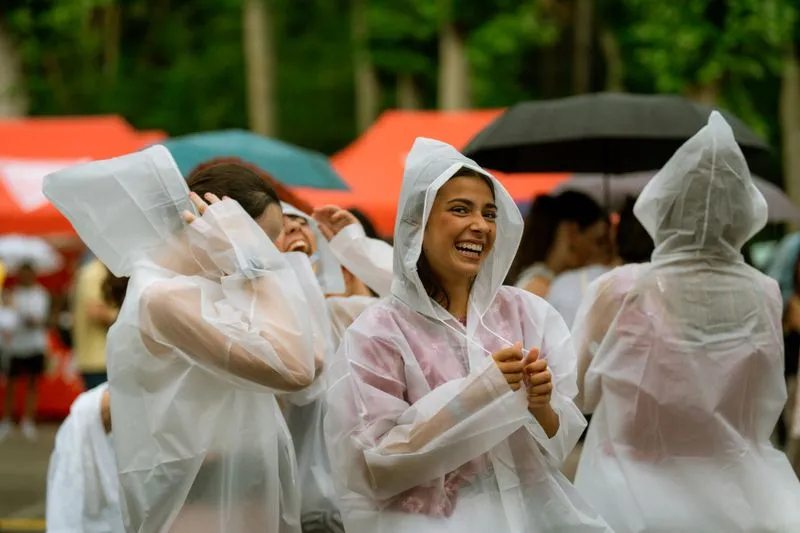
In the rain, the poncho almost always wins. It covers your bag, your top half and your thighs. It folds into a pocket. It doesn't bother anyone in the crowd. A waterproof jacket comes second, especially if the hood actually stays up. The umbrella comes a distant last — and not only because it blocks the view for everyone behind you.
For a start, umbrellas are often restricted at the gate — BST Hyde Park doesn't allow golf umbrellas, for instance. More importantly, they become dangerous the moment rain turns into a thunderstorm. The Met Office's advice for camping in wet and windy weather is unambiguous: "Do not use an umbrella or a mobile phone or shelter beneath a tree." The same page tells you to take rain ponchos and "lots of plastic bags", and to pack your clothing and bedding in plastic bags before they go into your rucksack.
For the rain outfit itself, three rules.
- A long poncho with a hood and sleeves, big enough to cover your bum bag. Take two: a poncho always ends up torn, lent out or blown away.
- Bottoms that dry fast — leggings, light joggers or shorts. No jeans. Glastonbury even suggests packing over trousers alongside a waterproof coat.
- A dry outfit kept for the evening, which only leaves its waterproof bag once the rain has passed.
In the evening, when the air cools after a downpour, my favourite combo never changes. Denim shorts over black semi-opaque tights, a big hoodie, the poncho on top. It looks like a back-to-school outfit, I know. It's also the only one that has kept me warm on a stormy night without making me feel like I was wearing a wet mop. For choosing the right denier without looking like a uniform, it's all in my guide to wearing tights with style all year round.
What should you pack for a three-day festival?
For three days at a festival, count three tops, two bottoms, one warm layer, one rain layer, two pairs of shoes and a night outfit. Everything else depends on the forecast — and that's where bags start to overflow.
Here's my basic list, to adjust the day before you leave, when the forecast firms up.
| Item | Heat forecast | Rain forecast | Changeable weather |
|---|---|---|---|
| Tops (three). | Cotton vests and T-shirts. | Quick-dry T-shirts. | One of each. |
| Bottoms (two). | Loose shorts, floaty skirt. | Leggings, light joggers. | Shorts and leggings. |
| Middle layer. | Long-sleeved light shirt. | Hoodie. | Shirt and hoodie. |
| Rain layer. | A poncho at the bottom of the bag. | Two ponchos or a waterproof jacket. | A poncho in the bum bag. |
| Shoes. | Canvas trainers (sandals for the showers). | Wellies, walking boots. | Walking boots, wellies on standby. |
| Socks. | One pair a day, plus the night. | Two pairs a day, plus the night. | Two a day (always round up). |
| Head. | Bucket hat, sunglasses. | Cap under the hood. | Bucket hat and hood. |
| Night. | Loose T-shirt, shorts. | Leggings, hoodie, thick socks. | The rain version. |
Day by day, the logic is simple. On day one, you arrive in your comfiest outfit: you'll be carrying, walking and pitching a tent (or crossing town) before the first set. Day two, you're settled — that's the day to wear the piece that makes the look, the printed shirt, the long skirt or the embroidered waistcoat you've been saving. On day three, you put back on whatever survived, and keep one clean outfit for the journey home in a separate bag. Nobody wants to sit next to you on the train home in yesterday's mud (you don't either, frankly).
Before you zip up, lay everything out on your bed and take out one item per category. In thirty-odd festivals, I've never once regretted a T-shirt left at home. I have often regretted a bag that was too heavy, carried for two kilometres down a dirt track between the shuttle bus and the campsite.
City festival or three nights under canvas: what changes?
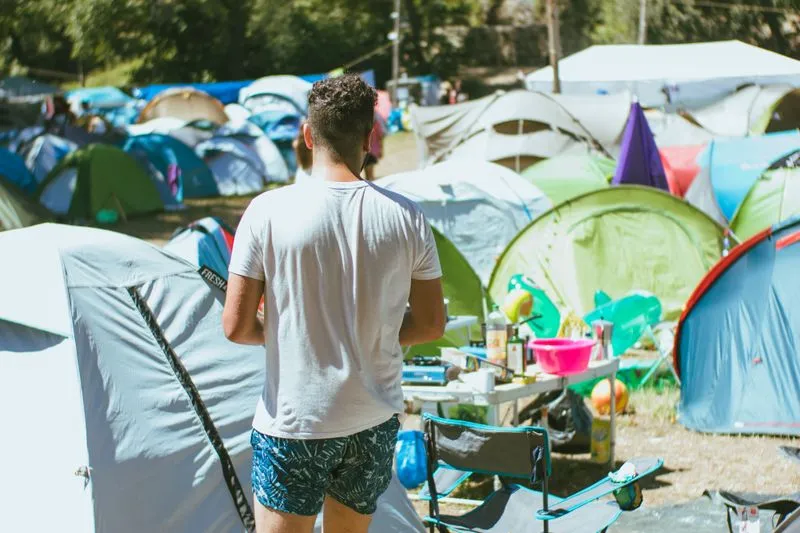
A city festival and a camping festival are packed for in completely different ways. In town, you sleep in your own bed and head home each night on the Tube or the Overground — so you only carry the day's outfit and a bag within the size limit. At a camping festival, your tent becomes your wardrobe, bathroom and bedroom for three nights. Anything you've forgotten stays forgotten until Monday.
For a city festival, think "very long day", not "weekend". You leave early afternoon and get home after midnight: you need an outfit that goes from full sun to a chilly night bus (yes, the hoodie again). City events often ban the comfort kit too — BST Hyde Park doesn't allow chairs, seats, shooting sticks or tables. So your comfort depends entirely on what you're wearing.
For a camping festival, add three things to your list.
- A sacred night outfit, dry and clean, which never leaves the tent. The day's damp clothes sleep outside in a closed bag.
- Sliders or sandals for the showers and the morning loo run.
- An eye mask and earplugs — Glastonbury's list includes ear plugs "to keep your ears from ringing!". At sunrise, under orange tent fabric, you'll understand the eye mask too.
Glastonbury also asks you to bring a sturdy tent (and to take it home again), and the Met Office adds one camping rule worth knowing: "Pitch your tent on high ground so rain will not run down into it." One last thing nobody tells you — in the morning, a tent in full sun turns into a greenhouse within minutes. Lay out the day's outfit the night before. You'll get dressed outside, in the shade, as soon as you wake up.
Jewellery, sunglasses, make-up: which accessories survive a festival?
At a festival, a good accessory is cheap, sturdy and hard to lose. Precious jewellery, your grandmother's watch and designer sunglasses stay at home. In a jumping crowd, a clasp gives way. A ring slides off a wet finger. A pair of sunglasses falls and vanishes underfoot.
For jewellery, go for quantity over value — fabric or beaded bracelets, layered costume necklaces, cheap rings. Skip big hoops and drop earrings (they catch on hair, hoods and hoodies pulled on in a hurry). How to layer without looking like a car boot stall is covered in my jewellery guide and its layering rules. At a festival, the golden rule is even simpler: don't wear anything you couldn't bear to lose.
For sunglasses — a cheap pair with a cord, full stop. For make-up, three days outdoors (sweat, rain, dust) are unforgiving. I stick to waterproof mascara, a tinted balm and a touch of cream blush — nothing more. Glitter is part of the folklore, but check the rules first. Glastonbury's list is categorical: "Do not bring body glitter. Even biodegradable body glitter will not properly breakdown without being heat-treated."
Last accessory, the most versatile: a scarf or bandana knotted to your bag strap. It shades the back of your neck, doubles as an emergency hair tie, and turns any basic T-shirt into an outfit.
How do you dress for a festival without buying a whole new look?
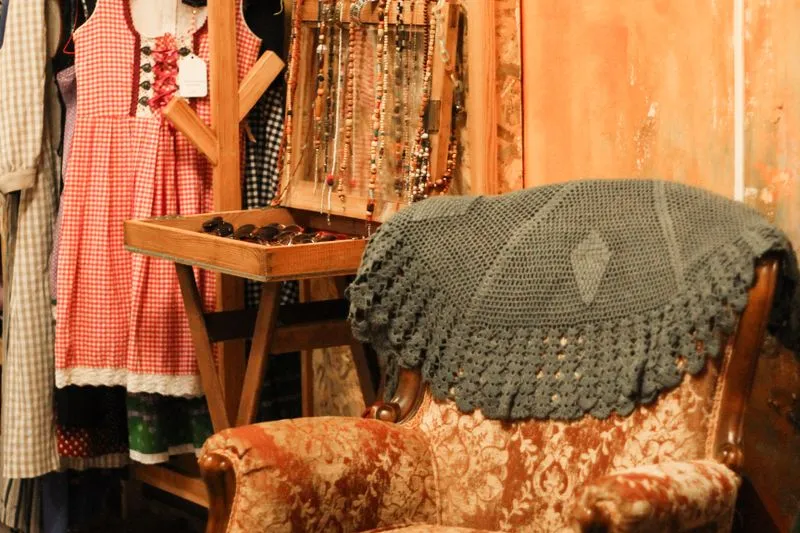
The best festival outfit is already in your wardrobe, give or take two or three pieces. Every spring, the "festival edit" rails appear — frayed shorts, fringed shirts, cowboy hats. As if you couldn't watch a gig in your own clothes. The V&A notes that high street retailers treat May to August as "a separate catwalk season, stocking up with glitter, flower crowns, patterned rain macs, denim shorts and statement sunglasses". My view: it's the best way to blow your weekend budget on pieces worn once (and found covered in mud at the bottom of a bin bag).
Start from what you've got. If you've already built a minimalist yet stylish capsule wardrobe, you have almost everything. Cut-off denim shorts, two basic T-shirts, a loose shirt, a hoodie, worn-in trainers. The style then comes from one or two statement pieces: a vintage printed shirt, an embroidered waistcoat, a hat, a western belt.
For those statement pieces, charity shops, Depop and Vinted are unbeatable — something that's already had a life has nothing left to fear. You can also borrow. Among friends, there's always a bucket hat, an oversized denim jacket or a pair of wellies sleeping at the back of a cupboard. And for customising, old jeans cut above the knee or a belted men's shirt work wonders (for nothing).
What does deserve a proper budget is whatever protects you: shoes that go the distance, a decent poncho, a water bottle, sun cream. The rest? Decoration. (And my mum's cashmere jumper, which I wear all winter, has never seen a festival. It never will.)
After the festival: how do you rescue your wellies, trainers and feet?
The journey home starts on the way there. Glastonbury's list includes bin bags "for dirty clothing and footwear" — one for muddy clothes, one for muddy shoes — so your bag (and your bathroom) don't turn into a battlefield.
Wellies get hosed or scrubbed outside, before the mud dries hard — then left to dry in the open air, away from the radiator. Canvas trainers often wash very well by hand, with soapy water and an old toothbrush (that's how I wash my Converse). Stuff them with newspaper afterwards: they keep their shape and dry faster. Muddy clothes deserve a cold rinse before they go in the machine.
And your feet, which took the brunt of it all? Wash them, dry them well between the toes, and give the festival shoes a few days off. If you've got a blister, the NHS advice is simple: do not burst it yourself, and don't wear the shoes that caused it until it heals. Me? I live in open sandals the whole week after.
Last move, the most useful of all: before you unpack, note on your phone what you actually used and what never left the bag. Next year, you'll travel with half the weight — and exactly what you need.
Frequently asked questions
Can you wear sandals to a festival?
At a city festival, in dry weather, on hard ground, yes, as long as they hold your foot (with a back strap). On grass, at a camping festival or in a dense crowd, no. Toes get trodden on, mud gets everywhere, and one downpour makes walking slippery. Save your sandals for the showers.
Do you really need wellies if the forecast is sunny?
If the forecast shows no rain and no storms all weekend, walking boots or sturdy trainers will do. As soon as a storm is possible, take the wellies, even if they stay in the tent. A waterlogged field often takes far longer to dry than the rain took to fall.
What size bag can you take into a festival?
Every festival sets its own limit. BST Hyde Park, for example, allows one bag per person up to A4 size (297mm x 210mm x 210mm) and refuses anything bigger. Your festival's info page gives the exact rule: read it before you leave.
Are umbrellas banned at festivals?
Not always, but they're often restricted: BST Hyde Park doesn't allow golf umbrellas. In a thunderstorm, the Met Office's advice is not to use an umbrella at all. A poncho remains the best choice.
What should you wear to sleep in a tent?
A night-only outfit, dry and clean: leggings or joggers, a hoodie, thick socks. Even in midsummer, nights can be chilly, especially after a day of rain. Add an eye mask and earplugs if you want to sleep past sunrise.
How do you stay stylish for three days with a small bag?
Go for a neutral base (shorts, cut-offs, plain T-shirts) and rotate two or three statement pieces. By changing the statement piece every day, you get three different outfits from one small bag.
Can you take glitter to a festival?
It depends on the festival, so check the rules. Glastonbury asks festival-goers not to bring body glitter at all, biodegradable glitter included, because it won't fully break down unless it's heat-treated.
Sources
- NHS — Sunscreen and sun safety
- NHS — Heat exhaustion and heatstroke
- NHS — Blisters (reviewed 22 November 2023)
- Met Office — Tips for camping in wet and windy weather
- Glastonbury Festival — Think before you pack for this year's Festival! (11 June 2025)
- BST Hyde Park — General information and prohibited items
- V&A — Fashioning Glastonbury Festival (updated 17 April 2024)