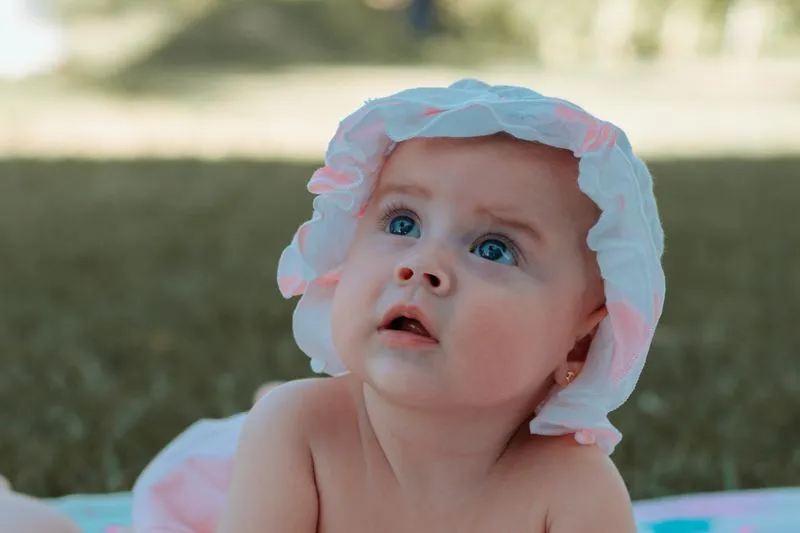
The fabric of the hood was hot under her palm. Tabitha, 33, a school librarian, had draped a muslin over the front of the pram — for shade, she thought, the way you'd draw a curtain. It was a June afternoon (the first properly hot one of the year), and she was walking back from the chemist when she lifted one corner to check that her four-month-old was still asleep. The air that came out smelled of warm milk and sun cream. It had the thick, still feel of an oven door opening. Her daughter was asleep, yes. Cheeks flushed, hair stuck to the back of her neck, vest soaked through.
Nothing bad happened, as it turned out. Tabitha pulled the muslin off, found a bench under a plane tree (the only shade on that stretch of road), fed her daughter and cooled the back of her neck with a damp flannel. When she told me about it a week later, she summed it up in one line: "I was keeping the sun off her. I wasn't thinking about the heat." That is the whole problem. Protecting a baby from the sun and protecting a baby from heat are two different jobs — and doing the first one badly can make the second one worse.
Cancer Research UK's 2024 analysis of melanoma cases projected a record 20,800 cases in the UK that year, and found that almost 9 in 10 are caused by too much ultraviolet (UV) radiation from the sun and sunbeds. Heat works on a much shorter clock: the NHS notes that babies and children are more at risk of dehydration than adults. What follows is what the NHS and UK health bodies advise for your baby's skin, eyes and fluids — and the signs that mean you should call 111 or 999.
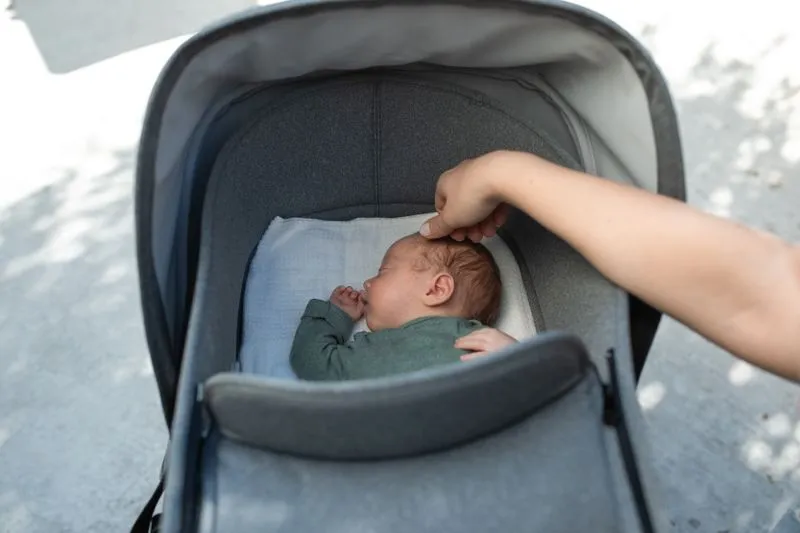
Why babies cope less well with sun and heat than adults
A baby is not a scaled-down adult. The NHS says in its sun safety advice: "Their skin is much more sensitive than adult skin, and damage caused by repeated exposure to sunlight could lead to skin cancer developing in later life." Sunburn in childhood is not a passing sting. It is the start of a tally — one that adds up over a lifetime.
Heat is a separate risk. UK guidance for early years settings (written by UKHSA) explains that children can be at risk from hot weather because of their physiology, their behaviour and how active they are. A baby cannot tell you they're thirsty, cannot take off a layer, cannot move into the shade. Everything depends on you, and on noticing early.
So there are two risks to keep in mind, and they don't follow the same logic. UV damages skin straight away (sunburn) and years later (skin cancer). It reaches your baby even when it isn't hot (the NHS reminds us you can burn in the UK even when it's cloudy). Heat, on the other hand, leads somewhere else entirely — dehydration, heat exhaustion and heatstroke. It can build up without any sun at all: a stuffy top-floor bedroom, a parked car, a covered pram.
Cancer Research UK's figure (from its 2024 analysis) is the one to remember. Getting sunburnt just once every two years can triple the risk of developing skin cancer, compared with never being burnt. Protecting a baby's skin now is one of the few preventive gestures with a payoff measured in decades. Protecting them from heat is measured in hours. Both are simple — as long as you don't confuse them.
No direct sun under six months: what UK guidance says
The core rule sits on the NHS page on keeping your baby safe in the sun: "Babies under 6 months old should be kept out of direct sunlight." In practice, a young baby goes out in the shade (a parasol, the pushchair hood, a tree) and is never set down in full sun.
The NHS doesn't stop at six months — older babies should also be kept out of the sun as much as possible, particularly in summer and between 11am and 3pm, when the sun is strongest. In the UK, the NHS dates that danger window from March to October — well beyond the few weeks most of us think of as "summer".
| Age | NHS advice |
|---|---|
| Under 6 months | Out of direct sunlight; shade, loose clothing and a sunhat; sunscreen not recommended |
| 6 to 12 months | Out of the sun as much as possible, especially 11am to 3pm; sunscreen on skin that clothes don't cover |
| All children, March to October | Cover up, stay in the shade from 11am to 3pm, sunscreen on exposed areas |
One number helps you decide on the day — the UV index, which most weather apps show. For a baby, a high reading is a cue to plan the walk for early morning or late afternoon.
Some settings make the sun stronger without feeling hotter. Water reflects UV rays and increases exposure, according to the NHS — and reflected light from sand, snow and concrete is particularly hard on the eyes. The NHS also asks for extra care in a hot country where the sun is particularly intense, which matters if your first family holiday is somewhere hot (the Mediterranean in July, say).
Shade, clothes, hats and sunglasses: real sun protection for a baby
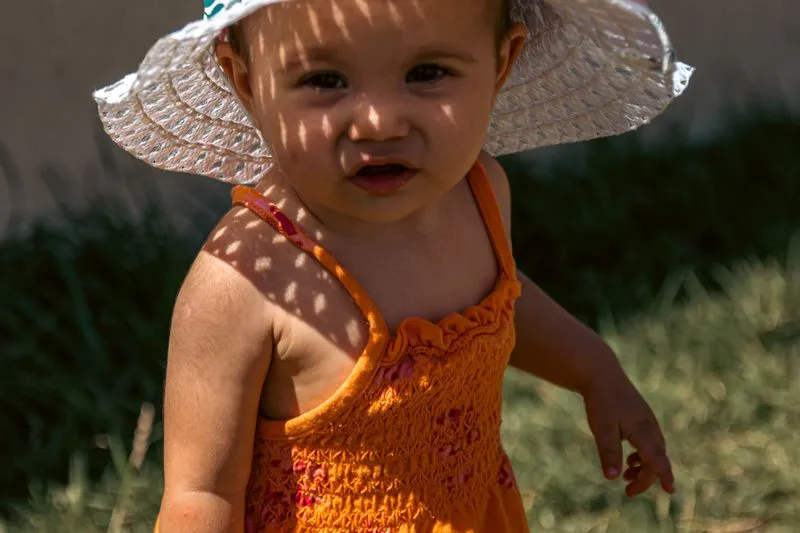
A baby's sun protection starts with what they wear, not with what you rub on. Shade comes first. But shade has limits — reflected light off water, sand or paving can still reach a baby in the shade, so it pays to combine several layers of protection.
Clothes. The NHS recommends loose-fitting clothing, and its general sun advice points to close-weave fabrics that don't let sunlight through (the kind of cotton you can't see through when you hold it up to the light). On hot days, UK guidance for early years settings adds that children should wear loose, light-coloured clothing to help keep cool. The two fit together: a thin, tightly woven cotton covers the skin without trapping heat.
The hat. The NHS asks for a sunhat with a wide brim or a long flap at the back — to protect the head, ears and neck. A cotton one with a chin strap is worth its price (it spends less time on the pavement). A baseball cap leaves the ears and neck bare — not ideal at the beach.
Sunglasses. They're on the NHS list for children too — alongside the hat and loose clothes. Look for wraparound lenses or wide arms, the CE mark and the British Standard mark BS EN ISO 12312-1:2013 E.
Sunscreen for babies: an extra layer, never a permission slip
Here is where UK advice may surprise you. On its baby sun safety page, the NHS says sunscreen is not recommended for babies under 6 months. For a young baby, shade and clothing do the whole job — no cream required. Sunscreen comes in from six months — and even then, the NHS says: "Do not rely on sunscreen alone to protect yourself from the sun."
From six months, the NHS asks for a high factor. Its page on keeping your baby safe in the sun and its guide to sunscreen and sun safety set out what to look for:
- SPF 50 for a baby. The NHS baby page asks for a sunscreen with an SPF of at least 50 from six months, protecting against both UVA and UVB. Its general guide sets SPF 30 as the floor for everyone, so a baby's bottle sits at the top of the scale.
- At least 4-star UVA protection. (Check the back of the bottle.) UK sunscreens carry a star rating of up to 5 — the higher, the better. "UVA" in a circle shows the product meets the EU standard.
- A product made for children. The NHS notes that many brands make sunscreen specifically for babies and young children, as these are less likely to contain additives that might irritate the skin.
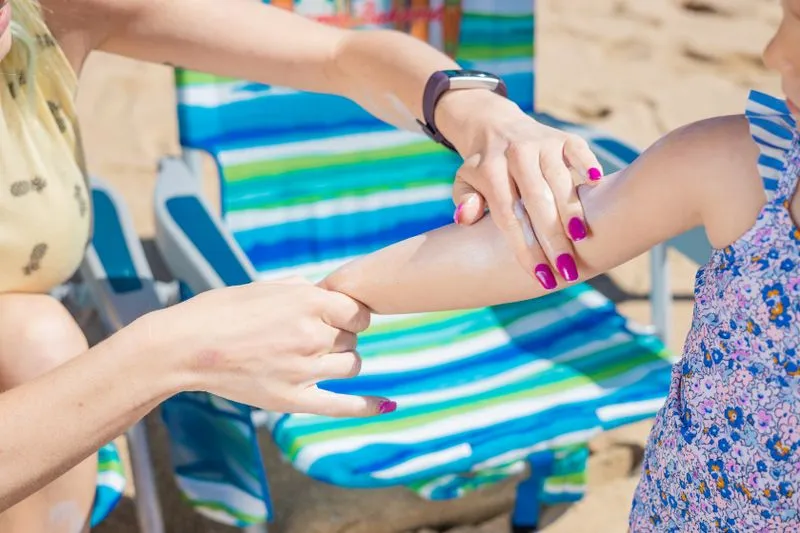
- Plenty, and often. Most people don't apply enough. Reapply every 2 hours (a phone reminder helps), and straight after swimming, towel drying or sweating — even with a "water resistant" product.
- Every exposed patch. Face, ears, feet and the backs of hands (the bits that clothes miss).
The same guide warns against a common trap — a high SPF doesn't buy extra time. Do not spend any longer in the sun than you would without sunscreen. And the NHS is blunt about tanning: there's no safe or healthy way to get a tan, and a tan doesn't protect the skin.
Pushchairs, slings and cars: the heat traps of getting around
A muslin or blanket draped over a pram is a classic summer mistake, and the advice against it is unambiguous. The NHS says not to cover your baby's pushchair or pram with a blanket, because it could lead to overheating. The Lullaby Trust's hot weather guidance goes further: "Don’t cover prams, buggies and travel systems with blankets, cloths or any cover that stops the air flowing." A cover risks the baby getting too hot, and it stops you seeing whether they're in difficulty.
The charity's reason matters — babies who get too hot have a greater risk of sudden infant death syndrome (SIDS) — which is why keeping them cool is a safety issue, not just a comfort one. Its top tip is a clip-on sunshade or parasol, which keeps your baby shaded while air circulates and leaves you a clear view. The NHS adds one habit: check on them regularly to make sure they're not getting too hot.
Slings and carriers. Held against your body, a baby shares your warmth. I learnt this the uncomfortable way. The summer my daughter was eight months old, I carried her in a wrap one very hot afternoon in July 2022, out of pure habit. Within a quarter of an hour we were both drenched. The next day I dug out the pushchair and bought a clip-on parasol. That is an experience, not a study — but it taught me to think "heat" every time I think "sun".
The car. This is where heat builds fastest — and where a few minutes matter. The NHS says: "Do not leave babies or children in small, enclosed spaces, such as a parked car, as they can get hot very quickly." Not while you pay for petrol, not in the shade, not with the window open a crack. On journeys, take plenty of water, fit sunshades to the rear side windows, and travel in the cooler hours where you can.
Heatwaves: keeping your home and your baby cool
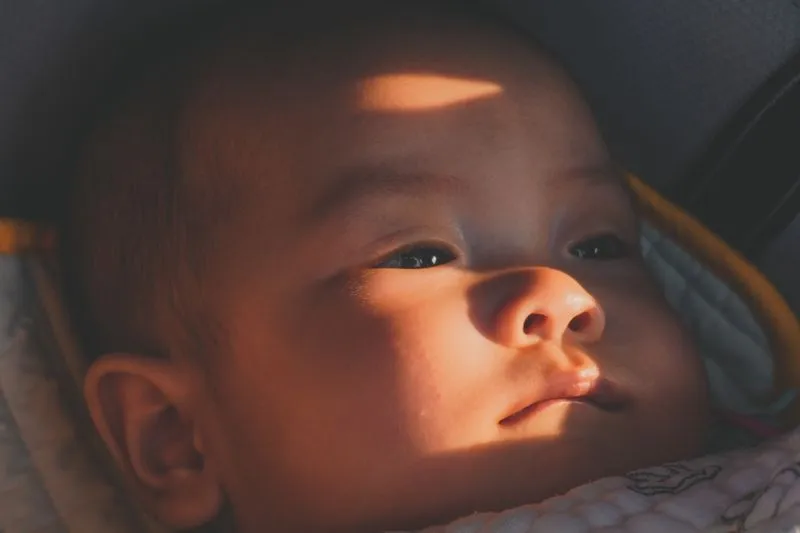
In a heatwave, the NHS advice starts with the house — not the baby. Close windows, curtains and blinds during the day. Open them at night, once the temperature outside has gone down. Electric fans can help if the temperature is below 35 degrees (above that, UKHSA guidance warns they may be counterproductive). And check the temperature of the rooms where people at higher risk live and sleep — which, in your home, means the nursery.
The bedroom. Your baby will sleep most comfortably when their room is between 16C and 20C, says the NHS, and the Lullaby Trust gives the same range. A nursery thermometer (a cheap one will do) is the only way to know. In a heatwave, 20C may be out of reach — so strip back. Keep nightwear and bedclothes to a minimum (a vest, or nothing over the nappy). The NHS says your baby can just wear a nappy.
Cooling your baby down. Several small things add up.
- A cool bath before bedtime.
- A fan to circulate the air in the room — but, the NHS says, do not aim it directly at your child, as this could make them dehydrated.
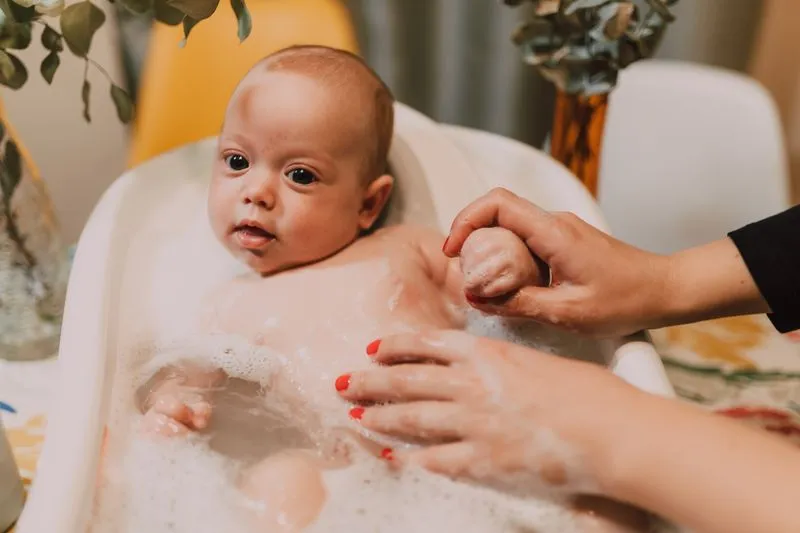
- A paddling pool in the shade on very hot days, with an adult supervising at all times. The same goes for the bath: stay within arm's reach, every second.
- The bedroom door left open, and the window open if it's safe to do so.
How do you tell if your baby is too hot? The Lullaby Trust's test is simple — feel your baby's chest or the back of their neck. If they feel clammy or sweaty, remove a layer and adjust the room if you can.
For an older sibling who is climbing the walls indoors, ideas for calm activities matched to each age help fill the hottest hours without handing over a screen all afternoon — and the rules for a healthy balance between kids and screens still apply in a heatwave.
Keeping a baby hydrated in hot weather: breast, bottle, water
How to keep a baby hydrated in hot weather depends on how they're fed, and the NHS separates the cases clearly.
Is your baby fully breastfed? Then they don't need any water until they've started eating solid foods. During hot weather they may want to breastfeed more than usual — more frequent feeds are normal. Keep a glass of water within reach for yourself while you feed.
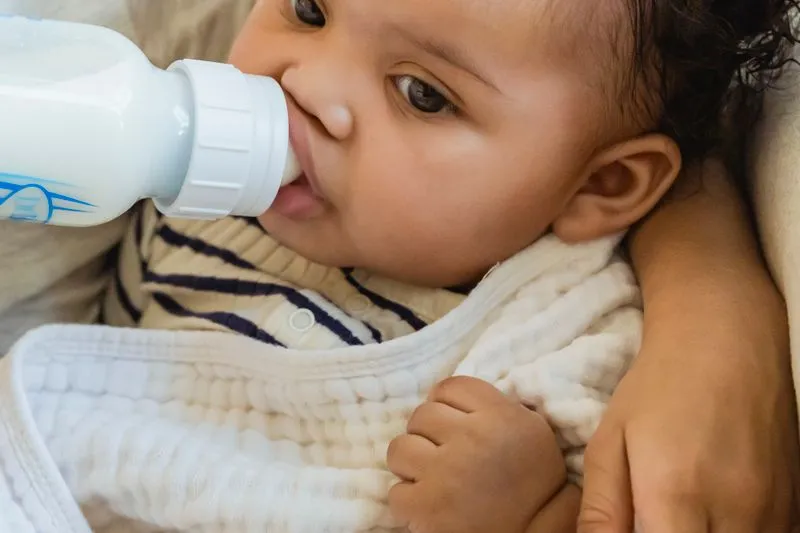
Is your baby formula-fed? As well as their usual milk feeds, the NHS says you can give a little cooled boiled water (boiled first, then left to cool). If your baby wakes at night, they'll probably want milk — but if they've had their usual feeds, try cooled boiled water as well. Make up formula exactly as the pack says (scoops and water both). The NHS dehydration guidance says not to make formula weaker.
Has your baby started solids? Offer sips of water from a cup or beaker with meals, and in hot weather some extra water between meals too. Breastmilk or infant formula remain the main drinks during the first year. To see where your baby is in those stages, our month-by-month guide to baby development in the first year sets out the milestones.
Dehydration in babies: the signs to act on
Babies are more at risk of dehydration than adults — and the signs are not the ones you'd look for in yourself. The NHS page on dehydration lists the signs in a baby:
- a sunken soft spot (fontanelle) on top of the head;
- few or no tears when they cry;
- fewer wet nappies than usual;
- being drowsy or irritable.
The nappy is the easiest gauge day to day. UK guidance for early years settings notes that dark urine or dry nappies may indicate dehydration and the need for more fluids. If you notice either, offer more feeds straight away, and watch closely.
The NHS asks you to get an urgent GP appointment or help from NHS 111 in several cases. Your child seems drowsy. They have fewer wet nappies. They're breathing quickly, or have a fast heart rate. They cry with few or no tears. Or the soft spot on their head sinks inwards. These can be signs of serious dehydration that need urgent treatment.
Once dehydration has been treated, the NHS advice is to keep your baby's fluid levels up — steady rather than dramatic. Carry on breastfeeding or using formula, giving small amounts more often than usual. Give small sips of extra water if your baby is on formula or solids. Use a rehydration solution your pharmacist recommends. And don't give young children fruit juice or fizzy drinks — they can make diarrhoea or vomiting worse.
Heat exhaustion and heatstroke: knowing when it's an emergency
Heat illness runs on a scale. UK early years guidance (from UKHSA) describes it as ranging from mild heat stress to potentially life-threatening heatstroke. A child under heat stress may seem out of character, uncomfortable and irritable — and without cooling, that can progress to heat exhaustion, then heatstroke.
According to the NHS page on heat exhaustion and heatstroke, the symptoms of heat exhaustion are often the same in adults and children. Heat exhaustion doesn't usually need emergency help if the person cools down within 30 minutes. For a baby, cooling means:
- moving them somewhere cool;
- taking off unnecessary clothing;
- giving fluids — extra breast or formula feeds, or the rehydration solution your pharmacist recommended;
- sponging or spraying their skin with cool water and fanning them.
| What you see | What to do |
|---|---|
| Irritable, very sweaty, pale and clammy skin, fewer wet nappies | Cool them down and give fluids; call NHS 111 if you're struggling or unsure |
| Still unwell after 30 minutes of cooling; hot skin that isn't sweating and may look red; fast breathing; a very high temperature (UKHSA's early years guidance gives 40C or above); a fit; loss of consciousness | Call 999 — heatstroke is a medical emergency |
If you suspect heatstroke, UKHSA's guidance for early years settings says to call 999 and then cool the child down while you wait — sponging or spraying them with cool water, or wrapping them in a cool, wet sheet and fanning them. If your child loses consciousness or has a fit, place them in the recovery position and call 999 immediately.
Nursery, childminder, grandparents: passing on the summer rules
Your baby may spend many summer days with someone else. Nurseries and childminders have their own guidance — and it is worth knowing what it says. The UK Health Security Agency's advice for early years settings asks staff to sign up for Weather-Health Alerts from UKHSA and the Met Office. Children stay in the shade. Sunscreen is at least SPF 30 with a 4-star UVA rating, reapplied every 2 hours. If you're still choosing, our comparison of nurseries, childminders and nannies helps you ask the right questions at the first visit — including how they handle hot days.
Grandparents sometimes learnt different habits — a nap in the sun to get some colour, a blanket over the pram. A short list on the fridge avoids the debate:
- Under six months: no direct sun, no sunscreen, shade and clothes instead.
- Outings before 11am or after 3pm on hot days.
- A clip-on parasol on the pushchair, never a blanket or muslin over it.
- Breastfeeds on demand, or a little cooled boiled water on top of formula feeds.
- Never alone in the car. Never alone in the bath or paddling pool.
- The warning signs (drowsiness, dry nappies, hot dry skin) — and 111 and 999.
The NHS also reminds parents that a health visitor can advise on any baby care question, with advice tailored to your baby. If your baby has a long-term condition or takes regular medicine, ask before the first heatwave how hot weather might affect them.
Frequently asked questions
Can I put sunscreen on my baby if they're under six months?
The NHS does not recommend sunscreen for babies under 6 months. At that age, your baby should be kept out of direct sunlight altogether, with shade, loose clothing and a wide-brimmed hat doing the work. From six months, the NHS baby page recommends a sunscreen of at least SPF 50 that also protects against UVA (look for 4 or 5 stars), on skin that clothes don't cover.
Does a breastfed baby need water in a heatwave?
No. The NHS says fully breastfed babies don't need any water until they've started solid foods. They may want to feed more often in hot weather, and your milk meets their needs. Formula-fed babies can have a little cooled boiled water on top of their usual feeds.
What temperature should my baby's room be in summer?
Between 16C and 20C, according to the NHS and the Lullaby Trust. In a heatwave that may not be possible. Close curtains in the day and open windows at night if safe. Use a fan that isn't aimed at your baby. A nappy alone is fine.
If my baby stays out of the sun, will they get enough vitamin D?
Sunshine isn't the answer for a baby. The NHS advises vitamin D supplements for all children under 5, to make sure they get enough. Your health visitor can tell you which product and dose suit your baby's age and feeding.
Is a fan safe for a baby?
Yes, used sensibly. The NHS suggests a fan to circulate air in your baby's room, but not aimed directly at them, as that could make them dehydrated. The NHS heatwave advice adds that electric fans help when the temperature is below 35 degrees.
When should I call 111, and when 999?
Call 111 or book an urgent GP appointment if your baby is drowsy, has fewer wet nappies, few tears, a sunken soft spot or fast breathing. Call 999 for signs of heatstroke: still unwell after 30 minutes of cooling, hot skin without sweating, a fit or loss of consciousness.
Does my baby really need sunglasses?
They're on the NHS list, with a sunhat and loose clothes. Choose wraparound lenses or wide arms, with the CE mark and the British Standard mark BS EN ISO 12312-1:2013 E. An elastic strap helps them stay on.
Sources
- NHS — Keeping your baby safe in the sun
- NHS — Sunscreen and sun safety
- NHS — Dehydration
- NHS — Heat exhaustion and heatstroke
- NHS — Heatwave: how to cope in hot weather
- The Lullaby Trust — Hot weather and safer sleep
- UK Health Security Agency (GOV.UK) — Looking after children and those in early years settings before and during hot weather
- Cancer Research UK — Skin cancer cases reach all-time high (May 2024)