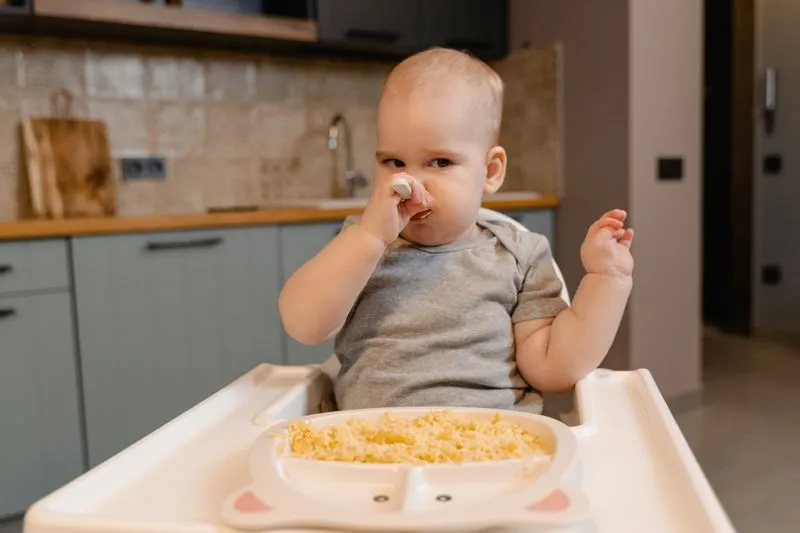
Your health visitor said "around six months." Your mother-in-law says "three months, with carrot soup." Instagram says baby-led weaning. The antenatal group chat has moved on from sleep to purées, with four competing theories before breakfast. Meanwhile your five-month-old follows every forkful of your beans on toast from plate to mouth, the first British strawberries are piled up at the greengrocer's, and you don't know where to start. This guide sorts it out.
Current UK advice differs from what many grandparents were told on three points: start at around 6 months rather than earlier, introduce allergens early rather than late, and move on to lumps as soon as your baby can manage them.
When to start: what current UK guidelines say
The UK answer is simple: around 6 months. The NHS guide to your baby's first solid foods says weaning, also called complementary feeding, "should start when your baby is around 6 months old", alongside breast milk or first infant formula.
That timing matches the World Health Organization. The WHO's page on complementary feeding explains why the six-month mark matters: "Around the age of 6 months, an infant's need for energy and nutrients starts to exceed what is provided by breast milk, and complementary foods are necessary to meet those needs."
Why not much earlier? Because most babies don't yet have the skills that solid food requires: sitting steadily, co-ordinating eyes, hands and mouth, and swallowing rather than pushing food back out. The NHS asks parents to watch for those three signs together, rather than go by the calendar alone.
Why not much later? Because milk on its own gradually stops covering a growing baby's needs, as the WHO puts it — and because the months that follow are when babies learn to manage lumps and chew, a skill you don't want to postpone (more on that below).
Signs of readiness: how to know if your baby is ready
Age alone isn't enough. The NHS describes three signs that, appearing together from around 6 months, show your baby is ready for first foods — not a single signal but a cluster of skills. They sit within the wider milestones of baby development month by month: head control, sitting, reaching and grasping.
The 3 key signs (to observe together, per NHS guidance):
1. Your baby can stay in a sitting position and hold their head steady. This is a safety prerequisite for swallowing anything thicker than milk.
2. Your baby can co-ordinate eyes, hands and mouth — look at the food, pick it up and put it in their mouth by themselves. Particularly relevant for baby-led weaning, and a good indicator of overall motor readiness.
3. Your baby can swallow food rather than spit it back out. If the tongue keeps pushing everything out, wait a few days and try again.
What to start with: first foods
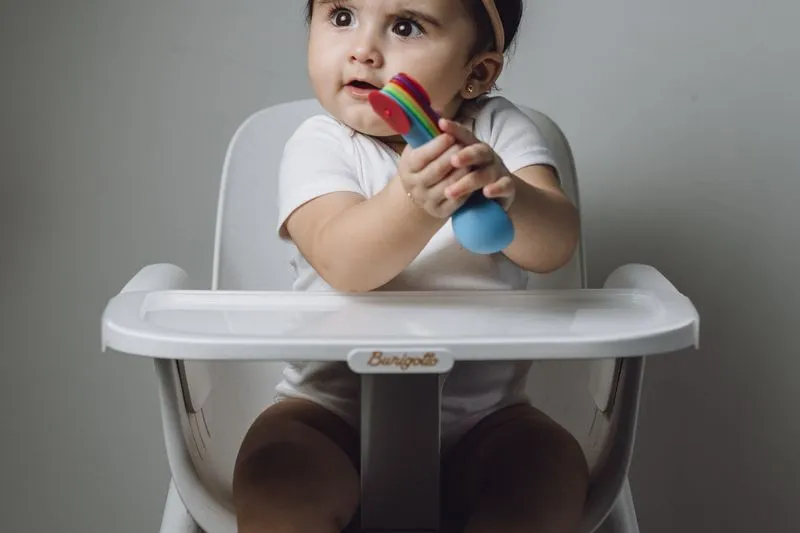
Start with single vegetables and fruits, bitter ones included, mashed or as soft-cooked sticks. At the start, the NHS notes, your baby will still be getting most of their energy and nutrients from breast milk or first infant formula. Weaning, in its first weeks, is primarily sensory and motor exploration.
Vegetables: a sensible place to start, bitter ones included
Vegetables make a good start — and not only the sweet ones. The NHS suggests mashed or soft-cooked sticks of parsnip, broccoli, potato, yam, sweet potato, carrot, apple or pear, and specifically asks parents to include vegetables that aren't sweet, such as broccoli, cauliflower and spinach. The idea is to get your baby used to a broad range of flavours early on.
June: let the season do some of the work
Early June is a gift for weaning. Courgettes, peas, broad beans, spinach and new potatoes are arriving, and so are the first British strawberries. A steamed courgette, mashed with no salt, makes one of the gentlest first purées there is; peas and broad beans work well blended until smooth at first, then lightly crushed as your baby gets the hang of lumps. Seasonal produce is usually cheaper too — useful when half of it ends up on the floor.
Fruits
Apple, pear, banana, peach, strawberry — gentle flavours that introduce easily. Banana is particularly practical: it mashes with a fork without cooking. Fruits can be offered raw (very ripe pear, banana) or cooked and puréed — without added sugar.
Starchy foods, protein and the rest
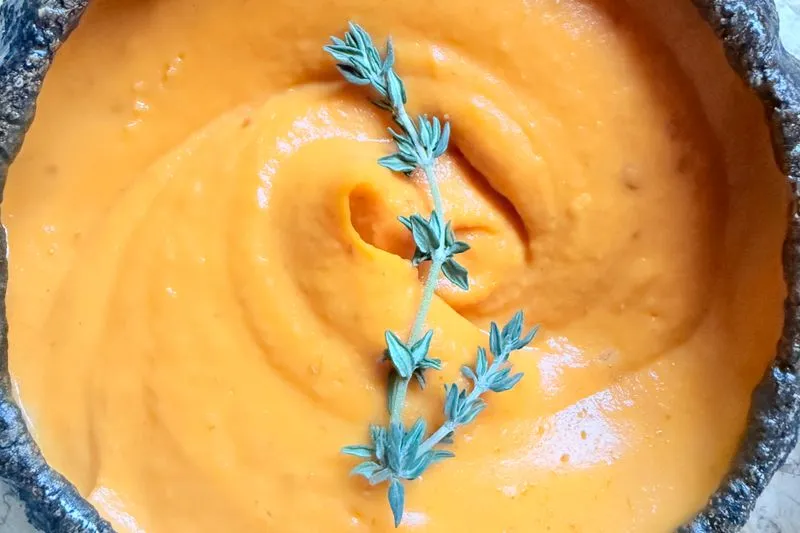
You don't need special products to get going. The NHS is explicit that babies do not need baby rice to help them move to solid foods or sleep better. Potato, pasta, rice, bread and porridge oats, soft-cooked and mashed or offered as finger food, all have their place. Protein foods — meat, fish, eggs, beans and pulses — can come in from around 6 months too, cooked through and in small amounts.
Vitamin drops: the step UK parents often miss
Weaning is a good moment to check your baby's vitamins. The NHS weaning guide recommends a daily supplement of 8.5 to 10 micrograms of vitamin D from birth for breastfed babies, and vitamins A, C and D every day for all children aged 6 months to 5 years. The exception is formula: babies having 500ml (about a pint) or more a day shouldn't be given vitamin supplements, because formula is already fortified with vitamin D and other nutrients. Your health visitor can tell you which drops suit your baby.
Foods to avoid before 12 months
Before 12 months, six things stay off your baby's menu: honey, added salt, added sugar, cows' milk as a main drink, unpasteurised cheese and raw shellfish, and foods your baby could choke on. Each rule answers a specific risk: infection, choking, tooth decay, strain on immature kidneys, or a milk that can't yet meet your baby's needs. Some of these rules outlast the first birthday: whole nuts stay off the menu until 5, and the NHS keeps mould-ripened soft cheeses and unpasteurised cheese off the plate for babies and young children, unless cooked.
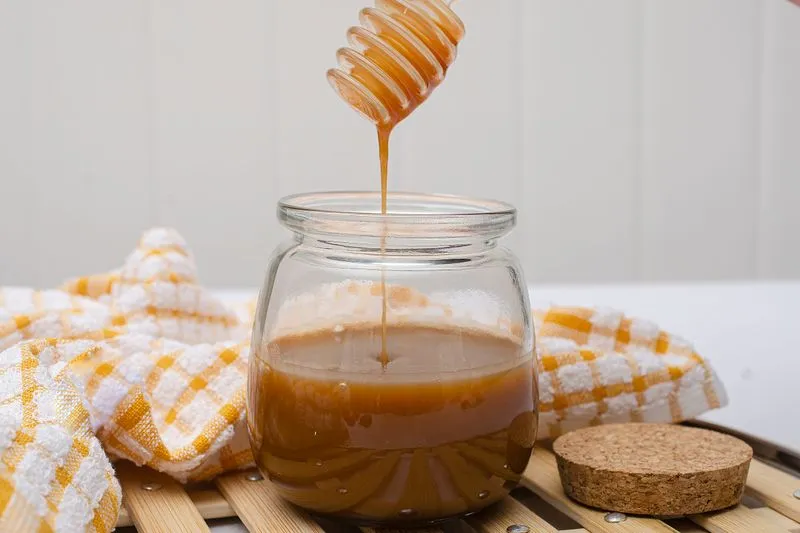
Honey — risk of infant botulism. The NHS list of foods to avoid giving babies and young children explains that honey occasionally contains bacteria that can produce toxins in a baby's intestines, "leading to infant botulism, which is a very serious illness". No honey until after the first birthday.
Added salt — the NHS puts it plainly: babies should not eat much salt, as it's not good for their kidneys. Don't add salt to your baby's food or cooking water, and skip stock cubes and gravy. Adult processed foods (sauces, ready meals, most crisps) are best avoided for the same reason.
Added sugar — your baby doesn't need sugar, and avoiding sugary snacks and drinks helps prevent tooth decay. The natural sweetness of fruit is plenty; a mashed banana will sweeten plain yoghurt perfectly well.
Cows' milk as a main drink — cows' milk can be used in cooking or mixed with food from around 6 months (a cheese sauce, some custard), but it shouldn't be given as a main drink until your baby is 1 year old. Breast milk or first infant formula remains the main drink throughout the first year. Rice drinks aren't suitable as a substitute for milk for under-5s, because they may contain too much arsenic.
Unpasteurised cheese and raw shellfish — many cheeses are made from unpasteurised milk, and the NHS advises avoiding them because of the risk of listeria. Shellfish shouldn't be served raw or lightly cooked.
Choking hazards — whole nuts shouldn't be given to children under 5. Cut small, round foods like grapes and cherry tomatoes into small pieces. Raw jelly cubes are a choking hazard too. Nuts and peanuts can be offered from around 6 months, but finely ground or as nut butters.
Purées or baby-led weaning: which method?
Spoon-fed purées and baby-led weaning are both fine by the NHS, and many families combine them. Which suits you depends mostly on your baby's motor skills and how comfortable you feel with lumps.
Traditional weaning (purées)
The classic approach: start with smooth purées, then gradually increase texture (smooth → mashed → soft lumps → finger foods and chopped family food). The NHS supports both routes — spoon-fed mashed food and finger food — and asks parents to move beyond purées "as soon as they can manage them".
Advantages: precise texture control; easier to keep an eye on quantities; reassuring for parents who feel nervous about lumps at first. The limit is the temptation to stay on smooth purées for too long, which is exactly what the NHS warns against.
Baby-led weaning (BLW)
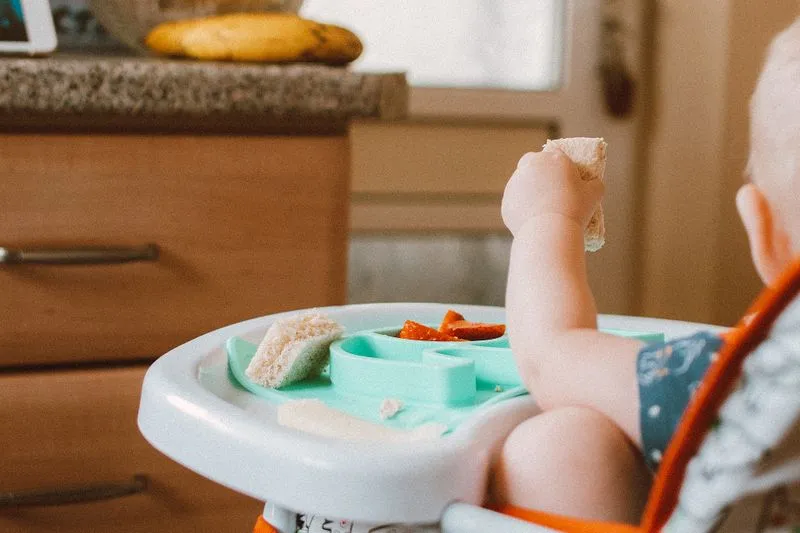
BLW, an approach popularised in the UK by Gill Rapley, means offering foods to pick up directly — finger foods of soft-cooked vegetables, soft fruit, strips of well-cooked meat — rather than purées. The baby manages what they take and swallow. The NHS defines finger food as food cut into pieces big enough for your baby to hold in their fist with a bit sticking out.
What the research says about choking: a randomised trial in New Zealand published in Pediatrics in 2016 (Fangupo et al., 206 babies) found no significant difference in the number of choking episodes between a modified form of baby-led weaning — with advice on avoiding high-risk foods — and usual spoon-feeding. The same trial found that 35% of babies across both groups choked at least once between 6 and 8 months, and that many parents were still offering foods that pose a choking risk.
What really matters, whichever method you choose
Whatever approach you choose, these points are non-negotiable: always stay with your baby while they're eating, sitting safely upright so they can swallow properly; know the difference between gagging (a noisy, effective protective reflex) and choking (silence, a blue tinge, distress); and never force your baby to swallow.
Progression: from first spoonfuls to full meals
Weaning moves in three stages: a teaspoon or two of single foods in the first weeks, protein and allergens from around 6 months, then thicker textures and family food as the months go by.
First weeks: small amounts, a new food offered on its own so your baby discovers its real taste; start with a teaspoon or two and increase gradually if your baby is interested. If your baby refuses, don't push — try again a few days later. The NHS reminds parents that it may take 10 tries or more for a baby to get used to new foods, flavours and textures.
Protein and allergens early on: meat, fish, eggs, beans and pulses can all appear from around 6 months, cooked through. Foods that can trigger allergic reactions are introduced one at a time, in small amounts, so you can spot any reaction (see the allergens section below).
As the months go by: textures thicken, meals grow, and your baby gradually eats a version of what the family eats — mashed or chopped, without added salt or strong spices. Breast milk or first infant formula stays the main drink until the first birthday.
Allergens: introduce them early, from around 6 months
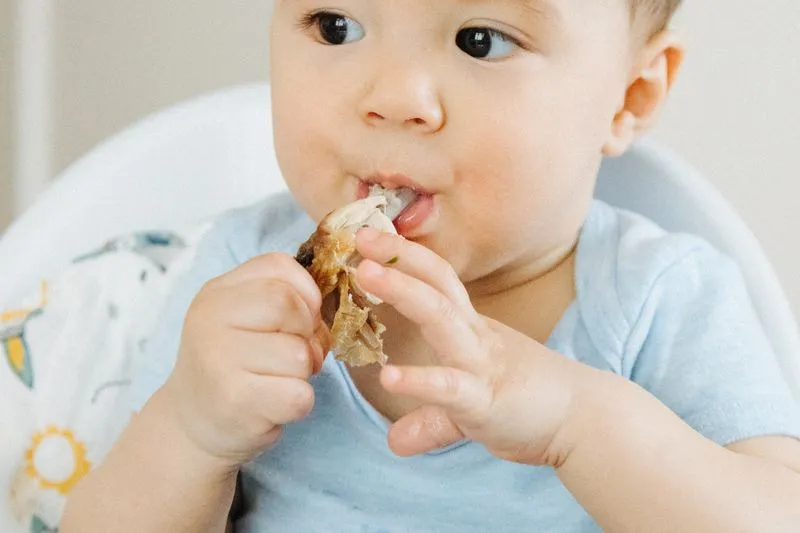
Allergenic foods (peanuts, hens' eggs, gluten, fish, cows' milk) go in from around 6 months, one at a time, rather than being delayed. That reverses what many grandparents were told, when the advice was to hold them back as long as possible.
The study that turned the tide was LEAP (Learning Early About Peanut Allergy), a single-site UK trial led from King's College London and Guy's and St Thomas' in London, published in the New England Journal of Medicine in 2015. It followed 640 high-risk babies (severe eczema, egg allergy, or both) who were 4 to 11 months old at the start. According to Du Toit and colleagues' paper on the LEAP trial, among the children whose skin-prick test was negative at the outset, 13.7% of those who avoided peanut were allergic at age 5, against 1.9% of those who ate it regularly.
UK guidance has followed. The NHS page on food allergies in babies and young children states that "evidence has shown that delaying the introduction of peanut and hen's eggs beyond 6 to 12 months may increase the risk of developing an allergy to these foods". Once introduced and tolerated, these foods should stay part of your baby's usual diet.
Textures and family meals: towards food autonomy
The classic mistake: staying on smooth purées for too long. The NHS asks parents to move from puréed or blended foods to mashed, lumpy or finger foods as soon as their baby can manage them. Research from Bristol supports that advice: Coulthard and colleagues' analysis of the ALSPAC cohort (the Avon Longitudinal Study of Parents and Children, 7,821 mothers) found that children first given lumpy foods after 9 months ate less fruit and vegetables at age 7 and had significantly more feeding problems than those introduced to lumps between 6 and 9 months. That's an observed association, not a fixed fate for every child — but it's a good reason not to linger.
A typical progression: smooth or blended at the very start (around 6 months) → mashed with soft lumps within the following weeks → soft finger foods alongside → chopped family food towards the first birthday. One new texture at a time, and let your baby handle the food — the mess is part of the learning.
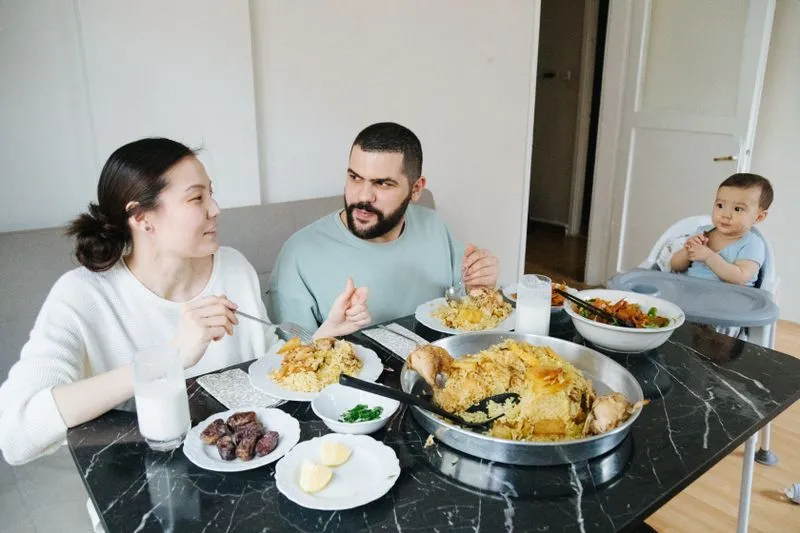
Sharing family meals deserves specific attention. The NHS advice is to show your baby how you eat, because babies copy their parents and other children, and to sit down together for family mealtimes as much as possible; as your baby grows, eating together encourages good eating habits. Switching off the television and putting phones away (more in our guide to a healthy balance with screens for children) also helps you notice when your baby is still hungry — or clearly done.
If your baby is looked after during the day, talk these stages through with whoever does the feeding: textures reached, allergens already introduced, foods refused. Practices vary from one setting to another, and it's a good question to raise when choosing between a nursery, a childminder or a nanny.
Weaning isn't a test to pass, and your baby isn't grading you on their empty plates. It's an exploration — theirs, with your support. Go at their pace, offer without pressure, trust current evidence rather than your mother-in-law's well-meaning memories. When your baby shows all three signs: one steamed summer courgette, no salt, mashed smooth. That's all the first spoonful needs.
Frequently asked questions
My 4-month-old is watching us eat intently. Can we start?
UK guidance is to start at around 6 months, when the three signs of readiness appear together: sitting steadily with head control, getting food to the mouth, and swallowing it. Strong interest in your plate is only part of the picture — it needs the other signs alongside. If you're thinking of starting before 6 months, or your baby was born prematurely, talk to your health visitor first.
My baby refuses everything I offer. What should I do?
This is normal and common. A few approaches: offer the refused food again a few days later — it may take 10 tries or more before a new food is accepted; change the presentation (mashed or finger food, warm or lukewarm); offer it at the start of the meal, when your baby is a little hungry; eat the same thing yourself alongside. Never force — pressure around food can create lasting aversions, and in the early weeks milk is still doing most of the nutritional work.
Are shop-bought pouches and jars acceptable?
Yes, as a convenience — for a day out, a busy evening, a trip. They're not the backbone of weaning, though: ready-made food can't match the variety of textures and flavours that home-cooked family food offers. Check labels for added sugar and salt, vary brands and recipes (the texture changes from one product to another), and keep offering soft pieces of whatever the family is eating, unsalted.
Is baby-led weaning safe in terms of choking risk?
The 2016 randomised trial published in Pediatrics (Fangupo et al.) found no significant difference in choking between a modified form of baby-led weaning, with advice on avoiding high-risk foods, and spoon-feeding. The risk exists either way: 35% of babies in the trial choked at least once between 6 and 8 months. Prepare foods correctly: soft, the right size, no whole nuts, grapes and cherry tomatoes cut into small pieces. Knowing the difference between gagging (an effective protective mechanism — don't intervene) and choking (silence, blue tinge, distress) is essential. A baby first aid course before you start is time well spent, whatever method you choose.
When should I introduce meat, fish and eggs?
From around 6 months, alongside vegetables and fruit. Meat and fish should be cooked through, with bones removed. For eggs, the NHS makes a useful distinction: hens' eggs produced under the British Lion Code of Practice (stamped with a red lion) are considered very low risk for salmonella and safe for babies to eat partially cooked; eggs without the red lion stamp shouldn't be eaten raw or lightly cooked. Beans and pulses count as protein foods too.
My 10-month-old still refuses all lumpy textures. Is this serious?
It's a sign worth taking seriously, though not dramatising. Keep offering lumps gently, one new texture at a time, and let your baby handle soft finger foods. If your 10-month-old consistently refuses everything that isn't smooth, discuss it with your health visitor or GP. They may refer you to a speech and language therapist who works with feeding difficulties.
Sources
- NHS — Your baby's first solid foods
- NHS — Food allergies in babies and young children
- NHS — Foods to avoid giving babies and young children
- World Health Organization — Complementary feeding
- Du Toit et al. (2015) — Randomized trial of peanut consumption in infants at risk for peanut allergy (LEAP study), New England Journal of Medicine
- Coulthard, Harris and Emmett (2009) — Delayed introduction of lumpy foods to children during the complementary feeding period, Maternal & Child Nutrition
- Fangupo et al. (2016) — A Baby-Led Approach to Eating Solids and Risk of Choking, Pediatrics