Why development charts send parents spiralling
Your baby is 3 months old. They're not holding their head up yet. Your friend's baby — born the same week — has been doing it for a fortnight. And there you are at 11pm, typing "3-month-old not holding head up" into Mumsnet with your heart hammering. This guide exists for one reason: to show you the real, wide range of normal development — not the ideal baby from the leaflets, but yours, at their own pace.
Developmental milestones are statistical tools. They describe what most babies do at a given age — and "most" means, by definition, that a proportion of perfectly healthy babies will do things earlier or later. The World Health Organization's study of six gross motor milestones, which followed 816 children in Ghana, India, Norway, Oman and the USA, makes the point neatly: 98% of the healthy children in the study (1st to 99th percentile) started walking alone between 8.2 and 17.6 months. That's a gap of more than nine months for a single milestone, with nobody "ahead" and nobody "behind".
In England, your baby's development is checked at set points in the first years. According to the NHS guide to your baby's reviews, a health visitor carries out a new baby review within 10 to 14 days of the birth, a thorough physical examination follows at 6 to 8 weeks (usually with a GP), the health visiting team offers a review between 9 and 12 months, and another comes at 2 to 2½ years. Each one is a snapshot. Between appointments, you're the one watching most closely.
This guide is organised month by month: what most babies acquire, the typical range, and the things worth watching more carefully. If your baby was born prematurely, the NHS calculates their developmental age from your original due date rather than their birth date — what's known as their corrected age — until they are 2. Your red book (the personal child health record you're given around the birth) is where your baby's weight, height and vaccinations are recorded, and it has a developmental milestones section you can keep up to date yourself.

Baby at 1 and 2 months: sleep, first gazes, first smiles
At 1 month, your baby sleeps 14 to 17 hours a day, naps included — the range set by the WHO guidelines for children under five up to 3 months, before it drops to 12 to 16 hours from 4 to 11 months. At 2 months, your baby will be invited for the 6 to 8 week check, a thorough physical examination usually done by a GP. By this early stage, Great Ormond Street Hospital's guide to speech and language development from birth to 12 months describes babies cooing alongside crying and starting to smile at you.
Those first two months are often disorientating for new parents: awake periods are short, and everything seems to change from one week to the next.
What your baby may be doing in the first two months, according to Great Ormond Street Hospital:
- Looking at your face and listening to your voice.
- Making cooing noises alongside crying.
- Smiling at you, then waiting for you to respond.
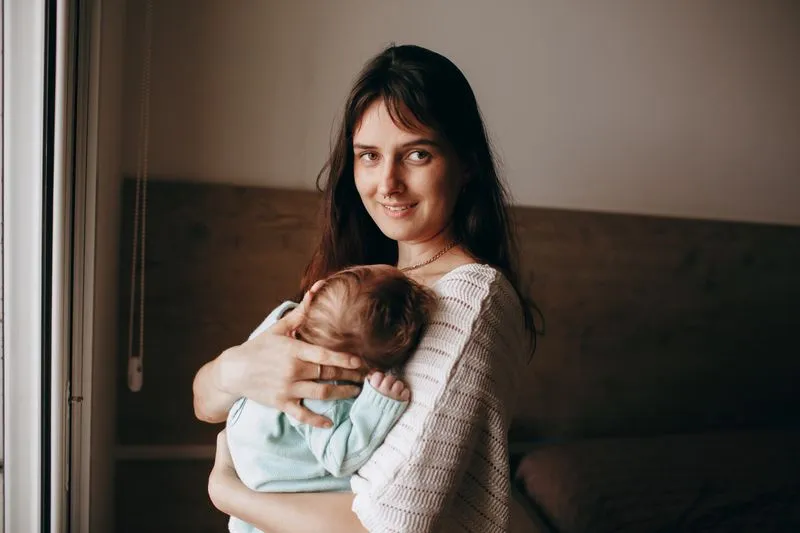
The social smile — a smile aimed at a face — doesn't arrive on a fixed date. If your baby isn't smiling back at you by the 6 to 8 week check, that's not necessarily a concern, but do mention it there. Your health visitor is also there for exactly these questions between formal appointments.
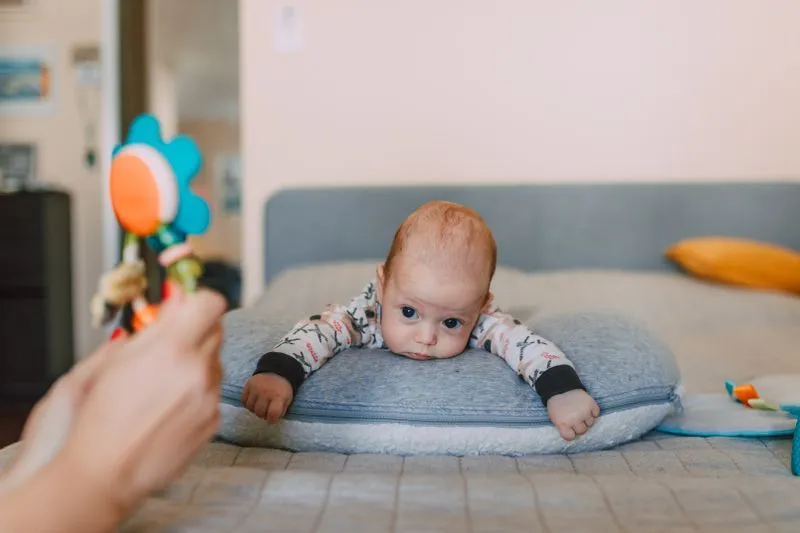
Head control builds week by week during tummy time: by three months, most babies can raise their head and chest when lying on their front (according to the Buckinghamshire NHS development guide). The WHO recommends that babies who aren't yet mobile spend at least 30 minutes a day on their tummy, spread through the day while they're awake — on a firm surface, and always supervised.
Baby at 3 and 4 months: cooing, laughing and lifting their head
At 3 months, most babies can raise their head and chest when lying on their tummy. They can also bring a hand to their mouth, according to Buckinghamshire Healthcare NHS Trust's guide to development from birth to 18 months. At 4 months, your baby may laugh or gurgle when you make a sound they find funny: Great Ormond Street Hospital places this response to the tone of your voice at about two to four months. Many parents describe this stretch as "the reward": your baby clearly recognises you and responds to your voice.
Typical milestones at 3 to 4 months:
- Raises their head and chest when lying on their tummy.
- Keeps their head in the middle when lying on their back.
- Opens and closes their hands and brings a hand to their mouth.
- Swipes at dangling toys.
- Coos and makes a range of vowel sounds ("ooh", "aah").
- Laughs or gurgles when you make a sound they find funny.
Around 4 months, plenty of parents see night waking return after a few calmer weeks — enough for the phenomenon to earn a nickname, the "4-month sleep regression". The word is misleading: a baby who is sleeping less well hasn't lost any skills. Their needs remain high (12 to 16 hours a day between 4 and 11 months, naps included, according to the WHO). If sleep stays poor for a long time and comes on top of other worries, talk to your health visitor.
Baby at 5 and 6 months: rolling, grasping and sitting with support
At 5 months, your baby may be experimenting with a wider range of sounds — "bubbly" noises and blowing raspberries — which Great Ormond Street Hospital describes in the later part of the first six months. At 6 months, babies are learning to roll both ways, begin to grasp objects and reach with one hand at a time. By six months, the Buckinghamshire NHS guide expects most babies to be doing these things, and it suggests plenty of floor play and time sitting with support. This is when babyproofing becomes properly urgent — even if they're not mobile yet, things change fast.
Typical milestones by 6 months:
- Learning to roll both ways (front to back, back to front).
- Grasps their feet with their hands.
- Takes their weight on their legs when held.
- Reaches with one hand at a time.
- Shakes and bangs toys placed in their hands.
- Uses the whole hand to "rake" small things towards them.
- Recognises familiar people and objects at a distance.
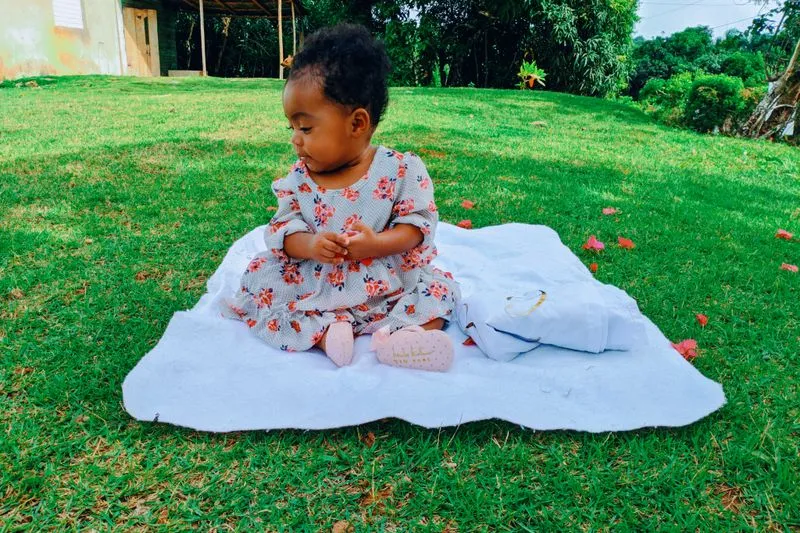
Sitting without support has a much wider window than most people think. In the WHO study, it appeared between 3.8 and 9.2 months for 98% of healthy children. If your 6-month-old can't sit unsupported yet, that's entirely normal. If they can't sit at all at 9 months, raise it with your health visitor.
Wariness of strangers, which tends to build through the second half of the first year, is a sign of healthy development: your baby now clearly tells familiar faces from unfamiliar ones. It's awkward for grandparents who don't visit often, but it's a good sign.
Baby at 7 and 8 months: getting around, in their own way
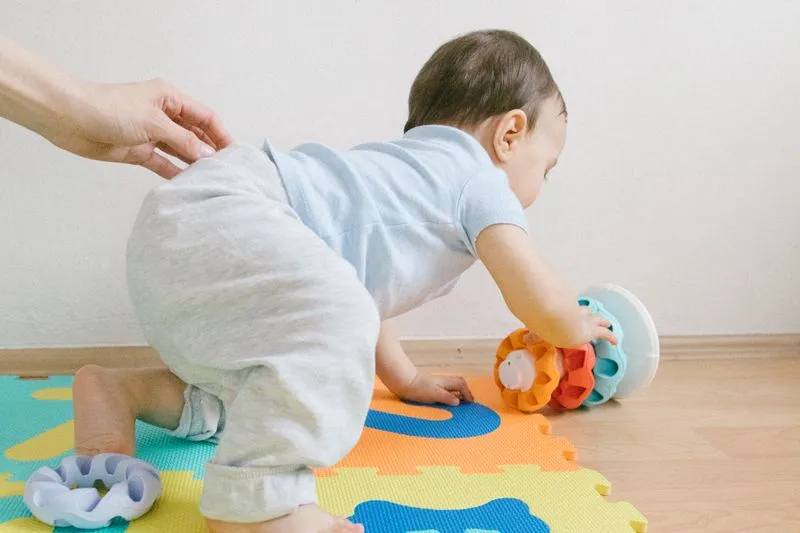
At 7 months, your baby may start crawling, or not at all. The NHS Start for Life advice puts crawling at around 7 to 10 months, and some babies shuffle around on their bottoms instead. At 8 months, babies tend to become more clingy and nervous of strangers: the Buckinghamshire NHS guide places this at around eight to ten months. The WHO study found the same variety in how babies get around, with 4.3% of healthy children never seen crawling on hands and knees.
What you may notice between 7 and 8 months:
- Babbling that combines sounds ("mama", "baba", "dada", "gaga").
- Waving when you say "bye-bye" (one of the first phrases understood in context).
- Letting go of toys on purpose, then shaking, banging, throwing and dropping them.
- Fear, anger and pain showing more strongly (from about seven months, according to the Buckinghamshire guide).
The pincer grasp — picking up a small object between thumb and forefinger — is one of the skills health professionals watch for. It develops through the second half of the year, and the Buckinghamshire NHS development guide lists it among the things most babies can do by 12 months. In practice, you'll see your baby going after crumbs and small pieces of food with increasingly precise movements. Keep anything that could be swallowed well out of reach.
Baby at 9 and 10 months: sitting steady, standing and stepping with support
At 9 months, most babies can sit unsupported and play with toys, according to the Buckinghamshire NHS guide. They also start to turn to familiar voices across a room, which Great Ormond Street Hospital places at six to nine months. At 10 months, your baby may stand while holding on and take a few steps with support. Or not yet: in the WHO study, standing with assistance appeared between 4.8 and 11.4 months and walking with assistance between 5.9 and 13.7 months, for 98% of healthy children.
The 9 to 12 month review, usually carried out by a member of your health visiting team, looks at your baby's language and learning, safety, diet and behaviour, among other things. Beforehand, you'll be sent the Ages and Stages Questionnaire (ASQ-3) to fill in at home. The review is a good moment to talk through movement (pulling to stand, cruising), babbling, social play (peekaboo, responding to their name) and fine motor skills.
Typical milestones by 9 months:
- Sits unsupported and plays with toys.
- Pivots round on their tummy to get into a crawling position — some crawl, some bottom-shuffle.
- Turns to familiar voices across a room and begins to respond to their name.
Baby at 11 and 12 months: first steps and first words, or not yet
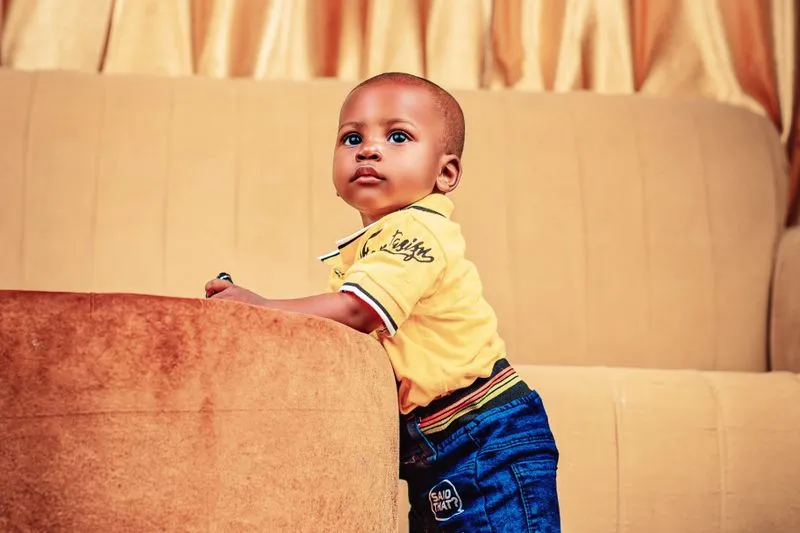
At 11 months, your baby may take their first independent steps, or not for months yet. In the WHO study, walking alone arrived between 8.2 and 17.6 months for 98% of healthy children, and the Buckinghamshire guide describes most babies walking alone by 18 months. At 12 months, babies understand a small vocabulary of words, often before they say their first one, as Great Ormond Street Hospital notes of the end of the first year.
A baby who walks at 17 months may be developing perfectly normally in every other way: the first birthday is a milestone to celebrate, not a test to pass.
Typical milestones by 12 months, according to the Buckinghamshire guide:
- Gets from lying to sitting by themselves.
- Pulls up to stand and lowers themselves to the floor in a controlled way.
- Walks holding on to furniture — some stand and walk alone.
- Uses a pincer grasp and bangs two objects together.
- Finds hidden objects and looks at the right picture in a book when you name it ("where's the duck?").
Warning signs in a baby under one: when to seek advice
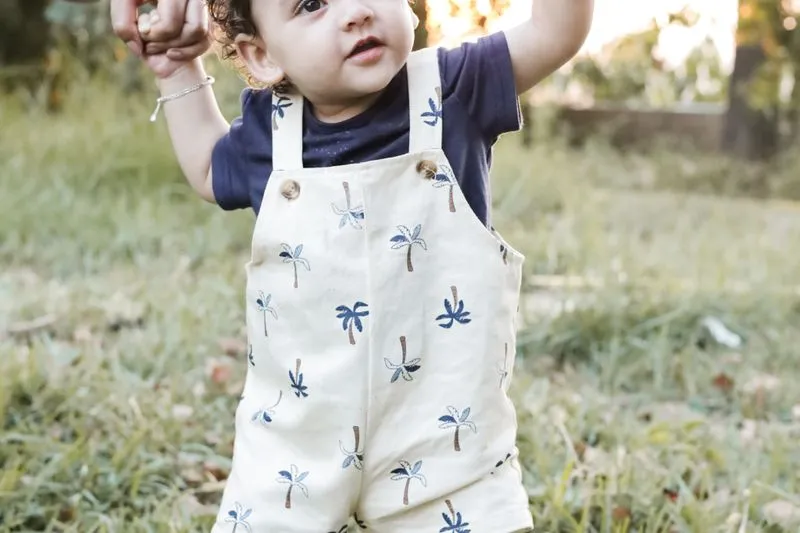
Contact your health visitor or GP without waiting for the next review if your baby loses a skill they had, or if anything in the table below worries you. The NHS is clear that between reviews, you can contact a health visitor or GP, or go to your local baby clinic. The table isn't there to alarm you. It sets out, age by age, what most babies can do, drawing on the Buckinghamshire NHS guide, Great Ormond Street Hospital's speech and language guide, the NHS Start for Life advice and the WHO windows. If your baby can't do something yet, that's a question to ask, not a diagnosis.
| Age | What most babies can do | Worth raising if… |
|---|---|---|
| By around 3 months | Raise head and chest when lying on their tummy; open and close their hands; bring a hand to their mouth | Not looking at your face or listening to your voice |
| By around 6 months | Follow moving objects; begin to grasp objects; learning to roll both ways | Not following moving objects with their eyes, or not reaching for or grasping anything |
| By around 9 months | Sit without support and play with toys; turn to familiar voices across a room | Not sitting at all (the WHO window closes at about 9 months), or not turning to familiar voices |
| By 12 months | Find hidden objects; use a pincer grasp; pull up to stand | No signs of moving around in any way (the NHS Start for Life advice is to ask your health visitor) |
| By 18 months | Walk alone; point to and name familiar objects | Not walking alone (the WHO window closes at about 17.6 months) |
One red flag deserves particular emphasis: regression. If your baby loses skills they had clearly acquired — they were babbling and go quiet, they were following things with their eyes and no longer do — contact your GP or health visitor promptly rather than waiting for the next review.
Emotional development: the often-overlooked piece
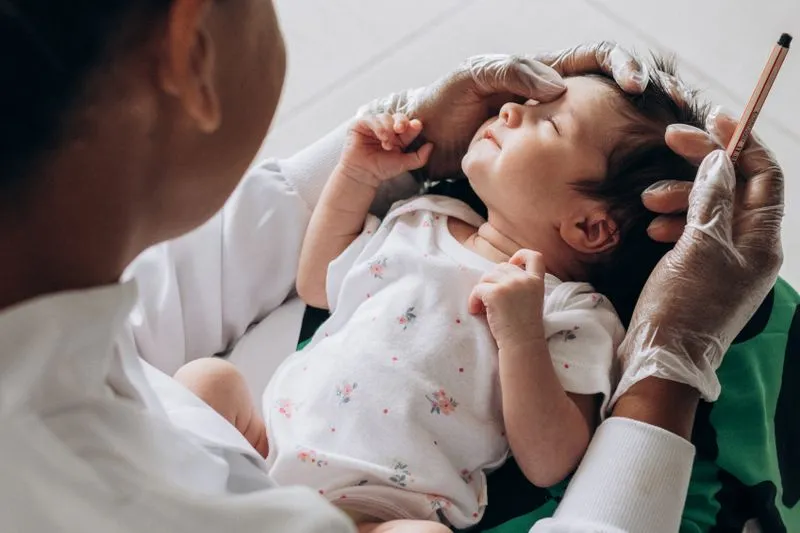
We talk a great deal about motor and language milestones, but emotional and social development is just as fundamental — and just as gradual. John Bowlby's attachment theory, extended through Mary Ainsworth's observational studies, established that the quality of early attachment relationships shapes emotional development in lasting ways.
This doesn't mean being a perfect parent. The British paediatrician and psychoanalyst Donald Winnicott wrote about the "good enough" mother: one who meets her baby's needs most of the time, without aiming for perfection. Respond, repair when things go wrong, stay predictable and warm. Not perfect — reliably present.
Key emotional milestones through the first year:
- 0-3 months: your baby is drawn to all human faces and seeks physical closeness and contact.
- 3-6 months: a clear preference for attachment figures. Smiling becomes selective.
- Second half of the year: wariness of strangers — a clear distinction between familiar and unfamiliar.
- 8-10 months: separation anxiety — it comes and goes, and often peaks at around 18 months.
- Around 12 months: social referencing — your baby looks to you to calibrate their reaction to something unfamiliar.
When the first frustrations and tantrums arrive, our practical guide to positive parenting offers concrete tools for handling big feelings without giving in or punishing.
Frequently asked questions
My 4-month-old still isn't holding their head up — should I be concerned?
What matters most is the trend: is your baby's head control better than it was a month ago? Gradual progress is generally reassuring, but steady head control is something most babies have around this age, so mention it to your health visitor or GP rather than waiting for the 9 to 12 month review. They can look at it in context alongside other markers like muscle tone and reflexes. Premature babies should always be assessed against their corrected age.
Is it normal for my 8-month-old not to crawl yet?
Completely. The NHS Start for Life advice puts crawling at around 7 to 10 months, and in the WHO study 4.3% of healthy children were never seen crawling on hands and knees. Some babies bottom-shuffle, some belly-crawl, some skip the stage entirely and go straight to walking. What matters is that your baby finds some way of getting around. If there are no signs of moving by 12 months, ask your health visitor for advice.
My baby said "mama" at 7 months — does she mean me?
At 7 months, "mama" is almost certainly babbling rather than a meaningful word. Babies discover they can produce certain sounds and repeat them for the pleasure of it, without yet linking the sound to a person. Words used with meaning come later, often around the first birthday and beyond. That doesn't diminish the babbling stage — it's essential preparation for speech — but "mama" at 7 months is more about sound exploration than naming you, even though, by this age, she already knows you from everyone else.
Do educational apps and videos actually help development?
Not for babies, at least: the WHO doesn't recommend any screen time for children under one, "educational" content included. Babies learn language through direct exchange — a face that responds, a voice that adjusts to their babbling, an adult who names what they're looking at. A video talks, but it doesn't answer back. The time you spend narrating bath time, meals or a walk to the shops is worth far more than any app.
My baby walked at 10 months — does that mean they're ahead in other areas too?
Nothing suggests so. The walking window is so wide (8.2 to 17.6 months for 98% of the children in the WHO study) that it mostly reflects differences in pace between healthy children: the WHO researchers describe it as normal variation, not a ranking. Some cautious babies wait until they're quite sure of themselves; others launch as soon as they can. A baby who walks at 10 months and one who walks at 16 months can develop just as well.
How can I tell if my baby has a hearing problem?
According to the NHS Newborn Hearing Screening Programme overview, hearing screening is offered to all babies in England, ideally within the first 4 to 5 weeks after birth, and can be done up to the age of 3 months. A clear result at birth doesn't cover everything, as some hearing loss develops later. Signs to watch for: no startle at loud sounds, not reacting to your voice when you're out of sight, not turning towards the person speaking by around 6 months. If you have any concern, ask your GP about a referral to audiology — children's hearing can be tested at any age.
My child has been identified with a developmental delay — what happens next?
A developmental delay picked up by your GP, health visitor or paediatrician opens the door to specialist support: physiotherapy for movement, occupational therapy for fine motor skills and everyday tasks, speech and language therapy for communication. NHS referrals are free, though waiting times vary from area to area, and your health visitor can also point you towards local family services. A delay is not a life sentence: the young brain is highly adaptable, and support that starts early gives children the best chance of making progress.
Should I actively stimulate development or let my baby set the pace?
Both, in balance. You don't need a structured programme: development is fed by ordinary daily interaction — bath time, meals, play, conversation. What really helps: unstructured floor time (letting your baby explore without being held or strapped into a seat), reading aloud from birth, narrating your day, and mirror games (copying your baby's expressions). Simple objects to handle, human faces and time together are plenty. For practical ideas, our guide to activities by age suggests games suited to each stage.
Sources
- NHS — Your baby's health and development reviews
- WHO — Motor Development Study: windows of achievement for six gross motor milestones (Acta Paediatrica, 2006)
- WHO — Guidelines on physical activity, sedentary behaviour and sleep for children under 5 (2019)
- NHS Start for Life — Baby moves
- Buckinghamshire Healthcare NHS Trust — A guide to development from birth to 18 months
- GOV.UK — Newborn hearing screening: programme overview
- Great Ormond Street Hospital — Speech and language development from birth to 12 months