Margaux, 29, a graphic designer, has a Saturday morning ritual that never changes: she wanders down to her local market, flat white in hand, wearing her battered Air Force 1s. The ones she's had for three years. The ones that survived a rainy November, the pavements of Berlin on an Interrail trip, and at least two muddy festivals. They're slightly yellowed along the edges, the right sole is wearing thin — and yet she categorically refuses to replace them. "They're not shoes," she told me once, laughing over a croissant. "They're memories with laces."
And honestly, fair enough. Because that's exactly what trainers are: something that starts as a fashion purchase and ends up as a piece of your life. Except that between the classic models that keep cycling back, the collabs that sell out in minutes and the growing crop of more responsible brands, picking the right pair is anything but obvious.
Spring is here, the trainers are coming out of the cupboard, and the same question comes back every year: which pair to buy, and how to wear it without looking like everyone else on the Northern Line? Here are the models worth your money, the slim trainer taking over this spring, the trend I wouldn't bet on — and, most importantly, how to choose, style and look after your pair.
How trainers went from the sports pitch to the street
Trainers made it from sport to the street one model at a time. The Air Force 1 came out in 1982 as a basketball shoe and went on to become Nike's best-selling shoe. The Samba began as a football shoe in the early 1950s — Lyst's 2023 report called it "the classic, 73-year-old shoe" — and, in Lyst's words, it "evolved from a football sneaker to an all-star fashion shoe" through limited-edition collaborations with brands and designers.
Today, trainers with a dress or a blazer are simply how most of us get dressed — so much so that we forget how radical that shift was.
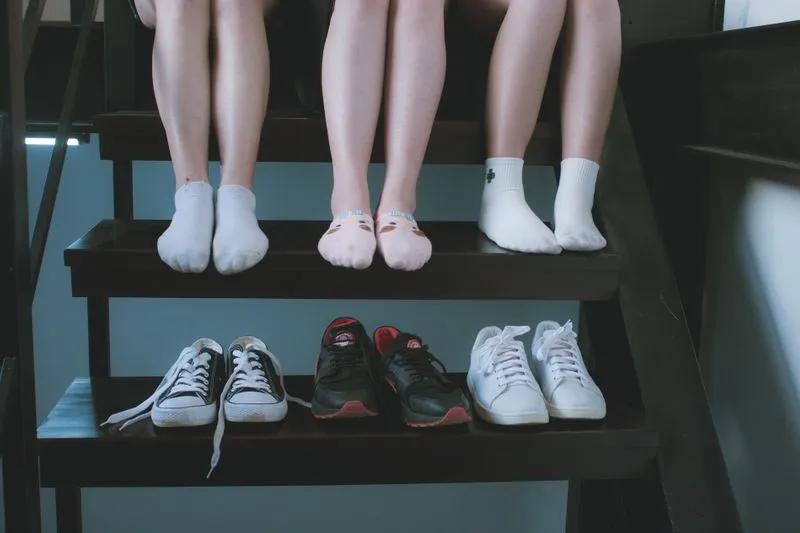
Women's trainers have changed status too. For years, brands were happy to offer "pink versions" of models designed for men. Not any more — because women have imposed their own way of wearing them: one pair, Monday to Sunday, with a dress, a suit or jeans.
The iconic models you need to know
Four models form the backbone of a trainer wardrobe: the Air Force 1, the New Balance 550, the Samba and the Chuck Taylor. They're not the most technical or the most expensive — their strength is a silhouette that has barely changed since they came out.
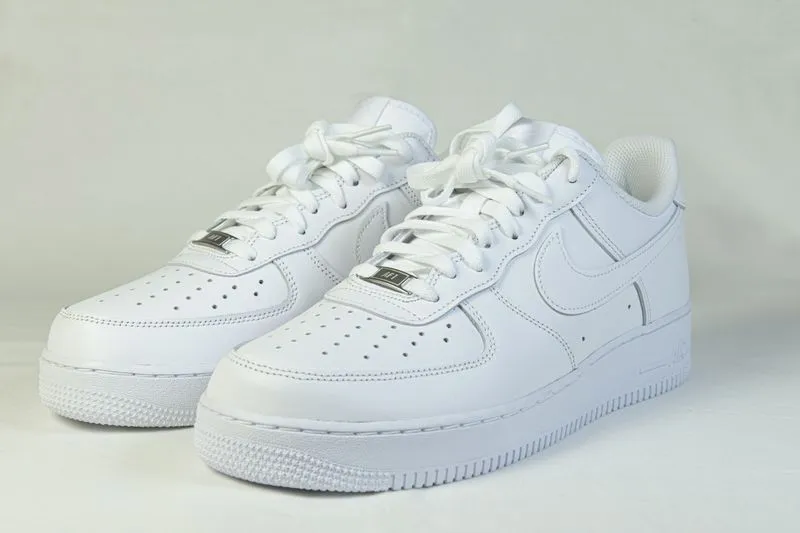
Nike Air Force 1
Released in late October 1982 as a basketball shoe and designed by Bruce Kilgore, the Air Force 1 is the brand's best-selling shoe of all time, as Nike's own archive history of the model points out. Its chunky silhouette, the Air cushioning tucked inside the sole and the "triple white" colourway make it a wardrobe staple. It's the pair you reach for when you can't decide what to wear on your feet — and it works every single time.
What I love is that the AF1 comes in low (the most popular), mid and high versions. The low goes with everything. The mid adds a bit more structure that works really well with wide-leg trousers. The high — honestly, it's more divisive, but with the right outfit, it can look properly cool.
New Balance 550
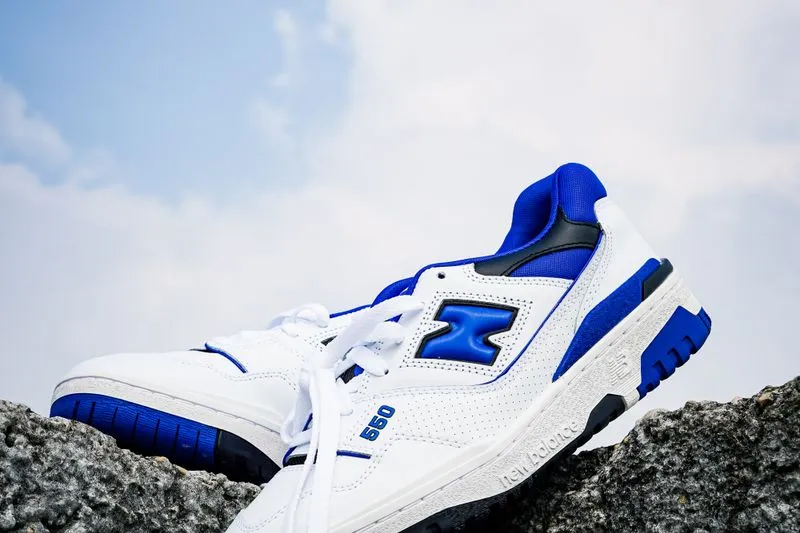
The 550 has had a spectacular revival in recent years, driven by the 'dad shoe' wave (yes, your dad's trainers, worn on purpose) and its collaborations with Aimé Leon Dore. Its vintage basketball look, with a flat sole and leather panels, stands apart from the usual Nike and Adidas offerings.
Let's be honest: the 550 isn't the most comfortable trainer in the world. The sole is quite rigid and needs a proper breaking-in period. If you're after a pair for walking around London all day, this might not be the best shout. For pure style points, though, it's hard to beat.
Adidas Samba
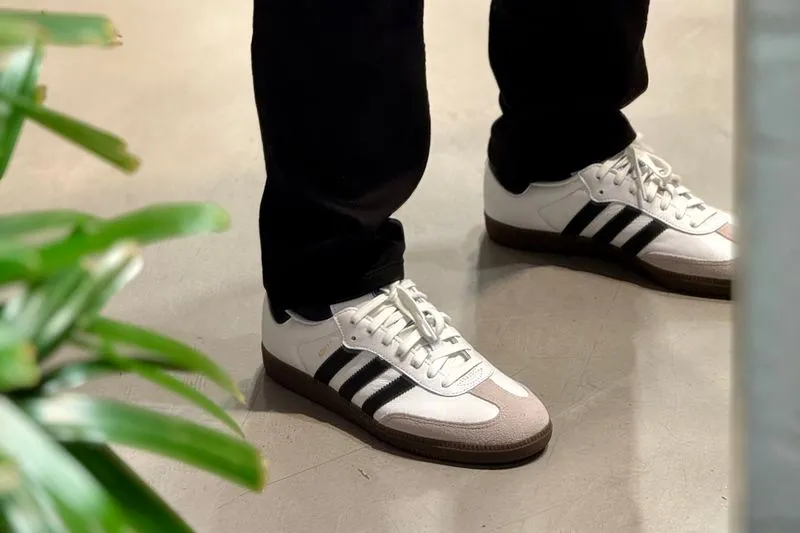
The Samba is the trainer that owned 2023. Lyst's Year in Fashion 2023 report put it bluntly: "Searched every 1.7 minutes on Lyst, the Adidas Samba is the sneaker of the year." The fashion world adopted it for its low profile, gum sole and supple leather. It's the elegant trainer par excellence — the one that bridges sportswear and smart-casual without breaking a sweat.
One thing to know: the Samba has a slim, elongated shape. Try it on with your usual socks before settling on a size, especially if you have wide feet. And stick with the classic colourways (black/white, white/green) rather than limited editions, which tend to be massively overpriced on the resale market.
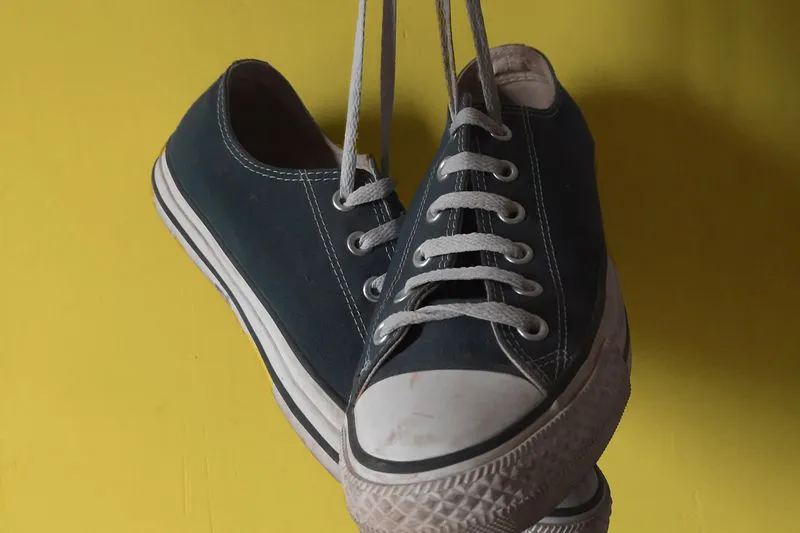
Converse Chuck Taylor All Star
Do we really need to introduce the Chuck Taylor? Probably not. But what's worth saying is that the Converse is arguably the most democratic trainer there is. At under £70 in canvas, it offers a canvas (quite literally) onto which you can project any style. Punk, preppy, minimalist, grunge — the Chuck adapts.
The low-top is easier to wear day to day. The high-top — the original version — has a bolder look that works particularly well with shorts or skirts. Basically, if you don't own a pair, it might be time to sort that out.
The trainer trends of spring 2025
The trainer trend of spring 2025 is the slim, low-profile shoe: the Puma Speedcat, the Adidas Taekwondo, the Onitsuka Tiger Mexico 66. Retro runners and platforms are still around. They're just no longer the new thing. As with adapting runway trends for everyday life, the test is simple: would you still wear it in two years?
Slim, low-profile trainers
This is the silhouette that has been building for months. Who What Wear UK tipped the Puma Speedcat and the Adidas Taekwondo as the It trainers of 2025, noting that "individuals are swapping their chunky shoes for lighter, sleeker options like the Adidas Taekwondos and Puma Speedcats." The Speedcat is a 1999 Puma model inspired by Formula One drivers. The Taekwondo first appeared in the early 2000s as a martial-arts shoe. The same piece also picks out the Onitsuka Tiger Mexico 66.
Who are they for? These trainers have a very thin sole and a narrow shape — almost a laced ballet flat. They suit a slim foot. On a wide foot they pinch quickly, exactly like the Samba. The flat sole offers little cushioning too. Not the pair for a full day of walking. Style-wise, they work with a midi skirt or straight-leg trousers that stop right at the ankle, so the slim shape shows.
Retro runners, still going
Retro running silhouettes are no longer new, but they're holding their ground. We're talking New Balance 2002R, Asics Gel-Kayano 14, Nike Vomero 5 — names that sound like Wi-Fi passwords, but never mind. Originally designed for performance, these models are being adopted for their technical look and their cushioning, which is far more generous than on retro basketball trainers.
What's interesting about this trend is that it reconciles style and comfort. Unlike Stan Smiths or Sambas with their thin soles, vintage runners offer proper cushioning. It's the ideal trend if you walk a lot — which, if you live in London and regularly battle the Tube, you almost certainly do.
Platform trainers — still very much here
The chunky sole isn't dead. Far from it. Whether it's the Converse Run Star Hike, the Chuck Taylor Lift or the Puma Mayze, the platform keeps its appeal because it elongates the silhouette without sacrificing trainer comfort. The style has evolved, though: gone are the massive Buffalo blocks of the late 90s. Today's platforms are subtler and better integrated into the line of the shoe. My bet? The very high platform will be the first to fade. It weighs down anything that isn't a wide-leg jean. And the slim trainer is heading the other way.
Understated minimalism
At the opposite end from platforms, another trend is gaining ground: ultra-minimalist trainers. Sweden's Axel Arigato and France's Veja offer pared-back silhouettes, often white or tone-on-tone, with discreet logos. It's the anti-hype — and that's precisely what appeals.
How to choose the right trainers for you
Choose a pair in this order: the shape of your foot, how you'll actually wear it, then the colour — the trend comes last. Because — spoiler — THE pair that suits you isn't necessarily the trendiest one.
Foot shape comes first
This is the number one criterion, and yet it's the one most people forget. A wide foot will quickly feel cramped in a slim Samba. A narrow foot may swim in a bulky runner. Before falling for a model because it looks gorgeous, try it on — and walk around the shop for at least five minutes.
How you'll wear them
Are you after a pair for the office? For walking around the city all day? For weekends? The answer completely changes the recommendation. A Stan Smith is perfect for a casual office. A New Balance 2002R is better for serious walking. A high-top Converse does the job for a relaxed weekend.
Strategic colour choices
For your first 'go-with-everything' pair, white or off-white remains unbeatable. For a second pair, a neutral colourway (grey, beige, black) adds variety without risk. Bold colours — red, forest green, cobalt blue — are brilliant for a pop of personality, but they do limit your styling options.
Styling your trainers: the combinations that work
The great advantage of modern trainers is that they go with (almost) everything. But some combinations work better than others, and a few simple guidelines help you avoid the "I just threw on my trainers because I couldn't be bothered" look.
Trainers + jeans: the timeless classic
It's the most obvious combination, and it always works. The trick is playing with the cut of the jeans (and with your shape: our guide to dressing for your body type helps you find the right one). Straight or slightly flared jeans with low trainers create a very 70s look. High-waisted mum jeans with chunky trainers give a committed 90s vibe. Slim jeans (yes, they're quietly coming back) with minimalist trainers — that's clean casual.
Trainers + midi dress or skirt
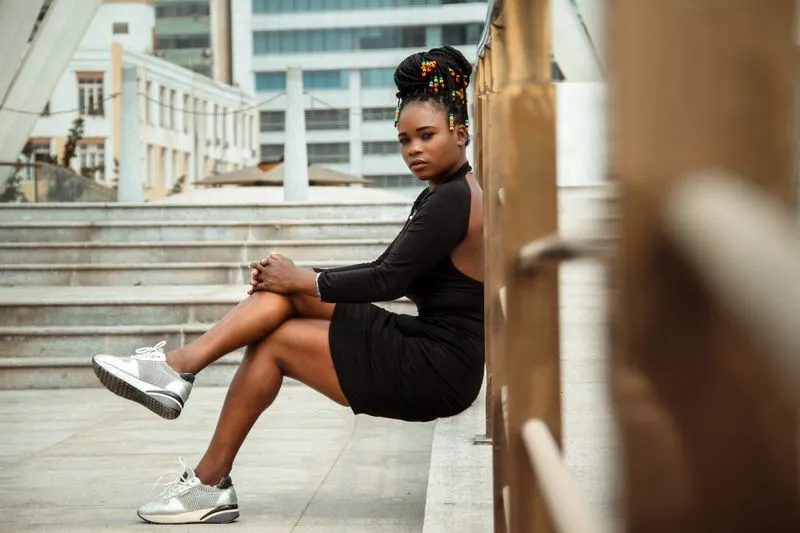
This is THE spring styling combination, because a trainer takes the formality out of a dress. A floaty dress with white trainers creates a relaxed/feminine contrast that works as well at the office as it does at brunch. The key is length: the dress or skirt should hit somewhere between the knee and the ankle. Shorter and it tips into sporty: great at the weekend, less so at the office. Longer and the trainer gets hidden, and you lose the effect.
Trainers + tailored suit
The power move. An oversized blazer, tailored trousers, and white trainers or black Sambas. It's the look that says "I'm serious but not stiff." It works particularly well in creative industries, digital, PR. In a City law firm — perhaps not quite yet, but give it time.
Sustainable trainers: the brands doing it differently
A typical pair of running shoes generates 30 pounds (around 14 kg) of carbon dioxide emissions, according to an MIT-led lifecycle assessment — "equivalent to keeping a 100-watt light bulb on for one week" — and more than two-thirds of that impact can come from manufacturing. In other words, most of the footprint is there before you take your first step. Several brands have decided to do things differently.
Veja — the French pioneer
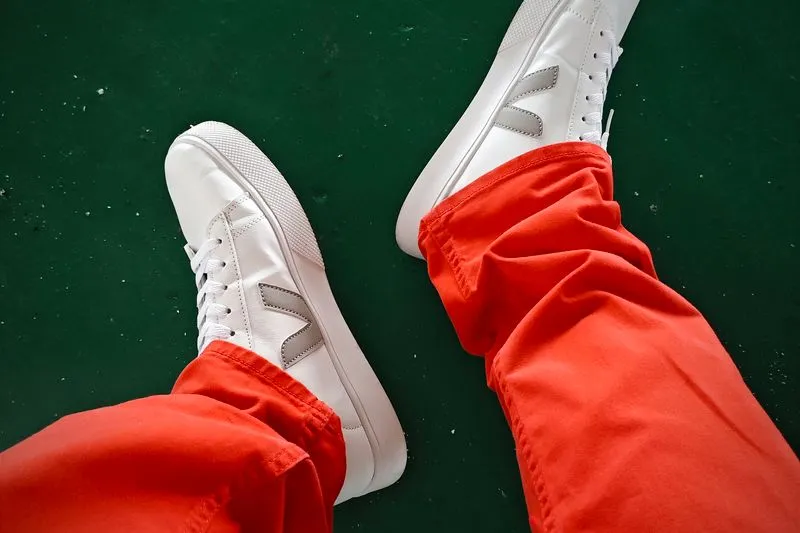
Veja is THE brand that proved you could make sustainable trainers people want to wear. The French label has been buying wild rubber from the Amazon since 2004, uses organic cotton grown in Brazil and Peru, and offers some of its models in chrome-free tanned leather. And the aesthetic result is impeccable: the Campo — the one with the big V on the side — has become a classic.
The price is higher than an entry-level trainer, but the build quality shows. I've had a pair of V-10s for two and a half years, worn nearly every day: they're still going strong.
Allbirds — comfort above all
Allbirds built its reputation on comfort and simplicity, with natural materials: merino wool, tree fibre, sugarcane. The result: very lightweight trainers (you almost forget you're wearing them). They're not the most stylish pair in the world — the design is deliberately understated, even austere — but for everyday comfort, they have a loyal following.
Looking after your trainers so they last
Three habits keep a pair of trainers going: gentle regular cleaning, a waterproofing spray from day one, and storage with paper stuffed inside. No pricey cleaning kit required.
Basic cleaning
For leather trainers (Sambas, AF1s, Vejas), a damp cloth with a bit of washing-up liquid handles everyday marks. For canvas (Converse), a soft brush and bicarbonate of soda work wonders. Scrub gently, rinse, leave to dry. No tumble dryer — ever. Some brands are happy for you to use the machine: Allbirds' shoe-care guide says to take out the insoles and laces, wash the shoes on a cold wool or delicates cycle, and let them air-dry rather than tumble dry. Check the care label on your own pair before trying it.
Preventative protection
A waterproofing spray applied as soon as you buy your trainers helps them last, especially in leather and suede. Reapply regularly through autumn and winter, following the instructions on the can. A can costs a fraction of a pair: the effort-to-benefit ratio is unbeatable.
Storage
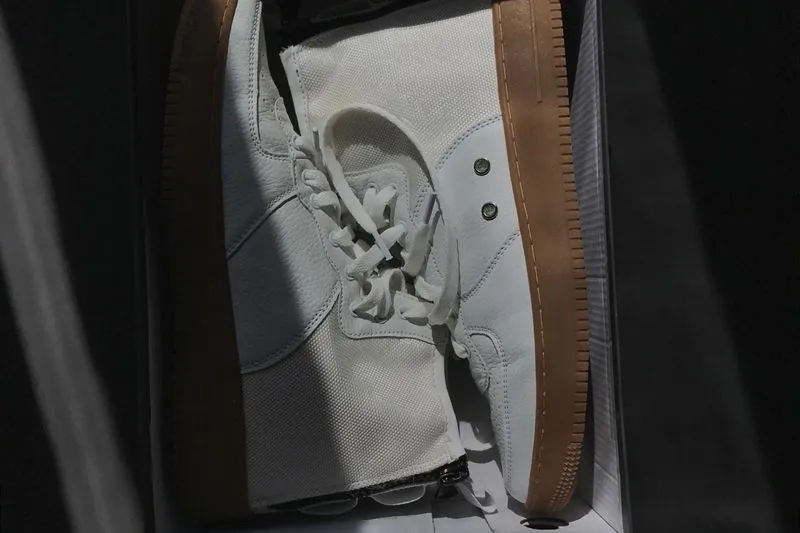
Store your trainers with shoe trees or tissue paper inside to keep their shape. Avoid stacking them on top of each other (it warps the uppers). And if you've got a pair you're not wearing for a while, keep it in the original box — it protects it from dust and light.
Investing wisely: the budget question
The trainers in this guide fall into three price bands: under £70, £70 to £130, and over £130. Between a bargain canvas pair and a luxury collab, the gap is dizzying. And price doesn't tell you how long a pair will last.
Under £70: basics that deliver
In this range, you'll find the canvas high-top Converse Chuck Taylor, which comes in white (£65 full price on Converse's UK site in March 2025, sometimes less in the sale), and certain entry-level New Balance models. On a tight budget, look secondhand first: that's where a barely worn Air Force 1 or Samba can fit into this price band. These are solid pairs with a decent quality-to-price ratio. Don't expect exceptional comfort or premium materials, but for regular wear, they do the job.
£70–£130: the sweet spot
This is the range where you find the best balance between quality, style and price. The women's Air Force 1 '07 sits at around £110 at Nike, and the Samba OG was listed at £95 on Adidas UK's product page in February 2025. These are pairs that can last several seasons if you look after them, offer good comfort and are versatile enough for most of your wardrobe.
Over £130: the fashion investment
Above £130, you're paying either for technology (top-end runners), for brand and design (minimalist luxury labels like Common Projects), or for more responsible credentials. These pairs aren't essential — and an expensive pair won't necessarily outlast a well-kept mid-range one.
Frequently asked questions
Which white trainer should I start with?
On a tight budget, start secondhand. Look for a barely worn white Air Force 1 or Stan Smith on Vinted or Depop. New, the canvas high-top Chuck Taylor, which comes in white, was £65 full price on Converse's UK site in March 2025. If you can stretch to around £110, the Nike Air Force 1 Low is the safest choice: it goes with everything, and its price sits in the mid-range. For a slimmer look, try the Veja Campo or the Adidas Stan Smith.
Can you wear trainers to the office?
It depends on the office, obviously. But in most professional environments, clean, minimalist trainers go down fine. Stick with leather models and neutral colourways, and avoid very sporty or heavily platformed styles. A black Samba or white Veja will pass practically anywhere.
How do I know if trainers are authentic?
Check the inner label (font, spacing, product code), the quality of the box (crisp printing, consistent colours), and compare with official photos from the brand. Some resale platforms have their own team check pairs before shipping them: read their help pages to see exactly what gets checked. If you're buying on Depop, ask the seller for extra photos: an honest seller has no reason to refuse.
Should I buy trainers a size up?
Not as a rule: the same size fits differently from brand to brand (Nike, Adidas, New Balance, Converse), and sometimes even between two models from the same brand. Check the brand's size guide, read reviews on fit, and try them in-store when you can. With a slim shape like the Samba, wide feet should try two sizes.
How do I clean white trainers that have yellowed?
Mix bicarbonate of soda with a little hydrogen peroxide into a paste. Apply it to the yellowed areas with an old toothbrush, leave in the sun for half an hour, then brush off the residue. Don't mix other household products into the paste, and keep bleach away from soles and canvas.
Leather or canvas trainers: which should I choose?
Leather is more durable, easier to clean and ages better. Canvas is lighter, more breathable and cheaper. For summer and casual wear, canvas is ideal. For everyday use year-round, leather is the better investment. And for British rain — leather, without question.
Are sustainable trainers worth the extra cost?
On materials, yes — but how long you wear them matters more. Brands like Veja and Allbirds rely on natural fibres (organic cotton, natural rubber, wool, tree fibre) and document their supply chains. But according to MIT's lifecycle assessment, more than two-thirds of a running shoe's carbon impact can come from manufacturing: the most responsible pair is the one you wear for years.
Sources
- Nike — The History of the Nike Air Force 1
- Lyst — The Year in Fashion 2023
- MIT News — Footwear's (carbon) footprint
- Veja — Amazonian rubber
- Allbirds UK — Shoe care
- Who What Wear UK — Fashion People in Paris and London Agree That These Will Be 2025's It Trainers
- CDC, MMWR — Respiratory Illness Associated with Boot Sealant Products, Five States, 2005–2006