You've had your period since you were 12, 13, maybe 14. That's 15, 20, 30 years. And yet, if someone asked you to explain exactly what happens in your body between day 1 and day 28, you'd hesitate. Not because you're not intelligent — but because no one ever explained it properly. Not at school. Not at the GP. Not anywhere.
Your GCSE biology taught you that "the uterus prepares to receive a fertilised egg." Your mum handed you some pads and said "it's normal, love." And your GP, pressed for time, asked whether your cycles were regular without really explaining what that meant. The result: plenty of women live with their cycle for decades without knowing what is happening hormonally and physically, month after month.
Tomorrow, 28 May, is Menstrual Hygiene Day — a good moment for the guide you should have been given at 14. Detailed, honest, grounded in NHS guidance and UK research — but written to be understood, not to impress. Because understanding your cycle means understanding your body, and knowing when something isn't right.

What really happens in your body
The menstrual cycle is so often reduced to your period — as if the rest of the month simply doesn't exist. That's a misreading. According to the NHS overview of periods, a period can last between 2 and 7 days, usually about 5, and most of the hormonal work of the cycle happens in the weeks that follow.
A complete cycle involves two main organs: the ovaries and the uterus. These two work in parallel, governed by four principal hormones produced in the brain and the ovaries themselves. The interplay between these hormones is remarkably precise — and when it goes off-beat, your body signals it in multiple ways.
Technically, a cycle begins on day 1 of your period and ends the day before your next period starts. The NHS puts it at around every 28 days for most women, while noting that it's common for periods to come anywhere from every 21 to every 35 days. The 28-day figure is an average, not a rule: a 24-day cycle is just as normal as a 32-day cycle, provided it's consistent for you.
The cycle divides into four distinct phases, each with its own hormonal pattern and possible effects on mood, energy, libido and skin. Understanding these four phases changes how you see yourself — and how you plan your month.
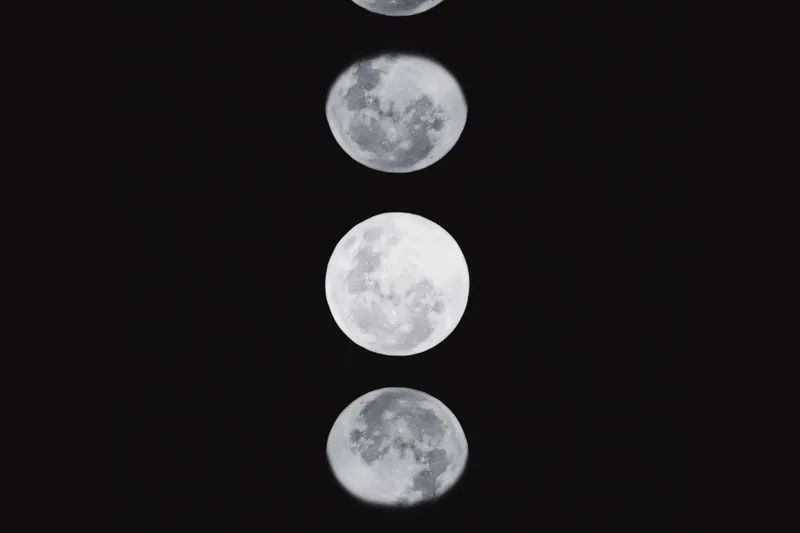
The menstrual phase: not just "your period"
Days 1 to 5 approximately. This is the most visible, most felt, most discussed phase — and paradoxically, the least understood mechanically.
What's happening physiologically: the endometrium (the uterine lining that built up during the previous cycle in preparation for a possible pregnancy) sheds and is expelled. It's not "blood" in the strict sense — it's a mixture of blood, endometrial tissue, mucus and vaginal secretions. The NHS estimates total blood loss at about 20 to 90ml per period (roughly 1 to 5 tablespoons). The shade varies from bright red to dark brown depending on flow, which is entirely normal.
Prostaglandins — substances produced by the lining of the womb — make the uterus contract so the lining can be expelled. Produced in excess, they make those contractions stronger and more frequent, and that's what you feel as cramps. It's also why anti-inflammatory painkillers such as ibuprofen work differently from paracetamol: they act on prostaglandin production itself rather than only on how you perceive the pain. The NHS lists both as over-the-counter options for period pain.
Hormonally, oestrogen and progesterone levels are at their lowest during your period. Many women link this time with tiredness, occasional low mood or heightened sensitivity — not a personal weakness. Others describe the opposite: a sense of relief as the period arrives and premenstrual symptoms fade.
What you can do: the NHS suggests a hot water bottle or heat pad on your tummy, a warm bath, and gentle exercise such as walking, swimming or yoga. If you take painkillers, follow the dose on the pack and ask your pharmacist if you're unsure which one suits you. You don't have to stay in bed if you feel well — but you're also completely within your rights to slow down.

The follicular phase: the rebuild
Days 1 to 13 approximately in a 28-day cycle (it begins with your period). Many women say this is when they feel "at their best", without quite knowing why.
In the ovaries, under the influence of FSH (follicle-stimulating hormone) produced by the pituitary gland, several follicles begin to develop. Each follicle contains an oocyte (a future egg). Typically, one dominant follicle outgrows the others and continues maturing — the rest regress. This dominant follicle produces increasing amounts of oestrogen.
Oestrogen does several things at once:
- Stimulates the rebuilding of the endometrium, which thickens progressively to prepare for potential implantation
- Acts on the brain, which partly explains why many women experience this as the most comfortable phase of the month
- Helps keep bones strong (which is why the menopause, with its oestrogen drop, increases osteoporosis risk)
- Changes cervical mucus, which becomes more abundant as ovulation approaches
Should you then book every important meeting between days 8 and 13? Claims like that circulate widely, but at best they describe an average, not your cycle. The only way to find out whether you have a "best week" is to note your energy and mood for a few cycles.
Cervical mucus also evolves during this phase. Early on, it's scant and thick. It becomes progressively more abundant, clearer and stretchier — until it takes on the characteristic "raw egg white" appearance that signals approaching ovulation. Observing this change helps you spot when ovulation is near, provided you don't rely on it alone as contraception.
Ovulation: the main event
Around day 14 in a 28-day cycle — but that's only an average. The more reliable marker counts backwards: the NHS page on fertility in the menstrual cycle explains that in most women ovulation happens around 10 to 16 days before the next period. It also notes that sperm can survive in the fallopian tubes for up to 7 days after sex — which is why the fertile window opens several days before ovulation itself.
The LH (luteinising hormone) surge, triggered by the rise in oestrogen, causes the dominant follicle to rupture and release the mature oocyte. This oocyte is then captured by a fallopian tube and begins its journey towards the uterus, where it can only be fertilised for a short time.
Certain physical signs accompany ovulation:
- Mittelschmerz (ovulation pain): a pain on one side of your tummy, on the side of the ovary releasing the egg, lasting from a few minutes to a day or two. Some women feel it every month, others never
- Abundant, transparent, stretchy cervical mucus — which can be drawn between your fingers without breaking
- A slight rise in basal body temperature after ovulation
- For some women, a livelier libido — if yours stays low all month, the causes of low libido and when to seek help are worth a closer look
- Mild breast tenderness
The luteal phase: the hormonal rollercoaster
From the day after ovulation until your next period — around 10 to 16 days. After ovulation, the ruptured follicle transforms into the corpus luteum, a temporary structure that produces large amounts of progesterone and, to a lesser extent, oestrogen.
Progesterone has several key roles:
- Preparing the endometrium to receive an embryo (it thickens, becomes richly vascular, and "receptive")
- Maintaining a potential pregnancy if fertilisation occurs
- Slightly raising basal body temperature (hence its use in fertility awareness methods)
- Acting on the brain: its fall at the end of the cycle is one of the explanations put forward for premenstrual symptoms
If the oocyte isn't fertilised, the corpus luteum breaks down. The fall in progesterone (and oestrogen) triggers menstruation — and the days just before it are when premenstrual symptoms cluster.
The NHS describes premenstrual syndrome (PMS) as the symptoms women can experience in the weeks before their period: mood swings, feeling irritable, anxious or low, tiredness or trouble sleeping, bloating, breast tenderness, headaches, spotty skin, changes in appetite or food cravings. For some, they're a background nuisance; for others, they shape a whole week of the month.
A small number of women experience a much more severe form, premenstrual dysphoric disorder (PMDD), where symptoms such as severe anxiety, anger or depression have a far greater impact on everyday life. If this resonates, the NHS lists several options your GP can discuss: hormonal medicine such as the combined pill, cognitive behavioural therapy and antidepressants, with a referral to a specialist if these don't help.
The four hormones that run your cycle
Four principal hormones orchestrate the menstrual cycle. Understand them and you have the key to almost everything that happens in your body over the month.
1. FSH — Follicle-stimulating hormone
Produced by the pituitary gland at the base of the brain. It stimulates the growth of ovarian follicles at the start of the cycle. Its level rises early in the follicular phase, then falls once the follicles produce enough oestrogen. At the menopause, when the ovaries stop responding, FSH rises and stays high.
2. LH — Luteinising hormone
Also produced by the pituitary gland. Its sudden surge, triggered by high oestrogen levels, causes ovulation. Ovulation predictor kits detect this LH surge, which comes shortly before the egg is released.
3. Oestrogen
Produced mainly by the ovarian follicles (and in the luteal phase by the corpus luteum). This is the hormone family of the first half of the cycle — it grows the endometrium, changes cervical mucus and prepares the body for potential fertilisation. There are three main types: oestradiol (dominant during reproductive years), oestrone (dominant after the menopause) and oestriol (produced during pregnancy).
4. Progesterone
Produced by the corpus luteum after ovulation. It's the hormone of the second half of the cycle. It prepares and maintains the endometrium, and its fall triggers menstruation. In pregnancy, it's produced first by the corpus luteum, then by the placenta, which takes over during the first trimester.
Normal symptoms or warning signs?
Knowing the difference between what's within the normal range and what warrants medical attention is one of the most useful skills you can develop about your cycle.
Generally within the normal range
- Cycle length varying by a few days from one month to the next
- Periods lasting 2 to 7 days (usually about 5)
- Bleeding that varies in intensity (heavier on the first days)
- Mild cramping in the first few days
- Mild bloating in the premenstrual phase
- Mood changes in the luteal phase
- Mild mid-cycle pain (Mittelschmerz)
- Slightly tender breasts before your period
What warrants a GP appointment
How to track your cycle effectively
Several methods exist for monitoring your cycle — from the simplest to the most precise. The right choice depends on your goal: basic body awareness, natural contraception, or help conceiving.
The basic calendar method
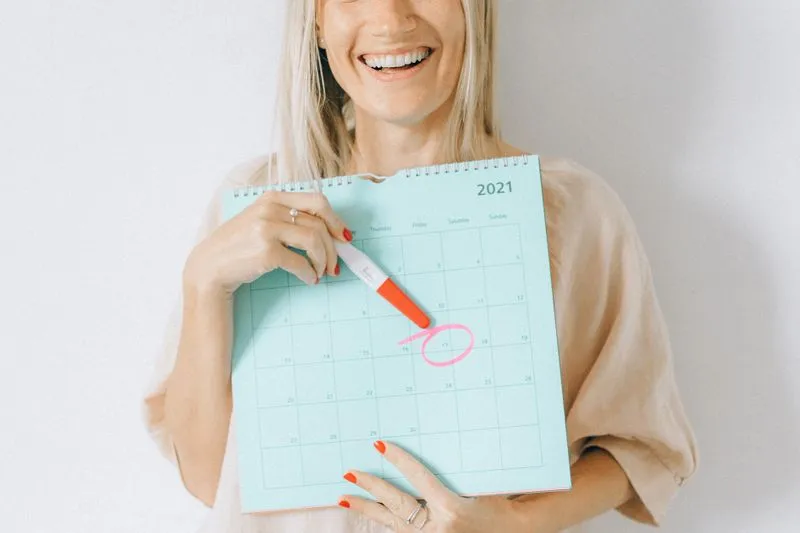
Note the first day of your period each month. After three to six months, you'll have a clear picture of your cycle length and regularity. It's the minimum worth doing for any of us — and the first information your GP will ask for.
Fertility awareness (the symptothermal method)
It combines daily observations: basal body temperature (taken first thing in the morning, before getting up, at the same time each day), vaginal discharge and cervical mucus, and the length of your cycle. According to the NHS page on natural family planning, fertility awareness is between 91% and 99% effective with perfect use, but only 76% effective with typical use. The NHS recommends learning it from a healthcare professional specially trained in fertility awareness. To compare it with the pill, the coil or the implant, our complete guide to every contraceptive method goes through them one by one.
Period and cycle tracking apps
Apps like Clue, Flo or Natural Cycles let you log symptoms, mood, bleeding and ovulation test results. They're useful for body awareness and for building a history to bring to appointments. Their ovulation predictions, however, rest on calculations whose reliability varies widely, and the NHS points out that none of these apps or fertility monitors is officially recommended by the NHS. A "predicted" date is not a confirmed ovulation.
Ovulation predictor kits (OPKs)
These are urine test strips that detect the LH surge, available from pharmacies, supermarkets and online. They're useful for pinpointing your fertile window, whether you're trying to conceive or simply want to understand your cycle better. Follow the manufacturer's instructions, which tell you which day to start testing based on your usual cycle length.
Cycle and fertility: what no one tells you
Fertility isn't a binary state of "fertile/infertile". It's a window that varies each cycle according to the quality of ovulation, of cervical mucus and of the endometrium, among many other factors.
Because sperm can survive for several days, sex in the days leading up to ovulation matters as much as sex on the day itself. And even perfectly timed, conception often takes a while: the NHS advises seeing a GP if you haven't conceived after a year of trying — sooner if you're 36 or over, or already know you may have fertility problems.
An anovulatory cycle (one without ovulation) can look normal from the outside — a bleed still occurs, sometimes slightly altered. Anovulatory cycles can be occasional (intense stress, illness, long-haul travel) or ongoing (polycystic ovary syndrome, premature ovarian insufficiency). They're only picked up by watching for signs of ovulation or through hormone tests.
When to see your GP
These situations justify booking an appointment, even without severe pain:
- Any sudden, unexplained change in cycle length, heaviness or regularity
- Missing your period 3 times in a row (outside a known pregnancy)
- Period pain that gets progressively worse
- Pelvic pain outside of your period
- Bleeding after sex
- Premenstrual symptoms that weigh heavily on your quality of life
- Not conceiving after a year of trying (sooner if you're 36 or over)
In the UK, cervical screening is offered on the NHS to women and anyone with a cervix aged 25 to 64, and your invitation letter tells you when you're due. If you think you've missed one, contact your GP surgery or a sexual health clinic — screening is free on the NHS. These appointments are also an opportunity to discuss your cycle, your questions, anything you've been hesitant to raise. There's no such thing as too small a concern.

Frequently asked questions
My cycle is 35 days long — is that normal?
Yes, if it's consistent for you. The NHS notes that it's common for periods to come anywhere from every 21 to every 35 days. A regular 35-day cycle simply means you ovulate later: since ovulation usually happens around 10 to 16 days before the next period, yours is likely to fall somewhere between day 19 and day 25 rather than day 14. What matters is the regularity of your own cycle, not its conformity to the textbook average.
Can you get pregnant during your period?
It's unlikely but not impossible. The NHS explains that it's possible, although not very likely, to get pregnant soon after your period finishes if you ovulate early or have a short cycle — and sperm can survive for up to 7 days. There's no point in the cycle where pregnancy is completely impossible without reliable contraception. After unprotected sex, emergency contraception is still an option: here's when to take the morning-after pill and how to get it.
Does the pill actually "regulate" your cycle?
No, not in the strict sense. The combined pill (oestrogen and progestogen) puts your natural cycle on pause by preventing ovulation. The "periods" you have on the combined pill are withdrawal bleeds — caused by the drop in hormones during the pill-free week. They don't reflect your natural cycle. When you stop the pill, your own cycle returns, at a pace that varies from one woman to the next: what happens to your body after stopping the pill, stage by stage. The pill hasn't "regulated" your cycle — it's been suppressing it.
Why does my cycle change after travel, stress, or illness?
Because the menstrual cycle is steered by the hypothalamus, a brain structure that's very sensitive to stress. Cortisol (the stress hormone) can disrupt GnRH (gonadotrophin-releasing hormone) production, which delays or suppresses ovulation. Long-haul travel (jet lag), a period of intense stress, illness or rapid weight loss can all delay ovulation, and with it your next period.
What is PMS and how can it be reduced?
PMS (premenstrual syndrome) covers the physical and emotional symptoms that can appear in the weeks before your period: irritability, anxiety, bloating, breast tenderness, tiredness, food cravings. The NHS suggests regular exercise, a healthy balanced diet, enough sleep, stress relief such as yoga or meditation, over-the-counter pain relief for cramps, and cutting down on smoking and alcohol. If symptoms are severe, speak to your GP — treatments are available, including hormonal options and talking therapies.
Does the menstrual cycle affect athletic performance?
Less than you might think. A 2020 meta-analysis published in Sports Medicine (McNulty and colleagues) concluded that exercise performance might be trivially reduced in the early follicular phase, around your period, compared with the other phases. But the effect is so small, and the studies so varied, that the authors declined to draw general guidelines, recommending instead a personalised approach based on how each woman responds. In other words, your own cycle diary will tell you more than a training plan built on an average.
At what age does the cycle start changing before the menopause?
The NHS says the menopause usually affects women between 45 and 55, though it can happen earlier. In the years before it, during the perimenopause, periods often become irregular — shorter or longer cycles, heavier or lighter bleeding — and symptoms such as hot flushes or disturbed sleep can appear. These changes are normal but deserve a conversation with your GP, to rule out other causes and discuss what can help.
Is pregnancy possible without periods (amenorrhoea)?
Yes. Amenorrhoea can have many causes other than the menopause or pregnancy: stress, significant weight loss, intense exercise, polycystic ovary syndrome, excess prolactin (hyperprolactinaemia). In these cases, the ovaries may still ovulate irregularly. An ovulation can happen before periods visibly return — so pregnancy is possible even without regular cycles. If you have no periods and aren't using reliable contraception, take a pregnancy test if there's any doubt.