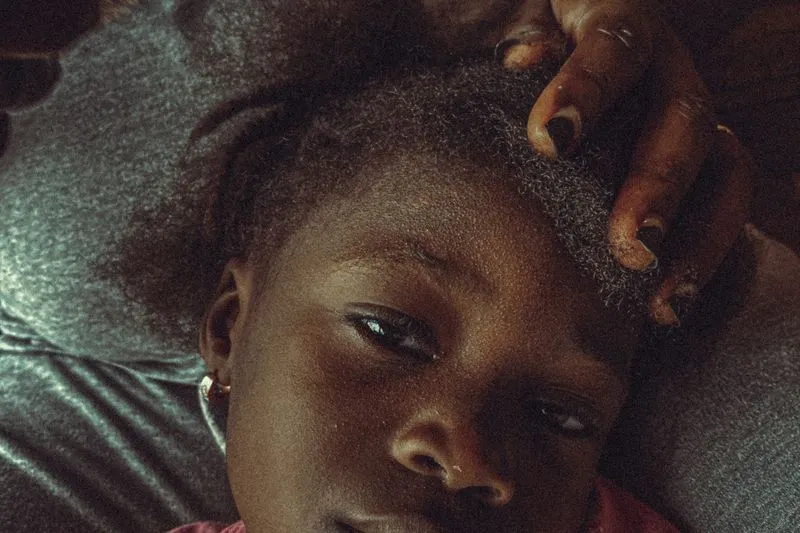
In England, adults bitten by a tick are commonly bitten on the legs. Children are commonly bitten on the head or neck. That finding comes from UKHSA's Tick Surveillance Scheme, and it is spelled out in the agency's Be Tick Aware toolkit (April 2023). Read it again if you have a toddler. The places you would check last — the hairline, behind the ears, the nape of the neck under a sunhat — are exactly where a tick is likely to be.
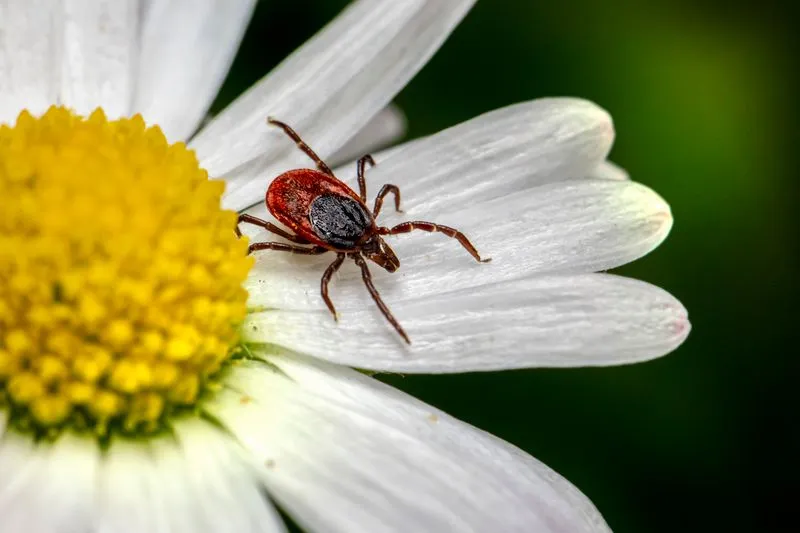
And at that stage it is tiny. Before feeding, a tick is about the size of a poppy seed; once it has fed, it can swell to the size of a baked bean, says the same toolkit. The stage that bites people most often, the nymph (the middle of three active life stages), is the hardest to spot — which is why it tends to stay attached and feeding for longer. In England, nymph activity rises through spring and peaks from April to June. Right now, in other words.
None of this is a reason to keep anyone indoors. Most tick bites do not transmit Lyme disease, and prompt, correct removal reduces the risk further. This guide draws on the NICE guideline on Lyme disease (NG95), the NHS and the UK Health Security Agency (UKHSA).

Where and when do tick bites happen in the UK?
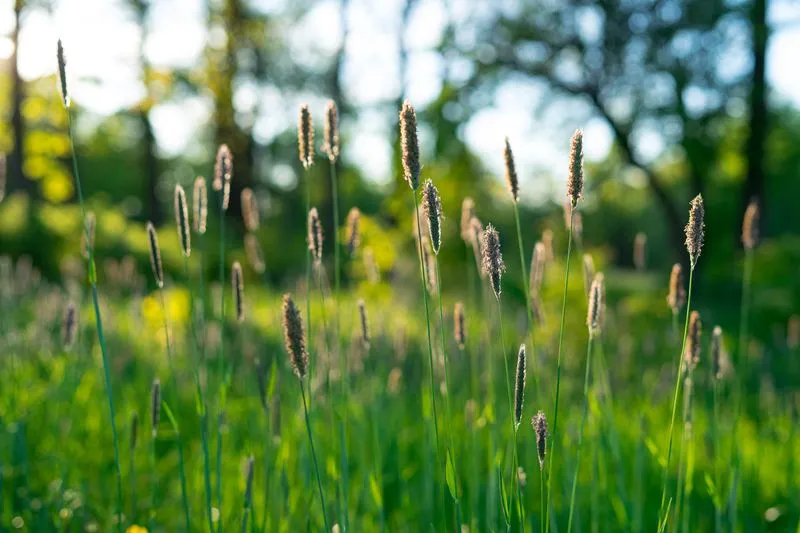
Ticks are tiny spider-like creatures. They live in woods and long grass — and sometimes in urban parks and gardens, as the NHS page on Lyme disease points out. They do not jump or fly. They wait on vegetation and attach to animals or people who brush past, then feed for a few days before dropping off.
Ticks need dense, humid vegetation at ground level to survive. Woodland, grassland, moorland and heathland (all with a dense layer of ground vegetation) suit them best, and they can be very abundant on the edges of woods and scrub used by wildlife. UKHSA also lists some urban parks, gardens and allotments — anywhere with thick vegetation that wildlife can reach. Ticks that may cause Lyme disease are found all over the UK; the NHS names grassy and wooded areas in southern and northern England and the Scottish Highlands among the high-risk places.
The UK tick calendar
Tick activity climbs in spring and peaks between April and June, when the risk of a bite is highest. It drops in summer, can pick up again in early autumn, and carries on through winter at a much lower level. Bites can happen in any month (winter included). Diagnoses follow later — nearly half of Lyme disease cases are diagnosed in July, August and September, according to UKHSA, which likely reflects the time it takes for symptoms (and antibodies) to develop after a spring bite.
Lyme disease: a real but limited risk
Lyme disease is a bacterial infection caused by Borrelia burgdorferi, spread to humans through the bite of an infected tick. In the UK, the tick that most often bites people is Ixodes ricinus — the sheep, castor bean or deer tick (one of around 20 tick species found in the UK). Ticks pick up the bacteria by feeding on infected wild animals, mainly small mammals and birds, and keep them for life.
Most ticks are not infected. UKHSA's latest research suggests that around 4% of ticks in England may carry the bacteria, although this varies by location. And not every bite from an infected tick leads to infection. NICE asks doctors to remember that most tick bites do not transmit Lyme disease — and that prompt, correct removal reduces the risk.
The numbers are modest, and they went up again in 2023. Around 1,500 laboratory-confirmed cases are reported each year in England and Wales, with about 15% linked to recent travel abroad (infections probably picked up in another country). Because a typical rash is diagnosed without a blood test, UKHSA estimates the true total at 3,000 to 4,000 new cases a year. Its report for the last quarter of 2023 counted 1,651 laboratory-confirmed cases in England that year (provisional data), up from 1,253 in 2022 — 1,144 of them acute infections (the rest were longstanding).
Cases occur at every age and in both sexes (equally). According to UKHSA's epidemiology page, laboratory-confirmed cases peak between the ages of 45 and 64, followed by 25 to 44. They are reported from most of England and Wales, but more often from parts of southern England.
What else ticks carry
Lyme disease is the most common tick-borne infection in England and Wales. Tick-borne encephalitis (TBE), a viral infection, also exists — but only a handful of cases have been confirmed in the UK. Other infections (babesiosis, anaplasmosis, louping ill) are rare. There is no licensed vaccine for Lyme disease, which is why UKHSA puts tick awareness and bite prevention first.
Preventing tick bites: clothing, repellent and the garden
Prevention is mostly common sense, applied consistently. Before a walk, a picnic or an afternoon in the garden, the NHS and UKHSA recommend a short list of habits.
- Wear long trousers and long sleeves, and tuck your trousers into your socks.
- Choose light-coloured clothing, so ticks are easier to see and brush off.
- Use an insect repellent on your clothes and skin — the NHS says products containing DEET are best.
- Stay on clear paths, away from the vegetation ticks wait on.
- Check your clothes and skin regularly while you are out, and brush off any crawling tick straight away.
A word on repellents. Always follow the manufacturer's guidance, as UKHSA reminds — especially the minimum age on the label and how often to reapply. For a baby or during pregnancy, ask your pharmacist which product and strength suits you before you buy. Clothing and sensible routes do most of the work; repellent is the extra layer.

A garden that suits ticks less
Since ticks need dense, humid vegetation at ground level, the corners of a garden left to grow wild are the ones to watch. It follows that a lawn kept short suits them less than a meadow patch — so keep the long grass for looking at rather than rolling in. Ticks feed on many animals, so pets that go outdoors can bring them home — check them too, and ask your vet about tick prevention.
The tick check: where to look on the body
Tick bites are not always painful. You may not notice a tick at all unless you see it on your skin, the NHS warns. A tick check — looking and feeling for ticks after being outdoors — is therefore one of the most useful habits there is. UKHSA recommends one after every outdoor activity: walking, running, gardening, camping, picnicking.
UKHSA lists the places where ticks are most often found on the body. Look carefully at each one.
- Skin folds, armpits and the groin (the easiest to miss).
- The wrists and the waistband.
- Behind the knees.
- The back of the neck and along the hairline.
- For children, around the neck, behind the ears and along the hairline first.
Bites can happen anywhere on the body — and more than one tick can be attached at a time. So once you have found one, keep looking. Check clothing too, inside and out, before it goes in the wash.
How to remove a tick properly, step by step
The longer an infected tick stays attached, the higher the risk of transmission. Other tick-borne germs may pass more quickly than the Lyme bacterium, which is another reason to act fast. You do not need a professional: people can remove ticks safely by themselves, says UKHSA, or ask someone to help.
- Use fine-tipped tweezers or a tick-removal tool. Fine-tipped tweezers are very narrow and pointed — not the ones you use on your eyebrows.
- Grasp the tick as close to the skin as possible. Aim for the head end, not the swollen body.
- Pull upwards slowly and firmly, taking care not to squeeze or crush the tick.
- Dispose of the tick once it is out (or photograph it first — see below).
- Clean the bite with antiseptic, or with soap and water.
- Wash your hands.
If you use a hook-style tool, follow the instructions that come with it. The slow, firm pull matters for another reason too: UKHSA notes that mouthparts left in the skin can cause a local infection. Once the tick is out, apply antiseptic and keep an eye on the area for several weeks.
After a tick bite: note it, photograph it, watch it
Tick out? Then the main job is done — the rest is paperwork, of a sort. The NHS is reassuring: the chance of getting ill is low, and you do not need to do anything else unless you notice a rash or become unwell. What helps is a record, because the first sign of Lyme disease can appear weeks later — long after the bite has been forgotten.
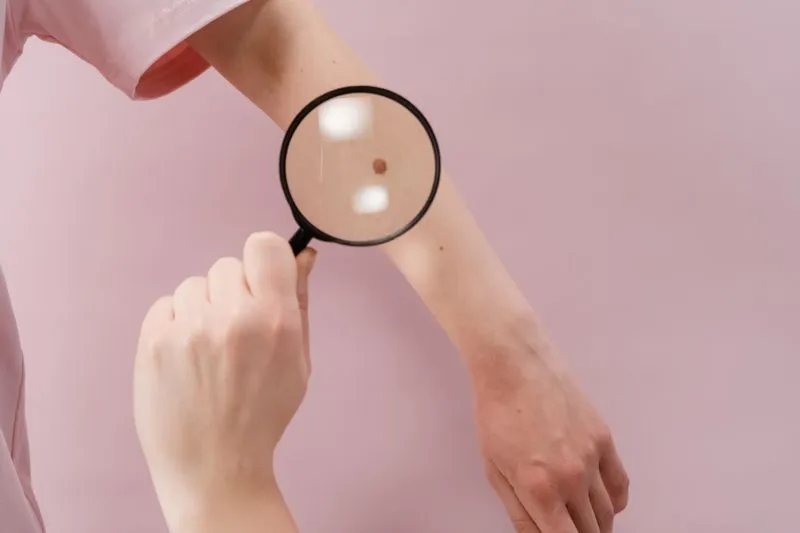
Note the date and where on the body the bite was. Photograph the tick if you can (next to a coin, for scale), then the bite itself. If you would like to help research, UKHSA's Tick Surveillance Scheme accepts ticks sent in by the public to map where they are found.
What not to do after a bite
You do not need a blood test just because you were bitten. NICE is explicit: doctors should not diagnose Lyme disease in people without symptoms, even if they have had a tick bite. Nor are antibiotics offered "just in case" — the NHS advice is to do nothing more unless a rash or illness appears.
A small red mark that appears soon after the bite can simply be a reaction to it. According to NICE, this kind of reaction usually develops and fades within 48 hours, and it is more likely than Lyme disease to feel hot, itchy or painful. What deserves attention is a rash that turns up later — and grows.
Recognising erythema migrans, the first sign of Lyme disease
The typical early sign of Lyme disease is a rash called erythema migrans (literally, a "migrating redness"). NICE's recommendations on Lyme disease describe it precisely, and a GP can diagnose and treat it on sight — without any laboratory test.
- It is a red rash that increases in size and may have a clearer centre.
- It is not usually itchy, hot or painful.
- It usually becomes visible 1 to 4 weeks after the bite — but can appear from 3 days to 3 months later.
- It usually sits at the site of the bite and lasts for several weeks.
- It may look like a bullseye on a dartboard, but not always.
On white skin, the rash can look pink, red or purple. On brown and black skin it can be harder to see and may look more like a bruise, the NHS notes. Some people also have flu-like symptoms a few days or weeks after the bite — a high temperature (or feeling hot and shivery), headache, muscle and joint pain, tiredness.
| Feature | Reaction to the bite | Erythema migrans |
|---|---|---|
| When it appears | Within 48 hours of the bite. | Usually 1 to 4 weeks later (3 days to 3 months). |
| How it feels | More often hot, itchy or painful. | Not usually itchy, hot or painful. |
| How it changes | Fades within 48 hours. | Grows over days. |
| What to do | Clean it, keep an eye on it. | See a GP. |
Two traps are worth knowing. A rash in the hairline or on the back is easy to miss if nobody looks. And Lyme disease is not always announced by a rash — the NHS says it can be difficult to diagnose, because its symptoms resemble other conditions and there is not always an obvious one.
When should you see a GP after a tick bite?
See a GP if you have been bitten by a tick — or visited an area where infected ticks could be (woodland, heath, long grass) — in the past three months, and you now have either of these.
- A round or oval rash, especially one that is spreading.
- Flu-like symptoms: feeling hot and shivery, headaches, aching muscles or feeling sick.
Tell the GP if you have recently been in forests or grassy areas, even if you never saw a tick. UKHSA encourages anyone who thinks they have symptoms to contact their GP or call NHS 111 promptly.
Left untreated, Lyme disease can cause more severe symptoms months or years later — pain and swelling in the joints, nerve problems, heart problems, trouble with memory or concentration. This is more likely when treatment is delayed. Hence the value of acting on a spreading rash early.

Ticks and children: what changes for little ones
Children play at ground level, roll in the grass and crawl into bushes. They will not mention a bite they have not noticed. And their bites cluster where adults rarely look — the head and neck. The habits are the same as for adults; they simply need to become automatic.
Protecting and checking a child
Dress them in light, covering clothes for woodland walks. After every outing, check around the neck, behind the ears and along the hairline, then the rest of the body. For repellent, read the minimum age on the product and ask your pharmacist for a suitable option for a baby. If a bite happens, note the date and place — in your phone, or in your child's red book alongside their other health notes.
How Lyme disease is managed in children
NICE asks GPs to discuss the diagnosis and management of Lyme disease in anyone under 18 with a specialist (a paediatrician or a paediatric infectious disease specialist, for example) unless the child has a single erythema migrans rash and no other symptoms. The antibiotic depends on age: for a rash without other symptoms, NICE recommends amoxicillin for children under 9, and doxycycline from 9 to 12.
| Who | First choice (rash, no other symptoms) | Alternative |
|---|---|---|
| Adults and young people aged 12 and over | Doxycycline for 21 days. | Amoxicillin for 21 days, then azithromycin. |
| Children aged 9 to 12 | Doxycycline for 21 days. | Amoxicillin, then azithromycin. |
| Children under 9 | Amoxicillin for 21 days. | Azithromycin. |
| Pregnancy | Antibiotics appropriate to the stage of pregnancy. | Chosen by the prescriber. |
Tick bites during pregnancy or breastfeeding
Being pregnant does not change how you remove a tick. It changes two things: the repellent you choose and how quickly you mention a bite. Ask your pharmacist which repellent is suitable in pregnancy, and lean on long sleeves and long trousers. If you are bitten, tell your midwife or GP at your next contact — and sooner if a rash or flu-like symptoms appear.
NICE asks doctors to assess and diagnose Lyme disease in pregnancy in the same way as for anyone else, and to treat it with antibiotics appropriate to the stage of pregnancy. It also asks them to reassure women with Lyme disease during pregnancy that they are unlikely to pass the infection to their baby — and to stress the importance of completing the full course. If you had Lyme disease while pregnant and have any concerns about your baby later, say so; your team can seek specialist paediatric advice.
Because the choice of antibiotic depends on pregnancy, NICE also asks doctors to check whether a woman might be pregnant before prescribing. If a pregnancy is possible but not confirmed, say so; our complete guide to every contraceptive method can help if you are weighing up your options. And add the bite and any treatment to your pregnancy notes.
Lyme disease treatment and recovery
If a GP thinks you might have Lyme disease, they will prescribe a course of antibiotics. For a rash without other symptoms, NICE recommends doxycycline for 21 days in adults, with amoxicillin as the first alternative and azithromycin as the second. Depending on your symptoms, the NHS says treatment can last up to 28 days. Finish the course, even if the rash fades early — the NHS is clear on this.
Some people feel worse at the very start of treatment. NICE describes this as a Jarisch–Herxheimer reaction: symptoms flare early on, but this does not usually mean stopping the antibiotic. Tell your GP if it happens, so they can rule out an allergic reaction.
Most people with Lyme disease get better after antibiotic treatment, and the sooner treatment starts, the better the chance of a full recovery. It can take months for some people, but symptoms should keep improving over time.
When symptoms persist
A few people treated for Lyme disease continue to have tiredness, aches and loss of energy that can last for years. The NHS compares these symptoms to fibromyalgia and chronic fatigue syndrome, and says it is not clear why they affect some people and not others — so there is no agreed treatment. If your symptoms return or do not improve, go back to your GP; you may be referred to a specialist.
Having had Lyme disease does not protect you from the next tick. Come next spring, the same habits apply: light clothes, the evening tick check, a tool within reach.
Frequently asked questions
Do I need antibiotics after a tick bite?
No, not for the bite alone. The NHS says the chance of getting ill is low and you do not need to do anything else unless you notice a rash or become unwell. NICE advises doctors not to diagnose Lyme disease in people without symptoms, even after a tick bite. Remove the tick, clean the area, note the date and keep an eye on the skin.
Should I have a blood test after a tick bite?
Not without symptoms. And if you develop the typical erythema migrans rash, NICE recommends diagnosing and treating it without laboratory testing. Blood tests are used when Lyme disease is suspected without the rash, and they are not always accurate in the early stages.
How long should I watch the bite?
The rash usually appears 1 to 4 weeks after the bite, but NICE notes it can show up anywhere from 3 days to 3 months later. Keep an eye on the area for several weeks, and see a GP if you develop a rash or flu-like symptoms within three months of a bite or of time in tick areas.
Part of the tick is still in the skin. Is that dangerous?
UKHSA notes that mouthparts left in the skin can cause a local infection, which is why a slow, firm pull close to the skin matters. Clean the area with antiseptic or soap and water and keep an eye on it for several weeks. If it becomes red, swollen or sore, ask a pharmacist or your GP.
Is there a vaccine against Lyme disease?
There is no licensed vaccine for Lyme disease, UKHSA confirms. That is why tick awareness — covering up, checking for ticks and removing them promptly — remains the best way to reduce the risk.
Can you get Lyme disease more than once?
Yes. NICE recommends treating again if someone's history suggests re-infection, so having had Lyme disease does not make you immune. Keep up the same prevention habits after recovery.
My child has been bitten. What should I do first?
Remove the tick promptly with fine-tipped tweezers or a tick-removal tool, pulling slowly upwards without squeezing it, then clean the bite. Note the date and place, and check the rest of their body, including the scalp and behind the ears. If a rash or flu-like symptoms appear in the following weeks, see your GP.
Sources
- NHS — Lyme disease
- NICE — Lyme disease (NG95): recommendations
- UKHSA — Be Tick Aware toolkit: raising awareness of the potential risk posed by ticks and tick-borne disease in England (April 2023)
- UKHSA — Lyme disease epidemiology and surveillance (updated April 2022)
- UKHSA — Common animal-associated infections (England): fourth quarter 2023
- UKHSA — Tick awareness and toolkit (March 2025)