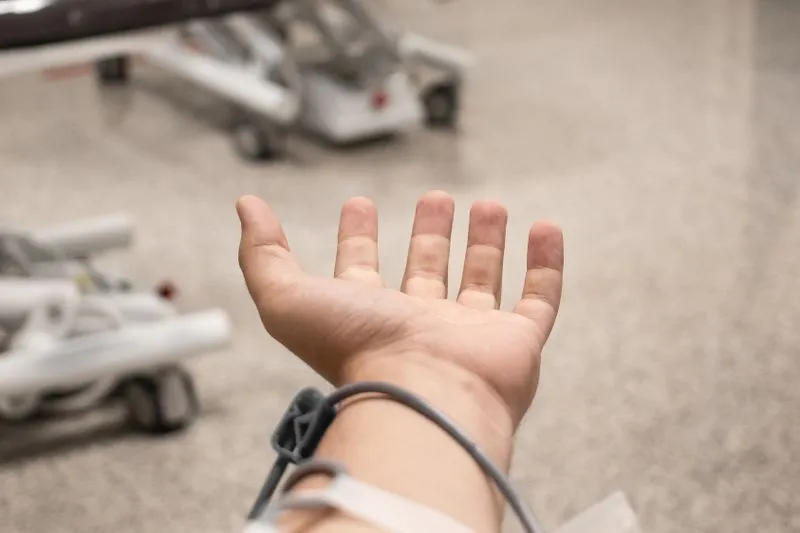
The first thing Esme notices is the plastic cup — cold, slightly soft under her fingers, holding half a litre of water (to be drunk over the next five minutes). Esme, 26, is a software developer. It is a Tuesday lunchtime in June, 12.40pm, in a city-centre donor centre, and her sleeve is already pushed above the elbow. A few minutes later a donor carer pricks her fingertip and lets a single drop of blood fall into a vial of blue liquid. It sinks straight to the bottom. That, apparently, is good news. Then comes the chair. The cold sting of the antiseptic sponge, the gentle squeeze of the cuff — and, next to her, a small machine that rocks the filling bag and lets out the occasional soft beep (like a microwave in the next room).
Nine minutes later, Esme is at the refreshment table — orange squash, a packet of crisps, a folded strip of gauze in the crook of her arm. The thing she had put off since sixth form took less time than her lunch break. And the NHS needs that gesture on a large scale. NHS Blood and Transplant's page on why people give blood says it needs 4,300 blood donations every day on average — and over 140,000 people to donate for the first time this year. World Blood Donor Day falls on Saturday 14 June. A good moment to check the criteria, the waits and what happens on the day.
Who can give blood in England?
In England, you can give blood if you are generally fit and well, aged 17 to 65 for your first donation, and weigh between 7 stone 12 lbs (50kg) and 25 stone (158kg). Those are the headline criteria on NHS Blood and Transplant's "Who can give blood" page. It adds two more — suitable veins (checked before you donate) and meeting all donor eligibility criteria (checked with you in private on the day).
In Scotland, Wales and Northern Ireland, donation is run by the Scottish National Blood Transfusion Service, the Welsh Blood Service and the Northern Ireland Blood Transfusion Service — the criteria are similar, but check with your own service before you book.
Some situations rule donation out for good. According to NHSBT (NHS Blood and Transplant), they include most types of cancer, some heart conditions, an organ transplant, a positive HIV test and being a hepatitis B or C carrier. The same goes for anyone who has injected non-prescribed drugs (including body-building and injectable tanning agents), or received blood, platelets, plasma or any other blood product after 1 January 1980. If you are not sure where you stand, the donor helpline on 0300 123 23 23 can check your situation before you book.
How often you can give depends on your sex. "Men can give blood every 12 weeks and women can give blood every 16 weeks," NHSBT states. The reason follows in the next sentence — men generally have higher iron levels than women. One exception is worth knowing: people with genetic haemochromatosis (an inherited tendency to store too much iron) may be able to donate as often as every six weeks.
There is also a check designed specifically for young women. Are you a woman under 20 who weighs under 10st 3lb (65kg) or stands under 5ft 6in (168cm)? Then NHSBT asks you to use its online calculator first, to make sure you have enough blood to donate safely. It uses your height and weight — but it is not the same thing as your BMI (body mass index).
Women and giving blood: why 16 weeks rather than 12
Women wait longer between donations because of iron. NHSBT explains it in its article on why waiting 16 weeks is better for women: "When you donate whole blood you lose about 200-250mg of iron." Your body replaces that loss at only 1-2mg a day (through the food you absorb). That rate also varies — with your iron levels beforehand, any supplements you take and how iron-rich your diet is.
The same article lists the donors most at risk of iron deficiency: younger donors, women of childbearing age and frequent whole blood donors. It also names the obvious complication — menstruation. When you already lose iron every month with your period, rebuilding what a donation takes can take a long time on diet alone. Planning a pregnancy? Then healthy iron stores matter even more, NHSBT notes, because pregnancy raises your iron needs.
That is why your haemoglobin (the protein in red blood cells that carries oxygen around your body) is checked before every donation. NHSBT needs it to be at least 125g/l for women (135g/l for men). The cut-off is deliberately high — the aim is to make sure your haemoglobin will not drop below normal after you have donated. Too low on the day? You will be asked to wait at least three months before your next donation, and you will leave with an advice leaflet on raising it.
Periods and iron are closely linked. If yours are very heavy, or you often feel exhausted (breathless on the stairs, for instance), mention it at your health screening and consider seeing your GP. A copper coil can make periods heavier and longer, especially in the first months, as our copper vs hormonal IUD comparison explains. Heavy bleeding alone can be enough to run your iron stores down — it is one of the symptoms covered in our guide to endometriosis, from diagnosis to daily life. And to understand what your body is doing from one week to the next, our complete guide to the menstrual cycle walks through each phase.
Pregnancy, finally, is a clear pause. You will need to wait if you are pregnant or have had a baby in the last six months — your body has other priorities for a while.
Tattoos, travel, a new baby: when you may need to wait
Many reasons for not donating are temporary: you wait, then you come back. NHSBT lists the main ones on its eligibility pages — better to know them before you book than at the health screening.
| Situation | How long to wait before giving blood |
|---|---|
| Tattoo, semi-permanent make-up or microblading | 4 months |
| Body piercing (ears included) or acupuncture | 4 months |
| Pregnancy | Throughout pregnancy and for 6 months after having a baby |
| Haemoglobin too low on the day | At least 3 months |
| Anal sex with a new partner | Up to 3 months |
| Finishing a course of PrEP or PEP | Up to 3 months |
| Feeling ill, or undergoing investigations for a medical condition | Until NHSBT confirms you can donate (helpline: 0300 123 23 23) |
| Travel to certain countries outside the UK | Depends on the destination (check NHSBT's travel section) |
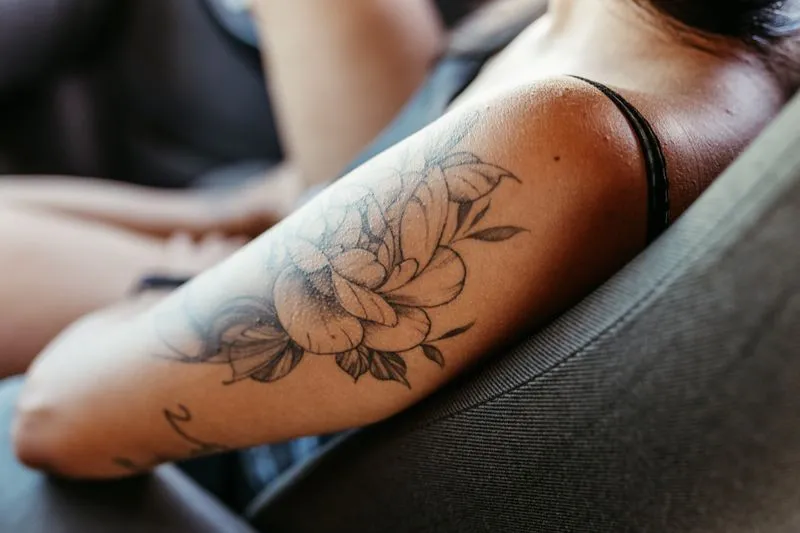
The tattoo rule is broader than many first-time donors expect. In its "Ask the experts" column from spring 2022, NHSBT puts it plainly: "You have to wait for four months after having a tattoo before you can give blood." The same wait applies to semi-permanent make-up and microblading — and to body piercings and acupuncture. The reasoning has nothing to do with judging your choices. Most tattoo and piercing practices are safe, but introducing a foreign object into the body carries a risk of blood-borne illness — and the four-month gap lets NHSBT be certain that patients receiving your blood are protected from it.
Travel works country by country. Some destinations carry infection risks that mean a temporary wait, and the list changes with outbreaks. Check NHSBT's travel section before you book — or call the helpline with your dates and destinations to hand.
Sex and giving blood: the same questions for everyone
Every donor in England now answers the same questions about sexual behaviour, whatever their gender or sexuality. The change was announced in December 2020, to be in place by summer 2021. In the government's announcement of the landmark change to blood donation criteria, it confirmed that "all donors will complete the same donor health check prior to donation, regardless of gender or sexuality". Donors with one sexual partner (for more than three months) became eligible whatever their gender.
What matters now is behaviour over the last three months. According to NHSBT, you may have to wait up to three months after anal sex with a new partner, or after finishing PrEP or PEP (medicines that protect against HIV). The same applies after sexual contact with a partner who is HIV or HTLV positive, a hepatitis B or C carrier or syphilis positive — or who has received money or drugs for sex, or injected non-prescribed drugs.
These questions can feel intrusive the first time. They are asked of everyone, in private, and your answers are confidential. If something feels unclear — a partner whose history you are not sure about, for instance — say so exactly as it is. The screening exists to sort out that kind of grey area.
Preparing to give blood: eat, drink, sleep
The single most important rule is simple — do not turn up on an empty stomach. NHSBT's advice on preparing to give blood is to eat regular meals beforehand. It keeps your blood sugar steady, so you are less likely to feel lightheaded or dizzy afterwards. A snack before you go helps too (and so do iron-rich foods, such as meat and green leafy vegetables, in the days before).
Drinking matters just as much. Almost half of the blood you donate is water — and losing that fluid can make your blood pressure drop and leave you feeling faint. That is why you are handed 500ml of water to drink immediately before you donate (NHSBT asks donors to bring a refillable bottle to cut plastic). Stay well hydrated in the days leading up to your appointment. Avoid alcohol before and after, too: it affects hydration and can delay your recovery.
The rest is practical. Avoid vigorous exercise and heavy lifting on the day of your donation (a walk is fine). Wear a top with loose sleeves that roll up past the elbow. NHSBT recommends a full night's sleep of seven to nine hours beforehand — and suggests bringing a book or some music, because distraction helps nerves. Received a Donor Safety Check form in the post? Bring it completed. And if you cannot make it, give three days' notice so your slot can go to someone else.
What happens when you give blood, step by step
A blood donation has four stages — arrival, health screening, the donation itself and time at the refreshment table. NHSBT describes each one on its page on what happens on the day. As Dr Jo Farrar, its chief executive, put it in January: "the whole process takes just one hour".
1. Arrival. You are welcomed and asked to read the donor consent information booklet — every time, because advice changes. Then you are given your 500ml of water to drink (over about five minutes).
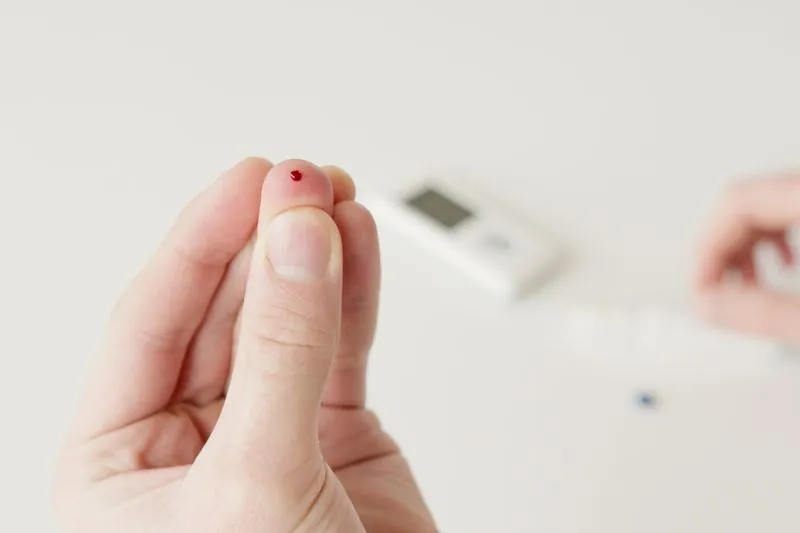
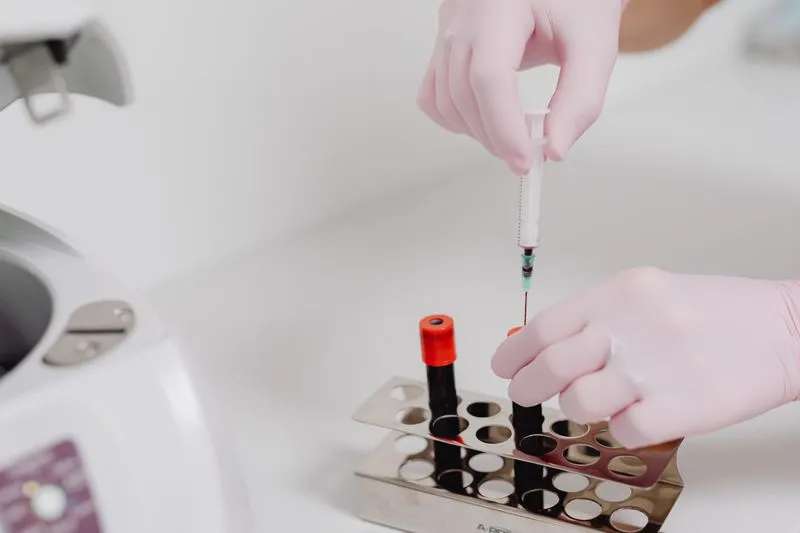
2. Health screening. A donor carer confirms your identity and goes through your Donor Safety Check in private. Then comes the haemoglobin test — a drop of blood from your fingertip goes into a vial of copper sulphate solution. If it sinks to the bottom within a set time, you can give blood. If it floats (or does not sink in one continuous motion), you are offered a second test on a HemoCue machine, which reads your haemoglobin level from another fingertip drop. Some medical questions are referred to a registered nurse, and if you cannot donate, you will always be told why.
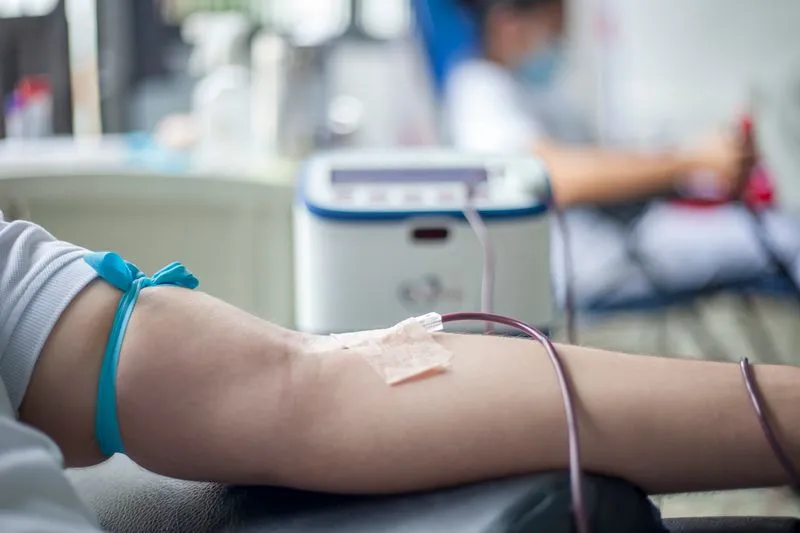
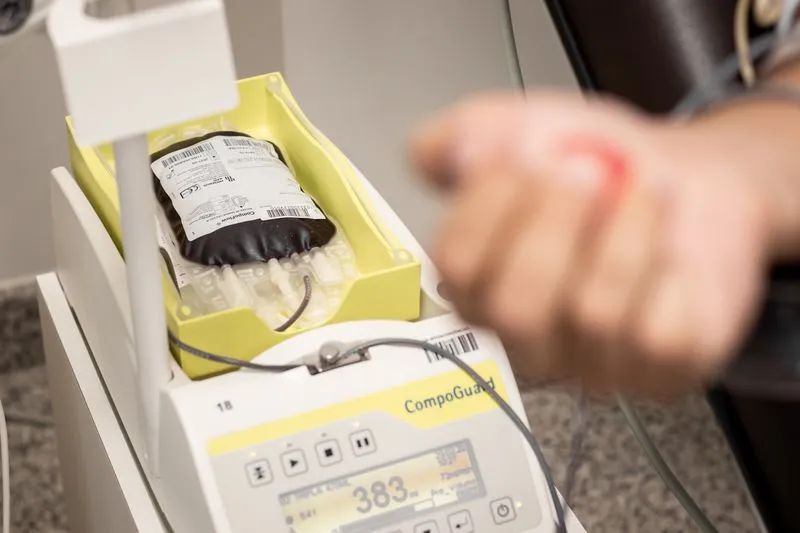
3. The donation. Once you are settled in the donation chair, you are asked your name, address and date of birth again. A cuff goes on your arm to keep a small amount of pressure (it does not measure your blood pressure). The team finds a suitable vein, cleans the skin with an antiseptic sponge and inserts the needle — and if they cannot draw blood first time, they will not try again on a less suitable vein. An agitator scale weighs your donation as it goes and stops automatically when it is complete. A full donation is 470ml (just under a pint) and usually takes between five and ten minutes. If you need help at any point, raise your non-donation arm.
4. The refreshment table. Once the needle is out and a dressing is on, you head for drinks and snacks. NHSBT encourages you to stay for at least 15 minutes — and to have at least two drinks before you leave. Keep the pressure dressing on for about 30 minutes, the plaster for six hours.
Feeling faint, bruising, tiredness: what can happen after giving blood
Giving blood is very safe, but it is not nothing, and your body notices. The most common problem is feeling faint. NHSBT's advice for after your donation lists the signs — feeling lightheaded or dizzy, hot, sweating, trembling, shaky or nauseous. The response is always the same: lie down immediately, rest until you feel better and drink plenty of fluid.
Bruising in the crook of the elbow can also happen. NHSBT describes it as usually harmless — it fades over time, through every shade from purple to yellow. If the needle site starts bleeding again, sit down, raise your arm and press on the spot for at least five minutes.
For the rest of the day, avoid using your donation arm to carry anything very heavy. And skip the hot bath — NHSBT specifically advises against one after giving blood. If you experience any prolonged after-effects, NHSBT asks you to ring its helpline.
After giving blood: rebuilding your iron
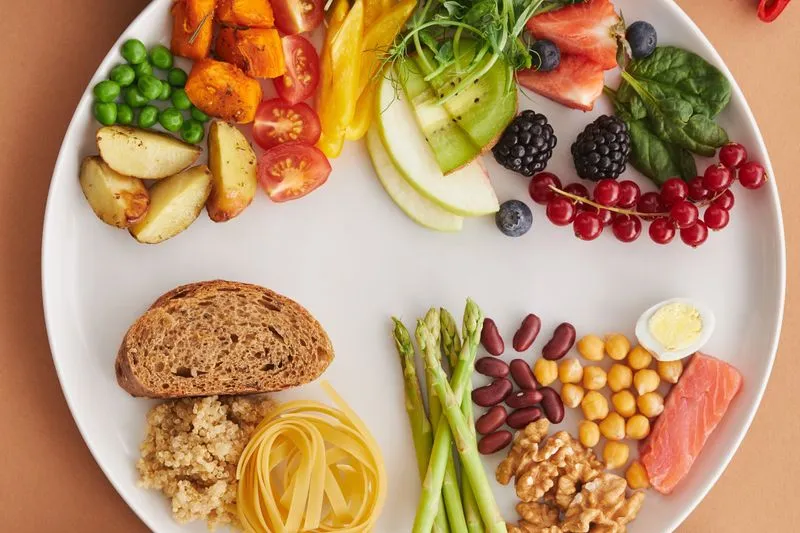
Your body replaces the fluid quickly. The iron takes much longer — which is where the following weeks of eating come in. NHSBT's page on haemoglobin and iron suggests three portions a day from a list of good iron sources:
- lean red meat, turkey and chicken;
- fish (mackerel, sardines, salmon, pilchards) and shellfish;
- eggs, and breakfast cereals fortified with iron;
- pulses and beans (baked beans, chickpeas and lentils especially) and tofu;
- nuts (peanut butter included), brown rice and wholemeal or brown bread;
- leafy greens (curly kale, watercress, broccoli, spinach);
- dried fruit (apricots, raisins, prunes).
Two habits make a real difference to how much of that iron you absorb. The first is pairing iron-rich meals with vitamin C — oranges or fresh orange juice, strawberries, kiwi, sweet peppers, Brussels sprouts, broccoli. The second is moving your tea and coffee. NHSBT advises avoiding them for an hour before and after meals (they contain tannins that stop you absorbing iron). And there is some good news in NHSBT's own video on the subject: "Dark chocolate contains up to 11 milligrams of iron per 100 grams."
If you are vegetarian or vegan, donating is still very much possible. Iron from non-meat sources is harder for the body to absorb — but NHSBT points out that people following a well-balanced vegetarian or vegan diet should get enough iron. Our guide to going vegetarian without deficiencies lists the best plant sources. If your haemoglobin comes back low more than once, see your GP, who can check your iron levels with a blood test.
What happens to your blood after you donate?
Your donation travels to one of NHSBT's blood centres, where it is tested and processed before being issued to hospitals. It is usually separated into its components — red cells, platelets and plasma — so that each patient gets only the part they need. NHSBT says each donation can save or improve up to three lives.
Who receives it? According to NHSBT, around two thirds of the blood donated in England treats medical conditions (anaemia, cancer, blood disorders). Nearly a third is used in surgery and emergencies — childbirth included. NHSBT also states that it does not sell blood, or its components, for non-clinical use. Blood that is not suitable for transfusion can still be used for research, training and developing tests.
Supply can be tight. In its appeal of 7 January 2025, NHSBT reported that over Christmas week, hospital demand exceeded collections by almost 3,000 units. England remained on amber alert for low blood stocks. O negative, B negative and Ro blood types were particularly needed — and so were donors of Black heritage, for patients with sickle cell who need ethnically matched blood (NHSBT is looking for 12,000 of them). If you do not know your blood type, you will find out after your first successful donation.
Plasma, platelets and stem cells: other ways to give
Whole blood is not the only option. Plasma — the liquid part of your blood — can be donated at NHSBT's plasma donor centres in Birmingham, Reading and Twickenham. According to NHSBT's page on who can donate plasma, you need to be between 17 and 65 to start (older if you have given blood or platelets before) and able to spare up to 90 minutes. Existing blood donors can switch to plasma four weeks after their last blood donation — but they stop giving blood while they give plasma. NHSBT collects platelets too.
| Type of donation | Where | Time to allow | Who can start |
|---|---|---|---|
| Whole blood | Donor centres and community venues | About 1 hour (5 to 10 minutes for the donation itself) | 17 to 65 for a first donation, 50kg or more |
| Plasma | Birmingham, Reading, Twickenham | Up to 90 minutes | 17 to 65 (older if you have donated before), over 50kg |
| Stem cells (register) | NHS Stem Cell Donor Registry | Donation only if you match a patient | All women aged 17 to 40, and men aged 17 to 40 |
The stem cell register deserves a special mention for women. Since October 2024, all women aged 17 to 40 can join the NHS Stem Cell Donor Registry. Before that, women could only sign up if they were of Asian or Black heritage or other mixed ethnicity. NHSBT made the change because evidence shows that age, rather than sex, matters more to the health of stem cells — and it now needs 30,000 new sign-ups a year. Stem cell transplants treat diseases including some forms of leukaemia, and for many patients they are the only chance of a cure.
Six myths about giving blood
"If I have a tattoo, I can never give blood." Not true. A tattoo, semi-permanent make-up, microblading or a piercing means a four-month wait, not a lifetime ban. After that, it makes no difference.
"You have to fast, like for a blood test." The opposite. NHSBT asks you to eat regular meals before donating, and to drink the 500ml of water it gives you on arrival.
"Giving blood wipes you out for weeks." That is not the expected course. The fluid comes back quickly if you drink well; the iron takes longer — exactly why women wait 16 weeks between donations. Tiredness that lasts is worth mentioning to your GP (it can point to iron stores that were already low).
"I'm too small to donate." It depends on the numbers. The minimum weight is 7 stone 12 lbs (50kg). Women under 20 who weigh under 10st 3lb, or are under 5ft 6in, are asked to check their blood volume with NHSBT's calculator first. Below the threshold, donating is not safe for you — it says nothing about the value of your blood.
"Gay and bisexual men still can't donate." Out of date. Every donor now answers the same questions about recent sexual behaviour, regardless of gender or sexuality — a change the government announced in December 2020.
"My blood type is too common to matter." Every type is needed, every day. NHSBT needs 4,300 donations a day on average, and O negative is used mostly in emergencies. First-time donors only find out their type after their first successful donation.
A healthy woman aged 17 to 65 who weighs 50kg or more can usually start giving blood, and many reasons to wait are temporary. Book a slot this week, eat before you leave, take a bottle of water — and allow an hour.
Frequently asked questions
Can I give blood on my period?
Periods are not on NHSBT's main list of reasons to wait. They do affect your iron, though — NHSBT names menstruation as one of the ongoing losses that make rebuilding iron slower. What is checked on the day is your haemoglobin. If your periods are heavy or you feel run down, mention it at your health screening, or move your appointment by a few days.
How much blood do they take?
A full donation is 470ml, just under a pint, according to NHSBT. It usually takes between five and ten minutes, and the whole appointment takes about an hour.
How long after a tattoo can I give blood?
Four months. The same wait applies to semi-permanent make-up, microblading, body piercings and acupuncture, NHSBT says.
How often can a woman give blood?
Every 16 weeks, compared with every 12 weeks for men, because women generally have lower iron levels. If your haemoglobin is too low on the day, you will be asked to wait at least three months before trying again.
Can I give blood after having a baby?
You need to wait until six months after the birth. Pregnancy itself is also a reason to wait. When you do return, give your iron stores some attention in the weeks before your appointment.
Will I find out my blood type?
Yes. NHSBT says first-time donors who do not know their blood type will find out after their first successful donation.
Can I have a bath after giving blood?
Not a hot one on the day of your donation: NHSBT advises against it. If you feel lightheaded at any point that day, lie down and drink plenty of fluid.
Sources
- NHS Blood and Transplant — Who can give blood
- NHS Blood and Transplant — What happens on the day
- NHS Blood and Transplant — Preparing to give blood
- NHS Blood and Transplant — After your donation
- NHS Blood and Transplant — Haemoglobin and iron
- NHS Blood and Transplant — Why waiting 16 weeks is better for women (The Donor, summer 2018)
- NHS Blood and Transplant — Ask the experts (The Donor, spring 2022)
- NHS Blood and Transplant — Why give blood
- NHS Blood and Transplant — How blood is used
- NHS Blood and Transplant — NHS urges people to give blood after challenging festive period (7 January 2025)
- NHS Blood and Transplant — Who can donate plasma
- NHS Blood and Transplant — Stem cell donor registry now open to all women aged 17 to 40 (4 October 2024)
- GOV.UK — Landmark change to blood donation criteria (14 December 2020)
- World Health Organization — World Blood Donor Day 2025