It was a Sunday roast at the in-laws. You mentioned, somewhere between the Stilton and the pudding, that you were thinking of going vegetarian. The silence lasted exactly three seconds before your brother-in-law asked: "But where will you get your protein?" Your mother-in-law recalled someone she knew who ended up anaemic. And your partner looked at you as if you'd just announced you were moving to Mars.
If you've had that dinner, this guide is for you. Because what science actually says about well-planned vegetarian eating is radically different from what most dinner tables believe. A well-planned vegetarian diet is nutritionally adequate for all stages of life — that's the official position of the British Nutrition Foundation, the NHS, and the Vegetarian Society (founded in 1847, the oldest in the world).
But "well-planned" — that's where everything lies. This guide gives you every tool you need to transition without deficiencies, without myths, and without having to justify your plate at every family gathering.
Why go vegetarian: the real data
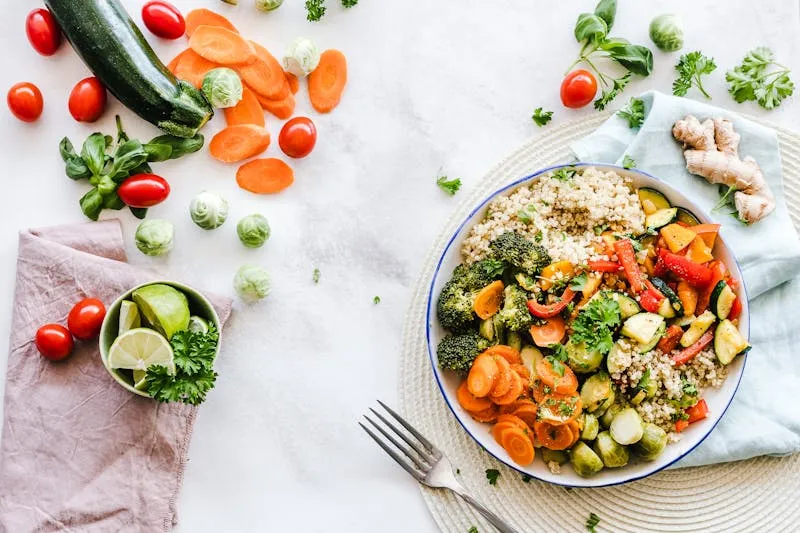
Before we discuss what to eat, let's talk about why. Your motivations matter: they determine long-term commitment. And the evidence available today validates all three major reasons people move towards vegetarianism.
Health: measurable effects
The EPIC-Oxford study (over 45,000 participants across 15 years) showed that vegetarians have a 32% lower risk of coronary heart disease compared to meat-eaters. The Adventist Health Study 2, following over 96,000 participants, confirms it: vegetarians have lower BMIs, less type 2 diabetes, and reduced all-cause mortality.
These effects don't come from magical plant nutrition. They come primarily from increased fibre, the absence of excess saturated animal fat, and higher antioxidant intake. Well-documented mechanisms.
Environment: the strongest argument
The EAT-Lancet Commission (2019), bringing together 37 scientists from 16 countries, established that a global shift towards plant-based eating is essential to stay within planetary boundaries. The data is unambiguous: producing one kilogram of beef emits an average of 27 kg of CO₂ equivalent. One kilogram of pulses: 0.9 kg. Livestock farming represents 14.5% of global greenhouse gas emissions, according to the FAO.
In the UK, food accounts for roughly 20-30% of individual carbon footprints. Reducing or eliminating red meat is the single most impactful dietary lever — more so than eating locally, according to multiple life cycle analyses.
Animal welfare: the motivation that sticks
This is often the most personal motivation — and the one that sustains commitment longest. Unlike health motivations (hard to observe day-to-day), ethical consistency is experienced at every meal. Research on dietary behaviour consistently shows that vegetarians motivated by ethical values maintain their diet more durably than those motivated solely by health.
The UK has particular significance here: Veganuary was founded in Britain and has grown from 3,300 participants in 2014 to over 700,000 in 2023. The Vegetarian Society, founded in Ramsgate in 1847, is the oldest vegetarian organisation in the world. Britain has a deeper vegetarian tradition than most people realise.
The protein myth, dismantled
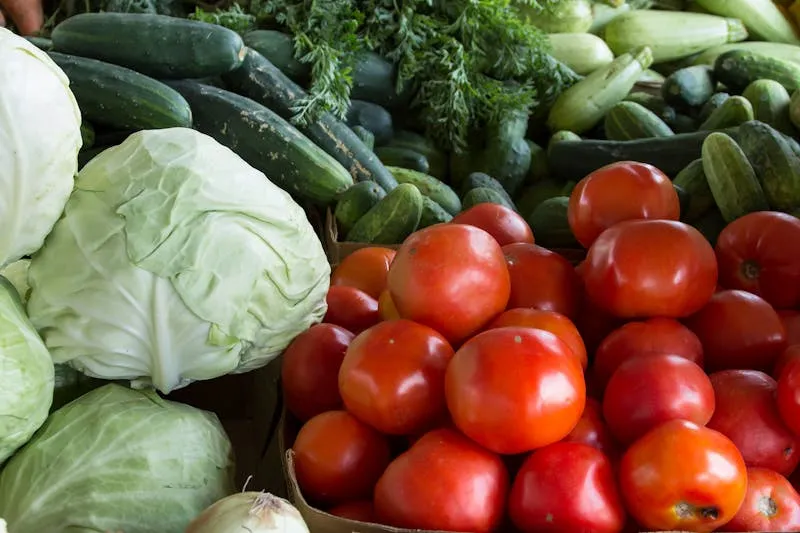
It's the first question every new vegetarian gets asked. It starts from a true premise — most plant proteins are incomplete — but draws the wrong conclusion: that it's therefore difficult to meet protein needs without meat. Let's take this apart methodically.
How much protein do you actually need?
The British Nutrition Foundation (BNF) recommends 0.75 g of protein per kilogram of body weight per day for sedentary adults. For a 60 kg woman, that's 45 g per day. For an athlete doing regular resistance training, requirements rise to 1.6–2 g/kg. These figures are achieved without difficulty on a varied vegetarian diet.
The complete protein concept
A "complete" protein contains all 9 essential amino acids in adequate amounts. Meat is a complete source. Most plant proteins are "incomplete" — they're low in one or two amino acids (typically lysine or methionine).
The classic solution: protein complementation. Combining pulses (rich in lysine, low in methionine) with grains (rich in methionine, low in lysine) creates a complete amino acid profile. This is the principle behind rice and lentils, hummus with pitta, beans with corn tortilla.
Vegetarian sources of complete or near-complete protein
Some plant proteins are naturally complete:
- Quinoa: 14 g protein / 100 g cooked, exceptional amino acid profile. One of the rare complete grains.
- Soy and derivatives (tofu, tempeh, edamame): 8–19 g / 100 g depending on form, complete profile. Tempeh also provides probiotics.
- Eggs: 13 g / 100 g, reference protein in nutrition (maximum quality score). Essential for lacto-ovo-vegetarians.
- Dairy products: Greek yoghurt (10 g / 100 g), cottage cheese, hard cheeses — excellent sources for lacto-vegetarians.
- Seitan (wheat gluten): 25 g / 100 g. Meat-like texture, low fat. Not recommended if gluten-sensitive.
- Quorn (mycoprotein): a British invention and a complete protein. 11–14 g / 100 g depending on the product, high fibre, low saturated fat. Studies show mycoprotein is as effective as chicken for muscle protein synthesis.
And sources to combine:
- Red lentils: 9 g / 100 g cooked, high in iron and folates
- Chickpeas: 9 g / 100 g cooked, high nutritional density
- Beans (black, kidney, white): 7–9 g / 100 g cooked
- Broad beans: 8 g / 100 g cooked
- Hemp, pumpkin, chia seeds: 5–9 g / 30 g
Critical nutrients: B12, iron, omega-3, zinc, iodine

Here is the truth about nutrients to monitor. Not to alarm you — but so you know exactly where to focus your attention.
Vitamin B12: the one nutrient with no plant alternative
B12 is synthesised by bacteria and found almost exclusively in animal-derived foods (meat, fish, eggs, dairy). Vegetarians who consume eggs and dairy products generally meet their needs. Vegans do not.
The recommended intake is 1.5 µg/day according to the UK Department of Health. Consequences of prolonged deficiency: megaloblastic anaemia, irreversible neurological damage, profound fatigue. This is serious — and it can take 2 to 5 years to manifest because hepatic stores are substantial.
For strict vegetarians and vegans: systematic supplementation. The most bioavailable forms are methylcobalamin and adenosylcobalamin. Cyanocobalamin (the most common) is also effective. Typical dosage: 250 µg/day or 2,000 µg/week (high doses compensate for passive absorption inefficiency).
Iron: far simpler than you think
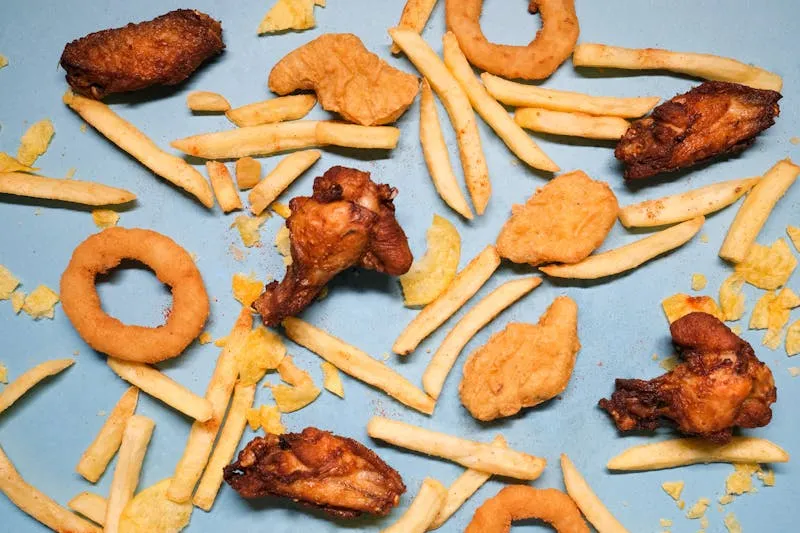
Plant iron (non-haem iron) is less well absorbed than haem iron from meat: absorption rate of 2–20% versus 15–35% for haem iron. This doesn't mean you need to eat meat — it means you need to know two simple strategies.
Strategy 1: vitamin C. Consuming a vitamin C source at the same meal as plant iron multiplies its absorption 3 to 6 times. Lemon juice on lentils, red pepper in a salad, kiwi after a pulse-based meal — that's all it takes.
Strategy 2: avoid inhibitors. Calcium, tea, coffee, and phytic acid (in unsoaked whole grains) inhibit non-haem iron absorption. Don't drink tea or coffee within 30 minutes of an iron-rich meal.
Best plant sources of iron: lentils (3.3 mg/100 g cooked), chickpeas (2.9 mg), cooked spinach (3.6 mg), pumpkin seeds (8.8 mg/30 g), tofu (2.7 mg/100 g), quinoa (1.5 mg/100 g), 70%+ dark chocolate (3.6 mg/30 g).
The UK reference nutrient intake (RNI) is 8.7 mg/day for men and 14.8 mg/day for women of childbearing age. With a varied vegetarian diet and the above strategies, these targets are achievable.
Omega-3: ALA, EPA, DHA — understanding the chain
Plants provide ALA (alpha-linolenic acid) — the basic omega-3. The body converts it to EPA and DHA, the active forms used by the brain and heart. Problem: the conversion rate is low (5–10% for EPA, less than 1% for DHA).
ALA sources: ground flaxseed, chia seeds, walnuts, rapeseed oil (very common in the UK), hemp seeds. Target: 2–3 g of ALA per day — 1 tablespoon of flaxseed oil or 30 g of walnuts is sufficient.
For DHA directly: marine algae are the DHA source at the base of the food chain (fish are rich in DHA because they eat algae). Algae oil supplements (Schizochytrium sp.) provide directly bioavailable DHA — recommended for pregnant vegetarian women, older adults, and intensive athletes.
Zinc: bioavailability strategies
Plant zinc is less bioavailable than animal zinc because of phytates. The UK RNI is 7 mg/day for women, 9.5 mg/day for men. Vegetarians should aim for roughly 50% more due to lower bioavailability.
Sources: pumpkin seeds (7.8 mg/100 g), cashews (5.6 mg), cooked lentils (1.3 mg/100 g), tofu (0.8 mg), hard cheeses (3–4 mg). Soaking and sprouting pulses reduces phytates and improves zinc absorption.
Iodine: the forgotten nutrient
Iodine is often overlooked in vegetarian discussions. Yet the main dietary sources are fish, seafood, and dairy (via cattle feed). Vegetarians who consume dairy generally cover their needs. For others: iodised salt, seaweed (with caution — iodine content varies wildly), or supplementation.
Iodine is essential for thyroid function. Persistent deficiency leads to hypothyroidism, chronic fatigue, weight gain. UK RNI: 140 µg/day. The Vegan Society recommends all vegans supplement iodine.
Calcium: much less problematic than you've heard
Lacto-vegetarians consuming dairy and cheese face no calcium problem whatsoever. For vegans, plant sources exist: kale and bok choy (bioavailability comparable to or exceeding milk in some studies), calcium-set tofu (350 mg/100 g), fortified plant milks (120–130 mg/100 ml), almonds (76 mg/30 g). The UK RNI is 700 mg/day for adults.
Practical transition: the gradual approach
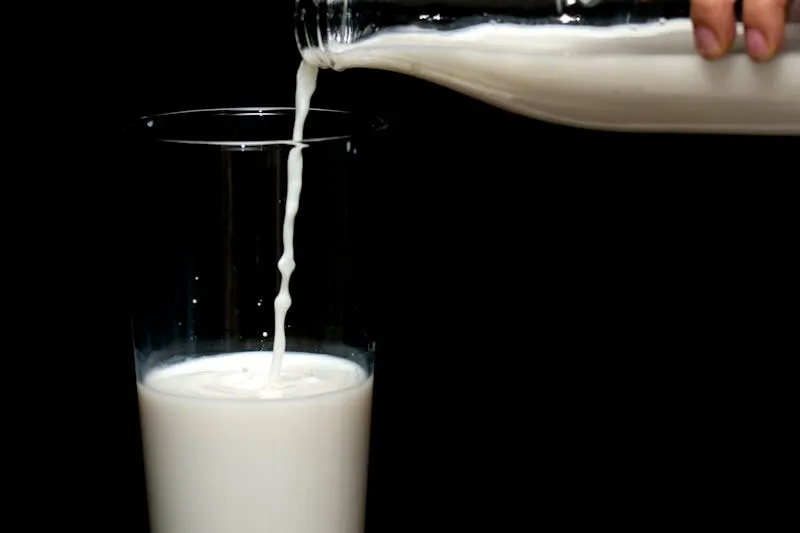
The best vegetarian transition is one that lasts. A sudden overnight conversion can work — but it often creates frustrations, social difficulties, and deficiencies from lack of preparation. The gradual approach has a significantly higher success rate.
Phase 1: Meatless Monday (weeks 1–4)
One meat-free day per week. The goal isn't penance — it's discovering vegetarian recipes you genuinely love. Red lentil dal with coconut milk. Spinach and feta frittata. Quinoa and hummus Buddha bowl. Chickpea curry. Find five recipes you adore. That's your foundation.
Phase 2: Gradual reduction (months 2–3)
Move to 3–4 meat-free days per week. Replace red meat first (highest environmental and health impact), then poultry. Keep eggs, dairy, and possibly fish for now if you're flexitarian — perfection isn't the starting goal.
Phase 3: Full vegetarian (months 3–6)
You now have a recipe repertoire, you know where to buy tofu and tempeh, you know your favourite pulses. The full transition happens naturally. Begin tracking B12, iron and zinc for a few weeks with an app (Cronometer is the most accurate for vegetarians).
The vegetarian pantry starter kit
Pulses (tinned and/or dried): green lentils, red lentils, chickpeas, black beans, kidney beans, butter beans.
Whole grains: quinoa, brown rice, oats, spelt, buckwheat, wholegrain sourdough.
Specialist proteins: firm tofu (plain and smoked), tempeh, seitan (if no gluten sensitivity), frozen edamame, Quorn mince or fillets.
Seeds and nuts: chia seeds, ground flaxseed, pumpkin seeds, sunflower seeds, sesame (tahini), walnuts, cashews, almonds.
Condiments and bases: rapeseed oil, olive oil, soy sauce, tamari, miso paste, nutritional yeast (B12-fortified), vegetable stock.
Vegetable staples: frozen spinach, broccoli, kale, onions, garlic, tinned tomatoes, sweet potatoes.
Weekly menu template
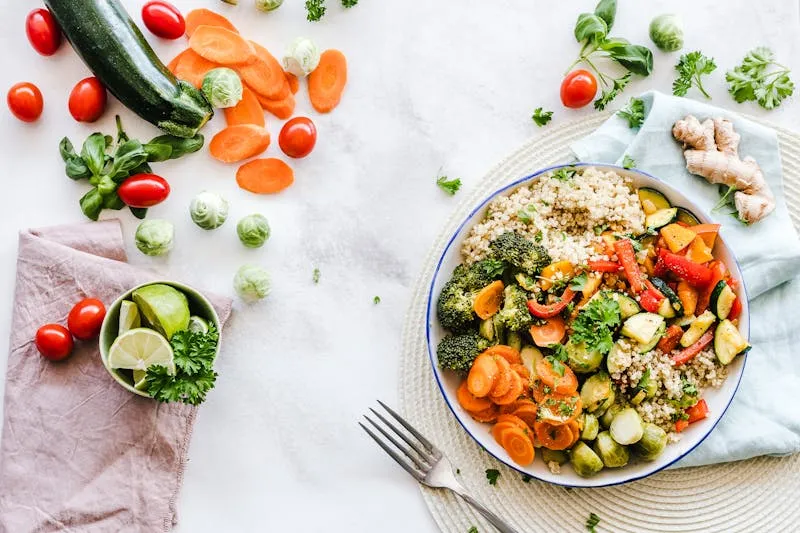
Here is a typical week covering all nutritional needs of an active woman (55–65 kg, moderate activity). All calorie figures are approximate — the aim is to show structure, not to count calories.
Monday
Breakfast: Porridge with fortified plant milk + chia seeds + banana + tea or coffee (away from meals if you have high iron needs).
Lunch: Quinoa bowl + roasted chickpeas + fresh spinach + avocado + tahini-lemon dressing + pumpkin seeds. Satsuma for dessert (vitamin C = better iron absorption from spinach).
Dinner: Red lentil dal with coconut milk + basmati rice + fresh coriander. Greek yoghurt for pudding.
Tuesday
Breakfast: Scrambled eggs (2) + wholegrain toast + tomato + fresh orange juice.
Lunch: Vegetarian Niçoise salad (green beans, potatoes, olives, boiled eggs, capers) + wholegrain bread.
Dinner: Stir-fried tofu with soy-ginger sauce + wok vegetables (broccoli, peppers, carrots) + soba noodles.
Wednesday
Breakfast: Smoothie: fortified plant milk + spinach (flavour masked) + frozen banana + ground flaxseed + peanut butter.
Lunch: Homemade minestrone (white beans, seasonal vegetables, wholegrain pasta) + sourdough + goat's cheese.
Dinner: Spinach, feta and pine nut frittata + green salad + walnut dressing.
Thursday
Breakfast: Homemade granola (oats, nuts, honey, cinnamon) + Greek yoghurt + berries.
Lunch: Hummus wrap + grilled vegetables (courgette, aubergine, peppers) + rocket + sunflower seeds.
Dinner: Chickpea and sweet potato curry with coconut milk + quinoa. Square of 85% dark chocolate.
Friday
Breakfast: Toast + smashed avocado + poached egg + chilli flakes.
Lunch: Quinoa tabbouleh + fresh herbs + cucumber + tomatoes + feta + lemon.
Dinner: Grilled marinated tempeh + sweet potato mash with olive oil + steamed broccoli + tahini-lemon sauce.
Weekend: flex and enjoyment
Weekends are the opportunity to explore world cuisines that are naturally vegetarian-rich: Indian (dal makhani, chana masala), Lebanese (full mezze), Ethiopian (injera and legumes), Mexican (black bean tacos with guacamole), Japanese (vegetarian ramen, agedashi tofu). The UK's restaurant scene has never offered more options — from Mildreds and The Gate in London to BOSH! meal kits nationwide.
Eating out and social situations

Eating vegetarian outside the home is often cited as one of the main obstacles. In reality, it's a skill that develops quickly — and the UK is an easier country for this than most.
At restaurants
The UK restaurant scene has made remarkable progress. Alongside dedicated vegetarian restaurants like Mildreds (since 1988), The Gate, and Manna, virtually every mainstream restaurant now offers genuine vegetarian options. Practical strategies:
- Check the menu online before you go — most UK restaurants publish menus on their websites.
- Don't hesitate to ask if a dish can be adapted (e.g., "can I have the risotto without the pancetta?"). In 90% of cases, the answer is yes.
- Ethnic cuisines are your allies: Indian, Lebanese, Japanese, Mexican, Ethiopian — all have long traditions of sophisticated vegetarian dishes.
- Marks & Spencer, Pret, Leon, and Itsu all have strong vegetarian menus for quick lunches.
Family gatherings
This is often the trickiest social terrain. A few principles that work:
Offer to bring a dish. Not as a demand — as a contribution. A vegetable gratin, homemade hummus, a tart: you're participating in the meal, not disrupting it.
Don't preach. You have your reasons for eating as you do — they're valid. But a family gathering isn't the moment to convert your relatives. People who don't ask you why you eat vegetarian don't need an explanation. Those who do: answer simply, without judging their own food choices.
Prepare a short answer. Something like: "I've decided to eat less meat for health and environmental reasons — I really enjoy it." End of conversation. You don't need to defend your food choices any more than someone who doesn't eat shellfish.
Veganuary and the UK context
The UK's Veganuary campaign, now global, was founded in Britain by Jane Land and Matthew Glover in 2014. Over 700,000 people officially signed up in January 2023, with millions more participating informally. The Holland & Barrett chain has dedicated entire aisles to plant-based nutrition. Linda McCartney Foods, a genuinely British brand, has offered vegetarian alternatives since 1991. The UK infrastructure for vegetarian eating — from supermarkets to restaurants to social support communities — is among the best in the world.
Sport and vegetarianism: it works
Lewis Hamilton, seven-time F1 World Champion, plant-based since 2017. Novak Djokovic, multiple Wimbledon title holder, vegetarian. Alex Morgan, US Women's Football international. Patrik Baboumian, world record holder in strength athletics. Elite vegetarian and vegan athletes exist in virtually every sport. This isn't coincidence — it's physiology.
For vegetarian athletes, the key adaptations are:
Increase protein intake. The International Society of Sports Nutrition recommends 1.6–2 g of protein/kg for muscle gain, and up to 2.5 g/kg for fat loss with muscle retention. These targets are achievable on a well-planned vegetarian diet: tofu, tempeh, seitan, Quorn, pulses, eggs, dairy, and vegetable protein supplements (pea, rice) if needed.
Creatine. Creatine is naturally present in meat and fish. Vegetarians have statistically lower muscular creatine levels. Studies show creatine monohydrate supplementation (3–5 g/day) has larger effects in vegetarians than omnivores — the lower baseline means the gain is more pronounced. One of the few supplements I actively recommend to vegetarian athletes.
Iron for women athletes. Endurance sportswomen have higher iron needs due to micro-injuries and red blood cell destruction by impact. Annual ferritin monitoring (blood test) is recommended.
Common mistakes to avoid
These mistakes are made by the majority of new vegetarians. Knowing them in advance saves you months of trial and error.
The junk food vegetarian
Eliminating meat without intelligent replacement produces what's known as the "junk food vegetarian": margherita pizza, buttered pasta, crisps, processed cheese, soft drinks. All vegetarian. None of it healthy. A poorly managed vegetarian diet can be less nutritious than a balanced omnivore diet. Removing meat generates no automatic benefit if it's replaced by ultra-processed foods.
Not varying your pulses
Red lentils are excellent. But if you eat red lentil dal five times a week and nothing else, you're missing the nutritional richness of black beans, chickpeas, broad beans, adzuki beans, lupin... Each pulse has a slightly different profile of amino acids, fibre, and minerals. Variety is your best nutritional insurance.
Ignoring B12 for years
This is the most serious mistake. B12 deficiencies can remain silent for 2 to 5 years (liver stores are substantial). When symptoms appear — fatigue, tingling, cognitive difficulties — neurological damage may be partially irreversible. If you're vegan or strict vegetarian not regularly consuming eggs or dairy: supplement now. Not "someday". Now.
Believing "vegetarian = light"
Fried tofu, large quantities of hummus, nuts, avocado, full-fat cheeses — all vegetarian, all highly calorific. A vegetarian diet is not automatically low-calorie. This misconception pushes some people to eat excessive portions of certain "healthy" foods.
Giving up through lack of recipes
New eating habits are built around signature dishes — those you've mastered, love, and can prepare with your eyes closed. For vegetarianism, you need 10 to 15 recipes you genuinely love. Not 150. Just 15. Invest the first three months finding them. After that, the transition is done.
Frequently asked questions
Can I switch to vegetarianism overnight?
Yes, technically. Some people make this abrupt transition after a catalyst (film, book, event) and maintain it. But data on long-term dietary change maintenance shows gradual transitions have higher success rates. A gradual approach allows you to build a recipe repertoire, adapt your social environment, and form new shopping habits without excessive friction. If you have a strong ethical or emotional driver, an overnight switch can work — but prepare your pantry and recipes before, not after.
Do I need to take supplements as a vegetarian?
B12 is the only supplement systematically recommended for vegans and strongly advised for strict vegetarians (without regular eggs or dairy). For lacto-ovo-vegetarians who regularly consume eggs and dairy, B12 supplementation is generally not necessary. Vitamin D is recommended for everyone in the UK from October to March, vegetarian or not — the NHS advises 10 µg/day in autumn and winter. Creatine is optional but particularly useful for vegetarian athletes. Other deficiencies are prevented through diet, not supplements — with a well-planned vegetarian diet.
Is vegetarian eating more expensive?
No — it's generally cheaper. Dried pulses are among the least expensive foods per gram of protein: 1 kg of dried lentils costs under £2 for 26 g protein / 100 g. Tofu costs less than most meats. Bulk whole grains are economical. Costs can rise if you buy many processed meat substitutes (veggie burgers, vegan nuggets) — but these products are not necessary for quality vegetarian eating. With pulses, whole grains, seasonal vegetables, and some eggs, a balanced vegetarian diet costs £150–£200 per month per person in the UK.
Can I be vegetarian during pregnancy?
Yes, with enhanced nutritional monitoring. The official position of the NHS and the British Dietetic Association is that a well-planned vegetarian diet is suitable for pregnancy. Critical points: B12 (systematic supplementation), folate (pulses plus standard preconception supplementation), iron (ferritin monitoring), iodine, DHA (algae oil supplementation recommended). Specialist dietetic support is advised. Do not follow a fully vegan diet during pregnancy without professional guidance.
Is vegetarianism suitable for children?
The British Dietetic Association states that a well-planned vegetarian diet can be nutritionally adequate for children. The NHS advises that vegetarian children can get all the nutrients they need if parents ensure they eat a varied diet. The BDA is more cautious about fully vegan diets for children and recommends professional dietary advice. For lacto-ovo-vegetarian children with informed parents and regular medical monitoring, nutritional risks are very limited. Annual nutritional assessment is strongly recommended.
What if I crave meat after going vegetarian?
This is normal and doesn't mean the transition has failed. Meat cravings are often cravings for umami flavour (glutamate), texture, or specific substances (creatine, haem iron, zinc). Useful alternatives: soy sauce, miso, nutritional yeast, dried mushrooms (intense umami), tempeh and seitan (meat-like texture), pumpkin seeds and pulses (zinc and protein). If the craving persists, question your diet: are you eating enough protein? Enough zinc? Sometimes a craving is a disguised deficiency.
Sources and references
- NHS — The vegetarian diet: getting the nutrients you need
- British Nutrition Foundation — Plant-based diets
- Vegetarian Society — Health and nutrition resources
- The Vegan Society — Nutrition and health
- EAT-Lancet Commission — Food in the Anthropocene (2019)
- Craig, W.J. — Health effects of vegan diets, AJCN (2009)
- Kim, H. et al. — Plant-based diets and cardiovascular risk, JAHA (2019)