
There's a stubborn idea that resurfaces every June, somewhere between Roland-Garros and Wimbledon. Women's elite sport, it goes, is a recent arrival — something that came with colour television, the 1970s and, eventually, sponsorship deals. It isn't true, and not by a small margin. In the summer of 1887, a 15-year-old from near Liverpool won Wimbledon in a calf-length dress borrowed from the look of her school uniform. On Boxing Day 1920, more than 53,000 people packed into Goodison Park to watch a women's football match. And the first Cricket World Cup ever played was a women's tournament, held in England in 1973 — two years before the men got theirs.
What's recent isn't women's sport. It's the habit of remembering it.
I'll confess that until I started researching this piece, Lily Parr was little more than a name on a museum statue to me. What I found were women fighting on three fronts at once — against their opponents, against the governing bodies, and against a press that often found them faintly ridiculous. Here are Britain's sporting pioneers — what each of them changed, and where to find their traces. Whether you're watching the tennis from the sofa this month or looking for a nudge to get moving again, they have something to tell you.
Why do we know so little about Britain's sporting pioneers?
We know so little about Britain's sporting pioneers because the institutions that wrote sport's history first kept women out, then quietly forgot them. The first obstacle has a famous name. In a letter from 1912, Pierre de Coubertin (the founder of the modern Olympics) wrote that women competing at the Games would be "impractical, uninteresting, ungainly and […] improper", as Marie Claire UK's history of equality at the Olympics recalls.
Women didn't wait for his permission. Twenty-two of them took part in the Paris Games of 1900, in croquet, dressage, golf, sailing and tennis: 2.2% of all competitors, according to the same article. A British tennis player, Charlotte Cooper, became the first woman to win an individual Olympic title there, on 11 July 1900. A Swiss sailor, Hélène de Pourtalès, had won before her — as part of a crew, on 22 May — which is why Guinness World Records lists her as the first female Olympic champion. Women's athletics had to wait until 1928 for its first five Olympic events.
In Britain, the second obstacle was blunter: an outright ban. In December 1921, the Football Association pushed women's football off the grounds of its affiliated clubs, and the women's game spent nearly 50 years in public parks. The third obstacle was the press, which often preferred sarcasm to reporting. The coverage of the women's 800m at the 1928 Olympics — distorted from start to finish — remains the most damaging example.
The result: names that survive on trophies, plaques and museum walls, while the stories behind them fade. Recovering them isn't an exercise in nostalgia. Each of these women moved a specific boundary (a dress code, a rule, a distance, the right to play on a proper pitch). And you benefit from those boundaries every time you pull on your trainers.
Charlotte Cooper, the first woman to win an individual Olympic title
Charlotte Cooper was the first woman to win an individual Olympic title (the Swiss sailor Hélène de Pourtalès had won as part of a crew in May 1900). According to the Lawn Tennis Association's profile of Cooper (the LTA), she was born in Ealing in September 1870. As the history books tell it, she used to cycle to Wimbledon for every match — both wooden rackets on her back. She won the first of her five Wimbledon singles titles in 1895, and reached eight consecutive finals up to 1902.
Her defining moment came in Paris, in 1900. Cooper beat the home favourite (Hélène Prévost) 6-1, 7-5 in the final, then added a second gold in the mixed doubles with Reginald Doherty. Medals weren't awarded at the Games until 1904 (she received both of hers later). The LTA points out that she was also the first athlete with a disability to be crowned an Olympic champion.
The most remarkable part of the story is what she did it with. The LTA notes that Cooper was declared completely deaf at 26 and, after her 1895 title, reportedly never heard a tennis ball again. She kept winning anyway. In 1908, aged 37 and already a mother, she lifted the Wimbledon singles trophy once more — the oldest female champion for over 90 years, until Martina Navratilova broke the record. She died on 10 October 1966, at 96.
Lottie Dod, Wimbledon champion at 15 in a dress she could run in
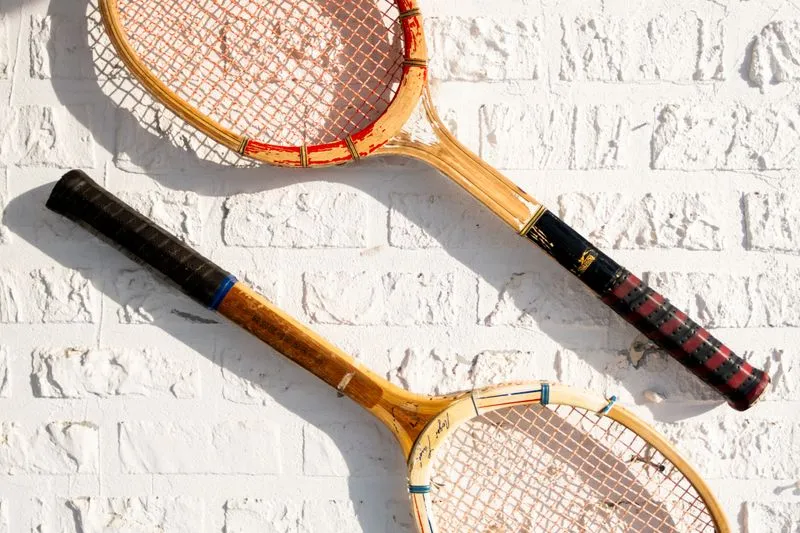
Lottie Dod remains the youngest woman ever to win the Wimbledon singles. Her International Tennis Hall of Fame biography puts her age at 15 years and 285 days when she took the 1887 title, beating the defending champion Blanche Bingley 6-2, 6-0. Nicknamed "The Little Wonder", she won again in 1888, 1891, 1892 and 1893 — five titles, losing only one set across all five championships.
Her outfit mattered as much as her age. Because she was so young, Dod was allowed to play in clothing that looked like her school uniform: black stockings and shoes, a white flannel cricket cap and a calf-length dress. Her opponents were wrapped in the layered, full-length dresses of the day. Dod could run. She hit a hard forehand, volleyed and smashed at a time when that was considered unladylike — and she had no patience for players who wouldn't chase the ball. "They should learn to run and run their hardest, too, not merely stride," she once said.
Tennis was only the beginning. The Hall of Fame describes an athlete accomplished in skiing, archery, field hockey and golf. She became British national golf champion in 1904 and won a silver medal in archery at the 1908 London Olympics. She died on 27 June 1960 (and was inducted into the Hall of Fame in 1983).

Rachael Heyhoe Flint and the first Cricket World Cup
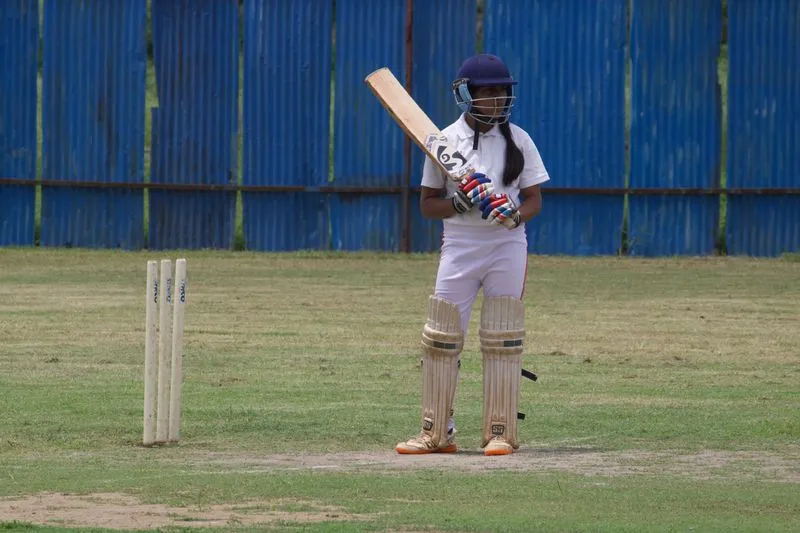
The first Cricket World Cup in history was a women's tournament, and Rachael Heyhoe Flint was the driving force behind it. The ICC's own history of the Women's World Cup (the International Cricket Council is the sport's world body) puts it plainly. The first winner of a limited-overs World Cup was not the West Indies, but England's women, "at the first Women's World Cup in 1973, two years before the first men's event".
Seven teams took part — England, Australia, New Zealand, Jamaica, Trinidad and Tobago, an International XI and Young England. The ICC credits England's captain with spearheading the event, with sponsorship from the businessman Sir Jack Hayward. In England's decisive last match, a century from Enid Bakewell and a fifty from Heyhoe Flint took the side to 279 for 3 in 60 overs, and a 92-run win over Australia.
She was also one of the finest batters of her generation. Over a Test career running from 1960 to 1982, she scored 1,594 runs in 22 matches for England, at an average of 45.54, with three centuries. The ICC inducted her into its Hall of Fame in 2010, noting that her work off the field was probably her greatest achievement. That's the organiser's legacy — the same one that, in France, belongs to Alice Milliat: building the competition women were refused.
Why did the women's 800m vanish from the Olympics for 32 years?
The women's 800m disappeared from the Olympics between 1928 and 1960 because of a story that wasn't true. Those 1928 track events existed at all because of a French campaigner, Alice Milliat: her Women's International Sports Federation (FSFI) had struck a deal with the IOC and athletics' world body (then the IAAF, now World Athletics) to stage them. On 2 August 1928 in Amsterdam, nine women lined up for the first Olympic 800m final. Germany's Lina Radke took the lead with 300 metres to go and won by three metres from Japan's Kinue Hitomi, in 2:16.8 — a new world record.
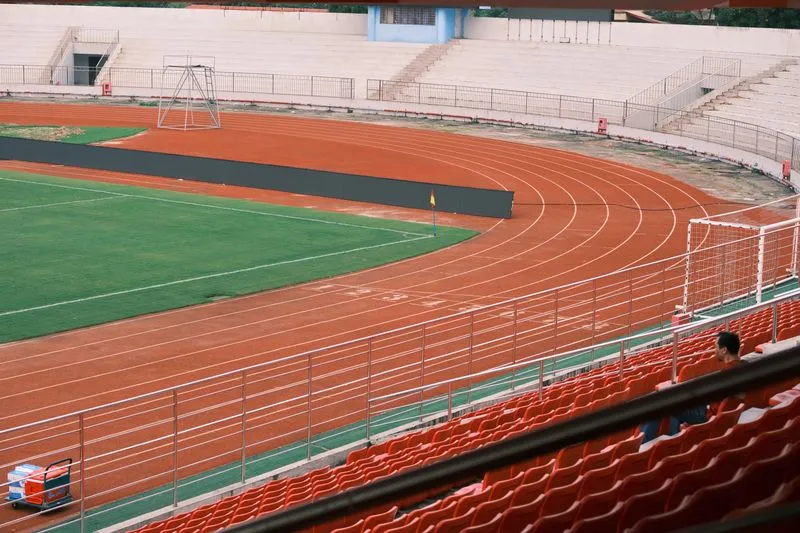
According to World Athletics' heritage record for Lina Radke, despite newspaper stories of distressed athletes, "just one collapsed afterwards". The newspapers told a different tale. The Notre Dame football coach Knute Rockne, reporting from Amsterdam, claimed only six women finished and five collapsed. "It was not a very edifying spectacle to see a group of fine girls running themselves into a state of exhaustion," he wrote. The New York Times said six of the women "fell headlong on the ground". In London, The Times called the race dangerous.
The truth, as Colleen English, an assistant professor of kinesiology at Penn State Berks, has documented, is that all nine women finished, and six of them ran faster than the previous world record. It made no difference. Days after the race, athletics' governing body voted to drop the women's 800m from the Olympic programme. It didn't return until the Rome Games (1960). Thirty-two years. Generations of runners lost the distance in the name of a frailty the race itself had just disproved.
The story is bigger than athletics. A belief about women's bodies (too fragile, not built for endurance) survived the evidence for decades, carried by witnesses who had decided in advance what they were going to see. The frailty was never in the runners' legs — it was in the way people looked at them.

Suzanne Lenglen, the Frenchwoman who turned Wimbledon into a spectacle
Suzanne Lenglen was the first tennis star to fill the stands on her name alone, and Wimbledon was where she did it. The International Tennis Hall of Fame lists six Wimbledon singles titles (1919, 1920, 1921, 1922, 1923 and 1925) and two French Championships (1925 and 1926), the first two open to players from abroad. She had already won four singles titles there when the event was reserved for the French. At the 1920 Antwerp Olympics, she took three medals — gold in the singles, gold in the mixed doubles, bronze in the women's doubles. Between 1919 and 1926 she lost a single match — a much-debated retirement against Molla Mallory at the 1921 US Championships.
She changed the look of the game as much as its level. The Hall of Fame describes her as the first player to do away with bulky undergarments. Her silk dresses were cut above the calf (a real taboo at the time), her sleeves were short, her hair bobbed, her lipstick bright red. Roland-Garros adds that she commissioned Jean Patou to design her a pleated white silk skirt. The Hall of Fame also recalls that, between sets, she liked sucking on sugar cubes soaked in brandy, tossed to her by her father from the stands — a detail that tells you everything about how little she cared for the rules of polite tennis.
That independence came at a price. At Wimbledon in 1926, tired and furious that the time of her match had been changed, she refused to play — even though Queen Mary had come specially to see her. Roland-Garros recounts that the incident cut her career short and that her membership of the French Tennis Federation was cancelled for life. She turned professional that same year, and beat Mary K. Browne 38 times in a row in the first women's professional series. Lenglen died on 4 July 1938, aged 39, of a serious blood disorder (pernicious anaemia).
Lily Parr and the Dick, Kerr Ladies: stars of the game the FA shut out
Lily Parr was one of the greatest goalscorers English football has produced, and she spent most of her career banned from its grounds. St Helens Council's tribute to its sporting women tells how she was born in the town in 1905, honed a formidable left foot with her brothers and, by 13, was playing for St Helens Ladies. The manager of the Dick, Kerr Ladies (a team from a munitions factory in Preston) spotted her and offered her a place and a factory job. She scored 43 goals in her first season.
A teammate later put it memorably: "She had a kick like a mule." The high point came on Boxing Day 1920, when more than 53,000 spectators watched the Dick, Kerr Ladies at Goodison Park (Everton's ground) — with several thousand more stuck outside. According to the council, that crowd remained the record for a women's match until the London 2012 Olympics. Parr kept playing until 1951, scoring close to 1,000 goals over three decades.
Then the door slammed. On 5 December 1921, the Football Association banned women's football from the grounds of its affiliated clubs, stating that "the game of football is quite unsuitable for females and ought not to be encouraged". The FA's own heritage account, Kicking Down Barriers, admits that the ban sidelined the women's game to public parks for nearly 50 years. The Dick, Kerr Ladies kept going regardless — 800 games between 1917 and 1965, 746 of them won. The FA Council finally voted to rescind the 1921 resolution on 19 January 1970, and the rule change took effect at the FA's annual general meeting in June 1971.
What each of these pioneers changed for women's sport
Each pioneer in this article moved one specific boundary. The table sums them up, with the key date and what's left of it today.
| Pioneer | Key date | Boundary moved | What's left today |
|---|---|---|---|
| Charlotte Cooper | 1900 | The first woman to win an individual Olympic title, deaf from 26. | A place in Olympic history as the first individual female champion, and proof that a deaf athlete could win at the top level. |
| Lottie Dod | 1887 | Won Wimbledon at 15 in clothes she could run in. | Sportswear designed for movement. |
| Rachael Heyhoe Flint | 1973 | Organised the first Cricket World Cup, two years before the men's. | A women's World Cup with its own history. |
| The 1928 800m finalists | 1928 | Proved women could race middle distance. | The women's 800m, restored in 1960. |
| Lily Parr and the Dick, Kerr Ladies | 1920 to 1971 | Drew crowds of 53,000, then survived a 50-year ban. | Women's football back on FA-affiliated grounds since June 1971. |
None of these advances was handed over. Each one was won, sometimes at the cost of a shortened career or a forgotten achievement. These stories aren't legends. They're proof that the rules of sport have always been open to question — and have always been questioned. To place these fights in the wider history of women's rights, our look at where feminism really stands today takes stock of what's still left to win.
Where does equality between women and men in sport stand today?
Equality in sport has moved a long way at the top, and far less at grassroots level. At the top, the symbols are there. Wimbledon announced equal prize money in 2007, after a campaign in which Venus Williams played a central part — a speech to the Grand Slam Committee in 2005, then a letter in The Times (in 2006). As the WTA puts it: "Appropriately, Williams was the first women's champion to receive it."
At grassroots level, the picture is more mixed. Sport England's Active Lives Adult Survey report, published in April 2025, found that 63.7% of adults in England met the guideline of 150 minutes of moderate activity a week between November 2023 and November 2024, the highest level on record. Women still trail men: 61.4% of women were active, against 66.3% of men — a gap of almost five points. As Sport England's chief executive put it, "women are still less likely to be active than men".
The pioneers opened the doors of the stadiums. What remains is getting girls and women through the doors of clubs, pools and leisure centres — week in, week out. Equal prize money at Wimbledon also says nothing about other sports or other jobs; for the wider question, the real numbers behind the gender pay gap show how far the problem extends beyond the pitch.
Where to find the traces of Britain's sporting pioneers
The most striking trace is in Manchester. In 2002, Lily Parr became the first woman inducted into the English Football Hall of Fame at the National Football Museum. In 2019, the museum put up a statue of her — the first in the country dedicated to a female player, according to St Helens Council. If you're passing through, it's worth the detour.
Rachael Heyhoe Flint's name sits in the ICC Hall of Fame — she was inducted in 2010. Lottie Dod and Suzanne Lenglen are both in the International Tennis Hall of Fame. And if you're watching Roland-Garros this fortnight, look out for the Court Suzanne-Lenglen, the second-largest show court at the stadium. The trophy handed to the women's singles champion also carries her name — a good excuse to tell whoever's watching with you who "La Divine" was.
For Charlotte Cooper, the trace is on the grass itself. She is one of only four women to have won Wimbledon after becoming a mother, the LTA notes — and she did it deaf, at 37. The association calls her "one of Wimbledon's all-time greats on Centre Court".
Frequently asked questions
Who was the first woman to win an Olympic title?
The Swiss sailor Hélène de Pourtalès, who won the 1-2 ton sailing event with her crew on 22 May 1900, according to Guinness World Records. The first woman to win an individual Olympic title was Charlotte Cooper, a British tennis player, who took the singles at the Paris Games on 11 July 1900.
Who is the youngest Wimbledon singles champion?
Lottie Dod, who won the 1887 title aged 15 years and 285 days. She won Wimbledon five times in total, and later took up golf and archery.
Was the first Cricket World Cup really a women's event?
Yes. The first Women's World Cup was held in England in 1973, two years before the first men's event, according to the ICC. England won it, with Rachael Heyhoe Flint as captain.
Why was the women's 800m removed from the Olympics after 1928?
Newspapers falsely reported that runners collapsed. All nine finished, and just one collapsed afterwards according to World Athletics. The event was nonetheless dropped until 1960.
Was women's football really banned in England?
In December 1921, the FA banned women's football from the grounds of its affiliated clubs, calling the game "quite unsuitable for females". The FA Council voted to rescind that resolution on 19 January 1970, and women's football could be played on FA-affiliated grounds again from June 1971.
Who was Lily Parr?
A footballer born in St Helens in 1905 who starred for the Dick, Kerr Ladies, played until 1951 and is believed to have scored between 900 and 1,000 goals. In 2002, she became the first woman in the English Football Hall of Fame.
Do women and men win the same prize money at Wimbledon?
Yes, since 2007. Venus Williams, who campaigned for it, was the first women's champion to receive equal prize money.
How much exercise do adults need each week?
The NHS recommends at least 150 minutes of moderate intensity activity a week, or 75 minutes of vigorous activity, plus strengthening activities on at least 2 days a week.
Sources
- Guinness World Records — First Olympic champion (female)
- Marie Claire UK — Olympics equality: a brief history of the Games (2024)
- LTA — History Makers: Charlotte Cooper (2021)
- International Tennis Hall of Fame — Lottie Dod
- International Tennis Hall of Fame — Suzanne Lenglen
- Roland-Garros — Suzanne Lenglen, the first diva of tennis (2018)
- ICC — ICC Women's World Cup History (2017)
- ICC — The World Cup that pioneered women's cricket (2023)
- ICC Hall of Fame — Rachael Heyhoe-Flint
- World Athletics — Heritage Plaque: Lina Radke
- Colleen English, Sport in American History — The women's 800m at the 1928 Olympics (2015)
- St Helens Council — Inspiring Sporting Women
- The FA — Kicking Down Barriers: the story of women's football in England
- WTA — Venus Williams recalls fight for equal pay (2023)
- Sport England — Active Lives Adult Survey November 2023-24 (April 2025)
- NHS — Physical activity guidelines for adults aged 19 to 64