We're not going to talk about Marie Curie. Or Emmeline Pankhurst. We're starting with a physicist nominated 49 times for a Nobel between 1924 and 1967, and never awarded one. Her name was Lise Meitner, and chances are it never made it into your history textbooks. This list is for her, and for the others. Women who changed lives, invented things — or simply refused to keep quiet when they were told to.
International Women's Day has just been and gone, and with it the annual parade of the same five or six portraits (you probably scrolled past the same ones I did). Yet the progress and setbacks in women's rights around the world make far more sense once you know the women who opened doors — without ever making it into the canon. Most of the fifteen women below never got a biopic. Some died in obscurity. What they did is real, documented and sometimes staggering.
Why these fifteen women and not others
There are thousands of "inspiring women" lists out there. Most recycle the same names: Marie Curie, Emmeline Pankhurst, Malala Yousafzai, Michelle Obama. These women are remarkable (no argument there). But their stories have already been told, analysed and turned into school assemblies — and the powerful women shaping pop culture already soak up most of the spotlight.
This list applies a single criterion: real, documented impact, without the recognition that should have come with it. Some missed out on it because they were women. Others because they were Black, colonised, poor, or simply too far ahead of their time. And for each of them, I've left you something to check — because a list of "forgotten women" riddled with myths is a double injustice.
The forgotten science pioneers
1. Lise Meitner — the physicist who explained nuclear fission
At the end of 1938, Lise Meitner and her nephew Otto Robert Frisch worked it out. They were the first to explain nuclear fission — the process at the heart of reactors and atomic bombs. Otto Hahn, her long-time colleague, had found the experimental evidence in Berlin (with Fritz Strassmann). Hahn alone received the 1944 Nobel Prize in Chemistry for the discovery.
Meitner was Austrian, of Jewish origin, and a woman in Nazi Germany. In 1938 she had to be smuggled across the Dutch border, leaving all her possessions behind, before settling in Stockholm. Her entry in the Nobel Prize nomination archive lists 49 nominations, in both physics and chemistry, between 1924 and 1967. None succeeded. She also refused to join the Manhattan Project at Los Alamos. The Atomic Heritage Foundation's profile of Lise Meitner records her words: "I will have nothing to do with a bomb!" She died in 1968. Element 109 of the periodic table now bears her name (meitnerium). Posthumously, naturally.
2. Chien-Shiung Wu — the experimentalist who broke a law of physics
Richard Feynman bet $50 that parity would hold. He lost. In June 1956, two theorists — Tsung-Dao Lee and Chen-Ning Yang — sent the Physical Review an awkward question: what if parity isn't conserved in weak interactions? In plain English: what if nature can tell left from right? As the American Physical Society's account of the fall of parity tells it, their paper sparked little more than passing curiosity at first.
Settling it required a fiendishly difficult experiment. It was Chien-Shiung Wu, a professor at Columbia University, who led it with a team at the US National Bureau of Standards in Washington. The set-up: cobalt-60 nuclei cooled to near absolute zero and lined up by a magnetic field, with their emissions carefully measured. The decisive runs took place between Christmas 1956 and New Year. Wu and her colleagues' paper in the Physical Review came out in February 1957. The result: parity is violated. Remember her name, because the Nobel didn't. Lee and Yang received the Nobel Prize in Physics in 1957 — Wu, who had supplied the proof, was left out. According to her biography at the National Women's History Museum, she received the Wolf Prize in Physics in 1978, twenty-one years later.

3. Rosalind Franklin — so much more than "Photo 51"
Franklin is probably the best known of the "little known". Which says something about how deep the problem runs. Her story is also the most distorted. The legend goes like this. In early 1953, James Watson is secretly shown Photo 51 — an X-ray image of DNA taken by Franklin at King's College London. He understands everything at a glance. Franklin, meanwhile, supposedly never grasped her own data.
Not quite. In April 2023, two historians — Matthew Cobb (University of Manchester) and Nathaniel Comfort — published a Nature analysis of what Rosalind Franklin truly contributed to the double helix. Photo 51 had been taken by Franklin and her PhD student Raymond Gosling; it was Gosling who passed it to Maurice Wilkins (with Franklin's knowledge, he says). More importantly, the photo didn't "give" Watson and Crick the structure. What mattered was an informal Medical Research Council report, containing Franklin's measurements, which Max Perutz handed to the Cambridge pair. The authors' conclusion: she was an equal contributor.
In April 1953, Nature ran three DNA papers back to back, one of them by Franklin and Gosling. Watson and Crick wrote that they had been "stimulated by a knowledge of the general nature of the unpublished experimental results and ideas" of Wilkins and Franklin — a polite understatement. In 1954 they went further: without Franklin's data, "the formulation of our structure would have been most unlikely, if not impossible". Franklin died of ovarian cancer in 1958, aged 37. In 1962, the Nobel Prize in Physiology or Medicine went to Watson, Crick and Wilkins — and Franklin, dead for four years by then, was no longer eligible.
An artist and an activist
4. Tarsila do Amaral — the painter at the heart of Brazilian modernism
Paris discovered her this winter. If you hopped on the Eurostar, you may have seen her face on the posters outside the Musée du Luxembourg. It gave her her first major retrospective in France, from October 2024 to February 2025. Yes, the first — more than fifty years after her death. If you plan your weekends around exhibitions (guilty), my pick of exhibitions and museums worth the trip is a good place to start. For everyone else: Tarsila do Amaral, born in 1886 near São Paulo, is one of Brazil's best-loved painters.
In 1923 she studied in Paris with the Cubists André Lhote, Albert Gleizes and Fernand Léger. She came away convinced that "Cubism is the artist's military service", as MoMA's press release for its 2018 Tarsila exhibition quotes her. She befriended the poet Blaise Cendrars, then went home with one fixed idea — to paint a country that looked like no other. In 1928, she gave her husband, the writer Oswald de Andrade, a strange canvas. A distorted, fairy-tale giant sitting beside a cactus: Abaporu — "man-eater" in Tupi-Guarani. The painting sparked the Anthropophagic movement. The idea: absorb — "devour" — every culture that made up Brazil, European ones included, and invent a modern art that was entirely Brazilian.
5. Djamila Boupacha — the case that shook France
Djamila Boupacha was 22 in 1960 when she was arrested at the height of the Algerian War. An FLN activist, she was accused of planting a bomb. In custody, she was tortured and raped by French soldiers.
The lawyer Gisèle Halimi took on her defence. On 2 June 1960, Simone de Beauvoir published an appeal in Le Monde titled "Pour Djamila Boupacha". It opens on a line that still stings: the most scandalous thing about a scandal is that people get used to it. The case became a symbol of the torture practised during the Algerian War. Sentenced to death by a French court, Boupacha was eventually pardoned — and freed in 1962, when Algeria became independent. The Guardian recalled her case in its report on Gisèle Halimi's death in 2020.
An entrepreneur, an inventor and a chemist
6. Madam C.J. Walker — the first self-made millionairess
Sarah Breedlove was born in 1867 in Delta, Louisiana. The fifth child of her parents, she was the first not to be born into slavery. Around 1904, in St Louis, she became a sales agent for Annie Turnbo Malone (another Black haircare entrepreneur). In 1905 she launched her own products for African-American women — customers whose needs the mainstream brands of the day simply ignored.
Walker built her empire on a method: criss-crossing the country and giving demonstrations. She rallied an army of around 25,000 sales agents (yes, you read that right: 25,000). When she died on 25 May 1919, aged 51, her business was turning over more than $500,000 a year. Guinness World Records lists her as the first self-made millionairess. It also admits that the exact extent of her wealth is hard to pin down — she herself denied being a millionaire.
7. Hedy Lamarr — actress, and inventor
Hedy Lamarr was one of Hollywood's biggest stars of the 1940s. What's less well known: in 1942, she and her friend the composer George Antheil were granted a US patent titled Secret Communication System. The idea was to make a radio signal hop from one frequency to another — in a sequence known only to the transmitter and the receiver. That way, the enemy couldn't jam radio-controlled torpedoes. The hopping was driven by a mechanism borrowed from player pianos, with 88 frequencies to match the 88 keys.
Proper recognition only came in 1997, more than half a century later. That year, the Electronic Frontier Foundation gave Lamarr and Antheil a special award for a technology that had become a key component of wireless data systems. Hedy Lamarr died in 2000.
8. Tu Youyou — the Nobel that waited 43 years
More than two thousand remedies in three months. That's what the researcher Tu Youyou gathered in 1969, after being put in charge of a group within Project 523 — a confidential military programme against malaria. She combed through ancient Chinese medical texts and interviewed experienced practitioners — as she explains in her Nobel lecture on the discovery of artemisinin. One lead stood out — sweet wormwood, Artemisia annua. In November 1972, her team isolated the active compound, artemisinin.
According to the 2015 press release from the Nobel Assembly at Karolinska Institutet, artemisinin used in combination therapy is estimated to cut malaria deaths by more than 20% overall — and by more than 30% in children. Tu Youyou received the Nobel Prize in Physiology or Medicine in 2015, 43 years after her discovery, at the age of 84. Before the first clinical trials, she had put herself on the line. She and members of her team volunteered to take the extract themselves, to make sure it was safe.
The ground-level activists
9. Wangari Maathai — planting trees as a political act
More than 20 million trees, planted on farms, at schools and around churches: that's the tally her official Nobel biography credited to Wangari Maathai's Green Belt Movement in 2004. The first woman in East and Central Africa to earn a doctorate, she launched the movement in 1977. It grew out of her work with the National Council of Women of Kenya. The idea: plant trees with rural women's groups — to protect the soil and improve their lives.
Tree planting soon turned political (if you thought a sapling couldn't frighten a regime, read on). As the BBC's obituary of Wangari Maathai put it, under President Daniel arap Moi she was arrested several times and vilified. Elected to parliament in December 2002 with 98% of the vote, she became Assistant Minister for the Environment. In 2004 she won the Nobel Peace Prize for her contribution to sustainable development, democracy and peace — making her the first African woman to receive it. She died in 2011, aged 71.
10. Berta Cáceres — killed for defending a river
Berta Cáceres was a Lenca activist from Honduras. In 1993 she co-founded the Civic Council of Popular and Indigenous Organisations of Honduras (COPINH). She went on to lead the resistance to Agua Zarca, a hydroelectric dam backed by the Honduran company DESA and the Chinese state-owned Sinohydro. The site? The Gualcarque river, sacred to the Lenca people. The project had been pushed through without consulting the communities.
In late 2013, Sinohydro pulled out, citing community resistance, and the World Bank's private-sector arm, the IFC, followed. In 2015, Cáceres won the Goldman Environmental Prize. On 2 March 2016 — two days before her 45th birthday — she was shot dead at home by hired gunmen. In July 2021, Roberto David Castillo, the former head of DESA, was found guilty of being a co-collaborator in ordering her murder. The Guardian reported from the verdict in Tegucigalpa.
An explorer and a sportswoman
11. Jeanne Baret — first woman to sail around the world
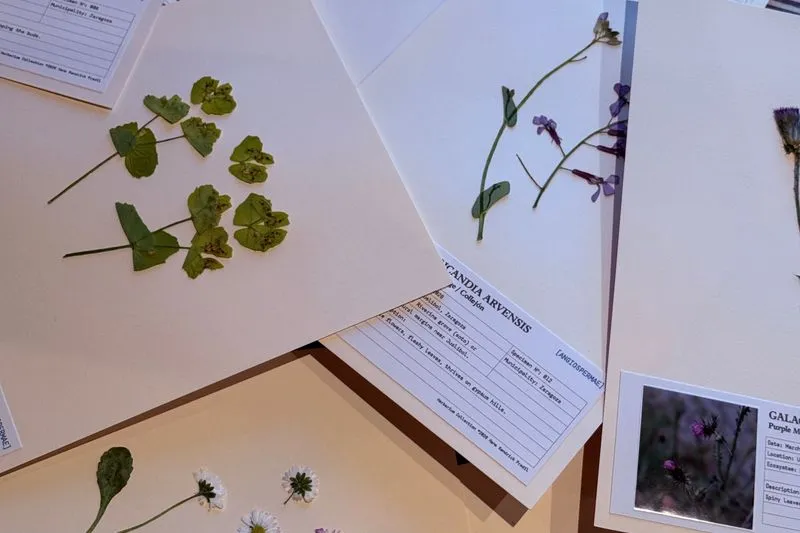
On 1 February 1767, a certain "Jean Barret" boarded the Étoile at Rochefort, one of the two ships on Bougainville's expedition. Under the disguise was Jeanne Baret (also spelt Barret), 26, housekeeper and assistant to the naturalist Philibert Commerson. It was the only way on board (a royal ordinance of 1689 banned women from the king's ships). She went with him on his botanical excursions, all the more since Commerson suffered from ulcers on his legs.
Her identity was revealed in Tahiti in April 1768 — yet she stayed with the voyage. In November 1768, Commerson and Baret left the expedition on Île de France (today's Mauritius) to carry on their work. Commerson died there in 1773. She married a naval officer in 1774 and returned to France in 1775 — completing the first known circumnavigation by a woman. Louis XVI granted her a pension for her work as a botanist. In 2012, three US-based researchers named a climbing nightshade from the Andes in her honour: Solanum baretiae (their description appeared in the journal PhytoKeys).
12. Alice Milliat — the sportswoman who forced open the Olympic door
Alice Milliat learnt her sport in England. Born in Nantes in 1884, she moved to London in 1904 as a tutor. The family she worked for gave her a grounding in football, hockey, athletics and rowing. Back in France she arranged one of the first international women's football matches, against the trailblazing English club Dick, Kerr Ladies. In 1921 she took a French team on tour to the UK. The Olympic door, though, stayed shut. Baron Pierre de Coubertin called female athleticism "the most unaesthetic sight human eyes could contemplate", as ABC News recalled as Paris 2024 reached gender parity.
So she organised her own. In 1921 she set up the International Women's Sports Federation (FSFI). On 20 August 1922, 77 athletes from five countries, Great Britain among them, competed at the first Women's Olympic Games, at the Stade Pershing in Paris. French officials were furious about the word "Olympic" — and Milliat turned that anger into leverage. Women's track and field arrived at the 1928 Amsterdam Games, as the historian Ruadhán Cooke explains for RTÉ. It wasn't enough — the IAAF had promised ten events and scheduled just five, and British women athletes boycotted Amsterdam entirely. The Women's World Games carried on, reaching London in 1934. But Milliat eventually stepped back, "exhausted by her struggle and by constantly having to seek funding", in the words of the Olympic historian Florence Carpentier. Next time you watch women's athletics at the Olympics, spare a thought for her.
An organiser, a prime minister and a biologist
13. Luisa Moreno — the organiser left in César Chávez's shadow
Blanca means "white" in Spanish; moreno means "dark". When Blanca Rosa López Rodríguez renamed herself Luisa Moreno in New York in 1930, the new name already said which side she was on. Born into a wealthy Guatemalan family, she had worked as a news reporter in Mexico City. She moved to New York in 1928 and took a job in a bleak garment factory — paltry wages, long hours. She rose to become one of the most prominent labour activists in the country, as Smithsonian magazine reported when the National Museum of American History unveiled a display about her.
In 1935, curator Mireya Loza recounts, the American Federation of Labor hired her to organise Latina and African American women cigar rollers in Florida. Next came the cannery workers' union UCAPAWA and a seat on the CIO council (a first for a woman). In 1938, the Spanish-Speaking People's Congress was born at her urging. Then came the red scare. In 1950 the federal government issued a warrant for her immediate deportation, and that November she left rather than face forced removal. "Oftentimes, we attribute Dolores Huerta and César Chávez as the beginning of labor activism and civil rights work," Loza told Smithsonian magazine. Plenty of people like Moreno, she adds, made their successes possible (heard of Chávez but not of her? That's the problem in a nutshell).
14. Sirimavo Bandaranaike — the very first female prime minister
"What does she know of politics?" That was the scornful question from a cousin of her husband, the assassinated Ceylonese prime minister Solomon Bandaranaike. It was 1960, and Sirimavo Bandaranaike had just taken over the party leadership. As the Guardian's obituary of Sirima Bandaranaike dryly notes, few forecasts have proved so wrong. She led the party back to power that same year and became the world's first woman prime minister (reread the cousin's question now). She governed three times: 1960 to 1965, 1970 to 1977, and 1994 to 2000.
Reducing her to a widow carrying on her husband's work misses the point. Her government's 1972 constitution made the island a republic and renamed it Sri Lanka. She pushed the country into the emerging Non-Aligned Movement. Alongside Indira Gandhi and Tito, she became one of the developing world's best-known leaders. She stepped down in August 2000 and died two months later — on 10 October, aged 84.
15. Nettie Stevens — sex, it turns out, is in the chromosomes
Nettie Stevens only started her research career at 39, after years of teaching and saving up to pay for her studies. In the mealworm (Tenebrio molitor), she found that males produce reproductive cells carrying either an X or a Y chromosome. Females produce only cells with an X. Her conclusion: sex is inherited as a chromosomal factor — and the male determines it. At the time, most people assumed the mother — or the environment — decided a baby's sex. If you were taught at school that the father's chromosome settles it, she's a big part of the reason.
At the same time, the biologist Edmund Wilson was reaching similar conclusions, and most scientists didn't embrace Stevens's theory straight away. Yet Nature's Scitable profile of Nettie Stevens says she made the larger theoretical leap — the one that turned out to be right. She kept researching and teaching at Bryn Mawr until she died of breast cancer on 4 May 1912, aged 50.
What these fifteen women have in common
Science, sport, art, politics, activism, exploration: the fields change, but what they share fits in one line. They all worked in conditions where their contribution was minimised, credited to someone else — or simply ignored. And they kept going anyway.
I'm not going to sell you a lesson in resilience (that word has gone hollow from appearing on too many mugs). Just an observation: when the system doesn't recognise you, some people stop. Others carry on, because the work matters more to them than the recognition that should come with it. Almost all fifteen were in the second camp. Alice Milliat, who eventually stepped back exhausted, is a reminder of what holding on without recognition costs.
Does that mean we should accept working without recognition? No. It means recognition often arrives late, in pieces, sometimes after death — and the work remains. Lise Meitner never won the Nobel; element 109 bears her name. Tu Youyou won hers at 84. Alice Milliat now has a statue at the French Olympic Committee's headquarters. Berta Cáceres was murdered; a court eventually convicted one of the men who organised the killing.
My advice from here: pick one of them, just one, and read her biography this month. Then tell someone about her (over dinner, at work, at your book club). That's how a name comes back into conversation, and eventually back into the textbooks.
Frequently asked questions
Why are these women so little known?
Mainly because of the Matilda effect: women's scientific contributions get minimised, or credited to male colleagues. Academic history was long written by and for white Western men, and women from colonised countries or minorities face a double invisibility. And discoveries are often only recognised long after the fact, when the direct witnesses are no longer around to correct the record.
Did Hedy Lamarr really invent Wi-Fi?
Not exactly. The 1942 patent she shared with George Antheil describes frequency hopping across 88 channels. According to the Electronic Frontier Foundation, frequency hopping became the basis for spread-spectrum radio systems — in everything from mobile phones to wireless networks. "She invented Wi-Fi" is a shortcut: her contribution is real, the slogan isn't.
Why did women have to create their own Games?
Because the Olympics kept most events closed to them. There were no women's track and field events at all up to and including the 1924 Paris Games. Pierre de Coubertin, who led the IOC, considered an Olympiad with women impractical, uninteresting, unaesthetic and improper. So Alice Milliat staged the Women's Olympic Games in Paris in 1922; three Women's World Games followed, in Gothenburg in 1926, Prague in 1930 and London in 1934. That rival event is what pushed the Olympic movement to open athletics to women in Amsterdam in 1928.
Is Wangari Maathai the only African woman to have won the Nobel Peace Prize?
No. Maathai was the first African woman to receive it, in 2004. In 2011, the prize was shared by Ellen Johnson Sirleaf and Leymah Gbowee of Liberia and Tawakkol Karman of Yemen.
Where can I learn more about these women?
A few reliable places to start: Inferior by the British science journalist Angela Saini, and Headstrong: 52 Women Who Changed Science — and the World by Rachel Swaby. Wikipedia's "Women in Red" project documents the biographies of women missing from the encyclopaedia. If you'd rather listen, dip into our pick of 20 podcasts for women you absolutely must listen to. For fiction, the must-have novels by women for your bookshelf make a good follow-on.
Is recognition of women scientists improving?
Slowly. According to the Nobel Prize's official list of women laureates, only five women have won the physics prize since 1901. They are Marie Curie (1903), Maria Goeppert Mayer (1963), Donna Strickland (2018), Andrea Ghez (2020) and Anne L'Huillier (2023). Three of those five came after 2017, so things are moving, but from a very low base.
Did Berta Cáceres really "save" the river?
Partly. According to her Goldman Prize profile, construction on the Agua Zarca dam has effectively come to a halt. After her murder, the development banks FMO (Dutch) and Finnfund (Finnish) suspended their involvement. In 2021, the court in Tegucigalpa ruled that Cáceres was killed for leading the campaign against the dam.
Sources
- Nobel Prize — Nomination archive: Lise Meitner
- Atomic Heritage Foundation (National Museum of Nuclear Science & History) — Lise Meitner
- APS News — December 27, 1956: Fall of Parity Conservation (2001)
- Physical Review — Wu et al., Experimental Test of Parity Conservation in Beta Decay (1957)
- National Women's History Museum — Chien-Shiung Wu
- Nature — What Rosalind Franklin truly contributed to the discovery of DNA's structure (2023)
- MoMA — Press release, Tarsila do Amaral: Inventing Modern Art in Brazil (2018)
- The Guardian — Gisèle Halimi, trailblazing French feminist MP and lawyer, dies aged 93 (2020)
- Guinness World Records — First self-made millionairess
- Electronic Frontier Foundation — Celebrating Pioneer Award-winning women on Ada Lovelace Day (2012)
- Nobel Prize — Tu Youyou, Nobel lecture: Discovery of Artemisinin (2015)
- Nobel Prize — 2015 Physiology or Medicine press release
- Nobel Prize — Wangari Maathai, biographical (2004)
- Nobel Prize — Wangari Maathai, Nobel lecture (2004)
- BBC News — Kenya's Nobel laureate Wangari Maathai dies aged 71 (2011)
- Goldman Environmental Prize — Berta Cáceres, 2015 recipient
- The Guardian — Berta Cáceres assassination: ex-head of dam company found guilty (2021)
- PhytoKeys — Tepe, Ridley & Bohs, A new species of Solanum named for Jeanne Baret (2012)
- ABC News — The Paris Olympics are the first to have equal split of male and female athletes, and Alice Milliat is the reason why (2024)
- RTÉ Brainstorm — How Alice Milliat brought women into the Olympics (2022)
- Smithsonian Magazine — Guatemalan immigrant Luisa Moreno was expelled from the U.S. for her groundbreaking labor activism (2018)
- Smithsonian Voices (National Museum of American History) — The Case of Luisa Moreno (2021)
- The Guardian — Sirima Bandaranaike obituary (11 October 2000)
- Nature Scitable — Nettie Stevens: A Discoverer of Sex Chromosomes
- Nobel Prize — Nobel Prize-awarded women