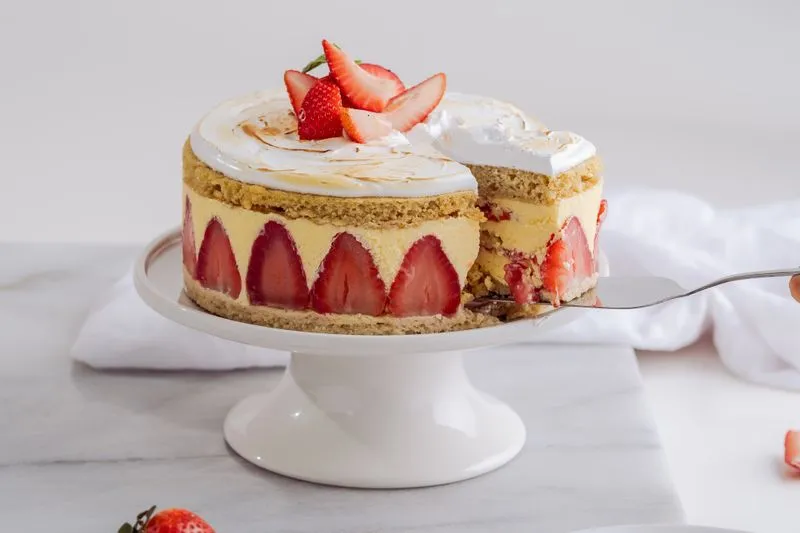
No, a crème mousseline that splits is not ruined. It certainly looks it — grainy, greasy at the edges, dotted with little beads of butter that refuse to blend in. But it only has one problem: the temperature is off. And that takes three minutes to fix, with nothing going in the bin.
I learnt this on Saturday 25 May 2024, at 11.20pm, the night before French Mother's Day. My first fraisier, made in one go (mistake number one — more on that later). The sponge was cooling by the open window of my Hackney flat (in a kitchen that size, the windowsill doubles as a cooling rack), the strawberries were drying on a tea towel, and my cream looked like badly stirred cottage cheese. My hand was hovering over the bin. Then I heated a splash of water in a saucepan, sat the bowl on top for ten seconds, whisked again — and the cream turned smooth and glossy, exactly like the photos. The next day my mum had a second slice. She never has a second slice of anything.
That's the thing about the fraisier. It has a reputation as a cake for professionals and TV contestants — in series 3 of The Great British Bake Off, Mary Berry set it as the technical challenge of the 2012 pâtisserie semi-final, with two and a half hours on the clock. Fair enough. But its four elements (sponge, syrup, crème mousseline, strawberries) are pastry-school basics, and nearly every failure comes from the same three or four mistakes. Mistakes of temperature and timing. Not talent.
This year, French Mother's Day falls on Sunday 25 May — France sets it on the last Sunday in May, unless that clashes with Pentecost (Mothering Sunday was back in March here, and my mum has never accepted it as a substitute). It lands on the same weekend as the spring bank holiday, which GOV.UK lists for Monday 26 May in England and Wales. Three days off, British strawberries in the shops: fraisier weekend. Here is the full recipe, step by step — the sponge, a crème mousseline that holds, the ring assembly — with the mistakes that make the cream collapse and a plan that spreads the work over three days.
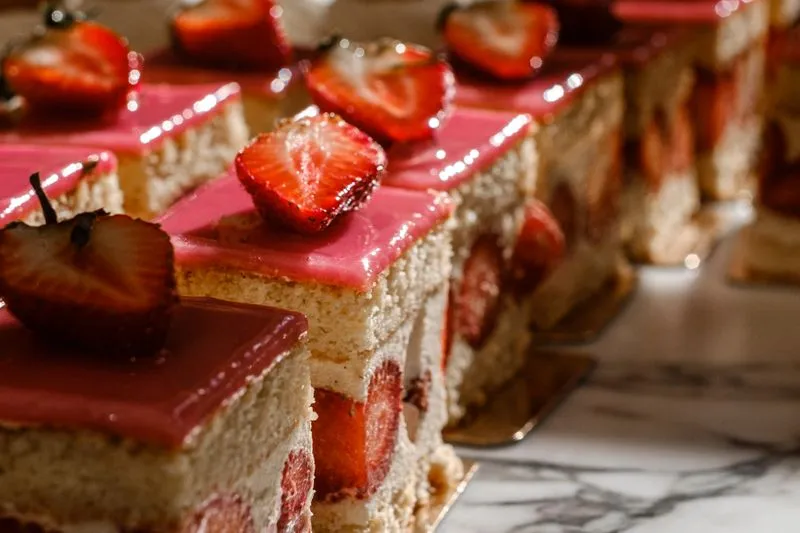
The fraisier at a glance: four elements, three days, one ring
A fraisier is a génoise sponge cut into two discs, soaked with syrup, filled with crème mousseline and strawberries, then topped with a thin layer of marzipan.
My recipe follows the proportions the food writer Mercotte published on her blog in 2013 for the fraisier technical challenge on Le Meilleur Pâtissier — France's answer to Bake Off. They're designed for a mousse ring 20cm across and 4cm high. Allow eight fairly thin slices — crème mousseline is rich (more on that later).
For the génoise: 150g egg (roughly three eggs, weighed without shells), 90g caster sugar, 90g plain flour.
For the syrup: 100g water, 120g sugar, 20g kirsch or strawberry syrup.
For the crème mousseline: 375g whole milk, 80g sugar, 55g egg yolks (about three), 15g plain flour, 15g cornflour, half a vanilla pod, 250g unsalted butter — and 15g kirsch if you like.
For assembly: 250g strawberries inside the cake, plus an extra punnet for picking the most even ones and decorating; 100g marzipan.
The fraisier is made in three stages. Meilleur du Chef's classic fraisier recipe says the assembled cake can be made 24 hours ahead — 48 hours is the absolute maximum. I make the génoise and the pastry cream a day earlier still, so the work splits like this:
- Two days before: the génoise and the pastry cream.
- The day before: the syrup, the crème mousseline and the assembly, then a night in the fridge.
- On the day: unmoulding, marzipan and decoration.
Why spread it out? Because a fraisier made in one go means an afternoon on your feet — cream worked in a hurry, a kitchen like a battlefield. That's when mistakes happen.
Which strawberries make the best fraisier?
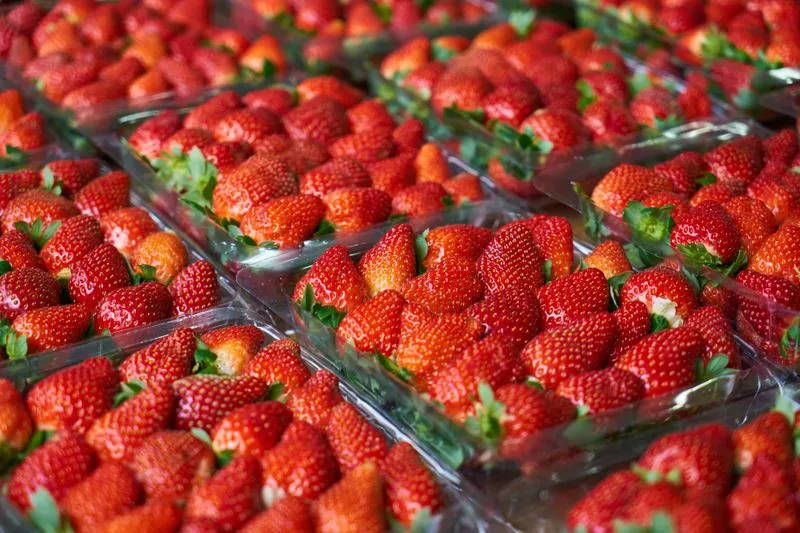
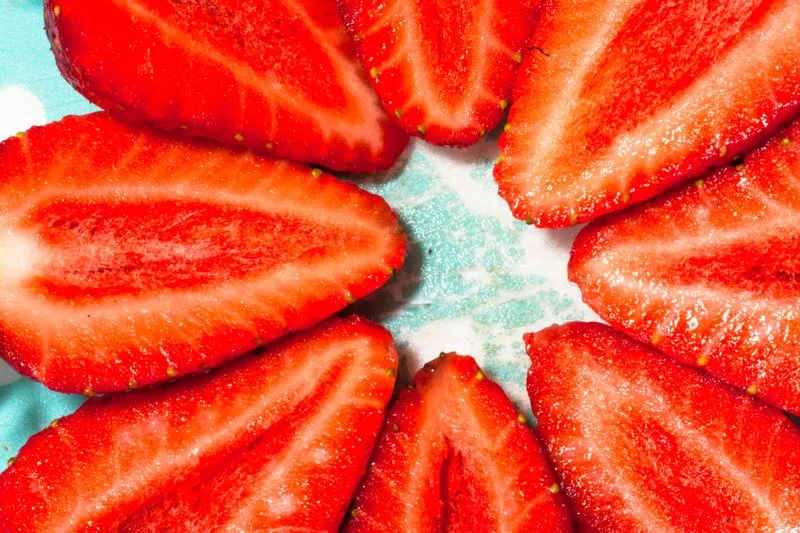
For a fraisier, choose ripe but firm strawberries — and above all, strawberries of the same size. The ones round the edge are the shop window of the cake. Mercotte, who judged that French technical challenge, wanted them the same height and pressed flat against the cake; one smaller than its neighbours, and a gap of cream shows when you slice.
British soft fruit — strawberries, raspberries and the rest — is serious business. In Defra's Agriculture in the United Kingdom 2023, the value of soft fruit rose "by 19% to £755 million". By the late May bank holiday, my Hackney greengrocer has British punnets next to the imported ones, and that's what I buy. Meilleur du Chef's recipe specifies French varieties (Gariguette or Mara des Bois); if you spot Gariguette, the long, sweet French one, grab it. If not, don't worry about the name — judge the punnet.
| What to check | What you want | Why it matters in a fraisier |
|---|---|---|
| Size | Medium, all roughly the same height | The halves round the edge form a neat, even wall |
| Firmness | Firm to the touch, no soft patches | A soft strawberry leaks juice into the cream |
| Colour | Red right up to the hull | White shoulders mean underripe and sour |
| Smell | You can smell them through the punnet | No scent, no flavour — no matter how pretty |
My choice, after two fraisiers: the most regular British strawberries for the edge and the inside, a few extra-pretty ones for the top. A ripe, firm, local strawberry makes a better fraisier than a photogenic one that tastes of water.
Two things before you cut. Rinse your strawberries — the NHS page on toxoplasmosis advises you to "wash fruit and vegetables thoroughly to get rid of any traces of soil". And wash them before hulling, with the green tops still on, so the cut fruit doesn't sit in water. In a fraisier, excess water is the cream's worst enemy.
The fraisier kit: mousse ring, acetate, probe thermometer
The fraisier kit fits on one shelf, and only one piece is essential — the ring. A stainless steel mousse ring (no base), 20cm across and 4 to 6cm high. Failing that, a 20–24cm springform tin works; it gives the fraisier its neat shape and makes layering easier.
Then, in order of usefulness:
- An acetate strip (the clear plastic ribbon French pastry chefs call rhodoïd) the height of the ring. It lines the inside so you can unmould without tearing the strawberries. It doesn't go in the oven — it's for cold work only.
- A probe thermometer, for the sponge and the cream. It turns the recipe into a method.
- A hand mixer or a stand mixer. A stand mixer makes life easier, but a decent hand mixer does the job (I'm the proof: a two-beater model and a very small London kitchen).
- A spatula, a small offset palette knife and a pastry brush — for folding in the flour, smoothing the cream and soaking the sponge.
Acetate changed my second fraisier. The first time, I unmoulded bare (a hot knife run round the edge) — three strawberries stayed stuck to the steel. With the strip, the ring slides off and the cake keeps its sharp edges.
The génoise sponge, without letting it sink
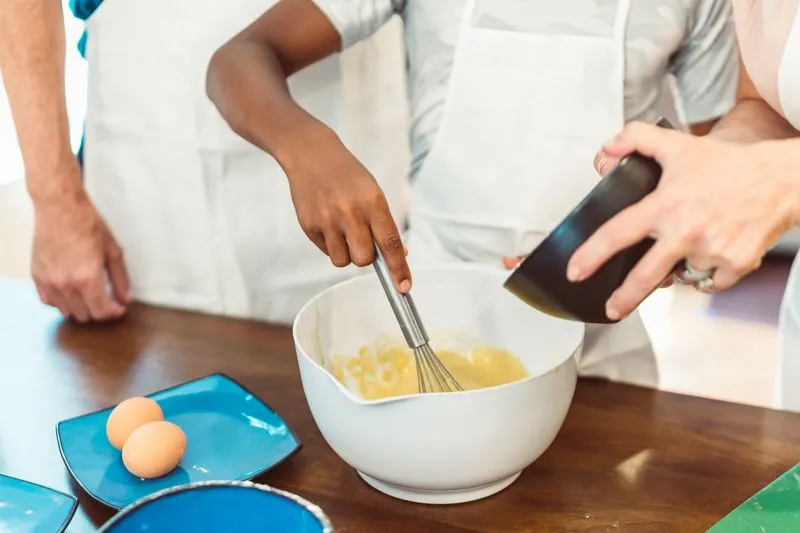
This génoise contains no baking powder and no butter — it rises only on the air trapped in the whisked eggs. The whole game is getting that air in, then not knocking it out when you add the flour. The method, step by step:
- Warm the eggs and sugar over a pan of simmering water, whisking constantly, to 50–55°C.
- Take off the heat and whisk until completely cool. The mixture turns pale, doubles in volume and reaches the ribbon stage — lift the whisk and it falls back in a thick trail.
- Fold in the sifted flour in two or three goes with a spatula, lifting the batter from the bottom. A whisk would burst the bubbles.
- Spread it on a silicone mat (or a tray lined with baking parchment) and smooth it with the palette knife.
- Bake at 180°C (gas mark 4) for 10 to 15 minutes. It's done when golden, springy in the centre, with the edges just pulling away.
- Turn it out onto baking parchment and cut two 19.5cm discs.
Why 19.5cm for a 20cm ring? Because in a proper fraisier, you don't see the sponge. The sponge stays hidden. That half-centimetre gap fills with cream — which gives you the neat white line down the side.
Baking the sponge flat also fixes a problem I didn't see coming. In a round tin, you then have to slice it horizontally with a bread knife — and that's where discs go uneven. My first fraisier had a top layer on a gentle slope, like a nursery ski run. Still want the tin? Turn the cake as you cut, not the knife.
Three mistakes sink a génoise. Flour tipped in all at once, which forms lumps you then overmix to squash. A whisk instead of a spatula. The oven door opened too early — a blast of cold air on a fragile foam. Flat, rubbery sponge? One of those three has been in your kitchen.
The soaking syrup, with or without kirsch
The soaking syrup stops the sponge being dry and gives it flavour. Bring 100g water and 120g sugar to the boil, leave to cool, then add 20g kirsch — the cherry brandy of the classic fraisier — or strawberry syrup if you'd rather skip the alcohol. Go easy: the ideal fraisier tastes of strawberries first, not of kirsch or marzipan.
Brush it on with a pastry brush, dabbing rather than stroking, until the sponge is soft under your finger (soft, not soggy). The bottom disc only gets soaked on its inner side, the one that meets the cream — otherwise it goes limp against the plate and supports nothing.
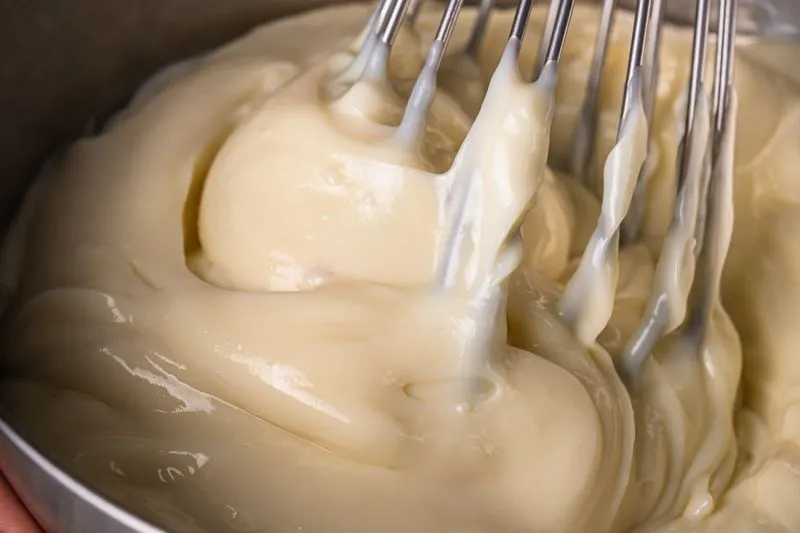
Crème mousseline, step by step
Crème mousseline is pastry cream (crème pâtissière) with butter whipped into it. Firmer than whipped cream, lighter than buttercream — it's what holds the fraisier up. Here's the method, in two stages.
Two days before: the pastry cream.
- Infuse the split half vanilla pod in the warm milk for 10 minutes, then bring to the boil with half the sugar.
- Mix the yolks with the rest of the sugar, then add the sifted flour and cornflour.
- Remove the pod, pour the boiling milk onto the yolk mixture while whisking, then tip it all back into the pan.
- Cook for a good minute, stirring all the time, until thick.
- Off the heat, whisk in half the butter (125g).
- Spread the cream in a shallow dish, cover with cling film touching the surface, and chill.
The cling film must touch the cream — it stops a skin forming, and a skin means lumps in tomorrow's mousseline. Don't put it in the fridge piping hot, either: the Food Standards Agency's chilling advice is to "cool cooked food at room temperature and place in the fridge within one to two hours". A shallow dish cools it much faster than a deep bowl.
The day before: the mousseline.
- Take the pastry cream out of the fridge and let it come up in temperature. Mercotte uses it at around 16–18°C — check with the thermometer.
- Meanwhile, beat the remaining 125g butter until smooth, pale and soft, like a thick paste.
- Add the pastry cream to the butter a little at a time, beating as you go.
- Once it's smooth, add the kirsch (or nothing).
The principle fits in one sentence: the soft butter and the pastry cream must be at the same temperature for a perfectly smooth result. Nearly every failed mousseline comes back to that one rule.
Not all mousselines are equal (if you've wondered, you're right to). The butter-to-milk ratio changes everything:
| Recipe | Milk | Butter | Butter per 100g milk |
|---|---|---|---|
| Mercotte (technical challenge) | 375g | 250g | about 67g |
| Meilleur du Chef, classic fraisier | 500g | 250g | 50g |
More butter means a cream that holds better — and a richer one. The butteriest version is the safest for a first fraisier, because it forgives unmoulding a little early. The 50g version is a little lighter to eat, and a little less forgiving. My advice: start with the butteriest, move to the lighter one once assembly no longer scares you.
Split or runny crème mousseline: causes and rescues
A failed crème mousseline almost always has one cause: a temperature gap between the butter and the pastry cream. Butter too cold sets into grains; cream too warm melts the butter; mousseline chilled before use sets solid. Each symptom has its rescue.
| What you see | What happened | What to do |
|---|---|---|
| Grains, a cottage-cheese look, beads of fat | Butter or cream too cold: the butter has set in lumps | Gently warm the sides of the bowl, then beat again |
| Soft, almost liquid cream that runs off the spatula | Cream too warm: the butter melted instead of whipping | Chill briefly, watching it closely, then beat again |
| Hard, brittle cream you can't spread | Mousseline chilled before assembly: the butter has crystallised | Let it come back to room temperature, then beat again |
| Cream that slides and weeps during assembly | Wet strawberries: water breaks the emulsion | Dry the fruit, remove any wet pieces, carry on |
The grainy rescue is the one from my Saturday night. The fix I use: gently warm the sides of the bowl to melt the grains of butter, then beat for two to three minutes to get the air back in. A kitchen blowtorch does it in seconds; without one, hold the bowl for a few seconds over a pan of hot water — in short bursts. Overdo it and you skip straight to the next row of the table (runny cream).
The hard cream is the least intuitive mistake. When a cream looks soft, the reflex is to chill it to firm it up. Don't. A mousseline chilled before you use it sets as the butter crystallises, and it turns too firm to spread. Save the cold for the assembled cake.
Assembling a fraisier in a ring, step by step
You assemble a fraisier the opposite way to what you'd expect: you start with the front. Edge strawberries first, cream second — the cream is what glues them to the acetate. The order matters more than speed.
- Line the ring with acetate and set it on the serving plate or a cake board.
- Place the first sponge disc in the centre, soaked on its inner side only.
- Stand halved strawberries round the edge, flat side against the acetate, rounded side facing in. They need to stand perfectly straight — that's where the look of the finished cake is decided.
- Pipe a line of crème mousseline against the strawberries, then press it in with the palette knife so it fills every gap. No air pockets.
- Cover the disc with a layer of cream, then add a generous layer of chopped strawberries. Press them in lightly.
- Add a thin layer of cream over the fruit.
- Place the second sponge disc, soaked on both sides. Press gently, flat, with your palm.
- Finish with a last layer of cream, smoothed level with the top of the ring.
The step that makes the difference is number 4. Without that line of cream pressed against the fruit, the cream from the centre never reaches the acetate — and you unmould to strawberries floating in thin air. Take your time on that lap of the ring; everything else is quick.
Chilling, marzipan and unmoulding the fraisier
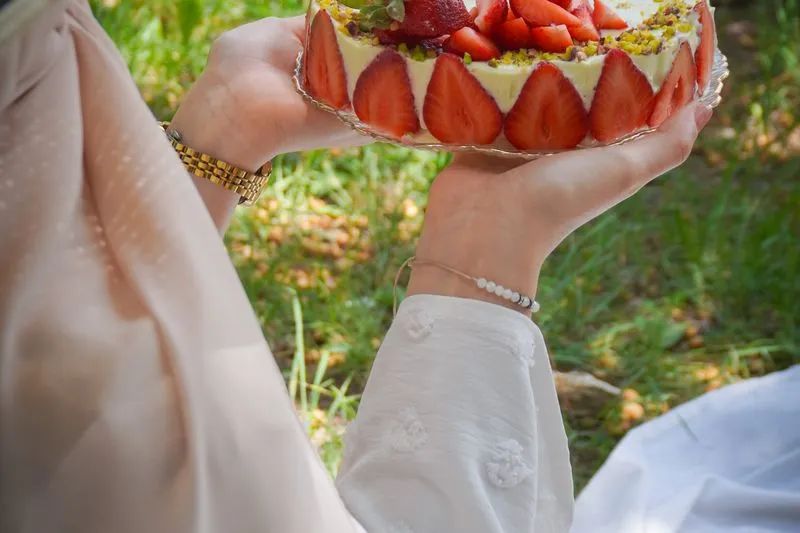
A fraisier has to chill before you unmould it: Meilleur du Chef's classic recipe gives it at least an hour in the fridge to set. I assemble mine the day before and leave it overnight in the fridge, covered. It's calmer, and the cream firms up all the way through.
Only unmould when the cream feels firm to the touch; too soft, and the fraisier slumps. With acetate, it's simple — lift the ring straight up, then peel the strip away gently.
Roll the marzipan thin, to a few millimetres, between two sheets of baking parchment (or on a worktop dusted with icing sugar). Cut a disc the size of the ring, then trim it into a crescent and lay it on one side of the cake. I never cover the whole top — a fraisier entirely wrapped in pink marzipan is a lot of sugar on a cake that doesn't need it.
Decoration: three or four whole strawberries you set aside are plenty.
Storing and serving a fraisier
A fraisier lives in the fridge and is assembled the day before at the earliest. Meilleur du Chef recommends making it no more than 24 hours ahead — 48 hours being the absolute maximum — and points out that it can't be made days ahead and frozen, because of the fresh fruit.
Check your settings, too. The Food Standards Agency says "your fridge should be between 0 and 5°C" — put the cake on the coldest shelf, not in the door. Pastry cream is cooked, but a cream made with eggs and butter is still delicate, and I never keep a fraisier beyond the next day.
That half hour out of the fridge isn't just for comfort: an ice-cold fraisier tastes of fridge, and the strawberries only really smell of strawberries once they've lost their chill.
For clean slices, dip a large knife in hot water, wipe it, cut — and repeat for every slice. And serve it at teatime rather than straight after lunch: after a celebration meal, nobody has room for crème mousseline. It's also the slot that chrononutrition keeps for a small sweet treat, around 4 to 5pm (no need to turn it into a rule).

A bank holiday weekend timeline, Friday to Sunday
For a fraisier served on Sunday 25 May, everything starts on Friday evening. Here's my plan — stick it on the fridge, temperatures written large.
Friday 23 May, evening (two days before)
- Génoise: bake, cut the two 19.5cm discs, wrap tightly in cling film and keep somewhere cool and dry, at room temperature.
- Pastry cream with the first half of the butter, cling film touching the surface, into the fridge within two hours.
Saturday 24 May (the day before)
- Morning: the strawberries (and the marzipan, if you haven't got it yet).
- Late afternoon: the syrup (it needs to cool), washing and drying the strawberries, pastry cream and butter out of the fridge together.
- The crème mousseline, then the full assembly — and a night in the fridge, covered.
Sunday 25 May (the day)
- Morning: unmould, marzipan, decoration. Back into the fridge.
- 30 to 45 minutes before serving: out of the fridge.
The result: on Sunday, all that's left is one crescent of marzipan to roll and three strawberries to place. A cake that looks like it took hours — and a baker who had time for a shower before leaving the house. Monday is a bank holiday. You've earned it.
Frequently asked questions
Can I make a fraisier the day before?
Yes — it's the best option. Assembled the day before, it spends the night in the fridge and the cream firms up all the way through. Meilleur du Chef recommends making it no more than 24 hours ahead, 48 hours being the absolute maximum. The génoise and the pastry cream can be made two days ahead.
How do I rescue a split crème mousseline?
A split cream (grains of butter, cottage-cheese look) is too cold. Gently warm the sides of the bowl — with a kitchen blowtorch or a few seconds over a pan of hot water — then beat for two to three minutes. It turns smooth again. Whatever you do, don't bin it.
Can I make a fraisier without kirsch?
Yes. Swap the kirsch in the syrup for strawberry syrup, and leave out the optional kirsch in the cream. That's the version to make if a pregnant guest or children are at the table: alcohol added to cold syrup is never cooked off.
How many strawberries do I need for a 20cm fraisier?
Mercotte's recipe uses 250g of strawberries for a 20cm ring, 4cm high. Buy twice that: you'll pick the most even ones for the edge, keep the prettiest for the top, and chop the rest for the middle.
Can I freeze a fraisier?
No. Meilleur du Chef points out that a fraisier can't be made days ahead and frozen, because of the fresh fruit. You can, however, get ahead with the génoise and the pastry cream.
Can a pregnant woman eat fraisier?
The pastry cream is boiled and the génoise is baked. Two things need care: the kirsch, to be swapped for strawberry syrup (NHS advice is not to drink alcohol in pregnancy), and the strawberries, to be washed thoroughly, as the NHS advises for toxoplasmosis. If in doubt, ask the midwife or GP looking after the pregnancy.
Sources
- Wikipedia — The Great British Bake Off, series 3 (2012)
- GOV.UK — UK bank holidays
- Defra (GOV.UK) — Agriculture in the United Kingdom 2023, chapter 7: crops
- NHS — Toxoplasmosis
- NHS — Drinking alcohol while pregnant
- Food Standards Agency (GOV.UK) — How to chill, freeze and defrost food safely
- Meilleur du Chef — Classic Fraisier Cake