You picked up a hire car in Lisbon on a Tuesday morning, with three suitcases for three friends and a box of pastéis de nata that didn't survive the first motorway junction. The satnav promised Pena Palace before lunch. Ten days, two countries and one very overplayed playlist later, you understood why, on a road trip, the best memories happen between the stops.
A road trip with your mates is a category of its own. Not the same dynamics as a couple ("are we stopping soon?"), not the same vibe as solo (you've got someone to take the wheel while you photograph the view). It's also the format that leaves you with forty blurry photos of a herd of goats taken through the passenger window, the ones that will resurface in the group chat for the next decade. And if you're reading this in early June, while that group chat is still arguing about dates, you're right on time: early enough to lock in a car and decent rooms, late enough that everyone finally knows when they can get time off.
Why a road trip works so well for a girls' trip
Cost sharing. With three or four of you in one car, the hire, the fuel and the tolls get split as many ways. On a route with lots of stops, that often works out cheaper than buying separate train or bus tickets for everyone — especially when the stops are villages that public transport barely reaches.
Access to remote spots. Europe's most beautiful places aren't always on a railway line. The Algarve's coves, the Highland glens, the beaches of the Dalmatian coast: all of it gets much easier with four wheels and a boot full of swimsuits. And if your group would rather take the ferry across the Channel this summer, our coast-by-coast guide to the most beautiful beaches in France works brilliantly as a road trip.
Route 1: Lisbon — Algarve — Seville (10 days)
Why this route: two countries, three moods (urban, coastal, Andalusian) and a drive that hugs the Atlantic almost the whole way. Lisbon is also where I took my first solo trip — the one I still put at the top of the list whenever someone asks for my best holiday. So yes, I have opinions on nearly every bakery in the city.
Total distance: about 435 miles (700km) from Lisbon to Seville; longest leg: Lagos to Seville, about 170 miles (270km, 3 hours' driving without stops).
Days 1 and 2: Lisbon. Do Alfama, Bairro Alto and Belém on foot: a car is useless in the city, so only collect it on the morning you leave. For pastel de nata, go to Manteigaria rather than Pastéis de Belém (the Belém queue eats half a morning, and I'm not convinced the difference justifies it). Sunset from the Miradouro da Graça.
Day 3: Sintra and Cascais. Pena Palace in the morning — book online, the time slots fill up — then down to Cascais for a late afternoon on the beach. Stay in Cascais or in Ericeira, the surfers' village.
Days 4 and 5: the Alentejo coast. To my mind, Portugal's most unspoilt coastline. Vila Nova de Milfontes and Porto Covo are fishing villages with blue-trimmed white houses, enormous beaches and none of the brochure Algarve feel. Family-run guesthouses are the best option here.
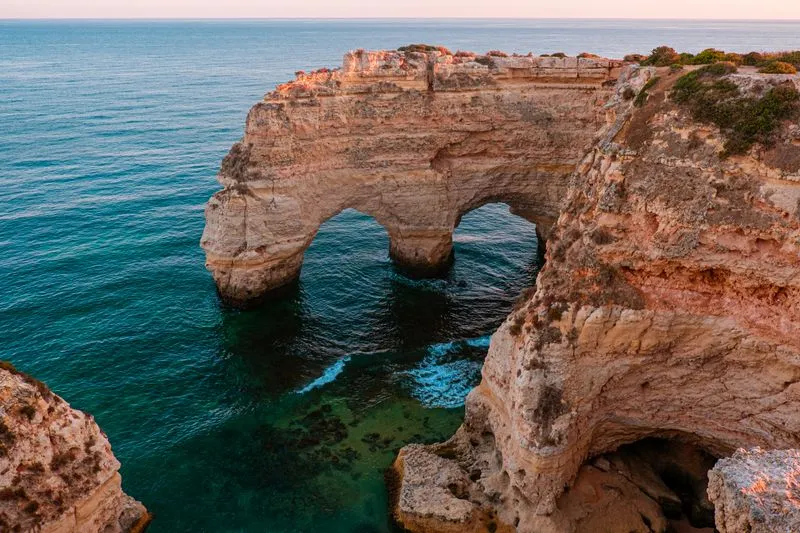
Days 6 and 7: the Algarve. Lagos (the arches of Ponta da Piedade seen from a kayak), Praia da Marinha, Benagil cave. Skip Albufeira — too built-up for my taste. Good news for the budget: Portugal's Law 37/2024 scrapped the tolls on the A22, the Algarve motorway, from 1 January 2025. You can cross the region from west to east without worrying about the gantries.
Days 8 and 9: Seville. The longest drive of the route, Spanish border included. The Alcázar, the cathedral, the Santa Cruz quarter, then tapas in Triana rather than around the Plaza de España. Keep one evening for flamenco in a tablao.
Day 10: home. Drop the car in Seville. Most big hire companies allow a return in another country, but with a one-way fee you need to know about BEFORE you book.
What pushes the bill up: that cross-border drop-off fee. If the quote stings, loop back to Faro to return the car and take the bus to Seville.
Route 2: Rome — Amalfi Coast — Puglia (12 days)
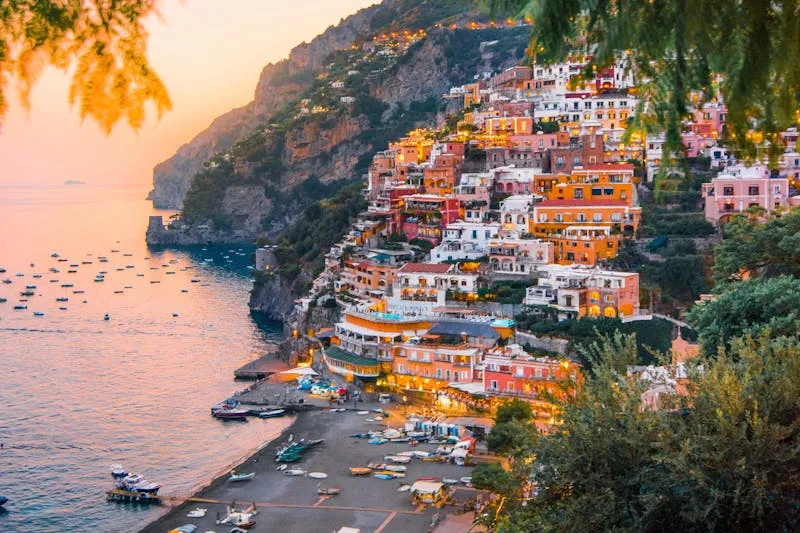
Why this route: the dolce vita, road-trip edition. Rome, the Amalfi Coast, then Puglia — a region that gets a fraction of the attention it deserves, and more than earns the detour.
Total distance: about 450 miles (720km) from Rome to Bari airport; longest leg: Rome to Positano, about 170 miles (270km, 3½ hours' driving without stops).
Days 1 to 3: Rome. No car here — collect it on the morning you leave the city, not before. Colosseum, Trastevere, the Vatican, and cacio e pepe at Felice a Testaccio. Rome deserves three days at the very least, and you'll still leave wanting more.
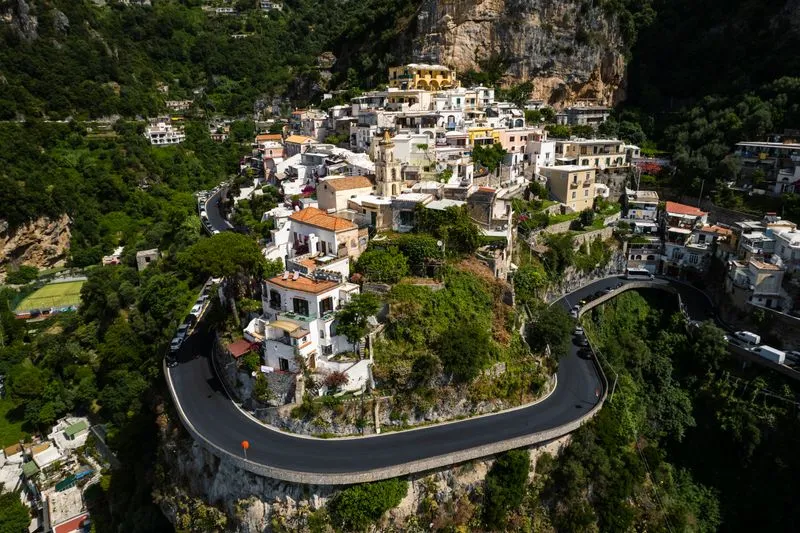
Day 4: drive to the Amalfi Coast. Motorway to Naples, then the Sorrento peninsula and the SS163, the Amalfitana — one of the most spectacular coastal roads in Europe. Take your time, stop often, and let the calmest driver handle the hairpins.
Days 5 and 6: the Amalfi Coast. Positano (pricey, but worth one night), Amalfi, Ravello. The SITA buses are a real alternative if the road frightens you: the bends are tight and the drop is very real. Check the traffic calendar before you head up, too. After the spring bank holidays (14 April to 2 May, according to the Comune di Amalfi), alternating number-plate restrictions come back to the SS163 in summer: Positanonews's rundown of the 2025 calendar has them on weekends and public holidays from 1 June to 31 July, every day from 1 August to 30 September, then on October weekends and public holidays, 10am to 6pm. On odd dates, plates whose last digit is odd can't use the road, and the reverse on even dates. Self-drive hire cars aren't exempt — among hired vehicles, only taxis and chauffeur-driven cars (NCC) are — and a hotel booking only covers your arrival and departure. So check the last digit of your plate at the desk, and plan your drives to Amalfi or Ravello for the days it's allowed through.
Days 7 and 8: Matera. The Sassi are cave districts carved into the rock and listed as a UNESCO World Heritage Site. For me it's one of the most photogenic places in Europe, especially when the lights come on in the caves at dusk. Sleep in a converted cave for at least one night.
Days 9 to 11: Puglia. Alberobello and its trulli (little stone houses with conical roofs), Ostuni the white city, Polignano a Mare and its beach wedged between two cliffs. Seafood at the counter, local olive oil, burrata at every meal: this is the part of the trip where the budget gets to breathe.
Day 12: fly home from Bari. Return the car at the airport.
What pushes the bill up: nights on the Amalfi Coast and parking in the villages, which is scarce and never free. Puglia more than makes up the difference.
Route 3: Edinburgh — Highlands — Isle of Skye (8 days)
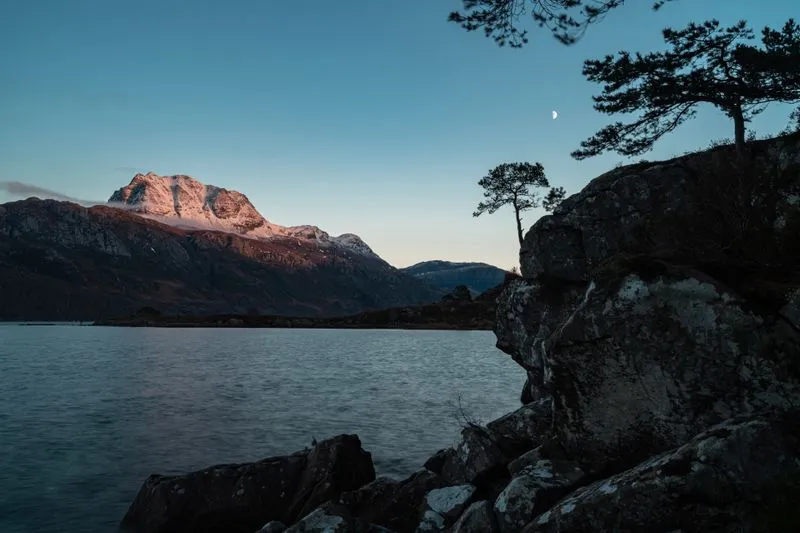
Why this route: lochs where yours is the only car for miles, cosy pubs, and no passport queue, currency exchange or single gear change on the wrong side. It's also the easiest route here to start by train: LNER and the Caledonian Sleeper both run from London to Edinburgh, and the Sleeper turns the journey into the first night of the holiday.
Total distance: about 620 miles (1,000km) as a loop from Edinburgh; longest leg: Inverness to Edinburgh, about 155 miles (250km, 3½ hours' driving without stops). The Applecross and Torridon day is shorter, about 110 miles (180km) from Portree, but takes around 4 hours on single-track roads.
Days 1 and 2: Edinburgh. The Old Town, Arthur's Seat at sunrise, a pub on the Royal Mile. Only collect the car on the morning of day three.
Day 3: into the Highlands. Via Stirling, then Glencoe, where the landscape flips in one bend: bare hills, lochs, waterfalls. Stop at Glencoe for a walk in the glen, then spend the night in Fort William.
Days 4 and 5: the Isle of Skye. Over the Skye Bridge from Kyle of Lochalsh, with a photo stop at Eilean Donan Castle on the way. On the island: the Old Man of Storr walk, the Fairy Pools (magical, and freezing), the Quiraing. Stay in Portree — book well ahead, the island is small and rooms go fast.
Day 6: a stretch of the North Coast 500. If you have time, drive Applecross and Torridon, one of the wildest sections of the loop around the north of Scotland.
Day 7: Loch Ness and Inverness. Touristy, yes. But the loch is impressive — and Inverness is a charming place for a final Scottish night.
Day 8: back to Edinburgh. Down the A9 through the Cairngorms National Park, then the train or a flight home.
What pushes the bill up: accommodation on Skye in summer. The roads cost nothing: there are no tolls on this route.
Route 4: Zagreb — Split — Dubrovnik (10 days)
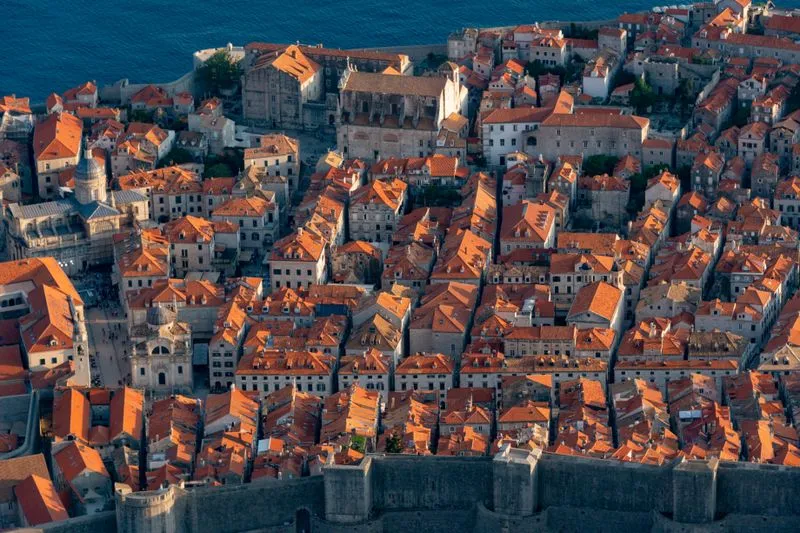
Why this route: Croatia packs Mediterranean Europe into one trip — medieval towns, turquoise water, national parks — with ferry-linked islands that give the whole thing a proper holiday rhythm.
Total distance: about 400 miles (640km) of road from Zagreb to Dubrovnik, not counting the ferries or the island roads; longest leg: Plitvice to Split, about 170 miles (270km, 3½ hours' driving without stops).
Days 1 and 2: Zagreb. An underrated capital. Dolac market, the Upper Town, and a café-terrace culture that would put most British high streets to shame.
Day 3: Plitvice Lakes National Park. Cascading lakes listed by UNESCO, linked by wooden boardwalks. Book your ticket online and pick your trail to match the group's energy: some take a morning, others fill the whole day.
Days 4 and 5: Split. Diocletian's Palace, where people live, sleep and drink coffee inside Roman walls, the Riva promenade at dusk, Bačvice beach. Take a ferry to Brač for Zlatni Rat, the pebble spit that changes shape with the wind.
Days 6 and 7: Hvar. Ferry from Split. The island has a reputation as Croatia's party capital, but it also has lavender fields, vineyards, a Spanish fortress and sunsets you watch with a cocktail in hand.
Days 8 and 9: Dubrovnik. For years, the coast road to Dubrovnik crossed a sliver of Bosnia and Herzegovina at Neum, with two border checks. Not any more: the Pelješac Bridge, opened in July 2022, lets you bypass Bosnia's short stretch of coast and stay in Croatia all the way. In Dubrovnik: the city walls, the old town, and a sea-kayak loop around the ramparts.
Day 10: fly home from Dubrovnik.
What pushes the bill up: car ferries, and Dubrovnik in July and August. If your dates are flexible, aim for June or September on the coast.
Route 5: Malaga — Granada — Ronda — Cadiz (9 days)
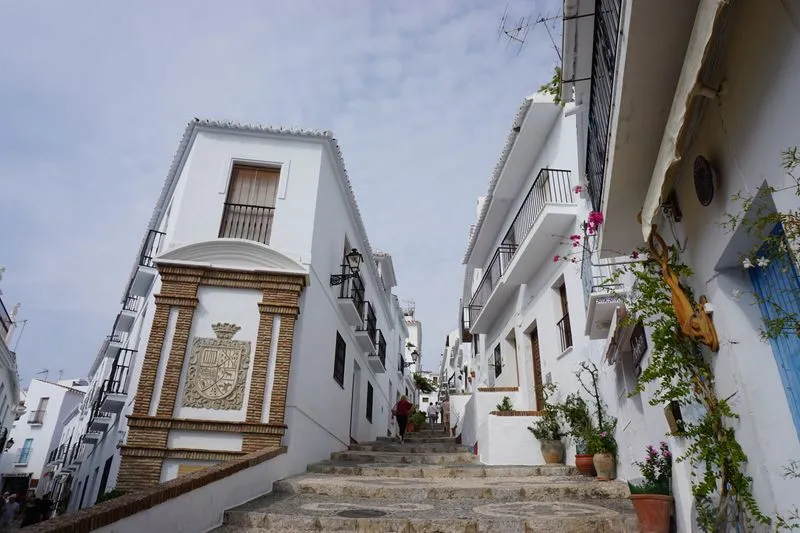
Why this route: in my view, the best beauty-to-budget ratio in this selection. Tapas served with your drink in plenty of Granada bars, the Alhambra and Moorish courtyards, and drives through olive groves and white villages.
Total distance: about 470 miles (760km) as a loop from Malaga; longest leg: Granada to Ronda via Antequera, about 120 miles (190km, 3 hours' driving without stops).
Days 1 and 2: Malaga. The historic centre, the Picasso Museum, Atarazanas market, and grilled fish on the seafront. Collect the car on the morning of day three.
Days 3 and 4: Granada. The Alhambra first — book through the official ticket site as soon as your dates are fixed — it's the one visit I'd lock in before even booking the car. Then the Albaicín, sunset from the Mirador de San Nicolás, and a tapas crawl through the centre.
Day 5: Ronda. Via Antequera and the olive-covered hills. The Puente Nuevo over the Tajo gorge, the eighteenth-century bullring, the local bodegas. A night in a cortijo, one of those big Andalusian farmhouses turned guesthouse, is part of the experience.
Days 6 and 7: the white villages and Cadiz. Arcos de la Frontera, Zahara de la Sierra (the most photogenic, with its turquoise lake), then Cadiz, founded by the Phoenicians. La Caleta beach, the cathedral, and fried fish in a paper cone on the Plaza de las Flores.
Day 8: Tarifa. The southern tip of mainland Europe: on a clear day, you can see the mountains of Morocco across the strait. Kitesurfing hub, near-constant wind, surfers' camper vans parked along the beach. Right next door, Bolonia beach and its dune, with the Roman ruins of Baelo Claudia at the edge of the sand.
Day 9: back to Malaga along the coast, then the flight home.
What pushes the bill up: hardly anything — apart from Malaga in high summer. This is the route I'd recommend to a group on its first road trip.
Road trip budget for three: a worked example and the five lines to work out together
A road-trip budget gets worked out line by line, and fuel is the easiest line to put a figure on in advance. Let's take a made-up example, just for the method: three friends drive Route 1, about 435 miles (700km) from Lisbon to Seville, in a small car that uses 6 litres per 100km. On 26 May 2025, the European Commission's Weekly Oil Bulletin put the average price of unleaded 95 in Portugal, where most of the driving happens, at the equivalent of £1.41 a litre, converted at the European Central Bank's reference rate for that day (£0.8392 to the euro). The result: 700 × 6 ÷ 100 = 42 litres, and 42 × £1.41 = about £59 of fuel, or roughly £20 each.
Spain came in cheaper in the same bulletin, at around £1.22 a litre, so the estimate leaves a little margin. The other lines need quotes, not a formula, and ten years of stretching every pound on holiday have taught me one thing: this budget has to be worked out together, before you leave — otherwise it gets settled on the last day in an airport car park, calculator in hand. Here are the five lines to put in a shared spreadsheet.
Car hire. Compare a broker AND the hire company's own site, for the same car category and the same cover — the gap changes from one booking to the next. Go for unlimited mileage on a road trip, and write down the three lines brokers print small: the excess, the additional driver and the one-way fee.
Fuel. The formula from the example works for all five routes: total kilometres × consumption per 100km ÷ 100 × local price per litre, then divide by the number of passengers. Every route in this guide shows its total distance, rounded, measured stop by stop on a route planner. The consumption is on the car's spec sheet; the price per litre you check the week you leave, because it varies from country to country.
Tolls. They vary enormously between routes. None on our Scottish loop, none on the Algarve's A22 since 2025, classic barrier tolls on Italian and Croatian motorways. In Andalusia, the white villages are all on free roads.
Accommodation. Mixing hostels, guesthouses and rentals, triple or quad rooms bring the per-person cost down. Book the "sensitive" nights (Positano, Portree, Dubrovnik) and keep the rest flexible.
Food. Supermarket breakfast, a set lunch menu in a village restaurant, tapas or trattoria for dinner: the simplest way to eat very well for not much.

To share it all, set up a group kitty before you leave rather than settling up afterwards. It's exactly the kitty method from our hen party guide for every budget: a per-person cap agreed together, and one person in charge of the accounts.
Practical tips: hire, insurance, tolls, driving
Book the car as soon as your dates are fixed. In high summer, the small categories and the automatics go first. Waiting means betting against everyone who's travelling at the same time as you. On four of these five routes you'll be driving on the right, which in a manual hire car means changing gear with your right hand: if that thought makes your palms sweat, book an automatic, and book it early.
Fill up before returning the car. Unless you've paid for a fuel option, handing the car back without a full tank means paying the hire company to refuel it. Find the nearest petrol station to the drop-off point the night before, not on the way to the airport.
Photograph the car before you leave. Every scratch, every dent, the wheels, the windscreen. Email the photos to yourself: if there's a dispute on return, you've got dated evidence.
Generate your licence check code. GOV.UK lets you create a check code to share your driving record with someone, for example a car hire company, and the code is valid for 21 days. Create it the week you fly, for every driver in the group.
Your phone's satnav is enough. Google Maps or Waze, with maps downloaded for offline use in areas with no signal (the Highlands, the Andalusian back roads). No need to rent the hire company's unit.
Alternate drivers. Everyone who'll drive must be added to the contract as an additional driver. It's the best safety investment of the trip: swap at every stop, and nobody drives tired. Check the contract allows you to cross a border, too — some hire companies restrict it.
The essential playlist (because a road trip without music is just a commute)
Create three playlists before you leave, and give the whole group editing rights.
The "open road" playlist: tracks that make you want to wind the windows down. Fleetwood Mac, Tom Petty, Lorde, Arctic Monkeys, Arlo Parks. The kind of songs that become the soundtrack to your summer — and that you'll never hear again without smelling sun cream.
The "local" playlist: music from the country you're driving through. Fado in Portugal, flamenco in Andalusia, Celtic folk in Scotland. Shazam every track you hear in cafés, and the playlist builds itself on the road. If the dates line up, plan a stop around a gig — our picks of the must-attend music festivals this summer give you plenty to detour for.
The "dusk" playlist: softer tracks for the final kilometres. Bon Iver, Phoebe Bridgers, Tamino, Billie Eilish. The moment when conversation fades and everyone gazes out of the window. For the long straight stretches when nobody wants to sing any more, keep a few episodes of the podcasts for women you absolutely must listen to in reserve.
Download all three playlists for offline use the night before: in the Highlands and the Andalusian back country, streaming drops out before the satnav does.
Frequently asked questions
Do I need an international driving permit to drive in Europe?
Not in the EU if you hold a photocard licence. The GOV.UK guidance on international driving permits is clear: "You do not need an IDP to drive in the EU, Switzerland, Norway, Iceland or Liechtenstein if you have a photocard driving licence issued in the UK." If you still have an old paper licence, you'll need to update it to a photocard or get an IDP.
What size car should I hire?
For two or three people, a small car is fine (Fiat 500, Vauxhall Corsa, Renault Clio). For four with luggage: an estate or a compact SUV (Peugeot 3008, Dacia Duster). Simple rule: if the bags don't fit in the closed boot, it's too small — and never leave anything visible inside the car.
How do tolls work without cash?
Cards work at most barrier tolls, in Italy as in Croatia. Portugal is different: part of its motorway network is paid through electronic gantries, with no barrier and no booth. Ask the hire company whether the car has an electronic toll device and how the crossings will be billed to you. Good news for the Algarve road, the A22: it has been toll-free since 1 January 2025.
Can I drop the car off in a different country?
Yes, most major hire companies (Europcar, Hertz, Avis) allow it, with a one-way fee set by each company for each journey. Check that cost BEFORE booking — it can turn a good deal into a bad one. Check too that the contract allows you to cross the border.
What if we have an accident or breakdown?
For a breakdown, call the hire company's assistance number (it's on the contract — save it in your phone when you pick up the car). After an accident: fill in the European accident statement with the other driver, call the hire company and take photos. For medical care, pack your GHIC. The NHS page on the free UK GHIC explains that it lets you get necessary state healthcare in the European Economic Area, and adds: "The UK GHIC is not a replacement for travel insurance."
When's the best time for a European road trip?
May, June and September: fewer crowds, gentler prices and pleasant weather. July and August: hotter and pricier, but often the only window when the whole group is off work. Scotland is at its best around the June solstice, when the evenings never seem to end. The south (Portugal, Andalusia, Croatia) is ideal in May or September.
Sources
- GOV.UK — International driving permits (IDPs)
- GOV.UK — View or share your driving licence information
- GOV.UK — The Highway Code, rules 103 to 158 (single-track roads)
- Which? — Best car hire insurance, cheaper than rental desks (2022)
- NHS — Apply for a free UK Global Health Insurance Card (GHIC)
- Diário da República — Law 37/2024 (end of tolls on the A22 and other motorways)
- Infraestruturas de Portugal — Electronic tolls in Portugal
- Comune di Amalfi — Alternating number plates on the SS163 (14 April to 2 May 2025)
- Al Jazeera — Croatia opens long-awaited bridge bypassing Bosnia
- Positanonews — Circolazione a targhe alterne sulla SS 163 Amalfitana, tutti i dettagli (28 May 2025)
- European Commission — Weekly Oil Bulletin (EU fuel prices)
- European Central Bank — Pound sterling/euro reference exchange rate