You take your make-up off every evening. Cotton pad, micellar water — done. Except the night you run a second cotton pad over your face "just to check", it comes back grey. All that foundation, pollution, SPF — still there. Double cleansing is the single change that transformed my skin in three weeks. No extra serum: just make-up that actually comes off.
K-beauty (Korean skincare) made it famous, and the whole method fits on a Post-it: oil first, water-based cleanser second. It works, and you can see it working — but it isn't for everyone, which is the part the ten-minute video tutorials tend to skip. Double cleansing is also the first step of my complete beauty routine, in the right order. Here it gets the full treatment: the technique, the products, and the skin types that can happily do without.
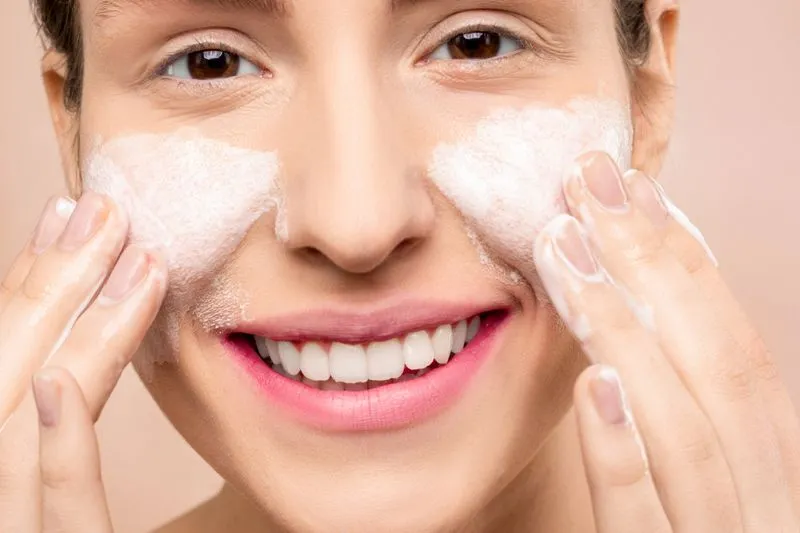
Why one cleanse isn't always enough
A single cleanser struggles to shift everything because your skin collects two families of residue during the day, and they don't dissolve in the same thing:
- Oil-soluble impurities: make-up (foundation, mascara, lipstick), sebum, sunscreen. They dissolve far more easily in oil than in water.
- Water-soluble impurities: sweat, dust, whatever is left of the first cleanse. These rinse away with water.
A standard gel cleanser is mostly built for the second family. On waterproof mascara or a water-resistant sunscreen, it slides over the top without taking it all off (hence the grey cotton pad). Dermatologist Dr Jane Wu, speaking to the Cleveland Clinic in its explainer on double cleansing, sums up what the oil step is for: removing waterproof make-up and sunscreen — and, for oily skin, excess sebum.
Micellar water has its place: on a light base, a couple of pads will do. Against my waterproof mascara it loses every time, first pad and second pad alike — and even when it wins, I still want a proper rinse-off cleanser afterwards rather than going to bed with the stuff sitting on my face.
The double cleansing principle
Double cleansing rests on one rule of basic chemistry: like dissolves like. Oil dissolves oil; a water-based cleanser takes care of the rest (sweat, dust, leftover oil).
- First step (oil cleanser): an oil or balm dissolves make-up, sunscreen and sebum. Oil attracts and breaks down oil — that's the whole trick.
- Second step (water-based cleanser): a gel, foam or cream removes the film left by the first step, plus anything water-soluble, such as sweat.
The result: clean skin with no greasy film — ready for the rest of your routine. According to the Cleveland Clinic, the extra step helps the water-based cleanser do its job and lets the products you apply afterwards penetrate better. Keep your expectations in check, though: clean skin makes your serum's life easier, it doesn't turn a cream into an injection (shame, I know).
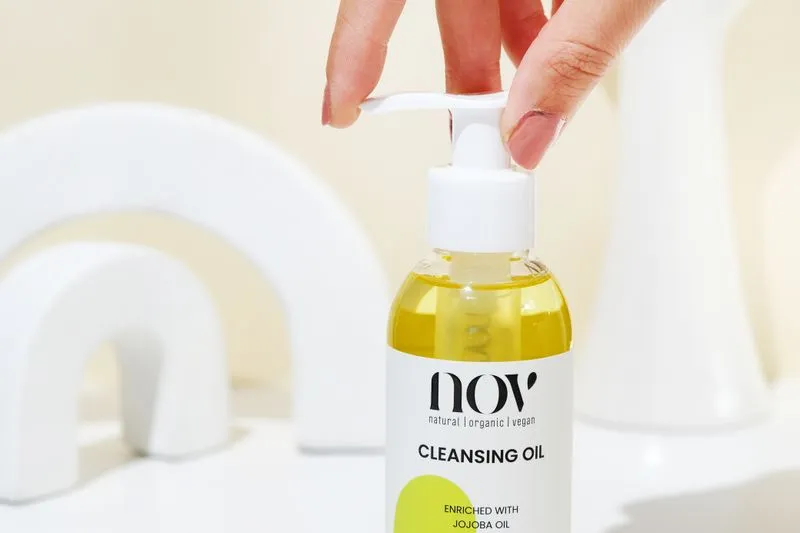
Who double cleansing is for, and who can skip it
Double cleansing earns its place if you wear make-up, especially waterproof, or a water-resistant sunscreen. That's the Cleveland Clinic's view — and the same article says plainly that if you go make-up-free, it might not be the routine for you.
Dr Wu goes further: for most people, one thorough wash with a gentle cleanser is more than enough, and dermatologists worry more about over-washing (dryness, irritation, a damaged skin barrier) than about a skipped step. I'll be blunt: I agree (yes, even though I talk about it like a revelation). Double cleansing changed my skin because I wear foundation and a water-resistant sunscreen — the two cases where it really pays off. Without either, a single gentle cleanser in the evening does the job perfectly well.
- Worth it: long-wear or waterproof make-up, daily water-resistant sunscreen, oily skin that's shiny by the end of the day (the classic 6pm shiny nose).
- Optional: light make-up or a tinted moisturiser. Micellar water followed by a gentle cleanser does the same work — an option Dr Wu calls a great alternative.
- Overkill: bare skin with no make-up or sunscreen, very dry or irritated skin. One gentle cleanse is plenty — no need to overdo it.
- Handle with care: acne-prone skin, because the oil in step one can trigger breakouts.
Step 1: the oil cleanser — how to apply it properly
An oil cleanser goes onto dry skin, gets a good minute of massage, is emulsified with a splash of lukewarm water, then rinsed off — whether it's an oil, a balm or a "balm-to-oil".
The technique
- Dry hands, dry face: this is where most people go wrong (me included, at first). Water emulsifies the oil before it has dissolved anything. Massage the oil straight onto dry skin.
- The right amount: two or three pumps, or a 20p-sized scoop of balm. Too little and the oil won't glide — you end up dragging your skin.
- Massage for a good minute: gentle circles over the whole face, eyelids and lips included. Pay attention to the nose, the sides of the nostrils and the jawline — where foundation clings the most. That's my working rule rather than a scientific standard; any less and my foundation is still there.
- Add a splash of lukewarm water: a few drops are enough to emulsify the oil — it turns white and milky. That's your sign it's ready to rinse.
- Rinse with lukewarm water: until there's no emulsion left on your skin (about twenty seconds, in my case).
Types of oil cleanser
- Cleansing oil: the lightest texture, spreads easily and emulsifies well. Handy for normal to combination skin.
- Cleansing balm: solid in the pot, it melts on contact with your fingers. Richer (and more pleasant to massage in, let's face it), and a favourite with dry skin. Examples: Clinique Take The Day Off, Emma Hardie Moringa Cleansing Balm.
- Rich cleansing milk: somewhere in between — often less effective on stubborn make-up.
Step 2: the water-based cleanser, gentle and soap-free
Step two lifts away the film from step one and everything water-soluble. This is where plenty of people make the opposite mistake — something far too harsh, because they want their skin to feel "squeaky clean".
Rules for step two
- A gentle, soap-free cleanser: ordinary soap has a pH of between 9 and 10, while the skin's surface sits at a physiological pH — around 4 to 6.5. Both figures come from Partha Mukhopadhyay's review of cleansers in dermatology (Indian Journal of Dermatology, 2011). Many dermatologists believe keeping skin at that pH while cleansing limits the growth of some bacteria, including the one linked to acne, and alkaline soap is said to damage the skin's lipid layer; the same review notes the point is still debated. On the label, look for "soap-free" or "pH-balanced".
- Swap soap for an emollient if you have eczema-prone skin: the NHS advises washing with an emollient instead of soap.
- Lukewarm water to rinse: not scalding (even in February), not icy. The full explanation is in my piece on the right water temperature for washing your face.
Adapting double cleansing to your skin type
Double cleansing doesn't work the same way on every skin type — and on some, it's up for debate.
Oily or acne-prone skin
This is the trickiest case. On one hand, according to the Cleveland Clinic, an oil cleanser can help oily skin shift excess sebum. On the other, the same article warns that an oil-based cleanser can cause breakouts on acne-prone skin, especially if it's used alone. UK advice leans cautious too: the NHS page on acne advises avoiding oil-based make-up, skincare and suncare products in favour of water-based, non-comedogenic ones, and the acne leaflet from the British Association of Dermatologists (BAD) warns that oily skincare products and greasy moisturisers can cause or worsen acne, pointing you instead towards products labelled "non-comedogenic" or "oil-free".
- Step 1: only if you wear make-up or a water-resistant sunscreen. A rinse-off cleansing oil labelled "non-comedogenic", never left on the skin on its own. Otherwise, skip it (guilt-free).
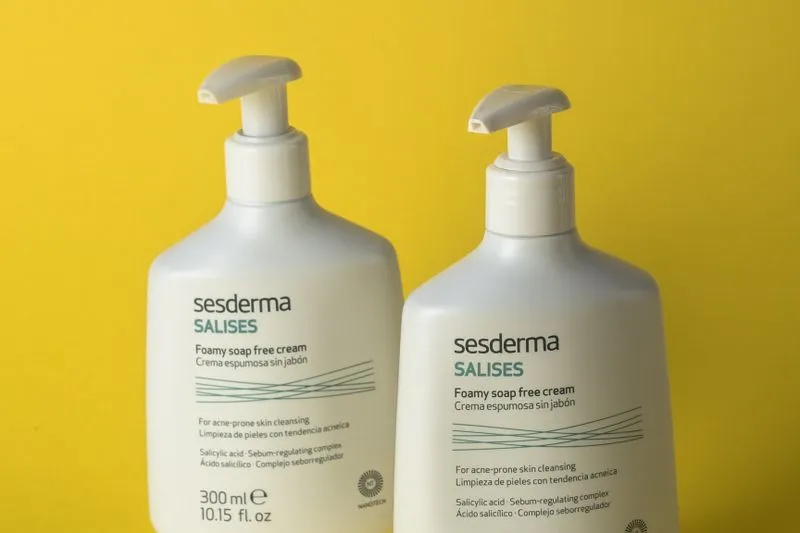
- Step 2: a gentle, soap-free foaming gel. Dr Wu points to cleansers with salicylic acid, glycolic acid or benzoyl peroxide for oily, acne-prone skin.
- The sensible reflex: if spots appear after you've added an oil to your routine, suspect the oil first — before you overhaul everything else.
Dry skin
- Step 1: a rich balm or a nourishing cleansing oil (balms were made for this).
- Step 2: a gentle, soap-free cream or milk cleanser. Dr Wu notes that cream cleansers are less drying than foaming ones.
Combination skin
- Step 1: a light cleansing oil — on the evenings you wear make-up.
- Step 2: a gentle gel cleanser, focusing on the T-zone.
Double cleansing and sensitive skin: is it possible?
Yes, sensitive skin can handle double cleansing, as long as every product is chosen with care and massaged in without rubbing.
- Step 1: a fragrance-free balm or oil, with no essential oils. Test anything new on a small patch of skin first.
- Step 2: an ultra-gentle cleanser, fragrance-free and alcohol-free. The sensitive-skin ranges from Avène, La Roche-Posay Toleriane and Bioderma Sensibio are good starting points, and they're widely stocked by UK chemists.
Atopic eczema? Check with your GP or dermatologist before adding a step — a flare-up is not the moment to change your routine. The emollients used to treat eczema can also stand in for your cleanser, as the NHS page on atopic eczema explains.
Double cleansing mistakes to avoid
Mistake 1: skipping step one because "I'm not wearing make-up"
If you put on a water-resistant sunscreen in the morning, it's still there in the evening — make-up or not. With no make-up and no water-resistant sunscreen, a gentle cleanser is enough: that's exactly when double cleansing is overkill.
Mistake 2: using a cotton pad or flannel for step one
Step one is massaged in with your fingers (clean ones, obviously). A cotton pad rubbed over your face soaks up the oil before it has dissolved anything, and the American Academy of Dermatology's face-washing advice warns that a washcloth, mesh sponge or anything other than your fingertips can irritate your skin.
Mistake 3: rinsing with hot water
Rinse with lukewarm water: the Cleveland Clinic warns that water that's too hot dries your skin out.
Mistake 4: massaging for ten seconds and rinsing
Ten seconds won't dissolve long-wear foundation and sunscreen. Give step one a good minute — timed, the first time. Nothing official about it: the white cotton pad test will soon tell you whether your skin and your make-up let you get away with less.
Mistake 5: a second cleanser that's too harsh
If your skin feels tight after cleansing, your second cleanser is too aggressive. Well-cleansed skin should feel clean and comfortable — not taut like a drum.
Double cleansing belongs in the evening
Double cleansing is an evening routine. The evening is when your skin is wearing the day's make-up, sunscreen, sebum and pollution, and the NHS acne page tells you to remove make-up completely before going to bed.
In the morning, a simple cleanse is enough — a gentle water-based cleanser, or even just lukewarm water if your skin is very dry or sensitive. The American Academy of Dermatology suggests limiting washing to twice a day, plus once after a sweaty workout, and the NHS advice for acne-prone skin is to wash no more than twice a day, with a mild cleanser and lukewarm water.
The exception (there's always one): if you applied a very rich face oil or overnight mask the night before, a quick pass of cleansing oil in the morning helps lift it all off without rubbing. But that's an exception, not a second routine.
The best double cleansing products, from budget to splurge
You don't need to spend much. In my experience, a higher price doesn't reliably buy a better cleanser, and some of the most dependable options live on the chemist's shelf. Here's a starting point for each skin type, from Boots to the beauty hall.
Recommended first steps
| Skin type | Budget | Splurge |
|---|---|---|
| Oily / acne-prone | Bioderma Sébium H2O, a micellar water, as an alternative to oil | — |
| Dry | Pure jojoba oil, followed by a cleanser | Emma Hardie Moringa Cleansing Balm |
| Sensitive | Bioderma Sensibio H2O, a micellar water | Clinique Take The Day Off Cleansing Balm |
| Combination | The Ordinary Squalane Cleanser | DHC Deep Cleansing Oil |
Acne-prone: if you'd rather use an oil, pick one labelled "non-comedogenic" and always follow it with a cleanser.
Recommended second steps
| Skin type | Budget | Splurge |
|---|---|---|
| Oily / acne-prone | CeraVe Foaming Cleanser | Paula's Choice CLEAR Pore Normalizing Cleanser |
| Dry | CeraVe Hydrating Cleanser | Tatcha The Rice Wash |
| Sensitive | Bioderma Sensibio Foaming Gel | First Aid Beauty Pure Skin Face Cleanser |
| Combination | La Roche-Posay Effaclar Purifying Foaming Gel | Drunk Elephant Beste No. 9 Jelly Cleanser |
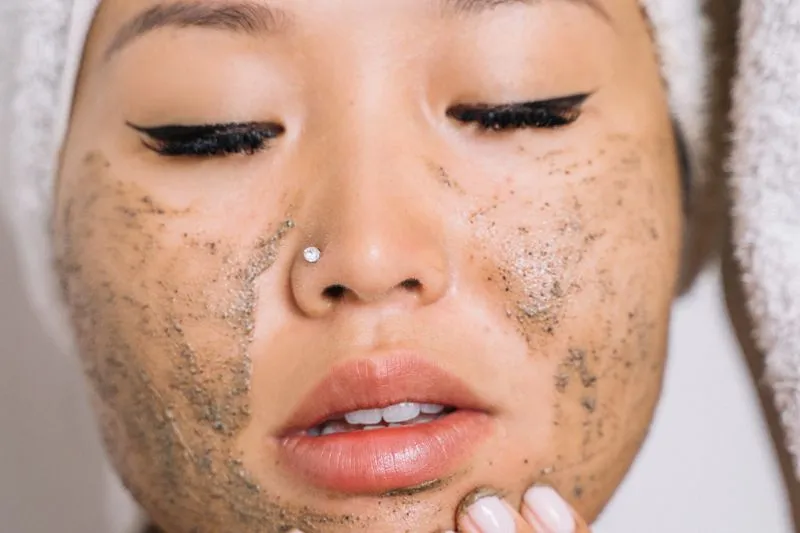
What about exfoliating? It isn't part of double cleansing. Keep it for other evenings — never every day — and go easy if you're spotty: the BAD's leaflet warns that scrubbing too hard can irritate the skin and make acne worse. For the body, the rules are different; they're all in my guide to body exfoliation done right.
Frequently asked questions
Is double cleansing suitable for oily skin?
Yes, with care. A cleansing oil dissolves the mix of sebum, make-up and sunscreen well. The Cleveland Clinic's article on double cleansing finds it useful on oily skin for removing excess sebum, but warns that on acne-prone skin it can trigger breakouts, especially if used alone. Choose a non-comedogenic one, always follow it with a water-based cleanser, and drop it if your spots get worse.
Can I use coconut oil as my first cleanser?
Best avoided. In its article on coconut oil and skin, the Cleveland Clinic explains that coconut oil is highly comedogenic and generally not recommended on the face: it can clog pores and increase blackheads and whiteheads. Dr Wu allows a little as a make-up remover, as long as you follow it with a water-based cleanser to cut the risk of clogged pores and milia. A cleansing oil formulated with an emulsifier is still the better choice — it actually rinses off.
Will double cleansing dry out my skin?
It can, if it's done badly. If your skin feels tight after double cleansing, one of your products is too harsh, or your water is too hot. Done right (a gentle balm, then a soap-free cleanser), it leaves skin clean but comfortable. And if your skin stays dry regardless, go back to a single gentle cleanse: Dr Wu is clear that over-washing dries and irritates.
Should I dry my face between the oil and the cleanser?
No. Once the oil is rinsed off, leave your skin damp and massage the water-based cleanser straight in: that's the method the Cleveland Clinic describes. The towel only comes out at the end, to pat (not rub) clean skin dry. I find a gel lathers faster on damp skin, too.
Can micellar water replace step one?
Partly. On light make-up, micellar water followed by a gentle cleanser does the job, and Dr Wu calls it a great alternative to double cleansing. On waterproof mascara or long-wear foundation, it takes me several cotton pads — and oil does it faster, with no rubbing.
How long before I see results?
For me, three weeks — for a noticeably less dull complexion. That's one person's experience, not a study: every skin changes at its own pace. The quicker answer is the white cotton pad test, which tells you from the very first evening whether your make-up is really coming off.
Can double cleansing cause breakouts?
It can, on acne-prone skin: the Cleveland Clinic notes that an oil-based cleanser can cause breakouts there, especially without a second cleanse. Other usual suspects: an overly rich balm, coconut oil, a rushed rinse (the most common, in my experience). If new spots appear after you've added an oil, stop it and go back to micellar water followed by a gentle cleanser. If they persist, talk to your pharmacist or GP.
Is double cleansing safe for sensitive eyes?
Yes. For the eye area, use an oil made for eyes or a very gentle balm, without essential oils or fragrance. Massage with your eyelids closed — very gently. For waterproof mascara, hold, without rubbing, a cotton pad soaked in cleansing oil against the closed eye for 30 seconds — the one exception to the fingertips-only rule.
Sources
- Cleveland Clinic — Double Cleansing Method Explained: Should You Try It? (2022)
- Cleveland Clinic — Should You Use Coconut Oil on Your Skin? (2022)
- NHS — Acne
- NHS — Atopic eczema
- British Association of Dermatologists — Acne patient information leaflet (July 2024)
- Mukhopadhyay P. — Cleansers and Their Role in Various Dermatological Disorders, Indian Journal of Dermatology (2011)
- American Academy of Dermatology — Face washing 101