
It's a Thursday in early May, a little before eight, and the top deck of the bus smells of someone's bacon roll. Nell (32, a paralegal) noticed it from the stairs. Then the coffee — two takeaway cups, two rows ahead. Then the perfume of the woman beside her, something sweet and powdery she would have asked the name of a month ago. Nell is seven weeks pregnant. She presses her forehead to the cold window and opens the little vent above it. Then she breaks a ginger biscuit into quarters and eats them one tiny bite at a time — all the way to her stop.
Nothing about this scene is unusual — which is rather the point. Around 8 out of every 10 pregnant women feel sick, are sick or both, according to the NHS page on severe vomiting in pregnancy. It's so common that it's often shrugged off. Yet the Royal College of Obstetricians and Gynaecologists (RCOG) is clear that it can affect your mood, your work, your home and your social life. Here is what we know about why it happens, how long it lasts, what genuinely helps — and the signs that should never wait until your next appointment.

Why do you get morning sickness?
Morning sickness is linked to pregnancy hormones. The NHS puts it cautiously: hormonal changes in the first 12 weeks of pregnancy are "probably one of the causes". For years, that was as far as anyone could go. Nobody could explain why one woman is sick ten times a day and her sister barely notices a thing.
Part of the answer arrived in December 2023. A study led by the University of Cambridge and published in Nature pointed to a hormone called GDF15. It acts on the brain to trigger nausea and vomiting. Most of the GDF15 in a pregnant woman's blood, the team showed, is made by the baby's side of the placenta. The University of Cambridge's account of the research quotes Professor Sir Stephen O'Rahilly, who led it.
"The baby growing in the womb is producing a hormone at levels the mother is not used to. The more sensitive she is to this hormone, the sicker she will become."
Sensitivity is the key word. Women who naturally have low levels of GDF15 before pregnancy have a higher risk of the severe form, hyperemesis gravidarum. Women with beta thalassaemia (an inherited blood disorder that keeps GDF15 very high all the time) experience little or no sickness at all. So it isn't only about how much hormone there is — it's about the gap between what the baby produces and what your body is used to. The Cambridge team presents its work as explaining why some women — the then Duchess of Cambridge among them — become so sick they need to be admitted to hospital.
There's no GDF15-based treatment yet. But the finding matters now, because it chimes with what the NHS already tells women with the severe form: it is not the result of anything you have or have not done.
What makes it more likely?
The NHS lists several factors that raise your chances of morning sickness:
- Expecting twins or more.
- Severe sickness and vomiting in a previous pregnancy.
- A tendency to motion sickness (car sickness, for example).
- A history of migraine headaches.
- Morning sickness in the family.
- Feeling sick on contraceptives containing oestrogen.
- It's your first pregnancy.
- A BMI of 30 or more.
Why is it called "morning" sickness?
Because it often starts in the morning — but the name is misleading. The NHS guide to vomiting and morning sickness says it plainly: "It can affect you at any time of the day or night or you may feel sick all day long." Plenty of women feel fine at breakfast and dreadful by four o'clock (or on the commute home).
When does morning sickness start?
Morning sickness usually starts early — between the 4th and 7th week of pregnancy, according to the RCOG. For most women, that means within a few weeks of a positive test, and often before anyone else knows.
| Stage of pregnancy | What usually happens | Source |
|---|---|---|
| Weeks 4 to 7 | Nausea and vomiting begin | RCOG |
| Weeks 16 to 20 | Usually clears up | NHS |
| By week 20 | Settled in 9 out of 10 women | RCOG |
| Beyond week 20 | Possible, especially with hyperemesis gravidarum | NHS, RCOG |
Some women feel it earlier, others later — and the intensity can shift from one week to the next. If you'd like to see what's happening to you and your baby along the way, our week-by-week pregnancy guide follows it all from day one.
How long does morning sickness last?
For most women, morning sickness clears up by weeks 16 to 20: the NHS morning sickness page says it "usually clears up by weeks 16 to 20", and the RCOG says it "settles by 20 weeks in 9 out of 10 pregnant women".
That still leaves one woman in ten. For some, it fades slowly — good days, then a relapse, then more good days (which is its own kind of tiring). For women with hyperemesis gravidarum, the NHS warns that it may not get better by 16 to 20 weeks. It may not clear up completely until the baby is born (although some symptoms may ease at around 20 weeks). The RCOG adds the reassuring part: symptoms usually resolve or improve after birth.
If you're past the first trimester and nothing is easing at all, don't just grit your teeth. Talk to your midwife or GP — there are treatments, and months of "coping" on your own help nobody.

How bad is too bad? When the NHS says to call
The NHS lists seven signs that mean you should call your midwife, GP or NHS 111 if you're vomiting:
- Very dark-coloured urine, or no pee in more than 8 hours.
- Being unable to keep food or fluids down for 24 hours.
- Feeling very weak, dizzy or faint when standing up.
- Tummy (abdominal) pain.
- A high temperature.
- Vomiting blood.
- Weight loss.
Without any of these signs, most morning sickness can be managed at home. With any of them, get checked — dehydration can be treated quickly, often without a hospital stay.
It also helps to know what you'll be asked. When women are assessed for pregnancy sickness, the RCOG describes a check-up that covers:
| What you'll be asked about | What to note down beforehand |
|---|---|
| How long you've had symptoms | The date it started |
| Whether you're keeping food and fluids down | A rough daily count of vomits and drinks |
| Any medication you've tried | Names, doses, and whether they helped |
| Rapid weight loss | Your weight before pregnancy and now |
| Other symptoms | Pain, fever, pain passing urine |
| A previous pregnancy like this one | What worked last time |
Everyday changes that ease nausea
If your sickness is mild, lifestyle changes are the first step. They won't make it vanish — but they can take the edge off. These are the changes the NHS recommends, grouped by where they help.
On your plate
- Start the day with something dry — dry toast or a plain biscuit.
- Eat small, frequent meals of plain foods that are high in carbohydrate and low in fat (bread, rice, crackers, pasta, potatoes).
- Choose cold food over hot if the smell of hot meals sets you off.
- Sip fluids little and often — water especially — rather than drinking a big glass at once.
- Steer clear of any food or smell that makes you feel sick.
If you're wondering which foods to favour and which to avoid for the full nine months, our guide to eating during pregnancy goes through it food by food.

Rest, and asking for help
Tiredness can make nausea worse, which is why the NHS puts "get plenty of rest" at the top of its list. If you already have a toddler at home, that advice may sound faintly comic — a nap, with a two-year-old? This is the moment to ask for help, and to ask precisely. "Could you do bath and bedtime every night this week?" gets you further than a vague "I'm shattered".
Were you active before pregnancy? Our trimester-by-trimester guide to exercise in pregnancy will help you adjust — on the good days and on the days when the sofa wins.
Ginger, acupressure and vitamin B6: what the evidence says
Ginger, acupressure bands and vitamin B6 turn up on every list of morning sickness remedies. The evidence behind them is thinner than the lists suggest (the NHS uses the careful phrase "some evidence" for the first two). Here is where each one stands.
| Remedy | What the NHS and RCOG say | Practical note |
|---|---|---|
| Ginger | Some evidence it may help reduce nausea and vomiting | Foods and drinks with ginger are fine; check with your pharmacist before taking ginger supplements |
| Acupressure | Some evidence that pressure on the wrist may help | A special band or bracelet on the forearm, or pressing with your fingers |
| Vitamin B6 on its own | Not mentioned as a standalone treatment on their pregnancy sickness pages | It is one of the two ingredients in Xonvea, the licensed medicine |
A ginger biscuit or a mug of fresh ginger tea is simply food. Capsules are different — they're concentrated supplements. That's why the NHS asks you to check with a pharmacist first (as you would with any "natural" product in pregnancy).

Iron and folic acid: what to pause, what to keep
Iron tablets can make pregnancy sickness worse, and the RCOG notes they can be stopped temporarily for that reason (always with your GP or midwife's agreement).
Folic acid is different. The NHS advice is to take a folic acid supplement for the first 12 weeks of pregnancy (you'll find the details on the NHS page on folic acid). So if a multivitamin tablet is making you retch, ask whether you can switch to a plain folic acid tablet for a few weeks — rather than dropping everything.
Anti-sickness medicines in pregnancy
If lifestyle changes aren't enough, there are anti-sickness medicines (antiemetics) that are safe to use in pregnancy. The NHS says your GP may recommend a short course, often a type of antihistamine. The RCOG patient information on pregnancy sickness sets out the usual order:
- Xonvea — a slow-release combination of doxylamine (an antihistamine) and pyridoxine (vitamin B6). The RCOG describes it as "the only licensed treatment of nausea and vomiting in pregnancy in the UK".
- Cyclizine — by mouth or by injection.
- Prochlorperazine, chlorpromazine and promethazine — if cyclizine hasn't worked.
- Metoclopramide, domperidone and ondansetron — usually used if the previous medicines haven't worked, because of a small risk of side effects.
Some of these medicines aren't licensed for pregnancy, but the RCOG considers them safe for you and your baby. Its patient information also makes a point worth holding on to: untreated hyperemesis gravidarum may cause more harm to the baby than any possible effects of a medicine your doctor recommends.
What it costs
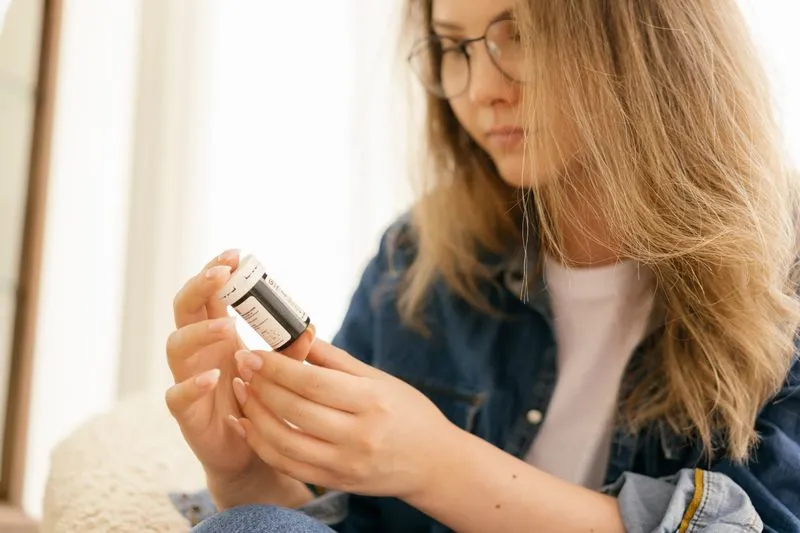
In England, the prescription charge is £9.90 per item. But you shouldn't be paying it. The NHS Business Services Authority's page on maternity exemption certificates explains that your midwife, doctor or health visitor can apply for one as soon as they confirm you're pregnant. One detail catches people out: "It is the maternity exemption certificate that entitles you to free NHS prescriptions, not being pregnant or having given birth in the last 12 months." Without a valid certificate, you may be liable for a penalty charge — so ask for it at your first appointment.
A word on ondansetron
Ondansetron is a strong anti-sickness medicine, licensed for sickness after surgery or cancer treatment. It's also used second-line for hyperemesis gravidarum. In January 2020, the Medicines and Healthcare products Regulatory Agency (MHRA) reported a small increased risk of cleft lip and palate when it's taken in the first 12 weeks. The figure is an additional 3 oral clefts per 10,000 births (14 per 10,000, compared with 11 in unexposed pregnancies).
If you've already taken it, the increase is small. It is, however, a reason why ondansetron isn't a first choice early on. The MHRA also says the decision should be made jointly — once you've been told the benefits and risks of each option.
Hyperemesis gravidarum: the signs you should never sit on
Hyperemesis gravidarum (HG) is the severe form of pregnancy sickness. The NHS says nobody knows exactly how many women get it, as some cases may go unreported — but it's thought to be around 1 to 3 in every 100. It isn't "bad morning sickness". It's a condition that needs treatment, and sometimes a hospital stay.
According to the NHS, the signs include:
- Prolonged and severe nausea and vomiting.
- Dehydration — feeling thirsty, tired, dizzy or lightheaded, not peeing very much, and having dark yellow, strong-smelling pee.
The RCOG describes it as sickness so severe that it stops you doing your daily activities and leaves you unable to eat and drink normally.
What happens when you're assessed
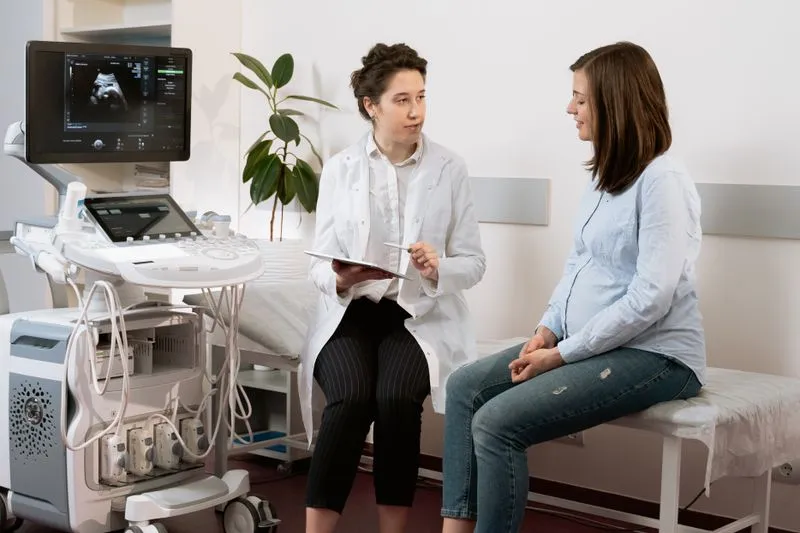
Your GP or midwife will usually arrange for you to be seen at the hospital's assessment unit (in the maternity department or the gynaecology unit). You'll have your temperature, pulse, breathing rate and blood pressure checked, you'll be offered a weigh-in, and your urine will be tested for infection. If you can keep some fluids down but not enough, the RCOG says you should be offered fluids through a drip over a short period (rapid rehydration) plus anti-sickness medicine. Many women feel much better afterwards and go home.
If you're admitted to hospital
While most women can be treated at home or as outpatients, the RCOG says 1 in 5 affected women may need admission. That's usually because they can't keep any fluids or tablets down, their blood tests are abnormal, or they've lost a lot of weight quickly. In hospital, you'll be given fluids through a drip. You'll also have anti-sickness medicine and a B vitamin called thiamine (both can go through the drip if tablets won't stay down). You may also be offered compression stockings and heparin injections, because dehydration and lying still raise the risk of blood clots. When nothing else works, corticosteroids may be considered.
HG takes a heavy emotional toll, and it helps to hear it said out loud. In the University of Cambridge's account of the research, Charlotte Howden, who was chief executive of the charity Pregnancy Sickness Support when it was published, recalls what she was told: "Oh, for God's sake, you've just got morning sickness. Pull yourself together." That isn't the standard of care anyone should accept. The NHS page on HG suggests the charity's support network if you want to talk to someone who has been through it.
Can morning sickness harm your baby?
Mild to moderate morning sickness doesn't harm your baby. The RCOG is direct about it: "There is no evidence that mild to moderate nausea and vomiting have a harmful effect on your baby." Living on crackers and toast for a few weeks, because nothing else will stay down, is nothing to feel guilty about.
Severe sickness is different. Women with severe nausea and vomiting or HG may have a baby with a lower than expected birthweight, and you may be offered extra scans to monitor growth. The NHS adds the other half of that message: HG is unlikely to harm your baby if it's treated effectively. That's the whole case for getting help early.
Is morning sickness a sign of a healthy pregnancy?
You'll hear this in every antenatal waiting room, and it isn't entirely an old wives' tale. In 2016, a US National Institutes of Health (NIH) analysis followed 797 women with positive pregnancy tests, who kept daily symptom diaries from the 2nd week of pregnancy. Those with nausea, with or without vomiting, were 50 to 75 per cent less likely to have a pregnancy loss.
Two caveats, though. All the women in that study had already had one or two losses, which limits how far the result travels. And a statistical association says nothing about any single pregnancy. Having no sickness at all is common — the NHS figure of 8 in 10 leaves a sizeable minority — and on its own it tells you nothing about how your pregnancy will go. If something worries you (bleeding or pain, especially), ask your midwife or GP.
Morning sickness at work: telling your employer and getting through the day
Morning sickness tends to peak at the worst possible moment professionally — in the first trimester, before most women have said a word. Legally, you have some time. The GOV.UK guide to working when pregnant says employees must tell their employer about the pregnancy at least 15 weeks before the beginning of the week the baby is due.
Keeping quiet has a cost, though. You can't take time off for antenatal appointments until you've told your employer. And once you have, your employer should assess the risks to you and your baby — including "standing or sitting for long periods without adequate breaks". Where there are risks, they should take reasonable steps to remove them (offering different work, for example, or changing your hours).

Whether or not you've told anyone yet, a few small habits make the working day more bearable:
- A snack every two or three hours, kept in your desk drawer.
- A water bottle on your desk, sipped little and often.
- A seat near a window or the door in meetings — well away from the coffee machine.
- A quiet word with HR about a later start, if the mornings are worst (once you've told your employer).
If the sickness is stopping you from working, don't wait until you're running on empty. The effect on your daily life and work is exactly what your GP or midwife needs to hear about.
Frequently asked questions
Can you get morning sickness before a missed period?
It's possible but not typical. The RCOG says pregnancy sickness usually starts between the 4th and 7th week of pregnancy. Nausea on its own has plenty of other possible explanations — a pregnancy test is the only way to know.
Does severe sickness mean you're having a girl?
No — you can't predict your baby's sex from your sickness. Neither the NHS nor the RCOG lists the baby's sex among the factors that make morning sickness more likely.
Will I get morning sickness again in my next pregnancy?
It isn't certain. Severe sickness in a previous pregnancy is one of the NHS risk factors. And if you've had HG before, the NHS says it's likely you'll get it again. It suggests planning ahead: arranging childcare so you can rest, doing the things that helped last time and talking to your doctor about starting medicine early.
Do I have to pay for Xonvea?
Not if you have a maternity exemption certificate (MatEx), which makes NHS prescriptions free during pregnancy and for 12 months after the birth. Without one, the standard charge in England is £9.90 per item. Your midwife or GP can apply for the certificate for you.
I don't have any sickness at all. Should I worry?
Not on that basis alone. If around 8 in 10 pregnant women feel or are sick, a good number don't. Studies linking sickness to a lower risk of miscarriage describe a statistical trend — not a prediction for you. If anything else concerns you, such as bleeding or pain, speak to your midwife or GP.
Can morning sickness last the whole pregnancy?
It's uncommon. The RCOG says it settles by 20 weeks in 9 out of 10 women. With HG, the NHS says it may not clear up completely until the baby is born. That's why ongoing severe sickness after 20 weeks should always be reported to your midwife or GP.
Sources
- NHS — Vomiting and morning sickness (reviewed 17 April 2024)
- NHS — Severe vomiting in pregnancy (reviewed 11 January 2023)
- RCOG — Pregnancy sickness (nausea and vomiting of pregnancy and hyperemesis gravidarum)
- University of Cambridge — Why seven in ten women experience pregnancy sickness (13 December 2023)
- MHRA Drug Safety Update — Ondansetron: small increased risk of oral clefts (27 January 2020)
- NHS — Folic acid
- NHS Business Services Authority — Maternity exemption certificates
- NHS — NHS prescription charges
- GOV.UK — Pregnant employees' rights
- NICHD (NIH) — NIH study links morning sickness to lower risk of pregnancy loss (26 September 2016)