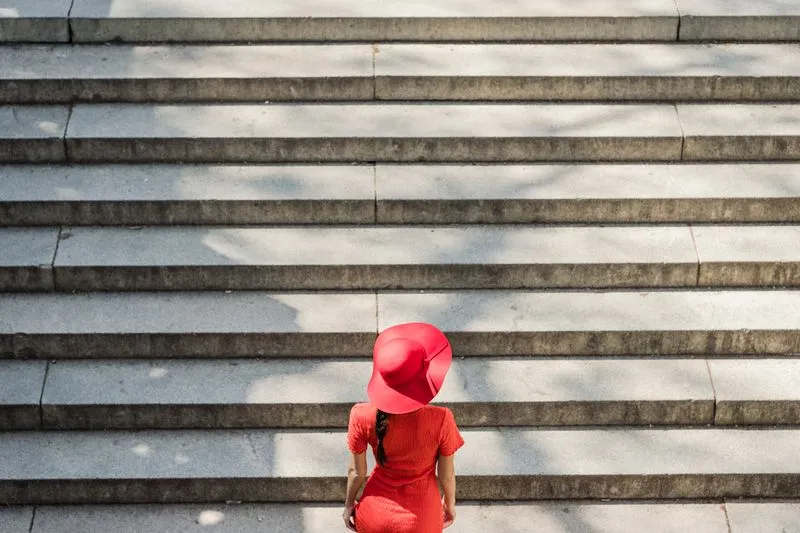
Tuesday 6 May, 7.04am. Your alarm hasn't gone off yet. Your phone, on the other hand, has been busy for an hour: 52 unread messages in the group chat. You open one eye. Rihanna, bump showing under a cropped jacket, in a hat the size of a bicycle wheel. A man with — you read it twice — a piano strapped to his back. A white gown whose train runs all the way down the steps. Then the question, typed at 6.58am: "Wait, what was the theme???"
In my group chat, it was Pauline who asked (three question marks, so properly lost). Clara said "suits". Sophie said "dandyism". I said "both" — which was correct and helped her not one bit. Meanwhile the thread kept scrolling: capes, canes, eleven hats, one cigar. Four people awake. Zero idea how to read any of it.
That's the Met Gala problem, seen from Britain. The whole thing happens on Monday evening in New York (so late at night here), and we discover it over breakfast, in a jumble, with no instructions. The result: we mark outfits like exam papers without having read the question. But the Met Gala does have a question — two, in fact — plus strict rules and a purpose most people have never heard of.
I've never climbed those steps (and I almost certainly never will: I watch the shows on livestream, not from the front row). But after years of picking apart the photos every first Monday in May, I've worked out how the machine runs. So here's the manual, then a method for reading a look — with the gala of 5 May 2025 as the case study.

What exactly is the Met Gala?
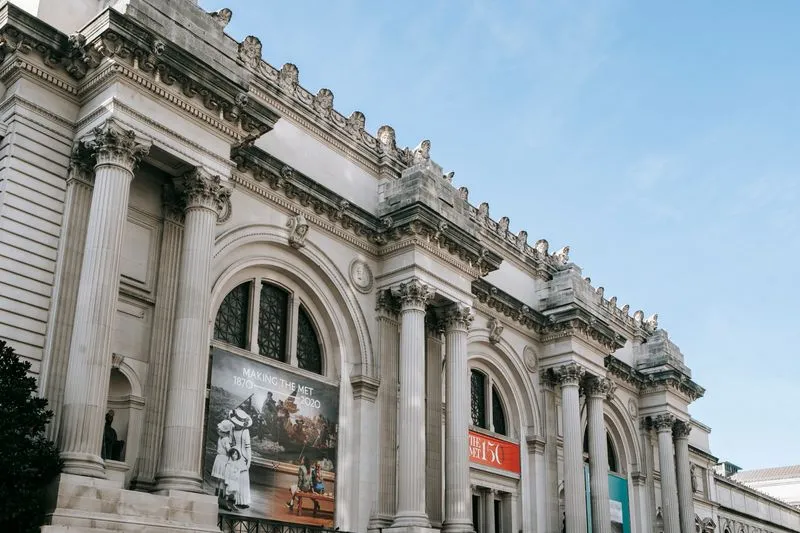
The Met Gala is, first and foremost, a fundraiser. Its official name — the Costume Institute Benefit — gives the game away: it's the benefit evening for the Costume Institute, the fashion department of the Metropolitan Museum of Art in New York. According to the Met's press release announcing the 2025 gala, it takes place every year on the first Monday in May. It provides the department with its main source of annual funding (exhibitions, publications, acquisitions, operations and building work).
So nobody climbs those steps to collect an award — this isn't the BAFTAs. There's no trophy, no jury, no "best dress" category. The guests are there to open an exhibition: each gala launches the Costume Institute's big spring show, and that show gives the evening its theme. The museum even closes to the public that Monday.
Why does a museum need a party like this? Because its fashion collection is huge — and fragile. The Costume Institute holds more than 33,000 objects: seven centuries of clothing and accessories for men, women and children, from the fifteenth century to today. Textiles are too sensitive to stay on permanent display — so the spring exhibition is when part of the collection comes out of storage.
People call it "fashion's Oscars" (the Met itself mentions the nicknames Oscars of the East Coast and Super Bowl of Fashion). The comparison works for the media frenzy, not for the mechanics. The Oscars reward films. The Met Gala funds a museum — and every guest answers a dress brief. It's nothing like how Fashion Week works either, where designers show a collection to buyers and the press.
Where did the Met Gala come from?
The Met Gala began in 1948 as a midnight supper, at fifty dollars a ticket. The Met's own history of the gala credits the idea to Eleanor Lambert, the great publicist of New York fashion, who dubbed it the "Party of the Year". The purpose hasn't changed — fund the Costume Institute and celebrate its annual exhibition.
The Costume Institute is slightly older. It started in 1937 as the Museum of Costume Art — an independent museum founded by Irene Lewisohn — then merged with the Metropolitan in 1946, with financial backing from the fashion industry. It became a full curatorial department in 1959. From day one, fashion paid its way into the museum.
The society turn came with Diana Vreeland, the legendary fashion arbiter who was special consultant to the Costume Institute from 1972 until her death in 1989. Under her, the gala became a grand party for both high society and the art world. Jacqueline Kennedy Onassis co-chaired it (in 1977 and 1978), then Pat Buckley (from 1979 to 1995).
In 1995, Anna Wintour, editor-in-chief of Vogue, took over as co-chair (today she is also a Met trustee). She has kept the role ever since, with two exceptions (1996 and 1998). On her watch, a New York society evening started drawing film, music, sport and business — to the point where, according to the museum, it's now one of the most visible fundraisers in the world.
The first-Monday-in-May ritual has had only one real break in recent years. In 2020, the evening was put on hold because of the pandemic; the 2021 gala was held in September. The exhibitions pay off too: Heavenly Bodies (2018, fashion and the Catholic imagination) drew more than 1.65 million visitors. It's the most visited exhibition in the Met's history.
Theme vs dress code: what's the difference?
The theme is the title of the exhibition. The dress code is the instruction given to guests. That one distinction explains half of Tuesday morning's arguments. In 2025, the theme was Superfine: Tailoring Black Style. The dress code: "Tailored for You".
The Met spells out how it works. Every year, the dress code takes inspiration from the exhibition theme and references ideas explored in the show. The 2025 one pointed towards suiting and menswear (silhouettes, fabrics, accessories). It was designed to give guidance while inviting creative interpretation — guide without boxing in, which is the whole fun of the Met Gala.
Why two labels? Because an exhibition title — however elegant — is written for museum visitors, not for stylists who have a few months to dress someone. The theme supplies the substance (a history, an era, an idea). The dress code supplies a practical way in. In 2025, that way in was wide — a suit, a jacket, a tie, a cane, a hat.
The 2024 gala shows what happens when the two labels pull in different directions. The exhibition, Sleeping Beauties: Reawakening Fashion, featured about 250 archive pieces, some too fragile ever to be worn again. The dress code, The Garden of Time, came from a 1962 short story by J. G. Ballard (time, fragility, flowers). In her interview on the Today show on the day of the 2024 gala, Anna Wintour admitted the pairing might have sent mixed signals: "I fear we have unleashed a lot of confusion out there for which I deeply apologize."
Who decides? The museum. The 2025 theme was selected primarily by Andrew Bolton, curator in charge of the Costume Institute, according to Time. And everything starts early: Anna Wintour has said the teams begin work on each gala two or three years ahead.
Superfine, the 2025 theme: what is Black dandyism?
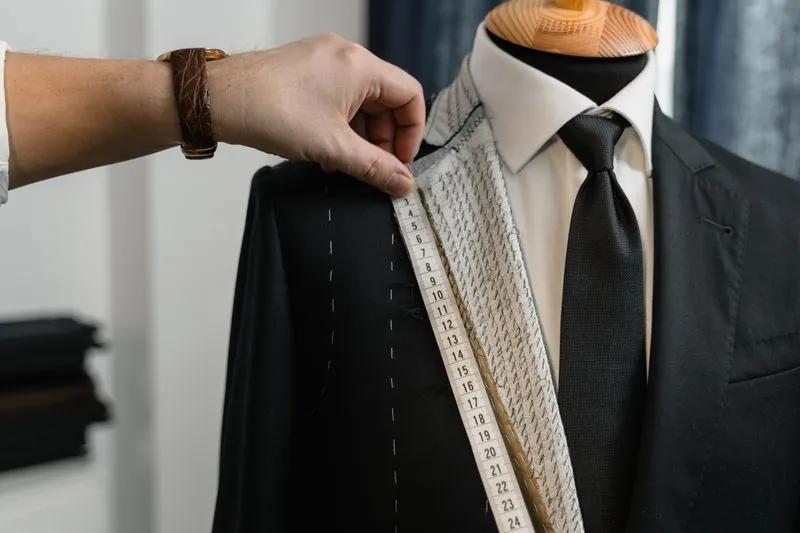
Superfine: Tailoring Black Style tells the story of Black style from the eighteenth century to today through one figure: the dandy. It's inspired by a 2009 book, Slaves to Fashion: Black Dandyism and the Styling of Black Diasporic Identity. Its author, Monica L. Miller, is chair of Africana Studies at Barnard College (Columbia University) and guest curator of the show, alongside Andrew Bolton.
So what is Black dandyism? The exhibition treats it as both an aesthetic and a strategy: the ways Black people in the Atlantic diaspora have used dress to transform their identities and imagine new political and social possibilities. Miller puts it neatly in the Met's press release: "Dandyism can seem frivolous, but it often poses a challenge to or a transcendence of social and cultural hierarchies."
And the title? Superfine is first of all a quality of cloth — superfine wool. Miller gives it a second meaning: an attitude, the feeling of being especially good in your own body, in clothes that express who you are. Wearing superfine and being superfine — that, in her words, is the subject of the show.
The exhibition runs at the Met Fifth Avenue from 10 May to 26 October 2025 (Gallery 999, second floor). It has twelve sections, each devoted to one characteristic of the style: Ownership, Presence, Distinction, Disguise, Freedom, Champion, Respectability, Jook, Heritage, Beauty, Cool and Cosmopolitanism. The framework comes from Zora Neale Hurston's 1934 essay Characteristics of Negro Expression. Only one of the twelve, Jook, comes straight from Hurston's essay; Miller and the curators chose the other eleven.
The first six sections are mostly historical; the last six cover the twentieth century to now. There's a London thread, too. The artist Iké Udé curates a section that highlights Julius Soubise, whose style and behaviour challenged the norms of eighteenth-century London. Elsewhere you meet Ellen and William Craft — a formerly enslaved couple who fled from Georgia to Philadelphia in 1848 — in the Disguise section, about clothes that conceal as much as they reveal. One of the sculpted mannequin heads is even inspired by André Grenard Matswa of the Congo, considered the first Sapeur of a community that emerged in the 1920s.
Bolton adds another first: it's the department's first exhibition devoted to menswear in more than twenty years. The last one, Men in Skirts, dates back to 2003, as Time points out. The show is also sponsored by Louis Vuitton, whose menswear creative director, Pharrell Williams, was one of the evening's co-chairs.
Who gets invited to the Met Gala, and who pays?
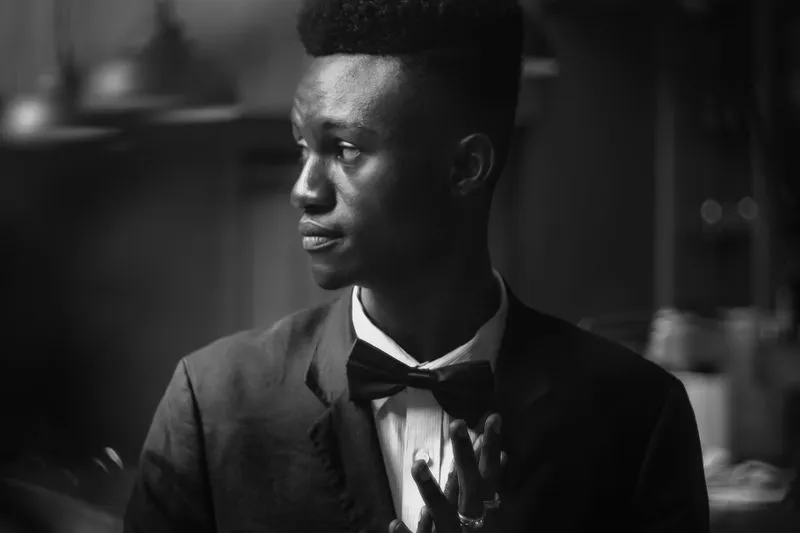
You can't buy your way into the Met Gala: you're invited. Tickets aren't on sale to the public, and the guest list stays secret until the stars step onto the carpet, as a Today piece on what it costs to attend the Met Gala explains. Invited doesn't mean free — far from it.
In 2025, an individual ticket cost $75,000 — a figure the Met confirmed to CBS News. In 2024, a table for ten started at $350,000. It's generally companies, fashion houses above all, that buy the tables and seat the celebrities of their choice, according to the Associated Press. Translation: an actress dressed by a house has a good chance of dining at its table. Burberry, for instance, brought in the stylist Law Roach to help curate its 2025 table, reported Wallpaper in its guide to the 2025 gala.
How many guests? Around 450, according to Vogue as quoted by Today (the Associated Press reported a 400-person guest list in 2024). Every name is settled months in advance. The seating plan starts in December, Eaddy Kiernan, who organises it, said in 2024 — her team tries to seat people side by side who will get on "like a house on fire" without realising they have much in common (every wedding planner's dream).
Each gala also has co-chairs, who act as ambassadors. In 2025, alongside Anna Wintour: the actor Colman Domingo, Lewis Hamilton (yes, our Lewis), the rapper A$AP Rocky and Pharrell Williams. LeBron James was due to be honorary chair but pulled out with a knee injury, Euronews reported.
For 2025, the Met revived its long-standing host committee tradition: around twenty names from art, literature, fashion, film, music and sport. They ranged from André 3000 and Simone Biles to Chimamanda Ngozi Adichie, the London-based designer Grace Wales Bonner and Edward Enninful. The dinner was created by chef Kwame Onwuachi, who grew up in the Bronx.
And the evening raises serious money: a record $31 million in 2025, museum officials told The New York Times, as reported by Today — the biggest total in the gala's 77-year history.
What are the Met Gala rules?
The most famous rule fits in three words: no phones inside. Guests must follow a no-phone policy once they're in, and only minimal photos are allowed, Today reports. Anna Wintour defends it in the name of conversation: "It's often wonderful to hear after dinner, people say, 'Oh, we had the most wonderful conversations.' And so that's the idea — that life can exist without a picture on your cell phone."
Rule two is less expected — no onions, no garlic, no chives on the menu. Asked about it on Today in May 2024, Anna Wintour confirmed the ban. Her reason? "Those are three things I'm not particularly fond of." (On a practical note, nobody wants a garlicky dinner neighbour when they're wearing three months of hand embroidery.)
Rule three — secrecy. The guest list stays under wraps until the carpet, and the inside of the museum is almost entirely off-camera. What you see on Tuesday morning is mostly the staircase. Wallpaper also noted that guests have to abide by a no-phone and no-social-media policy once inside.
Rule four isn't written anywhere, but everyone knows it: you play along. The dress code isn't a suggestion. A plain black dinner suit when the brief asks for interpretation? Off-topic by breakfast — for the press, for social media and for your group chat.

How do you read a Met Gala look in five questions?
A Met Gala look reads like an answer to the theme and the dress code. Here's the checklist I use every Tuesday morning — five questions, in this order, before I decide whether I like it.
1. What is the look referencing?
At the Met, almost every successful outfit points to someone or something. In 2025, the most-shared reference was a person, André Leon Talley (Colman Domingo's cape, for a start). If you can't see the reference, go looking for it. That's usually where the outfit makes sense.
2. Does it answer the dress code?
"Tailored for You" asked for tailoring. An evening gown with nothing cut, structured or borrowed from menswear answers the brief badly — however stunning it looks in photos. The reverse exists too: a perfect suit that says nothing ticks the box without touching the theme.
3. Who made it?
The designer's name is part of the message. In 2025, choosing Grace Wales Bonner, Ruth E. Carter or Ugo Mozie meant spotlighting Black designers on the night of an exhibition about Black style. A big house dressing ten guests — that's another story — mostly tells you about its own clout.
4. Which detail carries the meaning?
Usually an accessory: embroidered cowrie shells, a brooch, a cane, names stitched onto a train. Zoom in. In a full-length shot, the detail vanishes — yet it's what separates a nice suit from a real answer to the theme.
5. What does it say about the person wearing it?
The best looks connect the theme to a personal story, like a family history (the names on Diana Ross's train). When the answer is "nothing", the look can be beautiful and still say nothing.
A look that ticks all five boxes is a great Met Gala moment. A look that ticks two can be gorgeous. It just isn't a great Met Gala look. Subtle difference.
Met Gala 2025: which looks really played the theme?
Colman Domingo gave the most complete reading of the night — in my view, anyway. A co-chair, he arrived in custom Valentino under a dramatic blue cape: a nod to André Leon Talley, according to Euronews. Then the cape came off to reveal a tailored suit inspired by the Harlem Renaissance. Reference, dress code, detail, staging — it's all there.
Lewis Hamilton (just 24 hours after the Miami Grand Prix) wore a custom all-cream Wales Bonner look with a cropped ivory jacket. His stylist, Eric McNeal, explained the symbolism on Instagram, as quoted by Dazed's piece on Grace Wales Bonner's Met Gala debut: "The colour of ivory denotes purity and status; cowries pass from hand to hand, the regal sash turns shamanic." Question four, answered to the millimetre.
That debut deserves a moment for British readers. The London-based designer also dressed FKA twigs, Omar Apollo, Jeff Goldblum and the photographer Tyler Mitchell — and, according to Dazed, the exhibition itself features eight Wales Bonner looks from the past ten years. Not bad for a first Met Gala.
Diana Ross turned her look into a family tree. Her white ensemble, designed with the Nigerian designer Ugo Mozie according to CBS News's report on her Met Gala return, came with a train that ran all the way down the steps — and, as Hello!'s best-dressed round-up spotted, the names of her children and grandchildren were embroidered into it. For me, that's the most moving answer to question five of the whole night.
Zendaya went for apparent simplicity — a white custom Louis Vuitton three-piece suit with an oversized hat, as described by Euronews's round-up of the best 2025 looks. Dazed pointed out its striking resemblance to a look Diana Ross wore in the 1975 film Mahogany, and on the steps Zendaya bowed towards Ross, who had arrived just before her.
Pharrell Williams, co-chair and Louis Vuitton's menswear creative director, wore a pearl-embellished double-breasted jacket with a pinstripe effect, Euronews noted. Gigi Hadid's gold Miu Miu dress paid tribute to the Black designer Zelda Wynn Valdes, who made gowns for Ella Fitzgerald, according to the Guardian's report on the night. Janelle Monáe wore a suit within a suit, with a bowler hat and a spinning clock monocle. And Rihanna, in Marc Jacobs according to Hello!, used the night to reveal her third pregnancy (A$AP Rocky, one of the co-chairs, was by her side in an immaculate black suit).
The other images that flooded our phones? André 3000 with a replica piano on his back, a look he designed with Burberry. Dua Lipa and Callum Turner making their red carpet debut as a couple (he in a black suit, she in a feathery black dress). And Damson Idris arriving in a Tommy Hilfiger "race car" before revealing a red three-piece suit underneath.
| Guest | Designer | What the look says |
|---|---|---|
| Colman Domingo | Valentino | A nod to André Leon Talley. |
| Lewis Hamilton | Wales Bonner | Ivory, cowries, a regal sash. |
| Diana Ross | Ugo Mozie | Her children's and grandchildren's names, embroidered into the look. |
| Zendaya | Louis Vuitton | White tailoring that echoes Diana Ross in Mahogany (1975). |
| Pharrell Williams | Louis Vuitton | The co-chair and Louis Vuitton menswear director, in pearl-embellished suiting. |
| Rihanna | Marc Jacobs | A pregnancy reveal in cropped tailoring. |
Met Gala 2025: caution, misfires and one controversy — what did the theme reveal?
Not everyone played along with the same nerve. Before the night, some fans worried the dress code would become a licence for men to turn up in a "boring" suit, Wallpaper noted. Euronews, for its part, observed that black and white was the dominant colour scheme of the evening.
My view? The real misfire of 2025 wasn't the evening gown. It was the immaculate, silent black suit — the one that ticks "tailoring" and says nothing about the theme. On a theme this loaded with history, a well-cut dinner suit and nothing else is a blank exam paper handed in with lovely handwriting.
The night's controversy involved Lisa, of the K-pop group Blackpink, in Louis Vuitton by Pharrell Williams. Zooming in on the lace briefs peeking out from under her bodysuit, some social media users thought they recognised Rosa Parks among the tiny portraits and called the look disrespectful, Today reported. Louis Vuitton responded that the lace replicates elements of an artwork by the American artist Henry Taylor, depicting people who have been part of the artist's life. The lesson for question four: on a red carpet this scrutinised, a misread detail can eclipse an entire outfit — and where you place a portrait matters as much as the portrait itself.
Which looks made Met Gala history?
The Met Gala owes its global fame to a handful of entrances everyone remembers. The Met itself has a soft spot for the "much-memed" golden Guo Pei cape Rihanna wore in 2015, for the exhibition China: Through the Looking Glass. A Chinese couturier for a China theme, an unforgettable silhouette, a global meme: the five questions were already working.
The making of that 2015 gala became a documentary. Its title? The First Monday in May — the date had become a brand. Among the other moments the museum picks out: Sarah Jessica Parker in Oscar de la Renta (2014), Pharrell Williams and Helen Lasichanh in Comme des Garçons (2017), Madonna coming down the Great Hall stairs singing Like a Prayer (2018). And Billy Porter, arriving like no one else for Camp: Notes on Fashion in 2019.
Some regulars have made interpreting the theme their trademark. Today names Rihanna, Blake Lively and Jared Leto among those who always deliver a unique take. The rule never changes: the more legible the answer to the theme, the further the photo travels.
How can you use the Met Gala method for your own dress codes?
British invitations love a dress code — "black tie", "lounge suits", "cocktail", "Great Gatsby". And the Met method works perfectly for all of them.
First, separate the theme from the instruction. A "garden party chic" wedding has a theme (the countryside, a celebration) and an instruction (look smart without stilettos sinking into the lawn). Next, choose one reference — a single film, say, the way Zendaya's white suit echoed Diana Ross in Mahogany. Then one detail that carries it, not three. Finally, ask question five: what does your outfit say about you?
I learnt that last one the hard way. In 2019, I bought a dress for a wedding. It met the dress code, it was pretty, it was seasonal. It said absolutely nothing about me. I've never worn it again (it's still waiting at the back of the wardrobe for an occasion to inspire it). An outfit that obeys without telling a story is forgotten before pudding — along with the person wearing it.
The 2025 "Tailored for You" translates beautifully into everyday life. A well-cut trouser suit, a structured blazer over a floaty dress, a white shirt and a brooch: tailoring works almost anywhere, weddings included, as long as you respect the rules for a wedding guest outfit. And for the spirit of a red carpet look without a couture budget, our tips for copying celebrity style on a budget still hold.

Next time your group chat explodes at 7am, ask one question before voting for the best look: what is it referencing? The conversation goes up a level in two messages. And next year, on the first Monday in May, write the theme and the dress code on your Post-it before you open a single photo.
Frequently asked questions
When is the Met Gala held?
The Met Gala takes place every year on the first Monday in May at the Metropolitan Museum of Art in New York. The 2025 gala was held on Monday 5 May. Recent exceptions: in 2020 the evening was put on hold because of the pandemic, and in 2021 it took place in September.
How much does a Met Gala ticket cost?
In 2025, an individual ticket cost $75,000, a figure confirmed by the Met to CBS News. In 2024, a table for ten started at $350,000. These places aren't on open sale: you have to be invited, and fashion houses often buy the tables to seat their celebrities.
What's the difference between the Met Gala theme and dress code?
The theme is the title of the Costume Institute's spring exhibition. The dress code is the instruction given to guests, inspired by that theme. In 2025, the theme was Superfine: Tailoring Black Style and the dress code was "Tailored for You", focused on suiting and menswear.
Who chooses the Met Gala theme?
The theme comes from the Costume Institute. The 2025 theme was selected primarily by its curator in charge, Andrew Bolton, with Monica L. Miller as guest curator. According to Anna Wintour, co-chair since 1995, each gala is prepared two to three years in advance.
Can you visit the Superfine: Tailoring Black Style exhibition?
Yes. The exhibition runs at the Met Fifth Avenue in New York from 10 May to 26 October 2025, in Gallery 999 on the second floor. Its twelve sections trace Black style and dandyism from the eighteenth century to today.
Where does the money raised at the Met Gala go?
It funds the Costume Institute, the Metropolitan Museum's fashion department: exhibitions, publications, acquisitions, operations and building work. The gala is its main source of annual funding. The 2025 gala raised a record $31 million, according to museum officials.
Sources
- The Met, press release on the 2025 Met Gala and the Superfine exhibition (4 February 2025)
- The Met, a brief history of the Met Gala
- The Met, The Costume Institute department page
- Dazed, Grace Wales Bonner's Met Gala debut (6 May 2025)
- Wallpaper*, Met Gala 2025: everything you need to know
- Euronews, the best celebrity looks from the 2025 Met Gala (6 May 2025)
- Hello!, the best-dressed stars at the 2025 Met Gala (5 May 2025)
- CBS News, Diana Ross's train at the 2025 Met Gala (5 May 2025)
- Dazed, Zendaya's Studio 54 power suit at the 2025 Met Gala (5 May 2025)
- The Guardian, black style honoured at the Met Gala (6 May 2025)
- Today, Anna Wintour on the 2024 Met Gala (6 May 2024)
- Today, how much it costs to attend the Met Gala (5 May 2025)
- Today, the debate over Lisa's Met Gala outfit (6 May 2025)
- Time, everything to know about the 2025 Met Gala (23 April 2025)