You're scrolling Instagram. Hailey Bieber steps out of a studio in leggings, trainers, and an oversized blazer. The outfit costs £3,700. You're literally wearing the same thing — except yours is from Zara and there's a coffee stain on the blazer. And you know what? On the street, nobody sees the difference. Nobody. Because style isn't price. It's silhouette, proportions, and the one detail that makes it land.
This guide isn't a manifesto against luxury. If you want to invest in a piece that'll last twenty years, that's often the right calculation. But replicating an entire celebrity look for £3,000+ just isn't. We're going to teach you how to read a look — to identify what makes it strong — and recreate it for a fraction of the cost. With the right dupes, the right silhouettes, and (spoiler) a few alterations at your local tailor.

Why celebrity looks work (hint: it's not the price tag)
Before you search for dupes, you need to understand why a celebrity look works. Because if you buy the same pieces without understanding the mechanics, you'll reproduce the photo but not the impact.
The stylist does 70% of the work
Alexa Chung doesn't leave the house having randomly grabbed things from her wardrobe. Behind every "effortlessly casual street-style look" is a professional stylist, several hours of preparation, and a precise understanding of what will flatter her proportions that day. What you see on Instagram is the result of work. Not improvisation.
What this means for you: the look doesn't come from the garment. It comes from the selection, the proportions, and the styling. You can replicate 80% of the result with accessible pieces if you apply the same principles.
Cut and proportions, not the label
The Bottega Veneta blazer at £2,400 doesn't look expensive because it's Bottega Veneta. It looks expensive because it's cut with surgical precision, in fabric with weight, and it falls exactly where it should. Most people on the street don't read labels. They read silhouettes.
A Zara blazer at £59.99, well cut, worn with the right proportions, produces the same effect at a distance. That's intelligent duping.
Confidence is the piece that can't be bought
There's one thing money can't buy, and which celebrities have learned to project: posture. The way a celebrity wears a basic trench makes it look like a designer piece. That same ease — relaxed, assured, unapologetic — is available for free. And it's often the most decisive factor.
The 5 silhouettes that always work
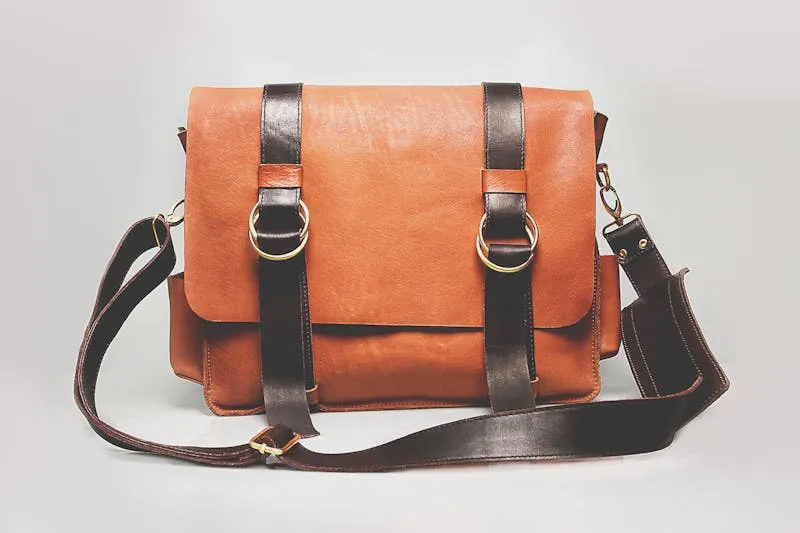
Before specific dupes, there are the great silhouette families. These five form the core repertoire of most well-dressed celebrities. Master them, and you'll have a solid foundation for any occasion.
1. The blazer + jeans (the universal formula)
Alexa Chung, Sienna Miller, Victoria Beckham. All have worn it dozens of times. The recipe: an oversized or slightly oversized blazer (one size up, shoulders slightly dropped), high-waisted straight or slightly flared jeans, and a clean shoe — mule, ballet flat, white trainer, or heeled boot.
What makes the difference: the blazer needs weight in the fabric. A too-light cotton blazer looks like a uniform. Look for wool, textured polyester, or a blend with viscose.
Budget dupe: Oversized Zara blazer (£45–£65) + Mango high-waisted jeans (£35–£50) + clean white trainer (already in your wardrobe). Total: £80–£115 vs £1,200–£2,500 for the original.
2. The monochrome total look
Zendaya has elevated this to an art form. Victoria Beckham built her whole style identity on it (often in navy or black). The rule: one colour head to toe, with different fabrics and textures to create depth. No colour accent. No exception.
The colours that work best for accessible dupes: camel, cream, ecru, burgundy, navy, sage green. Avoid all-black monochrome (it works, but it's harder to make interesting) and all-red (too difficult to harmonise in monochrome with high-street pieces).
3. The "Parisian" (myth and reality)
French celebrities and Alexa Chung's more relaxed looks. The "Parisian" look has precise rules: straight or slightly flared jeans + Breton stripe or basic round-neck tee + trench or denim jacket + loafer or derby. Vaguely styled-not-styled hair. Zero excess accessories (one only — the bag or the jewellery, not both).
What destroys it: trying too hard. The Parisian look collapses the moment it appears prepared.
4. The "Off-Duty Model"
The Sienna Miller festival-era formula reimagined for today: joggers or fitted leggings + crop top or basic vest + bomber jacket or oversized hoodie + vintage trainers (New Balance, Adidas Samba, Nike Air Force 1). This is the easiest look to dupe because the originals are already accessible (New Balance 574 = £85, no dupe needed).
The detail that changes everything: cleanliness. This look only works if everything is immaculate. A truly white white. A truly black black. No pilling, no distortion.
5. The "Power Dress"
Dua Lipa, Olivia Rodrigo, and their way of wearing a structured dress as if it's the most natural thing in the world. The midi or mini dress with a corset, defined shoulders, or bustier — worn with pointed mules or heeled boots. No jacket over it, no layering. The dress speaks for itself.
This look tolerates the least compromise on cut. A structured dress that doesn't fit well = uncomfortable and unconvincing. But the right copies exist — and this is where & Other Stories and Reiss do remarkable things.
6 iconic looks decoded with their dupes
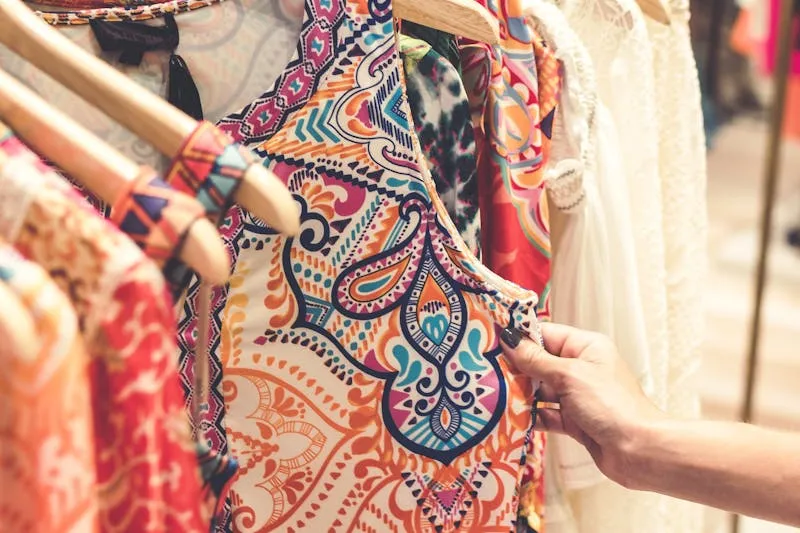
Look 1 — Alexa Chung: the effortless Breton stripe
The original look: Breton stripe Isabel Marant (£185) + vintage Levi's 501 (£90 second-hand or £100 new) + loafer Chloé (£480) + simple leather tote. Total: approximately £760.
What makes it powerful: Its studied nonchalance. Everything is recognisable but none of it is trying. The Breton stripe + jeans combination has never not worked because the proportions are inherently balanced.
The dupe:
- Breton stripe Uniqlo (£19–£25) — genuinely the best accessible Breton stripe, full stop
- Levi's 501 — keep the original if you have it, or Zara straight-leg jeans (£35–£45)
- Loafer Mango (£45–£59) or M&S leather loafer (£49) — both excellent at this price point
- Simple canvas or leather tote — Arket, COS, or a good second-hand find
Total dupe: £110–£150 vs £760.
Look 2 — Sienna Miller: the boho-chic midi
The original look: Floral midi dress Zimmermann (£550–£900 depending on the piece) + tan leather sandal Jimmy Choo (£480). Total: approximately £1,000–£1,400.
What makes it powerful: The light-ground floral print. The midi length (between knee and calf). The floatiness of the fabric — viscose or silk that moves. Sienna's effortless way of looking like she rolled out of bed and straight into a meadow.
The dupe:
- Floral midi dress & Other Stories (£89–£110) or ASOS (£45–£65) — look for light ground, not-too-busy print, fluid fabric
- Tan leather-look sandal Mango (£45–£55) or Schuh (£50–£65)
- Avoid: overly structured florals or busy prints — the floatiness is everything
Total dupe: £130–£175.
Look 3 — Kate Middleton: the "Kate effect" coat dress
The original look: The iconic coat dress formula — LK Bennett, Emilia Wickstead, Alexander McQueen — typically £400–£2,000. Block colour, clean cut, structured with a belt or defined waist.
What makes it powerful: The polish. The intentionality. The way a single structured piece in a strong colour reads as "put-together" across an entire room. The "Kate effect" sent entire LK Bennett styles selling out within hours of an appearance.
The dupe:
- Structured coat dress Mango (£65–£89) or Reiss in sale (£90–£130)
- M&S does genuinely excellent coat dresses at £65–£85 — underrated for this
- Add a simple leather belt if the dress doesn't have one (£20–£30)
- Heeled court shoe or low block heel — Marks & Spencer, Clarks, or L.K.Bennett in their sale
Total dupe: £90–£150.
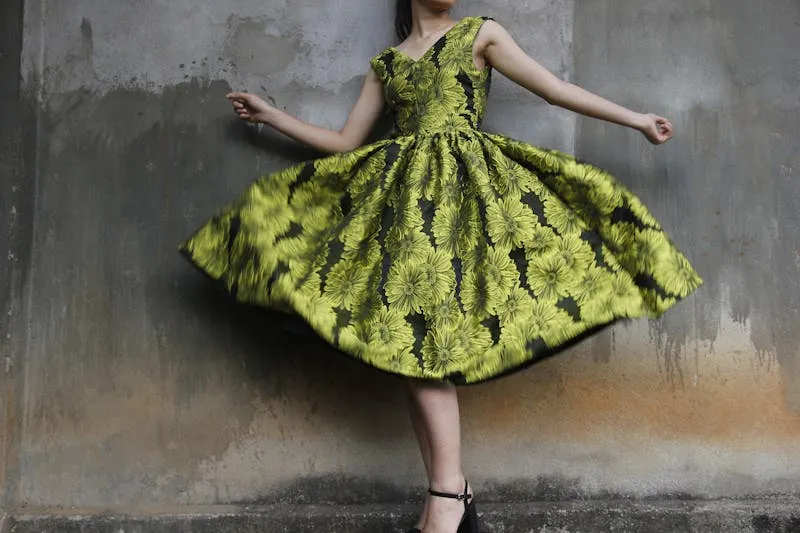
Look 4 — Victoria Beckham: the minimalist power suit
The original look: Victoria Beckham tailored suit (veste £650 + trouser £380) + clean white tee + pointed mule (£280). Total: approximately £1,300.
What makes it powerful: The precision of the tailoring. The slightly cropped jacket over wide-leg trousers. The absence of anything decorative — no jewellery, no scarf, no belt. Just the perfect suit.
The dupe:
- Tailored suit Zara (jacket £65 + trousers £35) or Mango (jacket £75 + trousers £45)
- White tee Uniqlo Supima cotton (£12–£15) — the best accessible white tee, period
- Pointed mule or court shoe Mango (£45–£55) or ASOS (£30–£45)
- Key: get the trousers hemmed at a tailor for the right break — this one detail makes or breaks the look
Total dupe: £155–£210.
Look 5 — Zendaya: the colour-blocked power suit
The original look: Bold colour suit Valentino or Versace (£2,000–£4,000+ for the full look, often couture). Total: £3,000–£5,000.
What makes it powerful: The colour itself. The absolute consistency of the total look. And the fact that Zendaya wears it with zero hesitation — complete confidence in a colour choice that might seem risky.
The dupe:
- Strong-colour suit (burnt orange, emerald, cobalt, burgundy) from Zara or Mango (£80–£120 for the set)
- Pointed mule or court shoe in the same shade or very close — Mango, ASOS, or Primark for very tight budgets
- Golden rule: the colour must be exactly the same shade or a harmonious adjacent tone. Cobalt blue + navy shoes = disaster.
- If you can't find the perfect matching set, buy jacket and trousers separately and have them coordinated by a tailor
Total dupe: £95–£145.
Look 6 — Rosie Huntington-Whiteley: the quiet luxury everyday
The original look: The Row camel trousers (£800+) + cream cashmere roll-neck Loro Piana (£1,000+) + tan loafer Bottega Veneta (£750) + minimal leather bag. Total: £3,000–£5,000+.
What makes it powerful: The total absence of logos. The quality of the fabrics. An ultra-cohesive neutral palette. "Quiet luxury" is, paradoxically, the hardest look to dupe because its power comes precisely from the material quality.
The honest dupe: Quiet luxury doesn't perfectly dupe in fast fashion. But here's the closest you can get:
- Merino roll-neck Uniqlo (£59–£79) — the only true affordable dupe for the luxury roll-neck
- Camel straight trousers Arket (£65–£79) or COS (£55–£65) — these brands sit in the right register
- Tan loafer M&S leather (£49) or Mango (£55)
- For the bag: invest in a genuine leather structured bag second-hand (Vinted, Depop, Beyond Retro) — a faux leather bag destroys the look in 30 seconds
Total dupe: £230–£270. Higher than other dupes, but that's the nature of quiet luxury: a minimum of quality is needed to be convincing.
Where to find dupes: high street, vintage, second-hand

The high street: what you can find (and what you can't)
Zara: The absolute reference for blazers, trenches, structured jackets, and high-waisted straight trousers. Brings its most-copied pieces to market 3–6 months after the catwalk. Strengths: well-considered cuts, decent fabrics at mid-range prices (£40–£80). Weakness: very variable quality depending on the line.
Mango: A notch above Zara on finishing. Excellent for midi dresses, coats, and workwear. The Mango Committed (eco-responsible) line often has very good pieces. Slightly higher prices than Zara, but quality generally follows.
H&M: Very strong on essential basics (tees, leggings, underlayers). H&M Studio collections are regularly at a genuinely elevated level. The annual H&M x [designer] collaboration produces legitimate dupes at very low prices.
Uniqlo: The brand every professional stylist uses for their basics. Supima cotton tees, merino roll-necks, light parkas, chino trousers. Consistent quality, simple but well-worked cuts. Non-negotiable for quiet luxury on a budget.
& Other Stories / Arket / COS: The three H&M group brands that play a notch above. Prices between £50 and £150. Excellent for dresses, leather-look jackets, and pieces with more considered cuts. If you want the "designer aesthetic on less money" rather than pure fast fashion, start here.
M&S: Consistently underrated for quality basics. The Per Una and Autograph ranges in particular offer excellent tailored pieces, coats, and knitwear at prices that surprise people. The leather loafer at M&S is a genuine dupe for Boden and LK Bennett.
Vintage: the best place for timeless pieces
"Parisian" looks and quiet luxury owe a great deal to vintage. Why? Because vintage clothing from the 80s, 90s, and early 2000s was manufactured with fabrics and cuts that no longer exist in fast fashion.
Where to look in the UK: Charity shops in affluent postcodes (Oxfam in Kensington, Edinburgh's Stockbridge neighbourhood), Depop for curated vintage sellers, Rokit and Beyond Retro in London, and car boot sales for the most unexpected finds at the lowest prices.
What to look for in vintage for dupes: 90s tailored blazers (shoulder padding can be adjusted by a tailor), 70s and 80s midi dresses (perfect silhouettes for the romantic look), 80s–90s trenches and coats (exceptional fabric quality).
Second-hand: accessible luxury
Vestiaire Collective: The reference platform for authenticated second-hand luxury. Chanel, Dior, Prada, Céline — with authentication verification. A second-hand Chanel GST: £1,200–£2,000 (vs £6,000 new). An Acne Studios blazer: £70–£120 (vs £380 new).
Vinted: More democratic. Excellent for mid-range brands (& Other Stories, Whistles, Reiss) with 50–70% discounts. The risk: no authentication for genuine luxury — stick to Vestiaire for the big houses.
Depop: Particularly strong on vintage and one-of-a-kind pieces. Lots of specialist resellers who've already done the sourcing and cleaning. Prices slightly higher than Vinted, but the curation is often better.
Beyond Retro / Rokit: Brick-and-mortar vintage shops with strong online presences. Excellent for the 90s tailoring and 70s florals that make the best dupes. Rokit's online shop ships UK-wide.
The 10 investment basics that make everything look expensive
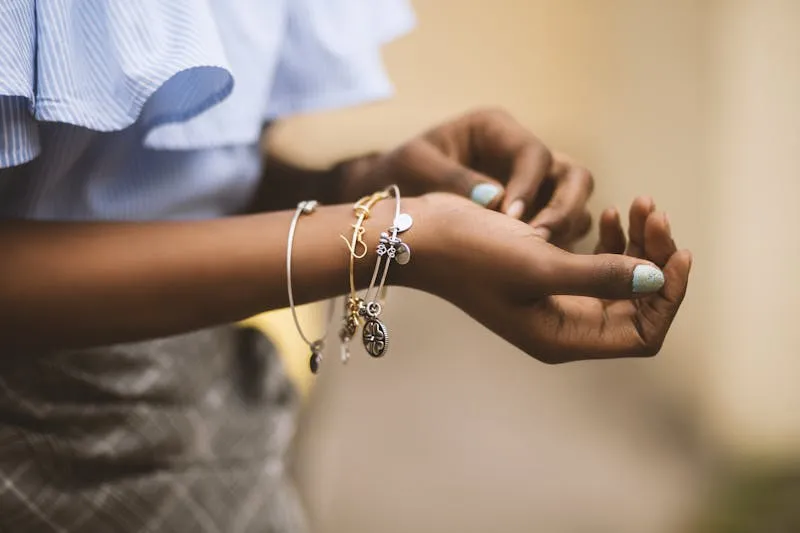
Here are the 10 pieces to prioritise. They don't necessarily have to be expensive, but they need to be good — well cut, well maintained, and in the right condition. These are the pieces that will visually carry all your dupes.
- The perfect white tee. Uniqlo Supima cotton (£12–£19). A truly white white, a slightly loose but not shapeless cut, fabric with a little weight. Replace it as soon as it yellows or loses its shape. It's the foundation of 60% of the looks in this guide.
- The high-waisted straight jeans. Levi's 501 (£85–£100), Agolde in the sale (£90–£120), or a good Zara dupe (£35–£50). The cut must be clean — no significant flare, no ultra-low rise. The high-waisted straight jean has survived every trend cycle for 30 years.
- The structured blazer. One size above your usual. Fabric with weight (avoid light cotton). Neutral colour: charcoal grey, camel, sand beige, navy. Budget: £55–£110 on the high street.
- The clean white trainer. Nike Air Force 1 (£90), Adidas Stan Smith (£75), New Balance 327 (£85). This isn't a dupe — it's literally what celebrities wear. Maintain them meticulously (trainer wipes, whitener for the soles).
- The structured bag. No slouchy bags that collapse. A bag with structure — in genuine or high-quality faux leather, with internal support. Budget: £45–£130 new or second-hand. This is the piece that most quickly reveals a low budget if you make the wrong choices.
- The well-cut trench or coat. The investment that transforms an entire look. Recommended budget: £80–£200 new, or vintage for better quality at equivalent price.
- The pointed mule or ballet flat. The shoe that instantly reads as "grown-up" and "intentional". No heel required — a flat pointed mule does the same work. Mango (£40–£60), Schuh (£60–£80), or M&S (£45–£65).
- The straight tailored trousers. For silhouettes 4 and 5. Clean straight cut, good drape. Wear with and without a jacket. Best low-cost options: H&M Studio or Zara.
- The fine roll-neck. Uniqlo merino wool (£55–£75). The Uniqlo roll-neck is the near-perfect dupe for the Toteme roll-neck at £280. Camel, cream, or black are the most versatile colours.
- The simple leather belt. Narrow, in genuine leather (not faux — it shows immediately), with a discreet buckle. £25–£55 at an independent leather goods shop or second-hand. It transforms any blazer or dress.
Accessories that upgrade everything
Accessories are often the least-invested part of a low-cost wardrobe — and yet they're what makes the difference between a look that reads as a dupe and a look that reads as a look.
The belt (£25–£60)
A simple leather belt, narrow (max 2cm wide), with a discreet rectangular gold or silver buckle. It transforms an oversized blazer into a fitted blazer. It creates a waist in a straight dress. It gives intention to an outfit that was missing it. It's the least glamorous and most effective accessory in the wardrobe.
Where to look: small independent leather goods shops, L.K.Bennett in their sale, or second-hand. M&S does a genuinely excellent leather belt at £20–£25.
The sunglasses (£35–£150)
Sunglasses are an immediate visual shortcut to glamour. You don't need to spend £250 at Céline. Similar frames are available at Mango (£25–£45), & Other Stories (£35–£55), or ASOS (£12–£30). The rule: choose a frame that works for your face shape, not the trending frame of the moment.
The real optical investment: if you wear prescription glasses, consider a designer frame second-hand (Ace & Tate archive, eBay, Depop). Your glasses frames are visible 8 hours a day — it's worth the investment.
The watch (£40–£200)
A simple watch with a fine leather or metal strap. The Casio MTP-V005 (£20–£35) is worn by fashion people who could afford a Cartier. The "clean watch" style — white face, fine leather strap — is timeless. Avoid watches too large for your wrist (proportions matter).
Fine jewellery (£15–£80)
The rise of accessible jewellery (Mabina, & Other Stories, COS) has democratised delicate gold jewellery. Basic rule: less is more. Two fine gold rings + a delicate chain = elegance. Five mismatched bracelets + cocktail ring + statement necklace = confusion. Celebrities have stylists who choose two pieces maximum. You can do the same.
Tailoring: the £15 secret that makes H&M look like Céline
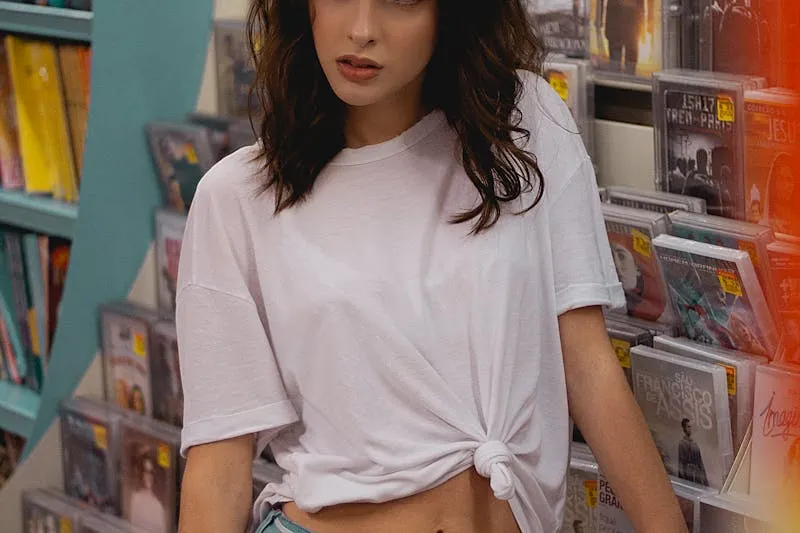
Here's the secret nobody states clearly: professional stylists have all their clients' clothes altered, even the expensive ones. A Dior dress worn on a red carpet has almost always been adjusted to sit precisely on that celebrity's specific body.
Most clothes are made for standardised silhouettes. Nobody has exactly the measurements of a size 10 standard. This is why a £50 garment that's been altered well will often surpass visually a £200 garment worn as-is.
The alterations that change everything
The trouser hem (£8–£15): The length of a pair of trousers changes everything. A millimetre too long and the look falls apart. Have your trousers hemmed at a tailor, specifying the exact length (with or without break depending on the style). The most cost-effective alteration in existence.
Taking in a jacket (£15–£30): If the shoulders sit slightly low or the jacket is too boxy for the intended look, a tailor can adjust the whole thing in 30 minutes. The result: a £60 jacket that looks made for you.
Shortening or adjusting sleeves (£10–£18): Sleeves that drag are one of the most visible signs of "inexpensive". Have them shortened cleanly.
Adding a discreet zip or hook (£5–£10): A dress that gapes at the neckline or trousers where the waist is too large — a tailor fixes this in minutes.
How to find a good tailor
In any British town or city, there's at least one dry-cleaning and alterations shop that does excellent work at very reasonable prices. Google Maps + "alterations" + your area. Read the reviews. Start with a small, simple alteration to test the quality.
Average budget to alter a full outfit: £20–£45. For that price, you transform an H&M look into a "designer on a budget" look, and nobody will ever know the difference.
Common mistakes (and how to avoid them)
Mistake 1 — Buying the visible piece, not the silhouette
Most people who try to "copy" a celebrity look buy the most visible piece — the it-bag, the iconic shoe — without thinking about how to integrate it. Result: they have a counterfeit Chanel bag (or a real one bought on credit) and the rest of the look doesn't hold together.
Intelligent duping works from the bottom up: silhouette first (the proportions), basics second (the solid pieces), statement piece last (if you can afford it).
Mistake 2 — The logo obsession
One of the paradoxes of contemporary fashion: the most iconic looks of the best-dressed celebrities have no visible logos whatsoever. Rosie Huntington-Whiteley, Alexa Chung at her best, Kate Middleton — not a logo in sight. Logos are reassuring when you're not confident in your style. But they also signal exactly the opposite of what you're trying to communicate.
A bag with a highly visible logo won't "validate" your look. It will point at itself and divert attention from the whole.
Mistake 3 — Neglecting garment care
A white Uniqlo tee washed correctly (low temperature, air-dried) lasts 3–4 years and stays immaculate. The same tee washed at 60° and tumble-dried is dead in six months. Garment care is the most underestimated and least expensive fashion skill there is.
Basic rules: read care labels, sort by colour, use stain remover immediately on marks, air-dry as much as possible, steam before wearing.
Mistake 4 — Chasing every trend
Trends are traps for modest budgets. A trendy garment bought in January will be dated by December of the same year — having cost £35–£75. Multiply that by 10 trends per year and your fashion budget is entirely consumed by pieces you won't wear in 8 months.
The intelligent strategy: 80% timeless pieces (the 10 basics from this guide) + 20% trend pieces at low prices (Zara, H&M, Primark for very on-trend items). The fun of fashion without the financial waste.
Frequently asked questions about fashion dupes
What exactly is a fashion "dupe"?
A dupe (short for "duplicate") is an affordable piece that captures the aesthetic of a more expensive piece without illegally copying logos or protected elements. It isn't counterfeit — it's an alternative that's inspired by the style, silhouette, or colour of a luxury or high-end item. For example: a camel H&M blazer that looks visually similar to a Max Mara blazer is a dupe. A bag with a copied Chanel logo is a counterfeit — that's not the same thing, legally or ethically.
How do I find dupes for things I see on Instagram?
Several methods. First: use Google's visual search (right-click any image > "Search image") to find similar pieces. Second: Instagram and TikTok accounts specialising in dupes — search "dupe [brand]" on TikTok; the community is very active, especially for UK high-street alternatives. Third: break the look down into simple elements (colour, cut, fabric) and search for exactly those at Zara, Mango, & Other Stories. Fourth: Reddit — the r/femalefashionadvice subreddit has entire threads dedicated to dupes by category, with UK-specific recommendations.
Do influencers actually wear dupes, or do they receive everything for free?
Both. Many influencers receive pieces as gifting from brands — that's the reality of the influence economy. But even influencers with generous budgets use dupes intelligently: timeless pieces invested in, trends duped at low cost. What you rarely see: the tailor visits, the vintage finds, and the second-hand pieces that often constitute a significant part of their actual wardrobes. The image of a 100%-luxury wardrobe is a construct, not a reality.
Which high-street brand is the most reliable for quality dupes?
For structured garments (blazers, coats, trousers): Zara and Mango, with a preference for Mango on finishing. For quality basics: Uniqlo, without competition. For more considered pieces or designer-adjacent styles: & Other Stories, COS, or Arket. For ultra-tight budgets on simple basics: H&M or Primark — but fabric quality can be highly variable. Best advice: touch before buying online by visiting a store to test fabrics first. M&S, consistently overlooked, does excellent coats, knitwear, and basics that punch well above their price point.
How much do I need to spend for a decent celebrity-style wardrobe?
The question isn't really the total budget — it's how that budget is allocated. With £400 spread intelligently (£120 on Uniqlo/Zara basics, £80 on alterations, £120 on quality accessories, £80 on second-hand for one strong piece), you can have a wardrobe far better than someone spending £400 on fast-fashion trends. Honestly: a £200 total budget demands a lot of patience and discipline. A £300–£450 budget spread over several months allows you to build something genuinely solid. The key isn't the number — it's the intention behind each purchase.
How do I wear affordable pieces without looking cheap?
The answer in four points. One: cut overrides everything — get things altered. Two: maintenance is non-negotiable — no pilling, no distortion, no yellowed whites. Three: volume reduction — fewer pieces, better chosen. Four: the way you carry yourself changes everything, and it's free. Someone wearing a £20 garment with confidence and intention will always have more style than someone wearing a £200 garment with hesitation. The clothes are the last 20% of the equation.
Sources
- Vogue UK — Celebrity looks and trend analysis: street-style decodes and high-low fashion features (vogue.co.uk).
- Who What Wear UK — Dupe guides and accessible look breakdowns: "How to copy [celebrity]'s look for under £X" updated weekly (whowhatwear.co.uk).
- Refinery29 UK — High street dupe round-ups and celebrity style accessibility features (refinery29.com/en-gb).
- The Telegraph Fashion — Style investment pieces, dupes, and quality-on-a-budget features (telegraph.co.uk/fashion).