Seven per cent. That is how much less, per hour, a woman working full time in the UK earned than a man in April 2024. It sounds almost modest — until you stretch it across a forty-year career, where it adds up to nearly three years' pay. And that is the flattering version of the figure. Count every employee, including the part-time jobs that women fill in far greater numbers, and the Office for National Statistics' gender pay gap bulletin for 2024 puts the gap at 13.1%.
That wider figure reflects more than pay decisions made about individual women. It captures the whole machinery that steers women into lower-paid roles, fewer hours, fewer promotions — and, at the end of it all, smaller pensions.

The UK gender pay gap: the numbers that matter
The ONS measures the gap as the difference between men's and women's median hourly earnings (excluding overtime), as a share of men's. Its October 2024 release gives three headline figures for April 2024:
- 7.0% among full-time employees — down from 7.5% a year earlier.
- 13.1% among all employees — down from 14.2%.
- Minus 3.0% among part-time employees — in other words, part-time women earned slightly more per hour than part-time men.
Why is the overall gap bigger than either of its parts? Because women fill far more part-time jobs, and part-time jobs pay less per hour. In 2024, roughly 85% of male employees worked full time, against about 61% of female employees. In cash terms, median full-time hourly pay was £19.24 for men and £17.88 for women.
One point of method matters here. The ONS is explicit that its gap is a measure across all jobs in the UK — not of the difference in pay between a man and a woman doing the same job. Unequal pay for equal work is a separate question, and it is illegal (see what UK law says about equal pay). The headline gap tells you something broader: how the labour market sorts women and men, and what that sorting costs.
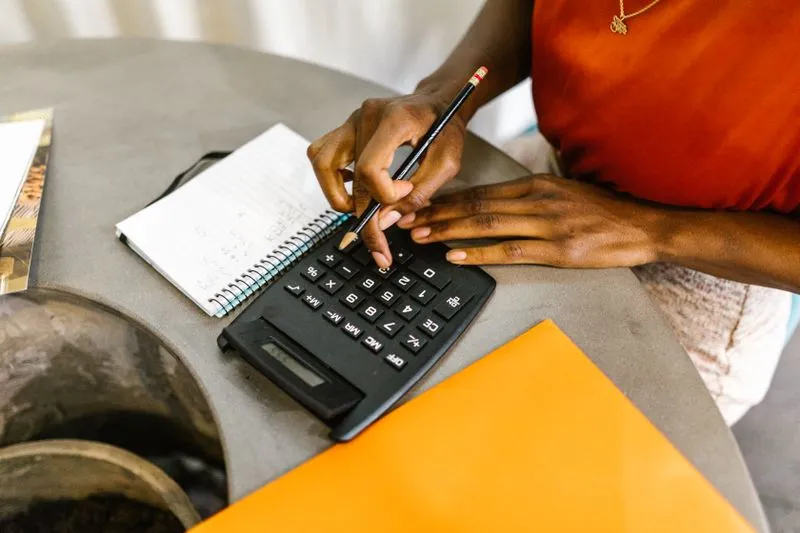
There is some good news. Over the last decade, the ONS finds the gap has fallen by roughly a quarter, both among full-time employees and among all employees. The direction is right; the pace is slow. If you want the mechanics in more depth, our guide to the real numbers behind the gender pay gap and the solutions that work goes further.
The glass ceiling: documented reality
The glass ceiling is easiest to see at the top of the UK's largest listed companies: women now hold a large share of board seats, but far fewer of the executive jobs that run the business.
According to the FTSE Women Leaders Review published on 25 February 2025, covering 2024:
- 43.4% of FTSE 350 board seats are held by women (44.7% in the FTSE 100) — above the voluntary target of 40% by the end of 2025.
- 35% of leadership roles (executive committees and their direct reports) in the FTSE 350 are held by women.
- 60 women chair a FTSE 350 company, around 17% of chairs.
- 19 women are FTSE 350 chief executives — down from 20 the year before.
The pattern is unmistakable: boards have moved, the roles that actually run companies much less so. The UK now ranks second in the G7 for women on boards — behind France, where boardroom quotas are written into law.

Three mechanisms are often put forward to explain why the ceiling holds. The first is evaluation bias: the same confidence in a meeting, the same appetite for risk, can read as ambition in a man and as aggression in a woman. The second runs through informal networks — lunches, after-work drinks, weekend sport — where some recommendations are made and where women are less present. The third is the motherhood penalty: having children slows women's careers far more than men's (see the motherhood penalty in figures).
Part-time work: a structural trap
In 2024, about 39% of women employees worked part time, against about 15% of men (ONS). Motherhood weighs heavily on that split: a 2016 TUC/IPPR analysis of people born in 1970 found that over half of mothers in work at age 42 were working part time — compared with just 3% of fathers and 13% of women without children.
Part-time work is often framed as the answer to "work-life balance". Its cost shows up in several places. Pay falls with the hours, and often the hourly rate falls too. Pension pots shrink, because lower earnings mean lower contributions from you and from your employer. Careers slow down, since part-time staff are less visible when promotions come round. And after a separation or divorce, the partner who cut her hours is the more financially exposed.

The hourly cost is steep. In April 2024, women working part time earned a median £13.40 an hour, against £17.88 for women working full time — about 25% less (ONS).
On an individual level, the best counterweight is to keep a firm grip on your own finances — especially during the years when you cut your hours. Our guide to women's path to financial independence sets out the first steps: an account in your own name, savings in your own name, and a clear view of your pension.
Where the UK pay gap is widest: occupations, earnings, age and nation
Inequality is not uniform across the labour market. The ONS figures for April 2024 show where it bites hardest.
Where the gap is largest:
- Skilled trades: the highest full-time gap of the nine main occupation groups.
- Higher earners: among full-time employees the gap is 15.5% at the 90th percentile, against 2.7% at the 10th.
- Employees aged 40 and over: 9.1% for those aged 40 to 49, more than double the 4.4% for 30 to 39.
- England: every English region had a higher full-time gap than Northern Ireland (0.8%), Wales (1.9%) or Scotland (2.2%).
Where it is smallest (which is not the same as equal): caring, leisure and other service occupations have the lowest gap of any major group, in line with the ONS finding that the gap is smallest for lower-paying occupations.
The sorting is the story. Women and men are not spread evenly across occupations, and the roles where women are most numerous — care, administration, part-time service jobs — tend to sit at the lower end of the pay scale. That occupational segregation, far more than two payslips for the same job, drives the headline gap.

The motherhood penalty
Economists call it the "child penalty". In the UK, as elsewhere, it falls overwhelmingly on mothers.
The clearest illustration comes from the TUC's Motherhood Pay Penalty research, carried out by the IPPR and published in March 2016. Looking at full-time workers born in 1970, at age 42:
- the pay gap between mothers and fathers was 42%, against 12% between women and men without children.
- mothers working full time earned 11% less than women without children (7% once education, region and occupation were taken into account).
- the penalty was concentrated among women who had their first child before 33: they earned 15% less than comparable women without children.
The penalty operates through reduced hours, moves into more "flexible" but lower-paid roles, slower promotion and, for some women, leaving work altogether. The ONS also finds the gap much wider from age 40, as the share of women falls in occupations where pay rises with age, such as managers and directors. Pay during leave plays its part too: Statutory Maternity Pay runs for up to 39 weeks, at 90% of average weekly earnings for the first six, then a flat weekly rate or 90% of earnings if lower for the remaining 33 — £184.03 a week in the 2024 to 2025 tax year.

UK legislation: where things stand
The UK has a reasonably robust legal framework on equal pay; the weak point is what happens once a gap is published.
The key legislation:
- Equality Act 2010: requires equal pay for equal work and work of equal value. Under section 77 of the Act, a contract term that stops you discussing your pay to find out whether it is linked to sex is unenforceable, and asking a colleague about their pay for that purpose is protected against victimisation.
- Gender pay gap reporting: every employer in England, Scotland and Wales with 250 or more employees on its snapshot date must publish six figures each year — mean and median hourly pay gaps, mean and median bonus gaps, the share of men and women receiving a bonus, and the proportion of women in each pay quarter.
- Plans announced in autumn 2024: the government's Plan to Make Work Pay says large employers will be required to produce action plans on their gender pay gaps and on menopause support, and a separate Equality (Race and Disability) Bill is due to extend pay gap reporting to ethnicity and disability for employers with more than 250 staff.
Reporting puts every large employer's figures in the open, and few want to appear as outliers. But the law requires them to publish their gap, not to close it — which is precisely what the promised action plans aim to address.
Closing the pay gap: what you can do at work
Before your next pay review, write down three figures side by side: your own salary, the pay range advertised for similar roles in your sector, and — if your employer has 250 or more staff — its median gender pay gap on the government's gender pay gap service. They give the conversation a concrete starting point.
Keep written records of pay promises, performance reviews and every promotion discussion — they matter if a disagreement ever turns into a formal grievance. And a professional network (a women's network in your sector, an employee network at your company, an alumni group) is often where vacancies and salary ranges circulate first.
If you manage people, three habits make a difference. Transparent pay bands, by role and competency level, leave less room for arbitrary decisions. Promotion data analysed by sex shows quickly at which grade women drop out. And high-visibility opportunities — major projects, presentations, board exposure — are shared more fairly when someone keeps track of who has had them.

Pay and parental leave: the countries that legislated further
The gender pay gap is not inevitable. Some countries have chosen tougher tools than the UK's, and their approaches are documented.
Iceland: since 1 January 2018, companies and institutions with 25 or more employees must obtain equal pay certification, proving that they pay equally for work of equal value. The Icelandic government describes it as a world first. Equal pay there is no longer just a ban on discrimination — it is an obligation to demonstrate.
Sweden: according to Försäkringskassan, the Swedish Social Insurance Agency, parental benefit covers 480 days per child, and 90 income-related days are reserved for each parent and cannot be transferred to the other. If a father doesn't take them, they are lost — a simple rule that turns shared leave from an intention into a habit.
The European Union: EU member states have three years to transpose the pay transparency directive adopted in April 2023. It will require pay ranges before interview, ban questions about salary history and, at employers that must report their gap, trigger a joint pay assessment wherever an unjustified gap exceeds 5%. The UK is not bound by it, but British companies with staff in EU countries may well feel its effects.
Progress is not universal, far from it. Our overview of progress and setbacks for women's rights around the world shows how gains in one country sit alongside reversals elsewhere.
Frequently asked questions
What's the difference between the gender pay gap and unequal pay?
The gender pay gap compares median hourly earnings of all women and all men, whatever their job (13.1% across all UK employees in April 2024, 7.0% among full-time employees). Unequal pay means paying a woman less than a man for the same work or work of equal value — which has been unlawful for decades and is now covered by the Equality Act 2010. A company can have a large gap without breaking equal pay law, simply because women are concentrated in its lower-paid roles.
Is gender pay gap reporting effective?
Partly. The duty to publish has created public accountability: every large employer's figures are open to scrutiny. But the law only requires employers to report their gap, not to reduce it. That is why the government's plans announced in autumn 2024 add mandatory action plans for large employers, and why campaigners keep pressing for enforcement linked to the data.
What can I do if I believe I'm being paid less because I'm a woman?
Several options. (1) Under section 77 of the Equality Act 2010, you can discuss your pay with colleagues to find out whether there is a link with sex, whatever your contract says, and you are protected from victimisation for doing so — although a colleague is free not to answer. (2) Raise a formal grievance, in writing. (3) Contact Acas for free, confidential advice; before a tribunal claim, the first step is normally to notify Acas, which opens early conciliation. (4) Time limits are short: usually three months minus one day from the act you're complaining about, and six months minus one day from the end of your employment for an equal pay claim.
Does gender pay gap reporting apply to all UK employers?
No. It applies to employers in England, Scotland and Wales with 250 or more employees on their snapshot date. Northern Ireland has no equivalent duty in force: its Department for Communities was consulting on its own gender pay gap regulations until 14 February 2025. Smaller employers are not required to report, which leaves a large share of the workforce outside the figures — a gap that campaigners continue to highlight.
Can men also face gender discrimination at work?
Yes. In heavily female occupations (nursing, primary teaching, care work), men face stereotypes and sometimes resistance to hiring. Gender stereotyping harms everyone — including men who want careers in care or education without being judged for it.
Do targets and quotas work?
The UK's experience suggests targets can move boards. FTSE 350 companies were given a voluntary target of 33% women on boards by the end of 2020, then 40% by the end of 2025 — and by 2024 women held 43.4% of FTSE 350 board seats. Leadership teams share the same 40% target but sat at 35% in 2024, and only 19 women led a FTSE 350 company — the top executive roles have moved far more slowly than boards. France took the legal route, with mandatory quotas, and ranks first in the G7 for women on boards.
How long will it take to close the gender pay gap?
At the current pace, a long time. The ONS finds the gap has fallen by roughly a quarter over the last decade — real progress, but slow. Countries like Iceland and Sweden have moved faster with legislation on pay transparency and parental leave. The UK has the reporting tools; what it does with the data is a question of political will.
Sources
- Office for National Statistics — Gender pay gap in the UK: 2024
- GOV.UK — FTSE Women Leaders Review 2025: record numbers of female leaders
- TUC — The Motherhood Pay Penalty (TUC/IPPR, 2016)
- TUC — Women who become mothers before 33 suffer a 15% pay penalty (March 2016)
- Department for Work and Pensions — The Gender Pensions Gap in Private Pensions
- Equality and Human Rights Commission — Pregnancy and maternity discrimination research findings
- Equality Act 2010, section 77 — Discussions about pay
- GOV.UK — Gender pay gap reporting: overview
- GOV.UK — Next Steps to Make Work Pay
- Acas — Employment tribunal time limits
- GOV.UK — Maternity pay and leave: pay
- GOV.UK — Benefit and pension rates 2024 to 2025
- Government of Iceland — New Icelandic law on Equal Pay Certification entered into force on January 1, 2018
- Försäkringskassan — Parental benefits
- Department for Communities (Northern Ireland) — Consultation on the Gender Pay Gap Information Regulations