Contents
- Why yoga — what the science actually says
- Yoga styles: finding the one that fits
- 10 foundational poses for beginners
- Breathing: yoga's invisible pillar
- Essential equipment (and what isn't)
- Choosing a class: studio, online or solo?
- 8 beginner mistakes and how to avoid them
- Your first routine: 20 minutes to get started
- Fitting yoga into a busy life
- FAQ — Yoga for beginners
Sophie's first yoga class, at 29, ended with a nervous giggle in the changing room. Not from embarrassment — from disbelief. For an hour, in a studio bathed in slanting light and incense she found slightly overpowering, she'd discovered that her hamstrings had the flexibility of steel cable, that her balance on one foot was a statistical miracle, and that downward-facing dog — the pose that looked so natural on Instagram — had made her arms tremble as though she were holding up a fridge.
Three years on, Sophie practises four times a week. Not because yoga "transformed" her — she hates that word. But because it did something more subtle and more lasting: it taught her to inhabit her body. To notice her trapezius muscles clenching when she opens Monday morning emails. To breathe from her belly when anxiety spikes. To sleep — properly sleep — for the first time since university.
That's not mysticism. It's neurophysiology. And it's proven. A meta-analysis published in the Journal of Clinical Psychology (2023) across 3,880 participants shows that yoga significantly reduces anxiety (moderate to large effect, d = 0.56), perceived stress and depressive symptoms. Harvard Medical School ranks it among the most validated non-pharmacological interventions for stress management.
This guide is for you if you've never set foot on a mat — or if you tried once and gave up thinking "yoga just isn't for me." Spoiler: it's for everyone. Literally.
Why yoga — what the science actually says
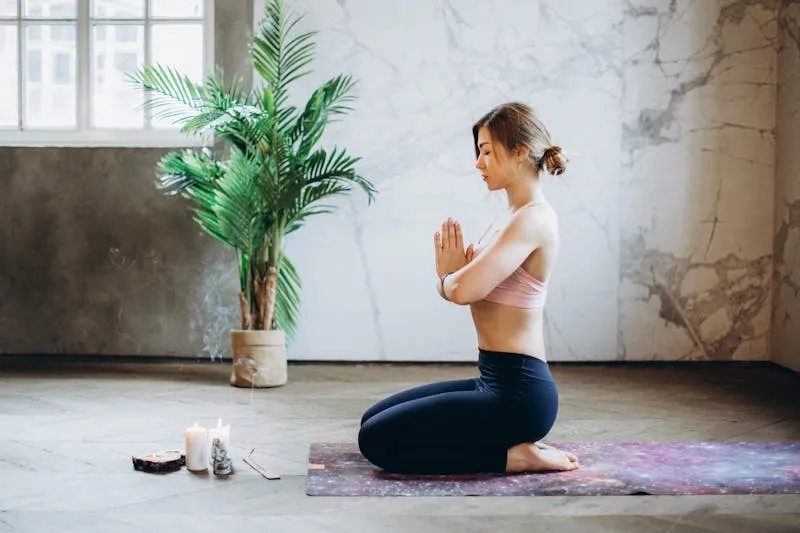
Before unrolling the mat, let's clear up a misunderstanding: yoga isn't a sport. Nor is it a religion, a cult, a diet or a lifestyle reserved for slim women in sage-green leggings. Yoga is a mind-body practice combining postures (asanas), breathing (pranayama) and concentration — and its health effects have been measured for over 40 years by biomedical research.
What the studies prove
On stress and anxiety. Yoga activates the parasympathetic nervous system ("rest and digest") and reduces cortisol production. A randomised controlled trial (Pascoe et al., Psychoneuroendocrinology, 2017) shows a 25% drop in salivary cortisol after 12 weeks of regular practice.
On chronic pain. The American College of Physicians recommends yoga as a first-line treatment for chronic low back pain — before medication. The data is unambiguous: yoga reduces pain and improves physical function comparably to physiotherapy (Saper et al., Annals of Internal Medicine, 2017). The NHS now includes yoga in its exercise guidelines for back pain.
On sleep. A meta-analysis of 19 controlled trials (Wang et al., 2020) concludes that yoga significantly improves sleep quality — with a particularly strong effect in women and those with insomnia.
On cardiovascular health. Yoga reduces systolic blood pressure by an average of 5 mmHg (Cramer et al., Mayo Clinic Proceedings, 2014) and improves lipid profiles. It's not a substitute for aerobic exercise, but an effective complement.
On mental health. Beyond anxiety, yoga shows positive effects on depressive symptoms (effect size comparable to low-dose antidepressants in some studies), PTSD (van der Kolk et al., 2014) and even eating disorders (Neumark-Sztainer et al., 2018).
What yoga doesn't do: it doesn't "detox" (your kidneys and liver handle that), it doesn't "burn toxins" (toxins aren't a medical concept), and it doesn't cure cancer. Be wary of miracle claims: yoga's real benefits are already impressive enough without exaggeration.
Yoga styles: finding the one that fits
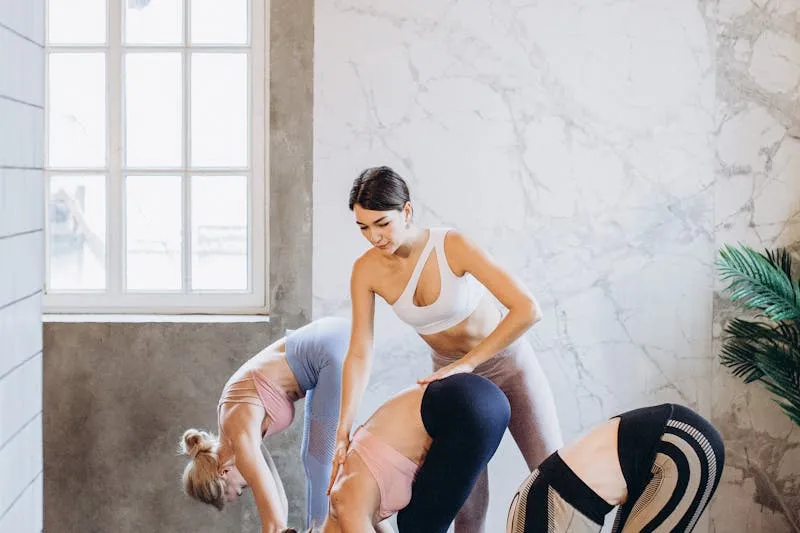
There are dozens of yoga styles — and choosing the wrong one to start can turn a positive experience into an ordeal. Here are the most accessible styles for a beginner, ranked by intensity.
Hatha Yoga — The accessible classic
Intensity: ★★☆☆☆
Hatha is the foundational style from which most others derive. Poses are held for 30 seconds to 2 minutes, with slow transitions and an emphasis on alignment. The recommended style for beginners: it gives you time to understand each pose, correct your placement, and breathe.
Vinyasa — Yoga in motion
Intensity: ★★★☆☆ to ★★★★☆
Vinyasa links poses in a continuous flow, synchronised with breathing. More dynamic than hatha, it suits people who get bored with slowness — but it's demanding for an absolute beginner. Tip: start with a "gentle vinyasa" or "slow flow" class.
Yin Yoga — Passive depth
Intensity: ★☆☆☆☆ (physically), ★★★★☆ (mentally)
Poses held for 3-5 minutes, often on the floor, targeting connective tissue (fascia, ligaments, tendons). Physically gentle but mentally demanding — staying still for 5 minutes while stretching your hips confronts a discomfort many find hard to bear. Excellent alongside intensive sport.
Ashtanga — Structured rigour
Intensity: ★★★★☆
Fixed series of poses, always in the same order, always with the same breathing. Ashtanga is demanding, athletic and progressive (you "unlock" poses one by one). Not recommended as a first approach, but excellent after 6 months of hatha or vinyasa.
Restorative Yoga — Total surrender
Intensity: ★☆☆☆☆
Uses props (bolsters, blankets, blocks) to support the body in passive poses held for 10-20 minutes. Zero muscular effort — the aim is deep nervous system relaxation. Perfect during intense stress, post-partum recovery or chronic fatigue.
Power Yoga — Athletic yoga
Intensity: ★★★★★
A vinyasa offshoot emphasising strength building. Close to fitness, it makes you sweat and builds muscle. Not advisable for a first-ever yoga class — but worth considering after a few months of regular practice.
Advice for absolute beginners: start with 4-6 hatha classes to learn the basics (alignment, vocabulary, breathing), then explore gentle vinyasa or yin according to preference. The key is to try at least 3 different styles before concluding that "yoga isn't for me."
10 foundational poses for beginners
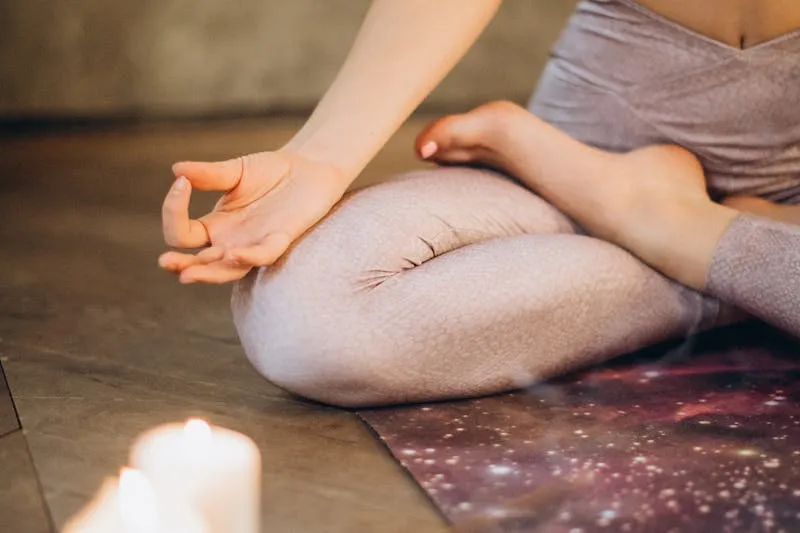
These 10 poses form yoga's core vocabulary. Mastering them — that is, practising them with correct alignment and fluid breathing — takes weeks, not minutes. And that's normal.
1. Tadasana — Mountain Pose
Standing, feet together or hip-width apart, arms by your sides, gaze forward. The pose seems unremarkable — it's foundational. It teaches grounding, spinal alignment and postural awareness. Distribute weight evenly across the four corners of each foot. Gently engage the quadriceps. Lengthen the spine skyward.
2. Adho Mukha Svanasana — Downward-Facing Dog
Yoga's most iconic pose. Hands shoulder-width apart, feet hip-width, body in an inverted V. The classic error: forcing heels to the floor. They don't need to touch — keep knees slightly bent if necessary. The goal is spinal lengthening, not calf stretching.
3. Virabhadrasana I — Warrior I
Front lunge, back foot at 45°, arms raised, gaze towards hands. Strengthens thighs, opens hips, works balance. Common error: letting the front knee extend past the ankle. Align the knee above the ankle, shin perpendicular to the floor.
4. Virabhadrasana II — Warrior II
Side lunge, arms extended horizontally, gaze over the front hand. Strengthens legs and shoulders, opens hips. Tip: imagine your arms pulling in opposite directions — energy extending from left fingertips to right fingertips.
5. Balasana — Child's Pose
Knees on the floor, bottom on heels, torso folded forward, arms extended ahead or alongside the body. This is the rest pose — one you can take at any time during a class if you need to catch your breath. No worthy yoga teacher will judge you for it.
6. Bhujangasana — Cobra
Lying face down, hands under shoulders, lift the chest while keeping the pelvis grounded. The spinal extension is gentle — don't force the arch. Elbows stay slightly bent, shoulders away from ears.
7. Trikonasana — Triangle
Feet wide apart, one hand reaching towards the floor (or ankle), the other towards the ceiling. Stretches the sides, strengthens legs, works lateral balance. Use a block under the lower hand if you can't reach the floor — that's its primary purpose.
8. Vrksasana — Tree Pose
Standing on one foot, the other placed against the inner thigh (never against the knee). Hands in prayer at the chest or arms raised. Balance tricky? Fix your gaze on an unmoving point (drishti) and keep the standing foot firmly rooted. Wobbling is normal — it's part of the pose.
9. Supta Baddha Konasana — Reclined Butterfly
Lying on your back, soles of feet together, knees open outwards. A hip-opening and deep relaxation pose. If hip tension is too strong, place a cushion or block under each knee.
10. Savasana — Corpse Pose
Lying on your back, arms and legs relaxed, eyes closed. The simplest-looking pose and the hardest in practice — because it requires you to stop doing. This is the closing pose of every session, where the nervous system integrates the practice's benefits. Never skip it.
Alignment before depth: a "shallower" pose with correct alignment is infinitely more beneficial than an "impressive" pose badly executed. Yoga is not a flexibility competition. If you need a block, a strap or a bent knee — use them without a shred of shame.
Breathing: yoga's invisible pillar
If you take away only one thing from this guide, let it be this: yoga without conscious breathing is just stretching. Pranayama (breath control) is what distinguishes yoga from gymnastics — and it's also what produces the majority of measurable effects on stress and anxiety.
Ujjayi breathing — the victorious breath
The foundational yoga breath: inhale and exhale through the nose while gently constricting the back of the throat, creating a soft, steady sound — like the ocean in a seashell. This constriction slows airflow, extends gas exchange and activates the vagus nerve — the great regulator of the parasympathetic nervous system.
In practice: inhale for 4 counts, exhale for 6. The longer exhalation is the key to parasympathetic activation — proven by heart rate variability data (Gerritsen & Band, 2018).
Abdominal (diaphragmatic) breathing
Lying on your back, one hand on your belly, the other on your chest. Inhale, inflating the belly (belly-hand rises, chest-hand stays still). Exhale, letting the belly fall. This exercise retrains the diaphragm to function properly — most adults breathe shallowly (thoracically), keeping the nervous system on chronic alert.
Nadi Shodhana — Alternate nostril breathing
Close the right nostril with your thumb; inhale through the left. Close the left nostril with your ring finger; exhale through the right. Inhale through the right. Close the right; exhale through the left. One cycle. Start with 5 cycles.
The effect is documented: alternate nostril breathing reduces heart rate and blood pressure within minutes (Telles et al., International Journal of Yoga, 2017). It's an immediate stress-management tool — usable anywhere, including on public transport or before a meeting.
The daily test: practise abdominal breathing for 5 minutes every morning, before even getting out of bed. Within two weeks, you'll notice a measurable difference in stress management — one of yoga's fastest "returns on investment."
Essential equipment (and what isn't)
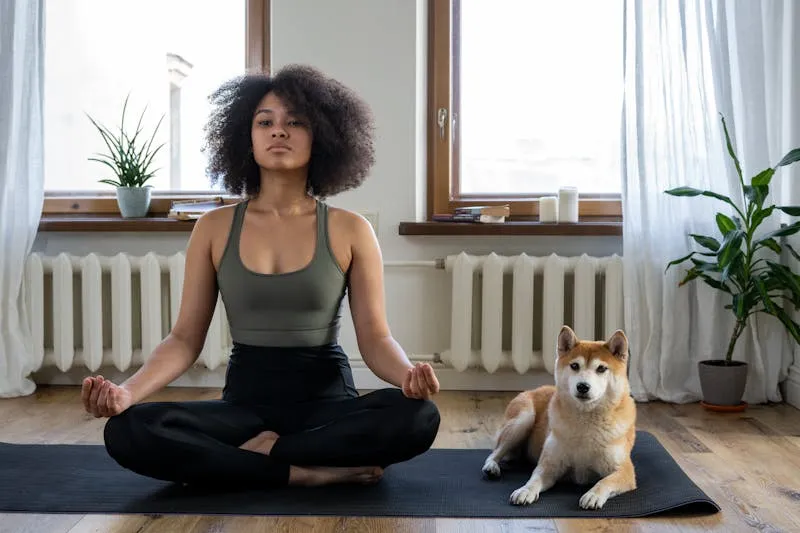
What you need
A mat. The only genuinely necessary investment. A good mat offers grip (feet and hands don't slide), cushioning (knees protected) and defines your space. Budget: £15-30 for a decent mat, £40-70 for a durable, eco-friendly one. Recommended thickness: 4-6mm.
Two cork or foam blocks. Blocks "bring the floor closer" to you. Too stiff to reach the floor in triangle? Rest your hand on the block. Tight hips in butterfly? Place a block under each knee. They're not a sign of weakness — they're a sign of postural intelligence. Budget: £8-15 per pair.
A strap. Useful for stretching poses when hands can't meet — for example, reaching your feet in a seated forward fold. Budget: £5-8.
What you DON'T need
- £80 leggings — comfortable trousers you can move in are fine
- Yoga socks — practice is done barefoot (foot grip on the mat is essential)
- A bolster (unless you regularly practise restorative yoga — a firm pillow works at first)
- A yoga wheel — gadget for advanced practitioners, useless before months of practice
- Incense, crystals or a singing bowl — if you enjoy them, by all means, but they're not yoga, they're decoration
Choosing a class: studio, online or solo?
Studio: ideal for beginners
A good teacher corrects your alignment in real time — and that's invaluable when starting out. Repeated poor alignment over weeks can create compensations leading to injury. The studio also provides a social framework (even a silent one) that strengthens motivation.
How to choose a studio:
- Is the teacher qualified? (minimum 200-hour training, ideally 500h, registered with Yoga Alliance or BWY)
- Do they offer "beginner" or "foundations" classes? (avoid studios that mix all levels)
- Is the atmosphere welcoming and non-judgemental?
- Is pricing transparent? (beware of long commitments without trial options)
Online yoga: flexibility and autonomy
Online platforms (Yoga With Adriene on YouTube — free and excellent — or paid platforms like Glo, Alo Moves) offer unmatched flexibility. The downside: no alignment correction. Solution: combine 1-2 studio classes per week (for corrections) with 2-3 online sessions (for consistency).
Solo at home: after the basics
Once foundational poses are learned and alignment is internalised, practising alone is perfectly feasible — and even desirable for developing your own body awareness. But not at the very start: the first few weeks deserve external guidance.
Beware of online "teacher training": the yoga market is poorly regulated. "50-hour online yoga teacher training" courses abound — they're worthless. A serious training: minimum 200 hours in person, certified by Yoga Alliance or British Wheel of Yoga. If you take online classes, check the teacher's credentials.
8 beginner mistakes and how to avoid them
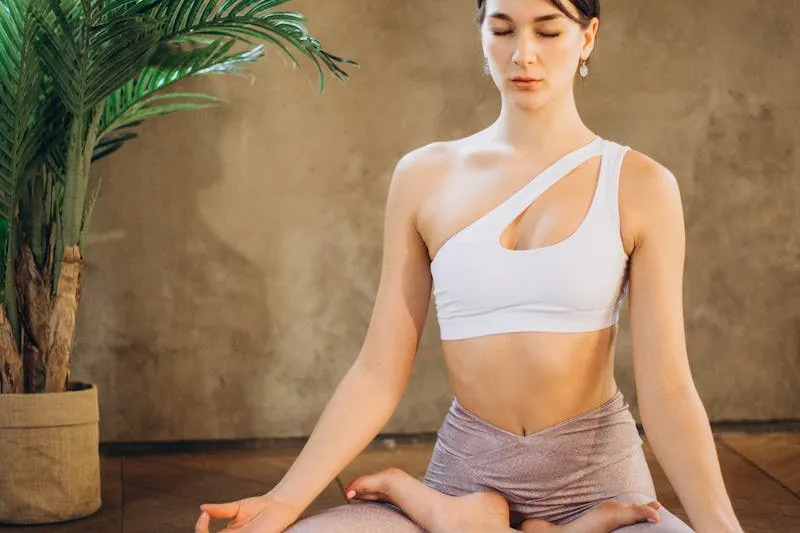
1. Comparing yourself to others
The person next to you touching their toes may have been practising for 10 years — or they may be naturally hypermobile (which, incidentally, is an injury risk factor, not an advantage). Your practice is your own. Full stop.
2. Holding your breath
When a pose is difficult, the instinct is to hold the breath. That's the exact opposite of what's needed: continuous breathing is what allows the body to relax within effort. If you've stopped breathing, you're pushing too hard.
3. Forcing flexibility
Yoga develops flexibility — it doesn't require it. Forcing a pose beyond your current range is the shortest path to injury. Work at 70-80% of your maximum capacity — never 100%.
4. Skipping the warm-up
Even in "gentle" yoga, the body needs preparation. A few minutes of joint mobilisation (wrist, ankle, neck, hip rotations) before poses protects the joints.
5. Skipping Savasana
Leaving before the final relaxation is like leaving a meal before dessert — except the "dessert" is where the nervous system integrates all the session's benefits. Stay. Even if it feels like "doing nothing." Especially if it feels like "doing nothing."
6. Practising through pain
Discomfort ≠ pain. Stretching creates bearable discomfort. Sharp, burning or stabbing pain is an alarm signal. If a pose hurts, come out of it immediately.
7. Wanting to progress too fast
Yoga is not a competitive sport. There's no "level" to reach, no pose to "unlock" by a deadline. Progress comes with consistency — not intensity. Two 20-minute sessions per week are better than a one-hour marathon every fortnight.
8. Choosing the wrong class
A power yoga class when you've never done yoga is like running a half-marathon without ever having jogged. Start at the right level — your ego will recover, your ligaments may not.
Your first routine: 20 minutes to get started
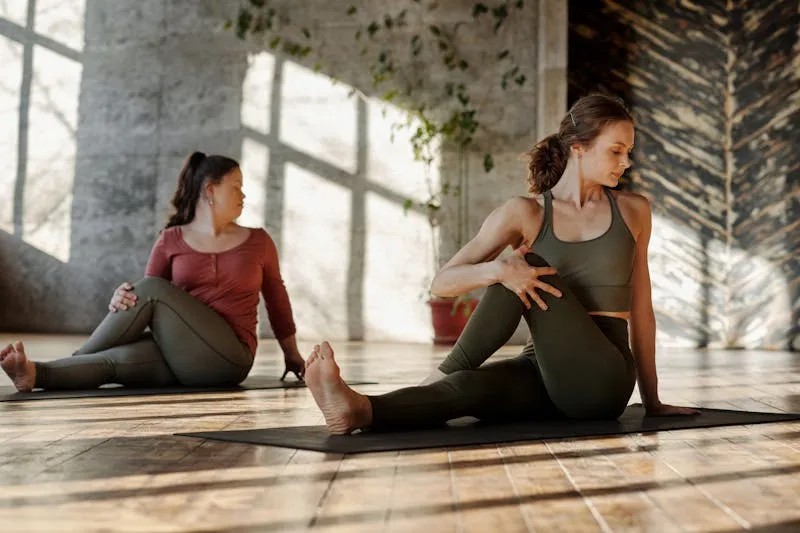
Here's a 20-minute sequence you can do at home, morning or evening, with just a mat.
- Seated abdominal breathing — 2 minutes. Cross-legged or on a chair, eyes closed. 4 counts inhale, 6 counts exhale
- Cat-Cow (Marjaryasana-Bitilasana) — 1 minute. On all fours, alternate between arched back (inhale) and rounded back (exhale). Gently mobilises the spine
- Downward-Facing Dog — 5 breaths. Push hips skyward, lengthen the spine. Bend knees if needed
- Warrior I (right side) — 5 breaths. Front lunge, arms raised
- Warrior II (right side) — 5 breaths. Open arms horizontally
- Downward-Facing Dog — 3 breaths (transition)
- Warrior I (left side) — 5 breaths
- Warrior II (left side) — 5 breaths
- Triangle (right then left) — 5 breaths each side
- Tree Pose (right then left) — 5 breaths each side
- Cobra — 3 breaths, 2 repetitions
- Child's Pose — 1 minute rest
- Reclined Butterfly — 2 minutes
- Savasana — 3 minutes minimum. Eyes closed. Do nothing
Recommended frequency: 3-4 times per week. Consistency trumps duration — 20 minutes daily is more effective than 90 minutes weekly. The body learns through repetition, not occasional intensity.
Fitting yoga into a busy life
The main barrier to yoga isn't flexibility — it's time. Here are concrete strategies for fitting practice into a packed schedule.
Morning yoga: 10 minutes that change the day
Set your alarm 15 minutes earlier. Unroll your mat (leave it out the night before — the friction of having to fetch it is enough to sabotage motivation). 5 minutes of sun salutations + 5 minutes of breathing. It's short, it's effective, and the effect on morning cortisol is measurable from the second week.
Desk yoga: postural micro-breaks
Every 90 minutes, 3 moves of 30 seconds each: neck rotation, shoulder stretch (arm crossed in front of chest), seated twist (hand on opposite knee). It's not yoga in the strict sense — it's postural maintenance. And it prevents the neck and back pain that 8 hours of screen time creates.
Evening yoga: 5 minutes for better sleep
Child's Pose (1 min) + Reclined Butterfly (2 min) + Legs Up the Wall (2 min). This micro-sequence activates the parasympathetic system and prepares the body for sleep. No dynamic poses in the evening — cortisol would spike.
The 2-minute rule
If you "haven't got time": sit down and do 2 minutes of abdominal breathing. Two minutes. That's better than zero. And often, 2 minutes turn into 10 — because the body asks for more.
FAQ — Yoga for beginners
I'm not flexible at all. Can I do yoga?
Yes. Saying "I'm not flexible enough for yoga" is like saying "I'm too dirty to have a shower." Yoga develops flexibility — it doesn't require it. Use blocks and straps to adapt every pose to your current body. Flexibility will come with practice.
Does yoga help with weight loss?
Yoga isn't a high-calorie-burning exercise (except power yoga). However, studies show that regular yoga practitioners have a lower BMI — not because yoga "burns calories" but because it develops body awareness and reduces emotional eating (Neumark-Sztainer et al., 2018). The effect is indirect but real.
Can I do yoga while pregnant?
Yes, with adaptations. Prenatal yoga is specifically designed for each trimester. Avoid deep twists, prone poses and inversions after the first trimester. Choose a class labelled "prenatal" with a trained teacher — not a standard class adapted verbally.
Is yoga a religion?
No. Yoga has philosophical roots in Indian traditions, but its modern Western practice is secular. You don't need to subscribe to any spiritual belief to benefit from yoga. If a class makes you uncomfortable with spiritual prescriptions, change the class — not yoga.
How many times a week should I practise?
For measurable results: at least 3 times per week, 20-45 minutes per session. But even once a week produces positive effects on stress and flexibility. The best frequency is the one you'll sustain long-term.
Can you injure yourself doing yoga?
Yes, if you push beyond your limits or if alignment is incorrect. The most common yoga injuries: wrists (poorly executed downward dog), knees (seated poses with forced rotation), lower back (forward folds with a rounded spine). Prevention: listen to your body, use props, and never force a painful pose.
What's the best time of day to practise?
Morning on an empty stomach (or after a light snack) is traditionally recommended — the body is rested, the stomach empty, and practice sets the day's tone. Evening works too, with gentler poses (yin, restorative). Avoid practising within 2 hours of a heavy meal.
Sources and references
- NHS – Yoga: A Guide to Getting Started
- WHO – Global Recommendations on Physical Activity, 2020
- Harvard Medical School – Yoga: Benefits Beyond the Mat
- Journal of Clinical Psychology – Yoga for Anxiety and Depression: Meta-Analysis, 2023
- Pascoe et al. – Yoga, Stress and Cortisol, Psychoneuroendocrinology, 2017
- Saper et al. – Yoga vs Physical Therapy for Chronic Low Back Pain, Annals of Internal Medicine, 2017
- Gerritsen & Band – Breath of Life: Respiratory Vagal Stimulation, 2018
- Cramer et al. – Yoga for Hypertension, Mayo Clinic Proceedings, 2014