You've created your Pinterest board My Wedding. 847 pins. The Vera Wang dress, the country house venue in the Cotswolds with the wisteria, the photographer who does those artistically blurry golden-hour shots, the artisan wood-fired pizza van. And then you opened your online banking. And closed Pinterest.
The average UK wedding now costs over £20,000, according to Hitched's 2023 annual survey. In reality, it costs the initial budget + 30% overspend + the existential crisis on the drive home from the florist. This guide exists so that doesn't happen to you.
I'll walk you through everything: how to allocate your budget, where to cut without it showing, how to negotiate with suppliers (with the exact words to use), and which hidden costs will blindside you if you're not prepared. Plus, at the end, three real wedding budgets at £10k, £25k and £40k so you know where you stand.

The reality of wedding costs: what nobody actually tells you
Let's start with the numbers. According to Hitched's 2023 report, the average UK wedding costs £20,775 for approximately 80 guests. Bridebook puts the figure slightly lower at £17,674. The gap between surveys reflects a fundamental truth: there's no single "average wedding" — there are people making it beautiful for £8,000 and others spending £80,000.
What drives the costs up? Three main culprits:
- The guest list: each additional guest costs roughly £100–£150 (food + drink + cake + flowers + invitation + favours). Inviting 20 extra people is an extra £2,000–£3,000 — easily.
- The venue: a country house in the Home Counties on a Saturday in June can represent 40% of your entire budget by itself.
- The extras creep: every "it's just a small detail" adds up. The photo booth (£400), the upgraded cocktail reception (£800), the hair and makeup for the bridesmaids (£400). Suddenly you've added £3,000 in "small details".
Bridebook reports that 72% of UK couples exceed their initial budget. The number one reason? They didn't have a properly defined budget in the first place — just a vague feeling.

The ideal budget breakdown (by percentage)
Here's how a well-managed wedding budget typically breaks down. These percentages are a guide — not commandments:
Category by category
| Category | % budget | Example on £20,000 |
|---|---|---|
| Venue hire | 30–40% | £6,000 – £8,000 |
| Catering (food + drink) | 25–30% | £5,000 – £6,000 |
| Photography | 8–10% | £1,600 – £2,000 |
| Wedding dress | 5–8% | £1,000 – £1,600 |
| Flowers and decoration | 3–5% | £600 – £1,000 |
| Music (DJ / live band) | 3–5% | £600 – £1,000 |
| Stationery and invitations | 1–2% | £200 – £400 |
| Groom's outfit + accessories | 2–3% | £400 – £600 |
| Hair and makeup | 1–2% | £200 – £400 |
| Wedding cake | 1–2% | £200 – £400 |
| Contingency (ALWAYS) | 10% | £2,000 |
Adjusting these percentages to your priorities
These percentages shift based on what matters most to you. If photography is your non-negotiable — because it's what lasts — push that up to 12–15% and trim proportionally on stationery or decorations. If you're a flower obsessive, increase florals to 8% and simplify catering.
The foundational principle of a wedding budget: decide on your 2–3 absolute must-haves and be genuinely prepared to compromise on everything else.
Where to save without it showing
Good news: there are places to cut that genuinely don't show in the photos or the memories. Here are the main ones.
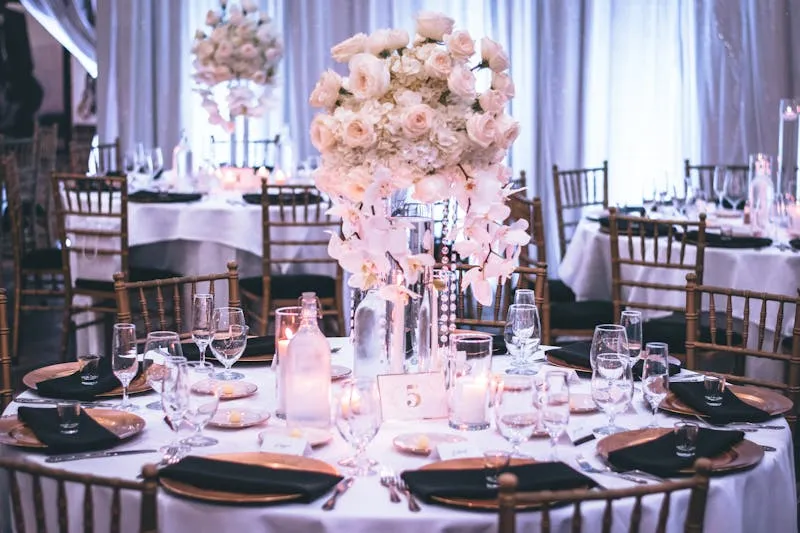
1. The date
This is the most powerful — and most underestimated — saving. A Saturday in June during peak season costs 30–50% more than a Friday or Sunday in October for the exact same venue.
- Off-season (November to March): reductions of 20–40% at many venues
- Friday or Sunday: some venues offer up to 30% off compared to Saturday
- Midweek: dramatically cheaper — most guests will still attend if they love you
2. The venue — alternatives to the country house
Country houses and barns are stunning. They're also priced accordingly. Alternatives that create real atmosphere:
- Pub with private dining room: warm, characterful, often half the price of a dedicated wedding venue
- Registry office + restaurant privatisation: the restaurant handles everything, décor already exists, no external caterer to coordinate
- Village hall (yes, genuinely): decorated thoughtfully, you cannot tell in photos. Cost: £200–£600
- Farm or smallholding: often cheaper than country house hotels, and the aesthetic is arguably more interesting
- Art gallery or museum: some offer evening hire at a fraction of dedicated wedding venue prices, with extraordinary built-in atmosphere
- Family garden with a marquee: marquee hire £800–£2,000, but the venue cost itself is zero
3. Catering — cost-effective alternatives
A sit-down meal from a full-service caterer costs £80–£150 per head in the UK. For 80 guests that's £6,400–£12,000. Alternatives:
- Canapés and bowl food reception: more sociable, less formal, £35–£55 per head. Guests genuinely mingle better standing up than seated at a table of ten they didn't choose
- Buffet: £45–£70 per head, less service required
- Two-tier event: ceremony + drinks reception for everyone, dinner only for your closest 30
- Food trucks: around £25–£40 per head, brilliant atmosphere, less formal service
- Self-catered with professional kitchen hire: only viable if someone in your family genuinely loves cooking at scale
4. Stationery and invitations
Invitations are opened in about twenty seconds and kept in a drawer. Let's be honest. Alternatives:
- Canva: stunning templates, print at home or online for £50–£80 instead of £300–£500 from a bespoke stationer
- Digital save-the-dates: free. Nobody is genuinely shocked in 2024
- Bridebook or Prezola wedding list: free and more practical for guests than a printed list
5. Flowers — strategic DIY
Flowers cost what they cost because florists have real skill AND significant overheads. Some strategies:
- New Covent Garden Market or local wholesale: buy in bulk the day before, assemble table centrepieces yourself
- Seasonal British flowers: a peony in June costs £2; the same peony in December costs £8
- Abundant greenery + accent flowers: eucalyptus, ivy, ferns — inexpensive and visually very effective
- Outsource only the bridal bouquet: it's in every photograph. The rest can be DIY
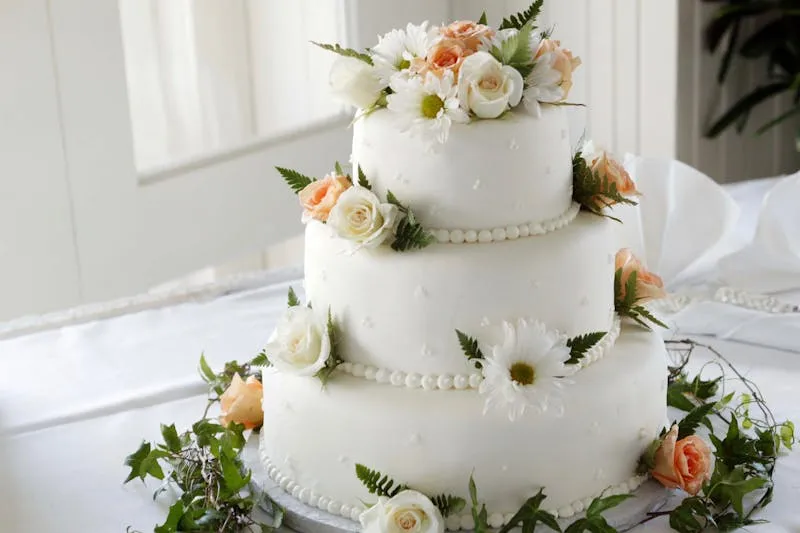
6. Wedding cake
A five-tier wedding cake with hand-crafted sugar flowers costs £600–£2,500. Alternatives:
- Naked cake: much simpler to produce, often 40–50% less expensive
- Cheesecake tower: wildly popular, delicious, and a fraction of the cost
- Cake from a local bakery (not specialist wedding): often half the price for equal gustatory quality
- Dessert table: doughnuts, macarons, tarts — visually impressive, budgetarily flexible

Where you absolutely should NOT cut corners
For every category where cuts are invisible, there are others where savings made in advance cost far more in regret.
Photography — investment priority #1
In thirty years, you won't remember the exact shade of the napkins. You will look at your photographs. A poor photographer is irreparable. A good one costs £2,000–£4,000 — and is worth every pound.
Signs of a photographer to avoid:
- Inconsistent or very sparse portfolio
- Suspiciously low pricing (under £800 for a full day)
- No clear contract covering rights and delivery timeline
- "My cousin has a nice camera" — no.
Food quality
Your guests will forget the centrepieces within a week. They will remember the meal — for better or worse — for years. A poor caterer can undermine an otherwise perfect day. Always request a tasting before signing a contract.
The bride's shoes
You'll wear those shoes for 12–16 hours. This is not the moment for the £25 heels from a fast-fashion site. Comfortable shoes that fit properly are an investment in your actual happiness on the day.
Wedding insurance
This is specific to the UK and genuinely underrated. Wedding insurance costs £100–£300 and covers venue insolvency, supplier no-shows, severe weather forcing postponement, and public liability. Given the costs involved, it's one of the most sensible spends on the entire list. Providers include Debenhams Wedding Insurance, WedSure, and John Lewis.
How to negotiate with your suppliers (scripts included)
Negotiating for a wedding is an art. Here's how to do it without feeling uncomfortable or coming across as difficult.

Rule #1: book early (or very late)
The best suppliers book 18–24 months ahead during peak season. But if you're flexible on date, last-minute can be golden: a photographer who's just had a cancellation may offer 20–30% off.
Rule #2: ask what's included, not for a direct discount
Most suppliers hate discounting their headline rate (it undermines their positioning). But they can add value:
- Photographer: "Could you include the civil ceremony as well as the reception?" (worth £300)
- Caterer: "Could you include the evening buffet in this quote?" (worth £600)
- Venue: "Could you include the tables and chairs in the hire fee?" (worth £800)
- Florist: "If I add the table centrepieces, could you give me a combined price?"
Negotiation scripts
For the venue:
"We absolutely love your venue and it's genuinely our first choice. Our budget for venue hire alone is £[X]. Is that something you could consider if we confirm before [date] / if we choose a Friday or Sunday?"
For the caterer:
"We've spoken to a few caterers and we'd really love to work with you. Your three-course menu is exactly what we have in mind. Our catering budget is £[X] for [N] guests — is there a package or adjustment that could work within that?"
For the photographer:
"Your work is genuinely perfect for us. We have a photography budget of £[X]. Do you have a package at that price point, or perhaps a winter date that might work?"
When to book for the best prices
- Venue and caterer: 18–24 months ahead for peak season
- Photographer: 12–18 months
- DJ / live band: 12 months
- Wedding dress: 12 months (alterations take 3–6 months)
- Florist: 3–6 months
- Stationery: 4–6 months before to post 2–3 months ahead
Hidden costs nobody warns you about
Here's the list of costs that blow the budgets of people who thought they'd planned for everything.
Gratuities
Tipping isn't mandatory in the UK, but it's warmly received and expected for catering staff. Budget £200–£400 in cash to distribute discreetly on the evening. Awkward to forget.
Dress alterations
Your dream dress is rarely your exact size. Alterations cost £100–£600 depending on the work required. Budget this from the moment you purchase.
Hair and makeup trials
The trial appointment costs £100–£250. You may need two if the first doesn't work out. Plus travel if your stylist comes to you on the day.
Transport
Getting from the registry office to the church or ceremony venue to the reception adds up. Classic car hire: £400–£900. Guest shuttles: £300–£800. Don't forget it.
Accommodation for out-of-town guests
You're not obliged to pay for guests' rooms, but you can negotiate a room block rate with a local hotel and make the logistics easier. Budget for a few rooms for immediate family.
Rehearsal dinner and/or morning-after brunch
Weekend weddings are increasingly popular in the UK. Wonderful for atmosphere. Also an additional £1,500–£4,000 for extra meals. If you're planning this, build it in from the start.
Ceremony décor
The floral aisle arrangements, pew ends, candles for the ceremony — often not included in the florist's quote, which focuses on the reception. Ask explicitly.
VAT
Many UK wedding suppliers quote ex-VAT. A £5,000 catering quote becomes £6,000 with VAT. Always check whether quotes are inclusive or exclusive of VAT before comparing.

Budget tracking tools
Having a budget is good. Actually tracking it is better. Here are the tools and methods that work.
The spreadsheet — the reliable method
A Google Sheets with these columns: Category / Planned budget / Accepted quote / Deposit paid / Balance remaining / Payment date / Notes. Share it with your partner. Update it every time you spend. Simple, free, effective.
UK-specific apps
- Bridebook: free UK-focused planning tool with built-in budget tracker, supplier search, and guest list manager
- Hitched: similar functionality, strong UK supplier directory
- Paperlust: if you want premium digital stationery with budget tracking built in
- Google Sheets: most flexible, most customisable
- Notion: good if you're already in the ecosystem — wedding templates exist
Financing: savings, family contributions, loans
Savings — the ideal plan
With 18–24 months to go, a £20,000 wedding represents roughly £833–£1,111 saved per month between two people. Manageable with genuine commitment.
Open a dedicated easy-access savings account or a Lifetime ISA (if you're under 40 and haven't used your LISA allowance for a property — the 25% government bonus can contribute). Set up an automatic transfer on payday. You forget the money exists — and it compounds.
Family contributions — the difficult conversation
Parents often contribute financially to weddings. "Often" doesn't mean "always", and "contribution" doesn't mean "full funding". How to handle it:
- Raise it early (12–18 months ahead), in a relaxed context, not immediately after announcing the engagement
- Be specific: "We're planning a budget of £18,000. Do you think you might be able to contribute, and if so, roughly how much?" — a direct question is less awkward than a hovering half-question
- Acknowledge conditions: if parents give £5,000, they may expect some input on the guest list or venue. That's human. Decide in advance how far you're willing to accommodate that
- Confirm in writing: not a legal contract, but a follow-up email summarising the conversation. It prevents very painful misunderstandings months later
Wedding loans — Kristina says no
I'll be direct: I'm against wedding loans. Not on moral grounds, but on financial logic. A personal loan for a wedding typically costs 6–15% APR on money spent on an event with zero residual value. You'll be paying £400–£700 per month for three to five years for a party that lasted one day.
Starting your marriage with £15,000–£25,000 of debt weighs on the monthly budget, on your mental health, and sometimes on the relationship itself.
The alternative: calibrate your budget to what you can fund through savings plus confirmed family contributions. A £10,000 wedding with no debt is objectively better than a £25,000 wedding with five years of repayments.
3 real weddings: £10k, £25k and £40k — what actually changes
The £10,000 wedding — "Heartfelt wedding"
Profile: 50 guests, Friday evening in September, village hall decorated with purpose.
| Category | Budget |
|---|---|
| Village hall hire | £350 |
| Catering (bowl food, 50 guests) | £2,200 |
| Photographer (8 hours) | £1,500 |
| Dress (high street + alterations) | £700 |
| Flowers (market + DIY) | £350 |
| Spotify playlist + speaker hire | £50 |
| Stationery (Canva + print) | £120 |
| Hair and makeup | £280 |
| Cake (local bakery) | £200 |
| Groom's outfit | £350 |
| Wedding insurance | £150 |
| Contingency (10%) | £625 |
| TOTAL | £6,875 |
What's left: £3,125 of buffer. This wedding is intimate, warm, and genuine. The photos are beautiful. Guests remember the evening as one of the best they've attended — because a room of 50 people who all actually know each other is a very different atmosphere from a function with 120 guests.
The £25,000 wedding — "Elegant wedding"
Profile: 100 guests, Saturday in May, country barn in the Cotswolds.
| Category | Budget |
|---|---|
| Barn venue hire (full day) | £5,500 |
| Catering — sit-down dinner (100 guests) | £9,000 |
| Photographer (10 hours) | £2,400 |
| Dress (designer + alterations) | £2,200 |
| Florist | £1,500 |
| DJ (6 hours) | £1,200 |
| Printed stationery | £350 |
| Hair and makeup (trial + wedding day) | £450 |
| Wedding cake | £700 |
| Groom's suit + accessories | £700 |
| Transport | £400 |
| Wedding insurance | £200 |
| Contingency (10%) | £2,060 |
| TOTAL | £26,660 |
What changes from £10k: the guest count (+50), a sit-down dinner rather than bowl food, a venue with inherent character, a designer dress. The guest experience is meaningfully different. But the photos from the £10k wedding can be just as stunning.
The £40,000 wedding — "Prestige wedding"
Profile: 150 guests, Saturday in June, listed country house.
| Category | Budget |
|---|---|
| Country house hire (full weekend) | £10,000 |
| Premium catering (150 guests) | £18,000 |
| Photographer + videographer | £5,000 |
| Designer dress + alterations | £4,500 |
| Florist (ceremony + reception) | £3,500 |
| Live band + DJ | £4,000 |
| Wedding coordinator (day of) | £1,500 |
| Bespoke stationery | £800 |
| Hair and makeup team | £900 |
| Classic car + guest transfers | £1,500 |
| Bespoke groom's suit | £2,000 |
| Guest favours + table gifts | £600 |
| Morning-after brunch | £2,000 |
| Wedding insurance (premium) | £300 |
| Contingency (10%) | £5,560 |
| TOTAL | £61,160 |
Yes — a listed country house for 150 guests in June is closer to £60,000 than £40,000. The "prestige" wedding at £40k exists but requires either meaningful compromises on certain categories or a less iconic venue.
Frequently asked questions
What is the average cost of a wedding in the UK in 2024?
According to Hitched's 2023 survey, the average UK wedding costs approximately £20,775. Bridebook puts the figure slightly lower at around £17,674. These are averages: genuinely beautiful weddings happen at £8,000, while others exceed £80,000. The median figure — which splits couples into two equal groups — sits closer to £14,000–£15,000. Your number will be determined primarily by your guest count and venue choice.
How do I set a realistic wedding budget?
In three steps. First, establish the maximum you can fund without borrowing (savings + confirmed family contributions). Second, fix your guest list — it's the primary cost driver. Third, use the reference percentages (30–40% venue, 25–30% catering, 10% contingency) to allocate across categories. If the resulting numbers don't match your aspirations, adjust the guest list or venue type — these are the two most impactful variables.
How can I reduce wedding costs without it being obvious?
The invisible savings: choosing Friday or Sunday over Saturday (up to 30% less on venue hire), going off-season (November–March), replacing a sit-down dinner with bowl food or a cocktail reception, using Canva for stationery, sourcing flowers wholesale and doing centrepieces yourself, and using a local independent bakery rather than a specialist wedding cake designer.
Is taking out a loan to pay for a wedding a good idea?
Generally, no. A personal loan for a wedding typically costs 6–15% APR on money spent on an event with no residual value. You'll spend three to five years repaying debt for a single day's celebration. If your savings don't cover the wedding you want, it's better to scale the event than to borrow. A £10,000 wedding with no debt is better than a £25,000 wedding with five years of repayments.
Should I get wedding insurance?
Yes, and it's one of the most straightforward decisions on this list. Wedding insurance in the UK costs £100–£300 and covers venue insolvency, supplier no-shows, severe weather forcing postponement, cancellation due to illness, and public liability. Given the sums involved, not having it is a genuine financial risk. Compare policies from Debenhams Wedding Insurance, WedSure, John Lewis, and Dreamsaver.
How do I negotiate with wedding suppliers?
The method that works: never ask for a direct discount, but ask what can be included at that price. Suppliers are reluctant to reduce their headline rate but can add value — extra hours, additional services, upgraded elements. Alternatively, genuine flexibility on date (Friday, Sunday, off-season) unlocks real reductions. Always negotiate over email with a specific budget stated, without comparing aggressively to competitors.
What are the most commonly forgotten wedding costs?
The classic oversights: dress alterations (£100–£600), hair and makeup trials (£100–£250 per session), gratuities for catering staff (£200–£400), transport between venues, guest shuttles, VAT on supplier quotes (check whether quotes are inclusive), morning-after brunch, ceremony décor separate from the reception florist quote, and the 10% contingency that almost everyone forgets to include.
What's the best free tool for tracking a wedding budget in the UK?
Bridebook offers the most comprehensive free UK-specific planning tool, with a budget tracker, supplier directory, and guest list manager all integrated. For flexibility and customisation, a Google Sheets spreadsheet with columns for planned budget, accepted quote, deposit paid, balance, and payment date is hard to beat. Open a dedicated bank account for all wedding-related transactions and the tracking largely takes care of itself.