
Contents
- The science of walking: why it's so effective
- Measured benefits — with the figures to prove it
- Brisk walking vs running: the surprising match
- Biomechanical technique: walking isn't just "moving forward"
- Equipment: the essentials and the extras
- Progressive programme: 8 weeks from zero to 6 km/h
- Walking and weight loss: what the data says
- Walking and mental health: the free antidepressant
- Fitting walking into an overloaded schedule
- FAQ — Power walking
Catherine, 47, an administrative director at an architecture practice, had tried — in chronological order — jogging (knees), Zumba (coordination), Pilates (boredom), swimming (swim cap), CrossFit (pride) and a stationary bike (dust). Six attempts in five years, six dropouts in under three months. Her GP, at the annual check-up, set down his glasses, looked at her over her medical file and said: "What if you walked?"
Catherine smiled with polite condescension. Walking. Granny's sport. The exercise of people who can't manage anything else. The Plan B for the athletically unambitious.
Nine months later, Catherine walks 45 minutes every morning at an average of 6.2 km/h. She's lost a stone. Her LDL cholesterol has dropped by 18%. Her sleep score has gone from 62 to 81 on her fitness tracker. And the most surprising thing — the detail she repeats in every conversation on the subject, with a convert's fervour — her chronic anxiety, the one she'd been taking medication for over four years, has reduced to the point where her psychiatrist approved a gradual taper.
Anecdote? No. Data. A massive study published in JAMA Internal Medicine (2022), following 78,500 adults over seven years, concludes that walking at a brisk pace (over 5.6 km/h) reduces all-cause mortality risk by 35%, cardiovascular disease risk by 38% and cancer risk by 11%. And these figures aren't about marathon runners — they're about people who walk. Briskly, granted. But who walk.
The science of walking: why it's so effective

Walking is the movement for which the human body was designed. Not running — walking. From an evolutionary perspective, Homo sapiens is an endurance walker: our anatomy (wide pelvis, long tendons, arched foot) is optimised for covering long distances at a moderate pace, not for sprinting.
What happens in the body during brisk walking
When you move from a leisurely stroll (3-4 km/h) to a brisk walk (5.5-7 km/h), the body crosses an important physiological threshold:
- Heart rate reaches 60-70% of maximum — the moderate-intensity zone recommended by the WHO
- VO2 (oxygen consumption) rises significantly — a sign the cardiovascular system is working
- Lipolysis (fat burning) is maximised in this intensity zone — more efficient than high intensity for fat combustion
- Cortisol remains stable (unlike intense exercise which spikes it) — no additional stress on the body
- Endorphins are released after 20-30 minutes — the famous "runner's high" works for walkers too
The talk test: you're at the right intensity if you can speak in short sentences but can't sing. If you can sing, speed up. If you can't talk at all, slow down. It's the simplest and most reliable test for the moderate-intensity zone.
10,000 steps: myth or reality?
The 10,000 steps/day figure was born from a 1960s Japanese marketing campaign — not a scientific study. Recent data (Paluch et al., Lancet, 2022) shows that walking benefits begin at 4,000 steps/day and increase progressively up to around 8,000 steps/day, after which gains flatten. For a 50-year-old woman, going from 4,000 to 8,000 steps/day reduces mortality risk by 51%. No need to hit 10,000 — 7,000-8,000 is plenty.
Measured benefits — with the figures to prove it
Cardiovascular system
Brisk walking reduces systolic blood pressure by 4-11 mmHg (comparable to a first-line antihypertensive medication), LDL cholesterol by 5-10% and triglycerides by 5-15% (Williams & Thompson, 2013). These effects are dose-dependent: the more you walk, the more pronounced they become.
Type 2 diabetes
30 minutes of daily brisk walking reduces type 2 diabetes risk by 30-40% (Jeon et al. meta-analysis, Diabetes Care, 2007). For those already diabetic, walking after meals significantly reduces postprandial blood sugar — sometimes enough to reduce insulin dosage.
Bone health
Brisk walking is a weight-bearing activity (unlike swimming or cycling): the foot strikes the ground with each step, creating mechanical impact that stimulates osteoblasts. Studies show maintenance or improvement of bone density in post-menopausal women who walk regularly — an osteoporosis prevention factor.
Longevity
The most striking figure: according to a BMJ cohort study (Stamatakis et al., 2018), brisk walkers have a life expectancy 15-20 years longer than slow walkers — regardless of BMI. It's not how much you walk that matters most; it's the intensity.
Important nuance: these data come from observational studies — they show association, not necessarily causation. Brisk walkers may be healthier for other reasons. That said, interventional studies broadly confirm the cardiovascular and metabolic benefits.
Brisk walking vs running: the surprising match
Brisk walking is often seen as running's "little brother." The data tells a more nuanced story.
Calorie burn
For the same duration, running burns roughly 40% more calories. But — and it's an important "but" — for the same distance, the gap narrows considerably. Running 5 km burns about 350 calories; walking 5 km burns about 250. And walking has a major advantage: you can do it for much longer without fatigue or injury risk.
Injury risk
The annual injury rate for runners is 37-56% (van Gent et al., 2007). For power walkers? Virtually nil. Walking is low-impact (one foot always on the ground), while running generates 2.5-3 times bodyweight in impact force with each stride. For knees, hips and back, the difference is monumental.
Long-term adherence
The best exercise is the one you do regularly. The dropout rate for beginner runners exceeds 50% within 6 months. Power walking has a markedly higher retention rate — because it's less painful, less intimidating and integrates more easily into daily life.
Cardiovascular benefits
Surprise: a Williams & Thompson study (2013) shows that brisk walking reduces cardiovascular risk as much as running — provided total energy expenditure is equivalent. In other words: walking longer produces the same effects as running shorter.
The verdict: if you enjoy running and your joints can handle it, run. If running isn't your thing — or your knees remind you it shouldn't be — brisk walking delivers comparable benefits with virtually zero injury risk. There's no hierarchy: just different tools for the same goal.
Biomechanical technique: walking isn't just "moving forward"

The difference between a casual stroll and power walking comes down to four biomechanical adjustments.
1. Posture
Back straight, shoulders low and relaxed, gaze towards the horizon (not at the ground — your cervical spine will thank you). Imagine a string pulling the crown of your head skyward. The torso tilts slightly forward — 2-3 degrees, no more.
2. Arm movement
Arms bent at 90 degrees, elbows close to the body. Swing them forwards and backwards — not side to side. Arm movement is power walking's secret engine: it synchronises upper and lower body, increases step frequency and works the upper body (deltoids, triceps, obliques).
3. Foot roll
The foot lands heel first, then rolls through to the forefoot and pushes off from the toes. This complete roll engages the arch, calf muscles and Achilles tendon. Avoid flat-footing (a "duck walk") or toe-striking (too much metatarsal pressure).
4. Step frequency
To reach power-walking speed (5.5-7 km/h), increase step frequency — not stride length. Short, quick steps are biomechanically more efficient and less traumatic than long strides. Aim for 120-140 steps per minute for a sustained pace.
Nordic walking: the next level. If you want even more intensity, Nordic walking (with poles) engages 90% of the body's muscles (vs 60% for regular walking) and increases calorie burn by 20-46% without increasing perceived effort. The poles also reduce knee load — a strong argument for those with osteoarthritis.
Equipment: the essentials and the extras

Shoes: the only critical investment
- Moderate sole rigidity — neither too soft (no support) nor too stiff (no natural roll)
- Moderate drop (8-10 mm) — the heel-to-toe height difference
- Heel cushioning — the heel absorbs impact each step
- Half a size up from your usual — feet swell during exercise
- Try in the afternoon — feet are larger in the evening
Budget: £40-70. Lightweight running shoes work perfectly — no need for specific "walking shoes," which is often just marketing.
Useful accessories
- A fitness tracker or pedometer — your phone's free app works too
- Breathable clothing — avoid cotton, which holds moisture
- A waist belt or armband for your phone — if using a GPS app
What you DON'T need
- Ankle or wrist weights — they alter biomechanics and increase joint risk
- Walking poles (unless you're doing Nordic walking with proper technique)
- A gym membership — the pavement is free
Progressive programme: 8 weeks from zero to 6 km/h
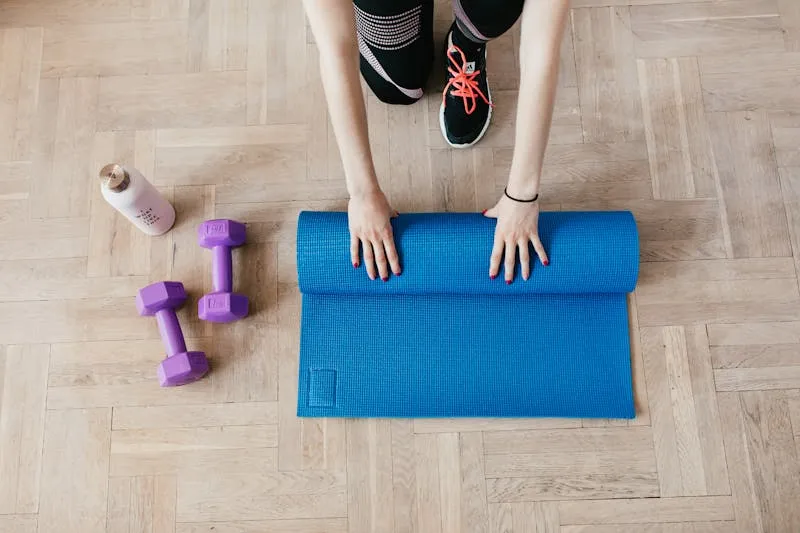
Designed for someone sedentary or minimally active, aiming to reach power-walking level (6+ km/h) in 8 weeks. 3 sessions per week.
Weeks 1-2: Getting started (3 × 20 minutes)
- 5 min gentle warm-up walk (~4 km/h)
- 10 min brisk walk (~5 km/h) — you should feel your breathing quicken
- 5 min gentle cool-down
Weeks 3-4: Building duration (3 × 30 minutes)
- 5 min warm-up
- 20 min brisk walk (~5.2-5.5 km/h) — arms bent at 90°, active swing
- 5 min cool-down
Weeks 5-6: Building intensity (3 × 35-40 minutes)
- 5 min warm-up
- 25-30 min brisk walk (~5.5-6 km/h)
- Include 3 × 2 min bursts at high intensity (pace that leaves you breathless) followed by 2 min at moderate pace
- 5 min cool-down
Weeks 7-8: Consolidation (3-4 × 40-45 minutes)
- 5 min warm-up
- 30-35 min brisk walk (~6-6.5 km/h)
- Vary terrain: hills, stairs, trails — variation drives adaptation
- 5 min cool-down + stretching (calves, quads, hamstrings) 5 min
After the 8 weeks: maintain 3-5 weekly sessions of 40-60 minutes. To keep progressing, play with three variables: duration, intensity (speed, hills) and frequency. Change one variable at a time — not all three simultaneously.
Walking and weight loss: what the data says
Walking is often promoted as a weight-loss tool — and it can be, but with nuances the fitness industry glosses over.
Actual calorie expenditure
One hour of brisk walking (6 km/h) burns roughly 300-400 calories for a 65 kg woman. To lose 1 lb of fat per week (a safe, sustainable rate), you need a deficit of 3,500 calories/week — about 500/day. Walking alone usually isn't enough: it needs to sit within an appropriate nutritional context.
Effect on body composition
Brisk walking preferentially reduces visceral fat (deep abdominal fat, the most metabolically dangerous) — even without significant scale weight loss (Ohkawara et al., 2007). A powerful argument for those with a normal BMI but a waist circumference above risk thresholds (80 cm for women, per WHO).
Walking's advantage over crash diets
Severe caloric restriction causes muscle loss — slowing metabolism and promoting the yo-yo effect. Walking, combined with adequate protein, preserves muscle while facilitating fat loss. A slower process but infinitely more sustainable.
Walking and mental health: the free antidepressant

Anxiety
A 2018 meta-analysis (Journal of Psychiatric Research) across 15 controlled trials concludes that walking reduces anxiety with a moderate effect (d = 0.47) — comparable to mindfulness meditation and superior to yoga alone in certain protocols.
Depression
The most cited study (Mammen & Faulkner, 2013) shows that 30 minutes of daily walking reduces depression risk by 26%. For those already depressed, walking alongside treatment significantly improves symptoms — a finding validated by NICE, which recommends physical activity as an adjunct treatment for mild to moderate depression.
Walking in nature: the multiplier
Walking in natural settings (forest, park, coast) amplifies mental health effects compared to urban walking. Nature exposure reduces activity in the subgenual prefrontal cortex — the region associated with rumination (Bratman et al., PNAS, 2015). In Japanese, this practice has a name: shinrin-yoku (forest bathing). In science, it has results: reduced cortisol, heart rate and blood pressure after 20 minutes in woodland.
Creativity
An unexpected finding: walking increases divergent thinking (the ability to generate original ideas) by 60% — and the effect persists afterwards (Oppezzo & Schwartz, Stanford, 2014). Steve Jobs walked to think. Aristotle taught while walking. It's not coincidence.
The walking prescription: if you could keep just one mental health habit, make it this: 30 minutes of outdoor walking, every day, preferably in green space. The effect is cumulative — the more you do it, the more lasting the benefit. No supplement, no meditation app can rival this effort-to-benefit ratio.
Fitting walking into an overloaded schedule

Walk-commuting
Get off one stop early. Park 15 minutes' walk away. Replace short car trips with walking. These "micro-doses" add up: three 10-minute brisk walks during the day equal a 30-minute session.
Walking meetings
Walking meetings — phone calls or informal discussions on the move — are adopted by a growing number of organisations. The advantage: you combine productivity and physical activity. The Stanford study shows creativity increases during walking — your ideas may be better than sitting in a meeting room.
Social walking
Replace coffee with a friend with a walk with a friend. Double benefit: exercise + social connection. Walking groups (free in most areas) provide a motivating, regular framework.
Walking meditation
Walk alone, without phone, podcast or music. Focus on sensations: foot contact with the ground, air on the face, surrounding sounds. Meditative walking combines the benefits of exercise and mindfulness — the most efficient two-for-one in preventive health.

FAQ — Power walking
How fast do I need to walk for it to be "exercise"?
Power walking begins above 5.5 km/h — the pace at which you feel your breathing quicken and can no longer comfortably sing. The long-term target: 6-7 km/h. Beyond 8 km/h, you enter race walking, which requires a specific technique (Olympic walking).
How many steps per day should I aim for?
Recent scientific data (Paluch et al., Lancet, 2022) shows significant benefits from 4,000 steps/day, with a plateau around 8,000 steps/day. The 10,000-step target is a marketing benchmark, not a scientific threshold. 7,000-8,000 steps/day is a realistic and sufficient goal for most adults.
Can walking replace strength training?
No. Walking is excellent for the cardiovascular system, metabolism and mental health, but it doesn't significantly build muscle mass or strength. The ideal is to combine both: brisk walking 3-5 times a week + strength training 2-3 times, in line with WHO recommendations.
Can I walk with knee problems?
In most cases, yes. Walking is low-impact — far less traumatic than running for the knees. For osteoarthritis, rheumatologists recommend walking as a first-choice activity. If pain increases during walking, see a sports doctor to adjust technique and intensity.
Is morning or evening better for walking?
Both have advantages. Morning walking synchronises the circadian rhythm (daylight exposure) and boosts energy for the day. Evening walking reduces accumulated stress and improves sleep — provided you finish at least 2 hours before bed. Choose whichever fits your schedule: consistency matters more than timing.
Is power walking suitable during pregnancy?
Walking is the first activity recommended by midwives and obstetricians during pregnancy — provided there are no obstetric contraindications. Adjust intensity to the trimester (slow down if needed, especially in the third), stay hydrated and wear well-cushioned shoes. Avoid uneven terrain to minimise fall risk.
How can I measure my walking speed without a fitness tracker?
Use your phone's free app (Apple Health, Google Fit, or apps like Strava). You can also time yourself over a known distance — if you cover 1 km in 10 minutes, you're walking at 6 km/h. Count your steps for 1 minute: 120 steps/min corresponds to roughly 5.5 km/h; 140 steps/min to roughly 6.5 km/h.
Sources and references
- WHO – Global Recommendations on Physical Activity, 2020
- JAMA Internal Medicine – Steps per Day and Mortality, Paluch et al., 2022
- British Journal of Sports Medicine – Walking and Bone Density, Martyn-St James & Carroll, 2008
- Harvard Medical School – Walking: Your Steps to Health
- Williams & Thompson – Walking vs Running for CVD Risk Reduction, 2013
- Bratman et al. – Nature Experience and Rumination, PNAS, 2015
- Oppezzo & Schwartz – Walking Improves Creative Thinking, Stanford, 2014
- Stamatakis et al. – Walking Pace and Mortality, British Medical Journal, 2018