
Last week, a patient showed me a photo of a shampoo she'd just bought. On the packaging: the words "natural," "organic," "clean," "eco-responsible" — four claims, zero certifications. The bottle cost £15. The first three ingredients were water, a sulphate, and silicone. Fifteen pounds of greenwashing in a pretty sage-green bottle.
The problem isn't that organic labels don't exist — it's that there are too many of them, they don't all guarantee the same thing, and marketing has learnt to blur the line between official certification and self-declaration. This guide is my antidote to the confusion — a no-nonsense comparison of what each label actually guarantees, in black and white.
USDA Organic and EU Organic: the regulatory foundation
When we say "organic" in a legal sense, we're talking about government-regulated standards enforced by accredited certification bodies. The two dominant frameworks are the USDA National Organic Program (NOP) and the EU Regulation 2018/848. Here's what they guarantee:
USDA Organic (United States)
- Products labelled "Organic" must contain at least 95% organic ingredients
- "100% Organic" means exactly what it says — every ingredient is certified organic
- "Made with Organic Ingredients" requires at least 70% organic content
- Prohibited: synthetic pesticides, synthetic fertilisers, GMOs, sewage sludge, irradiation
- Annual inspections by USDA-accredited certifying agents
- Allowed: certain natural pesticides (copper, sulphur, pyrethrin) and approved synthetic substances on the National List
EU Organic (European Union)
- The green "Euro-leaf" logo is mandatory on all organic products sold in the EU
- At least 95% organic agricultural ingredients
- GMO tolerance: 0.9% accidental contamination threshold
- Improved animal welfare: outdoor access, organic feed, antibiotic restrictions
- Annual control by an independent certification body
What organic certification does NOT guarantee:
- Zero pesticides — natural pesticides like copper sulphate are permitted, and drift from neighbouring conventional farms can introduce residues
- Local or seasonal — an organic product can travel thousands of miles
- Fair labour — no requirements for workers' conditions
- Better taste or nutrition — certification covers practices, not outcomes
- Environmental perfection — organic farming still has an environmental footprint, just a smaller one
Demeter: when organic meets biodynamics
Demeter is certified organic plus biodynamic agriculture — a farming system founded by Rudolf Steiner in the 1920s. The certification has existed since 1928, making it the oldest organic label in the world. Its standards are significantly stricter than the regulatory baseline:
What Demeter adds to standard organic:
- Entire farm must be organic — no split operations (standard organic allows partial conversion)
- Animal feed must be 100% from the farm or Demeter partners
- Lower copper limits — 3 kg/ha/year (vs 4 kg in EU organic)
- 14 additives permitted in standard organic are banned — including nitrites in cured meats
- Lower stocking densities than standard organic requirements
- Mandatory composting and biodynamic preparations
Biodynamics is divisive. Its theoretical foundations — cosmic forces, lunar planting calendars, homeopathic preparations buried in cow horns — lack scientific validation. But the agronomic results are measurable: Demeter soils consistently show better microbial activity and richer structure than standard organic soils, according to multiple comparative studies (the DOK trial in Switzerland, INRAE studies in France).
My view as a nutritionist: what interests me isn't the lunar calendar — it's the stricter standards. Less copper, no nitrites, whole-farm organic, no feed exceptions. From a health perspective, Demeter offers superior guarantees. Price-wise, it's 10–30% more expensive than standard organic — a premium justified by the level of rigour.
Soil Association and beyond-organic labels
Several organisations offer certifications that exceed the organic regulatory baseline. These "beyond-organic" labels are worth knowing:
Soil Association Organic (UK)
The UK's most trusted organic certification body, with standards that go beyond the EU baseline in several areas:
- Stricter animal welfare requirements (higher space allowances, slower-growing poultry breeds)
- Lower permitted levels of certain processing aids
- More rigorous antibiotic restrictions
- Additional sustainability criteria beyond the organic minimum
Organic Farmers & Growers (OF&G)
Another respected UK certifier, particularly strong in arable and mixed farming. Their Ethical Trade programme adds social responsibility criteria.
Regenerative Organic Certified (ROC)
A newer American standard that builds on USDA Organic by adding soil health, animal welfare, and social fairness requirements. Three levels: Bronze, Silver, Gold. Think of it as organic with a regenerative agriculture layer on top.
Biocyclic Vegan
A niche but fascinating standard: organic farming without any animal inputs whatsoever. No manure, no bone meal, no animal-derived fertilisers. For consumers who want organic aligned with vegan ethics, it's the only certification that covers both.
Misleading labels: "natural," "clean," and other traps
Here are the terms and logos that create the most confusion — because they look like organic without being organic:
"Natural" / "All Natural"
In the US, the FDA has no formal definition of "natural" on food labels. In the UK and EU, "natural" has a loose definition related to minimal processing but says nothing about pesticides, GMOs, or farming practices. A "natural" chicken nugget can come from a conventionally farmed chicken pumped with antibiotics.
"Farm Fresh" / "Farm Assured"
Red Tractor (UK) certifies that food meets baseline legal standards for safety, hygiene, and animal welfare. It does NOT restrict pesticides, does NOT require organic practices, and its animal welfare standards are significantly below organic. It's a quality assurance mark, not an ethical or environmental one.
"Free Range" (without organic)
Free range guarantees outdoor access — but not organic feed, not pesticide-free land, not antibiotic restrictions. A free-range chicken can eat conventionally grown, pesticide-treated grain and receive routine antibiotics. Free range organic is the combination that provides both welfare and chemical guarantees.
"Zero Pesticide Residue"
These labels guarantee the end product tests below detectable pesticide thresholds — but the farming process can use synthetic pesticides freely. It's the reverse logic of organic: organic bans the practices, zero-residue measures the result. The soil can be devastated, biodiversity destroyed — as long as the final fruit is "clean," the label holds.
Cosmetic certifications: navigating the maze
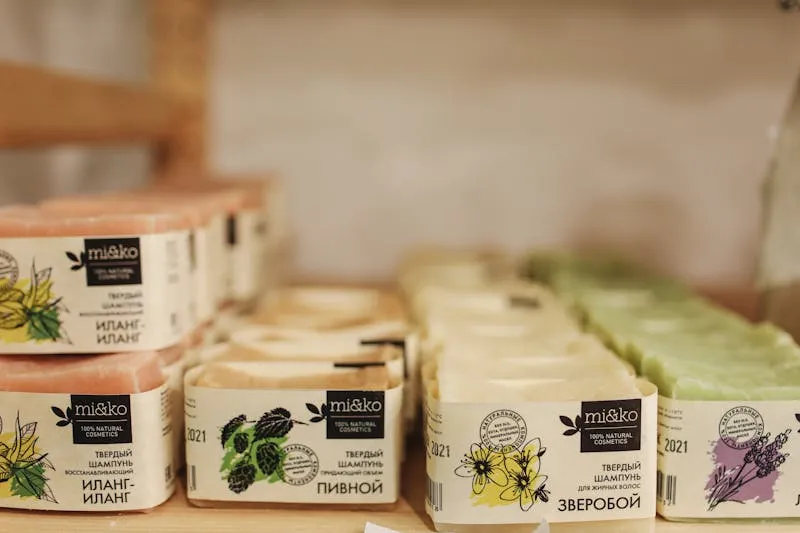
In cosmetics, the word "organic" is NOT regulated the way it is in food. Any brand can slap "organic" or "natural" on a moisturiser without any certification. Here are the labels that actually mean something:
COSMOS (Organic or Natural)
The most widespread European cosmetic standard, managed by a consortium including Ecocert, BDIH, Cosmebio, and ICEA:
- COSMOS Organic — at least 20% organic ingredients (of total product) and 95% naturally derived ingredients. Silicones, parabens, PEGs, and phenoxyethanol are banned
- COSMOS Natural — 95% naturally derived ingredients but no minimum organic threshold. A step below
Soil Association Organic (Cosmetics)
Applies organic food standards to cosmetics, requiring higher organic content than COSMOS in many categories. Particularly strong in the UK market.
NATRUE
German-based label with three tiers: natural cosmetics, natural cosmetics with organic portion, organic cosmetics. Stricter than COSMOS on permitted processing methods. Less common but very reliable.
Terms that are NOT cosmetic certifications:
- "Dermatologically tested" — means it was patch-tested on 20 arms for 48 hours. Nothing more
- "Natural formula" — no legal definition, no oversight
- "Clean beauty" — American marketing concept with zero regulatory framework
- "Vegan" — no animal ingredients, but says nothing about naturalness or toxicity
- "Paraben-free" — replaced with what? Often phenoxyethanol or MI/MCI, not necessarily safer
How to read a label in 30 seconds

When you pick up a product from the shelf, here's the reading sequence I recommend — 30 seconds, 4 checks:
Step 1 — The logo (5 seconds)
Look for a government-regulated organic logo: USDA Organic seal, EU Organic leaf, or your country's equivalent. If present, the product is certified organic — full stop. If you see Demeter, Soil Association, or ROC logos alongside: that's a bonus. If you only see words ("natural," "green," "responsible") without a certification logo: be immediately suspicious.
Step 2 — The certifier code (5 seconds)
In the EU, look for the certification body code: "GB-ORG-05" (Soil Association), "GB-ORG-04" (OF&G), etc. In the US, look for the USDA seal with the certifying agent's name. If the code or certifier is absent: the product isn't certified, regardless of what the front label claims.
Step 3 — The origin (10 seconds)
"Produce of UK," "EU Agriculture," "Non-EU Agriculture" — these declarations reveal sourcing. "EU/Non-EU Agriculture" means mixed origins. Not inherently bad, but you lose traceability.
Step 4 — The ingredient list (10 seconds)
Organic ingredients are marked with an asterisk (*). Count the asterisks among the first 5 ingredients: if fewer than 3 of 5 are organic, the product meets the 95% threshold by total weight but the main ingredients may not all be organic — common in processed products where water (non-certifiable) dilutes the percentage.
Frequently asked questions about organic labels
Can organic products contain pesticides?
Yes. Organic standards prohibit synthetic pesticides but allow natural ones: copper sulphate, sulphur, natural pyrethrin, neem oil, Bacillus thuringiensis. Additionally, drift from neighbouring conventional farms can introduce synthetic pesticide residues. The EFSA 2023 report shows that 15% of organic samples contain traces of synthetic pesticides, but at levels 10 to 100 times lower than conventional products.
Is organic food really controlled rigorously?
Yes. Every certified organic operation receives at least one annual inspection by an accredited certification body. Additional unannounced inspections occur for 10–15% of operations each year. Residue analysis is systematic. If fraud is confirmed, certification is revoked. The system isn't perfect — import fraud (particularly on grain from certain regions) has been documented — but it's infinitely more robust than self-declaration on packaging.
Is USDA Organic equivalent to EU Organic?
Broadly yes. The US and EU have a mutual recognition agreement, meaning products certified under one standard can be sold as organic under the other. The main differences are technical: the EU permits slightly more flexibility with antibiotics in livestock, while the USDA allows a few additional processing aids. For consumers, both provide a solid baseline. The Soil Association and Demeter standards exceed both.
Should I buy organic and local, or organic and imported?
If the choice arises: local + organic > imported organic > local conventional. But reality is nuanced. A New Zealand organic kiwi shipped by sea has a lower carbon footprint per kilo than a domestic organic kiwi transported by refrigerated truck then air freight. Maritime shipping is 50 times less carbon-intensive than air freight per tonne-kilometre. The key: avoid organic produce flown in by air (fragile counter-season items: strawberries, cherries, green beans) and prioritise local organic when available and in season.
Do organic labels guarantee better taste?
No, and no label claims to. Taste depends on variety, ripeness at harvest, terroir, and freshness — not farming method. A conventional farmer growing heritage varieties picked at peak ripeness will produce better-tasting tomatoes than an industrial organic grower shipping tomatoes picked green. That said, organic direct channels (CSA boxes, farmers' markets) often combine both: organic practices + harvest at maturity + flavour-focused varieties. It's the supply chain, not the label, that delivers taste.
Sources and references
- USDA National Organic Program — Organic Regulations and Standards
- EU Regulation 2018/848 on Organic Production and Labelling
- Soil Association — Organic Standards and Annual Market Report, 2024
- EFSA — European Food Safety Authority, Annual Report on Pesticide Residues in Food, 2023