In January 2024, the "mob wife aesthetic" was everywhere. Fur coats (faux, ideally), chunky gold jewellery, dark lipstick, Carmela Soprano energy. The Business of Fashion's piece on TikTok's mob wives summed up the uniform as "animal prints, heavy gold jewellery, glossy leather trousers, perfectly coiffed hair and a massive fur coat". A year and a half later, try finding anyone still talking about it. Tumbleweed. The micro-trend had completed its full cycle — birth, peak, oblivion — before most of those coats had even made it to the dry cleaner's.
Meanwhile, the beige trench, straight-leg jeans and the black roll-neck have not budged. They were here before "mob wife" and they will be here after "demure". They will still be here when someone invents the next aesthetic — a catchy two-word name, a three-million-follower TikTok account.
And this week, the summer sales have landed. Your inbox is already full of "up to 50% off" subject lines (so is mine — I opened it at 8.02 this morning). Micro-trends have their uses: they are fun, they shake things up, they inspire. Today's real question is where your money goes. Your budget is not unlimited (mine isn't either, trust me). Every pound spent on a piece that will end up on Depop in two months is a pound that did not go towards a trench that lasts ten years.
This guide gives you a framework for sorting your purchases while the sales are on, without telling you what to like. The aim is simple — wearing clothes you will still love in three seasons' time.
The frantic acceleration of the trend cycle
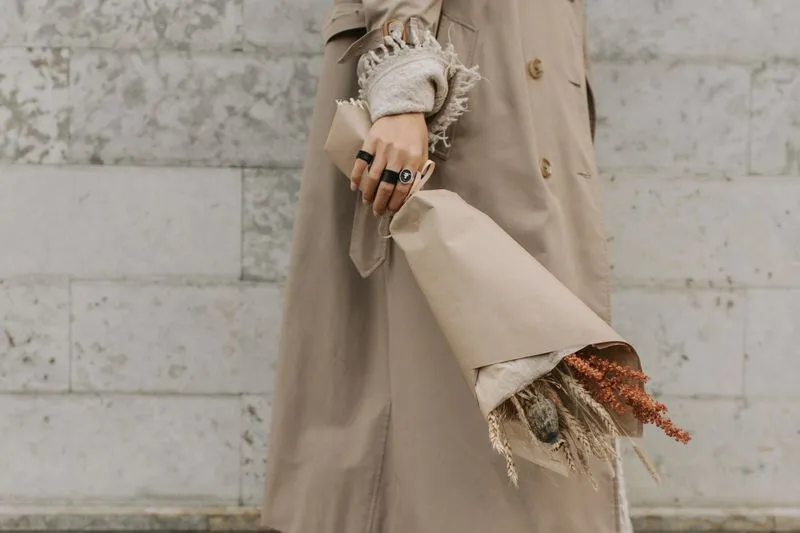
Before social media, a fashion trend took the long road. You saw it on the runway, then in magazines, then in shops, then on the street. By the time everyone had adopted it, the next one was barely emerging. It was slow, predictable, and left time to get your money's worth.
Today, the machine has sped up, and British wardrobes show it. The Environmental Audit Committee's Fixing Fashion report put it bluntly in 2019: "We buy more clothes per person in the UK than any other country in Europe." The same report quotes the Ellen MacArthur Foundation's 2017 textiles report on clothes "that are often used for only a short time". More buying, less wearing: that is exactly the playground micro-trends thrive in. Long enough to spot the trend, order it online, receive it, wear it twice — and discover it has already passed.
The culprits behind this acceleration are easy to name. First, social-media algorithms, which push novelty because novelty gets reactions. Second, ultra-fast fashion (Shein, Temu), which rushes out copies of whatever is going viral. Third, content creators, whose business model runs on constant novelty.
What is a micro-trend (and why it traps you)
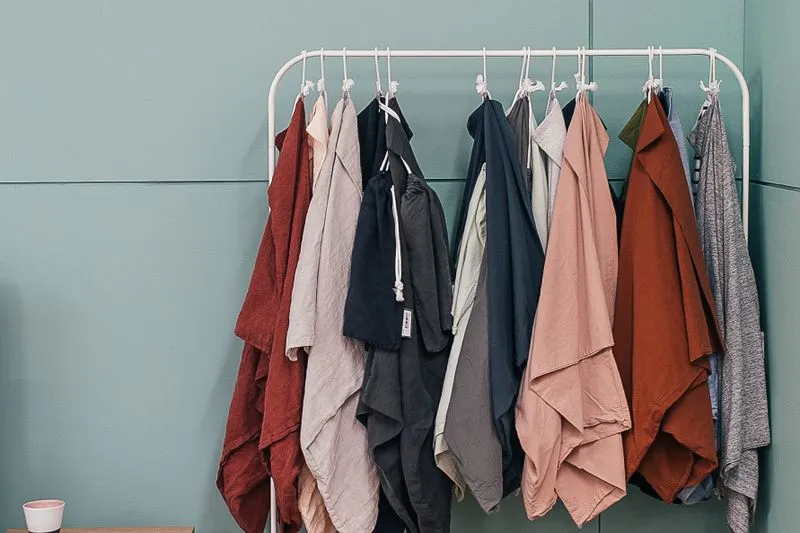
A micro-trend is recognisable by five criteria.
It has a catchy name, and that name often ends in "core" or "aesthetic": cottagecore, balletcore, mob wife aesthetic, clean girl, coastal grandmother, tomato girl, demure, very demure. The name is the product — it creates an instant, shareable, consumable universe.
It originates on social media (not the catwalk). Micro-trends are born on TikTok, spread to Instagram, and land on the high street in record time. They bypass the traditional filter of editors and buyers. In January, The Business of Fashion's analysis of the viral microtrend described consumers "inundated with microtrend after microtrend on TikTok" — from cottagecore to coastal grandmother to mob wife — before adding that "the churn has started to slow". Good news for your bank balance, perhaps. The reflex it trained in us has not gone anywhere, though.
It demands a complete dress code, practically a costume. Cottagecore does not ask you to buy ONE dress — it asks you to buy a lifestyle, with the dress, the straw hat, the wicker basket and the flat shoes.
It disappears as fast as it appears. The full cycle (emergence, peak, decline) is measured in weeks, sometimes a few months — after that, it is just a memory in your Instagram archive.
It does not survive a season change. If a trend cannot transition from summer to winter (or vice versa), that is a strong signal of a micro-trend — classics, by contrast, cross seasons. A real runway trend plays out over several collections — and the method for adapting runway trends to everyday life helps you spot the ones that will earn their place in your wardrobe.

Classics: the pieces that outlast the decades
A fashion classic is identified by a simple criterion: you can wear it in five years without it looking dated. The National Army Museum's history of Army fashion statements recalls that Burberry's trench coat became popular with officers serving in the trenches of the First World War. Levi's gave its riveted jeans the lot number 501 in 1890. And in October 1926, American Vogue featured a simple black Chanel dress it called "The Ford", after the hugely popular Model T. These pieces have weathered a century of fashion without ageing a day.
What makes a classic "classic" is the neutrality of its cut and the versatility of its use. A beige trench pairs with jeans and trainers just as well as with a dress and heels. A Breton-stripe top works at twenty and at sixty. A navy blazer suits the office, the restaurant and the weekend. These pieces were designed for a use (keeping the rain off, going to work, going out), and a use does not go out of fashion.
My own beige trench — bought second-hand in April, sleeves shortened at the alterations shop on my road — is nothing spectacular. That is precisely why it goes over pretty much everything, from a Saturday hoodie to an office dress.
The true universal classics (a non-exhaustive but reliable list) fall into four families.
- Jackets and coats: the trench (beige or navy), the blazer (navy, black or grey) and the straight coat (camel or grey).
- Tops: the roll-neck jumper (black, navy, camel), the white T-shirt (heavyweight cotton, straight cut) and the white shirt.
- Bottoms and dresses: straight-leg jeans (raw or lightly washed), tailored trousers (straight, mid-rise) and the little black dress (knee-length, simple cut).
- Shoes: loafers (leather, slim or chunky sole).
These pieces rarely make magazine covers, yet they form the backbone of any wardrobe that works, because they are the base for all the combinations that make a style look "effortless".
Cost per wear: divide the price by the times you wear it
Cost per wear is the purchase price divided by the number of times you wear the piece. It tells you far more than the price tag.
Concrete examples, with round numbers:
A trench at £200 worn 200 times over ten years works out at £1 per wear. A "mob wife" top at £15 worn 3 times works out at £5 per wear. Is the £15 top a bargain? No. Per wear, it costs five times as much as the trench — counterintuitive, but it is simple division.
For jeans, a quality pair at £100 worn 300 times over five years works out at £0.33 per wear. Ultra-fast-fashion jeans at £12 worn 15 times (before they lose their shape) come to £0.80 — more than double per use.
My Veja V-10s, which I have worn almost every day since late 2022, are the perfect example — at that rate, their cost per wear is borderline ridiculous. And the maths goes beyond your purse. WRAP's guidance on designing clothes to last longer reports that extending the average life of clothes by just nine months would save £5 billion in resources used to supply, launder and dispose of clothing.
The pieces worth investing in: shoes, jeans, blazer, bag, coat
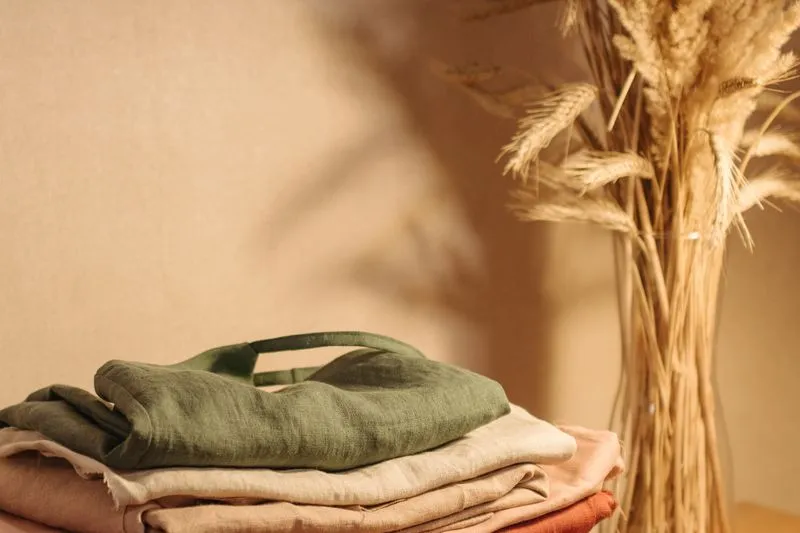
In the summer sales, target in-season classics (white shirt, lightweight tailored trousers, loafers, a leather bag). Leave the coat for the January sales. Investing, here, means spending the right amount on a piece that will last and be worn often — five categories justify it.
Everyday shoes — Your feet carry you all day. Quality footwear (full-grain leather, stitched sole) can be resoled, which adds several seasons to its life. Budget: £80 to £200. Brands: Russell & Bromley (in the sales), Grenson, Clarks Originals — check the listing says Goodyear-welted or Blake-stitched before counting on a resole.
Jeans — You probably wear them more than any other piece you own. Good denim (thickness, cut, stable dye) is worth £70 to £130 — Levi's territory new. Closed and Citizens of Humanity usually cost upwards of £200 new, so look for them second-hand.
The blazer — It instantly elevates a jeans-and-T-shirt look. Look for an interior lining, sturdy buttons, a wool blend or heavy cotton. Budget: £80 to £200.
The everyday handbag — The one you reach for five days out of seven: a mid-to-high quality grained leather ages better than new faux leather. Budget: £70 to £250. Polène, Radley, A.P.C. (second-hand) are solid bets.
The coat, in January — It is the most visible piece in your wardrobe six months a year. A well-cut, well-lined wool coat will serve you for years. Reasonable budget: £120 to £350, ideally in the January sales. Reliable mid-range brands: COS, Reiss, Max Mara (second-hand).
The pieces to save on (guilt-free)
Conversely, certain pieces do not warrant heavy investment — either because they wear out quickly regardless of price, or because they are strongly tied to a seasonal trend:
Basic white and black T-shirts — They yellow, they stretch, they are in permanent contact with skin (sweat, deodorant). My view: a well-chosen entry-level T-shirt (heavy cotton, straight seams) ages much like a "premium" one at three times the price, because sweat and deodorant win either way. Buy in batches, replace regularly.
Highly trend-specific pieces — The statement top, the printed skirt of the moment, the viral accessory. This is where Zara, H&M and Primark make sense: the price reflects the expected lifespan.
Costume jewellery — Unless you invest in gold or silver, fashion jewellery tarnishes, oxidises, loses its stones. Buy cheaply, replace without regret.
Activewear — Unless you are a competitive athlete, a pair of Decathlon leggings does the job perfectly well for one session a week. A premium logo will not run any faster than you.
The capsule wardrobe: myth or method
The concept of a "capsule wardrobe" — a wardrobe reduced to 30-40 perfectly combinable pieces — has been an Instagram fantasy for years. The reality is more nuanced (I have broken the method down step by step in the complete guide to a minimalist capsule wardrobe).
What works in the concept: the idea of cohesion. If all your pieces belong to the same colour palette and style register, they combine naturally. You save time in the morning, you eliminate the "I have nothing to wear" dilemma (which is really "I have loads of things that don't go together"), and you cut down on impulse purchases.
What does not work: the rigidity, because 30 pieces is an arbitrary number. With a job that requires varied outfits, some sport and an active social life, 30 pieces will not be enough, and that is fine. The number matters less than the logic: each piece should combine with at least three others in your wardrobe. Otherwise it stays isolated — and an isolated piece ends up underused.
Second-hand: classics for less, trends without the loss
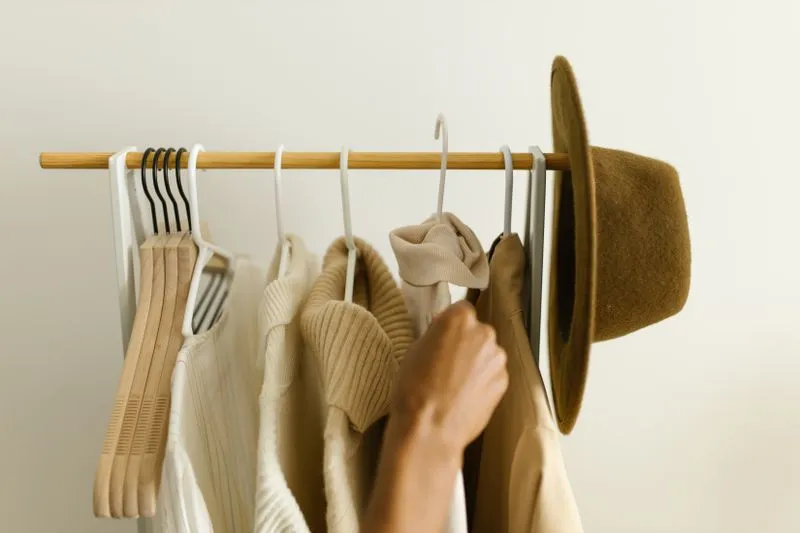
Second-hand settles the micro-trend versus classic dilemma both ways.
For classics, second-hand gives access to premium brands at mid-range prices. A pre-owned trench from a heritage house beats (in quality, cut and durability) a new fast-fashion trench sold at the same price. A second-hand Polène bag is the same leather with a healthy discount and zero compromise. My chocolate suede jacket, found last winter in a Hackney charity shop, is the proof. It comes back every in-between season, and I found it without ever going near a new-in rail.
For micro-trends, second-hand offers a low-cost playground. Want to try "coastal grandmother"? Buy the piece for £6 on Depop, wear it as long as it amuses you, resell it when it passes. The result: you have paid the difference between the buying and selling price, and nothing new was made for you.
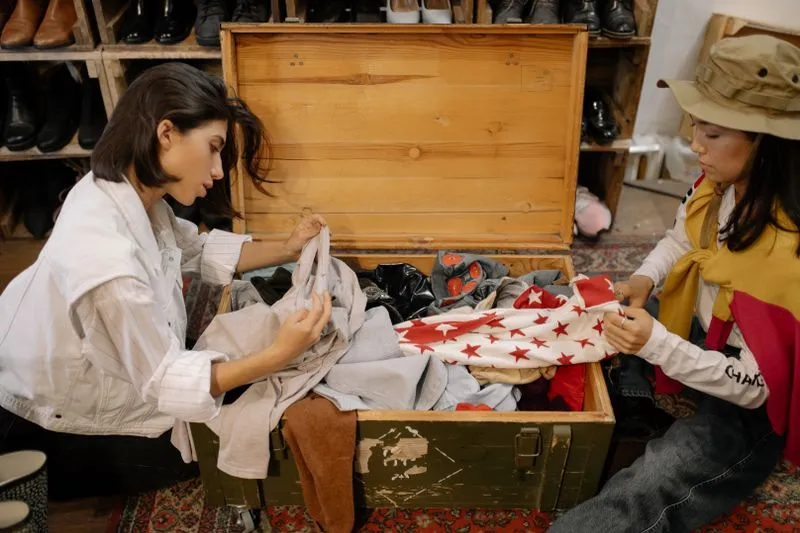
Platforms to know in the UK: Depop (trend-led, huge volume), Vinted (broad range, competitive pricing), Vestiaire Collective (luxury and premium), and charity shops (Oxfam, British Heart Foundation, Cancer Research UK) for bricks-and-mortar finds at rock-bottom prices. And if you prefer buying new, affordable ethical fashion brands offer a third way between fast fashion and luxury.
Full strategy: the season-by-season action plan
Here is a concrete plan you can apply from these summer sales onwards.
Step 1: The audit — Pull everything out and try it all on: what no longer fits goes on Depop or Vinted, what is damaged goes to the textile recycling bank — and what still works becomes your base. Allow one Saturday morning.
Step 2: The gaps — Compare your base against the core classics (trench, blazer, straight-leg jeans, roll-neck, white shirt, tailored trousers, loafers). Missing a blazer? Decent jeans? Quality shoes? Note the three most critical gaps.
Step 3: The budget — Allocate 70 per cent of your seasonal budget to durable pieces (classic gaps) and 30 per cent to trend desires. If your total budget is £250 for the season: £175 for classics, £75 for fun.
Step 4: Strategic buying — For classics: search second-hand first, then mid-range brands, then the sales. In the sales, check the "was" price: Citizens Advice's guide to misleading selling lists "advertising something as reduced or a sale item when it wasn't ever sold at full price" among the practices that count as misleading. For trends: high street or second-hand, guilt-free — and if you are torn, the ten runway pieces of spring/summer 2025 will help you spot the ones with staying power.
Step 5: The rotation — At the end of the season, take stock: resell anything you did not wear at all, keep anything you loved. Repeated four times a year, this sort refines your wardrobe season after season.

Frequently asked questions
How do I tell a micro-trend from a lasting trend?
A micro-trend has a catchy name (often ending in "core" or "aesthetic"), originates on TikTok, peaks in weeks, and does not survive a season change. A lasting trend emerges gradually on catwalks, is adopted across all market tiers, and remains relevant for at least two to three seasons.
I don't have a big fashion budget. Where should I start?
With shoes and jeans, because they are the two items you wear most often and that most visibly define the quality of your outfit. A good pair of jeans (£70 to £100, Levi's territory new — or a pricier brand found second-hand) and versatile shoes (£80 to £130) make a solid foundation.
Are the sales a good time to buy classics?
Yes, provided you have identified your needs BEFORE the sales. Sales are a trap when you buy "because it's cheaper". They are a tool when you buy a specific, pre-identified piece at a reduced price. And be wary of a "was" price the shop never really charged.
Is vintage always more sustainable than new?
Not automatically. A 1980s polyester vintage piece is no more sustainable than a new organic cotton one. What matters is fabric quality and construction. That said, vintage items that have survived decades have already proved their durability.
Can you dress well entirely from the high street?
Yes, with greater selectivity. You need to be more demanding in the fitting room (seams, drape, composition), quicker to resell what no longer works, and accepting of a shorter lifespan. Cost per wear will often be less favourable — but with a sharp eye, it is entirely possible.
How do I avoid getting bored of my classics?
By varying combinations rather than pieces. The same blazer worn over jeans and a T-shirt, over a dress, then over tailored trousers with a roll-neck gives three completely different looks. Accessories (scarf, jewellery, bag) also change how the same base reads. When you get bored of your classics, it is usually because you always put them together the same way.
What is the ideal classics-to-trends ratio in a wardrobe?
A 70/30 split (classics/trends) is a solid starting point. Classics form the stable base; trends bring renewal and enjoyment. The ratio can shift based on personal style — a very fashion-forward person might go to 60/40 — but below 50/50, the wardrobe tends to lose cohesion and longevity.
Sources
- The Business of Fashion — How TikTok's 'Mob Wives' Are Fuelling the Resurgence in Fur (January 2024)
- The Business of Fashion — The Decline and Fall of the Viral Microtrend (January 2025)
- House of Commons Environmental Audit Committee — Fixing fashion: clothing consumption and sustainability (2019)
- WRAP — Design for extending clothing life
- Citizens Advice — If you were misled or pressured into buying something you didn't want
- National Army Museum — Army fashion statements
- Levi Strauss & Co. — The 501 Jean in Fashion History (2016)
- Smithsonian Magazine — Why Coco Chanel Created the Little Black Dress (2017)