
"So after William, it's Harry?"
Saturday 6 May 2023, just after eleven, in my parents' living room. On the telly: Westminster Abbey, choirs, a great deal of gold — and outside, the kind of steady drizzle that refused to leave London all day. Mum, mug of tea in hand, asked the question the way you'd ask what happens in the next episode. No, Mum. After William, it's George. Then Charlotte, then Louis. Harry only comes in fifth.
"Charlotte before Louis? Since when do the girls go first?" Since a law passed in 2013 — but only for children born after 28 October 2011. Dad, without taking his eyes off the screen: "And Anne? The King's sister?" Sixteenth. Behind both her younger brothers — and every one of their children and grandchildren. Silence. Then Mum, with total conviction: "Well, that's needlessly complicated."
It isn't, really. The line of succession to the British throne comes down to three rules, one reform and a handful of exceptions. Once you've got them, you can place any royal baby in about ten seconds (yes, even the little Brooksbanks). And the timing is right: Princess Charlotte turns ten today, 2 May 2025, and the coronation — the one that earned us an extra bank holiday on Monday 8 May 2023 — has its second anniversary on 6 May. Here's the current list and the rules that produce it — and, spoiler, departures change far less than you'd think.

The line of succession to the British throne in May 2025
First in line to the British throne is William, Prince of Wales, the King's elder son. Next come his three children, then Prince Harry and his two, then the King's brothers and sister with their descendants. As of 2 May 2025, the official list on the Royal Family's succession page runs to 25 names — from the Prince of Wales down to little Lucas Tindall.
| Place | Name | Relationship to Charles III |
|---|---|---|
| 1 | William, Prince of Wales | Elder son |
| 2 | Prince George of Wales | Grandson (William's eldest) |
| 3 | Princess Charlotte of Wales | Granddaughter |
| 4 | Prince Louis of Wales | Grandson |
| 5 | Prince Harry, Duke of Sussex | Younger son |
| 6 | Prince Archie of Sussex | Grandson (Harry's son) |
| 7 | Princess Lilibet of Sussex | Granddaughter (Harry's daughter) |
| 8 | Prince Andrew, Duke of York | Brother |
| 9 | Princess Beatrice | Niece (Andrew's elder daughter) |
| 10 | Sienna Mapelli Mozzi | Great-niece (Beatrice's daughter) |
| 11 | Athena Mapelli Mozzi | Great-niece (Beatrice's daughter) |
| 12 | Princess Eugenie | Niece (Andrew's younger daughter) |
| 13 | August Brooksbank | Great-nephew (Eugenie's son) |
| 14 | Ernest Brooksbank | Great-nephew (Eugenie's son) |
| 15 | Prince Edward, Duke of Edinburgh | Youngest brother |
| 16 | James, Earl of Wessex | Nephew (Edward's son) |
| 17 | Lady Louise Mountbatten-Windsor | Niece (Edward's daughter) |
| 18 | Anne, Princess Royal | Sister |
| 19 | Peter Phillips | Nephew (Anne's son) |
| 20 | Savannah Phillips | Great-niece |
| 21 | Isla Phillips | Great-niece |
| 22 | Zara Tindall | Niece (Anne's daughter) |
| 23 | Mia Tindall | Great-niece |
| 24 | Lena Tindall | Great-niece |
| 25 | Lucas Tindall | Great-nephew |
Look at how the list works. It runs through every one of William's descendants before it reaches Harry. Then through all of Harry's before it climbs back up to the King's brother, Andrew. That's why a seven-year-old (Louis, born on 23 April 2018) sits ahead of his 40-year-old uncle. And why Princess Anne — Elizabeth II's second child — is now eighteenth.
You won't find the wives on it. Not Queen Camilla, not Catherine, Princess of Wales. Protocol has nothing to do with it: the succession passes by descent, and a spouse isn't a descendant. Beatrice's and Eugenie's children, on the other hand, are very much on it — even though none of them has a royal title (the official list calls them "Miss" and "Master").
The three rules that set the order of succession
The British order of succession rests on three rules that slot together: descent, Acts of Parliament and primogeniture. None of them works alone.
Rule 1: you must descend from Sophia of Hanover
Since the Act of Settlement of 1701, only the Protestant descendants of Princess Sophia — Electress of Hanover and granddaughter of James I — are eligible to succeed. Sophia never reigned herself. But she's the root of the tree: if you don't descend from her, or you aren't a Protestant, you have no place on the list.
Rule 2: Parliament decides, not the family
This one surprises people. The royal website puts it plainly: "The succession to the throne is regulated not only through descent, but also by Parliamentary statute." In 1688, when James II fled, Parliament declared the throne vacant and handed it to his daughter Mary and her husband William of Orange — rather than to his infant son. The Bill of Rights of 1689 and the Act of Settlement of 1701 set that principle in stone: the law decides who may reign. Neither the King nor the Prince of Wales can reshuffle the order to suit themselves.
Rule 3: the eldest first, and their whole line before the younger ones
The third rule is primogeniture. The eldest comes before the younger siblings — and, crucially, the eldest's entire line comes before those younger siblings too. So George, the King's grandson, sits ahead of Harry, the King's son. Not because he's more "important", but because he belongs to the senior branch. For anyone born before 28 October 2011, that primogeniture still comes with a male preference: a daughter can inherit, but her younger brother goes ahead of her.

2013: the reform that ended the priority of sons
The reform of the royal succession began at a Commonwealth summit in Perth, Australia, on 28 October 2011. The sixteen countries that had Elizabeth II as head of state agreed to change the rule. Just over a year later, when the Duke and Duchess of Cambridge announced their first pregnancy, the government's press release spelled out what was at stake: if the couple had a girl, she could "one day be our Queen even if she later has younger brothers". That release, dated 4 December 2012, also confirmed that the fifteen other realms had given their formal consent.
The law itself is the Succession to the Crown Act 2013. Its first section is a single sentence. For anyone born after 28 October 2011, according to the text of the Act on legislation.gov.uk, gender "does not give that person, or that person's descendants, precedence over any other person (whenever born)". The same Act also deals with marrying a Catholic and with the Sovereign's consent to royal marriages.
Why pass a law in 2013 that only came into force on 26 March 2015? Because the British monarch also reigns over other realms — Canada, Australia, New Zealand, Jamaica and more. As UCL's Constitution Unit explained in July 2013, different rules "could lead in time to different members of the Royal family succeeding in different countries". Some realms only needed a Cabinet resolution; others had to legislate (and the federal ones, Australia and Canada, faced extra hurdles). Three and a half years from Perth to commencement — that's the price of a rule shared by sixteen countries.
Princess Charlotte at ten: the first to keep her place
Princess Charlotte was born at 8.34am on 2 May 2015, at St Mary's Hospital in Paddington. She's ten today. At birth she was fourth in line — behind her grandfather Charles, her father and her older brother. The reform had come into force barely five weeks earlier.
For three years, the new rule made no difference to her: George was ahead of her anyway, as the eldest. Everything turned on 23 April 2018, when Louis was born. Under the old system, the baby would have leapfrogged his sister. He didn't. Charlotte stayed fourth, and Louis slotted in fifth, behind her.
That makes Charlotte the first princess for whom the 2013 reform changed something real. Before April 2018, no girl in the family born after October 2011 had a younger brother. Isla Phillips (born 2012) only has an older sister, Savannah — born in 2010, too early for the reform. And Mia Tindall (born 2014) didn't have a brother yet. The rule came into play again in 2021, when Lucas Tindall was born: he stayed behind his two older sisters, Mia and Lena.
Will Charlotte be Queen? Almost certainly not. And that's about position, not gender. She's exactly where Harry was at birth: third, behind her father and older brother. The moment George has children, each of them goes ahead of her. If you're looking for future queens, look to Sweden — or to Spain, for very different reasons.

What a new baby changes in the line of succession
A royal birth slots the baby in straight after its parent's existing descendants. Everyone below moves down one place — nobody above moves at all. It's mechanical, and it explains most of the year-to-year changes on the list.
The latest example: Athena Elizabeth Rose Mapelli Mozzi, Princess Beatrice's second daughter, was born on 22 January 2025 at the Chelsea and Westminster Hospital in London. She went in at eleventh, right behind her sister Sienna. The result: Eugenie dropped from eleventh to twelfth, her two sons each lost a place, and so did Edward and his children. Anne went from seventeenth to eighteenth. On the official list, fourteen people slipped a rung — and so did everyone behind them.
Harry's own path tells the same story, just over a longer run. Born in 1984, he was third: behind his father and his brother. The births of George, Charlotte and Louis pushed him down. When Archie was born in May 2019, the royal website put the baby seventh in line — so Harry himself was sixth. Then the Queen's death in September 2022 moved everyone up a place, and Harry has been fifth ever since.
See the pattern? A birth in a senior branch pushes every junior branch down. A death on the throne moves the whole list up. And a younger sibling almost never climbs back on their own: Harry was third from his birth in 1984 until George arrived in 2013, and the only place he has regained since came from the Queen's death.
And if William and Catherine had a fourth child? The baby would be fifth, right after Louis — and Harry would drop another place. The same goes, further down the line, for any children George has one day: each will go ahead of Charlotte and Louis.

Can you renounce the British throne?
You can't renounce the British throne with a simple announcement (or a statement, or an interview, in case you were wondering). Since the law sets the line of succession, only the law can take someone off it: an Act passed for the purpose, as in 1936, or one of the exclusions it already contains (becoming a Catholic, or, for the first six in line, marrying without the Sovereign's consent). That 1936 precedent was anything but a formality.
On 10 December 1936, Edward VIII signed an Instrument of Abdication. As the royal website puts it, he had to choose between the Crown and Mrs Simpson, a twice-divorced woman who would not have been acceptable as Queen. His signature wasn't enough — it took an Act, His Majesty's Declaration of Abdication Act 1936, to give it effect the following day. And the Act went further than a resignation: "His Majesty, His issue, if any, and the descendants of that issue" lost any right to the succession. Edward VIII was never crowned. His reign lasted 325 days. (Probably the costliest romantic decision of the 20th century — which puts a different spin on the famous couples who held together under intense public pressure.)
Today, a renunciation would be even harder to organise. The preamble to the Statute of Westminster 1931 says that "any alteration in the law touching the Succession to the Throne or the Royal Style and Titles shall hereafter require the assent as well of the Parliaments of all the Dominions as of the Parliament of the United Kingdom". The dominions of 1931 have become the realms of today, and the King is Sovereign of 14 Commonwealth realms in addition to the UK. Picture the paperwork: one British Act, fourteen sets of consent, possibly as many local laws. Even the 2013 reform, which everyone wanted, took three and a half years.
Harry and Andrew: stepping back doesn't cost you your place
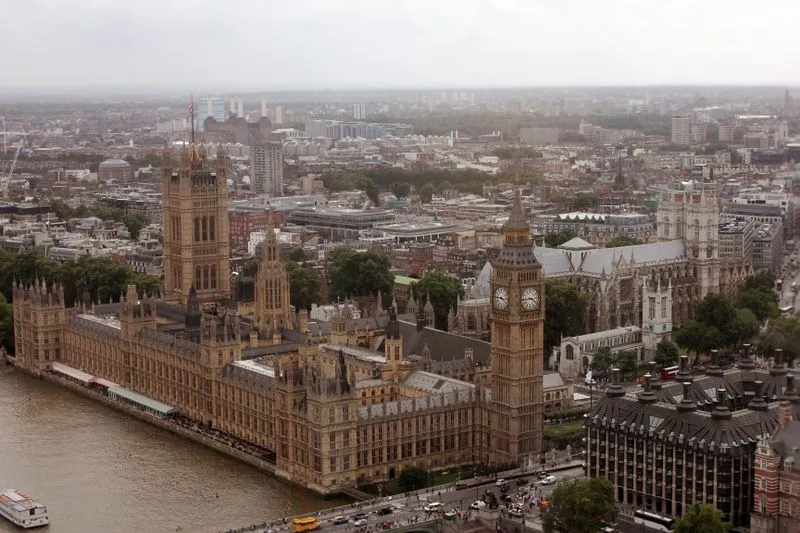
Stepping back from public life doesn't take anyone out of the line of succession, whatever you may have read. Harry and Andrew are the two living examples. Neither represents the Crown any more — and both keep their places, fifth and eighth.
Andrew first. On 20 November 2019, the Duke of York said he had asked the Queen "if I may step back from public duties for the foreseeable future, and she has given her permission". On 13 January 2022, Buckingham Palace announced that his military affiliations and royal patronages had been returned to the Queen. He hasn't resumed public duties (the Palace said in 2022 that he would continue not to). He's still eighth in line — because no Act of Parliament has removed him.
Then Harry. In January 2020, the Duke and Duchess of Sussex announced they were stepping back as working members of the Royal Family. On 19 February 2021, the Palace confirmed they would not be returning, and their patronages were redistributed. In his first address as King, on 9 September 2022, Charles III expressed his love for Harry and Meghan "as they continue to build their lives overseas". None of that touches Harry's place. On the official list, his children now appear as Prince Archie and Princess Lilibet of Sussex. With the Windsors, you never fully resign: the place in line stays.
Marriage and religion: the two conditions that remain
Two conditions still weigh on British heirs: the Sovereign's consent to marry (for the first six in line) and the ban on the monarch being a Catholic. The 2013 reform loosened the first and left the second untouched.
The King's consent, for the first six only
Before 2015, the Royal Marriages Act 1772 meant that a descendant of King George II could, with some exceptions, marry only with the Sovereign's consent — an obligation that reached cousins a very long way from the throne. The 2013 Act repealed it. In its place came a much narrower rule: anyone who is "one of the 6 persons next in the line of succession" must obtain the Sovereign's consent before marrying. Skip it, and that person — along with their descendants from the marriage — is disqualified from succeeding.
In May 2025, those six are William, George, Charlotte, Louis, Harry and Archie. In other words — and you're allowed to smile — four children aged five to eleven would need the Sovereign's permission to marry (there's no rush).
Marrying a Catholic, yes; a Catholic monarch, no
Until 2015, marrying a Catholic cost you your place in the line of succession. The 2013 Act ended that: a person "is not disqualified from succeeding to the Crown or from possessing it as a result of marrying a person of the Roman Catholic faith".
The monarch, on the other hand, still can't be a Catholic. The Sovereign must be in communion with the Church of England and must swear to preserve the established Church of England and the Church of Scotland. The 2013 Act left that ban alone. An heir who became a Catholic would therefore lose their place.
When the monarch dies: instant accession, coronation later
In the UK, the heir becomes King or Queen the instant the previous monarch dies. No vote, no delay, no ceremony required (yes, not even the coronation). As the royal website puts it, "A new Sovereign succeeds to the throne as soon as his or her predecessor dies", and is then proclaimed as soon as possible at an Accession Council in St James's Palace.
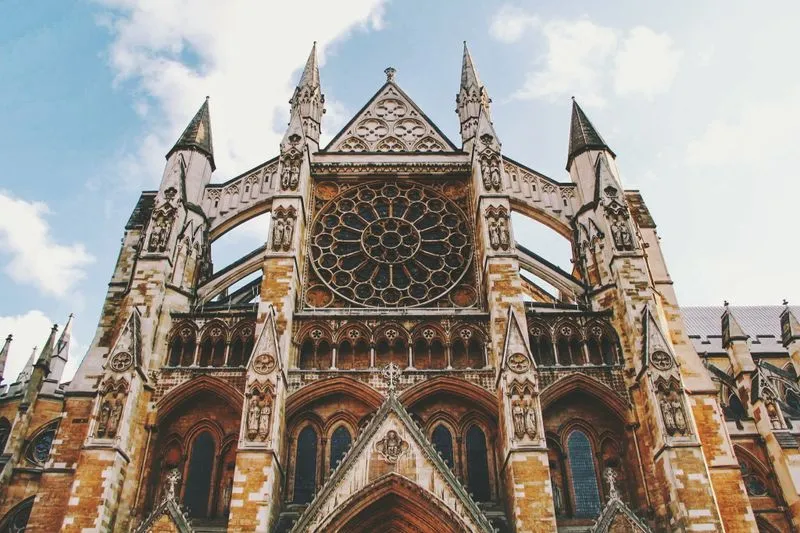
For Charles III, the dates went like this. On 8 September 2022, Elizabeth II died and her son became King at 73 — having been heir since the age of three, in 1952. On 10 September, at 10am, the Accession Council proclaimed him at St James's Palace. At 11am, the Principal Proclamation was read from the balcony overlooking Friary Court. The coronation came eight months later, on Saturday 6 May 2023, at Westminster Abbey. For Elizabeth II the gap was even longer: Queen on 6 February 1952, crowned on 2 June 1953.
So the coronation doesn't make the King. According to the royal website, "The Coronation Oath and the Accession Declaration Oath are the only aspects of the ceremony that are required by law." Everything else is tradition — St Edward's Crown (about 2.2kg of solid gold), the Coronation Chair made in 1300, and Westminster Abbey, the setting for every coronation since 1066. A tradition that weighs a lot (literally).
A detail that often puzzles people: the title Prince of Wales isn't automatic. The heir becomes Duke of Cornwall straight away — but it's the Sovereign who makes him Prince of Wales. Charles did it on 9 September 2022, in his first address to the nation: "Today, I am proud to create him Prince of Wales, Tywysog Cymru". Which gives you a nice bit of vocabulary for your next dinner party. William is the "heir apparent": no birth can displace him. An "heir presumptive", by contrast, can always be overtaken by the birth of someone with a better claim.
Regents and Counsellors of State: the line at work while the King is alive
The line of succession doesn't only matter when a monarch dies. While the King is alive, it also decides who can stand in for him temporarily — and who would reign on behalf of a monarch who was still a child. Two mechanisms that you'll often see confused.
Regency first. Under the Regency Act 1937, a monarch under 18 doesn't reign alone: a Regent exercises the royal functions. The Regent is the next person in line who isn't disqualified — and to qualify, you must be a British subject of full age and domiciled in the United Kingdom. That last condition matters. An heir who isn't domiciled in the UK is ruled out.
Then the Counsellors of State. When the King is ill or abroad, two or more Counsellors of State can be appointed by Letters Patent to act in his place. As the Royal Family's page on Counsellors of State explains, they are by law "the Sovereign's spouse and the next four people in the line of succession who are over the age of 21". In May 2025, with George, Charlotte, Louis, Archie and Lilibet all under age, those four are William, Harry, Andrew and Beatrice. The Counsellors of State Act, which received Royal Assent on 6 December 2022, added Anne and Edward. And the same page adds that "In practice, only working Members of the Royal Family are called upon to act as Counsellors of State" — which, in practice, rules out Harry and Andrew.
Elsewhere in Europe: Sweden ahead, Spain apart
Britain was far from the first country to adopt absolute primogeniture — and Spain still hasn't. Sweden got there in 1980. According to the Swedish Royal Court, full cognatic succession was introduced that year: the oldest child inherits the throne, girl or boy. Princess Victoria, born on 14 July 1977, became Crown Princess — even though she was born under a system in which only males could inherit.
Spain kept its male preference. Article 57 of the 1978 Spanish Constitution says that, in the same degree, "el varón a la mujer" — the man comes before the woman. If Princess Leonor is heir today, it's because she has no brother. On 31 October 2023, her eighteenth birthday, she swore allegiance to the Constitution before both chambers of the Spanish parliament.
Sweden changed the rule and applied it to a princess already born. Britain changed it for the future only. Spain hasn't changed it at all — it's the absence of a son that makes a daughter the heir. And if women and power interest you beyond crowns, have a look at our pick of the powerful women shaping pop culture in 2025.
Frequently asked questions
Can Prince Harry still become King?
In theory, yes — Harry is fifth in line. In practice, William and all three of his children (and their future descendants) would have to leave the line before him. Stepping back from royal duties in 2020 didn't change his place: only an Act of Parliament, or an exclusion the law already provides for (converting to Catholicism), could remove him.
Why aren't Camilla and Catherine in the line of succession?
Because the succession passes by descent. Only Protestant descendants of Sophia of Hanover are eligible. Camilla and Catherine joined the family by marriage: they hold titles (Queen, Princess of Wales), but no place in the line.
How many people are in the line of succession?
The Royal Family's website lists 25 names, from William to Lucas Tindall. The rule covers every eligible descendant of Sophia of Hanover, though, so the full line is far longer than the published list.
Can a Catholic become King?
No. The Sovereign must be in communion with the Church of England, and the 2013 Act didn't lift the ban on a Catholic monarch. If your question is about marriage, the answer changes: since 2015, marrying a Catholic no longer costs anyone their place.
What happens if the monarch is under 18?
A Regent carries out the royal functions until the monarch turns 18 (Regency Act 1937): the next person in line who is a British subject of full age and domiciled in the UK.
Do you have to be crowned to be King?
No. The new monarch reigns from the moment their predecessor dies. Charles III became King on 8 September 2022 and wasn't crowned until 6 May 2023. Edward VIII reigned for 325 days without ever being crowned.
Could Princess Charlotte become Queen?
Only if George — and all his future descendants — left the line. Since the 2013 reform, her younger brother Louis can't overtake her. But any children George has will go ahead of her, just as William's children went ahead of Harry.
Does the heir automatically become Prince of Wales?
No. The heir becomes Duke of Cornwall automatically, but the title Prince of Wales is conferred by the Sovereign. Charles III gave it to William on 9 September 2022.
Sources
- The Royal Family — Succession (rules and official line of succession)
- legislation.gov.uk — Succession to the Crown Act 2013
- GOV.UK — Royal succession rules will be changed (4 December 2012)
- UCL Constitution Unit — The Royal baby, the Rules of Succession, and the Realms (15 July 2013)
- legislation.gov.uk — His Majesty's Declaration of Abdication Act 1936
- The Royal Family — Counsellors of State
- The Royal House of Sweden — H.R.H. The Crown Princess