When Emma Watson stood at the UN General Assembly in 2014, she was 24, visibly nervous, and 15 million people watched her live. Ten years later, that speech is taught in communications courses. Not because an actress spoke — but because an actress said something people needed to hear, at the right moment, in exactly the right way.
And then there's the other side. The Instagram square. The tweet from a superyacht in the Caribbean. The star who flies eight times by private jet in a month and then turns up to a green carpet in a dress with an eco-message sewn into the hem. You know the type.
Celebrity activism is one of the most fascinating — and, honestly, most maddening — phenomena in contemporary culture. It can amplify a movement to global scale, raise millions for causes that would otherwise be invisible, and put real pressure on governments and corporations. Or it can dilute a message, appropriate a struggle, and redirect attention towards someone's ego when it was never needed there in the first place.
Here in the UK, we've had our own particularly compelling examples — Marcus Rashford taking on Downing Street over free school meals, Stormzy funding Cambridge scholarships, Emma Thompson lying down in front of traffic with Extinction Rebellion. Let's dig in properly.
Emma Watson and HeForShe: when celebrity activism actually works
Rewind. September 2014, UN General Assembly, New York. Emma Watson — known until then primarily as Hermione Granger, a role she'd held since age nine — steps up to the podium. She's 24. She's been a UN Women Goodwill Ambassador for six months. And she delivers a seven-minute-and-forty-second speech that becomes one of the most widely shared feminist documents of the decade.
What she says isn't theoretically revolutionary. Feminism involves men. The patriarchy harms everyone. Men need to be part of the solution. Feminist activists had been saying this for decades. But Emma Watson says it — her voice trembling slightly, looking directly into the camera from a UN podium — and 15 million people watch live.
What followed is measurable — and that's rare with celebrity activism. The HeForShe campaign gained 100,000 commitments from men within 72 hours. Universities and governments signed formal pledges under UN Women's framework. The speech sparked a global conversation about men's role in feminism that had struggled to exist without being immediately dismissed.
Is Watson "just" a celebrity lending her face? Partly. But she kept going. She supported concrete educational initiatives, funded scholarships, took public positions that cost her followers — and probably roles. She's since stepped back from the spotlight to protect her mental health, but the impact is documented, measurable, and real.
Marcus Rashford: the most effective UK celebrity activist in a generation
In June 2020, at the height of the first Covid lockdown, Marcus Rashford — 22-year-old Manchester United and England forward — wrote an open letter to MPs about child food poverty. He described, publicly and in detail, his own childhood experience of hunger. He called on the government to extend free school meals through the summer holidays.
The government reversed its position within 24 hours. The campaign that followed — partnering with Fareshare and McDonald's, lobbying directly, speaking in media consistently — extended free school meals for 1.3 million children in England and expanded food parcel provisions during lockdown. He didn't just post. He wrote to MPs. He met with ministers. He gave money (£20 million in food parcels via Fareshare partnership). He kept going when the cameras moved on.
What makes Rashford's activism a textbook case is precisely this combination: personal credibility (he lived this), specific and measurable goals (extend free school meals — a concrete, winnable policy ask), sustained pressure (not just one news cycle), and genuine financial commitment. He was also, crucially, speaking about something that directly affected the community he came from — not positioning himself as a saviour of strangers.
Stormzy, meanwhile, has taken a different but equally concrete approach: in 2018, he funded four full Cambridge University scholarships for Black British students, later expanding the programme. By 2021, the Stormzy Scholarship had supported 30 students. He also donated £10 million to Black British causes in 2020. These aren't performative gestures — they're structural interventions in access to education and funding that will have consequences decades from now.
Leonardo DiCaprio and the climate: serious work with real contradictions
DiCaprio's Oscar speech in 2016 gave climate change forty-five seconds in front of the most-watched awards broadcast in the world. Some dismissed it as recycling. Others noted it exposed the climate crisis to audiences who'd never watch an IPCC report.
The reality is more interesting. DiCaprio has been genuinely engaged on climate since 1998 — when it was still genuinely unfashionable in Hollywood and oil markets were booming. The Leonardo DiCaprio Foundation has funded over 200 conservation projects across 50 countries, contributed to forest corridor protection in the Amazon, renewable energy projects in sub-Saharan Africa, and coral reef preservation in the Pacific.
But. The yacht. The documented private jet trips — including a return flight between New York and Los Angeles within 48 hours for a gala event. The contradictions are real, and hypocrisy carries a symbolic cost in activist movements.
Emma Thompson's approach in the UK offers an interesting contrast. She joined Extinction Rebellion's 2019 protests, lying in the road in London. She was photographed, gave interviews, brought media coverage. She was then photographed boarding a flight from Los Angeles shortly afterwards — which generated significant backlash. The "you flew here to protest about flying" headline is uncomfortable. But Thompson's response — that she took the most carbon-efficient option available, acknowledged the contradiction publicly, and maintained that individual behaviour change without systemic change is insufficient — was at least more honest than most.
MeToo: the celebrity voices that changed everything
October 2017. Harvey Weinstein. The New York Times and New Yorker investigations. And then the avalanche.
MeToo wasn't created by celebrities. Tarana Burke founded the movement in 2006 to support sexual violence survivors in under-resourced communities. For eleven years it existed in activist spaces — important, consistent, largely invisible. Then actresses — Alyssa Milano, Asia Argento, Gwyneth Paltrow, Uma Thurman — began speaking publicly. And the world listened.
Is that fair? No. Burke herself had a complex relationship with the sudden visibility of a movement she'd founded — visibility centred on white Hollywood women while the original work concerned Black women and women in poverty. But what happened genuinely changed things.

Laws changed in multiple countries. HR procedures were overhauled in thousands of companies. NDAs (confidentiality agreements that allowed victims to be silenced for cash) were legally challenged and restricted in the UK through the Worker Protection Act. Harvey Weinstein was convicted and sentenced. Dozens of powerful men were removed from positions they'd held for decades. It isn't enough. But it's measurable.
The particular power of MeToo with celebrity voices is the mirror effect. When a famous actress describes being cornered in a corridor, pressured, staying silent to protect her career — millions of women in entirely unglamorous sectors recognise it. The waitress, the nurse, the accountant. And they think: if it happened to her too, and if she can say so, maybe I can too.
Black Lives Matter and UK celebrities: between solidarity and spectacle
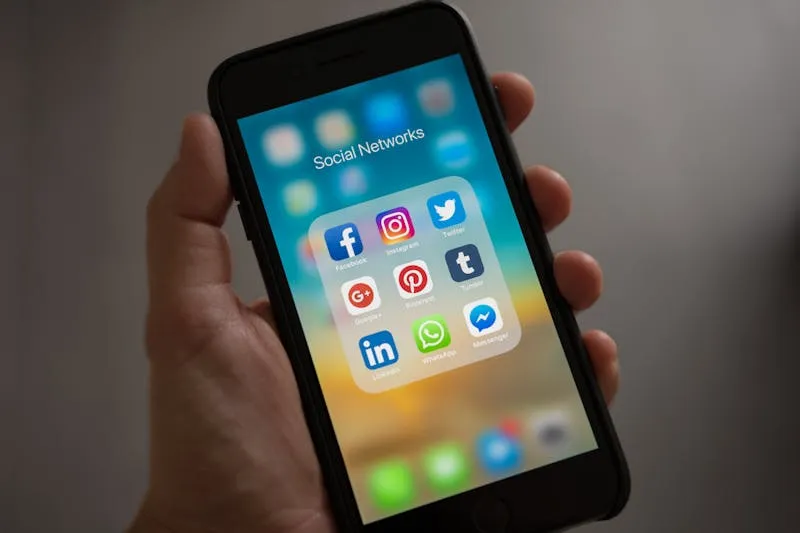
Summer 2020. George Floyd. And suddenly social media — including the Instagram feed of half the world's entertainment industry — went black. Blackout Tuesday. A black square. A hashtag. Millions of posts.
Some Black activists asked people to stop. The black squares were flooding hashtags used to share important resources — legal aid contacts, protest locations, bail funds — with visual noise. The concrete impact of Blackout Tuesday on the BLM movement is, at best, neutral. At worst it parasitised the visibility of useful content for 48 hours.
But look beyond the square. In the UK, Stormzy donated £10 million to anti-racism causes and organisations. Adele, Lewis Hamilton, and Idris Elba made significant personal donations to British organisations addressing systemic racism. Lewis Hamilton — who has spoken extensively about being one of very few Black drivers in Formula 1 — used his platform to push motorsport's governing body on diversity commitments in a sustained, sustained campaign, not a one-off post.
The distinction analysts consistently make is clear: symbolic support without follow-through is at best useless, at worst damaging to the movement by creating an illusion that something has been done. But celebrities who put real money, real time, and real personal credibility into durable structures have had measurable impact. Hamilton's pressure on F1 led to the We Race As One initiative and more structured diversity commitments from the sport's governing body — imperfect, contested, but documented.
LGBTQ+ advocacy: visibility and long-term commitment
Celebrity engagement with LGBTQ+ rights has a longer history than most other causes on this list. Since the early 1990s — when openly supporting gay rights genuinely cost something commercially — artists have taken public positions.
The late George Michael, who came out publicly in 1998, became one of the most significant voices for LGBTQ+ equality in British popular culture — and consistently donated to HIV/AIDS organisations and LGBTQ+ youth charities until his death. Elton John's foundation has raised over £550 million for HIV prevention programmes globally since 1992. Ian McKellen co-founded Stonewall UK in 1989 and has remained an active presence for over three decades — this is not a passing phase.
What distinguishes LGBTQ+ celebrity engagement from other forms of activism is often duration. Artists who supported Pride in 1995 are still supporting it. It isn't a response to a news event. And this consistency has a normalisation effect in popular culture that's difficult to quantify but real. When the most-watched television programmes, the best-selling artists, the most bankable actors have visibly supported LGBTQ+ rights for thirty years — it changes what is culturally acceptable to say in public debate.
The caveat, here too: "rainbow washing" is real. Brands that fly the Pride flag in June while funding anti-LGBTQ+ politicians the rest of the year. Celebrities who make supportive declarations while continuing to work with states or producers actively engaged in discrimination. Vigilance remains necessary. The Trevor Project — a US LGBTQ+ crisis intervention charity — publishes annual research on the mental health impact of cultural support signals on LGBTQ+ youth. The data on representation matters. So does its quality.
When celebrity activism goes badly wrong
Right. We've covered the good. Now the less good — because honesty requires both.
2017. Pepsi releases an ad featuring Kendall Jenner. In the ad, Jenner steps away from a photoshoot in the middle of a "protest" (cause unclear), removes her blonde wig, hands a can of Pepsi to a police officer, and everyone rejoices. The ad was pulled within 24 hours after universal backlash. It was meant to "capture the spirit of global harmony." It had, in fact, captured the absolute zenith of the commercial appropriation of activism.
What's interesting about that episode isn't the ad itself (marketing departments make mistakes) — it's what it reveals about how celebrity activism can be commodified. When militancy becomes an aesthetic, it loses its substance. When a brand can suggest in two minutes of video that a fizzy drink resolves racial and police tensions — and a celebrity agrees to carry that — something fundamentally dishonest is happening.
Other examples of engagement that's misfired: celebrities who arrive in developing countries for 48-hour humanitarian photo missions. The "white saviour" dynamic in action — a star flies in, holds a baby for the cameras, flies out. Local organisations that have been working in those contexts for years, without resources, find it at best condescending, at worst actively harmful because it redirects donations towards visible, Instagrammable projects rather than durable, less photogenic infrastructure.
Slacktivism and the saviour complex: understanding the real limits
The term "slacktivism" — a portmanteau of "slacker" and "activism" — describes low-effort militant gestures: liking a post, sharing a petition, updating your profile picture. The argument is that these gestures create a feeling of having "done something" without requiring real effort, which reduces motivation to engage concretely.
For celebrities, slacktivism takes specific forms. The Instagram post mid-crisis ("thinking of everyone affected" — no specification of what, who, or why). Attending a charity gala where the ticket costs £50,000 and 10% of proceeds go to the cause. Signing an online petition with your 50 million followers — which generates significant media coverage but isn't different from what anyone can do at home in their pyjamas.
It's not that these gestures are worthless. A post from a major celebrity can generate £400,000 in donations within 24 hours — that's real money. But there's an asymmetry between the visibility of the engagement (enormous) and its personal cost to the celebrity (minimal). And that asymmetry creates a credibility problem over time.
The saviour complex is more insidious. It's when a celebrity — often white, often from a wealthy country — positions themselves as the voice or face of a cause affecting people who don't need saving, but amplification. The difference is crucial. Amplifying (giving visibility, funding, removing obstacles to expression) is useful. Substituting (speaking on behalf of, deciding for, monopolising attention) is problematic. The best celebrity activists tend to understand this distinction instinctively. The worst ones don't notice it exists.
What actually works: amplification, funding, and cultural legitimacy
After all that — what do we take away? When celebrity activism genuinely works, when it measurably moves the needle, it tends to do one (or all three) of the following things.
1. Amplification. A celebrity can put a cause in front of millions of people who would never have encountered it otherwise. Marcus Rashford put child food poverty on the front page of every British newspaper for six months straight. The Elton John AIDS Foundation reaches audiences in countries where the disease is taboo and local resources are virtually non-existent. Emma Watson brought feminism in front of teenagers in countries where the word itself is treated as a slur. This amplification is real and has genuine value.
2. Funding. Celebrities are wealthy. When they open their wallets — genuinely, not symbolically — it funds concrete things. Dolly Parton famously contributed £1 million to Moderna's Covid vaccine research in 2020, a donation she made quietly and that only became public later. Elton John's foundation has raised over £550 million. Stormzy committed £10 million to Black British causes. These sums don't replace public policy — but they do things public policy doesn't reach.
3. Cultural legitimacy. Some causes need a normalisation signal in popular culture before public policy can move. Equal marriage wasn't legal in England and Wales in 2010. Today it is. That wasn't solely because of celebrity support — but the fact that beloved actors, popular musicians, and household-name presenters said openly and consistently "this is normal, this is right, this is overdue" changed what it was socially acceptable to say in public debate. George Michael, who was publicly gay at a time when it carried real professional risk, contributed to that shift over three decades.
The honest conclusion on celebrity activism is that it's neither inherently good nor inherently bad. It's a tool. A powerful tool, frequently misused, occasionally transformative. What makes the difference is duration (not just the media moment), personal cost (what the celebrity actually risks), and coherence (does the action follow the words). Those three criteria separate what will last from what won't.
Frequently asked questions
Does celebrity activism actually change anything?
Sometimes yes, sometimes no — and the difference is measurable. Engagements that combine media amplification, direct funding, and duration have documented impact. The HeForShe campaign generated measurable institutional commitments. The Elton John AIDS Foundation has funded HIV programmes in 87 countries. Marcus Rashford's free school meals campaign reversed government policy within 24 hours and benefited 1.3 million children. LeBron James's More Than a Vote registered over one million new voters. What doesn't work: symbolic gestures without follow-through, high-visibility slacktivism.
How do you tell genuine commitment from a PR exercise?
Apply three tests. The time test: does the engagement persist beyond the media peak? The cost test: what does it cost the celebrity personally — money, career risk, unpopular positions? The coherence test: are their personal actions aligned with their public position? A climate activist who takes weekly private jets sends a contradictory signal, even if their donations are real. The answers to these three questions usually make the distinction fairly clear.
What made Marcus Rashford's campaign particularly effective?
Several factors: personal credibility (he experienced food poverty himself), a specific and winnable policy ask (extend free school meals — concrete, measurable, achievable), sustained pressure over months rather than a single news cycle, real financial commitment (£20 million in food parcel provision via partnerships), and speaking about his own community rather than positioning as a saviour of strangers. His approach has become something of a template for how celebrity activism can work at a structural level.
Would MeToo have had the same impact without celebrities?
Probably not the same scale, not at the same speed. Tarana Burke created MeToo in 2006 — without celebrities, without global media coverage. Eleven years of important, largely invisible work. When well-known actresses spoke in 2017, the movement reached global scale in weeks. That's not fair — Burke herself said so publicly. But it changed laws, procedures, and resulted in real criminal convictions. The celebrity amplification had both a cost (erasure of the founders) and a genuine benefit (global reach) simultaneously.
Is "cancel culture" an effective tool for social change?
Its effectiveness is very uneven depending on the status of the person targeted. For powerful individuals with resources and legal teams, consequences are often temporary — Louis C.K. returned to performing, Kanye West continues releasing music. For less protected individuals, effects can be permanent and disproportionate. As a tool for systemic change, it's limited — it targets individuals without necessarily changing the structures that produced them. Criminal justice and institutional reform tend to have more durable impact. The two are not mutually exclusive, but conflating them weakens both.
What's the difference between amplifying a cause and appropriating it?
Amplifying means giving visibility, funding, and removing obstacles to people who are already doing the work and speaking for themselves. Appropriating means speaking instead of, deciding for, and monopolising the media attention of communities that didn't ask for a spokesperson. The practical test: is the celebrity lifting others' voices or replacing them? Are the organisations and activists from the affected community still centred, or has the celebrity become the face of something that isn't theirs? The best celebrity activists — Rashford is a good example — tend to understand this distinction instinctively.
Should celebrities stay out of politics?
That position sounds neutral but isn't. "Staying out of politics" always benefits the status quo. Celebrities are citizens with platforms. Asking them not to use those platforms is actually asking more of them than is asked of any other citizen. The relevant question isn't "do they have the right?" but "are they engaging in an informed, coherent, and useful way?" — and the answer varies significantly depending on the person and the cause. Rashford: yes. The Pepsi ad: no. The difference is doing the work versus performing it.
Sources
- The Guardian — Celebrity activism: does it make a difference?
- BBC News — Marcus Rashford: how a footballer changed government policy
- The Independent — MeToo five years on: what actually changed?
- The Guardian — Stormzy's scholarship programme and the question of representation
- BBC Culture — Emma Thompson and XR: when celebrities go beyond the hashtag