Harriet, 32, a secondary school teacher in Norwich, put her shopping down on a Saturday morning in March and stared at the receipt. £98. Nearly £20 of that — just on cleaning products. Washing-up liquid, laundry detergent, bathroom cleaner, multi-surface spray, dishwasher tablets. And the spring clean hadn't even started. She picked up her phone, typed "homemade cleaning products UK" and three hours later had a cupboard under the sink that looked like a Victorian chemist's back room. White vinegar. Bicarbonate of soda. Soap flakes. And the question that needed answering: does any of this really work, or are we all just telling ourselves a good story?
Here's what lab tests and public health bodies allow us to say, recipe by recipe — plus, just in time for the spring clean, the combinations you must never mix.
Why Make Your Own Cleaning Products?
Making your own cleaning products mainly saves money; the environmental and health gains are real but conditional.
White vinegar, bicarbonate of soda and soda crystals come in large, inexpensive packs, and one bottle does several jobs — descaling, degreasing, deodorising. Where the usual cupboard holds one product per room, three or four ingredients cover most everyday cleaning. The exact saving depends on your prices and your habits, and you can work it out with your receipt in hand.
For the planet, the picture is more nuanced. Fewer bottles and less plastic packaging — that part is settled. But a "simple" ingredient is still an industrial product — made, packed and shipped — and homemade only lowers your footprint if you use it at the right dose. Doubling the vinegar "just to be sure" isn't green.
For your health, homemade has its advantages — as long as you don't assume it carries no risk. Fewer products and fewer synthetic fragrances mean fewer things to go wrong. But "natural" doesn't mean "harmless" — vinegar is still an acid that etches stone, and essential oils are concentrated plant compounds with risks of their own — for children and, very much, for pets.
Essential Ingredients for Homemade Cleaning Products
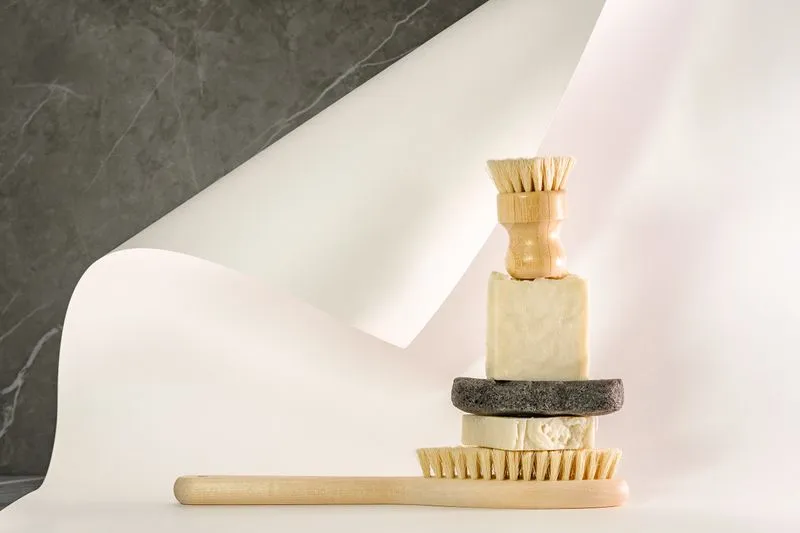
Five ingredients cover every recipe in this guide: white vinegar, bicarbonate of soda, castile soap (liquid or as flakes), soda crystals and, optionally, essential oils.
White vinegar
White vinegar is a solution of acetic acid. Supermarket white or distilled vinegar does most jobs; "cleaning vinegar" from the cleaning aisle is stronger, and the strength is printed on the label. It dissolves limescale, lightly degreases surfaces and takes the edge off some odours. It is not a disinfectant — and it doesn't replace a product that says it is one. Dilute it with water for general cleaning.
Do not use on: marble, limestone and other natural stone (the acid etches them), sealed or oiled wooden floors, or unseasoned cast iron.
Bicarbonate of soda
Mildly alkaline, it neutralises acids, absorbs odours, and its powdery texture makes it a very gentle abrasive. Mixed with vinegar, it releases CO2 — handy fizz for a sluggish drain, but the reaction uses up both products (they neutralise each other). Don't mix them for cleaning: use them one after the other.
Castile soap and soap flakes
A vegetable-based surfactant (saponified olive, palm or coconut oil, depending on the brand) that lifts dirt and grease. Liquid castile soap suits sprays and floor washes; pure soap flakes suit laundry. Read the ingredients list: for cleaning, a soap with no added fragrance or colour does the job.
Soda crystals (washing soda)
Much more alkaline than bicarbonate, soda crystals tackle grease and grime effectively and sit in the cleaning aisle of most supermarkets. Dissolved in hot water, they also cut grease on kitchen walls — useful when you're preparing and washing walls before painting a room. Wear gloves: this is the toughest ingredient on the list.
Essential oils (optional, and best skipped)
Lavender, tea tree, eucalyptus — they add scent, and that's about all these recipes need them for. They also carry real risks for pets. Cats Protection's guide to cats and essential oils lists lavender, tea tree and eucalyptus among the oils that are toxic to cats, and its advice to owners is blunt: "Don't clean with essential oils." With a cat, a baby or a toddler at home, leave them out altogether.
All-Purpose Surface Cleaner
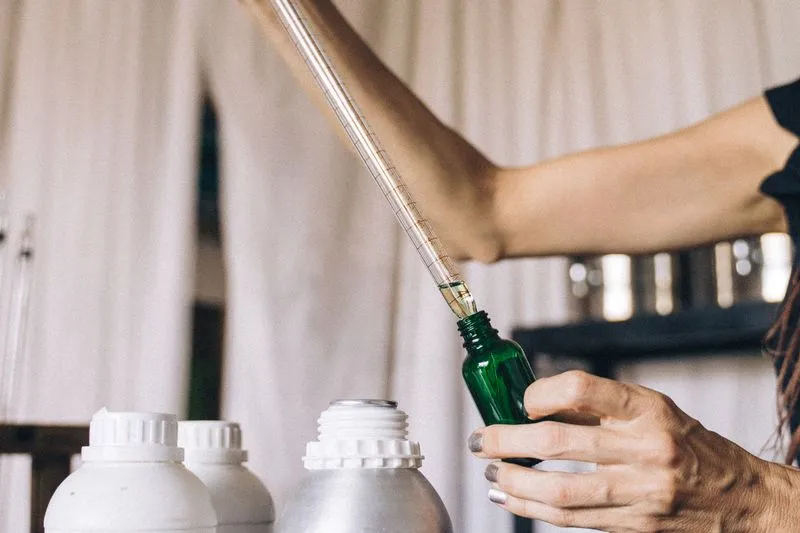
A homemade all-purpose spray is the staple recipe — the one that replaces the supermarket spray you keep by the sink. It works on worktops, appliance exteriors, tables, taps, and mirrors (sparingly).
The Recipe
- 500ml warm water
- 200ml white vinegar
- 1 tablespoon liquid castile soap (not standard washing-up liquid)
- 10 drops lavender or tea tree essential oil (optional; skip it with pets or young children)
Method: pour the water into the spray bottle first, add the vinegar, then the soap very gently (to minimise foam), then any essential oil. Cap and turn upside down twice to mix. Label with contents and date.
Use: spray onto the surface, leave for 30 seconds to a minute, wipe with a microfibre cloth. For shiny surfaces (stainless steel, taps), follow with a dry cloth to avoid streaks.
Works well on: all non-porous surfaces. Light limescale, food splashes, fingerprints. Mirrors and glass if you use very little soap (too much leaves streaks).
Less effective on: baked-on grease, stubborn stains, heavy limescale. Those need different solutions.
Natural Limescale Remover
Limescale is a daily nuisance in hard-water areas. The Drinking Water Inspectorate's guidance on water hardness explains that hard water "causes scaling in hot water systems, kettles, electric irons and domestic appliances", and points you to your water company for an exact figure where you live. The good news: the acetic acid in vinegar dissolves limescale very effectively.
For taps and fittings
Soak a piece of kitchen roll or an old cotton sock in neat white vinegar. Wrap it around the tap or crusted fitting and secure it with an elastic band. Leave for 2–4 hours (overnight for severe build-up). Rinse and scrub gently with an old toothbrush.
For the shower and shower screen
Mix equal parts white vinegar and hot water in a spray bottle. Spray generously on the screen, tiles and shower head. Leave for 15–30 minutes. Scrub with a soft brush or sponge. Rinse thoroughly.
For badly scaled shower heads: unscrew and soak in neat white vinegar overnight. By morning, most of the limescale comes away on its own.
For the kettle and coffee maker
Half-fill with equal parts water and white vinegar. Boil (kettle) or run a full cycle (coffee machine, if its manual allows it). Rinse twice with fresh water. The vinegar smell goes once rinsed.
Homemade Laundry Liquid: What It Cleans and What It Leaves
Homemade laundry liquid struggles to get clothes properly clean. In Which?'s tests of popular laundry detergent hacks, a homemade mix of baking soda, salt, liquid castile soap, lavender oil and hot water "did almost nothing to get our clothes clean". The same article warns that vinegar shouldn't go in the machine either, as "it can damage the rubber seals and hoses in some washing machines".
I haven't found any published test of the recipe below — it uses soap flakes and soda crystals rather than Which?'s mix — so judge it on one lightly soiled load before trusting it with the rest.
Basic laundry liquid recipe
- 1 litre of hot water
- 100g pure soap flakes (or a grated castile soap bar)
- 2 tablespoons bicarbonate of soda
- 2 tablespoons soda crystals
Method: dissolve the soap flakes in the hot water, stirring continuously. Leave to cool slightly. Add the bicarbonate and soda crystals and stir until dissolved. Transfer to a sealed container kept for this purpose. The liquid will gel as it cools — this is normal. Shake before each use.
Dosage: 100–150ml per wash (in the main detergent drawer), depending on water hardness and load size. In hard-water areas, use the higher end: as the DWI notes, hard water produces less lather from soap.
Try it on lightly soiled everyday washes, checking the result after the first load. Don't expect much on stubborn stains (blood, red wine, grass), on keeping whites white or on very sweaty sports kit: for stains, rub a wet soap bar directly onto the fabric, leave for 30 minutes, then wash.
What about soap nuts and laundry eggs?
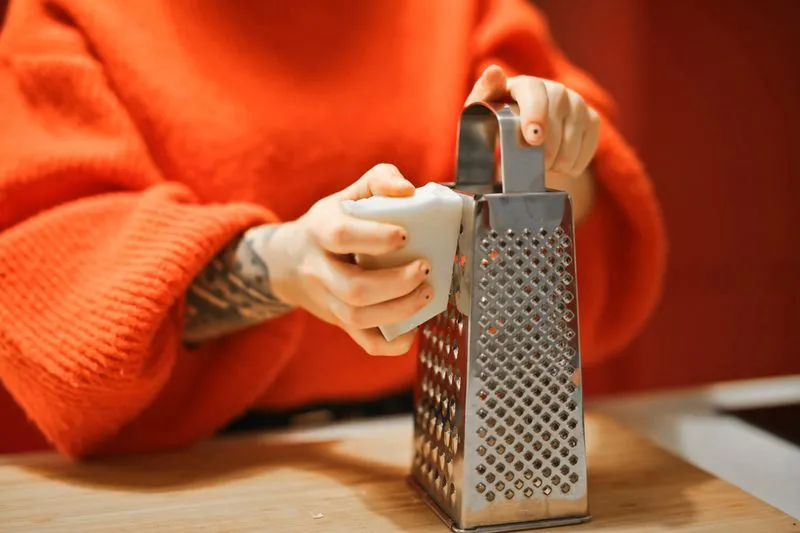
Soap nuts (Sapindus mukorossi shells) contain saponin, a natural surfactant. A few half shells go into the little cotton bag supplied, straight into the drum, and they're reused for several washes before being composted. The promise — washing without detergent — is appealing. The evidence is thin — in the same Which? tests, a refillable laundry egg designed to cut single-use plastic didn't manage to remove stains from clothes. Try soap nuts on a load that doesn't matter before trusting them with one that does.
Cleaning Floors: Cleaning Is Not Disinfecting
A cleaner is not a disinfectant. Vinegar doesn't disinfect, and no homemade recipe does. Cleaning removes dirt, and a good share of the germs with it. A disinfectant is a separate product that has to prove what it kills and says so on the label; a bottle of vinegar makes no such claim.
So homemade mixtures don't replace a disinfectant when you need one — for example when someone at home is ill and you've been advised to disinfect, or when a product label or a health professional tells you to. For everything else, a thorough clean does most of the work.
General floor cleaner (for cleaning, not disinfection)
- 5 litres of warm water
- 200ml white vinegar
- 1 tablespoon liquid castile soap
- 10 drops tea tree or eucalyptus essential oil (optional; skip it with pets)
This mixture cleans tiles, vinyl and linoleum effectively. Don't use it on wooden floors (too much moisture) or natural stone (the vinegar etches it).
For wooden and parquet floors
Water is wood's enemy. Use as little as possible — a mop wrung out almost dry, with a few drops of castile soap in cool water. No vinegar, no bicarbonate — they can stain or dull the finish.
Toilet Cleaner Without Harsh Chemicals
The toilet bowl can be kept clean with simple ingredients, provided you're clear about what you want to do — clean, descale or deodorise. And provided you don't mix things that cancel each other out.
The two-step method
- 2 tablespoons bicarbonate of soda
- 1 teaspoon liquid castile soap
- A toilet brush
- 250ml white vinegar, for descaling only
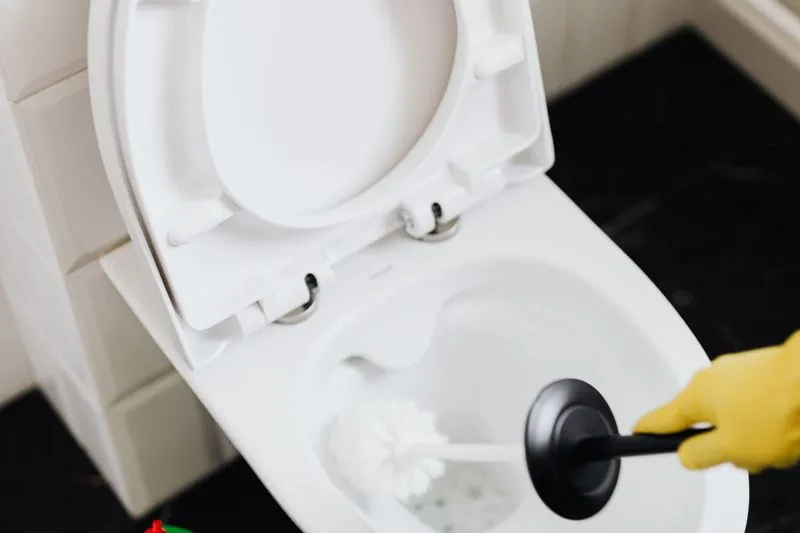
Step one, cleaning: sprinkle the bicarbonate into the bowl and under the rim, add the soap, leave for 10–15 minutes, scrub, flush.
Step two, descaling: the vinegar, on its own, on another day or last thing at night. The two products never meet in the bowl — otherwise you get an impressive fizz and not much else. If you also use bleach in the toilet, never add vinegar or a limescale remover while any is left: flush several times before switching products.
For descaling the bowl
Pour 250ml of neat white vinegar directly into the bowl, leave overnight, scrub in the morning. For deposits under the rim, soak pieces of kitchen roll in neat vinegar and press them up under the rim. Leave for 3 hours.
White Vinegar as a Natural Fabric Softener
White vinegar in the fabric softener drawer is the simplest swap in this guide — and also the one that needs the most caution. Which? advises against adding vinegar to the wash, because it can damage the seals and hoses in some machines, so check your manual first.
Amount: if your manual allows it, 100ml of neat white vinegar now and then, not in every wash — or half that to start with.
The cautious alternative: soak towels in a bowl of water with a splash of vinegar, rinse them, then wash as normal. Nothing acidic goes into the machine.
Vinegar neutralises the alkaline residue left by soap or detergent, so fabric feels less stiff, and clothes don't usually smell of vinegar once dry. It won't "fluff" fabric the way commercial softeners do, though: the result is more neutral, less pillowy, and that's purely a matter of taste.
Recipes That Don't Work, and Combinations You Must Never Mix
Four popular recipes don't deliver (vinegar and bicarbonate mixed together, bicarbonate by the scoopful in the wash, coconut oil, lemon juice), and bleach becomes dangerous mixed with an acid or with ammonia.
Vinegar + bicarbonate of soda as a cleaner
The reaction between acetic acid and sodium bicarbonate produces carbon dioxide, water and sodium acetate — a salt with no particular cleaning power. You're cancelling out both products. The fizzing looks impressive but does nothing for your worktop. Use them separately, never together.
Bicarbonate of soda by the scoopful in the wash
Adding scoops of bicarbonate to laundry detergent is one of the most shared money-saving tips. In the same Which? tests, a bicarbonate paste proved useful for spot-treating stains — but Which? advises against tipping scoopfuls into the drum, and the British Skin Foundation spokesperson it consulted warned that baking soda can irritate the skin. Keep it for the odd stain, not the whole load.
Coconut oil as a universal cleaner
Coconut oil is a fat. Cleaning with fat works for some surfaces (leather, wood conditioning), but on tiles or kitchen worktops you're leaving a greasy film that attracts dust. Not ideal.
Lemon juice as a descaler
Lemon juice contains citric acid, which does dissolve limescale. But it costs more than vinegar, its acidity varies from one lemon to the next, and it leaves a sticky, sugary residue that attracts insects. If you can't stand the smell of vinegar, citric acid powder from a chemist or online is easier to dose than fresh lemon juice.
The combinations you must never mix
The most dangerous mix in the house is also one of the most common — bleach with vinegar, or with any acid (toilet limescale removers included). UKHSA's general information on sodium hypochlorite, the active ingredient in household bleach, puts it plainly: "If sodium hypochlorite is mixed with acidic products, chlorine gas is produced." Mixed with an ammonia-containing cleaner, bleach can produce chloramines, which are "also highly irritating to the respiratory tract". Even minor exposures, the agency notes, can bring a burning sensation in the eyes and throat, coughing and a sore throat.
The general rule is simpler still: never mix one cleaning product with another, homemade or shop-bought. If you alternate between them, rinse the surface with clean water in between, and open a window.
Storing Homemade Cleaning Products Safely
Homemade cleaning products keep less well than their shop-bought equivalents, which contain preservatives. Three rules cover it: a short shelf life, a clear label and a safe place to store it.
Shelf life
- All-purpose spray: a few weeks — make small batches (the soap can turn)
- Laundry liquid: a few weeks, stored away from heat
- Neat white vinegar: keeps for a very long time in its original bottle
- Bicarbonate of soda: keeps dry in an airtight container
Labelling is not optional
Every bottle must be clearly labelled with its contents, the date it was made and "Do not drink". This isn't fussiness. RoSPA's advice on keeping children safe from poisoning is simple: "Always store household cleaning chemicals in their original containers." A homemade mix has no original container, so its label is the only thing telling anyone what's inside — and in an old drinks bottle, even a label isn't enough.
For your recipes, use dedicated spray bottles — never an old drinks bottle, however well labelled.
Storage
Keep finished products away from heat and direct light, and store them up high or in a locked cupboard, out of reach of children and pets. While you clean, and for a while afterwards, open a window.
Cost Savings: How to Work Out What You Save
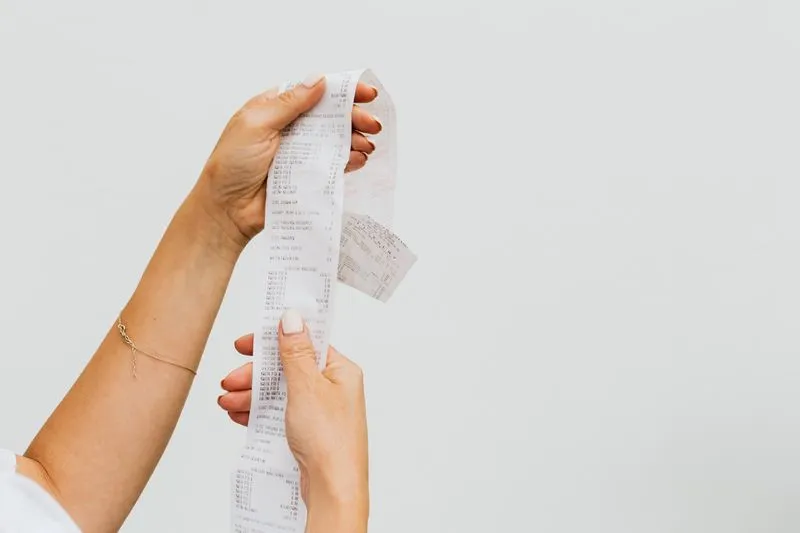
Prices vary from one supermarket and one year to the next, so the most reliable calculation is your own — and it takes two minutes with your receipt in hand.
1. The price per litre of what you buy now. Shelf labels usually show a unit price; if not, divide the bottle price by its volume.
2. The cost per litre of the homemade version. Add up each ingredient's share: for the all-purpose spray, 200ml of vinegar is a fifth of the price of a litre of vinegar, plus a tablespoon of soap.
3. How well it really works. A recipe that means rewashing clothes or scrubbing twice saves you nothing.
| Shop-bought product | Homemade swap | What to expect |
|---|---|---|
| Multi-surface spray | Water, vinegar, liquid soap | Good on lightly soiled surfaces, not on baked-on grease |
| Limescale remover | Neat white vinegar | Effective on limescale; never on marble or stone |
| Laundry liquid | Soap flakes, bicarbonate, soda crystals | A homemade mix did almost nothing in Which? tests |
| Fabric softener | White vinegar, or a vinegar soak | More neutral, less fluffy; check the machine's manual |
| Toilet cleaner | Bicarbonate, then vinegar separately | Fine for routine cleaning |
| Disinfectant | No homemade equivalent | Vinegar makes no disinfectant claim |
The clearest saving comes from the products vinegar replaces without loss: limescale remover and multi-surface spray. On laundry, the saving is real but can cost you in stains and greying whites. Redo Harriet's sums with your own receipt before deciding where homemade stops in your house.
On top of that come the benefits that are harder to price: less plastic packaging, fewer bottles to rebuy, and a cupboard under the sink you can finally make sense of.
Frequently Asked Questions
Does white vinegar damage washing machines?
It can. Which? warns that vinegar can damage the rubber seals and hoses in some washing machines, and advises against adding it to the wash. There's no universal answer, because every machine has its own seals and materials, so the rule is simple: your manual has the final word. Unless it explicitly allows vinegar, keep it out of the machine — not least for the warranty — and use the bowl-soak method for softening instead.
How do I stop my washing smelling of vinegar?
If clothes still smell of vinegar once dry, the dose was too high or the rinse too short: halve the amount and add an extra rinse. If washing done with homemade detergent smells musty, it often isn't fully clean — a sign the recipe has reached its limits for that kind of load. Run one wash with a shop-bought detergent to reset.
Are homemade products safe with babies and young children in the house?
Yes, with a few precautions. First, leave essential oils out: the simplest rule with a baby or toddler at home is to skip them entirely. Second, store everything properly: vinegar, soda crystals and homemade bottles go up high or in a locked cupboard, like any cleaning product, and never into food or drinks containers — RoSPA advises keeping cleaning chemicals in their original containers. Clean while your baby is in another room, and open a window during and after.
Are homemade products suitable for people with allergies?
It depends on the allergy. A recipe without essential oils or fragrance limits your exposure to scent chemicals. If you have a diagnosed allergy or asthma, patch test each recipe on a small area first, open a window while you clean, and talk to your GP before overhauling your whole routine at once.
Can you make homemade dishwasher tablets?
This is the homemade recipe best left alone. The versions online mix soda crystals, bicarbonate and salt, sometimes with a squirt of washing-up liquid to bind them — but hand washing-up liquid isn't made for dishwashers, and your manual specifies what kind of detergent to use. For this appliance, stick with a shop-bought product, ideally one with a recognised ecolabel.
How long do soap flakes keep?
A long time, if kept dry: in a jar or an airtight tub, away from moisture. They may harden or form a slight crust — completely normal, just break it up. Avoid open bags in a damp cupboard under the sink: moisture makes the flakes clump and can turn the oils rancid.
Are homemade cleaning products really eco-friendly?
More frugal, yes; impact-free, no. They cut packaging and the number of products you buy. But castile soap can contain palm oil (the ingredients are on the pack), and the lowest-impact product is still the one you don't use: a damp microfibre cloth handles a good share of everyday dusting and wiping. For shop-bought products, look for a recognised third-party ecolabel rather than green-looking packaging.