In 2023, a landmark study published in the Journal of the American Heart Association revealed a figure that should give every woman pause: approximately 78% of algorithms embedded in health wearables had been developed and calibrated almost exclusively on male data. Not through deliberate exclusion, but through decades of habit — medical research cohorts have historically over-represented men, a bias now well-documented in what researchers call the "Yentl syndrome" (Bernadine Healy, New England Journal of Medicine, 1991). The consequence: heart rate thresholds, stress models and sleep algorithms built into your daily devices are not necessarily calibrated to your physiology.
This is not a reason to discard your Apple Watch or Fitbit. It is a reason to understand what you are measuring, why certain features are more reliable for women than others, and how to choose a device that genuinely incorporates a female-centred health approach. That is precisely what this guide offers.
Since 2019, the major players in the sector have made a significant pivot. Apple launched its dedicated women's health research with over 150,000 participants. Garmin integrated Firstbeat Analytics — a scientifically validated Finnish HRV technology. Oura published several peer-reviewed studies on the precision of its basal temperature sensor. The market has matured, data has accumulated, and it is now possible to distinguish genuinely useful features from marketing gimmicks.
This guide walks you through that process: from physiological foundations to technical comparisons, including the critical question of data privacy for reproductive health information — an issue that has taken on new geopolitical dimensions in recent years.
The algorithmic bias: what the science actually says
Understanding algorithmic bias is not an ideological exercise — it is a question of medical accuracy. A foundational 2019 study published in PLOS ONE by researchers at the University of Toronto analysed 40 fitness tracking applications and devices. The finding: the margin of error for resting heart rate was ±2 bpm for male users and ±5 bpm for female users — a difference that may appear modest but becomes clinically significant when detecting arrhythmias or monitoring cardiovascular recovery.
Several physiological factors explain this disparity:
- Body composition: subcutaneous adipose tissue is on average thicker in women, affecting the penetration depth of PPG (photoplethysmography) sensors that measure heart rate via LED light.
- Hormonal fluctuations: progesterone and oestrogen directly influence heart rate variability (HRV), core body temperature and sleep patterns. An algorithm calibrated on male data — comparatively hormonally stable — does not account for these cyclical variations.
- Wrist size and morphology: optical sensors are often calibrated for pressure and angle assumptions based on male wrist proportions.
- Skin pigmentation: this factor affects all genders, but studies consistently show that green PPG sensors (the most common type) are systematically less accurate on darker skin tones — an intersectional bias affecting many women globally.
NICE (National Institute for Health and Care Excellence) and NHS Digital have both highlighted in their 2022 digital health guidance that wearable validation studies must include representative female cohorts and stratify results by menstrual cycle phase. This recommendation is beginning to be acted upon by Apple and Garmin, but remains largely ignored by mid-range manufacturers.
When reading the technical specifications of a connected health device, look explicitly for the phrase "validation study" or "clinical accuracy study" in the documentation. Serious manufacturers publish their precision data. If this information is absent, ask yourself why — and consult independent test results from Which?, Wareable or the British Heart Foundation's digital health assessments.
The encouraging news: since 2021, several manufacturers have made substantial catch-up progress. Garmin re-validated its heart rate anomaly detection algorithms on mixed-gender cohorts. Apple published in 2023 the results of its Apple Women's Health Study (AWHS) covering 150,000 US participants — now the largest longitudinal database on menstrual health and menopause collected via wearable. Oura Ring published in 2022 a study in Nature Digital Medicine showing that its basal temperature sensor achieves a precision of ±0.13°C, comparable to a precision medical thermometer.
Menstrual cycle tracking: accuracy, methods and limitations
Menstrual cycle tracking via connected devices actually encompasses very different approaches, with radically unequal levels of scientific evidence. It is fundamental to distinguish three levels of sophistication before evaluating any device:
Level 1 — Pure calendar-based tracking
The majority of cycle apps (Clue, Flo, Period Tracker) and the basic cycle functions of Fitbit or Samsung Galaxy Watch operate on a calendar algorithm: they memorise your past period dates and project future cycles by simple averaging. The precision of ovulation prediction using this method is approximately ±3 to 5 days, according to a meta-analysis published in npj Digital Medicine in 2020. Acceptable for general awareness, insufficient for contraceptive use.
Level 2 — Assisted symptothermal tracking
Applications such as Natural Cycles (the only contraceptive application certified CE and FDA-cleared) combine manual basal temperature entry with the calendar algorithm. This approach, validated in a study of 22,785 cycles published in the European Journal of Contraception & Reproductive Health Care, achieves a theoretical efficacy of 93% with typical use (98% with perfect use) — comparable to the contraceptive pill with typical use. It requires rigour: daily measurement at the same time, at rest.
Level 3 — Passive basal temperature sensors
This is where wearables make their most innovative contribution. The Oura Ring (generations 3 and 4) features an infrared sensor measuring skin temperature at the finger every 10 minutes throughout the night. This continuous measurement allows detection of the 0.2–0.5°C elevation characteristic of the post-ovulatory phase with significantly superior precision compared to a single morning measurement.
The Apple Watch Ultra 2 and Apple Watch Series 9 also incorporate a wrist temperature sensor (±0.1°C resolution) used in combination with heart rate and HRV data for the iOS "Cycle Tracking" feature. The retrospective ovulation view (available from iOS 17) allows retrospective estimation of the probable ovulation date — a notable advance over prospective predictions alone.
No smartwatch — including the most sophisticated — constitutes a reliable contraceptive method in isolation. Only the Natural Cycles application has received regulatory certification as a contraceptive device. Using your Apple Watch or Oura Ring as sole contraception creates a significant risk of unintended pregnancy. If you wish to use wearable data for natural family planning, do so only as a complement to a dedicated certified application, and following consultation with your GP or gynaecologist.
Garmin has integrated since Connect version 4.5 a cycle tracking feature that goes beyond calendar prediction: the algorithm cross-references sleep data (duration, efficiency, disruptions), HRV and training load to propose sports programme adjustments according to cycle phases. This approach — the sports medicine of the cycle — is a rapidly expanding field since the work of researcher Stacy Sims (ROAR, 2016), who documented variations in physical performance across hormonal phases.
In the follicular phase (after menstruation, until ovulation), oestrogen promotes recovery and tolerance to intense effort. In the luteal phase (after ovulation), progesterone raises basal body temperature, decreases heat tolerance and can degrade sleep quality. A device that understands these dynamics and adapts its recommendations accordingly delivers genuine value.
To maximise the value of your wearable's cycle tracking, complement it with a dedicated application such as Clue (the most privacy-protective option in Europe, based in Berlin under GDPR regulation) or Natural Cycles for contraceptive use. Cross-referencing wearable data with manual symptom logging gives a significantly more accurate picture of your individual cycle than either tool used in isolation.
Sleep and female health: what the sensors actually measure
Women sleep on average 11 minutes longer than men per night yet report lower subjective sleep quality. This apparent contradiction conceals a complex physiological reality: women are significantly more prone to insomnia (1.4× higher prevalence according to NHS data), to sleep disturbances linked to the menstrual cycle, and to sleep disruptions during menopause. These are precisely the areas where a well-chosen wearable can deliver the most value — provided you understand its limitations.
How wearables measure sleep
All modern devices use augmented actigraphy: the combination of an accelerometer (movement), a PPG sensor (heart rate and HRV) and sometimes a temperature sensor to infer sleep stages. Algorithms are trained on polysomnography (PSG) recordings — the clinical gold standard using EEG electrodes — to learn to distinguish wakefulness, light sleep (N1/N2), slow-wave deep sleep (N3) and REM sleep.
A 2019 meta-analysis published in Sleep Medicine Reviews covering 22 comparative studies (wearable vs PSG) concluded that consumer wearables achieve on average:
- Wake/sleep detection accuracy: 83–91%
- REM detection accuracy: 62–78%
- Deep sleep N3 detection accuracy: 49–67%
- Systematic underestimation of nocturnal waking time: −18 to −32 min
These figures have evolved since: Oura Ring Gen 3 and 4 show in recent studies REM detection precision reaching 84% and N3 reaching 73%, thanks to the integration of temperature into the algorithm. Apple Watch Series 9 and Ultra 2 achieve similar performance. At the bottom of the table, entry-level trackers (Xiaomi Smart Band, Realme Band) maintain N3 detection accuracy below 55%.
Sleep and the menstrual cycle
This is where wearables can deliver genuine diagnostic value, provided you know how to read the data. In the luteal phase (after ovulation), progesterone causes a rise in body temperature and modifies sleep architecture: increased light slow-wave sleep (N2), reduced REM sleep, and an increase in resting heart rate of 2–5 bpm. These modifications are detectable by a quality wearable.
If your Oura Ring or Garmin consistently shows a degraded "recovery score" in the 5 days before your period, it is probably not an algorithmic glitch — it is your cycle. This information is valuable: it allows you to contextualise your data and avoid unnecessary alarm at a "poor score" that is physiologically normal for you at that phase.
The Oura app has included since 2023 a "Cycle Insights" feature that explicitly correlates sleep, recovery and activity scores with declared or inferred cycle phases. Garmin offers a similar feature in Garmin Connect. These tools allow you to visualise your patterns over 3 to 6 months and identify chronic anomalies — persistent insomnia in the luteal phase, for instance, may indicate severe premenstrual disorder (PMDD) warranting clinical investigation.
Use your wearable as an objective health diary, not as a judge. If your sleep score is consistently low during your premenstrual week, export that data over 2–3 cycles and bring it to your GP or gynaecology appointment. A documented pattern, with timestamps and trends, is far more useful in a clinical consultation than a subjective description of symptoms — and can significantly accelerate the diagnosis of conditions such as PMDD or polycystic ovary syndrome (PCOS).
Menopause and sleep — a particularly useful window
Nocturnal hot flushes — affecting approximately 75% of women in perimenopause and menopause — disrupt sleep in a manner that wearables can document with precision: sudden elevation in skin temperature (+1.5 to +3°C within seconds), transient cardiac acceleration (+15 to +25 bpm), and brief but repeated nocturnal awakening. The correlation between these physiological signatures and hot flushes was validated in a 2022 study in Menopause journal covering 200 women equipped with Oura Rings.
Garmin launched late 2023 in its Fenix 7 and Venu 3 models night sweat alerts — a first for any consumer wearable. Apple integrates in watchOS 10 wrist temperature data that users can annotate for hot flush tracking, feeding into a longitudinal symptom log exportable to a healthcare provider.

Stress, heart rate variability and female hormonal health
Heart Rate Variability — HRV — has become the flagship stress and recovery marker in modern wearables. But its interpretation remains superficial even among regular users. Diana offers a rigorous explanation here, grounded in what published studies actually tell us.
What is HRV and why does it differ in women?
HRV measures the variation (in milliseconds) between two consecutive heartbeats. Contrary to what the name implies, a high HRV is not pathological — it is a sign of a flexible, responsive autonomic nervous system capable of adapting rapidly to physiological demands. Chronically low HRV is associated with overtraining, chronic stress, cardiovascular disease and a weakened immune system.
HRV is influenced by numerous factors: age, fitness level, alcohol, sleep quality, nutrition and hydration. In women, it is also significantly modulated by sex hormones:
- In the follicular phase, oestrogen promotes parasympathetic activity (vagal tone) — HRV tends to be higher.
- In the luteal phase, progesterone increases sympathetic activity — HRV tends to fall by 5–15%, notably documented in the study by Sato et al. in Clinical Autonomic Research (2020).
- At menopause, the decline in oestrogen causes a lasting fall in HRV, contributing to the well-documented increase in post-menopausal cardiovascular risk — a concern that NICE guidelines explicitly address.
This cyclical variability is fundamental to interpreting your HRV data: a 10-point drop in your HRV score during the premenstrual phase is almost certainly not an overtraining alert — it is your normal physiology. A wearable that does not contextualise this data against your cycle will expose you to anxious over-interpretation of entirely normal signals.
How wearables measure HRV
There are two primary methods:
1. Nocturnal RMSSD (Root Mean Square of Successive Differences): measurement taken during sleep, continuously or over 4–5 minute windows. This is the method used by Oura Ring, Whoop and Garmin (via Firstbeat Analytics). It is the most scientifically robust and least susceptible to movement artefacts.
2. Spot daytime measurement: Apple Watch offers on-demand or random background measurement. These point-in-time readings are more variable and less useful for long-term trends, but useful for immediate stress snapshots.
Garmin (via Firstbeat) and Whoop use HRV data to calculate their "Body Battery" and "Recovery Score" respectively — composite indicators that integrate sleep, HRV and resting heart rate to estimate your recovery level on a 0–100 scale. These scores are recognised in the sports science literature as valid proxies for physiological fatigue.
Chronically low HRV (below the 25th percentile of your personal baseline for more than 2 weeks) warrants medical attention. It can signal deep burnout, underlying illness or — significantly — thyroid dysfunction. In women, hypothyroidism is 5–8 times more prevalent than in men and produces precisely this pattern: low HRV, fatigue, sleep disruptions and cold sensitivity. Do not self-diagnose, but do not dismiss the signal: bring your exported data to your GP appointment. The NHS recommends annual thyroid function testing for women over 45 with persistent unexplained fatigue.
Comparing the 6 leading devices for women's health
This comparison evaluates each device across five criteria specifically relevant to women's health: cycle tracking quality, sleep precision (independently validated), menopause/pregnancy features, reproductive data privacy policy, and value for money. This is not a general ranking — all these devices are technically excellent — but an analysis centred on your specific needs.
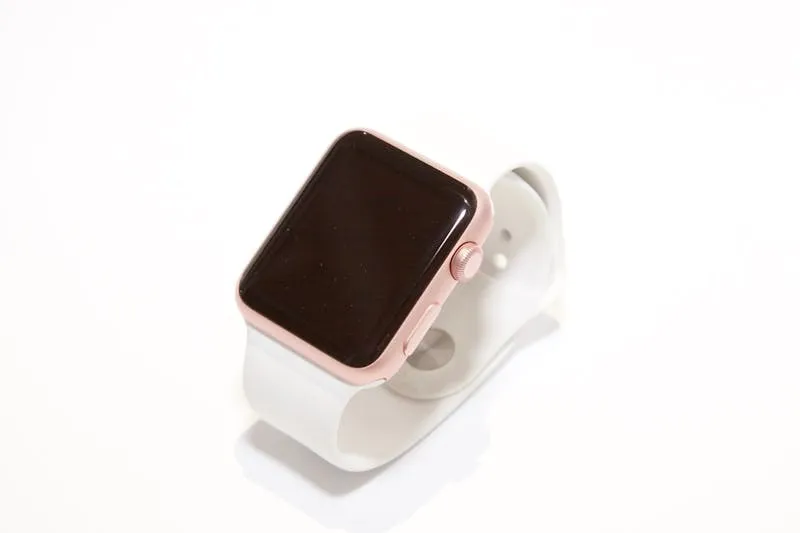
1. Apple Watch Series 9 / Ultra 2
Price: Series 9 from £399 (41 mm) at John Lewis — Ultra 2 from £799 at Currys or Apple Store
Sensors: PPG (heart rate), ECG, pulse oximeter, wrist temperature, high-precision accelerometer, barometric altimeter
Battery life: 18 hours (Series 9), 60 hours in low-power mode (Ultra 2)
Women's health: The iOS "Cycle Tracking" feature (available since watchOS 9) integrates the temperature sensor to offer retrospective ovulation estimates. Combined with the iPhone application, it allows logging of symptoms (mood, pain, flow) and export of a PDF report for your GP or gynaecologist. The Apple Women's Health Study validated detection of irregular cycles compatible with PCOS or premature ovarian insufficiency with 74% sensitivity in the 2023 paper.
Strengths: Exceptional iOS ecosystem, FDA-validated AFib detection, premium design, ECG recordable and shareable with a clinician.
Weaknesses: 18-hour battery necessitates nightly charging (disrupting sleep tracking consistency), iOS exclusive, high price point.
Privacy: Health data stored on iPhone, end-to-end encrypted via iCloud Health. Apple is one of the very few technology companies to have explicitly stated it would not share reproductive health data with third parties even under legal compulsion — a position maintained since the US Dobbs decision in 2022.
2. Garmin Lily 2 / Venu 3S / Fenix 8
Price: Lily 2 from £229 — Venu 3S from £329 at Currys and Amazon UK — Fenix 8 from £799
Sensors: Multi-wavelength PPG, pulse oximeter, Firstbeat stress sensor, skin thermometer (Venu 3 and Fenix 8), altimeter
Battery life: Lily 2: 5 days — Venu 3S: 10 days — Fenix 8: 29 days
Women's health: Garmin excels here with its "Health Snapshot" integration and advanced cycle tracking in Garmin Connect. The "Menstrual Cycle Tracking" feature cross-references cycle, HRV, sleep and training load to automatically adapt training plans to hormonal phases — a direct application of Stacy Sims's research. The Venu 3 and Fenix 8 include night sweat alerts, a first in the sector.
Strengths: Exceptional battery life, top-class GPS accuracy, rich Garmin Connect ecosystem, compatible with both Android and iOS, Body Battery recognised in sports science literature.
Weaknesses: Less intuitive interface than Apple, no ECG on mainstream models, high price on premium models.
Privacy: Data stored on Garmin servers (US). Subject to the EU-US Data Privacy Framework (2023). Export possible, deletion on request. Garmin does not sell data to third parties.
3. Oura Ring Generation 4
Price: £349 + £5.99/month subscription (available at John Lewis and oura.com)
Sensors: Infrared PPG, finger temperature (high precision, ±0.1°C), accelerometer, altimeter
Battery life: 5 to 7 days
Women's health: Oura Ring is arguably the most rigorously scientifically validated device for women's health. Its precision finger temperature sensing is superior to wrist-based watches for detecting basal temperature variations. Its 2022 study in Nature Digital Medicine demonstrated that the Oura temperature sensor could detect early signs of COVID-19 (sub-clinical fever) 2–3 days before symptom onset — evidence of genuine clinical sensitivity.
The "Cycle Insights" feature (available with subscription) correlates all metrics with declared or inferred cycle phases, presenting variations in an educational format that illuminates as well as measures.
Strengths: Discreet ring form factor (facilitates 24/7 wear), superior thermal precision, no screen (reduces cognitive load), robust scientific validation.
Weaknesses: No screen (smartphone dependency), no ECG or GPS, mandatory subscription for advanced features, fixed size (order via sizing kit).
Privacy: Finnish company (native GDPR regulation), explicit privacy policy. A 2023 partial acquisition by UnitedHealth Group raised concerns that management partially addressed via contractual commitments not to share health data with the insurer — worth monitoring.
4. Samsung Galaxy Watch 6 / 7
Price: Galaxy Watch 6 from £249 — Galaxy Watch 7 from £259 at Currys and John Lewis
Sensors: PPG, ECG, pulse oximeter, BIA (body composition analysis), temperature sensor
Battery life: 40 hours
Women's health: Samsung introduced cycle tracking in Samsung Health in 2020 and has progressively enriched it. The Galaxy Watch 7 integrates a menopause stage detection algorithm and hot flush tracking in beta. The BIA (bioimpedance) sensor enables estimation of body composition — relevant for monitoring post-menopausal sarcopenia (muscle mass loss).
Strengths: Solid value for money, ECG available, body composition analysis, good Android integration (particularly with Samsung phones).
Weaknesses: Cycle features less advanced than Garmin or Oura, limited battery life, Samsung Health dependency for advanced features.
Privacy: Data on Samsung servers (South Korea). Samsung Health's data-sharing policy with third-party partners is less transparent than Apple's or Oura's — review and restrict sharing options in the app settings.
5. Fitbit Sense 2 / Charge 6
Price: Sense 2 from £199 — Charge 6 from £129 at Currys and Amazon UK
Sensors: PPG, ECG (Sense 2), EDA sensor (electrodermal activity, for stress), pulse oximeter, skin temperature, built-in GPS (Charge 6)
Battery life: Sense 2: 6 days — Charge 6: 7 days
Women's health: Fitbit (Google property since 2021) was a pioneer in consumer cycle tracking. The cycle tracking in the Fitbit app is straightforward but effective for basic calendar use. The EDA sensor (galvanic skin response) is unique in its category for measuring physiological stress in real time, though its precision for passive wear (continuous measurement) remains limited.
Strengths: Excellent value for money (Charge 6), simple accessible interface, EDA stress sensor, solid battery life.
Weaknesses: Google acquisition raises serious privacy concerns, cycle features less advanced than competitors, some premium features require Fitbit Premium (£7.99/month).
Privacy: Major sensitive point. Since the Google acquisition, Fitbit data can be cross-referenced with Google data. The 2023 policy stipulates that Google may use health data to "improve its services." The ICO (Information Commissioner's Office) has not formally challenged this formulation under UK GDPR. For menstrual cycle data specifically, Diana recommends opting out of all optional sharing and downloading a complete data export annually.
6. Whoop 4.0
Price: Band free + mandatory subscription £30/month or £200/year (whoop.com)
Sensors: High-resolution PPG, pulse oximeter, accelerometer, skin temperature sensor
Battery life: 4–5 days (charges on the wrist without removal)
Women's health: Whoop is designed for elite athletes and serious biohackers. Its recovery modelling is recognised as the most sophisticated in the market for high-performance sportswomen. The "Whoop Women" feature launched in 2022 integrates the cycle into recovery calculations and provides training recommendations adapted to hormonal phases — a level of personalisation rare in the sector.
Whoop published in 2023 a study across 40,000 female users showing that average recovery scores fell by 7 points in the premenstrual phase and that inter-individual variability was 300% — underlining the importance of personalised approaches over generic norms.
Strengths: No screen (zero cognitive load), most advanced recovery model for sport, well-developed women's features, on-wrist charging (never needs removal).
Weaknesses: High total cost (mandatory subscription), steep learning curve for non-athletes, no ECG or GPS, not suited to non-sporting use cases.
Reproductive health data and privacy: the UK GDPR picture
Reproductive health data — menstrual cycles, fertility, pregnancy, menopause — constitutes health data under Article 9 of UK GDPR and EU GDPR. This is "special category" data whose processing is in principle prohibited except with explicit consent. In the UK and EU, this protection is real and constraining for operators subject to this jurisdiction.
The ICO (Information Commissioner's Office) published updated guidance in 2022 on health and wellness apps, noting that:
- Consent must be specific, explicit and revocable for each processing purpose.
- Menstrual cycle data cannot be used for insurance, employment or targeted advertising purposes without separate, specific consent.
- The right to erasure applies fully to these data.
- Transfers to third countries (the US in particular) must be covered by Standard Contractual Clauses or an adequacy decision.
In practice, here is what this means for the major brand apps:
- Apple Health: end-to-end encrypted on iPhone; Apple cannot access it even under legal compulsion. Full export and deletion available. Apple's position is the best in the sector on this point.
- Garmin Connect: data hosted in the US, governed by the EU-US and UK-US Data Privacy Framework. Export possible, deletion on request. Garmin does not sell data to third parties.
- Oura: Finnish company, native GDPR compliance, clear policy. The UnitedHealth Group partial acquisition contains contractual data isolation clauses worth verifying periodically.
- Samsung Health: less transparent policy, possible data sharing with "Samsung partners." Review your app privacy settings and opt out of optional data sharing.
- Fitbit/Google: the most concerning situation. While UK GDPR technically limits cross-referencing of health data, Google's global policy is to integrate health data into its user profile. For menstrual cycle data, Diana recommends requesting a complete data export, activating automatic history deletion in Google settings, and considering whether the privacy trade-off is acceptable for this category of intimate health information.
Whatever device you choose, spend 20 minutes auditing the privacy settings of the associated health application. Opt out of all "optional" sharing with partner organisations. Enable biometric authentication for the application. Export your data regularly (JSON or CSV format depending on the app) and store it in your own secure location. These medical records belong to you — do not surrender them by default.
Menopause, perimenopause and pregnancy: specialist features
These are the two greatest blind spots in the mainstream wearable market until recently. The encouraging news: 2022–2024 saw a remarkable acceleration in dedicated features.
Pregnancy and post-partum tracking
Apple introduced "Pregnancy Mode" in watchOS 9 (2022), which automatically adapts heart rate alerts (the normal thresholds for pregnant women differ significantly), disables certain potentially anxiety-inducing alerts, and informs about ECG measurements not recommended during pregnancy. The iOS Health app offers pregnancy symptom tracking integrable with watch data.
Garmin offers "Pregnancy Tracking" available since Connect 4.5 (2023), including foetal movement tracking (accelerometer-based — currently undergoing clinical validation), appointment reminders and activity statistics adapted to WHO recommendations for pregnant women (150 minutes of moderate activity per week, adapted by trimester).
What wearables cannot do during pregnancy: No consumer device can replace clinical foetal monitoring. Foetal heart rate measurement via wrist PPG is not technically feasible with current sensors. HRV and sleep data remain useful for maternal wellbeing tracking, but do not constitute a foetal surveillance device. The NHS explicitly cautions against using consumer wearables as a substitute for clinical monitoring during pregnancy.
Perimenopause and menopause
This segment has seen the fastest functional growth. Market estimates (Grand View Research, 2023) indicate that 65% of women in perimenopause or early menopause report using a wearable to track their symptoms — well above the national average across all age groups.
The most relevant features available in 2024:
- Hot flush tracking: Garmin Venu 3 and Fenix 8 offer automatic detection via temperature + heart rate combination. Apple Watch allows manual annotation with time-of-day and activity context. Oura detects nocturnal temperature elevations characteristic of night sweats.
- Sleep variation monitoring: menopausal sleep disruption has a detectable signature (frequent micro-arousals, reduced deep sleep, nocturnal thermal elevations). Longitudinal documentation over 6–12 months can help your GP assess the real impact on quality of life and the appropriateness of hormone replacement therapy (HRT) — increasingly recommended by NICE guidelines for suitable candidates.
- Body composition tracking: sarcopenia (muscle mass loss) accelerates after menopause. The BIA sensor in Samsung Galaxy Watch (and certain Garmin body composition sensors) can document estimated muscle mass variations over months — useful for adapting a preventative strength training programme.
- Adapted heart rate alerts: post-menopausal cardiovascular risk is real. Wearables with ECG (Apple Watch, Samsung Galaxy Watch, Fitbit Sense 2) can detect rhythm anomalies (atrial fibrillation in particular) whose incidence increases after menopause — a function with genuine NICE-endorsed clinical value.
Specialist UK applications for menopause such as Elektra Health and Stella integrate directly with Apple Watch and Garmin data for clinically-oriented menopause management. These specialist applications typically have a more rigorous clinical approach than the native manufacturer applications, developed with menopause specialists and aligned with NICE NG23 menopause guidelines.
How to choose your device by profile
There is no universal "best" wearable for women's health. The choice depends on your priorities, lifestyle and the level of sophistication you seek. Here is a structured decision framework.
You are an active sportswoman (3+ sessions per week)
First choice: Garmin Venu 3 or Fenix 8 depending on your sport. Cycle-adapted training guidance is unmatched here. Battery life means you never interrupt tracking to recharge. Class A GPS sensors deliver precise training data.
Alternative: Whoop 4.0 if you are a serious athlete focused on performance and recovery, at the cost of a steeper learning curve.
You are in the Apple ecosystem
First choice: Apple Watch Series 9 (or Ultra 2 for outdoor sports). iOS integration is unmatched, health data privacy is the best in the market, and cycle/menopause features are well developed. The one limitation: battery life requires regular nightly charging — wear it overnight at least 4 nights out of 7 for reliable sleep data.
You are tracking your cycle or planning a pregnancy
First choice: Oura Ring Gen 4. Finger-level thermal precision is superior for detecting basal temperature variations. Frictionless 24/7 wear without a screen supports long-term adherence. Coupled with Natural Cycles (or Clue for non-contraceptive use), this is the most rigorous combination available.
Note: the £5.99/month subscription is a recurring cost to factor into your budget.
You are in perimenopause or menopause
First choice: Garmin Venu 3 (night sweat alerts, cycle-integrated recovery) or Apple Watch Series 9 (manual annotation, ECG for cardiovascular monitoring). Pair either device with Elektra Health or Stella app for clinically-oriented menopause management aligned with NICE guidelines.
Key parameter: if cardiovascular risk is a concern — as it should be post-menopausally — prioritise a device with a validated ECG (Apple Watch or Samsung Galaxy Watch).
You have a tighter budget
First choice: Fitbit Charge 6 (£129). Core features are solid, battery life is good, and the Fitbit app is the most accessible for beginners. Restrict data sharing in privacy settings.
Alternative: Samsung Galaxy Watch 6 (from £199 on offer at Currys) if you are on Android and want ECG capability at this price point.
Can a smartwatch really predict my ovulation?
The honest answer is: partially. Devices with high-precision temperature sensors (Oura Ring, Apple Watch Series 9, Garmin Fenix 8) can retrospectively detect ovulation with 70–80% accuracy via the post-ovulatory thermal signature (0.2–0.5°C elevation). Prospective detection (before ovulation) remains less reliable — current algorithms predict ovulation with a ±2-day error window. No consumer wearable replaces a urinary LH test for precise fertile window detection. For contraceptive purposes, no smartwatch holds regulatory certification — use only Natural Cycles or a medically recognised contraceptive method. Your GP or a sexual health clinic can advise on all options available under the NHS.
What is the difference between an Oura Ring and a smartwatch for sleep tracking?
The Oura Ring measures at the finger, where blood circulation is more stable and closer to the digital arteries than the wrist. This results in more accurate PPG sensor readings (fewer movement artefacts) and, critically, superior thermal precision — crucial for cycle tracking. The finger shows a basal temperature variation of ±0.1°C vs ±0.3°C at the wrist. In return, the absence of a screen requires smartphone dependency, Oura Ring has neither GPS nor ECG, and the monthly subscription is an ongoing cost. For sleep alone, published studies give a slight edge to Oura Ring Gen 3/4 over Apple Watch Series 7+ for deep sleep (N3) detection — but the practical difference is modest for most users.
My watch has detected a heart rate anomaly — what should I do?
Heart rate alerts (resting HR persistently above 100 bpm, abnormally low HR below 40 bpm, or irregular rhythm detection on ECG-enabled devices) should be taken seriously but do not require immediate panic. An elevated heart rate can be linked to caffeine, stress, a developing infection, dehydration or recent exercise. If the anomaly persists across multiple readings over 24–48 hours and is accompanied by symptoms (palpitations, breathlessness, unusual fatigue), contact your GP and bring your exported app history. For AFib alerts on Apple Watch or Samsung, NICE guidelines recommend a consultation within 48–72 hours. You can also call 111 for urgent clinical advice. Never simply dismiss a persistent cardiac alert.
Is my menstrual cycle data safe in a health application?
In the UK and EU, GDPR provides real legal protection: this data is classified as "special category" and may only be processed with your explicit, specific and revocable consent for each stated purpose. Practically, protection varies by application. Most secure: Apple Health (end-to-end encrypted, Apple cannot access it), Clue (German company, native GDPR, annual independent audit), Oura (Finnish, native GDPR). More concerning: any application belonging to a US company potentially accessible under US legal compulsion. The ICO's post-2022 guidance specifically addresses reproductive health data. Whatever app you use: restrict all optional partner sharing, enable biometric app lock, and export your data annually to your own storage.
Is HRV tracking useful if I am not sporty?
Yes, and perhaps even more so than for athletes. For sportswomen, HRV primarily optimises recovery and training periodisation. For any woman, HRV is a systemic health indicator: chronically low HRV (accounting for cycle variations) can signal professional burnout, sleep disorders, thyroid imbalance or dysautonomia. HRV is particularly worth monitoring during major hormonal transitions (perimenopause, post-partum) when the autonomic nervous system undergoes documented perturbation. You do not need to run a marathon to derive value from your daily HRV score — and a consistent downward trend over weeks is always worth discussing with a clinician.
How long does it take to establish a personal HRV baseline?
Most algorithms (Garmin, Oura, Whoop) require between 14 and 30 days of data to establish your personal baseline and begin delivering meaningful insights. Before this period, recovery or stress scores are unreliable as they are not contextualised to your individual physiology. For cycle tracking, allow 2–3 complete cycles (2–3 months) before predictions and insights become genuinely personalised. The value of a wearable is longitudinal, not immediate — patience at the start pays dividends at 3, 6 and 12 months of wear.
Conclusion: the promise of women's wearables, half-delivered
Connected health devices have made considerable progress in accounting for female physiological specificities between 2019 and 2024. Cycle tracking no longer means a coloured calendar. HRV is contextualised against the hormonal cycle. Night sweat detection has become possible. Data can meaningfully feed clinical conversations.
But we should be clear-eyed about current limitations. Scientific validation remains uneven across features and devices. Core algorithms are still predominantly calibrated on male cardiovascular data. The privacy of reproductive health data in a shifting geopolitical context is a real risk that every user must actively manage.
Diana's synthesis: choose a device whose data you will actually read, whose limitations you understand, and whose privacy settings you have audited. Paired with a dedicated application (Clue or Natural Cycles according to your needs), a quality wearable can become a genuine tool for self-knowledge — not a pocket doctor, but an objective health diary of unprecedented precision.
And if one piece of data should guide your purchase above all others: ask your GP or gynaecologist what data format or application they find useful in consultation. The clinical value of your wearable is also measured by its ability to feed a productive conversation with your healthcare provider.
- Journal of the American Heart Association (2023) — Algorithmic gender bias in cardiovascular wearables
- Nature Digital Medicine (2022) — Oura Ring — Temperature sensor validation for early detection of illness
- Sleep Medicine Reviews (2019) — Systematic meta-analysis: consumer wearables vs polysomnography
- European Journal of Contraception (2021) — Natural Cycles validation across 22,785 cycles
- NICE Guideline NG23 — Menopause: diagnosis and management — UK clinical recommendations for menopause care
- ICO — GDPR guidance for health data — UK data protection framework for health and wellness applications
- Clinical Autonomic Research (2020) — Sato et al. — HRV variations across menstrual cycle phases
- NHS — Menopause — Official NHS guidance on menopause symptoms, diagnosis and treatment options