You stopped the pill six months ago. Every month, the same hope, the same waiting, then that sinking feeling when your period arrives. Your GP said "it's normal, it can take up to a year." But nobody told you what YOU could do to improve your chances — beyond simply waiting.
Let's start with the figure that puts the waiting in perspective. According to the NHS overview of infertility, more than 8 out of 10 couples where the woman is under 40 will conceive naturally within a year if they have regular unprotected sex — every 2 or 3 days. Within a year, not within a month. Six months without a positive test is not, in itself, a warning sign. This guide won't promise you a result in three months. It brings together what improves your chances, what is more myth than medicine, and the point at which it makes sense to see your GP rather than keep waiting on your own.

Understanding your cycle: two phases, two hormones
Your menstrual cycle isn't a simple 28-day countdown. That 28-day figure is an average — real cycles vary from woman to woman, and sometimes from month to month. The NHS page on periods and fertility in the menstrual cycle is clear that regular cycles anywhere from 21 to 35 days are normal.
The cycle divides into two parts. The follicular phase begins on the first day of your period and ends at ovulation — its length varies considerably, and it's the reason your cycle isn't always 28 days. During this phase, rising oestrogen levels cause one of your ovaries to develop and release an egg, and the lining of the womb starts to thicken.
The second half of the cycle, after ovulation, is far more predictable. The time from the release of an egg to the start of your next period is around 10 to 16 days. That's a valuable marker — ovulation happens roughly two weeks before your next period, not two weeks after your last one. For a 28-day cycle, that lands around day 14 — but it won't for women whose cycles are shorter or longer.
Behind the scenes, two hormones made at the base of the brain run the show: FSH (follicle-stimulating hormone) drives the maturing of follicles, then a surge of LH (luteinising hormone) triggers ovulation. That LH surge shows up in urine — it's exactly what ovulation predictor kits from Boots or Superdrug are designed to pick up.
A detail that changes the whole strategy: sperm can survive in the fallopian tubes for up to 7 days after sex, whereas the egg, once released, can only be fertilised for a very short time. That asymmetry is what creates the fertile window — and it's why sex in the days before ovulation matters more than sex afterwards.
The fertility window: the 6 days that matter
Pregnancy comes from sex during the six days that end on the day of ovulation. Wilcox and colleagues' study on the timing of intercourse and conception, published in the New England Journal of Medicine in 1995, established this: 221 women planning a pregnancy collected daily urine samples across 625 menstrual cycles, and conception occurred only when sex took place during a six-day window ending on the estimated day of ovulation. The probability of conception ranged from 10% for sex five days before ovulation to 33% for sex on the day of ovulation itself. Six days, then. Not fifteen.
In practical terms, if your cycle lasts 28 days, ovulation typically happens around day 14. If it lasts 32 days, it's more likely to be around day 18 — so counting from day 14 regardless would have you aiming too early, month after month, without realising it.
Three tools can help you pin down ovulation, and they work best together:
Ovulation predictor kits (OPKs) detect the LH surge, which comes shortly before ovulation. Start testing a few days before your estimated ovulation date, based on the actual length of your recent cycles rather than a textbook calculation.
Basal body temperature (BBT) charting: taken every morning before you get out of bed (with the same thermometer), your temperature rises slightly after ovulation, under the influence of progesterone. It tells you after the event — but over several cycles, it builds up a clear picture of your pattern.
Cervical mucus observation: around the time of ovulation, vaginal secretions become thinner and stretchy, a bit like raw egg white. This is the mucus that makes it easier for sperm to swim through the cervix.
So should you schedule sex down to the day? No. Regular sex every 2 or 3 days throughout the month covers the fertile window without turning your bedroom into a project plan. That's also the frequency the NHS uses when it talks about how long conception normally takes.
Recognising the signs of ovulation
Ovulation pain, light spotting and changes in cervical mucus are the three physical signs that can accompany ovulation. How strongly you notice them varies from woman to woman — some feel them clearly, others not at all, and neither is abnormal.

Ovulation pain (sometimes called "Mittelschmerz") feels like a dull ache or sharp, sudden twinges on one side of your lower tummy, about 14 days before your period. It's usually brief, may switch sides from month to month depending on which ovary releases an egg, and is usually nothing to worry about.
A little bleeding or discharge can also appear around ovulation in some women. This light ovulation spotting is brief and shouldn't be mistaken for a period.
Cervical mucus remains the easiest sign to track day to day: when it turns clear and stretchy, your fertile window is open. None of these signs, on its own, dates ovulation precisely — it's seeing the same pattern cycle after cycle that makes it reliable.
Tummy pain that doesn't get better with painkillers, keeps coming back or is severe is a different matter. Ask for an urgent GP appointment or contact NHS 111 — other conditions (endometriosis, ovarian cysts, some STIs such as chlamydia) can cause similar pain.
The diet that supports fertility
A diet close to Harvard's so-called "fertility diet" is linked to a markedly lower risk of infertility caused by ovulation problems. The evidence comes from the Nurses' Health Study II, a large American cohort run by the Harvard School of Public Health. Chavarro and colleagues' study on diet and ovulatory disorder infertility followed 17,544 women for eight years. Those whose eating habits most closely matched that pattern had a far lower risk of ovulatory infertility than those whose diets matched it least.
That pattern combined several habits — monounsaturated fats rather than trans fats, more plant protein than animal protein, low-glycaemic carbohydrates, full-fat dairy, multivitamins, and iron from plants and supplements. One important caveat: this is an observational study, which shows an association rather than proof of cause and effect, and it only covers infertility linked to ovulation.

Folate (vitamin B9) is the best-established nutrient around conception. It's found in green leafy vegetables (spinach, kale, broccoli), pulses, citrus fruit and wholegrains. But it's difficult to get the amount you need from food alone, which is why UK guidance recommends a supplement from the moment you start trying.
Non-haem iron — the kind found in lentils, spinach and supplements — deserves a mention. A separate analysis of the same cohort on iron intake was published in Obstetrics & Gynecology in 2006. Women who took iron supplements had a lower risk of ovulatory infertility, and non-haem iron, consumed mainly through multivitamins and supplements, was linked to lower risk, while haem iron (from red meat) was not. That's not a reason to start supplementing on your own: talk it through with your GP or pharmacist first.
Oily fish such as salmon, mackerel, sardines and trout provides omega-3 fatty acids — with one UK-specific limit. NHS guidance on fish says that women who are planning a pregnancy should eat no more than 2 portions of oily fish a week. The reason: pollutants found in oily fish may build up in the body and affect a future baby's development.
Ultra-processed foods are worth cutting back on. The trans fats found in some factory-made pastries and snacks are precisely the kind of fat the Harvard "fertility diet" swapped for monounsaturated fats, like those in olive oil. Variety remains your best strategy: fruit, colourful vegetables, pulses and wholegrains every day.
Lifestyle: what helps (and what hinders) your chances

Weight affects fertility in both directions. According to the NHS, having a BMI of 30 or over reduces fertility, and in women, being overweight or severely underweight can affect ovulation. If your weight worries you, raise it with your GP early on — a supported, realistic plan will do far more for you than a crash diet started in a panic.
Physical activity helps — with nuance. In the Nurses' Health Study II, combining five or more low-risk lifestyle habits, including diet, weight control and physical activity, was associated with a 69% lower risk of ovulatory disorder infertility. At the other extreme, very intense training without enough food to fuel it can disrupt the hormonal signals that control ovulation.

Stress is the most debated factor, and the most misunderstood. Lynch and colleagues' study on preconception stress, published in Human Reproduction in 2014, followed couples who were trying to conceive (401 of them completed the protocol). Women with the highest levels of salivary alpha-amylase, a biological marker of stress, had 29% lower fecundity than those with the lowest levels. Cortisol, on the other hand, showed no association with fecundity. The nuance matters. An association isn't a cause — and this study doesn't say that relaxing is enough to get pregnant. The NHS itself says only that, in severe cases, stress may affect ovulation.
Smoking, by contrast, is unambiguous. The NHS states that smoking — including passive smoking — affects your chance of conceiving and can reduce semen quality. Quitting is one of the most useful changes you can make, and you don't have to do it alone: your GP, a pharmacist or your local NHS stop smoking service can help.
Supplements and vitamins: fact versus fiction
Chemists and online shops are full of "fertility" supplements. For women trying to conceive, UK guidance singles out folic acid, and vitamin D joins it once you're pregnant. Everything else is case by case: check with your GP, midwife or pharmacist before you buy — and steer clear of cod liver oil and supplements containing vitamin A (sometimes listed as retinol), because too much vitamin A can harm a baby's development.
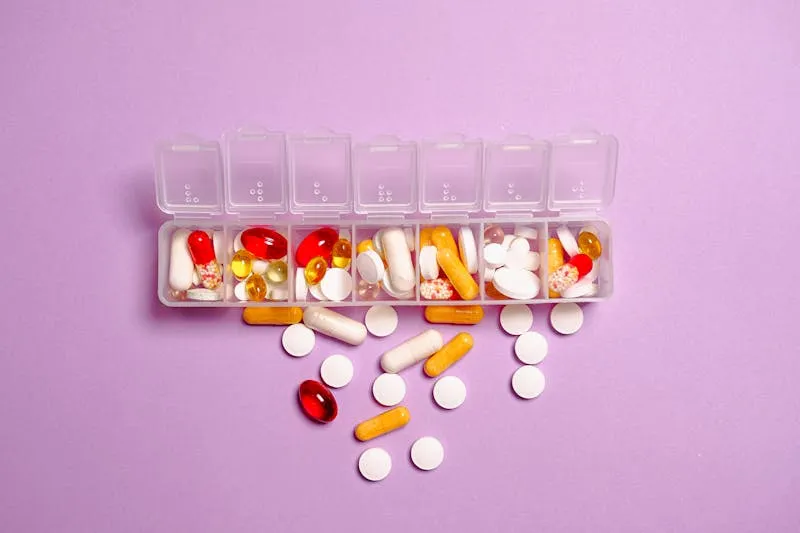
Folic acid (vitamin B9) — recommended. NICE's January 2025 guideline on maternal and child nutrition recommends 400 micrograms of folic acid a day for anyone planning a pregnancy, and for the first 12 weeks of pregnancy. It reduces the chance of your baby having a neural tube defect such as spina bifida. Some women — for example those with type 1 or type 2 diabetes, a personal or family history of neural tube defects, or who take medicine for epilepsy or HIV — are offered a higher 5mg dose, which your GP can prescribe.
Vitamin D — our bodies make vitamin D when skin is exposed to summer sunlight, which isn't strong enough in the UK between October and March. NICE advises anyone who is pregnant or breastfeeding to take 10 micrograms a day over those months, and all year round if they rarely go outside or have darker skin.
Coenzyme Q10, inositol, DHEA — these three names come up again and again on trying-to-conceive forums. The first is marketed for egg quality, the second is often promoted for women with polycystic ovary syndrome (PCOS), and the third is sometimes suggested for low ovarian reserve. None of them is part of general pre-pregnancy advice: whether they have any role depends on your individual situation, and that's a conversation for a fertility specialist. DHEA is a hormone — never take it without medical supervision.
The age factor: what the figures show
Fertility declines with age — it's the first risk factor on the NHS list. That doesn't mean conceiving becomes impossible past a certain birthday — it means the odds shift, and it may take longer.
A study of European couples gives a more detailed picture. Dunson and colleagues' study on infertility and age followed 782 couples at seven European centres. It estimated that the proportion of couples not conceiving within a year rose from 8% (women aged 19 to 26) to 13–14% (27 to 34) and 18% (35 to 39). Complete sterility, by contrast, was estimated at about 1% and didn't change with age.
The same study offers some genuine reassurance: depending on age, an estimated 43% to 63% of those couples classed as "infertile" after a year would go on to conceive if they kept trying for another twelve months. Increased infertility with age, the authors concluded, is mainly about lower fertility rates — not an absolute inability to conceive.
These figures are averages. Some women conceive at 40 in their first cycle; some at 28 run into difficulties. Your partner's age counts too: in the same study, from the late thirties, male age became an important factor. But averages are what shape medical guidance, including how long to wait before seeking help.
When to see your GP: timings and signs you shouldn't ignore

NHS guidance on when to seek help is straightforward:
Under 36: see a GP if you haven't conceived after a year of trying.
36 and over: see your GP sooner — there's no need to wait the full year.
At any age, see your GP sooner if you already know you may have fertility problems, for example:
Very short or very long cycles (under 21 or over 35 days), cycles that vary a lot from month to month, or absent periods — these can point to a problem with ovulation, one of the most common causes of female infertility.
Very painful periods or ongoing pelvic pain — worth investigating for endometriosis.
A history of pelvic surgery or a sexually transmitted infection such as chlamydia — both can scar the fallopian tubes.
A known diagnosis of PCOS, endometriosis, fibroids or premature ovarian failure.
A history of cancer treatment (chemotherapy or radiotherapy) for either of you, or, for your partner, undescended testicles, testicular surgery or a past testicular infection.
One point specific to the UK: what your GP can refer you for depends not only on what's causing the problem, but also on what your local integrated care board (ICB) funds. If you look at private treatment, choose a clinic licensed by the Human Fertilisation and Embryology Authority (HFEA).
The mental load of trying to conceive: let's talk about it
Nobody prepares you for what the waiting feels like. Every month becomes a cycle of hope and disappointment. You read meaning into every symptom — that queasiness, that tiredness, that twinge in your breast. You type "pregnancy symptoms 8 DPO" (eight days past ovulation) into your phone at two in the morning. You scroll past pregnancy announcements on Instagram. You smile through gritted teeth when someone asks "so, when are you two having a baby?"
You're not alone in this. This mental load is real, and you're entitled to name it. Social pressure doesn't help: the idea that women are naturally wired for motherhood weighs heavily on anyone who's waiting — even though what the research says about maternal instinct is far more nuanced.
Some practical ways to get through this stretch:
Talk about it. To your partner, a trusted friend, a professional. Silence amplifies the hurt. Your partner is living through this wait too — differently, but they're living it.
Limit "Dr Google." Trying-to-conceive forums can be a source of support, but also of anxiety. If your evenings are disappearing into symptom searches, put the phone down and give yourself one short slot a day at most.
Allow yourself breaks. A month without OPKs, without temperature charts, without pressure — that isn't "wasting time." Regular sex every 2 or 3 days still covers the fertile window, and your mental health is part of the equation.
Consider professional support. In England, you can refer yourself to NHS Talking Therapies for anxiety and low mood without going through your GP first, and if you're under a fertility clinic, ask what counselling it offers. It isn't a luxury — it's care.
Improving your chances of conceiving isn't about controlling every variable. And when that test does turn positive, the week-by-week pregnancy guide will take it from there. Until then, start this month with two simple steps: note the date of your period, and buy a pot of 400-microgram folic acid tablets.
Frequently asked questions
How long does it usually take to conceive?
Often several months. According to the NHS, more than 8 out of 10 couples where the woman is under 40 conceive naturally within a year with regular unprotected sex every 2 or 3 days. In the European study by Dunson and colleagues, between 8% and 18% of couples (depending on the woman's age) hadn't conceived after a year — and the study estimated that 43% to 63% of them would conceive if they kept trying for another year.
Should we have sex every day during the fertile window?
No. Regular sex every 2 or 3 days throughout the month covers the six-day fertile window that ends on the day of ovulation. Aiming for every other day around your estimated ovulation date is an option, but regularity across the whole cycle matters more than precision to the day.
Does stress stop you getting pregnant?
The evidence points to an association rather than a simple cause. A 2014 US study linked high levels of a salivary stress marker to 29% lower fecundity, while the NHS notes that stress may affect ovulation and sperm production in severe cases. Managing stress is good for your overall health, not only your fertility — but it isn't something to blame yourself for.
Are ovulation tests reliable?
Urine-based OPKs detect the LH surge, the hormone that triggers ovulation. They tell you ovulation is approaching, but they can't confirm it has actually happened. Used alongside mucus observation or temperature charting, they give you a much fuller picture of your cycle.
Should my partner make lifestyle changes too?
Yes. The NHS says smoking can reduce semen quality and drinking too much alcohol can affect sperm. There's also a link between a raised scrotal temperature and reduced semen quality, although it's uncertain whether wearing loose-fitting underwear improves fertility. If you're referred for tests, expect both of you to be assessed — fertility problems can affect either partner.
Is folic acid essential before pregnancy?
Yes. NICE recommends 400 micrograms of folic acid a day for anyone planning a pregnancy and for the first 12 weeks of pregnancy, because it reduces the chance of neural tube defects such as spina bifida. You can buy it from pharmacies and supermarkets; ask your GP whether you need the higher 5mg dose.
Can you improve your ovarian reserve?
No. Women are born with all their eggs, and that supply declines over time — it can't be topped up. What you can do is avoid what harms fertility, starting with smoking, and not leave it too long before seeing your GP if you're 36 or over.
Sources
- NHS — Infertility (overview)
- NHS — Infertility: causes
- NHS — Periods and fertility in the menstrual cycle
- NICE — Maternal and child nutrition (NG247): recommendations, 2025
- NHS — Fish and shellfish
- Wilcox AJ et al., Timing of sexual intercourse in relation to ovulation, New England Journal of Medicine, 1995
- Chavarro JE et al., Diet and lifestyle in the prevention of ovulatory disorder infertility, Obstetrics & Gynecology, 2007
- Dunson DB et al., Increased infertility with age in men and women, Obstetrics & Gynecology, 2004
- Lynch CD et al., Preconception stress increases the risk of infertility: the LIFE study, Human Reproduction, 2014
- Chavarro JE et al., Iron intake and risk of ovulatory infertility, Obstetrics & Gynecology, 2006